7 Best Car Sound-Deadening Material of 2026: Match Layers to Noise

Butyl stops panel rattle; foam blocks heat and echo. Find the right car sound-deadening material for your doors, floor, and budget.

Most listings use 'sound deadening' as one broad category, but the material under the foil splits into two jobs. Butyl mats add mass to metal panels and stop vibration, rattle, and resonance. Closed-cell foam blocks heat and echo. A sheet of foam alone won't cure a buzzing door, and a butyl mat alone won't do much for a hot roof.

The mistake most buyers make is treating thickness as the only spec. A 50-mil butyl kit can cover an entire van cheaply, but it asks for two layers if the panels ring loudly. An 80-mil sheet gives stronger damping per square foot; a 120-mil composite does both jobs at a higher price per square foot.

The closest call is between two 80-mil butyl mats that perform identically. The deciding issue is odor: one has a more visible hot-weather tar smell, while the other offers equal damping with less odor. Pick based on climate and sensitivity, not price alone.

About the Sound Score: This comparative score is calculated from a product's published customer rating and review volume. It is not a laboratory measurement or a hands-on test result.

2

Maximum Damping

Siless Max 120 mil

94 /100
Sound Score Outstanding

Key details

Format
Sheets
Thickness
120 mil
Coverage Area
30 sqft
Material Type
Butyl + foil
View on Amazon

Siless Max is the thickest pure butyl damper in this lineup, and the 120-mil mass makes doors sound solid while cutting exhaust rumble. It sits above the standard 80-mil kits when you need serious panel resonance control.

The material cuts cleanly with a utility knife and presses into contours without lifting, so the extra thickness does not make installation harder. A roller helps seat the butyl around door-panel curves and transmission humps, and once it is down, it stays put. This is the behavior you want from a high-density damper.

Best for high-end car audio builds and older vehicles with thin, tinny panels. Focus it on doors, trunk decks, and floor footwells — the places where the thickness pays off. It is a vibration damper rather than an insulator, so plan for a separate closed-cell foam layer if heat and echo are also on your list.

Priced below the usual 120-mil premium brands while keeping the same butyl-and-foil construction, it is a cost-effective way to get maximum damping in a few critical zones. Owners who want the density without the premium-brand price tag get that here.

💡 Map out the priority zones before cutting so you use the dense sheets where they matter most.

Pros

  • Thick 120-mil butyl mass makes doors sound solid and reduces road noise.
  • Strong on speaker rattle and exhaust rumble, not just highway drone.
  • Cuts and presses easily despite the thickness.
  • Priced below comparable 120-mil premium brands.

Cons

  • Tar-like smell can show up in some boxes and fade after installation.
  • The 120-mil density adds weight, so a weight-sensitive build will feel it.
  • 30 sqft per box covers less area than 80-mil kits, so full-vehicle jobs need multiple boxes.
Our verdict

For a concentrated, high-mass treatment on doors and floors, this is the densest butyl sheet in the group.

Check Latest Price
3

Best Closed-Cell Foam Layer

Siless Liner Foam 36 sqft

91 /100
Sound Score Outstanding

Key details

Format
Roll
Thickness
157 mil
Coverage Area
36 sqft
Material Type
Closed-cell PE foam
View on Amazon

Siless Liner is a 157-mil closed-cell PE foam roll that reduces heat and echo when installed over butyl. It is not a vibration damper; panel rattle and resonance need a butyl layer underneath. In a two-layer build, this foam adds thermal blocking on doors, roof, and firewall, and it shortens the hollow sound that butyl alone leaves behind. The closed-cell structure also fits van insulation work, where heat matters as much as noise.

The 36 sqft roll cuts cleanly with scissors, so trimming around door bars and roof ribs is simple. A single roll covers a sedan floor or a van roof section; full van builds will likely need a second roll. The per-square-foot cost is lower than comparable foam layers, which keeps multi-roll orders within a sensible budget. The roll format also makes it easy to layer strips onto firewall contours without leaving gaps.

This is for the builder who already has a butyl layer down and wants a separate foam layer for heat and echo. It is not a material you can manhandle; surface prep and careful placement are part of the job. For that buyer, this roll is the foam half of a two-layer build.

💡 Press each piece from the center outward to keep the backing flat against the panel.

Pros

  • Layered over butyl, it cuts road noise and adds thermal insulation to the cabin.
  • Easy to cut with scissors and trims cleanly around interior contours.
  • Costs less per square foot than comparable closed-cell foam rolls.

Cons

  • On unprepared panels, the backing can peel or stretch during unrolling.
  • During installation, stretching the foam can tear or dent it, and pulling it up after pressing is not realistic.
Our verdict

For anyone already invested in a butyl kit, this roll is the cost-effective second layer that adds heat and echo control to the same panels.

Check Latest Price
4

Best Budget Full-Coverage Kit

CUKWUYBY 50 mil 50 sqft

91 /100
Sound Score Outstanding

Key details

Format
Sheets
Thickness
50 mil
Coverage Area
50 sqft
Material Type
Butyl + foil
View on Amazon

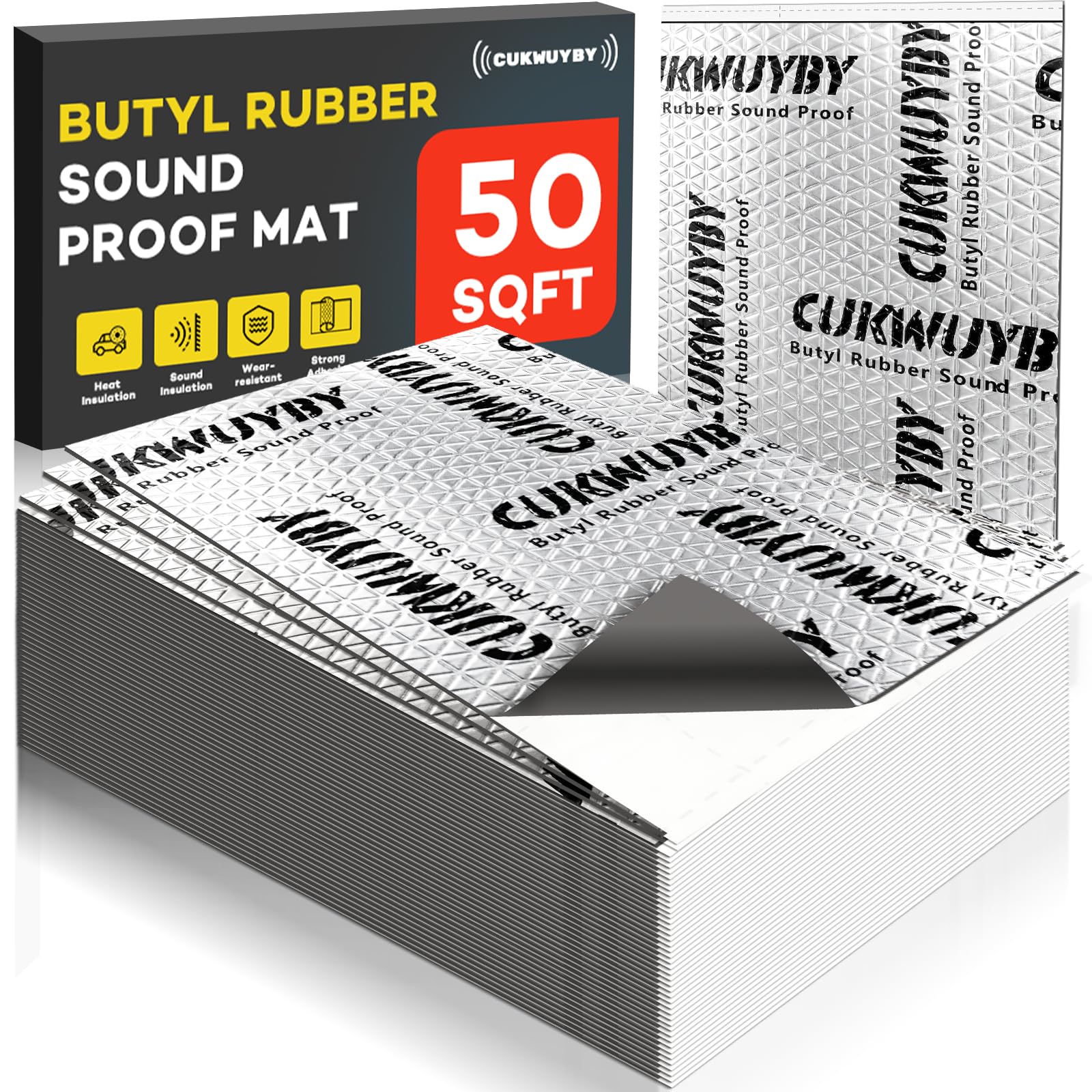
Fifty square feet of butyl in one box is enough to cover the full floor and doors of a single-cab truck, and the peel-and-stick sheets cut vibration and echo on normal panels without a second layer. The 46 sheets are sized for one-person installation: pull the release liner, press into place, and the foil facing stays flexible enough to follow curves.

The damping effect is noticeable on large metal surfaces — floors, roof skins, and van walls lose their hollow ring quickly. The adhesive grips firmly once it touches clean metal, so working slowly matters more than heating the material; in most interior temperatures, the butyl conforms well without extra tools.

This is the pick for a budget-focused truck or van owner who wants whole-vehicle coverage before chasing maximum panel damping. At 50 mil, serious rattle control may require two layers; the kit still has enough material to do that in a small cabin.

Pros

  • Enough material for a full single-cab truck, with noticeable reductions in vibration and echo.
  • Peel-and-stick installation conforms to curves and stays down without heat.
  • Budget-friendly way to cover a whole vehicle in one box.

Cons

  • At 50 mil, the material is thinner than 80-mil alternatives, so damping depth is moderate rather than severe.
Our verdict

For a large cabin on a budget, this kit puts real butyl where it matters without demanding a premium.

Check Latest Price
5

Best Value 80-Mil Sheets

ZARBRE 80 mil 36 sqft

89 /100
Sound Score Excellent

Key details

Format
Sheets
Thickness
80 mil
Coverage Area
36 sqft
Material Type
Butyl + foil
View on Amazon

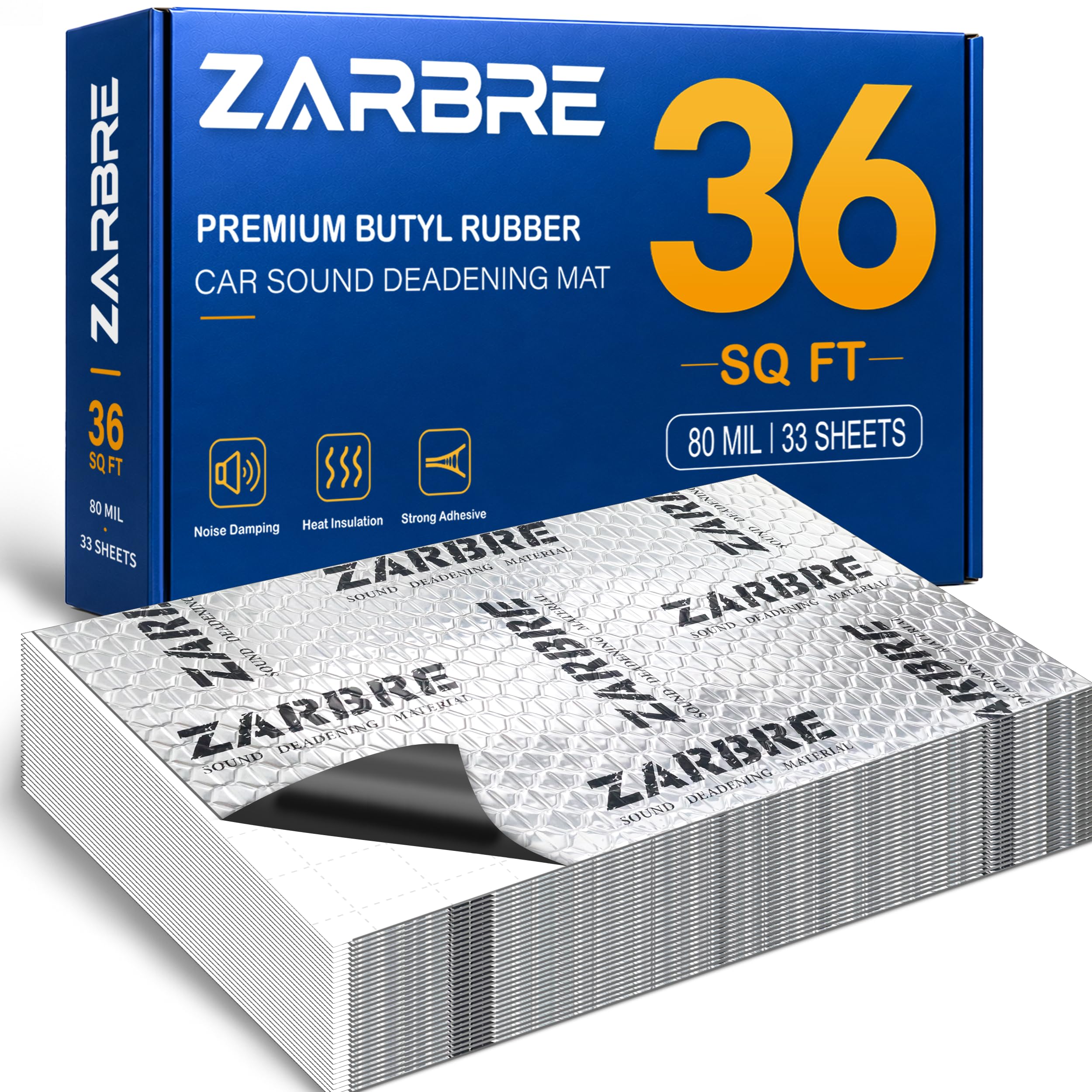
ZARBRE's pure-butyl 80-mil sheets are priced below the established 80-mil leaders while keeping the same material core: butyl with an aluminum foil face. Each of the 33 sheets measures 15.7 x 9.8 inches, and the 36 sqft total covers door, floor, and trunk work, which is the right scope for a weekend sedan project. That direct material-to-price match is the main reason to shortlist it.

The foil-faced sheets cut cleanly with a utility knife and press onto flat metal panels without extra heat in normal conditions. Road noise, drone, and panel resonance drop once doors and trunk floors are covered, leaving a value-minded 80-mil alternative that does not fade into thinner budget territory. The 80-mil thickness is the same target as the category's standard dampers, so installers get the expected mass without a price premium.

This is for DIY installers who want 80-mil damping without paying top rates and who are comparing automotive sound-deadening materials for a sedan or small SUV. It is an emerging option, not the default 80-mil pick, so the buying decision rests on the material formula and the fit for a single-layer butyl install. If the project is limited to doors, floors, and trunk panels, this kit fits without surplus material or compromise.

Pros

  • Cuts road noise, drone, and panel resonance on doors and trunk floors.
  • Priced below the established 80-mil leaders without dropping the butyl core.
  • Easy to cut and apply with standard peel-and-stick technique.

Cons

  • Heat and echo blocking is a separate closed-cell foam layer, not part of this butyl kit.
  • Full-size van and truck projects need a second 36 sqft box to finish the job.
Our verdict

For a door, floor, and trunk build in a sedan or small SUV, this kit delivers 80-mil damping at a mid-range price.

Check Latest Price
6

Doors, Trunk Panels

CUKWUYBY 80 mil 36 sqft

89 /100
Sound Score Excellent

Key details

Format
Sheets
Thickness
80 mil
Coverage Area
36 sqft
Material Type
Butyl + foil
View on Amazon

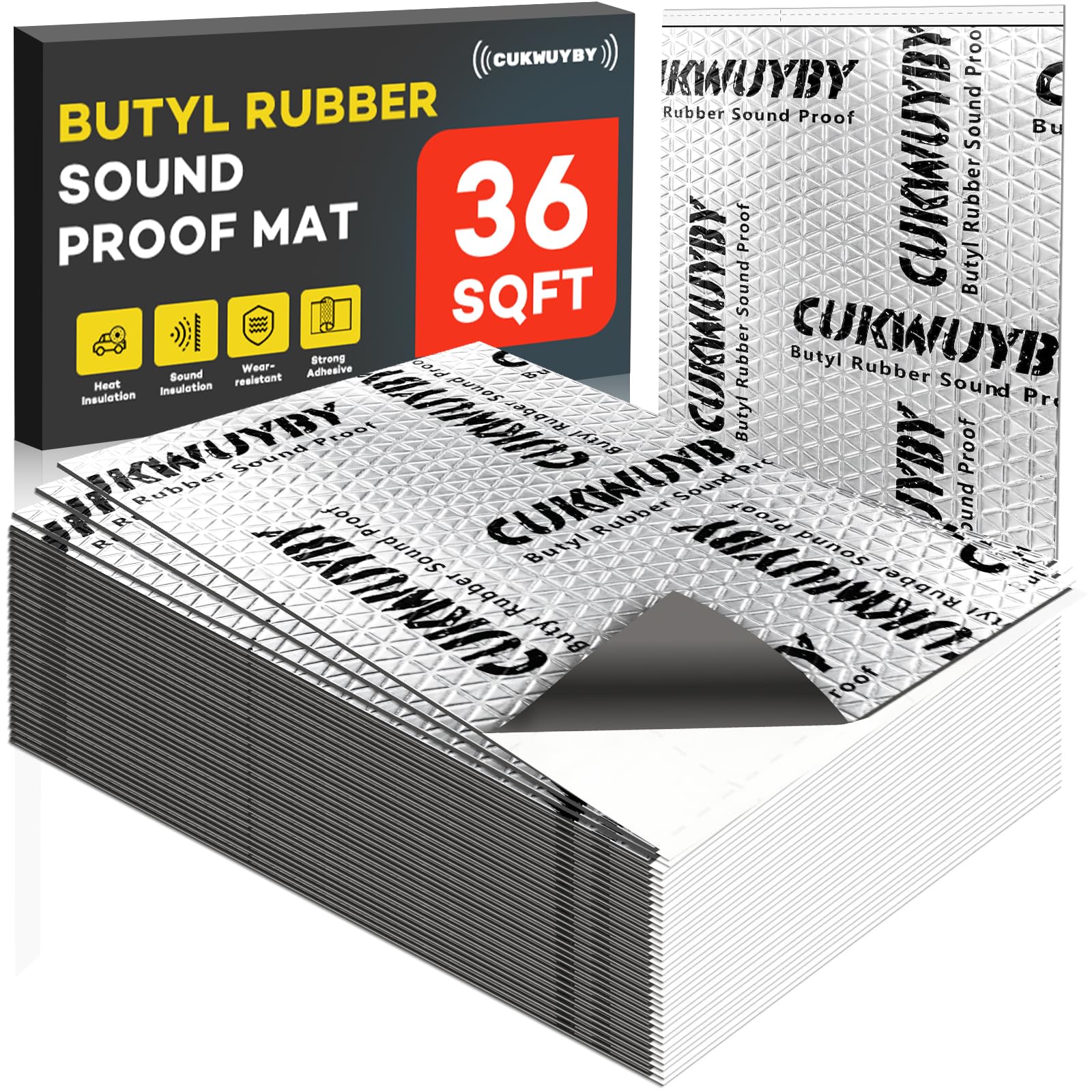
This budget-priced butyl kit takes aim at the 80-mil segment without the usual price tag. The sheets are sticky, cut cleanly, and knock down road noise and rattle on door and trunk panels. Thickness is where the compromise sits: the material may measure closer to 50 mil than 80 mil, so buyers chasing maximum resonance control should expect a lighter-weight result.

This suits price-conscious DIYers covering doors and trunk panels where coverage per dollar matters more than absolute stiffness. The kit delivers strong first-layer damping without the established-brand markup.

Pros

  • Sticky, easy to cut, and works well on doors and trunk panels.
  • Road noise and rattles drop noticeably; doors feel more solid.
  • Budget-friendly price undercuts comparable 80-mil kits.

Cons

  • Sheets may stick together in storage, so peel carefully before positioning.
  • Adhesive can release from panels exposed to high heat.
Our verdict

For a budget door-and-trunk-panel install, this is a sensible value pick.

Check Latest Price
7

Heat Blocking

VOISEN Foam 31 sqft

81 /100
Sound Score Excellent

Key details

Format
Sheets
Thickness
197 mil
Coverage Area
31 sqft
Material Type
Foil + closed-cell foam
View on Amazon

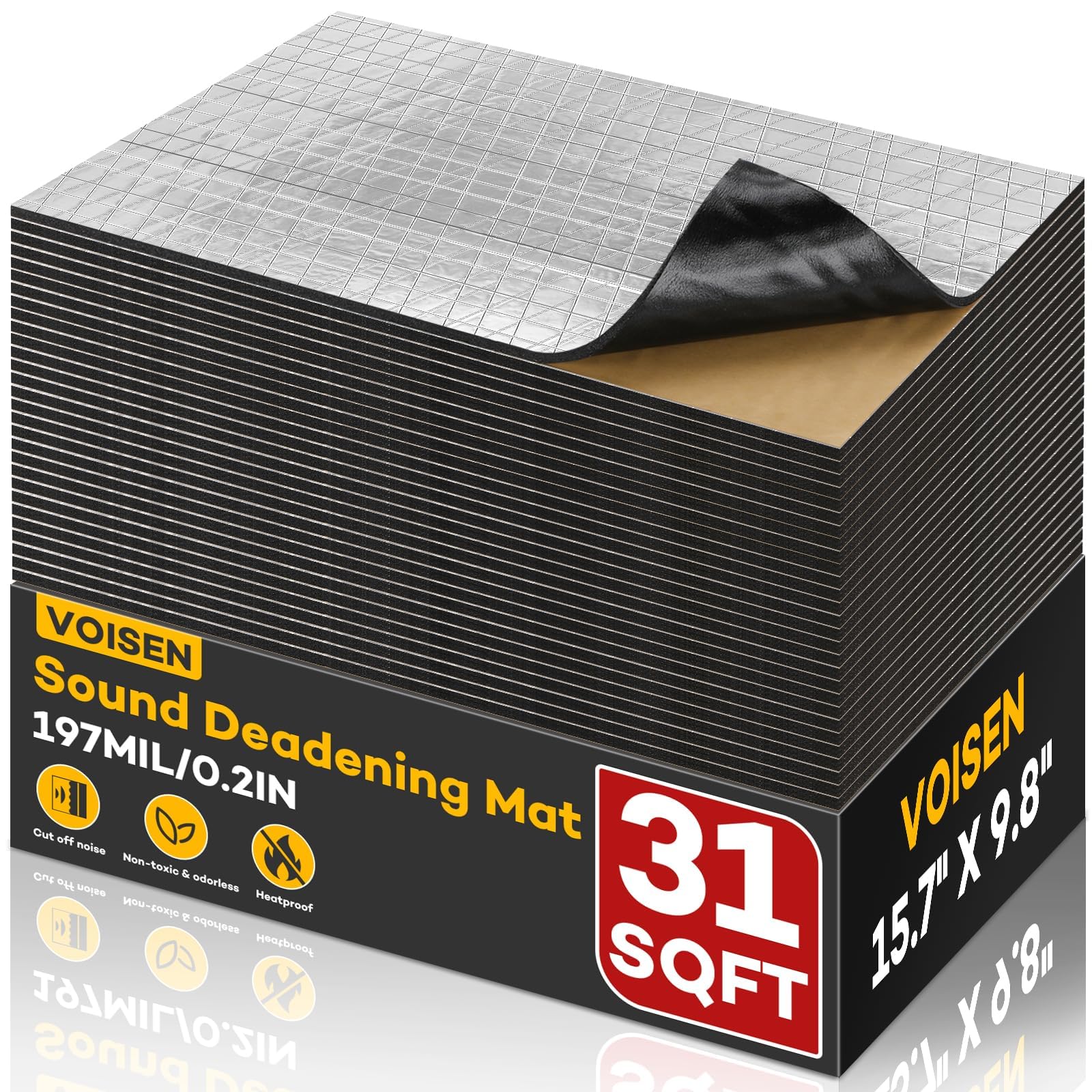
VOISEN's 197-mil foil-faced foam is a low-cost second layer for two-stage car sound builds. Installed over a separate butyl mat, it adds a meaningful heat and echo block for roof panels, firewalls, and van walls. The 31 sqft sheet kit is easy to cut and covers a long floor without pushing the budget. Despite its sound-deadening label, this is a foam barrier, not a vibration damper, so the butyl layer stays responsible for resonance control. The sticky foam can tear if repositioned, so panel prep and placement matter. As a companion layer, it is a practical way to extend a two-layer sound treatment; as a standalone deadener, its role is limited.

Pros

  • Adds a noticeable heat and echo block when installed over a butyl mat.
  • 31 sqft of sheet stock covers a long floor without pushing the budget.

Cons

  • Sticky foam can tear when repositioned, so get panel positioning right before pressing down.
  • Panel vibration remains without a separate butyl layer underneath.
Our verdict

For a van or roof build that already includes a butyl layer, this is a cost-effective second-layer heat/echo barrier.

Check Latest Price
8

Spot Rattles

AggSound Foam 6 sqft

87 /100
Sound Score Excellent

Key details

Format
Roll
Thickness
157 mil
Coverage Area
6 sqft
Material Type
Closed-cell PE foam
View on Amazon

AggSound's 6 sqft foam roll gives budget-minded buyers a low-cost way to test how closed-cell foam behaves in their car before investing in a larger two-layer build. The 157-mil PE foam is easy to cut and works well on door panels and small enclosures, which is exactly where this type of material shines.

Where it falls short of a full solution is coverage and material toughness. Six square feet covers roughly one door or a few small panels, so it is not a whole-car sound deadener. The foam can also rip if stretched or handled aggressively, which limits it to light-duty spot fixes rather than large flat panels. For anyone working on a single door or testing before buying a larger kit, that limited scope is the point.

Pros

  • Good for spot rattles on door panels, dishwashers, and small enclosures.
  • Easy to cut to size and affordable enough for testing.

Cons

  • Thin foam can rip or tear when stretched, so it needs careful handling.
  • Adhesive consistency can vary between rolls; some arrive with spotty coverage or stick to themselves.
Our verdict

Buy it if you want a budget patch roll for door-panel rattles or a small experiment before buying a larger butyl and foam kit.

Check Latest Price

How to Choose

Material Type

Choose the material for the problem you are solving. Butyl mastic is a dense, flexible pad that sticks to bare metal and stops panel vibration, which eliminates rattles and resonance. Closed-cell PE foam is a lightweight insulator that slows heat transfer and reduces echo, but it adds almost no mass and cannot stop a buzzing door skin.

Combination products sandwich a thin butyl layer onto closed-cell foam. That saves installation time and works well on roofs and van walls, but the butyl layer is often thinner than a dedicated 80-mil mat, so serious vibration control may still need an additional butyl layer.

Thickness

Thickness determines how much mass each square foot adds. A 50-mil mat is light and cheap for large floors, but thin panels that ring loudly often need two layers. An 80-mil mat is the standard for doors and trunks because it quiets most panels in one pass.

At 120 mil, the mat is denser and heavier. It delivers the strongest damping per square foot, but a box covers less area and adds real weight to the vehicle.

Coverage Area

Know your panel area before ordering. A sedan's four doors use roughly 20-30 sqft, a trunk floor adds 10-15 sqft, and a full floor pan can exceed 50 sqft. A 36 sqft kit covers doors plus trunk, not an entire car.

Measure the panels you plan to cover and add 10 percent for waste, then choose one larger kit or multiple smaller kits with matching material.

Format

Sheets are easier to cut into door-panel shapes and easier to place without waste. Rolls deliver continuous coverage on large flat floors and van walls, but they are harder to maneuver in tight areas.

For a first-time install, sheets are the more forgiving format. Use a roller to press edges down and avoid air pockets.

Heat, Adhesion, and Odor

Butyl softens in heat, so adhesion and odor show up after summer installs. A clean, dry, warm panel makes the adhesive bite immediately; fitting in cold weather is the main cause of peeling.

Some butyl products carry a tar-like odor that strengthens when panels bake in the sun. The odor usually fades, but scent-sensitive buyers should favor products with fewer odor reports.

Frequently Asked Questions