11 Best Hearing Protection for Kids in 2026: Fit, Noise, Durability

Which hearing protection for kids actually fits, blocks the right noise level, and lasts through real-world use.

Parents shopping for kids hearing protection often hit a wall: a listing says 'noise cancelling,' but the product is a passive earmuff that lowers sound rather than silencing it. That distinction matters less than matching the protection level to the event.

The harder problem is durability. Several popular children's earmuffs earn high star ratings while ear pad glue or hinge joints give way after light use. A pair that works for one fireworks show can give out before the next. Fit is the other common regret: a band too tight on a toddler or a soft strap that slides over a baby's eyes turns a yes into a no.

The useful split is therefore simple: one adjustable pair for families with mixed ages, a soft band for newborns, and discreet earplugs for school-age sensory support. That lets you buy for the child you have and the places you will actually take them.

About the Sound Score: This comparative score is calculated from a product's published customer rating and review volume. It is not a laboratory measurement or a hands-on test result.

1

Best Overall

Dr.meter EM100

93 /100
Sound Score Outstanding

Key details

Form Factor
Over-ear earmuffs
Headband Fit
Toddler-to-adult adjustable
Noise Reduction
SNR 27.4 dB
View on Amazon

The Dr.meter EM100 is a mixed-age passive hearing protector built for loud public events. An adjustable headband spans toddler through adult sizing, and the foldable ABS shell packs into a backpack or stroller. The published 27.4 dB SNR rating drops fireworks, motorsport, and concert noise into a safer range, while the memory foam pads hold voices in the same muffled layer rather than erasing them. PU leather outer material and foam cushioning keep the seal comfortable for event-length wear. ANSI S3.19 and CE EN 352-1 certification backs the attenuation claim.

This is the default pick for families attending monster truck shows, parades, fireworks, and concerts with a child old enough to wear a hard headband. Toddlers through adults can share one set without carrying multiple sizes. The same muffling suits sensory-sensitive kids who need a buffer at school assemblies or public events. The boundary is newborn soft-band comfort: babies under two who need a softer fit should use the baby-specific protector in this set instead. The headband can feel tight out of the box and may need gentle stretching before first use, so kids who dislike clamp pressure will need a break-in session or a softer style.

Pros

  • Certified 27.4 dB SNR protection lowers noise at fireworks, concerts, and motorsports.
  • Adjustable headband spans toddler to adult sizing in one foldable package.
  • Memory foam ear cups keep long-event noise muffling comfortable.

Cons

  • Moving the headband between toddler and adult sizes can feel stiff until the band is worked in.
Our verdict

For monster truck shows, fireworks, and concerts with a toddler or older child, this is the certified ear protection to grab first.

Check Latest Price
2

Best for Babies and Toddlers

BANZ Baby Earmuffs

95 /100
Sound Score Outstanding

Key details

Form Factor
Over-ear earmuffs
Headband Fit
0-2 years adjustable
Noise Reduction
26 dB NRR
View on Amazon

The BANZ Baby Earmuffs take a firmer over-ear approach than soft-band newborn solutions: a 26 dB NRR shell shaped for babies and young toddlers, with a fit they accept for long event wear. That tolerance shows in loud settings such as fireworks, concerts, and races where little ones can stay settled or sleep through the noise.

Families with a newborn-to-2 focus get strong infant comfort and sleep results. The main caveat is the age band: plan to move to a youth-sized model around age 2-3, and the slider hardware feels less premium. Choose this for baby-specific event protection rather than a single protector that grows with the child.

💡 Slide the plastic adjusters gently and re-check the fit before each loud event.

Pros

  • Strong noise reduction across concerts, fireworks, and race environments without total silence
  • Age-specific fit that newborns and young toddlers tolerate for extended stretches
  • Babies can sleep through loud events when cups are properly seated

Cons

  • Fit can run snug near age 2-3, and the plastic slider hardware can feel less premium
Our verdict

Best matched to parents attending loud events during the first two years rather than a long-term all-ages solution.

Check Latest Price
3

Best Soft-Band for Newborns

Alpine Muffy Baby

89 /100
Sound Score Excellent

Key details

Form Factor
Soft-band earmuffs
Headband Fit
Velcro soft headband
Noise Reduction
23 dB NRR
View on Amazon

The Alpine Muffy Baby uses a Velcro soft headband with no hard parts, sized from newborn up to age 4 and rated at 23 dB NRR. That design avoids the rigid shell of a structured baby earmuff and centers on a gentler profile for an infant head, which can help babies stay asleep during fireworks or events.

Best for newborns and calm younger infants whose parents prioritize low-pressure headband comfort and supervised wear. The soft band can slide over the eyes or slip during active movement, so this is not the choice for an active toddler who will fight the straps.

Pros

  • Soft no-hard-parts headband keeps newborns comfortable enough to sleep during loud events.
  • Real-world attenuation is strong enough for events while still allowing some awareness.
  • Velcro sizing adjusts across infant head sizes during the first years.

Cons

  • One-person placement on a wiggly baby can take extra adjustment.
  • In very loud settings, the 23 dB NRR is a moderate ceiling rather than maximum protection.
Our verdict

This is a comfort-first infant band for parents who want a softer no-hard-parts profile and can supervise fit during events.

Check Latest Price
4

Best High-Noise Protection

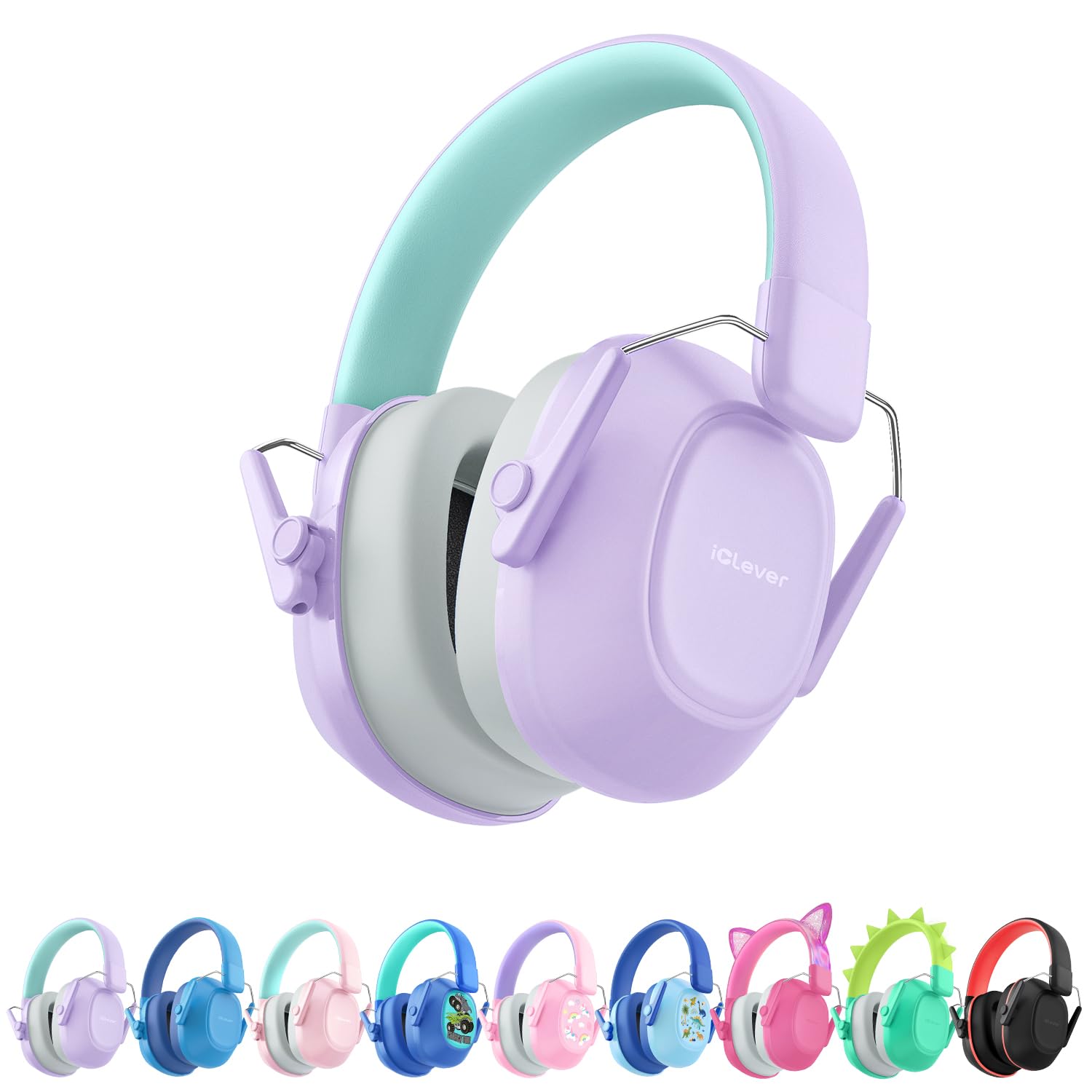
iClever EM01

92 /100
Sound Score Outstanding

Key details

Form Factor
Over-ear earmuffs
Headband Fit
Telescopic arms 38 mm
Noise Reduction
29 dB SNR
View on Amazon

This model separates itself from the top pick by prioritizing certified 29 dB SNR attenuation and a deeper telescopic adjustment range. The 38 mm per side extension and slow-rebound foam padding make the fit workable for older kids, teens, and some small adults. That focus suits loud concerts, fireworks, motorsports, and sensory-sensitive routines where higher passive protection matters more than having the broadest age band.

This is best for sensory-sensitive older kids, teens, and small adults whose families want certified protection without overspending. The boundary is durability under rough handling and initial adjustment: rough handling can bend some units, and the telescopic arms can feel stiff until the correct size is set. That makes it a better match for careful users than for rough young toddlers.

💡 Set the telescopic arms to the child's size before the first outing; the mechanism can feel stiff until it is positioned.

Pros

  • Certified 29 dB SNR reduces loud-event noise for older kids and teens.
  • Slow-rebound foam padding supports comfortable longer wear for sensory-sensitive users.
  • Telescopic arms extend up to 38 mm per side for a grow-with-child fit.

Cons

  • Adjustment arms can feel stiff or confusing until the size is set correctly.
  • Rough handling can bend some units, so younger toddlers are outside its strongest fit.
Our verdict

The right runner-up for maximum certified attenuation in a grow-with-child fit, provided the user is old enough to handle gear carefully.

Check Latest Price
5

Best Discreet Earplugs for School

Loop Engage Kids 2

92 /100
Sound Score Outstanding

Key details

Form Factor
In-ear earplugs
Headband Fit
Four ear tips, ages 6-12
Noise Reduction
16 dB SNR
View on Amazon

The Loop Engage Kids 2 takes a different path from the moldable silicone water plugs in this set: it reduces everyday classroom and outing noise while preserving speech intelligibility. Acoustic filtering softens background chatter, assemblies, and busy spaces without creating the muffled feeling that makes instruction harder to follow.

This is for school-age kids, roughly 6 to 12, who need discreet sensory support and can tolerate in-ear wear. The 16 dB SNR is intentionally mild and not suitable for very loud events like motorsports or front-row concerts; it trades maximum attenuation for speech clarity and all-day comfort. Kids under 6 are outside the intended range.

Pros

  • Softens everyday background noise while keeping speech intelligible in classrooms and assemblies.
  • Comfortable for long daily wear and stays put during active school days.
  • Comes with four ear tip sizes and a keychain carry case for smaller ear canals.

Cons

  • The smallest included ear tips may still be too large for some small ear canals.
  • 16 dB SNR is intentionally mild and may not cover very loud events like motorsports or front-row concerts.
Our verdict

The right call for school-age sensory support and classroom focus where preserving speech clarity matters more than maximum noise blocking.

Check Latest Price
6

Best for Swimming and Water

Mack's Kids Earplugs

89 /100
Sound Score Excellent

Key details

Form Factor
Moldable silicone earplugs
Headband Fit
Moldable silicone, under 6
Noise Reduction
22 dB NRR
View on Amazon

NRR 22 and a six-pair pack make these kid-size moldable silicone plugs a water-protection pick for swimming, bathing, and ear-tube care. The putty molds to small ear openings and takes the edge off moderate noise for travel and low-key events, without bulky cups.

Children six and under and small adults get the most from this size. Moldable silicone can fall out during active play or tangle in hair, so water-first and moderate-noise use is the boundary; active high-energy kids are better served by the over-ear default in this set.

💡 Press the putty flat over the ear canal and keep longer hair pulled back during active water play.

Pros

  • Molds to small ears for swimming, bathing, and ear-tube protection.
  • Reduces moderate noise for travel and low-key loud events.
  • Six pairs deliver budget-friendly value for kids six and under.

Cons

  • Not built for high-decibel motorsports or concerts where deeper NRR and secure placement matter.
Our verdict

The water-first in-ear option for kids six and under, especially around ear tubes and moderate noise.

Check Latest Price
7

Toddlers

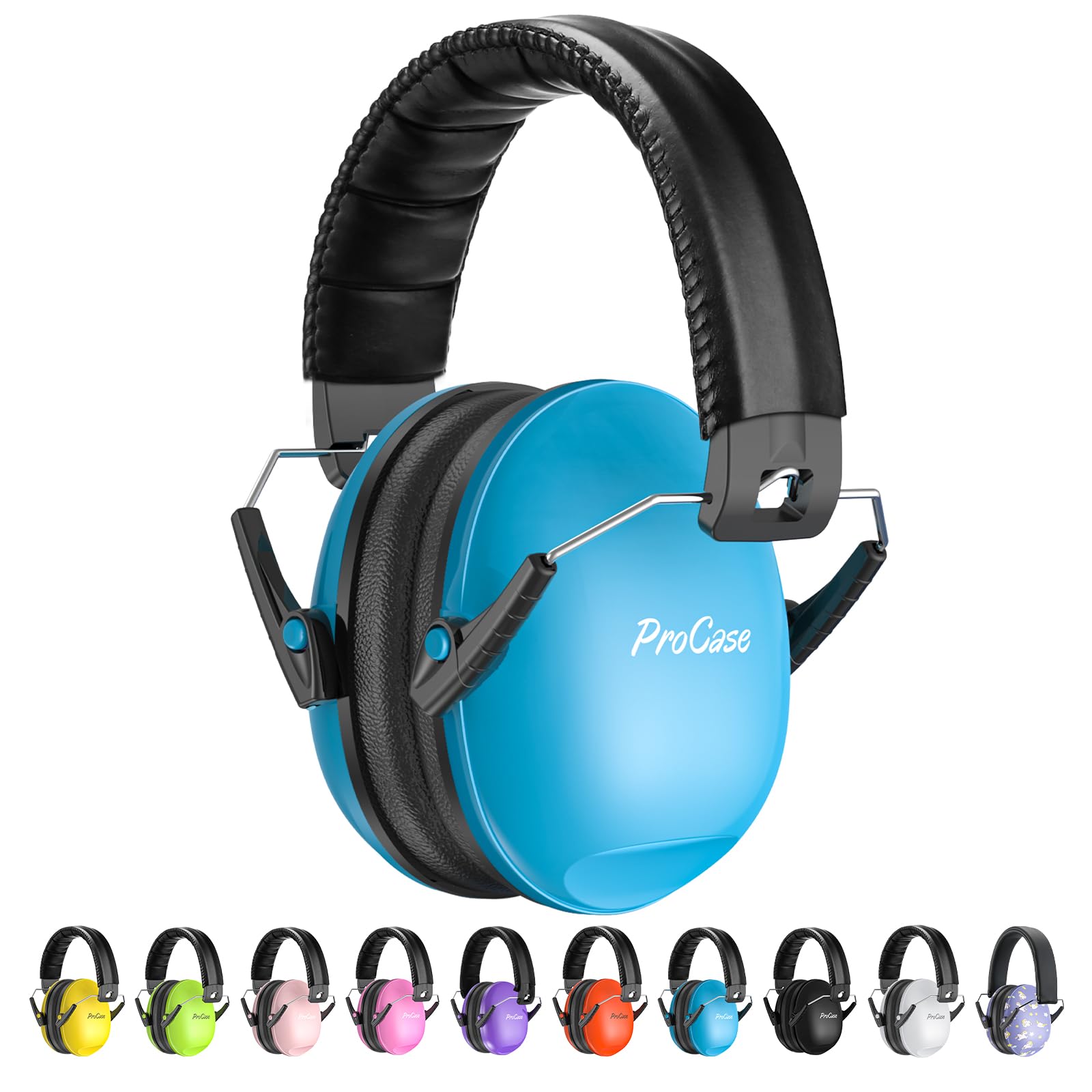
ProCase Kids Earmuffs

93 /100
Sound Score Outstanding

Key details

Form Factor
Over-ear earmuffs
Headband Fit
32 mm telescopic arms
Noise Reduction
27 dB SNR
View on Amazon

ProCase Kids Earmuffs deliver 27 dB SNR with a compact folding design and ANSI/CE certification, making them a practical budget pick for toddler event use and sensory-sensitive children. The main limitation is initial clamp pressure that may need stretching, which keeps them from the top pick for kids who cannot tolerate a break-in period.

Pros

  • Drops ambient noise enough for monster jams, fireworks, and theme parks.
  • A low-cost starter earmuff for sensory-sensitive toddlers and kids with autism.

Cons

  • Headband clamp pressure can run tight and may need stretching before wear.
Our verdict

Pick these for toddler monster-jam, fireworks, or theme-park outings when a compact folding pair at this price is the priority; babies under 2 need a different shape.

Check Latest Price
8

Fireworks

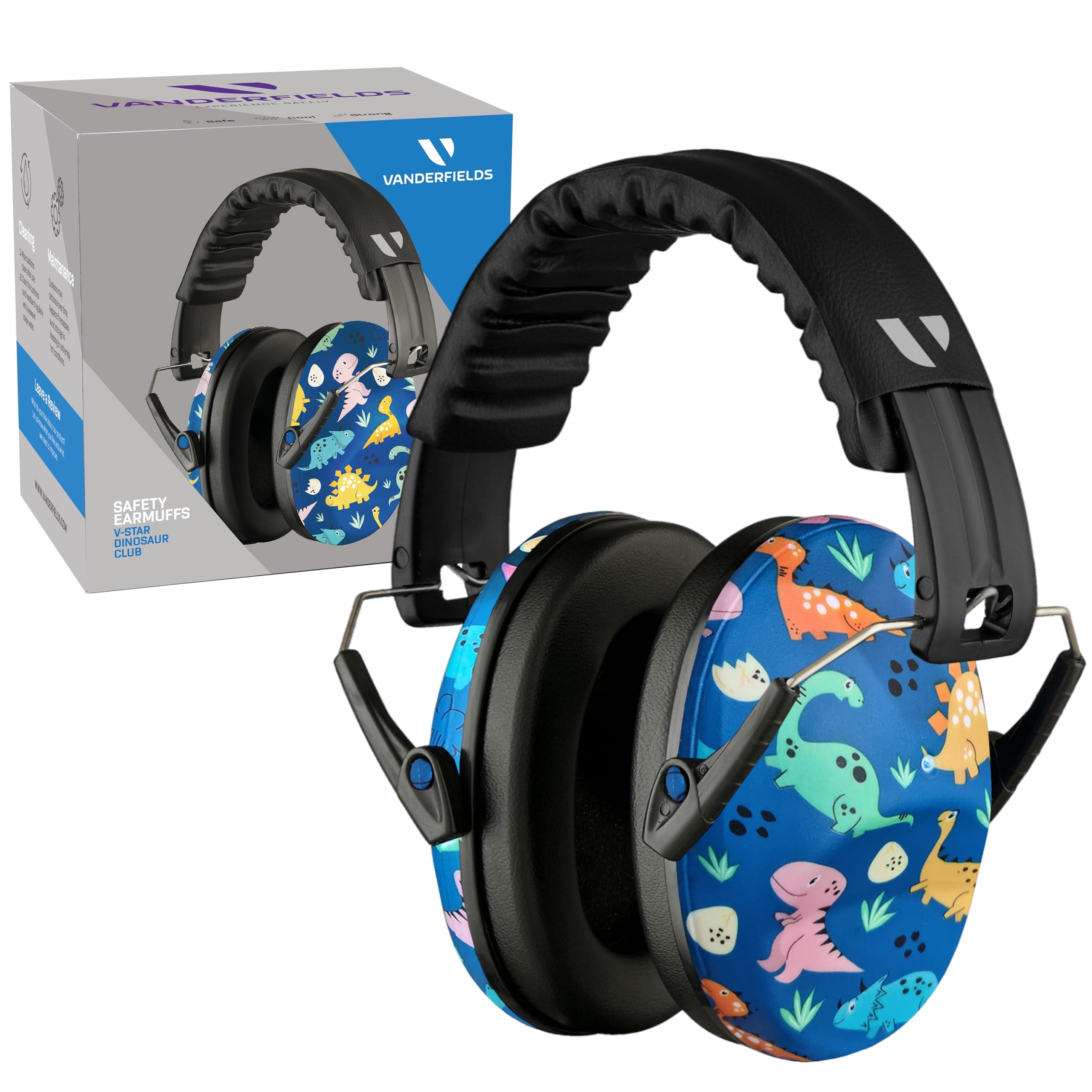
Vanderfields Kids Earmuffs

91 /100
Sound Score Outstanding

Key details

Form Factor
Over-ear earmuffs
Headband Fit
Stretch-to-fit
Noise Reduction
31 dB at 2 kHz
View on Amazon

The Vanderfields Kids Earmuffs block noise effectively at monster truck events, fireworks, and other high-decibel outings, while staying comfortable for extended wear. Sparse official NRR/SNR rating data and a fit that can need adult help for younger children to place keep this from being a top-tier choice.

Pros

  • Blocks loud event noise effectively for monster trucks, fireworks, and outdoor shows.
  • Strong budget value for occasional loud outings with toddlers and young kids.

Cons

  • For some four- and five-year-olds, the fit can be quite snug despite the flexible design.
Our verdict

A practical budget pick for occasional high-decibel family outings with toddlers and young kids.

Check Latest Price
9

Moderate Noise

BBTKCARE Baby Earmuffs

93 /100
Sound Score Outstanding

Key details

Form Factor
Over-ear earmuffs
Headband Fit
3 months to 3 years
Noise Reduction
23 dB NRR
View on Amazon

The BBTKCARE baby earmuff pairs a 23 dB NRR with a lightweight build that babies can tolerate through parades, planes, and light fireworks. Strong infant comfort and sleep performance make it useful for moderate event noise. That lower noise reduction sets a clear boundary: high-decibel motorsports and close-range fireworks need heavier protection.

Pros

  • Effective for babies at parades, fireworks, and races.
  • Comfortable enough that babies can sleep through loud events like parades and light fireworks.

Cons

  • Fit can vary by head shape, making a short trial run useful before long events.
Our verdict

Parents seeking a baby-specific earmuff for moderate-duration outings get a lightweight option that prioritizes comfort and sleep tolerance.

Check Latest Price
10

High-NRR Babies

Mumba Baby Earmuffs

93 /100
Sound Score Outstanding

Key details

Form Factor
Over-ear earmuffs
Headband Fit
3 months to 3 years
Noise Reduction
31 dB NRR
View on Amazon

The Mumba Baby Earmuffs pair a 31 dB NRR / 26 dB SNR claim with a 103 g zero-pressure design that keeps infants and younger toddlers comfortable through fireworks, parades, and flights. Head shape can push the fit toward slipping or snugness. Parents expecting complete silence from passive protection may find it less total than assumed.

Pros

  • Delivers strong noise reduction for fireworks, parades, and plane cabins.
  • Lets babies and young toddlers sleep through loud events without added bulk.

Cons

  • Headband fit can slip or feel snug depending on head shape.
Our verdict

For parents of babies and younger toddlers who prioritize high passive attenuation at a mid-range price over premium extras, this fits the event-use role.

Check Latest Price
11

Kids 3-12

PROHEAR 032

91 /100
Sound Score Outstanding

Key details

Form Factor
Over-ear earmuffs
Headband Fit
3 to 12 years
Noise Reduction
25 dB NRR
View on Amazon

Bright colors and foldable cups make this easy to pack for fireworks, school events, and sensory breaks. The 25 dB rating covers loud environments. Fit can clamp tight on some kids and run large on younger toddlers. Early hinge or ear pad issues can appear under rough use, so this fits occasional travel and event use rather than daily heavy wear.

Pros

  • Lowers loud-event noise to safer levels for fireworks and school events.
  • Bright color and foldable cups make it easy to pack and spot in a bag.

Cons

  • Fit and durability vary, so sizing checks and gentler handling matter.
Our verdict

This fits families needing an inexpensive foldable earmuff for kids 3-12 at occasional loud events, provided the fit is checked before an outing.

Check Latest Price

How to Choose

Noise Reduction Rating

NRR and SNR describe how much sound a passive protector cuts in testing, but the numbers are not interchangeable with silence. A 12 dB NRR softens a crowded store; a 23-29 dB earmuff is the baseline for fireworks or monster trucks.

Pay attention to whether the rating is certified and whether the listing cites NRR, SNR, or a frequency-specific figure such as 31 dB at 2 kHz. Frequency-specific numbers sound high but do not mean full-spectrum protection.

Headband Fit and Adjustability

A fixed or cheaply adjustable band can create too much clamp pressure on a toddler or slide off a newborn's rounder head. The physical consequence is an uneven seal around the ear, which cuts real-world attenuation well below the label.

Soft-band styles remove hard parts and work well for babies, but they trade stay-put security. For older kids, telescopic arms that add measured width are more useful than a generic age range.

Ear Cushion and Headband Comfort

Comfort is not about pampering; it determines whether a child keeps the protector on for 20 minutes or two hours. Thin or stiff ear cushions create pressure points, and a child who yanks the muffs off gets zero attenuation.

Memory-foam padding and deep ear cups help, but the trade-off is that thicker pads can increase heat and make small heads feel clamped.

Build Durability

Ear pad glue and folding joints are the two most common weak points in budget kids earmuffs. Thin plastic hinges concentrate stress every time the band is pulled wide or folded for storage.

A pair with clean certification can still give out if the cushion detaches before the next show. Check for solid hinge material and whether replacement ear pads are available; for frequent use, consider a backup pair.

Form Factor

Over-ear earmuffs are easier for parents to guide onto a child and offer more predictable sealing, but in-ear plugs are less conspicuous for school-age sensory needs.

Moldable silicone plugs handle water and moderate noise, but they trade retention during active play. The right form factor depends on whether the child can leave them in place without adult help.

Frequently Asked Questions