9 Best Open-Ear Earbuds for Running in 2026: That Actually Stay Put

Which open-ear earbuds for running actually hold up through sweat, wind, and long miles — and which fit lasts.

Open-ear running earbuds solve one problem by creating another: the open design keeps traffic and surroundings audible, but it also means no seal, no isolation, and thinner bass. Wind noise cuts into volume, and a fit that feels secure in the kitchen can loosen during a hard stride.

The bigger trap is the spec sheet. Total battery numbers often count the charging case, not the earbuds, so a headline like 80 hours can still mean only 8 hours before a top-up. Durability beats big numbers: the most common issue is not weak sound but one bud going silent or a case that stops charging.

This guide separates the earbuds that stay put from the ones that don't, and the premium choice from the value choice. If you run near traffic, expect to trade some volume for awareness; if you run long, prioritize per-charge runtime and water resistance. Get those decisions right and training runs get easier.

About the Sound Score: This comparative score is calculated from a product's published customer rating and review volume. It is not a laboratory measurement or a hands-on test result.

1

Best Overall Bone-Conduction Open-Ear

SHOKZ OpenRun Pro 2

89 /100
Sound Score Excellent

Key details

Battery
12H per charge
Bluetooth
5.3
Sound Type
Bone conduction
Form Factor
Bone-conduction band
View on Amazon

DualPitch dual drivers give the OpenRun Pro 2 the clearest open-ear audio in this set: vocals stay sharp, and the dedicated bass driver adds body that other bone-conduction models lack. That distinction matters because open-ear designs trade away bass for traffic awareness; this one keeps both. Notes separate well enough at moderate volume that podcasts and playlists both sound full rather than tinny. The 12-hour single-charge battery covers marathon training blocks without a charging case, and it leaves enough reserve for a week of commutes if you charge every other day. Bluetooth 5.3 holds a steady connection through open road stretches and gym loops.

The 30.3g frame stays put on high-cadence runs, and the wraparound band does not pinch or pull on glasses. Wind-resistant dual mics keep call partners audible on open roads, even with a light breeze. The reflective strip adds visibility for low-light sessions, and IP55 sweat resistance covers hard interval work and light rain. Swimmers should pick a fully waterproof model, because this is rated for sweat and splashes, not submersion. Comfort holds over multi-hour sessions, and the band's open form leaves your ear canals free of pressure.

This is a premium-priced pick for runners and cyclists who treat traffic awareness as part of the experience. The open-ear max volume is modest next to in-ear earbuds, and the price sits at the top of the set; for anyone who needs sealed sound or deep sub-bass, that boundary matters. Budget-conscious buyers can save by dropping to the standard OpenRun, but they give up the dual-driver sound and the extra four hours of battery. That difference adds up on long training runs where music and navigation prompts need to stay interesting. For athletes who want to hear approaching cars while still enjoying real music, this tradeoff is the whole point.

Build quality feels dense for a band this light, and the physical buttons give predictable control mid-stride. There is no charging case to keep track of on race days; one USB-C cable restores the next 12-hour training block. The frame's flex holds position without clamping pressure, which suits riders who pair it with sunglasses or a helmet. Controls sit where a thumb expects them, and physical buttons stay usable with gloves or sweaty fingers.

💡 Rinse and dry the charging contacts after heavy sweat sessions to keep recharging consistent.

Pros

  • Dual-driver open-ear sound keeps vocals clear and adds real bass.
  • Lightweight band stays secure through high-cadence running and cycling.
  • 12-hour charge covers marathon training without a charging case.
  • Physical build and wind-resistant mics handle sweaty training.

Cons

  • In very loud outdoor environments, nearby traffic can overpower the open-ear output.
  • Battery charging can become inconsistent on individual units after months of heavy use.
Our verdict

For runners who want open-ear traffic awareness plus real musicality and marathon-length battery, the OpenRun Pro 2 is the strongest fit in this set.

Check Latest Price
2

Best Value Shokz

SHOKZ OpenRun

91 /100
Sound Score Outstanding

Key details

Battery
8H per charge
Bluetooth
5.1
Sound Type
Bone conduction
Form Factor
Bone-conduction band
View on Amazon

The OpenRun delivers IP67-rated bone conduction at a more accessible price than the dual-driver Shokz flagship, and it keeps the same open-ear running idea: no ear canal seal, no isolation, just a 26g titanium band that leaves traffic audible. That combination makes it the sweat-heavy runner's pick in the Shokz lineup when the flagship's audio upgrades and longer battery are not worth the extra cost.

The 26g frame and contoured ear hooks stay locked in place through interval sessions, and that rating handles sweat-heavy training without hand-wringing about moisture. After a muddy run, a rinse under the tap is enough to reset it before the next workout.

This is the right fit for runners and cyclists who want premium open-ear awareness and a secure frame without paying flagship price. Bass is modest, and the magnetic charging connection can become less consistent as the unit ages, so the OpenRun favors clarity and safety over low-end punch.

Bluetooth 5.1 pairs quickly and holds a clean connection across a full workout. The magnetic quick-charge cable snaps on for a top-up between sessions, and the lightweight band disappears enough that the only reminder it is there is the music in your ears.

💡 If you train on loud roads, keep the volume moderate and let the open-ear design preserve awareness.

Pros

  • Open-ear design keeps traffic and surroundings audible without sealing the ear canal.
  • The 26g titanium frame is light enough to forget but stays fixed during sprints.
  • IP67 protection accepts sweat, rain, and post-run rinses without extra care.
  • Bluetooth 5.1 pairs quickly and holds a clean connection through workouts.

Cons

  • Eight hours per charge covers typical training runs but not all-day endurance events.
  • The open-ear volume ceiling sits below in-ear earbuds, so heavy traffic may overpower it.
Our verdict

The OpenRun is the training pair for runners who want IP67 Shokz bone conduction without paying for the dual-driver flagship's extra battery life.

Check Latest Price
3

Best Budget Adjustable Hook

Soundcore V20i

89 /100
Sound Score Excellent

Key details

Battery
8H per bud, 36H case
Bluetooth
5.4
Sound Type
Dynamic open-ear
Form Factor
Open-ear earhook, adjustable
View on Amazon

The Soundcore V20i pairs 16mm open-ear drivers with four-position rotating hooks, giving runners a secure fit and fuller bass than the top pick's bone-conduction design. It also brings a 36-hour charging case, IP55 sweat protection, and Bluetooth 5.4 multipoint to the entry level, so budget-minded runners get most of the open-ear convenience without the flagship cost.

The ear hooks click into four positions, so you can tune the angle before a run and hold the earbuds steady through tempo work. The case covers a week of daily sessions at around eight hours per charge, and multipoint lets you stay connected to a phone and a running watch at the same time. On normal roads and trails, the open-ear sound keeps traffic audible while the drivers remain clear, and the soft hook contact stays comfortable over longer efforts.

This is the pair for runners who want open-ear awareness and a hook fit without paying for a premium bone-conduction frame. Runners who prioritize long-term unit consistency over low price may want the top pick; this is a budget-first open-ear for daily training, with enough battery to cover recovery runs and speed sessions alike.

Pros

  • Open-ear sound stays clear with richer bass than most budget designs in this weight class.
  • Four-position hooks rotate for a secure fit that holds through interval work.
  • Comfort holds for all-day wear and long runs without ear fatigue.
  • The 36-hour case and easy pairing keep weekly training hassle-free.

Cons

  • In loud city traffic, the V20i's open-ear output may not cut through; quieter loops are its best setting.
  • Occasional one-side audio loss or charging case trouble can surface after extended use.
Our verdict

For runners who want open-ear sound and a hook fit without leaving the budget tier, the V20i is the case-battery leader in this set.

Check Latest Price
4

Best Ultralight Clip-On

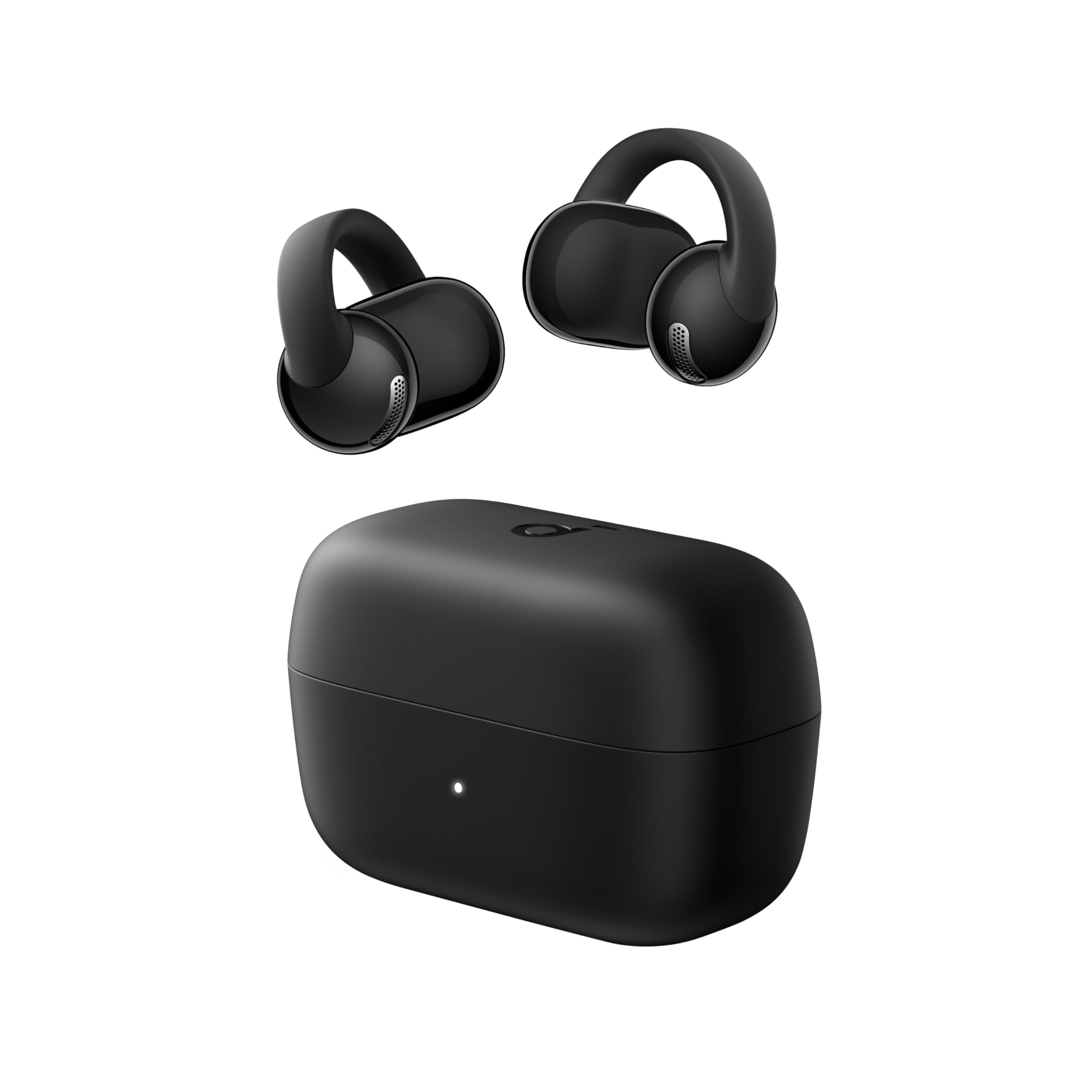
TOZO OpenEarRing

89 /100
Sound Score Excellent

Key details

Battery
10H per bud, 40H case
Bluetooth
5.4
Sound Type
Dynamic open-ear
Form Factor
Open-ear clip-on
View on Amazon

At 5.1g per bud, the OpenEarRing is a near-weightless clip-on that avoids the headband pressure of behind-the-neck bone-conduction models. It combines a 32-band EQ, an LED battery-display case, and 10-hour single-charge playback at a budget price. This is a separate clip-on form, so it follows the ear's contour rather than wrapping around the skull, and the clip sits lightly enough that glasses arms don't create pressure points on long runs.

Speech and vocals stay clear during runs, and the open-ear tuning keeps traffic and surroundings audible. The IPX5 rating covers sweat and light rain, and the 40-hour case total stretches across a full training week. For a clip-on this light, the 10-hour single-charge runtime is genuinely useful.

This is for glasses wearers and runners who want a barely-there clip rather than a headband, and who accept occasional Bluetooth hiccups and a shape-dependent fit. The app's 32 EQ modes let you shape the sound around the open-ear tuning, so the default profile can be adjusted to taste. Long-term durability under heavy use is an open question; if that's a deal-breaker, a pricier bone-conduction model with a more established frame is the safer route.

Pros

  • Clear open-ear sound with strong vocal presence for the price.
  • Solid build quality and value compared with far pricier open-ear buds.
  • Ultralight clip-on design is comfortable and glasses-friendly.
  • Secure fit without in-ear pressure.

Cons

  • The open-ear tuning is bass-light, so low-end-heavy playlists won't get much punch.
  • There is no ear seal, so loud environments can drown out the music.
Our verdict

This is the budget clip-on to start with for runners who want an unobtrusive open-ear fit and full awareness on the road.

Check Latest Price
5

Best Secure Clip-On for Workouts

Soundcore C50i

86 /100
Sound Score Excellent

Key details

Battery
8H per bud, 28H case
Bluetooth
6.0
Sound Type
Dynamic open-ear
Form Factor
Open-ear FlexiClip
View on Amazon

The C50i pairs a secure FlexiClip fit with a 12mm dynamic driver tuned for low-end punch, giving open-ear runners more bass presence than typical bone-conduction units. The IP55 rating covers sweat and light rain, so this clip-on is at home on roads, trails, and gym floors.

A full charge lasts around eight hours, with the case adding roughly twenty more, so the 28-hour total covers a full training week without hunting for a charger. The FlexiClip stays put through intervals and hill repeats without constant re-seating, and the open-ear shape keeps traffic noise and workout cues in range. Call quality gets a boost from AI-enhanced mics, which is useful for post-run check-ins.

This is for runners who want the airy feel of open-ear sound without the thin tone of bone conduction. The tradeoff is that this is a budget unit, so checking battery and Bluetooth behavior early pays off. If you want a connected behind-neck band, this separate-clip design is not that.

💡 Keep the paired phone in a front pocket or armband during runs to minimize Bluetooth cutouts.

Pros

  • Open-ear sound with noticeably more low end than bone-conduction rivals.
  • Low-fatigue clip-on stays comfortable over long sessions and keeps ears open to traffic.
  • Secure FlexiClip fit holds through running and gym workouts without constant re-seating.
  • Branded open-ear clip-on at a price that undercuts typical sport-focused alternatives.

Cons

  • Left-bud charging can be inconsistent in the case; the bud may not top up fully.
  • Connection cutouts can surface during workouts when the phone is in a rear pocket.
Our verdict

The C50i is a smart buy for runners who want open-ear awareness, a stay-put clip, and bass-leaning sound without paying premium prices.

Check Latest Price
6

Best Budget Bone Conduction

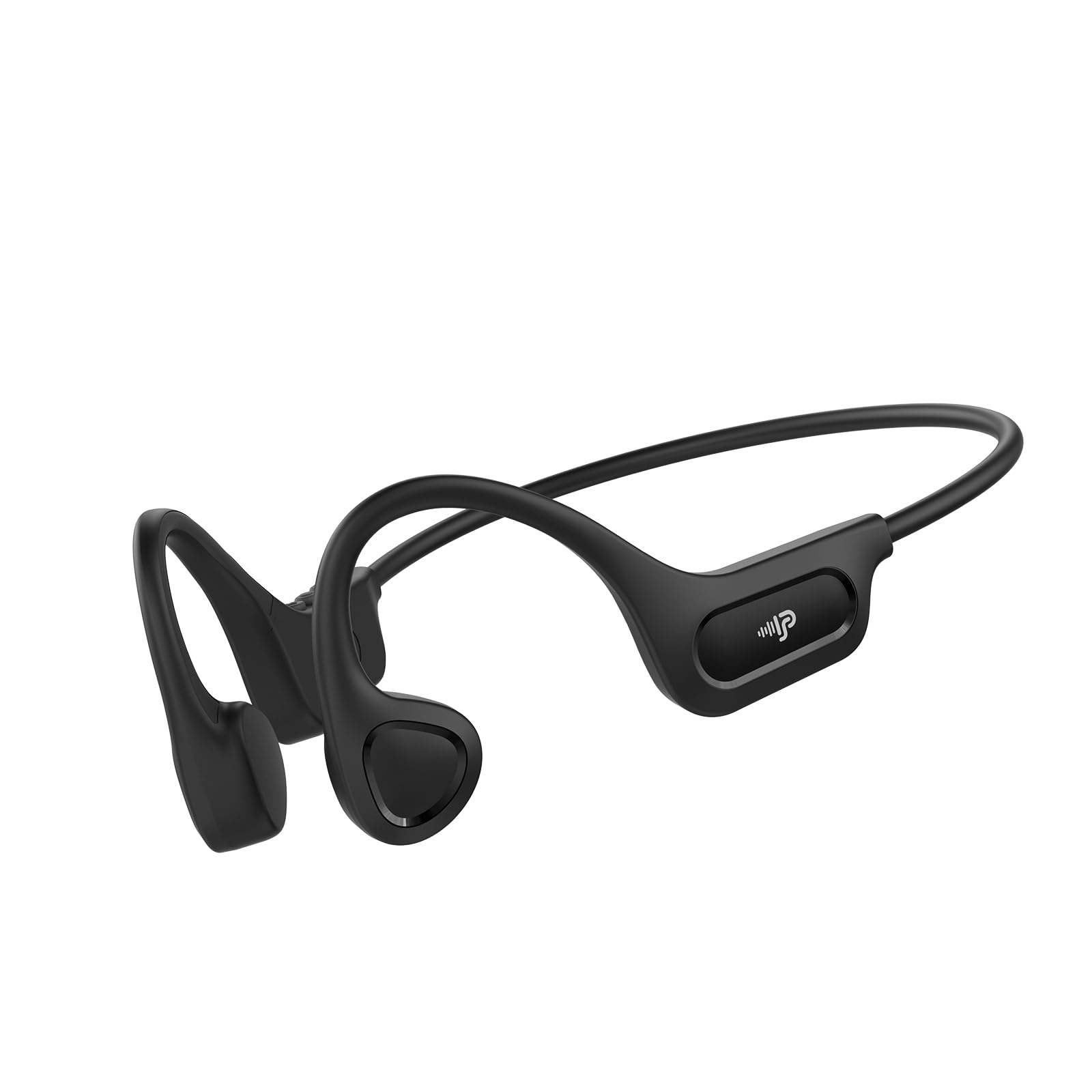
PSIER X23

83 /100
Sound Score Excellent

Key details

Battery
10H per charge
Bluetooth
6.0 (claimed)
Sound Type
Bone conduction
Form Factor
Bone-conduction band
View on Amazon

The PSIER X23 keeps the bone-conduction essentials in place for runners at a budget price: a 23g frame, 10-hour battery, IPX5 sweat resistance, and open-ear awareness. That combination puts it at a fraction of the cost of the premium dual-driver flagship while preserving the main reason to go open-ear: hearing your surroundings without in-ear isolation.

Open-ear sound stays clear at normal volumes with minimal leakage, so traffic and conversation remain audible. The 13mm driver doesn't chase deep bass, a standard bone-conduction tradeoff, but the light frame and secure fit keep the focus on running.

The 10-hour battery covers several training sessions, and USB-C charging gets the band back to full quickly. There is no charging case to lose, which keeps the package simple; the band stays in place through road miles and intervals.

This is for first-time bone-conduction buyers who want situational awareness without moving up to the premium flagship. The controls can trigger accidentally and the fit varies by head shape, so those are boundaries to check before a long run. If they pass, the 23g frame and 10-hour battery make it a practical training companion for outdoor runs.

💡 Position the band so the control panel sits behind the ear, and press with deliberate taps.

Pros

  • Open-ear sound stays clear with minimal leakage, keeping traffic and conversation audible.
  • Secure snug fit holds the band in place through running motion without constant adjustment.
  • Ten-hour battery with fast USB-C charging covers multiple training days without a case.
  • Featherweight 23g frame reduces fatigue during longer outdoor sessions.

Cons

  • A stray brush against the control panel can pause or skip tracks during a run.
  • The behind-neck band can feel bulky or press on certain head shapes after extended wear.
Our verdict

For runners who want open-ear awareness without premium-priced gear, the PSIER X23 brings the essential training features to the budget tier.

Check Latest Price
7

Budget Runners

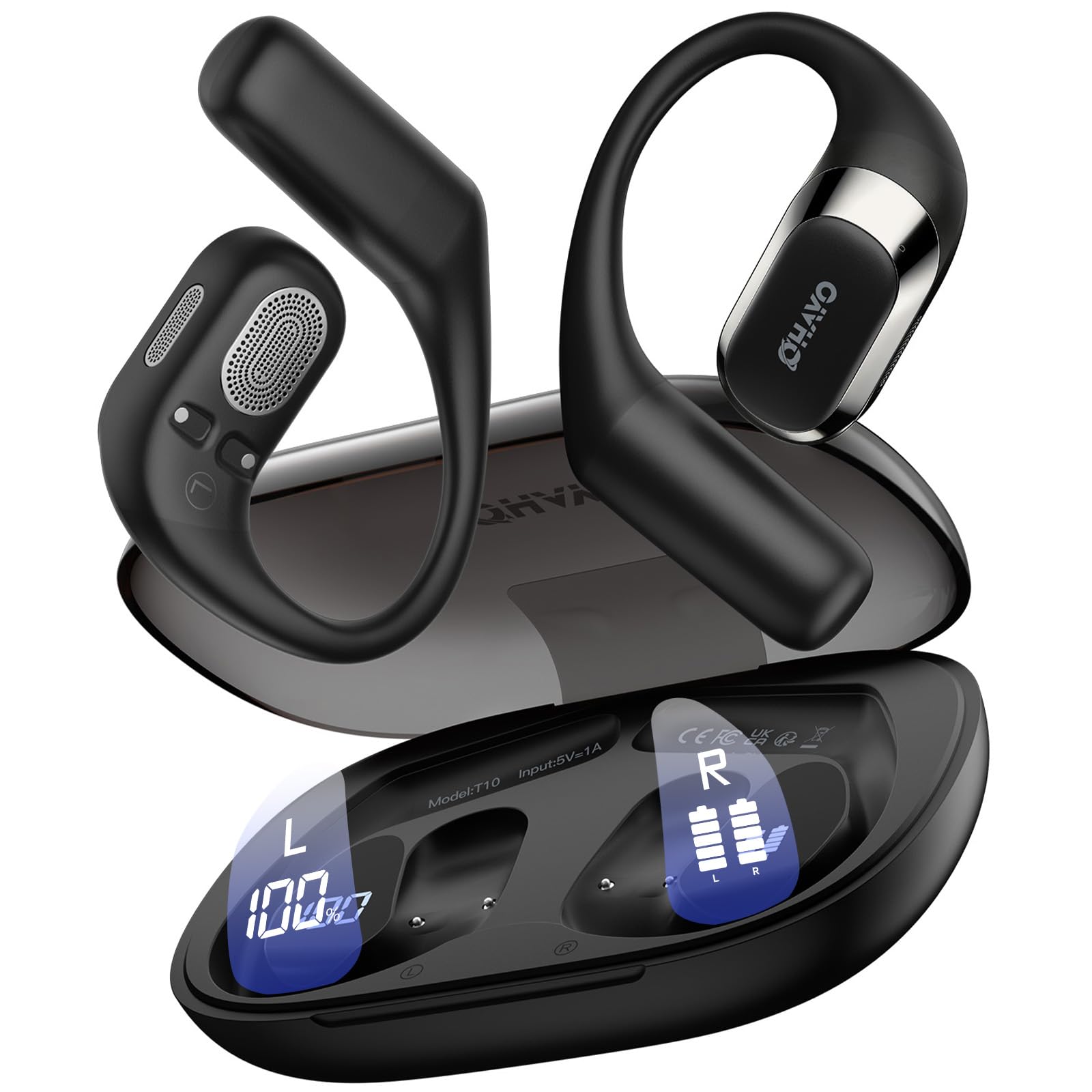
OHAYO T10

87 /100
Sound Score Excellent

Key details

Battery
10H per bud, 40H case
Bluetooth
5.4
Sound Type
Dynamic open-ear
Form Factor
Open-ear earhook
View on Amazon

The OHAYO T10 delivers rich, balanced open-ear audio from 15mm dual drivers and keeps a secure hold through sweaty runs thanks to its earhook design and IPX6 protection. The 40-hour case total with fast charging reduces the need for constant top-ups during a normal training week. It stops short of the runner-up tier because the volume ceiling can be noticeable on loud roads, and battery/charging behavior can fade after several months, so it suits runners who value sweat protection and earhook stability over maximum output and multi-year consistency.

Pros

  • Dual-driver tuning delivers rich, balanced sound in an open-ear format for workouts.
  • Earhook design holds the buds securely through running and gym sessions without constant adjustment.
  • Case battery and fast charging cover long stretches between top-ups for regular training.

Cons

  • Volume tops out below what some runners need on loud roads or at maximum effort.
  • Battery and charging consistency can fade over months of ownership, and occasional one-side audio loss may surface.
Our verdict

For budget-conscious runners who want dual-driver open-ear sound and IPX6 protection, this is a sensible pick for sweaty training blocks, provided the tradeoffs above fit your expectations.

Check Latest Price
8

Extreme Budget

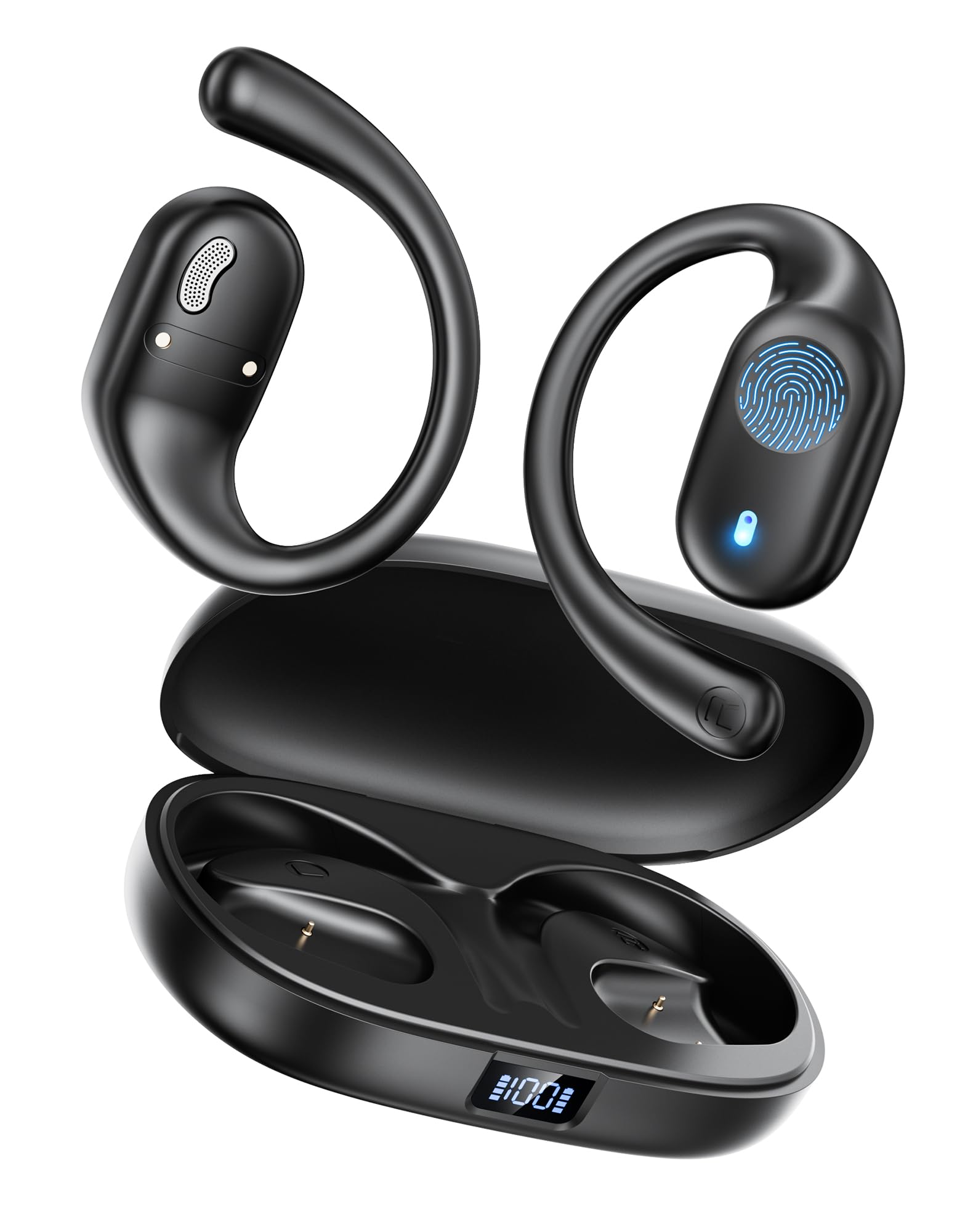
Eigsupia X18

87 /100
Sound Score Excellent

Key details

Battery
4H per bud, 36H case
Bluetooth
5.3
Sound Type
Dynamic open-ear
Form Factor
Open-ear earhook
View on Amazon

The Eigsupia X18 pairs 14.2mm drivers with a 36-hour charging case at an ultra-low price, and the sound stays loud and clear for open-ear audio. The case adds a digital readout, while the hook keeps a comfortable hold for a wide range of ear shapes and works with glasses. The X18 sits at the entry-level end of this set: it is built for shorter sessions and lighter movement rather than hours of high-impact running. Budget runners easing into open-ear audio get real value here, as long as they treat it as a starting point.

Pros

  • Loud, clear open-ear audio at an ultra-low price.
  • Comfortable with glasses or hearing aids, with a hook that suits a wide range of ear shapes.
  • Budget-friendly package with a 36-hour charging case.

Cons

  • Per-charge runtime is about 4 hours, so the charging case needs to be part of the daily carry.
  • High-impact running can shift the hook for certain ear shapes.
Our verdict

For short runs and everyday wear on a tight budget, the X18 makes open-ear sound easy to try; pick it for convenience, not for race-day distance.

Check Latest Price
9

Gym Workouts

TRAUSI T6

90 /100
Sound Score Outstanding

Key details

Battery
80H case
Bluetooth
5.4
Sound Type
Dynamic open-ear
Form Factor
Open-ear earhook
View on Amazon

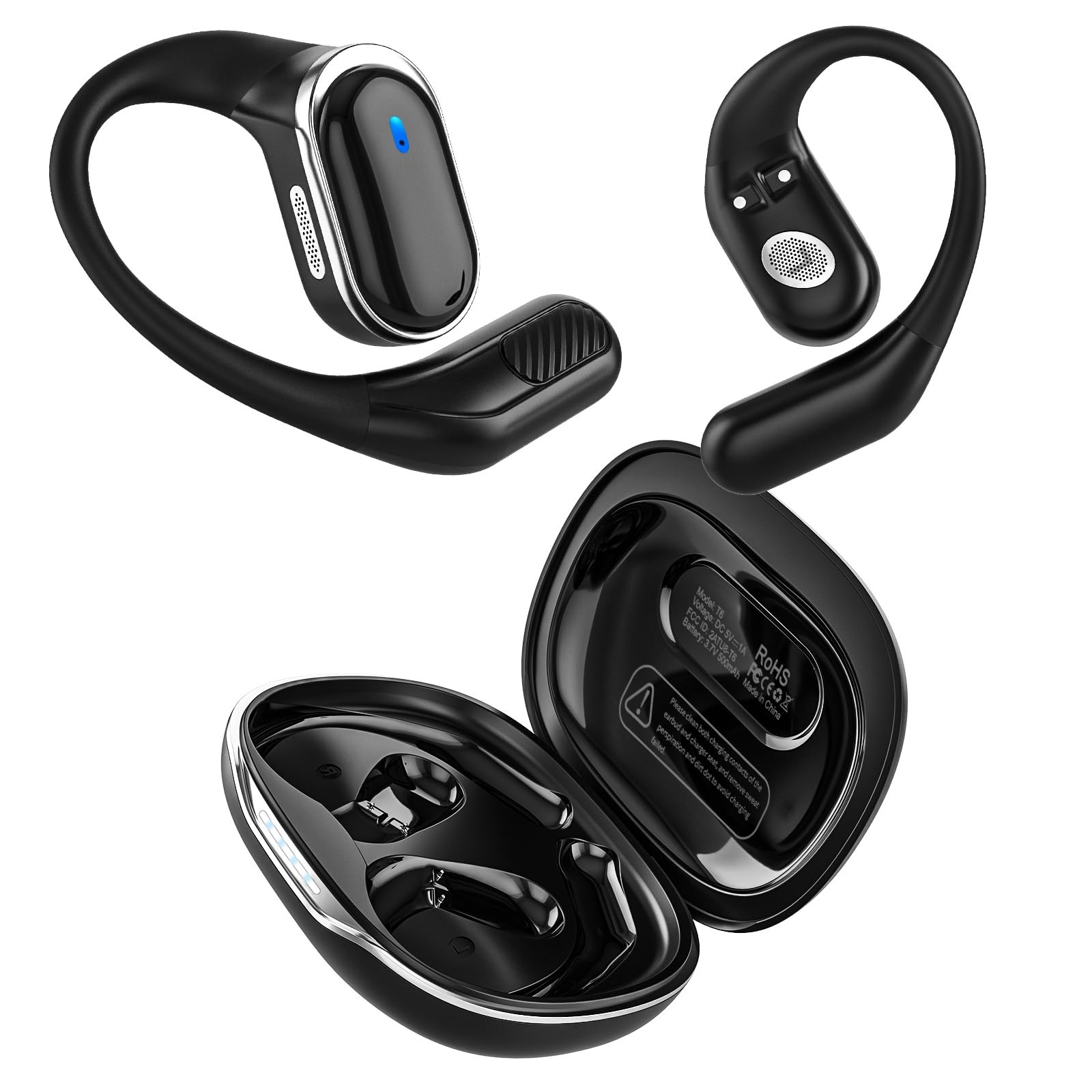
The T6 gets the runner basics right. The open-ear hook holds securely through intervals and sweat sessions, IPX7 covers rain and heavy perspiration, and the charging case backs an 80-hour total playback claim. Sound is balanced for the price with enough bass to keep workouts moving, and Bluetooth 5.4 pairs without fuss. It is a comfortable, low-cost alternative to bone-conduction bands, but multi-month durability on a daily training schedule remains an open question; treat it as a capable budget pick rather than a multi-year investment.

Pros

  • Clear balanced sound with solid bass for the price.
  • IPX7 sweat and rain protection plus an 80-hour total battery via the case.
  • Lightweight earhooks stay secure during workouts and outdoor runs.

Cons

  • In quiet gym spaces, open-ear audio can be audible to others when volume is pushed up.
  • Dusty trail runs fall outside the IPX7 rating, which covers water but not dust.
Our verdict

Pick the T6 for sweat-heavy budget training when open-ear awareness and case-supported battery are the priority.

Check Latest Price

How to Choose

Fit and Form Factor

Hooks, clips, and behind-the-neck bands distribute weight differently during a run. Hooks wrap around the ear and stay locked through high-impact strides; clips hang from the outer ear and feel lighter but depend on your ear shape; bands rest on the cheekbone and avoid the ear entirely but press against the head.

That physical difference matters more than the driver size. A hook that fits poorly will bounce on uneven pavement, a clip that is too heavy will rock with each footstrike, and a band that is too wide can shift when you turn your head. Buy for the movement pattern you actually train in.

Water Resistance

IP ratings are not all the same. IP54 blocks dust and light sprays, IP55 and IPX6 handle sweat and rain, and IP67 survives temporary submersion. Sweat is not just water; it carries salts that corrode exposed contacts faster than rain.

For outdoor runners, IPX6 or better is the safer floor if you train in heavy sweat or open weather. A higher rating also protects charging contacts, but it does not cover plugging in a wet earbud. Dry the contacts before charging.

Battery Runtime

The number on the box is almost always the case plus the earbuds. A 40-hour pair with 8-hour earbuds gives you roughly five 8-hour blocks, not one continuous 40-hour charge. For a marathon or long trail run, per-charge runtime is the spec that prevents a silent last few miles.

Case batteries add convenience but also add a second component that can stop working. Budget models with huge totals often compromise on the charging contacts or cell quality. Choose 8 hours or more per charge and treat the case total as a bonus.

Bluetooth Stability

Bluetooth 5.3 and newer generally handle interference better than older versions, but the version number doesn't guarantee dropouts. Most true-wireless earbuds use a relay connection: one bud talks to your phone and the other follows. Your body can block that relay signal when the phone is in a rear pocket.

If a pair disconnects on the left side, check firmware updates, disable multipoint, and move the phone to a front pocket or armband. Wind and sweat do not cause Bluetooth problems, but a weak antenna or wet charging contacts can trigger one-side audio loss.

Sound Delivery

Dynamic open-ear models use small speakers angled into the ear canal without sealing it. They produce more bass and louder output than bone conduction, but they still leak sound and let noise in. Bone-conduction models send vibration through the cheekbone, keeping the ear canal completely clear.

That difference changes how you hear traffic and music. If situational awareness is non-negotiable, bone conduction gives you the most transparent soundscape. If you want fuller music and don't mind a little less awareness, a dynamic open-ear hook or clip delivers stronger bass.

Frequently Asked Questions