Best Overall

PRUNUS J-150
Key details
- Coverage
- AM/FM/SW
- Bluetooth Use
- Speaker input
- Power Sources
- Solar, USB, D-cell backup
- Speaker & Size
- 1.2 lb, tabletop
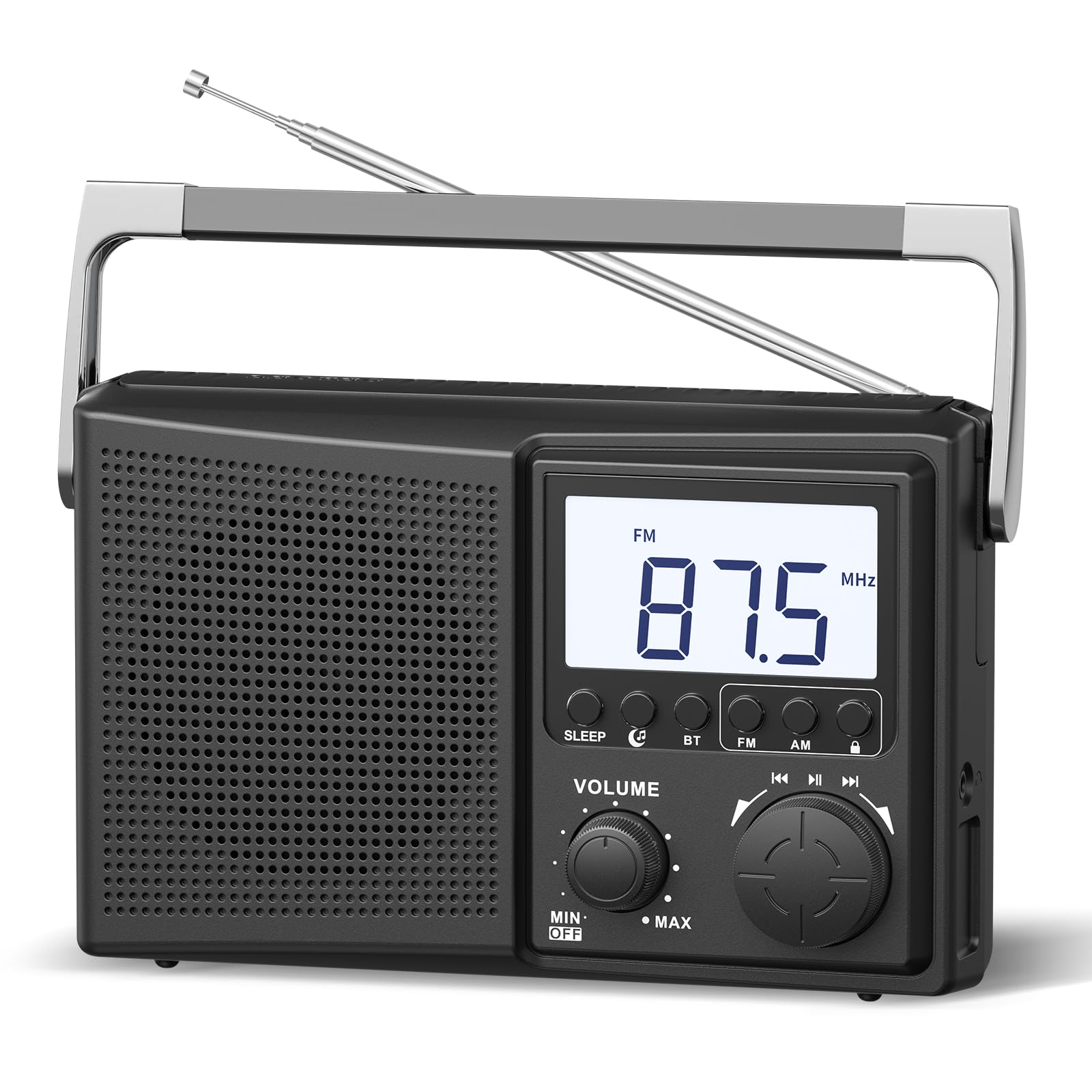
The J-150 is a radio-first tabletop that combines AM/FM/SW coverage with solar, USB, rechargeable, and D-cell power in a retro shell. Sound quality is clear at moderate volume, and the build feels solid enough for a campsite shelf or kitchen counter. The tuner pulls in AM and FM stations without constant antenna adjustment, which is the main job a radio of this kind needs to do.
The speaker does not need to be pushed to fill a small room, and the cabinet stays calm at higher volume rather than buzzing. It is not a party speaker, but for talk radio, news, and background music, the J-150 is easy to live with. The retro cabinet gives the controls a solid feel, with knobs that turn smoothly without feeling loose or plasticky.
Charging flexibility is what separates it from Bluetooth-speaker-with-FM hybrids. The internal battery can be topped up over USB or in sunlight, and two D-cells provide backup when the rechargeable cell runs flat. That combination suits trips where a wall outlet is not guaranteed, and it gives the J-150 a practical edge over radios that depend on a single power source.
Shortwave coverage is the feature that lifts this above a typical AM/FM kitchen radio. It opens up international broadcasts and makes the J-150 useful for late-night listening, not just local news. That band coverage, combined with a Bluetooth speaker function, gives it a wider reach than a dedicated tuner or a simple wireless speaker.
The J-150 is compact enough to move from shelf to campsite table without hassle, and the 1.2-pound weight keeps it manageable in a tote or carryall. For a budget-friendly price, the overall feature set is hard to match in this category.
This suits campers, off-grid users, seniors, and retro-design fans who like knobs. Bluetooth pairing can require a retry, and the analog dial has no digital presets, so buyers who want station presets or direct digital frequency entry should look at the slimmer model in this lineup instead. For the intended audience, those limits are minor: the knobs and dial are part of the charm, and the radio's core job is tuning stations, not acting as a smartphone accessory.
💡 If the radio doesn't appear in your phone's Bluetooth list, switch it back to pairing mode and try once more.
Pros
- Clear sound with enough presence for talk, news, and background music.
- Solid construction and smooth knobs that hold up on a campsite shelf or kitchen counter.
- Compact tabletop footprint and 1.2-pound weight make it easy to move or pack.
- Solar, USB, rechargeable, and D-cell power options keep it usable off-grid.
- AM/FM reception holds strong, so antenna fiddling stays minimal.
Cons
- Bluetooth input does not transmit radio audio to wireless earbuds, so headphone listening is wired only.
- The tabletop body is heavier and bulkier than pocket AM/FM radios, so it needs a bag rather than a shirt pocket.
This is the radio to choose when tuner-first design and off-grid power matter more than digital shortcuts.