5 Best Portable Multitrack Recorder in 2026: Match Channel Counts

Best portable multitrack recorder picks for podcasting, music, and video: match simultaneous channels, XLR inputs, and battery limits to your session.

'Multitrack' is one of the most stretched terms in portable audio. A six-track or eight-track pocketstudio can look like a full location rig, but it may only capture two channels at a time while the rest are for layering after the recording. That gap between track count and simultaneous channels changes what you can actually record.

The same confusion applies to 32-bit float and battery claims. Clip-free recording prevents digital overs, but a hot microphone input can still distort before conversion. Phantom power turns a compact AA-powered recorder into a battery drain, and a 20-hour spec disappears under a full mic load.

This guide narrows the field by the specs that decide whether a session survives: simultaneous channel count, XLR inputs, phantom power, and built-in mic flexibility. The right tool is less about how many tracks the box promises and more about how many sound sources it captures cleanly at once.

About the Sound Score: This comparative score is calculated from a product's published customer rating and review volume. It is not a laboratory measurement or a hands-on test result.

1

Best Overall

Zoom H5 4-Track Recorder

92 /100
Sound Score Outstanding

Key details

Battery Power
2 AA batteries
Built-in Mics
Detachable X/Y capsule
XLR / TRS Inputs
2 XLR/TRS, 48V phantom
Simultaneous Tracks
4 simultaneous tracks
View on Amazon

The Zoom H5 records four independent tracks at once through two XLR/TRS combo inputs and a detachable X/Y capsule. Each XLR input provides phantom power, and the body records WAV files up to 96kHz/24-bit to SD/SDHC media. The modular capsule opens up different microphone configurations without replacing the recorder. The same body handles band rehearsals, location dialogue, and ambient field capture without a separate mixer, with clear output from built-in and external mics.

Low-noise preamps and separate input dials keep level changes accessible during live recordings and real-world projects. A backup safety track records a lower-level duplicate for takes where an unexpected peak could otherwise cause a clipped file. That combination makes it a more complete capture tool than a two-channel recorder.

This suits musicians recording rehearsals or song ideas, filmmakers needing a battery-powered location recorder, and field recordists who want interchangeable capsule options. The tradeoff is that 24-bit recording requires careful gain staging on loud sources, and only two XLR inputs are available; a four-mic setup relies on the built-in X/Y pair for the remaining channels. The recorder runs from AA batteries, so field swaps stay simple.

💡 Check the record and control buttons early, and use the backup safety track for critical first takes.

Pros

  • Four simultaneous tracks from two XLR/TRS inputs and the detachable X/Y capsule suit band demos and location audio.
  • Low-noise preamps, separate input dials, and a backup safety track keep level changes manageable.
  • The interchangeable capsule system changes pickup options without replacing the whole recorder.

Cons

  • Record/control button durability can vary between units, so button feel is worth checking early.
  • No phone remote-interview mix-minus path; the podcast-focused recorder in this set covers that workflow.
Our verdict

The H5 is the battery-powered four-track recorder for music and location capture; its capsule system and four-track input structure fit that brief better than the podcast-focused and two-channel options in this set.

Check Latest Price
2

Best for Podcasters

Zoom PodTrak P4

93 /100
Sound Score Outstanding

Key details

Battery Power
2 AA or USB
Built-in Mics
No built-in mics
XLR / TRS Inputs
4 XLR, 48V phantom
Simultaneous Tracks
4 simultaneous XLR tracks
View on Amazon

Four XLR mic inputs feed four independent recording tracks, while four headphone outputs and mix-minus phone/USB routing turn a portable bag into a multi-guest podcast setup. The PodTrak P4 prioritizes interview workflow over field capture, which separates it from the top pick's detachable-mic approach.

Podcasters and remote-interview hosts get a budget-friendly four-mic recorder with individual headphone feeds and USB interface support. It is not a general field recorder: there are no built-in condenser mics. Phantom-powered mics drain the two AA batteries quickly, so budget for USB power. The compact chassis keeps a multi-mic setup portable.

Pros

  • Clean, quiet preamps deliver podcast-ready XLR mic audio.
  • Plug-and-play setup keeps multi-mic podcast sessions moving without deep menus.
  • Mix-minus phone and USB inputs simplify remote interviews without echo.

Cons

  • Certain SD cards can stop a recording; checking compatibility before a session avoids surprises.
Our verdict

For multi-mic podcasting and remote interviews on a budget, this compact four-XLR hub is a focused workhorse.

Check Latest Price
3

Best for Videographers

Tascam DR-60DmkII

89 /100
Sound Score Excellent

Key details

Battery Power
4 AA batteries
Built-in Mics
No built-in mics
XLR / TRS Inputs
2 XLR/TRS, dual 1/8-inch, 48V
Simultaneous Tracks
4 channels
View on Amazon

An under-camera chassis houses two locking XLR/TRS inputs, dual 1/8-inch inputs, and HDDA preamps for four-track video capture. That separates it from pocketstudios built for demo layering rather than multi-source location sound. The layout allows two wired microphones plus wireless or camera feeds without a separate mixer.

Solo video shooters and small interview crews get strong value from this setup. Plan for an external USB pack when running 48V phantom, and keep the edge-mounted 1/8-inch cable strain-free. The camera-mount form factor suits run-and-gun interviews, not tabletop podcasting with built-in mics.

Pros

  • Field-recording quality holds up for camera dialogue and interview capture.
  • HDDA preamps provide clean gain and enough headroom for location dialogue.
  • Practical controls suit single-operator camera and audio work.

Cons

  • Locking XLR jacks may bind with certain cables and require careful removal.
  • Quiet indoor scenes with high-gain budget mics may expose an audible noise floor.
Our verdict

For compact video interviews and location camera work, this four-track layout fits the shoot.

Check Latest Price
4

Solo Songwriters

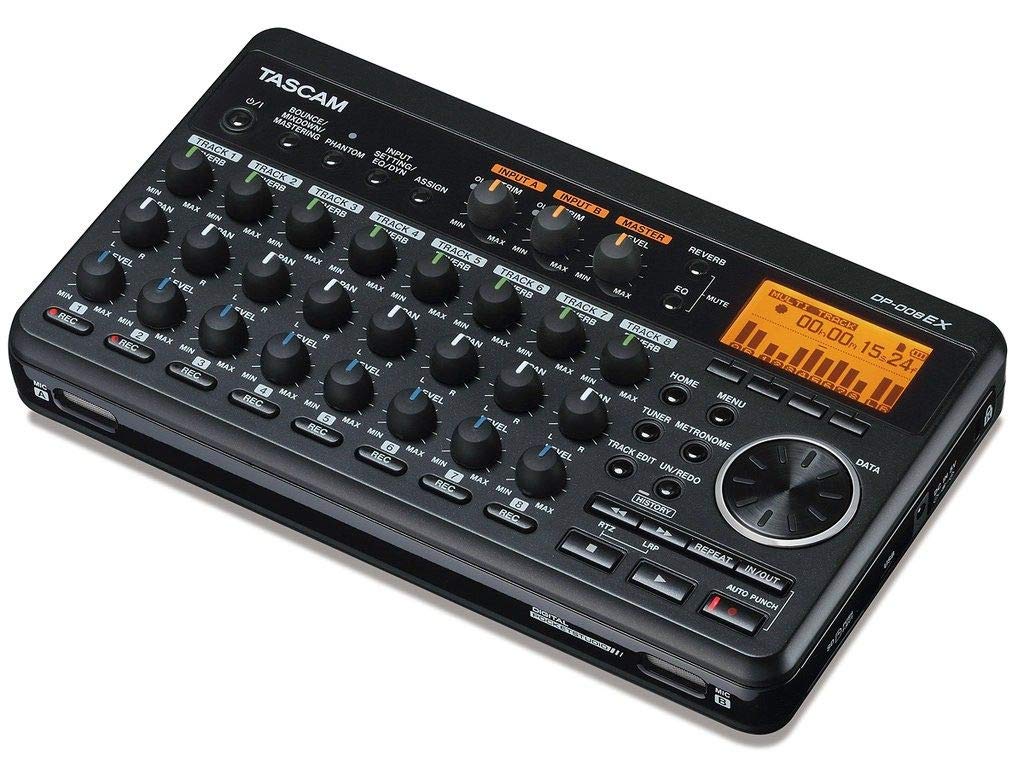
Tascam DP-008EX

90 /100
Sound Score Outstanding

Key details

Battery Power
4 AA batteries
Built-in Mics
Built-in condenser mics
XLR / TRS Inputs
No XLR/TRS
Simultaneous Tracks
2 simultaneous tracks
View on Amazon

Built-in condenser mics and eight-track layering turn this into a self-contained sketchpad for songwriters who build ideas two channels at a time. Two-channel simultaneous capture keeps it away from multi-mic podcast or video work. The menu-heavy workflow and phantom-power battery drain demand patience and AC power. This is a solo demo machine, not a four-channel field recorder.

Pros

  • Built-in condenser mics capture clear acoustic and vocal ideas without extra gear.
  • Eight-track layering and bouncing gives solo songwriters a portable arrangement tool.

Cons

  • Control function or screen may degrade after extended use.
Our verdict

Solo songwriters who want a pocket-sized eight-track sketchpad and keep AC power nearby will get the most from this unit.

Check Latest Price
5

Guitarists

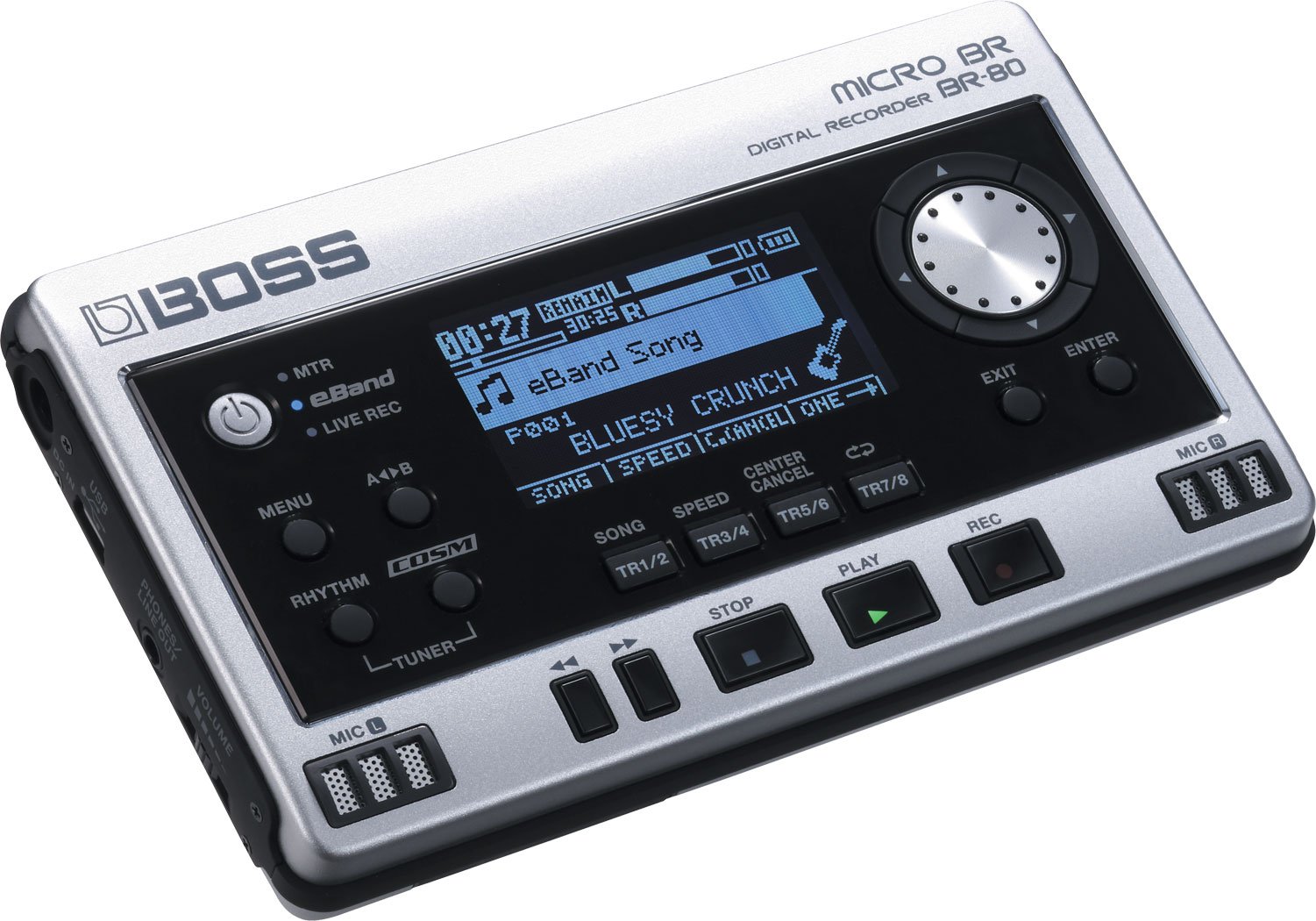
BOSS BR-80

86 /100
Sound Score Excellent

Key details

Battery Power
Battery powered
Built-in Mics
Stereo condenser mics
XLR / TRS Inputs
No XLR inputs
Simultaneous Tracks
Stereo capture
View on Amazon

For guitarists, the battery-powered BR-80 captures stereo song sketches with COSM amp models, Boss effects, and drum patterns while recording to SD. No XLR inputs and a menu-heavy navigation path keep it from multi-mic podcast work or four-channel field capture.

Pros

  • Strong COSM amp models and Boss effects for direct guitar recording
  • Built-in stereo condenser mics and rhythm patterns support quick song sketches

Cons

  • For quick mobile capture, control wheel or SD card slot quality can vary unit to unit
Our verdict

This fits guitarists who want COSM amp models, Boss effects, and drum patterns in a pocket recorder; for true multi-channel field recording, look elsewhere.

Check Latest Price

How to Choose

Simultaneous Track Count

A recorder labeled 8-track may still capture only two channels at once. Multitrack playback and layering are not the same as recording four mics live, and buying a portastudio when you need multi-mic capture will leave you with unusable session tracks.

XLR Inputs and Phantom Power

Phantom power lets condenser mics pull voltage from the recorder, but that voltage draws extra current. A device that runs all day with dynamic mics can drain AAs within a few hours once 48V phantom is enabled, so match input count and power delivery to your mic locker.

Battery Life

Battery type and phantom power interact in field use. External USB power or a battery bank changes the portability and cost calculation, especially for sessions that run long. A USB power bank is cheaper than losing a take when AAs die midway through a session.

32-Bit Float vs 24-Bit

32-bit float removes digital clipping after conversion, but it cannot save an input stage that is already distorted. A loud source can still overdrive the analog front end, so you still set input levels to avoid distortion before the converter.

Built-in Mics and Capsules

Built-in mics and interchangeable capsules determine how much you can record before adding external gear. A recorder with weak built-in mics forces you to pack extra XLR mics, while a detachable capsule system changes the pickup pattern you can use without a full mic locker.

USB Interface and Remote Calls

USB audio interface and remote-call features determine whether a recorder can replace a computer interface as well. A recorder without mix-minus or TRRS input cannot feed phone interviewees a clean audio return, so remote podcast sessions can fall apart in post.

Frequently Asked Questions