9 Best Record Inner Sleeves of 2026: Match Sleeves to Your Records

Which record inner sleeves protect your LPs, slide in without snagging, and justify their per-sleeve cost — without anti-static hype.

Most record inner sleeves claim anti-static and archival, but the real test is how a sleeve behaves after months of pulls from a tight jacket. A liner that wrinkles, snags, or sheds paper fibers can undo the protection it promises. The right sleeve should slide out cleanly, hold its shape, and keep dust and static off the grooves.

The key trade-off is material. Rice-paper/HDPE hybrids give you a soft paper surface with a static-dissipating plastic layer, while plain HDPE is cheaper but floppier in tight jackets. Archival paper feels classic but offers no static control. The best choice comes down to how snug your jackets are and whether you are sleeving one prized album or a whole shelf.

Also compare per-sleeve cost, not just pack price. A 50-count box can cost more per sleeve than a 100-count box, so the smartest buy starts with quantity and the records you actually store.

About the Sound Score: This comparative score is calculated from a product's published customer rating and review volume. It is not a laboratory measurement or a hands-on test result.

1

Best Overall

Hudson Hi-Fi Rice Paper

95 /100
Sound Score Outstanding

Key details

Material
Rice paper + HDPE
Rigidity
Rice-paper hybrid
Pack Size
100 sleeves
Anti-Static
Yes
View on Amazon

Hudson Hi-Fi's 100-pack rice-paper/HDPE inner sleeves give collectors an archival-grade anti-static upgrade without the per-sleeve premium of smaller rice-paper packs. The hybrid build layers acid-free rice paper over a plastic lining, so the sleeve holds its shape in the jacket while the smooth interior lets an LP slide out without clinging. The 12.6-inch dimensions match standard 12-inch LP covers, and the anti-static material keeps dust off the grooves during side changes. Unlike plain paper liners, this sleeve introduces no extra surface noise when you pull a record out, and it does not cling the way all-plastic sleeves can.

Insertion is smooth on standard LPs: the paper exterior runs easily inside the jacket, and the slightly rigid structure stops the sleeve from bunching at the bottom. The surface finish is clean, with no rough edges or paper dust flaking into the cover. For everyday use, this behaves like a more substantial version of the stock paper liner, minus the static charge that pulls dust toward the record. The sleeve also keeps the vinyl centered inside the jacket, which makes flipping through a crate less awkward.

This pack is aimed at collectors upgrading from plain paper liners who want a large stash of archival protection at a mid-range price. The rice-paper/HDPE combination covers the two main jobs: buffering the vinyl from jacket seams and controlling static when the sleeve opens. The intended audience is someone with a mixed collection who doesn't want to think about which LP gets the nicer sleeve. Thicker gatefold records can run snug, so those jackets need a slower first insertion.

The 100-pack size changes how you use it. Instead of rationing a premium 50-pack for favorite LPs, you can replace every old paper liner at once and keep the extras on hand for new arrivals. The sleeve's balance of paper stiffness and plastic flexibility works well in standard album covers, and the clean edges mean the inner sleeve won't catch when you pull the record out. That makes the swap routine faster than with flimsier plastic liners.

Putting a record back into a jacket that's already packed tight is where this sleeve earns its keep. Rather than crumpling inside the cover, the sleeve slides in as a unit, and the smooth paper face doesn't catch on inner jacket seams. This works in favor of anyone who stores records vertically and wants the sleeve to stay put during crate browsing.

Pros

  • Hybrid rice-paper/HDPE build gives archival protection without the static cling of plain paper.
  • 100-pack format handles a large collection at a lower per-sleeve cost than premium rice-paper packs.
  • Anti-static layer and smooth paper face reduce dust and surface noise.
  • Records slide in and out without snagging, which speeds up side changes.
  • Album-storage ready construction keeps the sleeve flat and centered inside the jacket.

Cons

  • Thicker gatefold records can fit snugly, so the first insertion needs care.
Our verdict

For collectors replacing paper liners in bulk, this 100-pack delivers rice-paper/HDPE protection without the per-sleeve premium of smaller archival packs.

Check Latest Price
2

Premium Rice Paper Pick

Invest In Vinyl Master

96 /100
Sound Score Outstanding

Key details

Material
Rice paper + HDPE
Rigidity
Rice-paper hybrid
Pack Size
50 sleeves
Anti-Static
Yes
View on Amazon

Invest In Vinyl's Master Sleeves use rice-paper/HDPE construction that matches the feel of MoFi-style inner sleeves at a lower per-sleeve price. The 50-count format is the clear separation from the top pick, which offers the same material class in a 100-pack for higher-volume buyers. If your collection is smaller and your priority is sleeve quality over quantity, this pack puts the premium experience front and center.

The anti-static layer suppresses the cling that plain HDPE can create, and the rice-paper surface stays neutral against record grooves. Records load cleanly, and the sleeves hold their shape inside tight jackets, which cuts down on the frustration of a liner that crumples on reinsertion. The sheet stays flat during handling, so you don't fight the liner while guiding the disc back in.

Audiophiles with a short list of prized LPs will get the most from this pack: it delivers the archival-style feel without leaving you with a huge inventory of spares. Batch quality can vary, and a new pack can contain off-center inserts or slightly tight sleeves, so spot-checking the first few is a sensible habit.

Pros

  • Rice-paper/HDPE build gives prized LPs a MoFi-style surface at a lower per-sleeve price.
  • The anti-static layer reduces static cling and scratch risk during insertion and removal.
  • Sleeves are easy to load and remove for routine listening sessions.
  • The 50-count format bundles premium protection without forcing a bulk purchase.

Cons

  • A 50-count pack does not maximize dollars per sleeve for high-volume collections.
  • The non-round-bottom shape asks collectors to be more deliberate when inserting sleeves into tight jackets.
Our verdict

For a smaller rotation of valuable LPs, this is the rice-paper pack to keep on hand; the top pick's 100-count stash covers the high-volume end better.

Check Latest Price
3

Best Value Entry Pick

Invest In Vinyl Round Bottom

95 /100
Sound Score Outstanding

Key details

Material
Acid-free HDPE
Rigidity
Thicker HDPE
Pack Size
50 sleeves
Anti-Static
Yes
View on Amazon

Round-bottom HDPE sleeves load into record jackets without the corner catch of square-bottom liners. The clear polyethylene stays rigid enough to hold its shape while flexing around the record, and the anti-static treatment keeps dust from clinging before playback. At 12 x 12 inches, each sleeve covers a standard LP edge-to-edge with little excess material.

The 50-pack suits new collectors who want an affordable way to test or sleeve a growing stack before committing to a bulk box. If you are just starting to replace original paper liners, this is a low-commitment way to see whether clear HDPE fits your routine. These are best paired with standard single-LP jackets that have a little breathing room; buyers after rice-paper/MoFi-style sleeves should look to the premium 50-pack in this set.

Day-to-day handling is where this pack earns its keep: records come out of the jacket with the sleeve still in place, and the smooth HDPE surface slides across the platter without catching. The round bottom also makes return insertion less fiddly, which matters when swapping LPs mid-listening session. During storage, the barrier limits dust and light scuffs from ordinary handling, and the anti-static effect keeps static crackle from interrupting quiet passages.

Budget-conscious collectors get a full anti-static HDPE sleeve at a lower entry cost than premium rice-paper options. The 50-pack format is enough for a meaningful sample without forcing a bulk commitment.

💡 Hold the jacket open wide when inserting the sleeve to ease the fit.

Pros

  • Round-bottom sleeves slide into jackets without the corner catching of square-bottom liners.
  • Protects records from dust, dirt, and light scratches in storage.
  • Anti-static treatment reduces surface charge before playback.
  • Budget-friendly 50-pack suits a growing collection without bulk commitment.

Cons

  • The 50-sleeve pack size means a large collection refresh takes two boxes.
  • Inside tight outer jackets, the thicker HDPE can feel less maneuverable during insertion.
Our verdict

For new collectors, this 50-pack is a cost-effective entry point to anti-static HDPE protection.

Check Latest Price
4

Best Archival HDPE/Rice Paper Hybrid

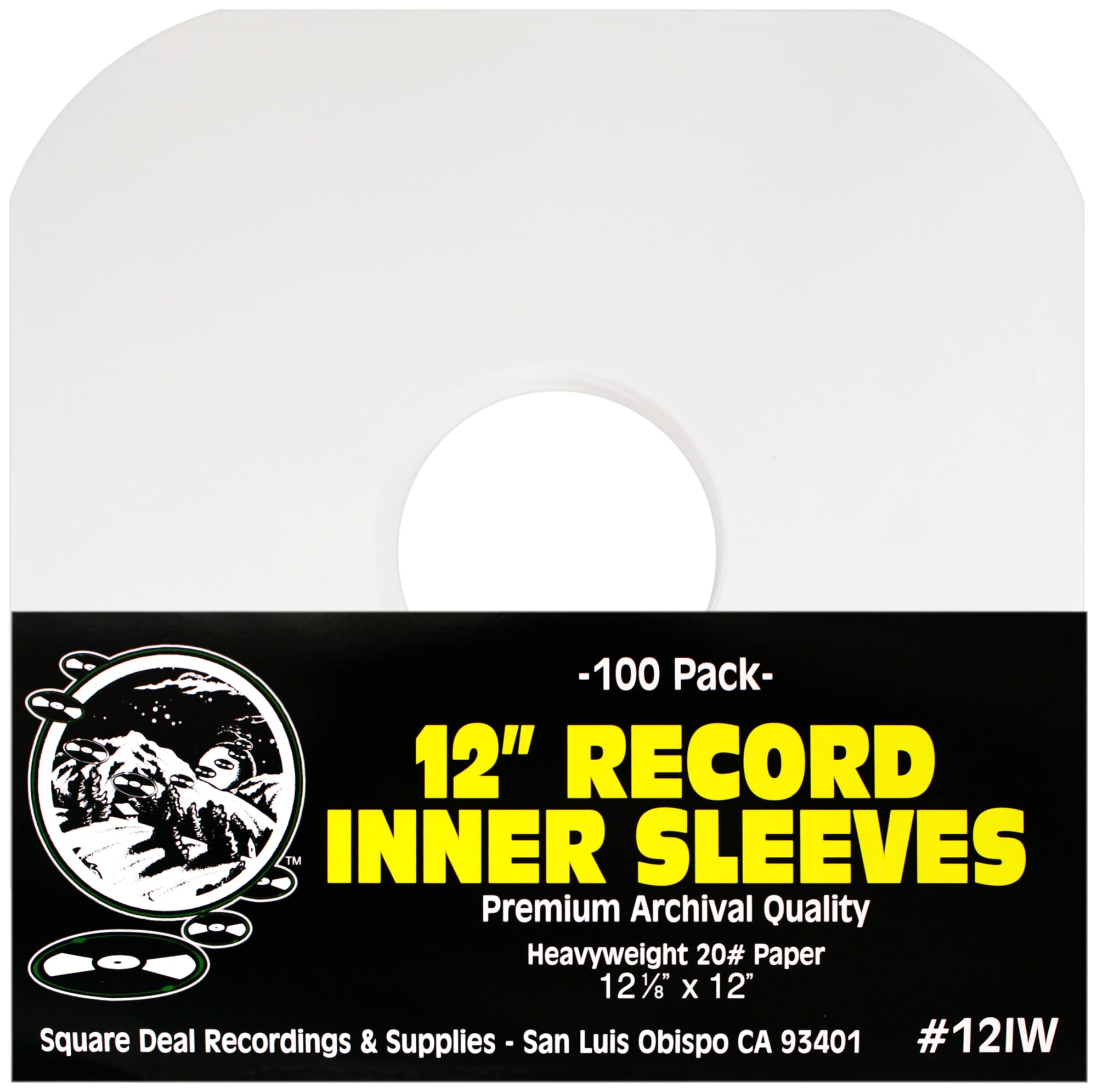
Square Deal 3-Layer HDPE

94 /100
Sound Score Outstanding

Key details

Material
3-layer HDPE + rice paper
Rigidity
Triple-layer rigid
Pack Size
100 sleeves
Anti-Static
Yes
View on Amazon

The Square Deal 3-layer sleeve holds its shape with a rigid HDPE and rice-paper sandwich, so the record side stays soft while the sleeve stands up on its own. This construction makes it a more substantial option than a flat paper liner inside a 100-pack archival box.

Priced for bulk storage, this 100-pack undercuts premium rice-paper sleeves while keeping the same material family. That economy matters when you are sleeving an entire collection rather than a handful of prized pressings, and it is a strong reason to buy in quantity.

The stiff mouth stays open during insertion, which eases loading compared with a collapsing paper sleeve. It also reduces the chance of the vinyl catching on a folded edge, a nuisance with flimsier liners. The 12.125 x 12-inch cut provides full coverage for 12-inch LPs, and the rice-paper layer adds a smooth buffer between the HDPE and the vinyl.

This box suits archivists and collectors who want rigid, acid-free protection in bulk. Seam and fit QC vary between sleeves, so the first few deserve a check before you commit the whole box to your collection.

Pros

  • Rigid three-layer build holds its shape and keeps the record side soft.
  • Cost-effective 100-pack brings archival HDPE and rice paper into bulk storage.
  • Stiff mouth stays open for easy record insertion.
  • HDPE and rice-paper layers keep dust and contaminants off the vinyl.

Cons

  • Fit can run slightly large, making some sleeves snug inside tight outer jackets.
  • Bottom seams can split on first insertion in some sleeves.
Our verdict

For archivists who want rigid HDPE protection with rice-paper softness in a bulk 100-pack, the Square Deal is the practical runner-up.

Check Latest Price
5

Best Archival Paper Sleeves

Big Fudge Paper Sleeves

95 /100
Sound Score Outstanding

Key details

Material
Acid-free paper
Rigidity
Heavyweight paper
Pack Size
100 sleeves
Anti-Static
No
View on Amazon

Big Fudge’s 100-pack is the reference point for paper sleeves in this set: heavyweight acid-free stock, rounded corners, and exterior seams. It takes the archival-paper approach of the made-in-USA 20# sleeve and gives you a full 100 sleeves, which pushes the per-sleeve cost below that premium paper option while keeping the traditional paper feel.

The rounded corners clear jacket creases without catching, and the exterior seams let records slide out and back in with little effort. The paper sits flat inside outer jackets, holds its shape through normal handling, and keeps dust, dirt, and light scratches off the vinyl. The 100-pack count means fewer reorder cycles for high-volume collectors, and the acid-free stock keeps the archival credentials intact.

Classic paper-sleeve fans replacing worn original liners are the right fit, as are collectors who want a full 100-pack of archival paper without switching to HDPE or rice-paper sleeves. Paper weight can vary between batches, so a thinner run may buckle in very tight outer jackets; standard jackets don’t present the same issue. Within the paper-sleeve category, the handling and count make that compromise easy to live with.

💡 Start with the tightest-fitting jacket in your collection when opening a new pack.

Pros

  • High-quality paper sleeve with the classic archival feel.
  • Fits outer jackets without adding bulk and slides out smoothly.
  • Holds up through normal handling while protecting records from dust and scratches.
  • Rounded corners reduce catching when inserting into jacket creases.

Cons

  • Opaque paper keeps the label and record out of sight through jacket openings.
  • No anti-static layer, so it won’t suppress static charge the way HDPE or hybrid rice-paper sleeves can.
Our verdict

For collectors who want a full 100-pack of archival paper, the rounded-corner handling and generous count make this the default paper-sleeve option.

Check Latest Price
6

Best Clear Display Sleeves

COIDEA Clear 3.2Mil HDPE

88 /100
Sound Score Excellent

Key details

Material
3.2Mil HDPE
Rigidity
Flexible HDPE
Pack Size
100 sleeves
Anti-Static
Yes
View on Amazon

The clear HDPE sheet does the main job well: labels and album art stay visible while the record is inside the sleeve. At 3.2Mil, the material is noticeably more substantial than the thinnest budget liners, yet flexible enough to follow the record into a jacket without stiffness. The 100-pack count makes this a strong stash for active collections. The same clarity makes it easy to spot the exact record when flipping through a shelf.

Standard 12-inch LPs sit inside without overhang, and the squared format fits common storage boxes and gatefolds. Records come out of the sleeve without static cling, which matters more for this material than for paper liners. Compared with soft-texture budget HDPE sleeves, this version is easier to slide records into.

This is for collectors who put display value first and want a large anti-static supply without a premium price. The flimsy feel is part of the package, so it is not a stand-in for rice-paper rigidity; it suits buyers who care more about clear visibility than stiffness in the hand.

💡 Slide the record and sleeve together as one unit to keep the plastic flat.

Pros

  • Clear material keeps labels and album art visible while the record is stored.
  • Anti-static HDPE shields records from dust and scratches.
  • 100-sleeve pack gives budget buyers a large supply at once.
  • Fits standard 12-inch LPs without trimming or overhang.

Cons

  • In a snug outer jacket, the plastic can bunch up while sliding the record in.
Our verdict

A clear 100-pack that balances visibility, anti-static protection, and cost for collectors who want to see the record while it is stored.

Check Latest Price
7

Newer Alternative

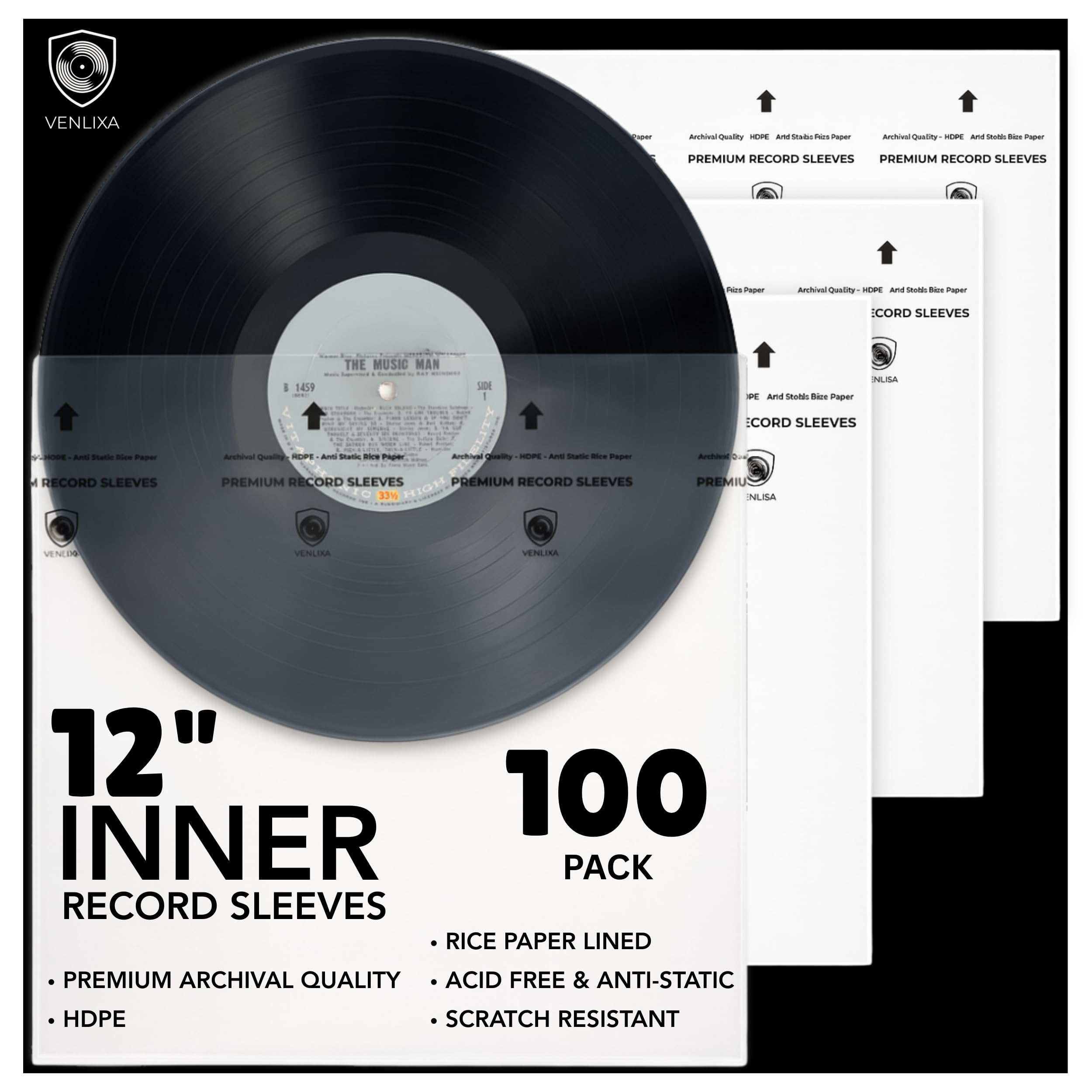
VENLIXA HDPE Rice Paper

90 /100
Sound Score Outstanding

Key details

Material
HDPE + rice paper
Rigidity
3-ply hybrid
Pack Size
100 sleeves
Anti-Static
Yes
View on Amazon

VENLIXA's 100-pack uses a 3-ply HDPE/rice-paper construction with anti-static and acid-free properties, placing it in the same material class as the balanced 100-pack that leads this group. It holds its shape during insertion and carries a mid-range price, which answers the main demands of an inner-sleeve upgrade. The reason it sits below the top pick is the depth of field history behind the established 100-packs — this is a newer challenger, not a default option. Collectors willing to try a fresh entry get the material story at a lower per-sleeve cost; those who want a sleeve with years of established use behind it will be more comfortable with the category leader.

Pros

  • 3-ply HDPE/rice-paper build keeps its shape when sliding into a jacket.
  • 100-pack format undercuts premium rice-paper 50-packs on per-sleeve cost.
  • Anti-static and acid-free specs cover the archival basics for LP storage.

Cons

No consistent drawbacks identified in the available review data.

Our verdict

This fits when the 100-pack count, anti-static build, and 3-ply material mix are the priority.

Check Latest Price
8

Made-In-USA Paper

Square Deal Archival Paper

95 /100
Sound Score Outstanding

Key details

Material
20# archival paper
Rigidity
Heavyweight paper
Pack Size
100 sleeves
Anti-Static
No
View on Amazon

This 100-pack uses 20# heavyweight archival paper with exterior seams, giving records a stiff paper sleeve that holds its shape when the record is slipped in. Sizing at 12.125 x 12 inches fits standard LP jackets, and the made-in-USA construction gives paper-first buyers a solid alternative to plastic inner sleeves.

The material boundary shows in static control: paper will not neutralize static the way HDPE or rice-paper hybrids do, so this pack is best for archival-minded buyers who want acid-free paper and don't need anti-static performance. That is why it sits below the HDPE top picks in this roundup; for traditional paper users, it still delivers a protective heavyweight sleeve at a mid-range cost.

Pros

  • Heavyweight 20# acid-free paper gives records a rigid protective sleeve without the slick plastic feel.
  • 100-pack sizing suits archivists and resellers who need a large stash of archival paper liners.
  • Useful as a direct replacement for worn or missing inner sleeves on LPs already in storage.

Cons

  • Sleeves can catch on tight-fitting outer jackets, making insertion a little fussier than slick plastic.
Our verdict

For archivists and resellers who prefer paper over plastic, this 100-pack delivers the heavyweight archival feel that makes it a practical addition to a vinyl storage shelf.

Check Latest Price
9

Tight Jackets

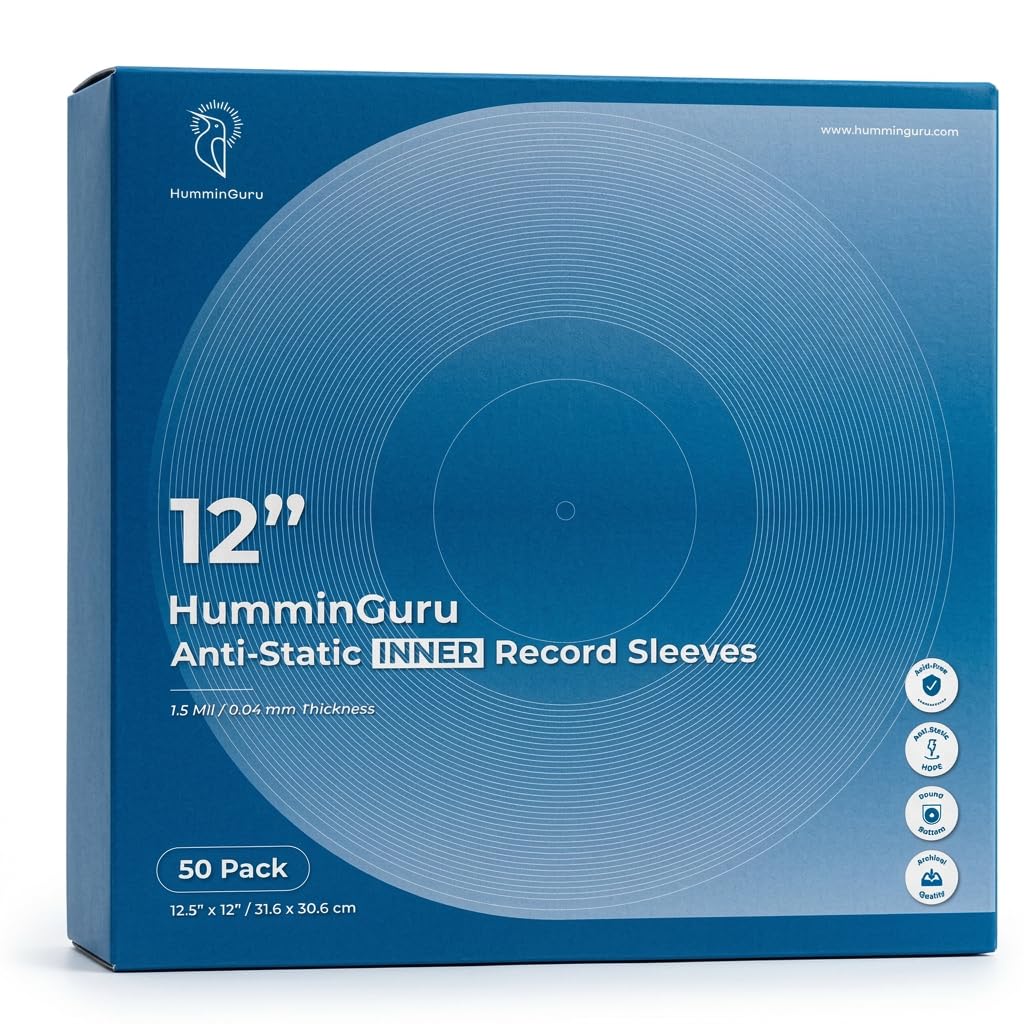
HumminGuru Round HDPE

89 /100
Sound Score Excellent

Key details

Material
1.5Mil HDPE
Rigidity
Flexible HDPE
Pack Size
50 sleeves
Anti-Static
Yes
View on Amazon

The HumminGuru 50-pack round-bottom liner uses a 1.5Mil acid-free HDPE with a shape that drops into tight gatefold jackets more easily than square-cornered paper liners. The material is anti-static, and the fit is consistent enough that the sleeve slides into an existing outer jacket without bunching. Compared with the general-purpose round-bottom HDPE option in this set, this one leans further into a precise cover fit rather than broad-strokes bulk value. That narrow focus is also its boundary: it suits collectors who treat the inner sleeve as a cartridge for the outer jacket, not as a one-size-fits-all archival cover. The round-bottom behavior is the reason to choose it; if you don't have tight jackets, the feature set is less distinctive.

Pros

  • Round-bottom shape slips into tight gatefold jackets and outer sleeves without the edge catch of square paper liners.
  • Anti-static 1.5Mil acid-free HDPE protects records without paper fibers or added bulk.

Cons

  • More pliable than rice-paper hybrids, so it lacks the rigid shape some collectors prefer.
  • No 100-pack version; refitting a large library takes multiple orders.
Our verdict

For tight jackets where square paper liners catch, this HumminGuru liner gives archival HDPE protection with a clean slide-in.

Check Latest Price

How to Choose

Material

Rice-paper/HDPE hybrids bond a paper lining to a polyethylene layer. The paper side stays soft against the vinyl, while the plastic layer gives the sleeve enough body to hold its shape. Pure HDPE sleeves are thinner and more flexible, which makes them easier to wrinkle in tight jackets.

Plain archival paper avoids plastic entirely and gives a classic feel, but it sheds fibers and offers no static control. Matching the material to your jackets and playback habits matters more than the word 'archival' on the box.

Pack Size

Pack size is a per-sleeve cost decision. A 50-count box can carry a higher per-sleeve price than a 100-count box, so check unit pricing before you buy.

A 100-count pack suits a full collection; a 50-count pack is a sensible trial size for a new material. A 200-count budget pack works when raw quantity matters more than fit and finish.

Anti-Static and Archival Construction

Anti-static is the most oversold claim in this category. HDPE can dissipate charge, but the sleeve must also fit tightly enough to stop the record from shifting while it is in the jacket. A loose liner creates more friction and static, not less.

Acid-free and archival construction is easier to verify than static performance. If your records sit near heat or in a closet for long stretches, acid-free materials justify the small premium.

Rigidity

Rigidity matters when you slide a record into a tight gatefold or outer sleeve. A floppy liner can fold, bunch, or fold over the record, turning a simple replacement into a dented edge. Hybrid sleeves hold their shape and stay open, so the record glides in without a second hand.

The trade-off is fit. Stiffer sleeves can feel snug on 180-gram or gatefold records, so the first insertion should be slow and gentle rather than forced.

Bottom Design

Round-bottom sleeves curve with the jacket pocket, so they tend to slide in more smoothly. Square-bottom sleeves are often cheaper, but the corners can catch on the jacket's inner fold.

Flap designs add an extra protective layer over the open edge, useful for shelf storage, but add bulk. For most jackets, a round-bottom hybrid offers the least friction.

Frequently Asked Questions