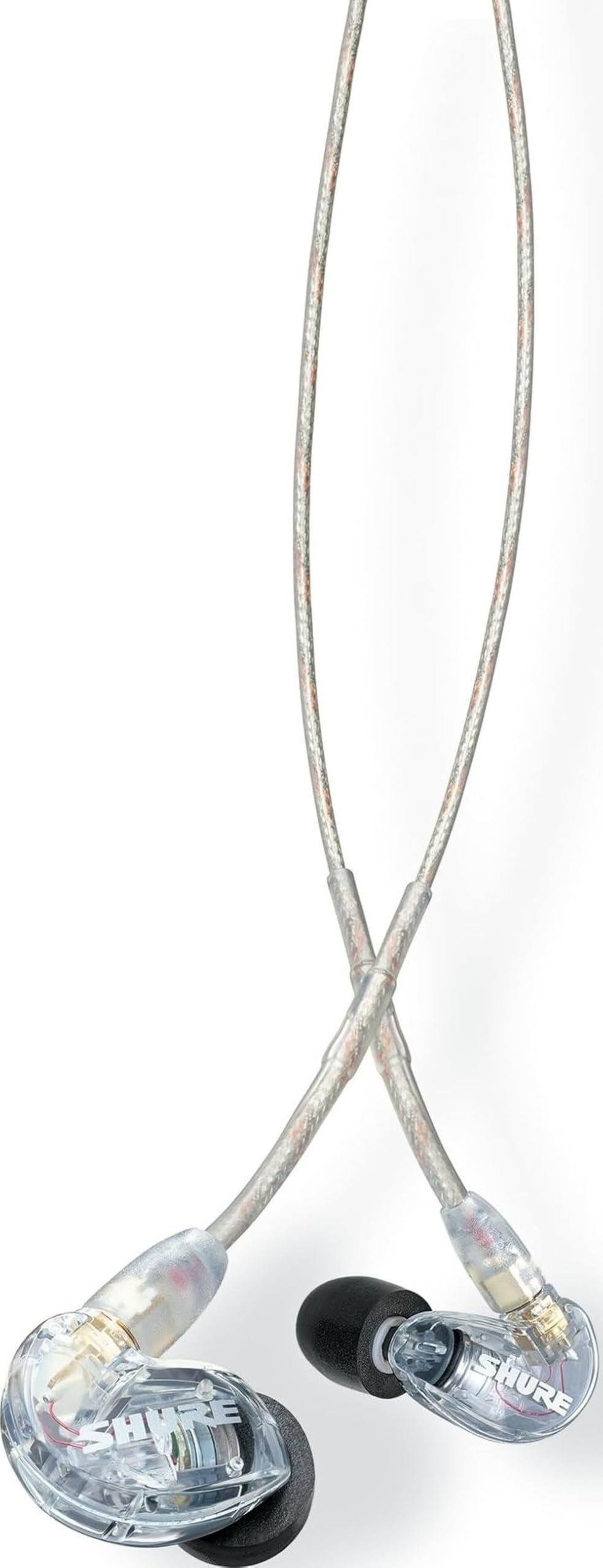
5 Best Shure In-Ear Monitors of 2026: Find Your Fit and Use

Find the best Shure in-ear monitors for stage, studio, commute, or audiophile listening — and know which trade-offs matter before you buy.

Shure's wired IEM lineup spans from entry-level stage monitors to four-driver flagships, but the real buying decision is not driver count. Fit, tip seal, cable seating, and warranty coverage decide whether a model disappears into your workflow or keeps interrupting it. That is why this guide sorts the lineup by use case instead of price tier.

The lower end of the range already delivers the isolation, detachable cable, and bass response that most musicians and commuters need. Higher-priced models add detail and tuning options, but they also demand more patience with fit and source pairing. If you buy by how you listen — stage, studio, train, or critical listening — the right choice becomes clear.

No Shure model is universally comfortable or universally neutral. The best trade-off is the one that matches the shape of your ear, the output of your device, and the type of listening you do most.

About the Sound Score: This comparative score is calculated from a product's published customer rating and review volume. It is not a laboratory measurement or a hands-on test result.

1

Best Overall

Shure SE215 Pro

89 /100
Sound Score Excellent

Key details

Fit Design
Over-ear wireform
Sound Isolation
Up to 37 dB
Detachable Cable
Detachable MMCX
Driver Configuration
Single dynamic MicroDriver
View on Amazon

The SE215 Pro delivers deep bass and clear highs with up to 37 dB of passive isolation, and it is the entry-level model in Shure's wired monitor lineup. The single dynamic driver is tuned toward a warm, stage-friendly sound rather than a neutral reference; if you need flat analytical response, the dual-driver and triple-driver options in the same lineup are the better fit.

The detachable MMCX cable is the practical highlight. Worn cords can be swapped in seconds without replacing the earpieces, which makes this model a sensible long-term buy for daily commutes or regular stage work. The over-ear routing holds the earpieces in place while you move, and the low 10-ohm impedance means a phone, laptop, or headphone amp can drive it to healthy levels. The same MMCX standard is used across Shure's lineup, so replacement cables are easy to source.

Passive isolation is the other major strength. With a proper seal, the 37 dB figure puts the SE215 Pro in the same league as active noise cancelling, but with no battery or electronics to charge. That is what makes it useful on a plane, in a noisy venue, or in a shared office. There is no hiss or noise floor from active circuitry to distract during quiet passages.

Build quality also holds up at the price. The shells feel substantial rather than flimsy, and the MMCX connectors seat with a firm click. The clear housing shows the internal driver, which gives the earpieces a professional instrument look.

The SE215 Pro is aimed at budget-conscious musicians, first-time Shure buyers, and commuters who want to block ambient sound without spending for ANC. It is not for buyers who need an inline mic/remote or a flat analytical reference. Fit depends heavily on ear shape: without a good seal, both bass and isolation drop sharply. If your ears accept a standard tip, the SE215 Pro's bass and isolation are exactly what makes it a stage-worthy monitor.

At entry-level pricing, the SE215 Pro keeps the core Shure wired monitoring experience—isolation, detachable cable, and deep bass—intact while the dual-driver and triple-driver models add more resolution at a higher price. For the right wired IEM buyer, that balance is what makes it the pick of the lineup.

💡 Replace the foam tips when they lose their spring; fresh ones restore both isolation and bass response.

Pros

  • Deep bass and clear highs give a detailed, well-balanced sound for monitoring and listening.
  • Build quality feels substantial at an entry-level price, with solid shells and firm connectors.
  • Entry-level pricing delivers strong cost-per-performance value in the Shure wired lineup.
  • Passive isolation blocks up to 37 dB of ambient noise when the included tips seal properly.

Cons

  • Stock cable can feel stiff and has a faint plastic smell at first.
  • In occasional units, one side can cut out after months of use.
Our verdict

For stage work, commuting, or travel, the SE215 Pro gives you the core Shure wired IEM experience—isolation, detachable cable, and bass weight—at a price that makes higher-tier models a harder sell.

Check Latest Price
2

Best Balanced Clarity

Shure SE425 Pro

87 /100
Sound Score Excellent

Key details

Fit Design
Over-ear wireform
Sound Isolation
Passive sound isolating
Detachable Cable
Detachable MMCX
Driver Configuration
Dual balanced-armature drivers
View on Amazon

The SE425 splits the difference in Shure's wired lineup: dual drivers deliver more midrange separation than the single-driver entry, without moving up to the triple-driver flagship. Its tuning is balanced rather than warm, so vocals and acoustic textures sit forward while bass stays controlled. This is a reference-minded earpiece that reveals recordings instead of flattering them.

Passive isolation is strong once the tips seat properly. Street noise and cabin rumble drop away without any circuitry, which makes these earbuds practical for travel monitoring or focused listening in shared spaces. The detachable MMCX cable swaps in seconds, so a worn cable does not end the life of the earpieces. The 22 ohm impedance pairs with phones and portable players without extra amplification, though a headphone amp adds headroom for dynamic peaks.

This pick suits detail-first listeners who find the bass-forward entry too thick and do not need the triple-driver resolution of the flagship. Bass-light tuning is a real boundary for low-end-heavy genres, so warmth seekers should look elsewhere. Vocalists, producers checking midrange, and anyone who prefers a neutral signature get the most from it. That focus makes this dual-driver Shure a deliberate middle-step upgrade rather than a sideways alternative.

💡 The over-ear cable loop distributes weight across the ear, which helps once you get the routing angle right.

Pros

  • Dual-driver tuning gives vocals and acoustic instruments a clear, natural presence.
  • Sound-isolating shells reduce jet and traffic noise without active electronics.
  • Detachable MMCX cable and sturdy shells hold up to regular travel use.

Cons

  • The over-ear shell can feel tight for smaller or sensitive ear shapes.
  • One-sided audio loss can occur; reseat the MMCX connector before assuming the driver is at fault.
Our verdict

The SE425 is the wired Shure for listeners who want dual-driver clarity and neutral midrange without stepping up to the flagship.

Check Latest Price
3

Best Professional-Grade Triple-Driver

Shure SE535 Pro

86 /100
Sound Score Excellent

Key details

Fit Design
Over-ear wireform
Sound Isolation
Passive sound isolating
Detachable Cable
Detachable MMCX
Driver Configuration
Triple balanced-armature drivers
View on Amazon

The SE535 PRO resolves triple balanced-armature detail across an accurate full-range response, and its passive isolation keeps stage noise from masking vocal cues. Output volume is high, providing the headroom needed on loud stages. Compared with the dual-driver SE425, the third driver adds separation between low, mid, and high frequencies, so a singer stays audible when instruments stack up.

The passive isolation handles airplane and engine noise without any power, and the detachable MMCX cable turns a worn cable into a serviceable repair rather than a full replacement. Housing and strain reliefs are built for regular gigging, and the clear shell keeps the connector area visible for a quick check before a set.

This monitor is for working musicians, stage performers, and engineers who need vocal and midrange clarity at monitored levels. Comfort and fit can be difficult for some ears, especially during long sessions, so the aggressive seal required for isolation should be tested before a day of rehearsals. For audio engineers, the full-range tuning stays neutral enough to check a mix without the low-end emphasis that colors consumer monitors. The bass is controlled and accurate rather than boosted, which rules out listeners who want deep-bass consumer tuning; the entry-level SE215 covers casual monitoring at a lower cost.

💡 When reconnecting the detachable cable, push until it seats; a loose MMCX joint can drop one channel without damaging the earpiece.

Pros

  • Triple balanced-armature detail separates vocals from instruments with enough clarity for live monitoring.
  • Passive isolation blocks airplane and engine noise, keeping monitor levels low on stage.
  • Solid shell construction and a detachable MMCX cable keep repair costs down.

Cons

  • Long sessions can become uncomfortable for some ear shapes; tip choice and insertion angle matter.
  • A single earpiece can lose output; warranty service resolves the unit.
Our verdict

The SE535 PRO suits critical listeners and stage work; casual listeners should weigh the entry-level SE215 for similar isolation and a detachable cable at a lower price.

Check Latest Price
4

Best with Mic for Travel & Calls

Shure AONIC 215

83 /100
Sound Score Excellent

Key details

Fit Design
Over-ear wireform
Sound Isolation
Up to 37 dB
Detachable Cable
Detachable MMCX with remote/mic
Driver Configuration
Single dynamic driver
View on Amazon

The AONIC 215 is the travel-minded version of Shure's wired monitor: it keeps the detachable MMCX cable and 37dB isolation, then adds an inline remote/mic that the classic SE215 Pro leaves out. The shell is smaller and rounds off at the ear, which makes it less intrusive under a helmet or in a crowded car.

This model suits commuters and riders who split the day between calls and music. The over-ear cable holds well during movement, and the foam tips block road and transit noise once they seal. The tradeoffs are setup-bound: the stock cable is short for desktop listening, and fit depends on trying tips until one matches your ear shape.

Sound stays clear and composed, with crisp highs and bass that stays defined rather than muddy; vocals remain present in busy mixes, which suits spoken-word podcasts and live-style recordings as much as music. Isolation is strong enough to lower volume demands outdoors, and the remote/mic handles voice duties without a separate headset.

The cable unclips from the earpieces, so a damaged cord can be replaced without swapping the whole unit. That flexibility is uncommon at this price, and it stretches the useful life of the earpiece.

Pros

  • Crisp highs and defined lows keep vocals and basslines clear without the muddiness of budget earbuds.
  • Build quality feels solid and well above the entry-level price.
  • Foam tips deliver strong isolation, cutting road and transit noise during commutes.
  • Entry-level pricing buys a detachable-cable Shure with mic and remote, which is rare at this price.

Cons

  • The stock cable is short for desktop listening; an extension cable solves it for home monitor setups.
  • Ear shape can prevent a stable seal; a secure fit may require switching between the silicone and foam tips.
  • Durability can vary between units; if one side drops audio, reseating the MMCX connection is the first check.
Our verdict

The AONIC 215 fills the call-ready gap in Shure's wired lineup without abandoning the detachable-cable design.

Check Latest Price
5

Best Flagship Customizable

Shure SE846 Gen 2

85 /100
Sound Score Excellent

Key details

Fit Design
Over-ear wireform
Sound Isolation
Sound isolating sleeves
Detachable Cable
Detachable 3.5mm
Driver Configuration
Quad balanced-armature drivers
View on Amazon

The SE846 Gen 2 stands apart in Shure's wired IEM lineup through its user-swappable acoustic filters: the included nozzles move the response from neutral to warm to bright, so the same earphone can serve different monitoring tasks without an equalizer. The quad balanced-armature array adds speed and detail, and 114 dB sensitivity means it reaches listening level from a dongle or audio interface without a separate amp. Build quality matches the price band: a dense clear shell, sturdy MMCX connectors, and a detachable 3.5mm cable. It is the model that makes tuning a feature of the earpiece itself, something the triple-driver step in the lineup does not offer.

The detachable MMCX cable is service-friendly, though a partially seated connector can cut one channel, so it pays to click both ends into place. Tip seal matters as much as driver count: the included sound-isolating sleeves anchor low end and block outside noise when fitted correctly, while a loose fit thins the bass and weakens isolation.

This is for producers, engineers, and audiophiles who treat the earphone as a monitoring instrument and want to match the voicing to the source or mix. It is not aimed at casual listeners or commuters, and buyers who need a built-in mic on the stock cable will want a separate remote-capable cable. Premium pricing puts it in serious-listener territory; the interchangeable filters are the payoff.

Pros

  • Interchangeable nozzles tune the response between neutral, warm, and bright.
  • Quad balanced-armature drivers deliver quick, precise transient detail across the range.
  • Detachable MMCX cable can be replaced without reshelling the earpiece.

Cons

  • Stock cable is audio-only; call handling requires a separate remote-capable cable.
  • Premium pricing targets serious listeners; casual buyers get little from the tunable filters.
Our verdict

The SE846 Gen 2 is the Shure wired IEM for listeners who want reference detail and the freedom to change the voicing without changing the earphone.

Check Latest Price

How to Choose

Driver Configuration

Shure uses one dynamic MicroDriver in entry models and multi-driver balanced-armature arrays in higher tiers. Moving from one driver to two, three, or four does not automatically add bass or volume; it divides the frequency range among separate transducers.

Multi-driver models tend to reveal more detail in mids and highs, while a single dynamic driver often sounds warmer and fuller down low. Most listeners notice this difference only when monitoring vocals or listening critically.

Isolation and Ear-Tip Fit

Shure's passive isolation rating only holds when the ear tip forms a complete seal in your ear canal. Foam tips expand to fill the canal; silicone tips depend on finding the exact size for your ear shape. Air leaks cut bass response and ambient-noise reduction sharply.

Test the included tip styles before judging a model. The right seal also changes comfort over time; a tip that feels fine for ten minutes can become painful in a long session.

Detachable Cables

MMCX connectors let you replace a damaged cable without replacing the earpieces, but the connector can rotate and loosen over time. A loose connection usually causes one side to cut out until the cable is reseated.

Keep the connector clean and avoid sharp bends in the cable. Replacement cables are available separately, and the AONIC 215's cable adds a remote and microphone.

Impedance and Sensitivity

Shure IEM impedance spans 9 to 36 ohms, so a phone, laptop, or headphone amp can drive every model. The catch is source noise: high-sensitivity models such as the SE846 at 114 dB turn a small volume step into a large loudness jump.

For quiet listening, pair high-sensitivity IEMs with a clean low-noise output stage; a hissy desktop amp exposes itself during silent passages.

Over-Ear Fit Design

The over-ear wireform routes the cable behind your ear so cable weight does not pull the earpiece out. It is the standard stage-monitor shape, but it adds a second contact point: the ear wire itself.

Eyeglass arms, face shape, and jaw movement can interfere. Bend the wireform around your ear, then insert the tip with a slight twist.

Frequently Asked Questions