9 Best TV Listening Device for Seniors of 2026: Built to Last

Which TV listening devices for seniors keep working through daily use, and which trade-offs matter before you buy. Match it to your TV and hearing needs.

Most wireless TV headsets sound clear on the first evening. The harder question is whether they still charge, pair, and feel comfortable after a year of daily living-room use. Battery charging and durability are where budget sets and even well-regarded models start to separate.

The fix is to match the device to three things: your TV's audio outputs, your hearing needs, and the head-wear style you will actually tolerate. An over-ear headset with a drop-in dock suits the largest number of seniors. A neckband speaker or tabletop companion speaker is a better fit for anyone who refuses to wear headphones.

Sound settings are part of that match as well. Speech-focused tuning and left/right balance controls can do more for tired ears than a simple volume boost, but only if the connection itself stays stable. Confirm the TV has an optical, AUX, RCA, or HDMI ARC port before shopping, because no headset can create an output that is not there.

About the Sound Score: This comparative score is calculated from a product's published customer rating and review volume. It is not a laboratory measurement or a hands-on test result.

1

Best Overall

Avantree Ensemble

89 /100
Sound Score Excellent

Key details

Charging
Dock
Form Factor
Over-ear
Battery Life
35 hours
Connectivity
Optical, AUX, Bluetooth
View on Amazon

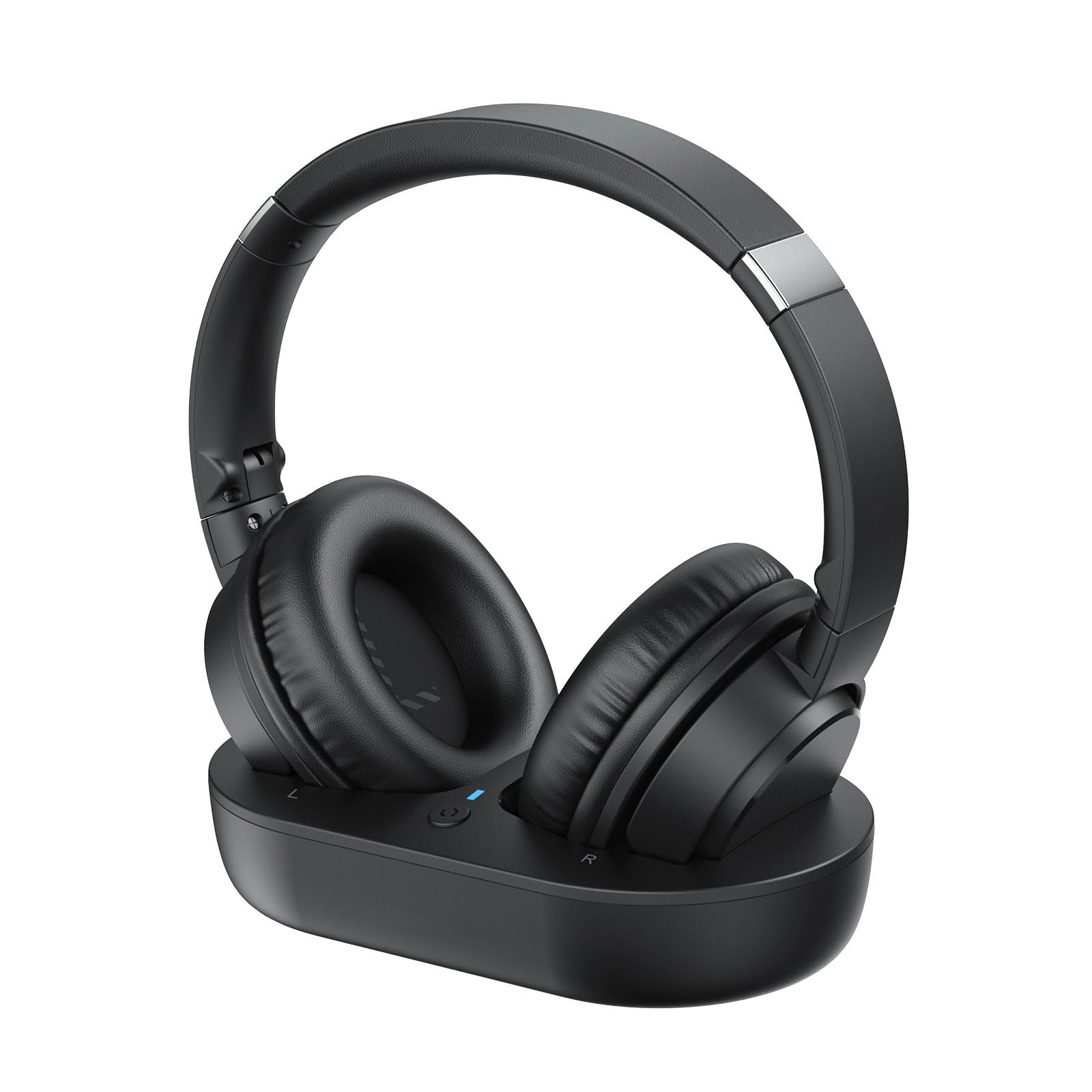
The Ensemble makes TV dialogue noticeably easier to follow, with clear voice reproduction that keeps conversations distinct from background music and effects. The over-ear cushions are soft enough for extended sessions, and the 35-hour battery easily covers multi-episode viewing before a recharge. Low-latency transmission keeps lip sync tight, so the audio stays matched to the picture. The voice-focused tuning does not just raise the volume; it makes speech easier to parse when the TV mix is busy.

Setup takes minutes: connect the transmitter to the TV via optical or 3.5mm AUX, place the headset on the dock, and the base handles charging and signal transmission together. The buttons are large and clearly labeled, and the headset feels sturdy during ordinary evening use. The dock keeps everything in one place, which removes the separate-cable clutter that can discourage older viewers from using a TV headset in the first place. A caregiver who has never set up a TV headset can get it running in the time it takes to find the right input.

This is for seniors with mild-to-moderate hearing difficulty who want clearer TV dialogue without raising the volume for everyone else, and for caregivers who appreciate a product that is simple to set up and well documented. It works well as a daily listening tool for hearing-aid users, but it is not a hearing-aid replacement and does not provide profound-loss amplification. First-time wireless buyers will find the controls intuitive and the printed guide helpful. The headband is the boundary: after months of daily use, cracking has been noted in some households, so regular handling is fine but rough use is not. TVs with only HDMI-ARC and no optical or AUX output will need a different system.

At a mid-range price, the Ensemble delivers a complete optical/AUX system that works without an app, a soundbar, or a technical routine. It is not the feature-loaded option in this category, and it does not try to be. The workflow is predictable, which makes it the category default for first-time wireless TV headphone buyers. If the TV has optical or AUX and the goal is clearer dialogue without disturbing the room, this is the system to start with.

Pros

  • TV dialogue stays clear and distinct from background music, so you can keep the room volume down.
  • Optical or AUX setup is nearly plug-and-play; the transmitter dock handles the rest.
  • Soft over-ear cushions keep listening comfortable through long programs.
  • Works well as a daily TV listening tool for hearing-aid users.
  • Sturdy build quality holds up well in ordinary living-room use.

Cons

  • Occasional pairing or connectivity drops may leave the headset quiet until it is re-synced.
  • Charging can become inconsistent over time; a headset may not hold a charge or may not seat fully in the dock.
Our verdict

The Ensemble is the complete optical/AUX TV-listening system to start with: clear dialogue, comfortable over-ear fit, and a dock that keeps the routine simple. It suits seniors with mild-to-moderate hearing difficulty and caregivers who want a daily tool without modern-audio complications.

Check Latest Price
2

Best for HDMI & Soundbar TVs

Avantree Opera Plus

83 /100
Sound Score Excellent

Key details

Charging
Dock
Form Factor
Over-ear
Battery Life
35 hours
Connectivity
HDMI ARC, Optical, AUX
View on Amazon

The Opera Plus is the clearest route to boosted TV dialogue in a soundbar household. Its transmitter takes audio from an HDMI-ARC port and sends it to the headset, while an optical output keeps the soundbar playing. That lets one viewer listen at elevated volume without pushing the room audio up for everyone else. The 35-hour battery and dock charging keep the headset ready for daily use.

Dialogue remains crisp and intelligible at higher volumes, with 30ms latency keeping speech in sync. Voice frequencies stay forward in the mix, which makes dialogue easier to follow without repeated rewinds. The over-ear design is light enough for a full movie, and the premium-priced feature set—ARC input, optical passthrough, dock charging, and long battery—sits above basic optical-only TV headsets.

This headset suits seniors with a modern HDMI-ARC TV and a soundbar that must stay on for others in the room. It also works with optical and AUX connections when the TV lacks ARC. For hearing loss that needs hearing-aid-level gain, a dedicated amplified product is a better fit. The headband and build are the two physical variables to check in person before daily use.

💡 For soundbar passthrough, run an optical cable from the transmitter to the soundbar; HDMI ARC carries audio to the headphones only.

Pros

  • Dialogue is crisp at higher volume, with a boost that helps older listeners follow TV without raising the room volume.
  • HDMI ARC connection removes extra wiring on modern TVs and routes TV audio to the headset.
  • Soft ear cups and light clamping keep the headset comfortable for long viewing sessions.
  • Premium-priced feature set—ARC, dock charging, long battery—covers the needs of soundbar households.

Cons

  • Some units may have loose-feeling ear-cup joints; a quick hands-on check is a sensible precaution.
  • The headband's limited adjustability can feel loose on smaller or narrower heads.
  • Occasional pairing resets or signal dropouts can interrupt a listening session.
Our verdict

The Opera Plus pairs modern HDMI-ARC wiring with a loud, clear headphone feed and soundbar passthrough—the right call for one-room, two-volume TV watching.

Check Latest Price
3

Best Headphone-Free TV Speaker

SEREONIC TV Speaker

83 /100
Sound Score Excellent

Key details

Charging
USB cable
Form Factor
Companion speaker
Battery Life
8 hours
Connectivity
Optical, RCA, AUX
View on Amazon

The SEREONIC is a portable wireless TV speaker that puts clear dialogue next to a recliner, nightstand, or kitchen counter without asking the listener to wear headphones. It connects to the TV through optical, RCA, or 3.5mm audio outputs via an RF transmitter, and the speaker itself moves with the listener. The 95dB output makes it the portable companion in this set rather than a tabletop unit built around a stethoscope headset.

Voices come through crisp and easy to follow, which is the core demand for evening TV watching. The body holds up to being carried between rooms, and the setup routine is minimal: plug in the transmitter, select the TV's audio output, and keep the speaker charged when not in use. The sound profile favors speech over effects, so dialogue stays ahead of background music and action.

This is for a senior who refuses to wear headphones, a viewer who wants separate volume from a partner, or anyone who does most TV listening from a bed or kitchen chair. It is not a medical-grade amplifier, and the volume ceiling is a boundary for profound hearing loss. Buyers who want a zero-maintenance daily device should choose accordingly.

💡 Keep the speaker seated fully in its dock when not in use to minimize charging hiccups.

Pros

  • Clear dialogue and enhanced TV voice reproduction
  • Easy to set up and use
  • Portable and convenient to move around the home
  • Solid build quality

Cons

  • Charging contact can be inconsistent in some units
  • Long-term durability can vary between units
Our verdict

For headphone-averse seniors who want clearer TV dialogue from a bed or kitchen chair, this portable speaker is the right runner-up.

Check Latest Price
4

Best Neckband Speaker System

HomeSpot Neckband TV Speaker

88 /100
Sound Score Excellent

Key details

Charging
USB cable
Form Factor
Neckband speaker
Battery Life
50 hours
Connectivity
Optical, 3.5mm, RCA
View on Amazon

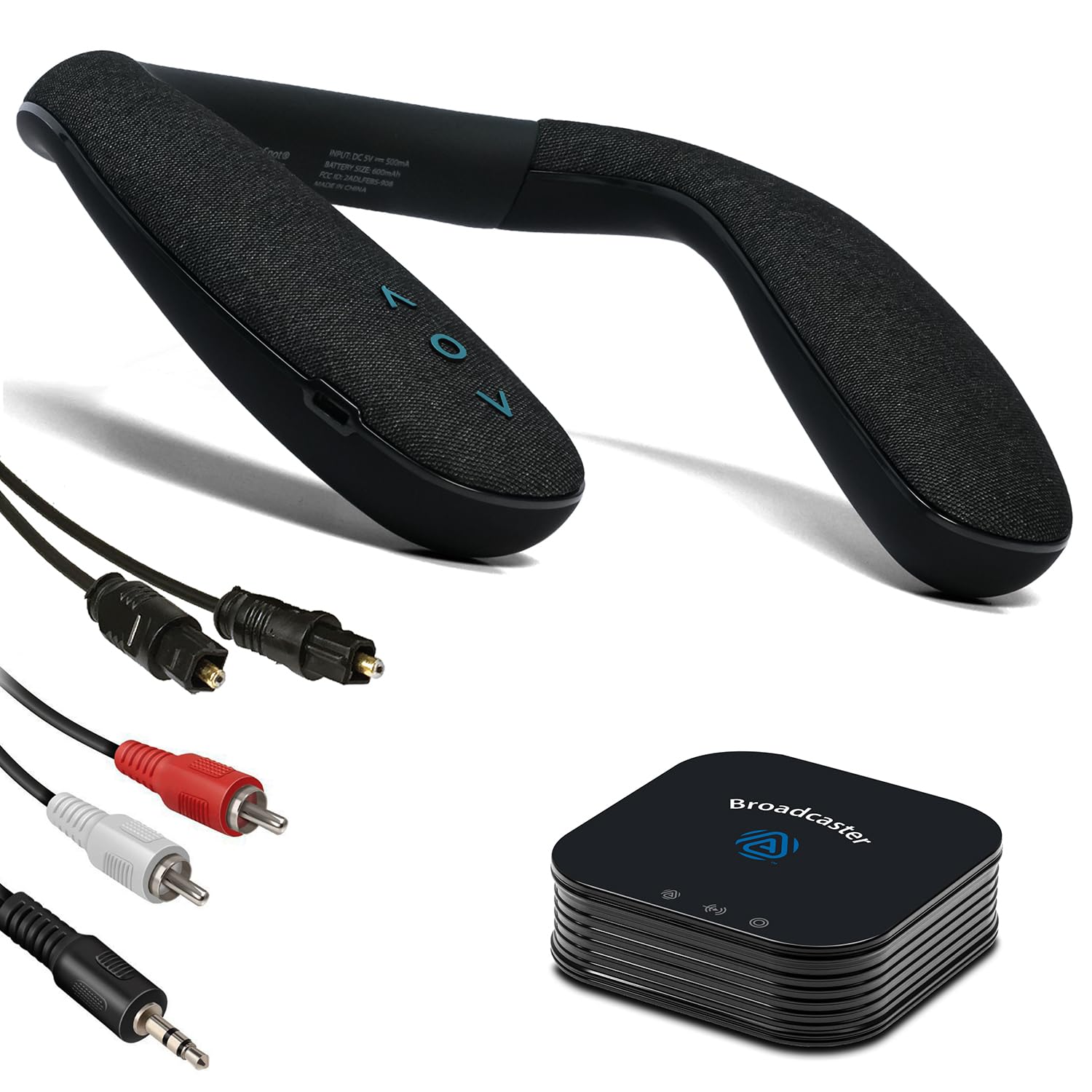
The HomeSpot BA210 v2 delivers clear, immersive TV audio through open-ear stereo drivers that rest on the shoulders instead of in or over the ears. A 50-hour neckband battery and a low-latency Bluetooth transmitter turn it into a complete TV-listening package, and the open design keeps the viewer connected to the room.

Unlike a tabletop companion speaker, this system travels with the listener. The transmitter pairs with a one-time button press and accepts optical, 3.5mm, or RCA audio, so TVs with those outputs need no extra adapter; the neckband stays light through long sessions and the build feels solid for the price.

The open-air format keeps the viewer connected to the room; the tradeoff is some sound leakage and the absence of a mute button on the band. That matters less for a viewer who will mute from the TV remote, but it rules out completely private listening.

This is the right shape for seniors who dislike earbuds and over-ear headphones, need TV dialogue boosted for one listener, and want to stay aware of their surroundings. It also fits shared viewing where one person needs a louder feed without raising the volume for everyone.

💡 Store the transmitter near the TV and leave the neckband on its charger between sessions; the 50-hour battery removes the need to charge every day.

Pros

  • Clear, immersive TV audio without earbuds or headphone pressure.
  • One-time transmitter pairing handles the setup with optical, 3.5mm, or RCA TVs.
  • Lightweight neckband stays comfortable through long TV sessions.
  • Solid build quality at a mid-range price.

Cons

  • TVs with only an occupied HDMI-ARC port and no optical, 3.5mm, or RCA output are outside this system's reach.
Our verdict

Choose this neckband when the goal is one-person TV volume with the TV sound left for the room.

Check Latest Price
5

Best In-Ear TV Headset

SIMOLIO SM-824D1

83 /100
Sound Score Excellent

Key details

Charging
Dock
Form Factor
In-ear
Battery Life
14 hours + spare
Connectivity
Optical, AUX, RF
View on Amazon

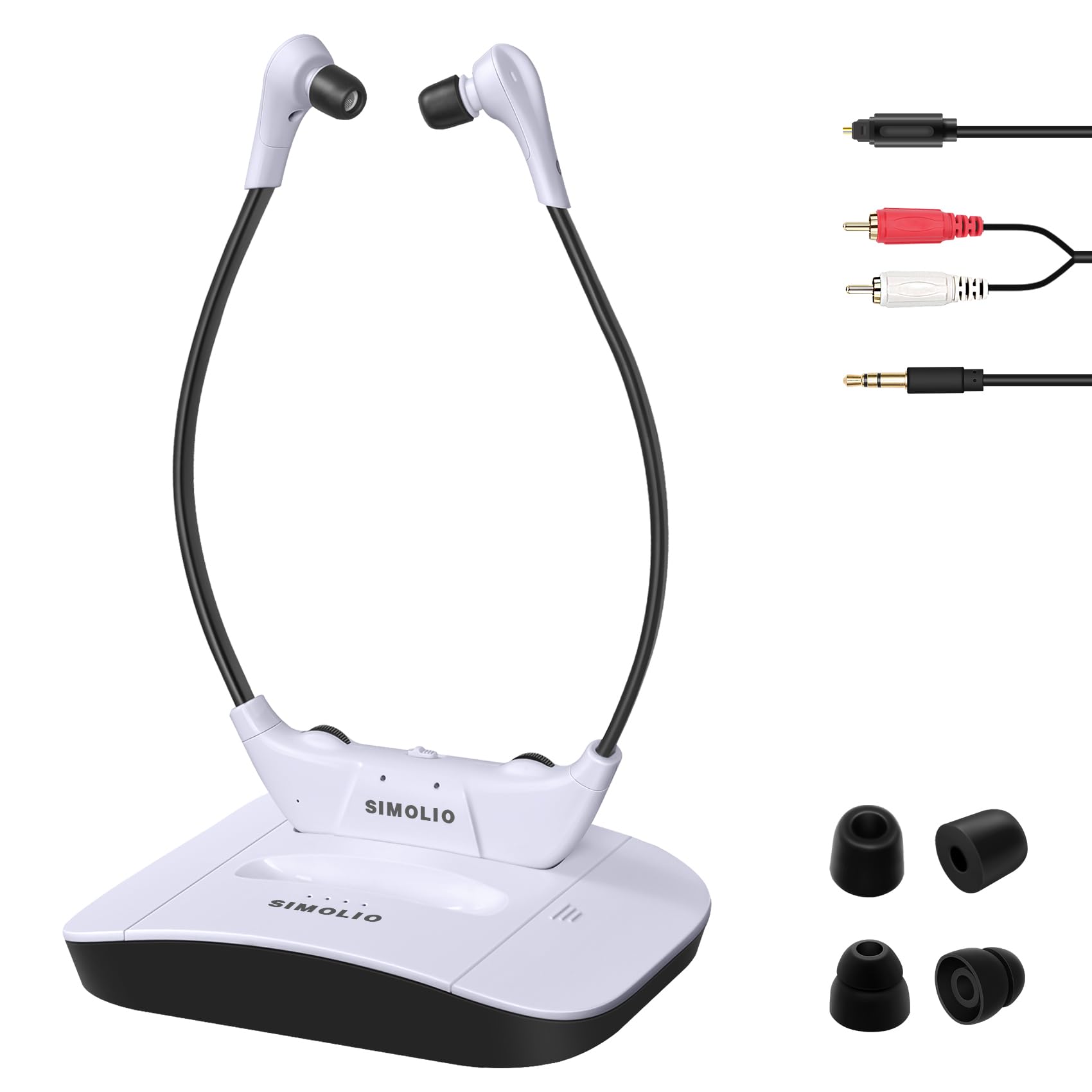
The SM-824D1 is the in-ear SIMOLIO option: a lightweight earbud headset with a base that stores a spare battery, plus L/R balance, tone, and mono/stereo settings that make TV dialogue easier to follow.

This setup fits a senior who prefers small earbuds to over-ear cups, especially someone with different hearing levels in each ear or glasses that make headband pressure unwelcome. The lightweight earbuds, separate left/right balance, and room-spanning RF signal match that profile. In-ear comfort varies from person to person, so a comfort check is the first filter before buying.

The base's spare battery extends the 14-hour internal battery without waiting for a charge, and a built-in microphone keeps you aware of the room while wearing the headset. The optical bypass lets a soundbar continue playing for the room while the headset carries the same audio. The transmitter accepts optical or AUX input, and the headset pairs automatically once powered.

Durability can be inconsistent after months of daily use, so this is not a long-term set-and-forget purchase. The mid-range price, spare battery, and dialogue clarity keep it a reasonable value in the right household.

💡 Keep the spare dock battery charged and ready for a quick swap before a long movie.

Pros

  • Dialogue-forward tuning brings TV speech forward, making quiet conversations easier to follow without boosting background noise.
  • The dock stores a spare battery, and swapping in a fresh pack extends long viewing sessions.
  • Setup is quick: plug in the transmitter, connect optical or AUX, and the headset pairs with the base.
  • The 2.4GHz RF signal holds up through walls, so moving to the kitchen keeps audio intact.

Cons

  • The 14-hour battery can be short for seniors who keep the TV on from morning until bedtime.
  • In-ear tips can be uncomfortable or loose for people with sensitive ear canals; a secure fit is not guaranteed.
Our verdict

For a senior who prefers lightweight earbuds and needs per-ear volume control, the SM-824D1 delivers clear TV dialogue with a spare battery in the base.

Check Latest Price
6

Best Budget Over-Ear

SKYCOMET TV Headphones

85 /100
Sound Score Excellent

Key details

Charging
Dock
Form Factor
Over-ear
Battery Life
65 hours
Connectivity
Optical, AUX, RCA, Bluetooth
View on Amazon

The SKYCOMET wireless TV headset combines 65-hour playtime and a charging dock at a budget price, so long evening viewing sessions do not get interrupted by charging reminders. Protein-leather cushions add comfort for extended wear.

Dialogue comes through clear and balanced, with enough vocal presence to make speech easy to follow. Optical, AUX, RCA, and Bluetooth inputs cover older TVs and soundbars, and the transmitter pairs quickly. Latency stays low enough that lip-sync issues do not intrude during normal programs.

The charging dock doubles as a storage spot, keeping the headset in one place and ready to grab. The lightweight frame and soft protein-leather ear cushions suit lengthy TV sessions, and setup is simple for non-technical users.

This is a practical gift for budget-focused seniors who watch several hours of TV a day and want clearer dialogue without turning up the room. Connectivity can drop and require re-pairing in some setups, and quality control can vary from unit to unit, so buying from a return-friendly retailer is a reasonable step. An HDMI-only TV will not connect.

💡 If the audio link drops, placing the headset back on the dock for a few seconds usually restores it.

Pros

  • 65-hour playtime covers days of evening TV between dock charges.
  • Soft protein-leather cushions and a light frame stay comfortable for long viewing sessions.
  • Dialogue-focused sound keeps voices clear without harsh treble.
  • Optical, AUX, RCA, and Bluetooth options make hookup easy on older TVs and soundbars.

Cons

  • In some setups the wireless link can drop and require re-pairing.
  • Unit-to-unit quality control can vary, so some headsets may develop issues sooner than expected.
Our verdict

For a senior with optical, AUX, RCA, or Bluetooth TV output, this headset makes dialogue easier to hear while keeping charging out of the daily routine.

Check Latest Price
7

Long Battery Life

LEVN TV Wireless Headphones

86 /100
Sound Score Excellent

Key details

Charging
Dock
Form Factor
Over-ear
Battery Life
65 hours
Connectivity
Optical, AUX, RCA, Bluetooth
View on Amazon

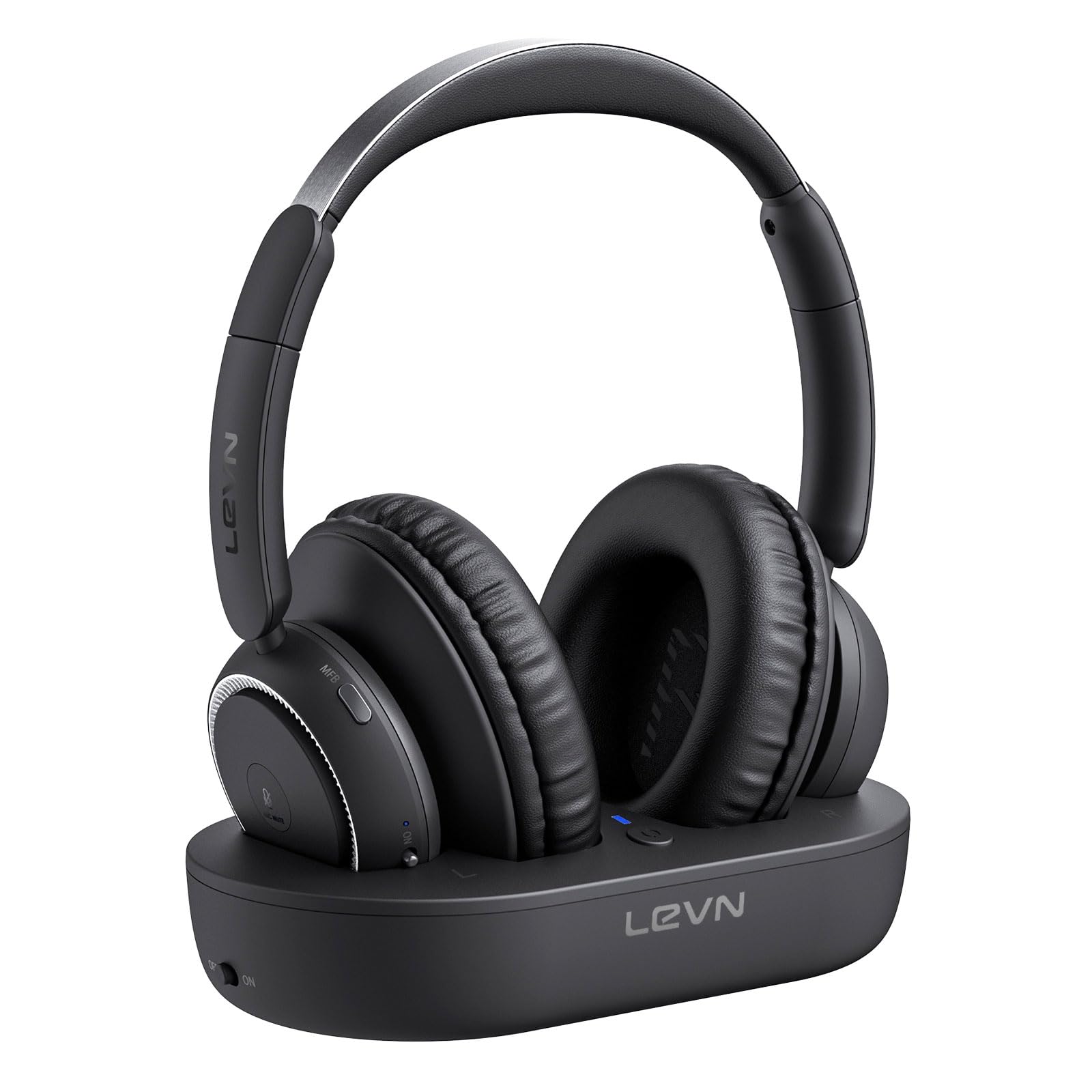
The LEVN keeps the same everyday pattern as the top pick: drop the over-ear headset on its charging base, and it pairs automatically with the transmitter over optical, AUX, RCA, or Bluetooth. Sound is clear and loud enough for everyday TV dialogue, and the 65-hour battery stretches well beyond a typical week of evening viewing. The trade-offs are concentrated in headband durability and occasional re-pairing, which is why it sits just below the top pick. For seniors with mild-to-moderate hearing needs, this is a battery-first alternative; profound loss needs a higher-gain system.

Pros

  • Clear, loud TV sound with a volume adjustment that stays simple to use.
  • Auto-pairs with the transmitter base, so initial setup is plugging in and putting the headset on.
  • Over-ear cushions block surrounding noise for focused private listening.

Cons

  • Returning from Bluetooth use can require placing it back on the charging base to reconnect.
  • Headband and switch durability can vary after months of daily use.
Our verdict

For a senior-focused TV setup that values fewer charging cycles above all else, this over-ear set fits that balance.

Check Latest Price
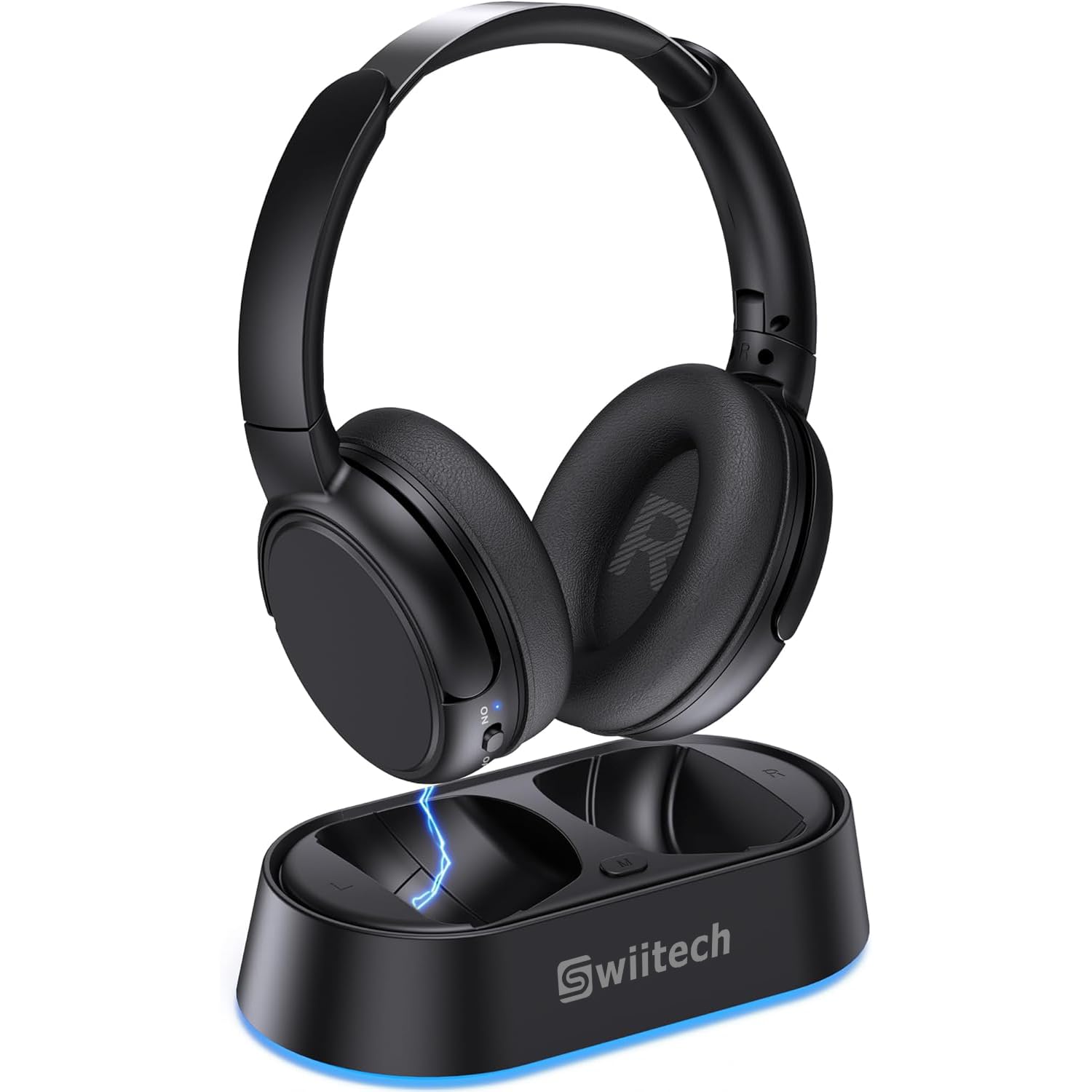
8

Budget First-Time Buyers

Swiitech TV Headphones

88 /100
Sound Score Excellent

Key details

Charging
Dock
Form Factor
Over-ear
Battery Life
45 hours
Connectivity
Optical, AUX, RCA, Bluetooth
View on Amazon

For a budget-priced TV headphone, the Swiitech brings a lot to the living room: 45 hours of battery life, a charging dock that keeps the headphones topped up, and a transmitter that hooks up via optical, AUX, RCA, or Bluetooth in minutes. Dialogue stays clear at moderate volume — the core need for seniors who struggle to follow conversations. The over-ear build feels well made for the price. What keeps it out of the higher tier is its short real-world durability record: a newer model without the years of usage behind the category’s established picks. That trade-off is acceptable for first-time buyers in a secondary bedroom.

Pros

  • Box-to-TV setup takes minutes: plug the transmitter into optical, AUX, RCA, or Bluetooth and the docked headphones pair without menus.
  • TV dialogue comes through clearly at moderate volume, keeping voices intelligible without extra harshness.
  • The 45-hour battery and charging dock keep nightly viewing covered without frequent cable hunts.

Cons

No consistent drawbacks identified in the available review data.

Our verdict

For a first-time wireless TV headphone buyer in a secondary room, the budget price, clear dialogue, and dock routine make this the sensible entry.

Check Latest Price
9

Companion Speaker Use

SIMOLIO 621D TV Speaker

85 /100
Sound Score Excellent

Key details

Charging
USB cable
Form Factor
Companion speaker
Battery Life
8 hours
Connectivity
Optical, RCA, AUX, Bluetooth
View on Amazon

Clear TV dialogue comes from a tabletop speaker that can sit beside the listener, and the wired stethoscope headset adds a useful path for those who prefer not to switch to full headphones. Setup accepts optical, RCA, AUX, or Bluetooth, so nearly any TV will connect without extra gear, and the dual AC adapters make charging convenient in two rooms. The main caveat is long-term behavior: charging consistency and durability can weaken after months of daily use, which keeps it below the category reference. Even so, that pairing of a dialogue-focused speaker and a stethoscope headset gives this unit a distinct place in a senior TV-listening setup.

Pros

  • Dialogue-focused sound brings out TV voices without turning the room into a home theater.
  • Connects through optical, RCA, AUX, or Bluetooth, so nearly any TV can be paired within minutes.
  • Compact enough to move from living room to bedroom and sit near the listener.

Cons

  • Wireless pairing can require an occasional reset after the speaker and transmitter lose sync.
  • Maximum volume may not be enough for profound hearing loss, so a demo is advisable.
Our verdict

This fits the viewer who wants a tabletop speaker beside the chair and a wired stethoscope headset as the fallback for quiet-room listening.

Check Latest Price

How to Choose

TV Connectivity

Check the back of the TV for an optical port, a 3.5mm AUX jack, RCA jacks, or HDMI ARC before picking a device. Most dedicated TV headsets use a transmitter that expects optical or AUX, and a TV with only HDMI ARC will reject them without an adapter.

The practical catch is that optical and AUX connections are stable and simple, while HDMI ARC adds compatibility but brings CEC handshake quirks that can mute or switch audio unexpectedly. For a senior-focused setup, a dedicated optical or AUX connection is usually the more dependable route.

Charging Method

A drop-in charging dock makes a headset practical for daily use because it removes cable hunting and port alignment. Without a dock, a device is far more likely to be left uncharged on a coffee table.

The physical mechanism behind charging complaints is contact alignment. Dust, a slightly crooked drop, or worn pins can stop the dock from charging even when the headset looks seated. If contacts are clean and the headset still drains fast, the battery itself has aged and warrants replacement or service.

Form Factor

Over-ear headphones give the most consistent private listening and the strongest seal around the ear, but they add pressure on the head. In-ear earbuds are lighter but depend on a secure fit in the ear canal, which varies a lot among older listeners.

Neckband speakers and tabletop companion speakers keep the ears open, so the viewer stays aware of the room. The trade-off is sound leakage and lower maximum output. If isolation matters more than awareness, over-ear beats both; if wearing anything on the head is the problem, a speaker-style device is the answer.

Dialogue Controls

General sound quality and speech clarity are not the same thing. Voice-enhancing modes raise talk frequencies above background music and noise, while left/right balance controls correct hearing differences between ears.

Look for explicit controls rather than assuming a louder headset will improve dialogue. Some devices also offer mono mixing, which can help when one ear does most of the work. These features matter more than long battery claims for a hearing-impaired viewer.

Battery Life and Replaceability

Long runtimes are useful, but what matters more is how the battery charges and whether it can be replaced. A 65-hour headset stops being useful if the built-in cell ages and will not hold a charge.

Prefer models with user-replaceable batteries or documented service options. A spare battery in a charging base can double a viewing session and extend the usable life of the device. Treat any rechargeable TV listening product as a consumable, and pick the one that makes replacement easiest.

Frequently Asked Questions