9 Best USB Turntables of 2026: Which Actually Record to Your PC

Find the best USB turntables that actually digitize vinyl to your computer — and skip models where USB only plays flash drives or records to SD.

Shopping for a USB turntable should be easy, but the category has a quiet catch: 'USB' can mean several different things. Some decks record audio to a computer, while others only play files from a flash drive or record to an SD card. That mismatch leaves buyers with a record player they cannot use for the vinyl-to-PC archiving they had in mind.

The practical fix is to check the USB output type before comparing cartridges or drive systems. Once you filter for models that connect directly to a PC or Mac, the remaining choices come down to speed stability, tonearm adjustability, and whether Bluetooth output matters for your setup. Clear decisions on those specs produce digital files you will actually want to keep.

About the Sound Score: This comparative score is calculated from a product's published customer rating and review volume. It is not a laboratory measurement or a hands-on test result.

1

Best Overall

Audio-Technica AT-LP120XUSB

95 /100
Sound Score Outstanding

Key details

Drive Type
Direct-drive DC servo
Phono Preamp
Built-in switchable phono/line
USB Output Type
USB to PC digitization
Bluetooth Direction
No Bluetooth output
View on Amazon

The direct-drive DC servo motor keeps 33/45/78 RPM playback steady, which matters when a USB capture is running. The built-in switchable phono/line preamp sends a clean signal to a computer, powered speakers, or a receiver without an outboard phono stage. A balanced S-shaped tonearm with adjustable anti-skate gives enough control to keep the stylus tracking properly through long sides.

For archiving sessions, the direct-drive motor holds speed through long sides, so digitized files do not drift noticeably. The stable platter keeps the record level, and the USB path records the selected phono or line signal without an additional interface. Direct-drive torque brings the platter up to speed quickly and maintains it under stylus drag, which helps when recording older or warped records.

Setup emphasizes mechanical control. The counterweight and anti-skate need a few minutes to balance, and the platter sits flat once assembled. Selecting the internal preamp is a matter of flipping the switch to route phono or line signal to the USB output. That flexibility helps when moving between a receiver and a computer input without re-plugging the turntable.

The 78 RPM setting extends capture work to shellac transcriptions that some USB decks omit. The S-shaped tonearm supports standard cartridge swaps, so the included cartridge is a starting point rather than a dead end. That manual control suits listeners who want to hear the record at a known speed, not fight a runaway platter.

This deck matches vinyl collectors who already have wired speakers or a receiver and want USB-to-PC digitization without an outboard phono stage. Manual tonearm operation is part of the package: you cue the stylus and lift it at the end of a side, so buyers who want fully automatic playback should look elsewhere. Bluetooth-first buyers sit outside the use boundary, and a quick return-window test is worth doing for possible motor QC variance.

💡 Keep a wired signal path ready for monitoring and capture — the deck performs best with a USB cable and powered speakers or a receiver.

Pros

  • Crisp, clear playback from the direct-drive motor keeps records sounding detailed.
  • Included cartridge and build quality are strong out of the box.
  • High value for a direct-drive USB deck with this feature set.
  • Setup is approachable with clear instructions and adjustable tonearm settings.
  • Stable platter and solid construction keep records level during capture.

Cons

  • HDMI and digital output are absent; this deck needs a wired USB or analog connection.
  • Motor stoppage or functionality variance can occur on some units.
Our verdict

This is a focused archiving tool: direct-drive speed control, switchable preamp, and manual tonearm adjustments serve USB capture over wireless convenience.

Check Latest Price
2

Best Wireless USB Upgrade

Audio-Technica AT-LP120XBT

93 /100
Sound Score Outstanding

Key details

Drive Type
Direct-drive DC servo
Phono Preamp
Built-in switchable phono/line
USB Output Type
USB to PC recording
Bluetooth Direction
Bluetooth output
View on Amazon

Unlike the wired direct-drive model in this set, the AT-LP120XBT makes Bluetooth output a first-class path, not an afterthought. aptX pairing sends vinyl playback to Bluetooth speakers or headphones while the USB output keeps direct-to-PC recording available for digitization. The included AT-VM95E cartridge sits on an upgradeable path, so stylus swaps or cartridge changes can follow a listener's taste without replacing the deck.

The direct-drive DC servo motor keeps speed stable enough for clean USB captures, while the switchable phono/line preamp lets the deck feed powered speakers, an amplifier, or a computer input directly. Sound is detailed and high-fidelity, with the stock cartridge offering a balanced presentation that suits both archiving and casual listening. Bluetooth output uses aptX for lower latency and better quality than basic SBC, which helps when syncing to wireless headphones or a soundbar.

This is a wireless-first vinyl listener's turntable: buyers who already own Bluetooth speakers or headphones and still want USB-to-PC digitization get both in one deck. The premium over the wired-only sibling pays for aptX output, and the fully manual tonearm means no auto-return at record end. Out-of-box or pairing failures have been noted on some units, so check the return window and pair promptly.

💡 Lift the tonearm via the cue lever when the side finishes — the manual design does not auto-return.

Pros

  • Detailed, high-fidelity sound holds up for both critical listening and USB archiving.
  • Direct-drive construction supports 33/45/78 RPM and delivers speed stability for clean recordings.
  • aptX Bluetooth output connects to wireless speakers and headphones with minimal sync lag.
  • Strong value for a wireless direct-drive deck with USB recording and an upgradeable cartridge.

Cons

  • No auto-return means the listener must lift the tonearm when the record ends.
  • Out-of-box failures or Bluetooth pairing drops may affect some units and require a return or resync.
Our verdict

For vinyl listeners who want aptX Bluetooth output without giving up USB digitization, the AT-LP120XBT is a focused premium pick. Buyers who will never use wireless should save the money and choose the wired direct-drive model in this set.

Check Latest Price
3

Best for Aspiring DJs

Pioneer PLX-500

90 /100
Sound Score Outstanding

Key details

Drive Type
Direct-drive
Phono Preamp
Phono/line output
USB Output Type
USB vinyl recording
Bluetooth Direction
No Bluetooth output
View on Amazon

Direct-drive speed accuracy and a DJ-style pitch control distinguish the Pioneer PLX-500 for vinyl digitization. The USB output feeds a computer for recording, while the club-style pitch fader allows speed adjustment for beatmatching or minor speed correction. Compared with the wired USB direct-drive workhorse in this set, the PLX-500 shares the manual, wired format but steps up the physical presence with a heavier chassis.

Setup is direct, and the included starter cartridge removes one early purchase decision. The phono/line output works with powered speakers or a traditional amp, and the heavy plinth resists vibration during USB recording sessions. That stability is useful when the deck sits on the same surface as speakers or in a room with active foot traffic.

This suits beginner DJs and vinyl purists who want direct-drive control for listening and USB archiving. The wired-only manual DJ layout means no auto-return and no Bluetooth wireless output, so it fits buyers who prefer physical connections and do not expect automatic start/stop. Accessory QC variance such as a missing cartridge or cracked cover can show up on arrival, so inspect the box before first use.

Pros

  • Direct-drive motor maintains accurate speed for DJ mixing and USB recording.
  • Heavy, stable chassis resists vibration during playback and recording.
  • Clear setup and included starter cartridge get new owners started quickly.
  • Phono/line output and USB recording cover hi-fi playback and computer digitization.

Cons

  • Accessory QC variance can include a missing starter cartridge or cracked cover on arrival.
Our verdict

For beginner DJs and vinyl purists, the PLX-500 is a capable direct-drive USB deck with pitch control and stable sound.

Check Latest Price
4

Best Value Belt-Drive

1byone Bluetooth USB

87 /100
Sound Score Excellent

Key details

Drive Type
Belt-drive
Phono Preamp
Built-in MM phono preamp
USB Output Type
USB digital output to PC
Bluetooth Direction
Bluetooth output
View on Amazon

Bluetooth output and USB-to-PC recording sit alongside a built-in moving magnet phono preamp, an adjustable counterweight, and a belt-drive design that looks pricier than its mid-range tier. That combination makes this deck a feature-dense alternative to the wired USB direct-drive workhorse in this set, for buyers who want wireless playback plus archiving without moving to a fully automatic model.

The moving magnet stage and diamond-tipped Audio-Technica stylus give vinyl-to-PC transfers a clear, balanced start, and the switchable phono/line output keeps powered speakers or an amplifier within reach. Build quality holds up for a budget deck, with a cabinet and platter that read as more expensive than the price suggests. The adjustable counterweight also helps with tracking force, which matters for digitization consistency.

Digitization-first buyers who can follow a few setup steps get the best value here. The USB path to a computer is direct, and the manual tonearm and belt-drive platform suit archiving rather than DJ use. Bluetooth output adds wireless playback for soundbars and speakers, while the USB output remains the digitization path. Fiddly initial assembly, occasional unit variation, and device-specific Bluetooth pairing are the tradeoffs that separate this from a one-button automatic deck.

💡 Pair Bluetooth before the session if you plan to listen wirelessly; for digitization, use the USB or line output rather than Bluetooth.

Pros

  • Sound quality for vinyl playback and USB transfers is strong for the price
  • Appearance reads more expensive than the mid-range price
  • Overall build and sound work well for a budget belt-drive deck
  • Bluetooth output connects to a range of soundbars and speakers
  • Value is strong for a feature set that includes USB-to-PC, Bluetooth, and adjustable counterweight

Cons

  • Bluetooth pairing can be device-specific, with some soundbars not connecting
  • Initial assembly and tonearm balancing require more patience than an automatic deck
  • Unit variance can include stopping, no-power, or tonearm drift
Our verdict

For vinyl-to-PC digitization with wireless playback as a secondary convenience, the 1byone covers the brief without forcing a jump to a direct-drive DJ deck. It fits patient DIY buyers who want USB recording and Bluetooth output in one package.

Check Latest Price
5

Premium Semi-Automatic Convenience

Denon DP-450USB

84 /100
Sound Score Excellent

Key details

Drive Type
Belt-driven weighted platter
Phono Preamp
Built-in phono equalizer
USB Output Type
USB-A one-touch recording
Bluetooth Direction
No Bluetooth output
View on Amazon

The Denon DP-450USB centers on a combination the wired direct-drive workhorse in this set does not offer: 78 RPM speed, auto-lift and playback stop, and one-touch USB-A recording. It also accepts moving magnet and moving coil cartridges through its built-in phono equalizer, reducing the need for a separate phono stage. For someone digitizing 78s or wanting semi-automatic operation, that feature set changes the setup calculus.

This deck fits premium convenience buyers with older records and integrated amplifiers or home theater receivers. The built-in phono stage makes it a cleaner match for that context than a manual direct-drive deck. The tradeoff is that the dust cover can rest on the platter or leave sections exposed, and auto-stop or USB recording stop timing can vary during capture. It is not a fit for budget setups or Bluetooth-only playback; it suits buyers who value the automated workflow and 78 RPM support over a conventional lid and repeatable stop behavior.

The weighted platter and belt drive deliver controlled vinyl playback without manual speed-switching, and setup remains manageable for a feature-dense deck. USB-A capture is direct and one-touch, which matters when a separate audio interface would add cabling or software steps.

💡 Remove the dust cover during playback if it contacts the platter or restricts tonearm movement.

Pros

  • Delivers controlled, detailed vinyl playback across 33, 45, and 78 RPM speeds.
  • Premium build and component support feel substantial while setup stays manageable.
  • Setup is quick for a feature-rich deck with built-in phono equalization.
  • USB-A one-touch recording converts vinyl to computer audio without a separate interface.

Cons

  • Dust cover can rest on platter and leave portions of the record exposed.
  • Auto-stop and USB recording timing can vary, creating occasional capture stops at unexpected points.
Our verdict

The DP-450USB serves library-minded vinyl owners with 78 RPM records and an integrated amp or home theater setup who want semi-automatic convenience over fully manual control.

Check Latest Price
6

Style-First Budget

Retrolife Bark Brown

86 /100
Sound Score Excellent

Key details

Drive Type
Belt-drive
Phono Preamp
—
USB Output Type
USB to PC recording
Bluetooth Direction
Bluetooth output
View on Amazon

Retrolife Bark Brown brings a handsome vintage look plus warm, easygoing sound at a budget-friendly price. The included AT-3600L cartridge, adjustable counterweight, and quick setup make it approachable for casual listeners, while Bluetooth output suits powered speakers or headphones without a receiver. The boundary for digitization-focused buyers is speed consistency: a unit can run slow, fast, or wobbly, which shifts pitch during recording. That matters when archiving music, but less for style-conscious listeners planning occasional USB captures rather than critical transfers.

Pros

  • Warm, easy sound that flatters casual vinyl listening.
  • Includes an AT-3600L cartridge and adjustable counterweight for flexible setup.
  • Handsome retro styling that fits a shelf or media console.

Cons

  • In Bluetooth-only rooms, pairing can take extra attempts with some speakers.
  • In digitization work, a unit can show quirks that interrupt capture until troubleshooting or exchange.
Our verdict

This fits a style-first setup that values a warm, good-looking deck for Bluetooth listening and occasional USB captures. Digitization-first buyers should look at direct-drive USB models in this set instead.

Check Latest Price
7

Budget DJ Digitization

Reloop RP-2000 MK2

78 /100
Sound Score Very Good

Key details

Drive Type
Quartz-driven direct drive
Phono Preamp
Built-in phono preamp
USB Output Type
USB audio output for PC
Bluetooth Direction
No Bluetooth output
View on Amazon

The Reloop RP-2000 MK2 pairs a quartz-driven direct-drive motor with built-in USB audio output and an included Ortofon OM Black, so buyers can digitize records without adding a separate phono stage. The selectable +/-8% pitch range supports DJ-style speed adjustment for transfer monitoring. Bluetooth playback is absent, and long-term durability under heavy use is not independently documented. That makes this a focused option for budget-conscious digitizers who want pitch control and are comfortable with a wired-only DJ deck.

Pros

  • Quartz-driven direct-drive motor keeps platter speed steady during USB recording.
  • Built-in USB audio output sends vinyl signal to a computer without an external interface.
  • Included Ortofon OM Black cartridge provides a moving magnet pickup out of the box.

Cons

  • Pitch control tops out at +/-8%, so wide DJ tempo shifts require a different deck.
  • No 78 RPM speed limits digitization of shellac or older archival records.
Our verdict

Choose the Reloop RP-2000 MK2 for wired vinyl-to-PC archiving where DJ pitch control and the included cartridge are priorities.

Check Latest Price
8

Budget Bluetooth USB

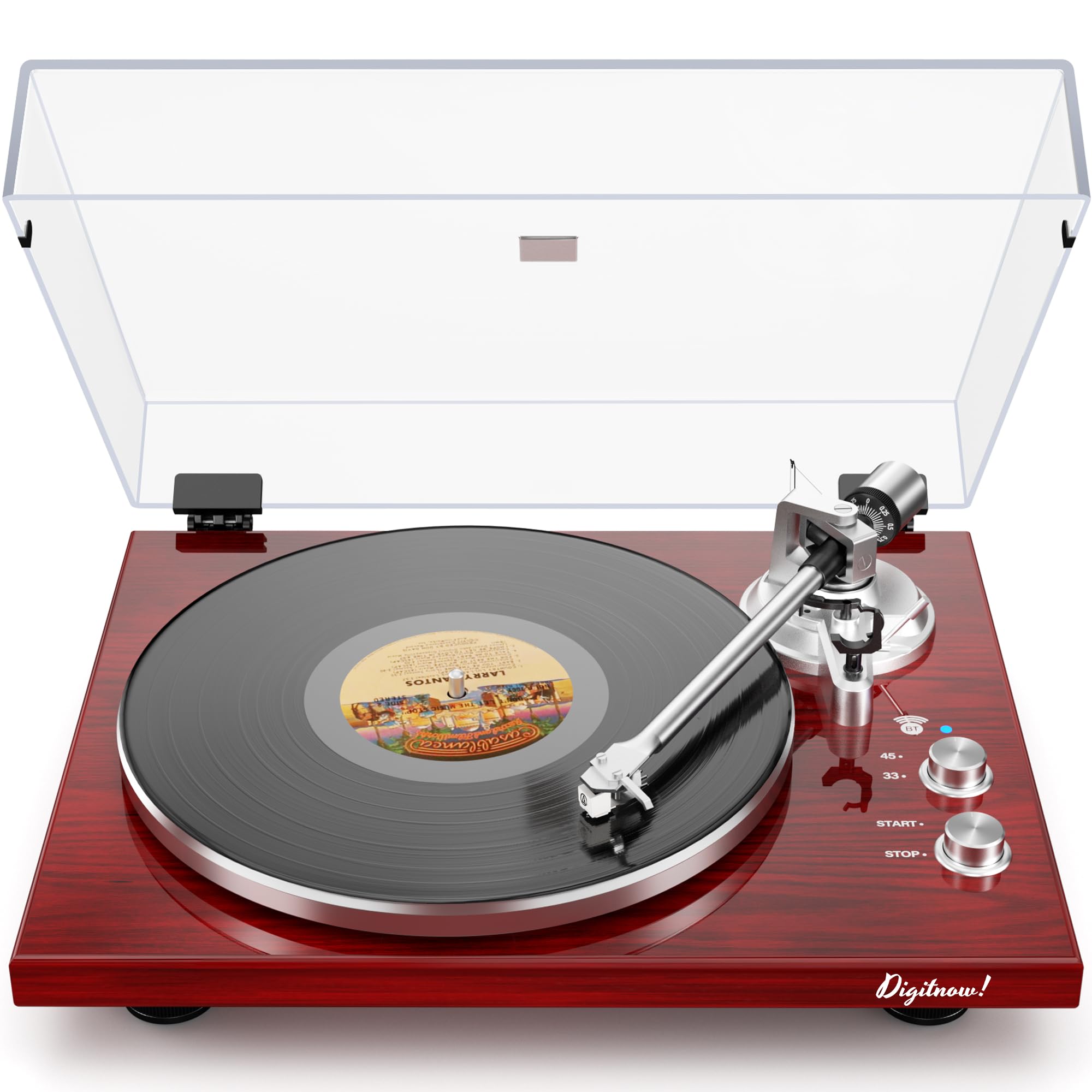
DIGITNOW Bluetooth USB

88 /100
Sound Score Excellent

Key details

Drive Type
Belt-drive
Phono Preamp
—
USB Output Type
USB digital output to PC
Bluetooth Direction
Bluetooth output
View on Amazon

For a budget-friendly USB digitization deck, the DIGITNOW bundles the right core pieces: USB output to a PC, Bluetooth output for external devices, and an AT3600L moving magnet cartridge. The solid feel separates it from entry-level plastic decks, and the USB path handles family LP conversion directly. The main boundary is that this listing also carries accessory variants, so the turntable-specific performance record is harder to isolate from broader feedback. That makes it a conditional pick rather than the top direct-drive digitizer.

Pros

  • USB output lets you digitize family LP recordings directly to a computer
  • Solid, sturdy build for a budget deck unlike flimsy alternatives
  • Bluetooth output can pair directly with external audio devices, including hearing aids

Cons

  • Bluetooth pairing can be hit-or-miss with certain devices
  • Some records may show crackling or surface noise through this setup
Our verdict

This fits budget-focused digitizers who want USB-to-PC archiving and a real moving magnet cartridge without pursuing a direct-drive workhorse or a purely wired setup.

Check Latest Price
9

Casual All-In-One

Udreamer Suitcase

88 /100
Sound Score Excellent

Key details

Drive Type
—
Phono Preamp
—
USB Output Type
USB input only
Bluetooth Direction
Bluetooth input
View on Amazon

The Udreamer works as a low-effort, decor-forward suitcase player: the retro shell is genuinely charming, setup is minimal, and Bluetooth input plus built-in speakers handle casual listening without external gear. The USB port is input-only for flash-drive playback, so it does not provide the USB-to-computer signal path that a digitization workflow requires. Built-in speakers can sound thin, and platter movement may become uneven on some units, so treat it as a compact playback piece rather than an archiving tool. For dorm rooms or a gift where looks and ease matter more than extraction quality, that boundary is acceptable.

Pros

  • Retro suitcase cabinet gives a decorative appearance without extra setup.
  • Bluetooth input lets phones stream through the built-in speakers easily.
  • Basic record playback feels approachable for first-time vinyl listeners.

Cons

  • Built-in speakers can sound thin, quiet, or limited in range.
  • The USB port is input-only for flash drives, so it cannot send vinyl audio to a computer.
Our verdict

The Udreamer fits dorm rooms, casual decor-led spaces, and low-budget gift buyers who want built-in speakers and Bluetooth input for simple playback. Buyers who need to digitize vinyl to a computer should look to a dedicated USB-output deck.

Check Latest Price

How to Choose

USB Output Type

Some turntables use USB for recording audio directly to a Windows or Mac computer, while others only read files from a flash drive or record to an SD card. The difference determines whether you can produce clean digital copies of a record at all.

Check for phrasing like 'USB output to PC' or 'USB audio output' rather than just 'USB' or 'USB input.' If your goal is vinyl archiving, this single check eliminates many suitcase-style players that look similar but cannot transfer audio to a computer.

Drive Type

Direct-drive models use a motor directly attached to the platter, which keeps speed more consistent and supports accurate 33/45 RPM transfers. Belt-drive decks isolate motor vibration better and usually cost less, but their speed can drift or wobble as belts age.

For digitizing, speed stability matters more than a slight reduction in motor noise. A direct-drive deck reduces the chance that a digital file will sound sharp or flat from inconsistent rotation.

Phono Preamp

A turntable cartridge produces a very low phono-level signal that needs equalization before it reaches speakers or a recording input. A built-in switchable phono/line preamp means you can connect the deck directly to powered speakers, a receiver, or a computer line input.

Without a built-in preamp, you need a separate phono stage or an amplifier with a phono input. Building it in removes one extra box and cable from the chain without forcing you to use it if you already own a better phono stage.

Tonearm Adjustability

An adjustable counterweight lets you set the tracking force for the specific cartridge, which affects how firmly the stylus sits in the groove. Anti-skate adjustment counteracts the tonearm's natural pull toward the record center.

Fixed or non-adjustable tonearms are easier to set up but can bounce or distort on less-than-pristine records. Listeners digitizing older vinyl usually benefit from a tonearm that can be fine-tuned for lighter or heavier tracking.

Bluetooth Direction

Bluetooth on a turntable can mean two opposite things: output to wireless speakers or headphones, or input from a phone for streaming music through the turntable. Buyers often assume one and get the other.

For wireless listening, look specifically for 'Bluetooth output' or 'aptX' support. For digitizing to a computer, Bluetooth does not replace the USB cable; recordings still move through the wired USB or line output.

Frequently Asked Questions