6 Best Yamaha Soundbar of 2026: Clear Dialogue for Your Space

Find the Yamaha soundbar that fits your room, budget, and viewing habits — with Clear Voice, built-in subs, or a separate wireless subwoofer.

Yamaha soundbars share clear dialogue, balanced sound, and an often-overlooked split between simple one-piece bars and models with separate subwoofers or smart features. Two bars at similar prices can deliver very different low-end impact and connection behavior.

The biggest trade-off is practical: paying for object-based Atmos versus saving with a proven virtual-surround bar, and choosing built-in bass versus a separate wireless sub. Room size and TV stand width settle most of those debates.

This guide sorts those choices by the specs that change how a soundbar performs in your space: subwoofer configuration, surround format, dialogue enhancement, and physical footprint.

About the Sound Score: This comparative score is calculated from a product's published customer rating and review volume. It is not a laboratory measurement or a hands-on test result.

1

Best Overall

Yamaha SR-B30A

85 /100
Sound Score Excellent

Key details

Footprint
35.88 in wide
Subwoofer Config
Dual built-in 3-inch
Surround Support
Dolby Atmos
HDMI And Bluetooth
eARC, Bluetooth
View on Amazon

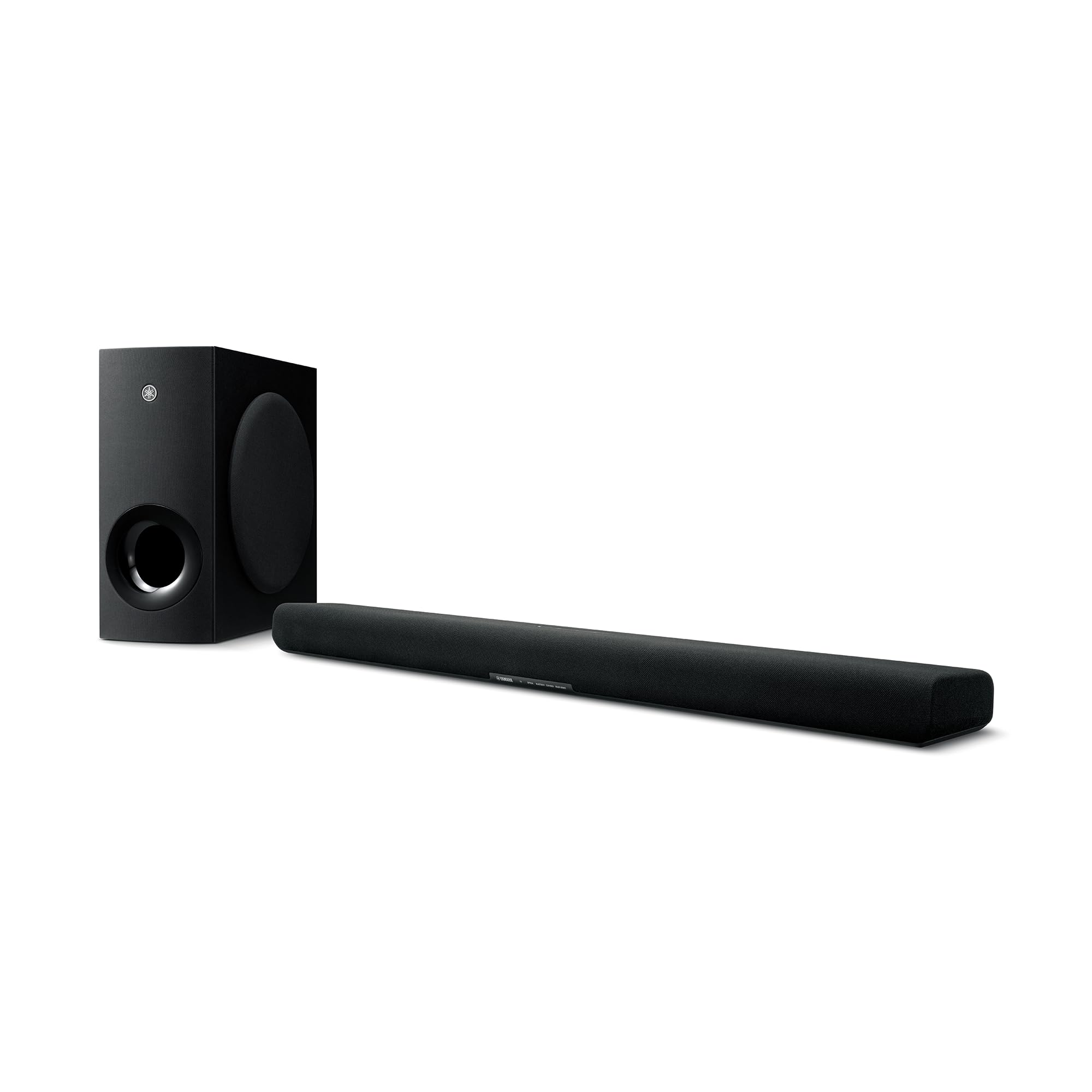
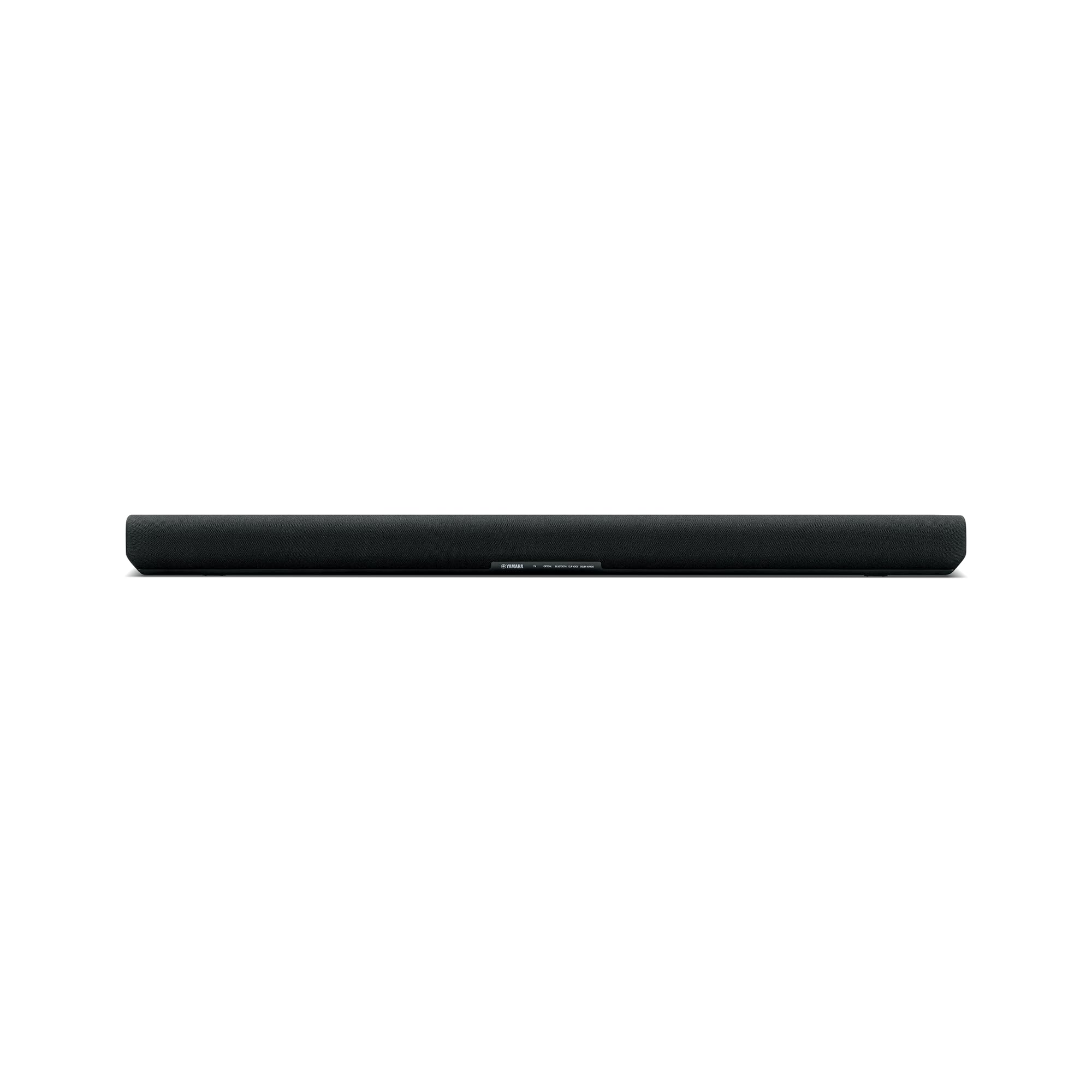
The SR-B30A combines Dolby Atmos with twin built-in subwoofers in the bar itself, giving a medium-sized room a wider soundstage than typical TV speakers can manage. The 120 W system uses virtual 5.1-channel processing, so action scenes keep some directional motion without rear speakers. HDMI eARC sends Atmos from compatible TVs over one cable, and the bar wakes with the TV rather than requiring extra remote steps. For anyone shopping Yamaha's current soundbar lineup for home-theater audio, this is the configuration that covers the common setup with the least complication.

Clear Voice mode is the standout for movie nights: it lifts dialogue above effects and score, so quiet conversation stays intelligible during loud passages. Bluetooth pairing holds for smartphone audio, while the optical input keeps older TVs connected without ARC. The dual built-in subwoofers add body to soundtracks and keep the system down to one box, which matters when a media console is already crowded.

At its price point, the SR-B30A covers the main home-theater features: Atmos support, clear dialogue, and low-frequency reinforcement without a separate sub. The entry-level bar in this lineup skips Atmos, and the premium model with a wireless sub reaches deeper but adds another box to place and power. The B30A lands between them as the balanced option for a living room. That balance is why it fits buyers who want an upgrade without turning their TV setup into a multi-component project.

The positioning matters more when you look at the rest of Yamaha's soundbar lineup. The compact one-piece model is easier to fit on a shelf, and the compact bar with a separate wireless sub offers more placement flexibility for low end, but each gives up something in room-filling Atmos. The B30A is the one that doesn't force a tradeoff between a single bar and modern sound formats.

Buy the SR-B30A for a medium-sized living room where the priority is better TV and movie audio without extra components. It suits streamers who value dialogue clarity and Atmos support, and it rewards buyers who want a single-cable setup. A power-on issue can surface in isolated units, so check the return policy and test the bar through a full viewing session within the first week.

Pros

  • Dolby Atmos plus twin built-in subwoofers brings room-filling sound from a single bar.
  • HDMI eARC setup passes Atmos through one cable and Bluetooth stays paired for phone streaming.
  • Clear Voice mode lifts dialogue over effects, so loud scenes don't bury conversations.
  • Built-in dual subwoofers add enough low end for typical movies without an extra sub.
  • At a mid-range price, this is a cost-effective way to get Dolby Atmos in a Yamaha soundbar.

Cons

  • Deep-bass output is modest; listeners who want a separate sub's punch should step up to the wireless-sub model.
  • The 36-inch width can be too wide for narrow shelves or compact desks.
Our verdict

The SR-B30A gives TV and movie streamers the best balance of Atmos, dialogue clarity, and single-bar simplicity in Yamaha's current lineup.
Check Latest Price
2

Best Budget All-In-One

Yamaha SR-B20A

88 /100
Sound Score Excellent

Key details

Footprint
35.88 in wide
Subwoofer Config
Dual built-in
Surround Support
DTS Virtual:X
HDMI And Bluetooth
ARC, Bluetooth
View on Amazon

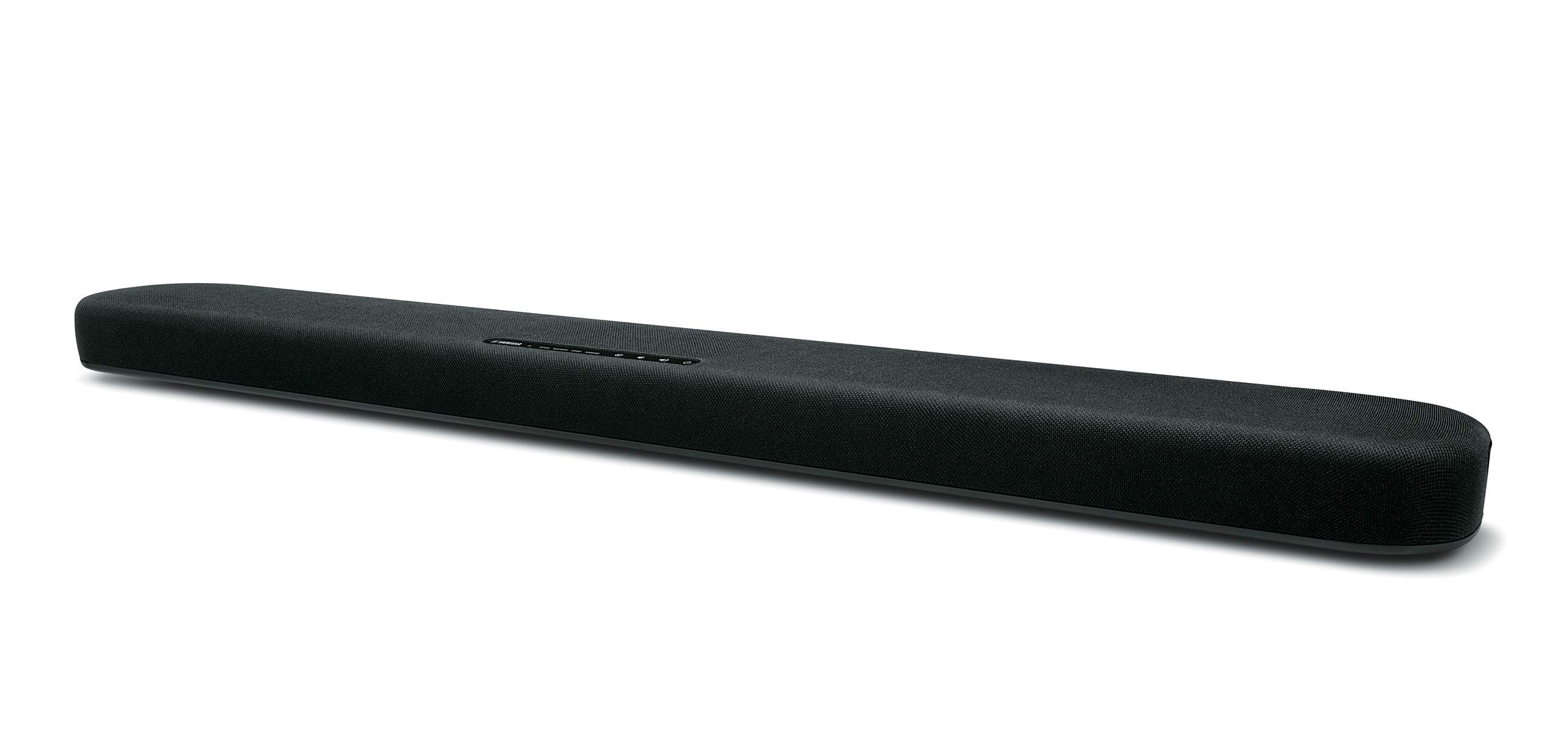
The SR-B20A is the value anchor of Yamaha's soundbar lineup: dual built-in subwoofers, DTS Virtual:X virtual surround, and Clear Voice dialogue enhancement in a single 35.9-inch bar. For an entry-level price, it offers the same clear midrange and controlled low end Yamaha is known for, without requiring a separate subwoofer or complex wiring.

Setup is fast, and the app gives direct access to tone, bass, and Clear Voice controls. The dual built-in subs produce more low end than the cabinet size suggests, Bluetooth pairing stays stable during casual streaming, and dialogue remains intelligible in mixed-content scenes. The one-piece design keeps the footprint small, making it an easy fit in apartments, bedrooms, or secondary rooms.

This fits budget buyers in small-to-medium rooms who want one-bar simplicity and clear dialogue. It is not the pick for Dolby Atmos; the top pick adds height effects, and HDMI ARC can occasionally lose sync. The sound signature favors vocals over aggressive effects, which suits dramas, sports, and everyday TV. For buyers weighing this against a separate-sub model, the built-in pair covers normal listening levels without adding floor clutter.

Pros

  • Dual built-in subwoofers deliver satisfying low end without a separate sub.
  • Clear Voice keeps dialogue intelligible in action-heavy scenes.
  • Entry-level price with Yamaha's balanced, detailed sound profile.
  • Quick setup and app controls simplify tone and dialogue tuning.

Cons

  • The remote can feel unresponsive, so the app handles control changes more smoothly.
  • Power-on behavior can vary between units, so an early test after unboxing is worth the time.
Our verdict

The SR-B20A is the entry point for Yamaha's one-bar home-theater sound: clear dialogue, built-in bass, and no separate sub to manage.

Check Latest Price
3

Best Compact / Small Rooms

Yamaha SR-C20A

88 /100
Sound Score Excellent

Key details

Footprint
26 in wide
Subwoofer Config
Built-in 3-inch
Surround Support
Virtual 5.1/7.1
HDMI And Bluetooth
HDMI ARC, Bluetooth
View on Amazon

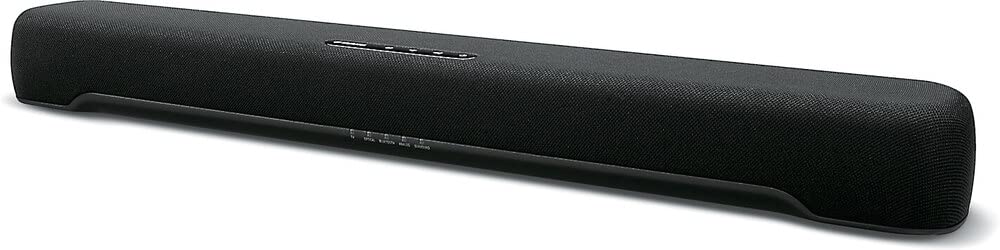
The SR-C20A is the compact Yamaha soundbar that leads with footprint and simplicity: a 26-inch cabinet with a built-in sub and Clear Voice upgrades TV dialogue without extra speakers or subwoofer placement.

Sound quality holds up well for a bar this size. Clear Voice keeps speech intelligible at low volumes, and virtual surround processing adds a touch of width without rear speakers. The built-in sub supplies enough low-end weight for apartment-level movie nights while leaving dialogue uncluttered. For an entry-level price, it covers the core reasons a television viewer would want a soundbar.

Setup is genuinely quick: one cable to the TV's HDMI ARC or optical input, power on, and the bar handles the rest. Bluetooth adds a convenient option for late-night listening without the TV. At 26 inches wide, the bar fits neatly on a desktop or the shelf beneath a bedroom TV.

This is the right fit for small apartments, bedrooms, and desktop TV setups where floor space is scarce and deep bass isn't the priority. The built-in sub is modest, so buyers who want deeper low end for open living rooms should consider a Yamaha model with a separate wireless sub instead.

Pros

  • Clear, balanced audio from a single cabinet; dialogue stays intelligible at low volumes.
  • Entry-level price covers HDMI ARC, optical, aux, Bluetooth, and Clear Voice.
  • Setup takes minutes: connect one cable and power on, with no subwoofer pairing.
  • The 26-inch width fits easily on a desk, shelf, or under a small TV.

Cons

  • HDMI ARC or Bluetooth connections can drop mid-show, so a stable input matters.
  • The remote can be unresponsive unless aimed directly at the bar, so placement becomes part of setup.
Our verdict

For small-room TV viewing, the SR-C20A upgrades dialogue and detail with the smallest possible footprint.

Check Latest Price
4

Best Premium Home Theater

Yamaha SR-B40A

88 /100
Sound Score Excellent

Key details

Footprint
35.88 in wide
Subwoofer Config
Wireless 6.5-inch
Surround Support
Dolby Atmos
HDMI And Bluetooth
eARC, Bluetooth
View on Amazon

With Dolby Atmos and a separate 6.5-inch wireless subwoofer, the SR-B40A delivers the most physical low-end performance in this Yamaha lineup. The 200 W system stays composed in medium-to-large living rooms, and Clear Voice keeps dialogue distinct during loud action sequences without pushing quiet scenes into the background.

Setup is simple for a design with a separate sub: the wireless sub pairs quickly, and HDMI eARC carries Atmos without extra menu digging. Bluetooth covers casual phone playback when the TV is off, and optical remains a fallback for TVs without ARC. The 35.88-inch cabinet fits standard media consoles, and the overall sound stays balanced rather than boomy.

This model is for the living-room buyer who wants real subwoofer bass and Atmos without assembling a separate component system. It belongs in a medium-to-large room; in a small bedroom, the dedicated sub can overpower the space, and the premium price is a poor fit for tight budgets. The twin-built-in-sub Atmos bar in this lineup is the leaner alternative, but the SR-B40A is the one to pick when a physical sub is non-negotiable. A power-protection quirk can appear in some units, so checking the bar at louder volumes during the first week is practical.

Pros

  • Powerful, balanced home-theater sound with enough low-end weight for action movies.
  • Clear Voice makes dialogue easier to follow without constant volume adjustments.
  • Simple, quick wireless sub pairing and eARC setup.
  • Strong performance for its price tier among Yamaha's soundbar lineup.

Cons

  • HDMI/CEC handshakes can be finicky with certain TV and source combinations, requiring manual input selection at times.
  • Circuit protection can interrupt playback on some units during demanding scenes, so early verification is worthwhile.
Our verdict

Buyers who want a dedicated wireless sub and Atmos in a Yamaha soundbar will find this model delivers on that specific promise. The twin-sub option is simpler, but it does not match this bar’s low-end weight.

Check Latest Price
5

Best with Alexa Built-In

Yamaha YAS-209

85 /100
Sound Score Excellent

Key details

Footprint
36.6 in wide
Subwoofer Config
Wireless 16-inch
Surround Support
DTS Virtual:X
HDMI And Bluetooth
ARC, Bluetooth, Wi-Fi
View on Amazon

The YAS-209 pairs a 36-inch soundbar with a wireless 16-inch subwoofer and bakes Alexa, Wi-Fi, and Spotify Connect into the bar itself. That makes it the only Yamaha soundbar in this lineup you can command by voice while it handles both TV dialogue and streaming music.

Sound quality is balanced for casual viewing: Clear Voice lifts dialogue, the wireless sub adds low end for action scenes, and 90 W of total output fits small-to-medium rooms without straining. Initial setup is quick over HDMI ARC or optical, and the sub pairs as part of that first session.

This is for Alexa users who want voice control and Wi-Fi music streaming from the same speaker that handles TV audio. Connectivity is the honest tradeoff: Wi-Fi, Bluetooth, and sub pairing can be frustrating, and some units may shut down on their own. If simple TV sound matters more than smart-home integration, a non-smart Yamaha bar with fewer radios is the better fit.

💡 Use HDMI ARC as the primary TV connection and reserve Bluetooth for music on demand.

Pros

  • Alexa, Wi-Fi, and Spotify Connect are built in, so voice control and streaming music share one soundbar with TV audio.
  • The wireless 16-inch subwoofer adds low end without a cable run across the room.
  • Clear Voice mode sharpens dialogue without drowning out the rest of the mix.
  • Initial hookup over HDMI ARC or optical is quick, and the sub pairs as part of setup.

Cons

  • No Dolby Atmos support, so the soundstage remains forward-facing rather than overhead.
  • Alexa can miss voice commands when the TV is loud or the room is noisy.
Our verdict

The YAS-209 is the one to pick when your TV speaker also needs to be a smart speaker; without that habit, a plain soundbar in the lineup is a better match.

Check Latest Price
6

Compact Rooms

Yamaha SR-C30A

78 /100
Sound Score Very Good

Key details

Footprint
23.63 in wide
Subwoofer Config
Wireless compact 5.13-inch
Surround Support
HDMI And Bluetooth
HDMI, Bluetooth
View on Amazon

At 23.6 inches wide with a separate wireless subwoofer, the SR-C30A is the flexible compact option in Yamaha's current lineup: the bar fits a small shelf while the sub can go behind or beside the TV stand. Sound quality is a clear step up from built-in TV speakers, and Clear Voice keeps dialogue easy to follow. It skips Atmos and multi-channel processing, so a large room won't feel enveloped, but daily TV and movies gain weight and clarity. The bigger trade-off is unit variance: some bars may power-cycle unexpectedly or not respond until unplugged, which is why the one-piece compact Yamaha remains the safer pick for buyers who prioritize simplicity. Check the unit early and this remains a reasonable small-space buy.

Pros

  • Dialogue-heavy shows and music get more body and clarity than TV speakers provide.
  • Out-of-box setup is quick: connect the bar, pair the sub, and play.
  • At 23.6 inches wide, it fits shelves and tabletop spots larger bars can't.

Cons

  • The remote can be short-range and awkward to use from a sofa.
  • Bluetooth streaming can drop out or require re-pairing mid-use.
Our verdict

For small-to-medium rooms where a compact bar and separate sub fit the space, the SR-C30A is a cost-effective sound upgrade.

Check Latest Price

How to Choose

Dialogue Enhancement

Yamaha's Clear Voice mode isolates and boosts mid-range vocal frequencies while leaving the rest of the mix intact. That matters because most TV dialogue sits in the same frequency band as ambient effects; without a dedicated EQ shift, vocals get buried.

If you watch a lot of dialogue-heavy dramas or have trouble catching every line, a Yamaha with Clear Voice is the practical feature to prioritize.

Subwoofer Configuration

Built-in dual subwoofers save space and remove the pairing step, but their small drivers cannot move enough air for deep bass in large rooms. A separate wireless subwoofer gives you longer low-frequency extension and lets you place the bass near a wall or corner for more impact, at the cost of one more box and a wireless connection to manage.

For apartment living, the built-in type is often enough; for dedicated home theater, the separate sub is the difference between hearing bass and feeling it.

Surround Support

DTS Virtual:X and Dolby Atmos both create a wider soundstage from a single bar, but they work differently. Virtual processing electronically mimics rear and height cues using DSP; it is a clear upgrade over stereo but it will not match real rear speakers.

Atmos adds object-based metadata that places sounds in space, so a bar with Atmos can make overhead effects feel more pinpointed. If your TV streams Atmos content and your room has a flat ceiling, Atmos is worth the upgrade.

HDMI and Bluetooth

HDMI ARC/eARC is the best single-cable connection because it carries TV audio and lets the TV remote control volume. eARC handles higher-bandwidth formats like Dolby Atmos from a TV's built-in apps, while ARC is limited to compressed 5.1.

Bluetooth is a fallback for music, not a primary TV connection; it can drop out if the source is far from the bar or if the bar is placed inside a closed cabinet.

Physical Footprint

Soundbar width should match the TV stand or the TV's width. A 36-inch bar under a 55-inch TV looks natural, but under a 32-inch TV it overhangs.

Compact 23- to 26-inch bars fit tiny shelves and desks, yet their smaller drivers and internal ports limit maximum output. Measure the space in front of your TV before choosing, and account for the bar's depth plus an IR remote line of sight.

Frequently Asked Questions