8 Best Analog Audio Mixer of 2026: Match Inputs to Your Setup

Find the best analog audio mixer for your mic count, line sources, and USB needs—without paying for channels you can't actually use.

Shopping for an analog mixer often starts with inflated channel counts and low-noise claims, then hits the same friction: hum from a budget line mixer, a USB record level too low to use, or a '12-channel' board with only four mic preamps. Those are not rare duds; they are the category's most common weak points.

The right mixer is less about total channels than about matching the actual inputs and outputs to your setup. A keyboardist sub-mixing stereo line sources needs a different tool than a podcaster connecting condenser mics or a band running four microphones into a compact live board. This guide separates true mic preamps from line inputs, flags where USB is a stereo convenience rather than a multitrack interface, and points toward the board that fits the way you work.

About the Sound Score: This comparative score is calculated from a product's published customer rating and review volume. It is not a laboratory measurement or a hands-on test result.

1

Best Overall

Yamaha MG10XU

92 /100
Sound Score Outstanding

Key details

Build And Power
—
XLR Mic Preamps
4 D-PRE preamps
USB Or Bluetooth
Stereo USB I/O
Onboard EQ And FX
3-band EQ, SPX effects
View on Amazon

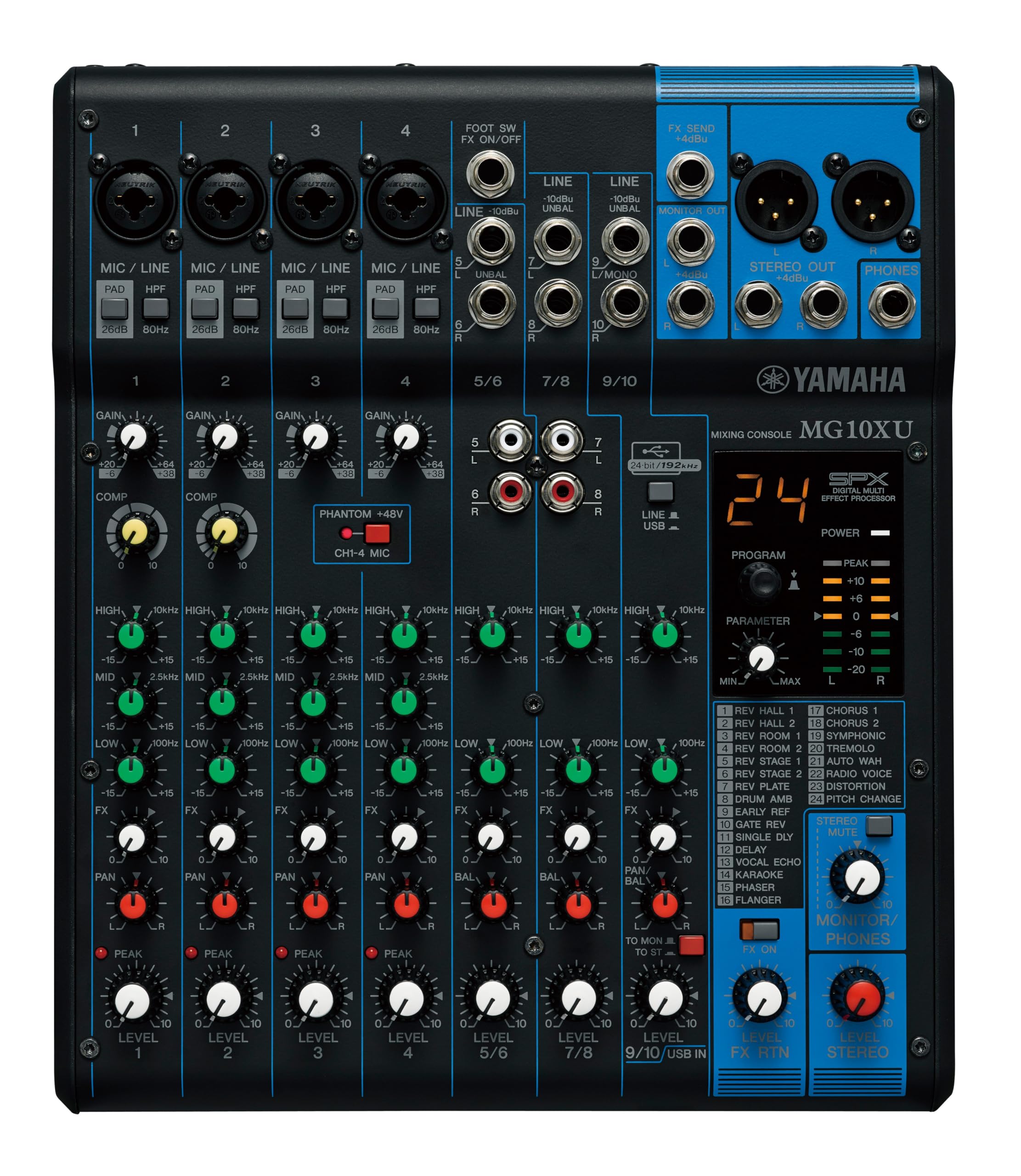
The Yamaha MG10XU packs four D-PRE mic preamps, SPX effects, three-band EQ, and channel compression into a 10-input analog console. The build quality holds up under live handling, and the preamps keep vocals, acoustic instruments, and speech clean without forcing extra outboard processing. Per-channel high-pass filters make it easier to tame room noise and feedback before it reaches the mix.

The SPX effects stay manageable during a live set, with usable reverb and delay programs that do not require deep menu edits. The routing covers four mic inputs along with stereo line sources, so small bands and solo performers can run a compact stage mix without immediate expansion. Input and output connections are simple, and the controls remain accessible when quick adjustments are needed.

Small bands, live performers, and content creators wanting a traditional analog front end get four mic inputs and stereo USB in one console. USB is a stereo convenience rather than a multitrack interface; buyers whose primary need is multitrack recording will need separate outboard. Compact live rigs and podcast-style setups fit this board best.

💡 For critical recording, run the analog main outputs to a dedicated interface instead of relying on the stereo USB feed.

Pros

  • Clean, detailed sound from D-PRE preamps across vocals, instruments, and speech.
  • Strong mid-range value with high-quality preamps, effects, and routing in one console.
  • Built-in SPX effects stay usable and easy to manage during live sets.

Cons

  • Four XLR mic inputs cap channel count for larger ensembles needing more mic channels.
  • USB output can sit low or noisy in some recording setups.
Our verdict

For small stages and desktop content setups, this console covers analog mixing with clean preamps and usable effects without pushing you into extra outboard gear.

Check Latest Price
2

Best Feature-Rich Live/Home Studio Mixer

Behringer X1204USB

90 /100
Sound Score Outstanding

Key details

Build And Power
Rackmountable chassis
XLR Mic Preamps
4 Xenyx preamps
USB Or Bluetooth
USB/audio interface
Onboard EQ And FX
3-band EQ, 24-bit FX, compressors
View on Amazon

The X1204USB packs four XENYX preamps, one-knob compressors, British EQ, 24-bit FX, and USB into a rackmountable 12-input frame. That is a broader outboard-style feature set than the top pick delivers at this size, aimed at small live bands and home studio owners who want compression and effects included.

This board fits buyers who need multiple mic inputs, simple routing, and built-in FX without a stack of external gear. Noise floor and USB consistency vary; careful gain staging matters more here than on quieter boards. For home studio and small live use, the built-in routing covers the core need.

💡 Set gain stages carefully before routing to USB or FX so the signal stays clean.

Pros

  • Four XENYX phantom-powered preamps cover small band and podcast sessions without extra outboard.
  • Compressors, British EQ, and 24-bit FX reduce the need for separate processing gear.
  • Routing stays simple enough for beginners while offering useful aux and USB options.

Cons

  • Audible hiss or hum can appear, especially when USB or certain inputs are used.
  • USB output is stereo-only, so multitrack recording requires a separate interface.
Our verdict

Small live bands and home studio owners who want compression, EQ, FX, and USB in one rackmountable console get the most from the X1204USB.

Check Latest Price
3

Best No-Frills Analog Workhorse

Mackie 802VLZ4

90 /100
Sound Score Outstanding

Key details

Build And Power
Compact metal chassis
XLR Mic Preamps
3 Onyx preamps
USB Or Bluetooth
—
Onboard EQ And FX
3-band EQ
View on Amazon

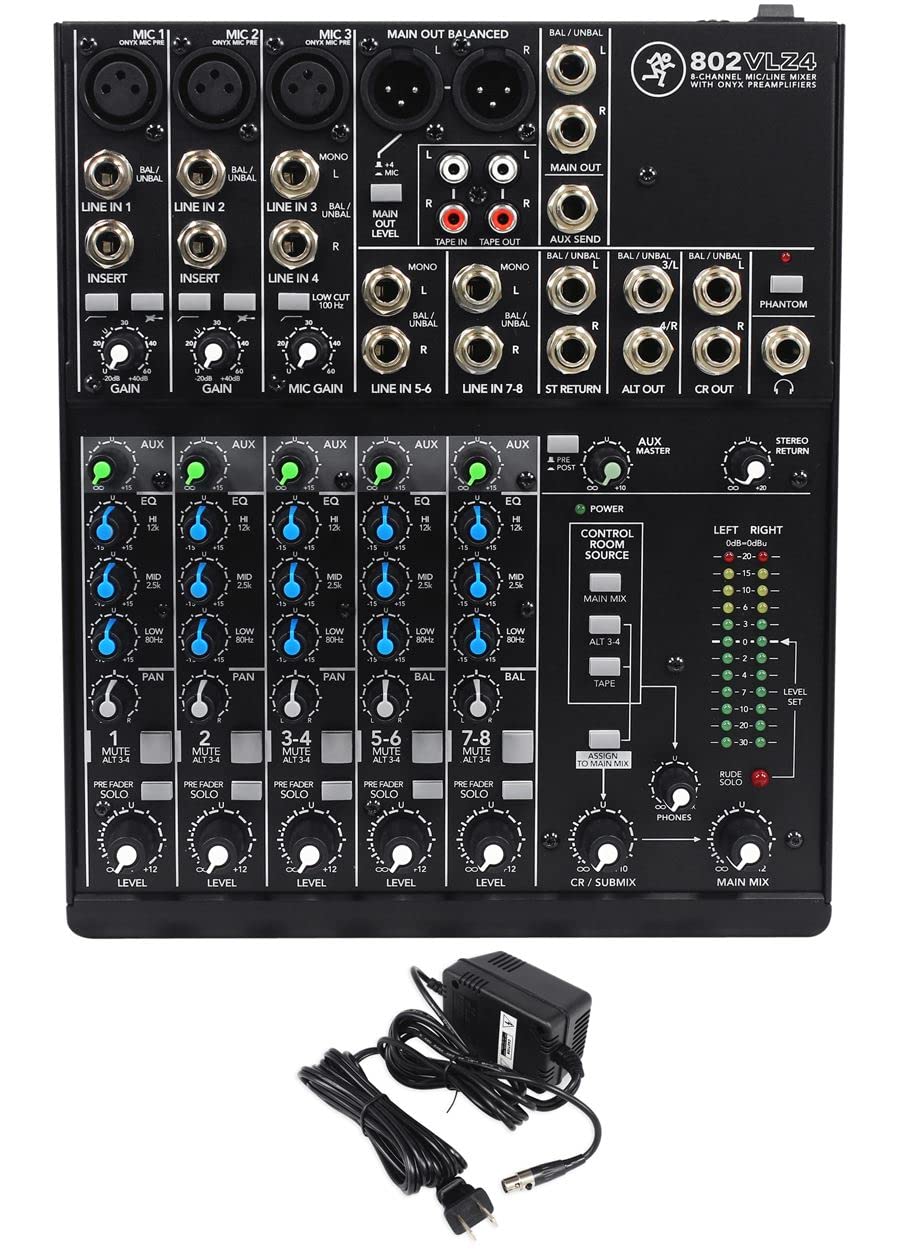
The 802VLZ4 is the compact analog workhorse of this set: three Onyx mic preamps, eight high-headroom line inputs, and a heavy metal chassis. The compact USB mixer in this set targets computer creators; the 802VLZ4 instead gives live and installed setups a clean analog summing path with headroom for synths and playback.

Live sound, wedding and corporate carts, and keyboard rigs fit this board best. No built-in USB or effects means recording and FX require outboard gear, so it suits buyers who already own an interface or rack FX and want the mixer to handle analog gain and routing.

Pros

  • Three Onyx mic preamps add clean gain for mics and instruments without excessive hiss.
  • Heavy metal chassis holds up under load-in and live use.
  • Eight high-headroom line inputs accept hot synth and playback levels without immediate clipping.

Cons

  • Limited to three Onyx mic preamps, so larger multi-mic setups need a larger console or external preamps.
Our verdict

This is the compact analog board for live and install setups that value clean headroom and a strong build over digital convenience.

Check Latest Price
4

Best Bluetooth Karaoke/Streaming Mixer

Pyle PMXU83BT.5

86 /100
Sound Score Excellent

Key details

Build And Power
—
XLR Mic Preamps
4 combo XLR/1/4-inch
USB Or Bluetooth
Bluetooth, USB, MP3
Onboard EQ And FX
3-band EQ, 16-bit FX
View on Amazon

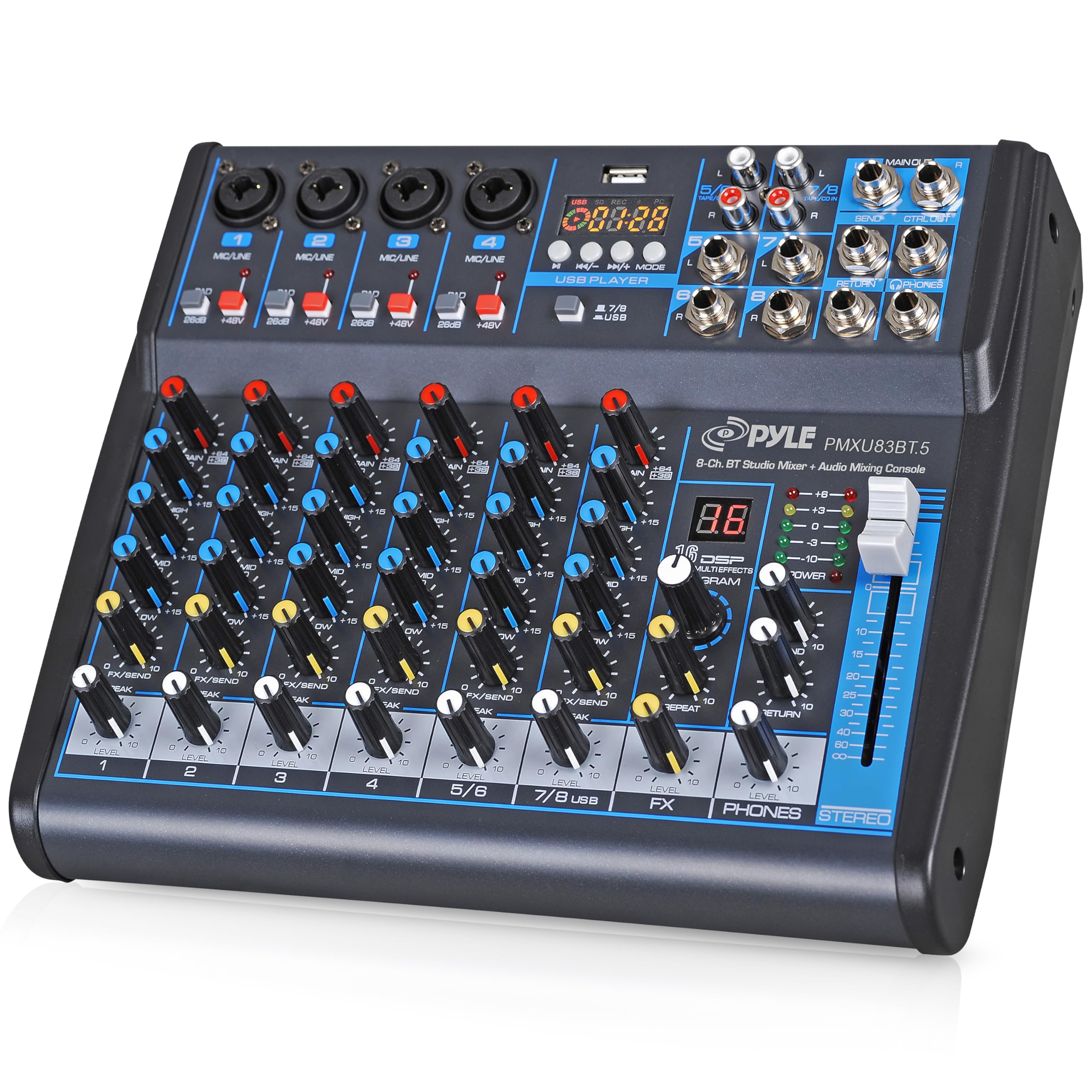
Unlike the compact USB mixer in this set, the Pyle centers Bluetooth and media playback rather than high-gain preamps and effects. Four combo XLR/1/4-inch inputs, 48V phantom power, and three-band EQ provide enough physical control for small karaoke, podcast, or DJ-style setups.

It fits buyers who want a budget physical console for casual vocals, instruments, and phone-sourced backing tracks. Missing pan or balance controls and intermittent Bluetooth limit stereo placement and live consistency, so this is a party and podcast desk rather than a precision mixing tool. That positioning works for karaoke nights and simple streams.

💡 Run sources in mono or pre-panned upstream when stereo placement matters.

Pros

  • Packs Bluetooth, USB/MP3 playback, four combo inputs, and 48V phantom power into one budget board.
  • Sets up quickly for karaoke, podcasting, and basic streaming out of the box.
  • Delivers acceptable sound quality for casual use at this price.

Cons

  • No pan or balance controls, so precise stereo placement is not available.
  • Bluetooth pairing can be intermittent with some phones and playback sources.
Our verdict

For karaoke nights, party playback, and basic podcasting, this board is a sensible budget console focused on media convenience.

Check Latest Price
5

Best Budget Line Sub-Mixer

Moukey MAMX3

89 /100
Sound Score Excellent

Key details

Build And Power
Compact metal enclosure
XLR Mic Preamps
None
USB Or Bluetooth
—
Onboard EQ And FX
None
View on Amazon

The Moukey MAMX3 is the line-level specialist next to the compact live boards in this set. Eight active 1/4-inch channels sum multiple stereo instruments and playback devices without adding a full mic console. Mono/stereo switching covers synths and sub-mixes that need flexible routing.

This suits keyboard players, small venues, and home audio rigs that already run line-level sources. No XLR or phantom power is available, and noise can rise with power and gain settings, so critical studio capture stays outside its boundary. For live keyboard rigs and installed sound, that is enough.

Pros

  • Eight switchable mono/stereo line channels handle multiple keyboards, synths, and playback sources.
  • Metal enclosure and compact footprint sit comfortably on a desk or keyboard.
  • Budget price supports multi-source summing for small venues and home rigs.

Cons

  • Line-level sound can be thin or weak in the low end on some units.
Our verdict

Place it in a live keyboard rig or utility summing station where line-level inputs are the whole job.

Check Latest Price
6

Best Compact USB Mixer for Solo Creators

Mackie ProFX6v3

88 /100
Sound Score Excellent

Key details

Build And Power
—
XLR Mic Preamps
2 Onyx preamps
USB Or Bluetooth
2x4 USB, 24-bit/192kHz
Onboard EQ And FX
24 GigFX effects
View on Amazon

Two Onyx mic preamps with up to 60dB gain, 24-bit/192kHz USB, and 24 GigFX effects sit in a desktop-friendly six-channel board aimed at one-mic recording, podcasting, and live streaming. It separates itself from a no-frills analog workhorse by adding USB and effects while keeping physical channel controls for analog-style mixing.

The board fits solo musicians and content creators who need a compact analog mixer with simple USB output, not a large-format console. It provides only two XLR mic inputs and limited routing, so buyers needing more mic channels or extensive mute and routing control should look elsewhere.

💡 Test the USB connection with your computer and audio software before a live session.

Pros

  • Clean Onyx preamps provide enough gain for podcast and vocal work without adding noticeable hiss.
  • Built-in reverb and delay effects are usable on vocals and guitars without outboard processing.
  • The desktop mixer gives solo streamers a compact analog front end with USB recording and playback.

Cons

  • USB connection can be intermittent with some computers, particularly Macs.
Our verdict

Solo podcasters and streamers get capable preamp quality and usable effects in a small USB mixer; buyers needing larger analog channel counts belong elsewhere.

Check Latest Price
7

Budget Line Summing

FIFINE N5

86 /100
Sound Score Excellent

Key details

Build And Power
Compact metal enclosure
XLR Mic Preamps
None
USB Or Bluetooth
—
Onboard EQ And FX
None
View on Amazon

It sums line-level sources for keyboard, drum, and headphone practice use. Hiss and hum may appear depending on power and gain staging, so the low-noise claim is not consistently true, and XLR inputs are absent. The larger eight-channel comparator in this set outclasses it for expanded line summing except on price, leaving a budget utility for practice rigs.

Pros

  • Four switchable stereo/mono channels handle multiple 1/4-inch line sources for keyboard and drum sub-mixes.
  • Compact metal enclosure sits on a keyboard or pedalboard without consuming extra desk space.

Cons

  • Full-range monitoring can expose thin low-end through some line sources.
Our verdict

Keyboard and drum practice rigs that only need simple 1/4-inch summing get a strong value here.

Check Latest Price
8

Home Audio Summing

LiNKFOR CX400

86 /100
Sound Score Excellent

Key details

Build And Power
Metal shell
XLR Mic Preamps
None
USB Or Bluetooth
—
Onboard EQ And FX
None
View on Amazon

The LiNKFOR CX400 is a passive four-channel stereo RCA summing mixer for home audio sources. It combines CD players, tape decks, computers, and phones without needing power. Because the circuit is passive, it attenuates the signal, so expect to add make-up gain downstream, and RCA-only connectivity limits it to consumer line-level use.

Pros

  • Compact metal chassis sums four stereo RCA sources without an added power supply.
  • Independent volume controls make basic consumer line-level blending simple.

Cons

  • Low-level hiss can surface at low volumes or high downstream gain.
Our verdict

This is the right box for simple karaoke or bar line-level source mixing that stays entirely on RCA.

Check Latest Price

How to Choose

Mic Preamps vs. Line Channels

Total channel numbers often include stereo line pairs that cannot accept a microphone. A dynamic or condenser mic needs an XLR preamp with enough clean gain, and condensers also require 48V phantom power.

If you plug a mic into a line input, the signal stays too weak and noise takes over. Count the XLR preamps, not the box number, and match that count to the most mics you will use at once.

EQ, Effects, and Compression

Onboard EQ helps cut feedback and shape a vocal, while one-knob compressors catch loud peaks before they distort a small PA. Built-in effects save an outboard reverb unit but sit on the main bus, so you have less control than with a separate aux send.

For karaoke or speech, a simple FX engine is enough; for multi-instrument live sets, look for per-channel EQ and a dedicated aux send.

USB and Bluetooth Connectivity

USB on an analog mixer is usually a two-channel stereo sum of the main mix, not a multitrack feed. Record level may change with the master fader, so low USB volume is often a gain-staging issue rather than a broken mixer.

Bluetooth is useful for break music and phone playback, but not stable enough for a live set or recording. Treat both as conveniences, not primary inputs unless the mixer is explicitly built for them.

Noise Floor and Hum

Cheap line mixers often hiss when many channel gains are up and the amplifier does the heavy lifting. The first fixes are proper gain staging, balanced cables, and separating the power adapter from audio lines.

If the mixer hums with nothing plugged in, the external supply is the likely cause. An under-spec or failing adapter can add more noise than any preamp.

Build and Power Supply

A compact metal chassis protects jacks and pots better than plastic, especially in a bag or rack. Connect enough clean power for the mixer's total draw; some budget boards ship without an adapter.

For live use, choose a design that feels solid at the jacks, because that is where connection problems usually appear.

Frequently Asked Questions