8 Best AV Receiver 2026: The Ones That Stay Connected

The best AV receivers for building a home theater without HDMI handshake headaches or Bluetooth dropouts — matched to how you actually watch and listen.

The first thing you notice shopping for an AV receiver is the spec sheet: watts, channels, 8K HDMI. The second thing, after a few weeks with one in your rack, is that the rough edges show up in ARC handshakes, Bluetooth pairing, and firmware quirks — not in the power rating.

A receiver that sounds clean and sets up easily is worth more than one with a bigger wattage number but finicky connections. Room correction, eARC support, and steady wireless behavior tend to decide whether a system feels finished.

This guide is organized around those real-world boundaries, so you can match a receiver to the shape of your room, your sources, and your tolerance for setup tinkering. The right receiver is the one that disappears into the system and lets the sound carry the evening.

About the Sound Score: This comparative score is calculated from a product's published customer rating and review volume. It is not a laboratory measurement or a hands-on test result.

1

Best Overall

Denon AVR-X1700H

87 /100
Sound Score Excellent

Key details

HDMI
6 HDMI, 8K, 4K/120, eARC
Channels
7.2
Streaming
HEOS, AirPlay 2, Wi-Fi, Bluetooth
Audio Format
Dolby Atmos, DTS:X
View on Amazon

The AVR-X1700H pairs 7.2 Atmos processing with three 8K/60 and 4K/120 HDMI inputs, so a home theater can handle modern consoles and streaming boxes without stepping up to a 9.2 chassis. Denon's channel separation keeps dialogue anchored to the screen while effects move around the room, and 80W per channel is enough for medium-size living rooms. The guided on-screen setup handles speaker configuration, source assignment, and HDMI checks before the first movie starts, which shortens the time from unboxing to playback.

HEOS and AirPlay 2 cover multi-room music over Wi-Fi, and the receiver's streaming options are broad enough for households with mixed sources. Denon's sound signature stays composed during dense action scenes and keeps music playback even-handed. The remote and front-panel controls are easy to navigate, though the on-screen assistant handles the heavy parts of the installation work. Once the network and speaker settings are in place, the X1700H behaves like a settled component rather than a box that demands constant attention.

At its price tier, the X1700H includes features that used to cost considerably more: 8K/4K120 HDMI, HEOS, AirPlay 2, and DTS Virtual:X height virtualization. Denon's budget 5.2 sibling covers bare-bones TV sound for less, but that model skips Atmos, Wi-Fi, and multi-room streaming. This is the step-up that makes sense when the room is wired for surround and the source devices can use HDMI 2.1. The 80W-per-channel rating is not a high-current amp for difficult speakers, but it never feels undersized in a normal living room.

This is the right receiver for a 7.2 or 5.1.2 Atmos setup in a living room or dedicated media room, especially when a PS5, Xbox, or PC is part of the signal chain. It also suits households with HEOS speakers or AirPlay 2 sources. If that profile matches, the X1700H's channel count and streaming tools line up with the way a typical mid-size home theater is built.

The Bluetooth connection can be inconsistent, and occasional HDMI input dropouts appear on some units; buyers with a finicky TV handshake should test that combination before committing. Neither issue cancels the 7.2 Atmos experience, but both belong in the purchase decision for anyone who relies heavily on wireless streaming or ARC/eARC. For the right owner, the core strengths outweigh these quirks, but they are real enough to check with your own TV and phone before purchase.

💡 For multi-room sessions, HEOS or AirPlay 2 is the steadier path; Bluetooth works best as a quick secondary input.

Pros

  • Immersive 7.2 Atmos/DTS:X sound with strong channel separation for a mid-range home theater.
  • Denon build quality and sound signature give the AVR a composed, familiar feel.
  • Guided on-screen setup handles speaker configuration, source assignment, and HDMI checks.
  • HEOS, AirPlay 2, and 8K/4K120 HDMI cover streaming and gaming at a mid-range price.

Cons

  • Bluetooth can be inconsistent with some phones, so wireless audio is best treated as a backup to HEOS.
  • HDMI input dropouts or lockups occur on some units during source switching and ARC/eARC handshakes.
Our verdict

For a 7.2 Atmos home theater with a 4K/120 gaming console or HEOS speakers, this Denon is the balanced mid-range pick.

Check Latest Price
2

Best Budget 5.1

Yamaha RX-V385

90 /100
Sound Score Outstanding

Key details

HDMI
4 HDMI, 4K HDR
Channels
5.1
Streaming
Bluetooth
Audio Format
Dolby TrueHD, DTS-HD, no Atmos
View on Amazon

The Yamaha RX-V385 is the budget 5.1 workhorse that keeps the AV receiver basics intact: 5.1 surround, 4K HDR switching, Bluetooth, and YPAO room calibration. Dialogue stays clear and surrounds create a believable sound field, with none of the harsh treble of some budget amps. The 100W-per-channel rating has enough headroom for typical bookshelf speakers, and YPAO's auto calibration measures each speaker and sets levels, removing guesswork for a first-time owner. There is no phone app or network connection to learn.

Four HDMI inputs cover a cable box, console, and streaming player with HDCP 2.2 pass-through. Bluetooth pairs with a phone quickly for casual music, and the binding posts take standard speaker wire. The chassis feels sturdy for the price, which is reassuring when you're plugging in cables.

This is the receiver for someone moving up from a soundbar who wants true 5.1 without extra setup steps. It does not include Dolby Atmos/DTS:X and has no 8K/4K120 HDMI 2.1, so it belongs with 1080p or 4K/60 sources, not a new HDMI 2.1 TV. ARC can be finicky with certain TVs, so a simple optical hookup is a useful fallback. Those boundaries are easy to accept at this price tier.

Pros

  • Strong sound quality for the price
  • Sturdy build quality and dependable operation
  • YPAO calibration keeps setup simple
  • Bluetooth pairs quickly for casual phone streaming

Cons

  • The remote and front-panel controls feel dated, with limited customization.
  • HDMI output or power issues can surface in some units after extended use.
Our verdict

For a budget 5.1 living room, this receiver delivers strong sound, simple setup, and enough 4K HDR switching without charging for features you won't use. Buyers with 1080p or 4K/60 sources are the right fit.

Check Latest Price
3

Best Premium Home Theater

Onkyo TX-RZ50

86 /100
Sound Score Excellent

Key details

HDMI
8 HDMI, 8K/60, 4K/120, eARC
Channels
9.2
Streaming
Sonos, Wi-Fi, Bluetooth
Audio Format
Dolby Atmos, DTS:X
View on Amazon

The TX-RZ50 combines THX-certified 9.2 amplification with 11.2 processing and Dirac Live, while its 8K/60 and 4K/120 HDMI switching covers modern gaming sources. It steps up from the brand's more affordable Dirac model with a THX certificate and higher amplifier headroom, keeping enough configuration depth for a custom theater build.

The amplifier remains composed across all nine channels when a soundtrack moves from quiet dialogue to heavy bass, and Dirac Live tightens low-frequency response without dulling the top end. Eleven-channel processing leaves room to add external amps for a 7.2.4 layout, and the dual subwoofer outputs make this a true foundation for a dedicated theater.

Home theater enthusiasts building a dedicated room with external amps or Sonos integration are the primary buyers. This is not for budget shoppers or anyone expecting plug-and-play without calibration; calibration is part of the process. Occasional HDMI or board issues have been noted on some units, so a dealer with a clear return policy reduces purchasing risk.

💡 Update the receiver's firmware before running Dirac Live so the calibration uses the latest processor code.

Pros

  • Soundstage clarity and dynamic range keep complex movie soundtracks legible.
  • The amplifier section holds together when a full 9.2 array is driven hard.
  • Strong value for a feature set that includes Dirac Live, THX, and 11.2 processing.
  • Configuration options allow serious builders to tune each seat with Dirac.

Cons

  • Wi-Fi and Bluetooth pairing can drop in crowded wireless environments.
  • Dirac calibration is time-consuming, so a first-time user should set aside a long session.
  • HDMI or board glitches can appear on a specific unit, so dealer return terms are worth checking.
Our verdict

A dedicated theater build with external amps is the right setting for this Dirac/THX package.

Check Latest Price
4

Best Value 9.2

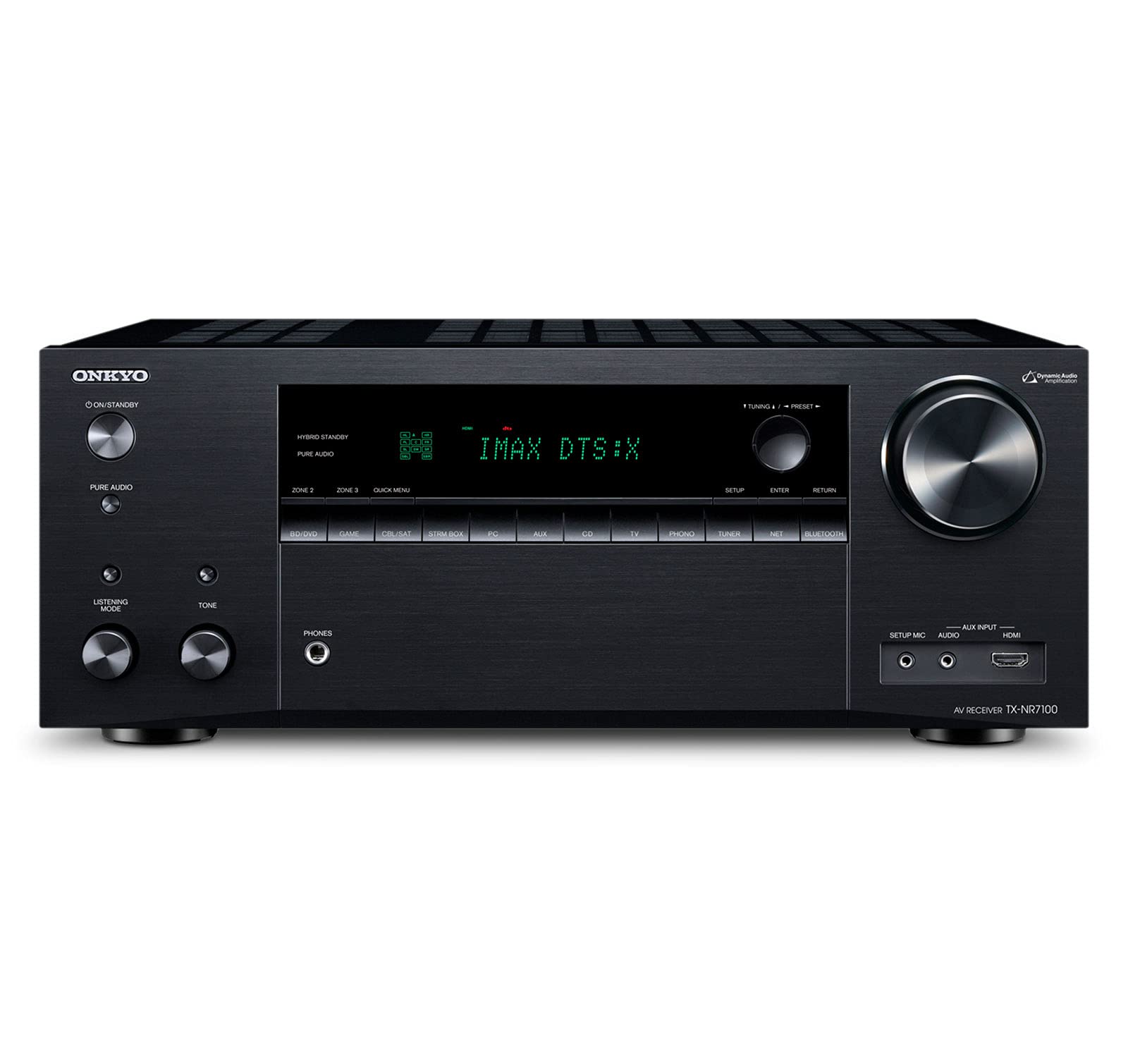
Onkyo TX-NR7100

83 /100
Sound Score Excellent

Key details

HDMI
8 HDMI, 8K, eARC
Channels
9.2
Streaming
Sonos, Wi-Fi, Bluetooth
Audio Format
Dolby Atmos, DTS:X
View on Amazon

The TX-NR7100 combines 9.2-channel processing, Dirac Live, THX certification, and 8K HDMI in a mid-range chassis that undercuts the step-up Onkyo flagship. Eight HDMI inputs with 40Gbps bandwidth make it a practical source hub for modern game consoles and streaming boxes, while eARC handles return audio from TV apps. The extra channels suit a 5.1.4 Atmos setup or a second zone, and Dirac addresses room modes that fixed EQ cannot correct.

Running the full Dirac calibration takes more time than a basic auto-EQ setup, but the payoff is firmer bass and more stable imaging across seating positions. The built-in 100W per channel handles most bookshelf and compact floor-standing speakers; buyers driving large, power-hungry towers should step up to the more expensive Onkyo for extra amplifier headroom. In smaller rooms, this output level is enough for loud, clean playback, and Wi-Fi streaming with Sonos certification covers most music sources.

Home theater builders who want Dirac Live without flagship pricing and need 9.2 channels for one main room or two zones are the right audience. This is a value pick rather than a set-and-forget centerpiece: some units can show HDMI or startup glitches, so checking a new unit on arrival is worth the effort. Anyone skipping room correction or looking for a simple stereo receiver should not spend the extra money here.

💡 Run the full Dirac calibration rather than the quick setup; the extra time pays off in bass response.

Pros

  • Clear channel separation and detailed sound across movie and music content.
  • Delivers strong home theater performance without reaching flagship pricing.
  • Dirac Live plus 9.2 processing in a mid-range package.

Cons

  • Bluetooth pairing can be inconsistent with some phones, so wireless audio may need reconnection.
  • Certain TV pairings can show blank screens or no-signal handshakes through eARC or video connections.
Our verdict

This is the value route to a 9.2 Dirac setup, with enough multi-room flexibility for a two-zone theater.

Check Latest Price
5

Best for Sony Ecosystem

Sony STR-AN1000

83 /100
Sound Score Excellent

Key details

HDMI
6 HDMI, 8K, eARC
Channels
7.2
Streaming
Chromecast, AirPlay, Sonos
Audio Format
Dolby Atmos, DTS:X, 360 Spatial
View on Amazon

The STR-AN1000 pairs Sony's 360 Spatial Sound Mapping with 6-in/2-out 8K HDMI, Chromecast, AirPlay, Spotify Connect, and Sonos in a single premium 7.2 chassis. It also brings strong video upscaling and 165W per channel, which puts it clearly above the entry-level Sony 5.2 receiver. This is a targeted product for an all-Sony living room.

Sony TV and PS5 owners get the most from the spatial processing, and the dual HDMI outputs suit a TV-plus-projector layout. Buyers wanting Dirac Live or multichannel pre-outs should pass; this receiver is an ecosystem play, not a room-correction powerhouse. It is a convenience-first receiver for households already inside Sony's ecosystem. The premium price and occasional protection-mode or HDCP handshake behavior are the main caveats, so confirm return or swap terms before buying.

Crisp, clear sound and strong spatial processing carry movies and music, with enough amplifier headroom for most living-room speaker packages. Atmos and DTS:X mixes benefit from the seven channels plus a second subwoofer output, and streaming is broad across Chromecast, AirPlay, Spotify Connect, and Sonos. Video upscaling cleans up 1080p sources before they reach a 4K display.

Pros

  • Crisp, clear sound with strong spatial processing for immersive Atmos and DTS:X soundtracks.
  • Theater performance stays clean and engaging across all 7.2 channels for movies and music.
  • Video upscaling improves 1080p sources before they reach a 4K display.
  • Broad streaming coverage includes Chromecast, AirPlay, Spotify Connect, and Sonos in one box.

Cons

  • A first-time surround buyer will find the menu depth demanding despite the on-screen setup help.
  • If Bluetooth or Sonos is the main way you stream, be ready for occasional pairing hiccups.
Our verdict

The STR-AN1000 fits best in an all-Sony theater where spatial mapping, dual HDMI outputs, and streaming features matter more than room-correction flexibility. Buyers outside that setup are better served by the mid-range Denon pick.

Check Latest Price
6

8K 5.2 Budget

Denon AVR-S570BT

82 /100
Sound Score Excellent

Key details

HDMI
4 HDMI, 8K, eARC
Channels
5.2
Streaming
Bluetooth
Audio Format
Dolby TrueHD, DTS-HD, no Atmos
View on Amazon

The AVR-S570BT pairs clean surround output with an easy 5.2 setup routine. Dialog from the center channel stays clear and stereo music sounds natural through its five amplified channels. The 70W-per-channel output drives typical bookshelf-based living-room speakers without strain, and Denon's on-screen prompts handle the basic configuration without much fiddling.

Streaming is Bluetooth-only, and pairing can be inconsistent with iPhones and certain TVs; there is no Wi-Fi, AirPlay, or Atmos. Volume control through a TV remote can feel slow, which makes everyday level adjustments less direct. These boundaries put it below the top pick for buyers who want overhead channels or app-based streaming, though the same budget audience gets Denon build quality and an 8K HDMI hub.

Pros

  • Clean surround sound for a budget 5.2 receiver
  • Easy setup for basic speaker configurations
  • Budget-friendly entry to 8K HDMI switching and eARC

Cons

  • Audio settings may return to defaults after a power cycle, which means re-checking levels.
  • 4K/120 pass-through can drop video on some display chains, which matters for console gaming.
Our verdict

Fits the buyer building a 5.2 living-room setup with an 8K TV and a modest speaker kit, where the focus is on surround sound rather than smart features.

Check Latest Price
7

Entry-Level 5.2

Sony STRDH590

88 /100
Sound Score Excellent

Key details

HDMI
4 HDMI, 4K HDR
Channels
5.2
Streaming
Bluetooth
Audio Format
Dolby Atmos, DTS:X
View on Amazon

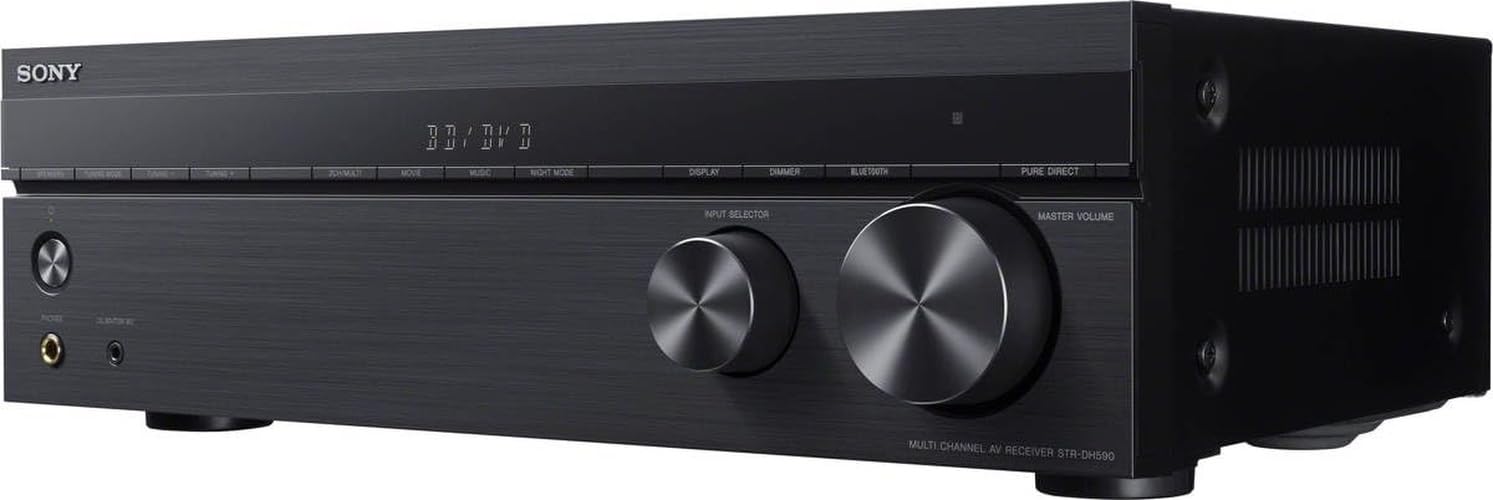
Clear surround sound and easy Bluetooth make the Sony STRDH590 a natural entry point for a first 5.2 living-room surround system, and its auto-calibration keeps setup simple. The four 4K HDR HDMI inputs handle the switching needed in a basic home-theater setup. Intermittent shutdown and protect-mode trips have been noted, so a buyer planning to keep the receiver for a long service life should weigh that against the budget price. Within those boundaries, the STRDH590 delivers good value for basic 5.2 use.

Pros

  • Clear surround sound for an entry-level receiver
  • Simple setup and day-to-day operation
  • Strong value as a budget 5.2 home theater unit

Cons

  • Bass and treble adjustments are limited for users who like to fine-tune sound
  • Bluetooth pairing can be device-dependent, with compatibility varying by phone or TV
Our verdict

This fits a first 5.2/4K HDR setup on a budget; buyers with 7+ channels or 8K switching needs should look at a higher-tier receiver.

Check Latest Price
8

MusicCast Gamers

Yamaha RX-V6A

83 /100
Sound Score Excellent

Key details

HDMI
7 HDMI, 8K, 4K/120, eARC
Channels
7.2
Streaming
MusicCast, AirPlay 2, Wi-Fi
Audio Format
Dolby Atmos, DTS:X
View on Amazon

The Yamaha RX-V6A is a good-sounding 7.2 Atmos receiver with MusicCast and 8K/4K120 HDMI, making it a natural fit for console gamers building a modern home theater. eARC, AirPlay 2, and Spotify Connect round out the feature set, and 4K passthrough stays clean for mixed sources. Some units can develop HDMI handshake or audio-return issues, and QC concerns plus limited availability keep it from outranking the top pick for buyers who need a more predictable unit. For anyone who lands a solid sample, this is a feature-rich mid-range receiver that covers the important gaming and streaming bases.

Pros

  • Good sound quality with clear surround imaging in a 7.2 Atmos layout.
  • 8K-ready HDMI inputs support 4K/120 passthrough for current-gen consoles.
  • Useful feature set with MusicCast, AirPlay 2, and Spotify Connect.

Cons

  • Setup flow is less instructive than rival receivers, so first-time 7.2 builders may need extra configuration time.
  • During wireless streaming, the MusicCast app can drop connections; wired Ethernet is the steadier option.
Our verdict

This fits a console-first 7.2 Atmos build where 4K/120 gaming and MusicCast streaming outweigh the need for a hands-off receiver.

Check Latest Price

How to Choose

Channel Configuration

A 7.2 receiver adds two rear-surround or height channels over 5.2, while a 9.2 receiver adds true overhead channels for layouts like 5.2.4. The hidden trade-off is placement: height speakers need ceiling or wall mounting, extra speaker wire, and an amplifier channel for each. For a typical living room, 5.1.2 via a 7.2 receiver is the practical ceiling.

HDMI and eARC

HDMI 2.1 bandwidth determines whether a PlayStation 5 or Xbox can pass 4K/120 or VRR without a black screen. eARC carries high-bitrate Dolby Atmos from TV apps back to the receiver, but it depends on both the TV and receiver implementing CEC cleanly. That is why two receivers with identical HDMI counts can feel very different in daily use: one drops the signal during input switching, the other does not.

Dolby Atmos and DTS:X

Atmos and DTS:X decode object-based sound into discrete height channels. Without physical height speakers, virtualizers create a diffuse overhead image that is less precise than a true height channel. Ceiling height, seating distance, and whether the room has reflective surfaces all change how convincing the effect sounds.

Room Correction

Room correction measures speaker distance, level, and frequency response through a microphone and applies digital filters to tame bass peaks and compensate for room reflections. YPAO, Audyssey, and Dirac Live differ in filter resolution and how deep you can adjust the result; Dirac Live requires more setup time but gives the most control. The hidden payoff is that a full correction run often does more for sound quality than adding another pair of speakers.

Streaming and Control

Wi-Fi streaming over HEOS, MusicCast, AirPlay 2, or Chromecast is more stable than Bluetooth because it avoids the receiver's internal antenna and compressed audio link. The trade-off is ecosystem alignment: a Sonos household needs a Sonos-certified receiver like the Onkyo RZ50, while Alexa-first users may prefer HEOS or MusicCast. Pick the platform that matches the speakers and apps you already use, not the one with the longest spec list.

Frequently Asked Questions