9 Best Belt-Drive Turntable of 2026: Match Vinyl to Your Speakers

Find the best belt-drive turntable for your room and speakers — from automatic entry-level decks to audiophile upgrades.

The hardest part of buying a belt-drive turntable is deciding what kind of product you actually need. Some models are bare decks that require a receiver and speakers. Others are complete record players with built-in speakers and Bluetooth. Many listings blur that line, and the mismatch usually becomes obvious at setup.

Start with what you already own. If you have powered speakers or a receiver, look for a turntable with a built-in phono preamp and skip all-in-one models. If you are starting from nothing, an all-in-one with built-in speakers gets you playing vinyl immediately. Just know that upgrading your speakers later changes the sound more than swapping the turntable.

A practical difference is convenience versus control. Fully automatic decks handle start, stop, and tonearm movement for you; manual decks let you adjust tracking force and swap cartridges. Both work well — the right one depends on how vinyl fits into your daily listening.

About the Sound Score: This comparative score is calculated from a product's published customer rating and review volume. It is not a laboratory measurement or a hands-on test result.

1

Best Overall

Audio-Technica AT-LP60X

91 /100
Sound Score Outstanding

Key details

Outputs
RCA
Speakers
External required
Cartridge
Dual Magnet, replaceable
Operation
Fully automatic
View on Amazon

The AT-LP60X brings fully automatic playback to the entry-level belt-drive class: press start and the tonearm lifts, cues, plays, and returns on its own. The switchable phono/line preamp feeds powered speakers, a receiver, or a home amplifier without a separate phono stage, and the replaceable diamond stylus keeps the cartridge useful after the original wears down. Sound is clear and composed at this price, with the die-cast aluminum platter holding 33 1/3 and 45 RPM steady. There is no audible motor rumble through the platter, and the belt-drive keeps the music front and center rather than drawing attention to the deck.

The automatic cycle is quiet and consistent in normal use: the tonearm drops gently near the lead-in groove, and the return mechanism lifts it at side end. That hands-off behavior is the main draw for a first vinyl setup, and it lets a new listener stay engaged with the record rather than the equipment. Because the deck handles the cueing itself, there is no need to time a manual drop. The mechanism repeats the same movement side after side, which is reassuring when every record is new to you. For someone coming from digital, the automatic return is a small safety net that prevents stylus wear from a forgotten side end.

Setup is a quick process: the platter and belt are the only parts to install, and the integrated cartridge comes pre-aligned from the factory. No protractor, no alignment gauge, and no separate phono stage needed. The speed selector handles 33 1/3 and 45 RPM without swapping pulleys, so changing records from LP to single is just a matter of flipping a switch.

Compared with its wireless sibling, the wired LP60X keeps the same automatic mechanism and platter while trimming the price to the budget tier. Bluetooth is convenient only if your speakers lack an RCA input; for a traditional stereo, the wired connection adds nothing to your setup routine and removes one more pairing variable. The value case is strongest for buyers who already own powered speakers or a receiver with a spare input.

First-time vinyl buyers who want a plug-and-play turntable are the natural audience. The automatic tonearm and built-in preamp remove the usual beginner obstacles, and the budget-friendly price leaves room for a decent set of powered speakers. Check the dust cover and stylus on arrival because transit damage can occur. It is not a fussy machine, so it suits households where no one wants to adjust settings before every record.

Pros

  • Clear, high-fidelity sound for an entry-level deck.
  • Well-regarded beginner turntable in its class.
  • Strong value for money.
  • Simple setup and automatic tonearm operation get records playing quickly.
  • Sleek, modernized styling fits a living room shelf.

Cons

  • Tracking force is preset at the factory, so the replaceable stylus is the only upgrade path.
  • Intermittent power-on behavior can appear in individual units; a return-friendly retailer covers that contingency.
Our verdict

For the buyer who wants records spinning without learning tonearm setup, the AT-LP60X is the sensible entry point in the wired budget class.

Check Latest Price
2

Best Wireless Upgrade

Audio-Technica AT-LP60XBT

93 /100
Sound Score Outstanding

Key details

Outputs
Bluetooth, RCA
Speakers
External required
Cartridge
Dual Magnet, replaceable
Operation
Fully automatic
View on Amazon

The AT-LP60XBT adds aptX Bluetooth output to Audio-Technica's fully automatic belt-drive turntable, so wireless listeners can stream records straight to a speaker or pair of headphones without a receiver. The switchable phono/line preamp means the same deck can plug into powered speakers or an existing stereo receiver, keeping the setup flexible without extra gear.

The belt-drive platter gives records a warm, easy-going character, and the automatic tonearm handles start and return with a single button. Setup involves little more than plugging in power and pairing Bluetooth, and the platter accepts 33 1/3 and 45 RPM records with the speed switch near the tonearm base.

This wireless version is for buyers who already have Bluetooth speakers or headphones and want a fully automatic deck that can be moved around without rethinking cabling. Bluetooth drops can happen, and a connection may not rejoin until the speaker is power-cycled; the wired RCA output remains the stable fallback. If Bluetooth is not part of your speaker setup, the standard wired AT-LP60X is the cheaper route and removes the pairing variable entirely. This is not the turntable for audiophiles who need an adjustable counterweight or VTA, but for a relaxed listening session through wireless gear it covers the essentials without ceremony.

💡 If a Bluetooth connection drops, power-cycle the speaker and press the pairing button; the RCA output is the no-fuss fallback.

Pros

  • Sound through Bluetooth keeps the warm, full character of vinyl.
  • Bluetooth pairs cleanly with aptX-compatible speakers and headphones.
  • Automatic tonearm start and return make side changes one-button simple.
  • Setup and controls are easy enough for a first-time turntable buyer.

Cons

  • The wireless version costs more than the wired AT-LP60X, so skipping Bluetooth means paying for unused output.
  • Bluetooth pairing can drop, and reconnecting may require power-cycling the speaker.
Our verdict

For wireless listeners, this adds a Bluetooth path to the easiest automatic belt-drive setup without moving up the price ladder or adding complexity.

Check Latest Price
3

Best Audiophile Upgrade

Fluance RT85

95 /100
Sound Score Outstanding

Key details

Outputs
RCA
Speakers
External required
Cartridge
Ortofon 2M Blue
Operation
Manual
View on Amazon

The RT85 pairs an Ortofon 2M Blue cartridge with a high-density acrylic platter, and the belt-drive stays quiet enough to keep motor noise from entering the picture. This is a wired deck for listeners who already care about the signal path, not a Bluetooth convenience player.

Imaging and bass control are the first things you notice: dense mixes stay separated, cymbals keep their texture, and the platter's mass steadies the tempo. The walnut plinth and heavy construction give it the feel of a component you will not feel the need to upgrade. A large share of the premium-priced package goes into the cartridge and platter instead of decorative extras.

Setup is documented with enough clarity that a first-time manual owner can work through tonearm adjustment without guesswork. The deck also holds speed well, which keeps pitch stable across a full side.

This is for someone who already owns a phono stage or a receiver with a phono input — there is no built-in preamp. Manual cueing is part of the appeal, and the lack of automation is a boundary rather than a flaw. If you want automatic playback or a self-contained system, the entry-level automatic deck in this roundup is a better match.

Pros

  • Sound quality has enough detail to expose differences between pressings.
  • Build quality and walnut finish give the deck a furniture-grade presence.
  • Setup instructions make tonearm and cartridge alignment manageable.
  • Acrylic platter and quiet belt-drive keep mechanical noise out of playback.

Cons

  • Auto-stop can leave the platter spinning after the last groove.
Our verdict

The RT85 is the manual deck to get when the cartridge and platter matter more than automation.

Check Latest Price
4

Best Complete Turntable + Speaker System

ANGELS HORN TT + Speakers

90 /100
Sound Score Outstanding

Key details

Outputs
Bluetooth, RCA
Speakers
Included bookshelf
Cartridge
AT-3600L
Operation
Manual
View on Amazon

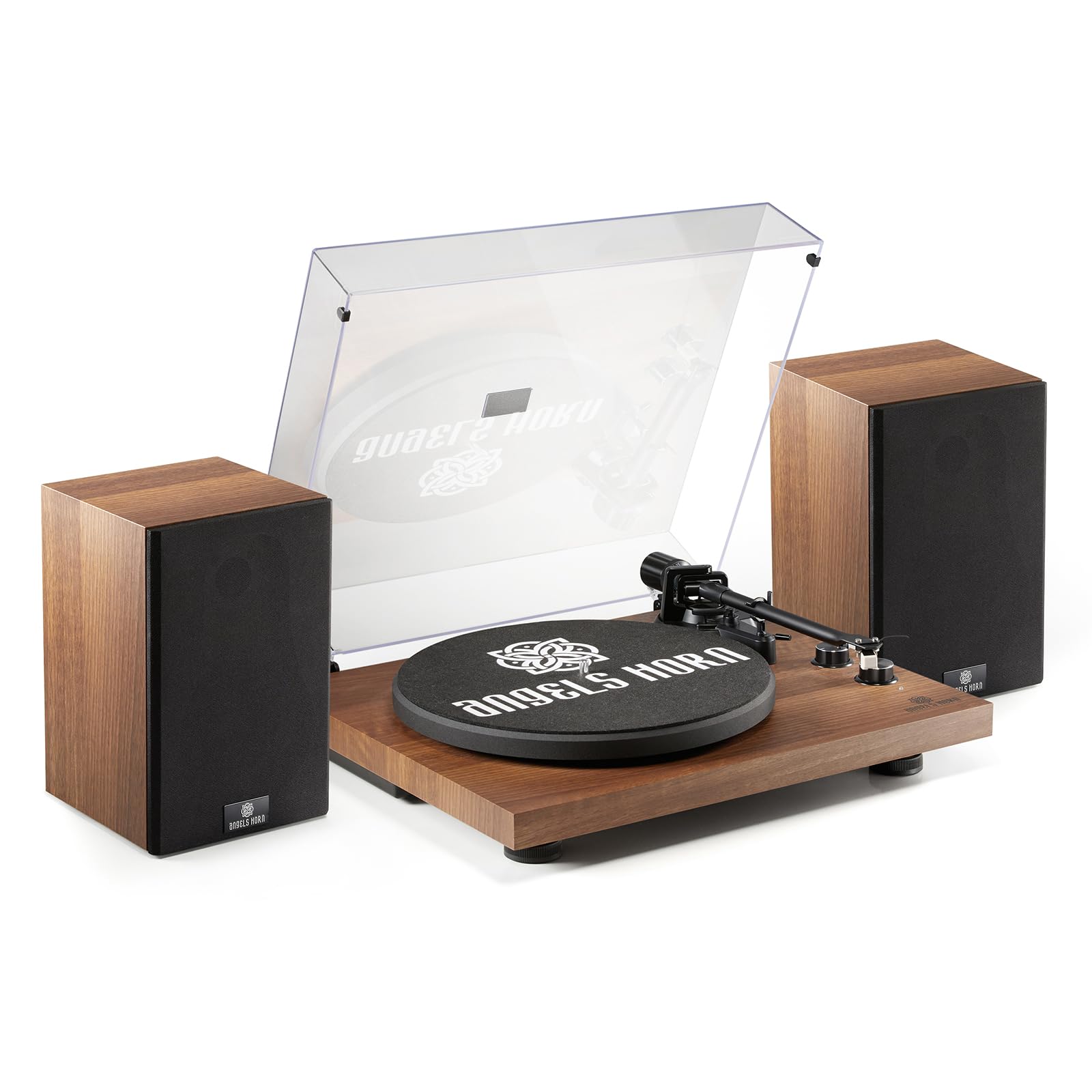
Two separate bookshelf speakers come in the box with a belt-drive turntable, making this a true speaker-plus-deck package rather than a compact all-in-one cabinet. The wood-grain finish gives the whole setup a vintage furniture look that suits a living room.

Buyers who want a complete turntable and speaker system in one purchase and don't already own powered speakers are the right audience. The main caveat is unit-to-unit consistency: tonearm lift issues and mid-record power-offs are possible, so this fits casual listening better than professional work.

With speakers placed apart, the stereo stage is more open than a single-cabinet record player. Bluetooth output pairs quickly for wireless listening, and the included AT-3600L cartridge tracks 33/45 RPM records without difficulty. Cabinet construction feels sturdy, and the vintage finish helps it blend into a room rather than dominate it.

The package is cost-effective for a new listener because a phono preamp, speakers, and turntable arrive together at a mid-range price. The separated speakers also offer more presence than a single-cabinet unit, which is the strongest reason to choose this model over a compact alternative.

Pros

  • Sound quality is strong for a bundled system, with separate speakers instead of one cabinet.
  • Wood-grain vintage styling turns the turntable into a living-room focal point.
  • Bluetooth output holds its connection for wireless speaker listening.
  • Beginner-friendly turntable operation for first-time vinyl buyers.

Cons

  • Setup instructions, especially counterweight balancing, can confuse first-time owners.
  • Bundled speakers add unnecessary cost for buyers who already own powered speakers.
  • Unit-to-unit behavior can vary; tonearm lift issues and mid-record power-offs are possible.
Our verdict

Living-room listeners who want the vintage wood look and don't want to shop for separate components will find the package fits their space and budget.

Check Latest Price
5

Best Budget All-In-One

1 BY ONE Built-in Speaker TT

89 /100
Sound Score Excellent

Key details

Outputs
Bluetooth, RCA, Aux
Speakers
Built-in
Cartridge
AT diamond stylus
Operation
Manual
View on Amazon

Built-in speakers, Bluetooth, and an Audio-Technica stylus come together in a vintage wood cabinet, making this belt-drive turntable a complete no-extra-gear option for record play. It is the self-contained counterpoint to the wired automatic deck at the top of this list: no phono preamp, receiver, or separate speakers needed before that first spin.

The built-in speakers put out more body than typical all-in-one cabinets, and they can fill a medium-sized room at moderate volumes. Bluetooth input and output handle phone streaming to the speakers and sending vinyl to wireless speakers. That flexibility makes this a practical one-box answer for casual listening; serious listeners chasing audiophile detail will still hit the ceiling of small built-in drivers.

The sweet spot is a dorm room, small apartment, or gift recipient who values convenience over component flexibility. If you already own good powered speakers, skip this and buy a bare turntable instead. Long-term reliability can vary between units, and the volume control is coarse; for casual listening in a modest room, those tradeoffs are easier to live with than the cost and clutter of separate components.

💡 Set the volume with short turns around the lower half of the dial; that range is easiest to land on.

Pros

  • Built-in speakers put out more body than typical all-in-one systems, covering a dorm room or small apartment.
  • Setup is quick even for a first-time vinyl owner, with the main elements arriving pre-adjusted.
  • Vintage-styled wood cabinet looks at home in a dorm, apartment, or living room.
  • Bluetooth input and output handle phone streaming and wireless speaker connections from the same unit.

Cons

  • At the low end, the volume dial jumps in larger steps, making quiet listening harder to fine-tune.
  • Long-term reliability can vary between units; some may develop power or motor issues after extended use.
Our verdict

Choose it when you want a complete first turntable, not a component to build around.

Check Latest Price
6

Best for Digitizing Vinyl

1 BY ONE Bluetooth Turntable

87 /100
Sound Score Excellent

Key details

Outputs
Bluetooth, USB, RCA
Speakers
External required
Cartridge
AT diamond stylus
Operation
Manual
View on Amazon

USB recording is the defining feature: records feed into a computer for MP3 archiving, while Bluetooth output covers wireless listening and RCA jacks connect to a traditional amplifier. The adjustable counterweight and Audio-Technica diamond-tipped stylus give this more setup control than the fully automatic entry-level deck, which is useful for buyers who want to set tracking force rather than accept a fixed tonearm. That combination is rare at this price level.

Assembly and tonearm setup are more involved than fully automatic models, so this is not a no-setup all-in-one. The intended buyer owns powered speakers or a receiver, has records to digitize, and expects to balance the tonearm before playback. Buyers who want a one-button start/stop experience will be better served by the fully automatic top pick, but that deck lacks USB archiving.

The USB output captures vinyl directly to a computer, so no separate recording interface is needed. Sound quality is competitive with higher-priced belt-drive models, and the plinth carries a classier look than the price suggests. Bluetooth pairing with soundbars and headphones works smoothly for casual listening, with RCA outputs as a stable wired fallback for anyone who wants to avoid wireless compression.

💡 Keep Bluetooth for casual listening and use the USB output when you want the archival capture to happen cleanly.

Pros

  • Sound quality is competitive with costlier belt-drive decks.
  • The plinth and hardware look more expensive than the price suggests.
  • Bluetooth output pairs cleanly with soundbars and headphones.
  • Strong value for the combination of USB archiving, Bluetooth, and adjustable tracking force.

Cons

  • Counterweight and anti-skate need to be dialed in by hand before first use.
  • Tonearm drift or intermittent electronic behavior can develop over time.
Our verdict

The USB output gives vinyl a path to a computer library, while Bluetooth keeps wireless speakers in the loop.

Check Latest Price
7

Budget Bluetooth

Retrolife BT Record Player

86 /100
Sound Score Excellent

Key details

Outputs
Bluetooth, RCA
Speakers
External required
Cartridge
AT-3600L
Operation
Manual
View on Amazon

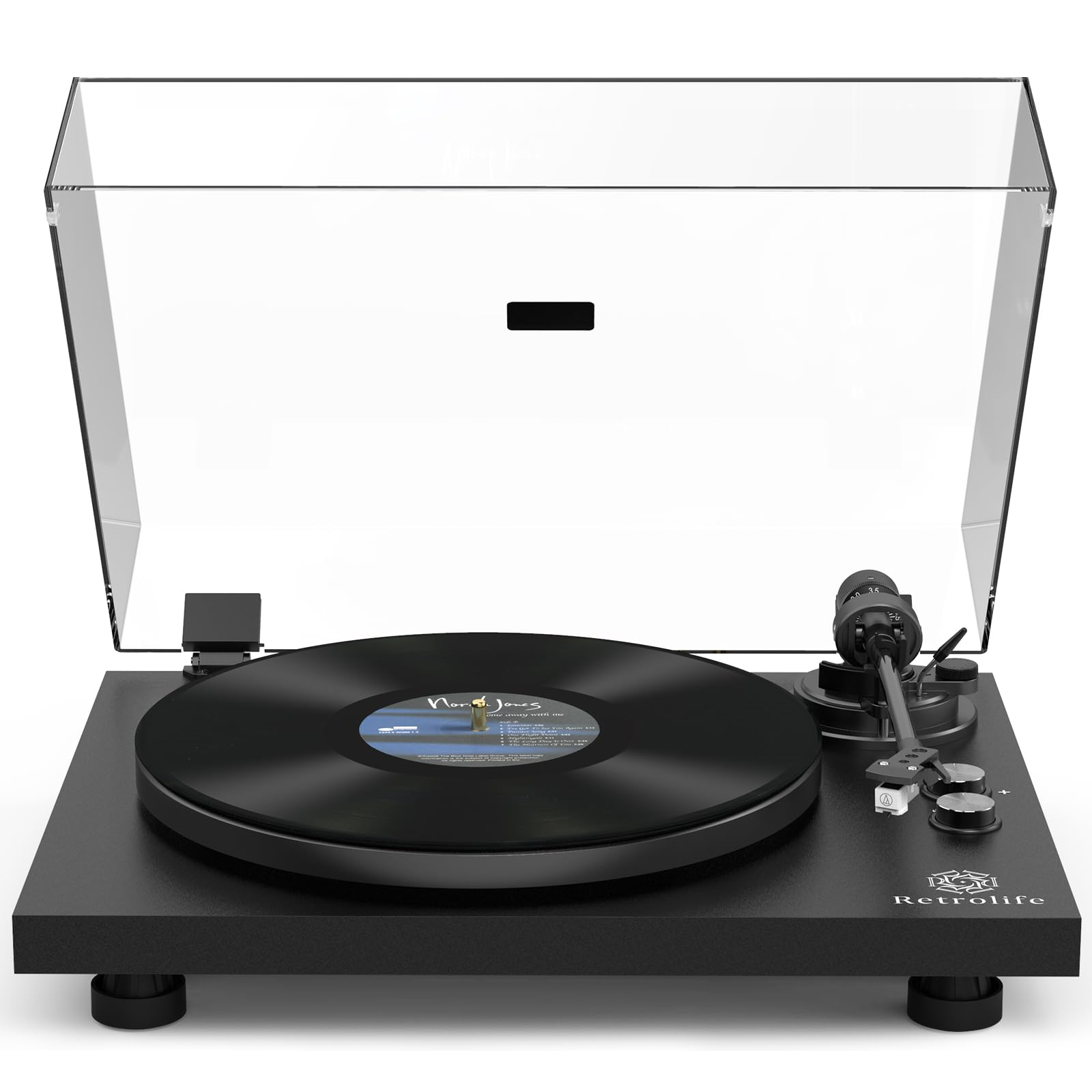
The carbon-fiber tonearm, anti-skate, and ±10% pitch control give this Retrolife deck adjustability that's rare at a budget price, and the black vintage cabinet fits the look buyers want from a Bluetooth turntable. Sound quality suits casual listening through powered speakers or a receiver, and setup is quick for a manual belt-drive. The intended audience is casual listeners rather than pitch-sensitive ones; critical pitch checking requires a more accurate deck. Manual operation also means cueing the record yourself, which is fine for buyers comfortable with a hands-on turntable.

Pros

  • Good sound quality for a budget deck, with enough clarity for casual listening.
  • Bluetooth output pairs well with receivers and speakers for wireless listening.
  • Classic vintage appearance is a strong match for decor-focused buyers.

Cons

  • Manual playback means cueing and lifting the tonearm yourself; no auto stop or return.
  • Speed accuracy can vary between units, so records may play slightly sharp or flat.
Our verdict

This vintage-styled Bluetooth deck suits casual listeners who want an inexpensive wireless setup and are comfortable cueing records by hand.

Check Latest Price
8

Budget 78 RPM

TANLANIN 3-Speed BT Turntable

83 /100
Sound Score Excellent

Key details

Outputs
Bluetooth, RCA, Aux
Speakers
Built-in
Cartridge
Operation
Manual
View on Amazon

The TANLANIN is a 33/45/78 RPM belt-drive turntable with built-in speakers, Bluetooth, and RCA output in a wood-finish cabinet — a rare low-cost combo that also plays older 78 RPM records. Built-in sound is convenience-grade: volume stays modest and treble detail is limited, so dedicated listening sounds better through the RCA outputs or a Bluetooth speaker. The tonearm mechanism can feel flimsy when cueing, which makes the deck better suited to patient hands than heavy daily use. That combination of basic built-in audio and occasional tonearm stiffness is why it sits below the stronger all-in-one options in this guide, though the 78 RPM support and gift-friendly price keep it relevant for casual listening.

Pros

  • Black wood cabinet looks clean and the base feels solid for an entry-level all-in-one.
  • Easy setup and simple operation with clearly marked speed and auto-stop controls.
  • Bluetooth streaming pairs quickly and holds steady at casual listening levels.

Cons

  • At typical listening volume, built-in speakers sound modest and lack treble detail.
  • Tonearm mechanism can feel flimsy when cueing, so a gentle touch matters.
Our verdict

Fits best when 78 RPM support and a self-contained setup are the priority on a tight budget; the trade-offs are acceptable in that context.

Check Latest Price
9

Compact All-In-One

ANGELS HORN BT Turntable

87 /100
Sound Score Excellent

Key details

Outputs
Bluetooth, RCA, Aux
Speakers
Built-in
Cartridge
AT-3600L
Operation
Manual
View on Amazon

Four built-in speakers give this self-contained record player a big, balanced voice for its footprint, with clear treble and strong bass. Setup is quick for a belt-drive, and the retro-modern cabinet looks like furniture.

Early power or platter stoppage can occur, and dust covers can arrive cracked, so an unboxing inspection is wise. That unit-to-unit variation is why this model sits behind the leading built-in-speaker competitor despite strong everyday performance. Bluetooth pairs easily, the belt-drive spins records at the right speed, and the built-in speakers fill a room. For a compact first or secondary vinyl player in a room without external speakers, this is a cost-effective way to get into records without extra audio gear.

Pros

  • Four built-in speakers produce clear treble and strong bass from one compact unit.
  • Setup takes minutes for a belt-drive, with no extra gear to wire.
  • Retro-modern wood cabinet works as furniture in a styled living space.

Cons

  • Counterweight and tonearm balance can be fiddly for first-time turntable users.
  • Built-in speakers won't match the channel separation of a dedicated bookshelf-speaker setup.
Our verdict

For someone who wants the record player itself to be the speaker system, this is a cost-effective route into vinyl without a separate stereo.

Check Latest Price

How to Choose

Automatic vs Manual

Automatic turntables start, stop, and return the tonearm with one control. Manual decks require you to cue the stylus and lift it yourself.

What changes is control. Automatic models fix tracking force at the factory; manual models let you adjust counterweight and anti-skate. In a shared living room, automatic protects the stylus; for cartridge upgrades, manual gives you room to grow.

Built-In Phono Preamp

A phono preamp boosts the tiny cartridge signal and applies RIAA equalization. Without one, vinyl plays too quiet and thin.

A built-in switchable preamp is most flexible: line for powered speakers, phono for a receiver's phono input. If it can't be switched off, it can overload a receiver's phono stage.

Bluetooth, USB, and Wired Outputs

Bluetooth output lets you use wireless speakers, but it digitizes the analog signal. Wired RCA stays analog; critical listeners usually prefer it.

USB output is for archiving vinyl, not everyday listening. Look for aptX Bluetooth for lower latency and better stability. Check whether Bluetooth is output, input, or both; all-in-one models often stream from your phone to their speakers, which is a different feature.

Cartridge Quality and Upgrades

The cartridge is the first point of contact with the groove. Its stylus shape determines how much detail you hear and how gently it treats worn records.

Entry-level decks often use an integral cartridge with a replaceable stylus. Decks with a standard half-inch mount or a VM95 series allow upgrades, so the turntable doesn't become a dead end.

Counterweight and Anti-Skate

Counterweight sets vertical tracking force; anti-skate applies a lateral force so the tonearm doesn't drift inward.

Fixed counterweights are set for a specific cartridge. Adjustable counterweight and anti-skate let you swap cartridges and fine-tune playback; without them, skipping and mistracking are more likely on loud passages.

Built-In Speakers vs External Speakers

All-in-one turntables with built-in speakers share a cabinet with the platter and motor, which introduces vibration that a separate speaker setup avoids.

The practical ceiling is lower: a small integrated amp can't move enough air for real bass. For a dorm room, built-in speakers are fine. If you already own powered speakers, a separate turntable sounds better at the same price.

Frequently Asked Questions