7 Best Direct-Drive Turntable of 2026: Hi-Fi or DJ

Hi-fi or DJ: choose the right direct-drive turntable for your setup, from torque and preamps to Bluetooth and USB.

Direct-drive marketing leans on the motor, but the motor is only half the story. Buyers actually live with the tonearm, the built-in preamp, and whether the deck connects to their existing speakers at all. Those details separate a home listening table from a serious DJ tool more than the motor badge ever does.

The same direct-drive foundation splits into two different products: a high-torque club deck with no preamp and no cartridge, and a plug-and-play hi-fi turntable with USB or Bluetooth. Choosing the wrong one means paying for torque you never use or missing the connectivity your speakers require. This guide matches decks to the way you actually listen.

Home listeners should prioritize included cartridges, phono stages, and wireless output. DJs and turntablists should prioritize torque, pitch control, and tonearm adjustability. The right deck is the one whose feature set fits your setup, not the one with the most impressive spec sheet.

About the Sound Score: This comparative score is calculated from a product's published customer rating and review volume. It is not a laboratory measurement or a hands-on test result.

1

Best Overall

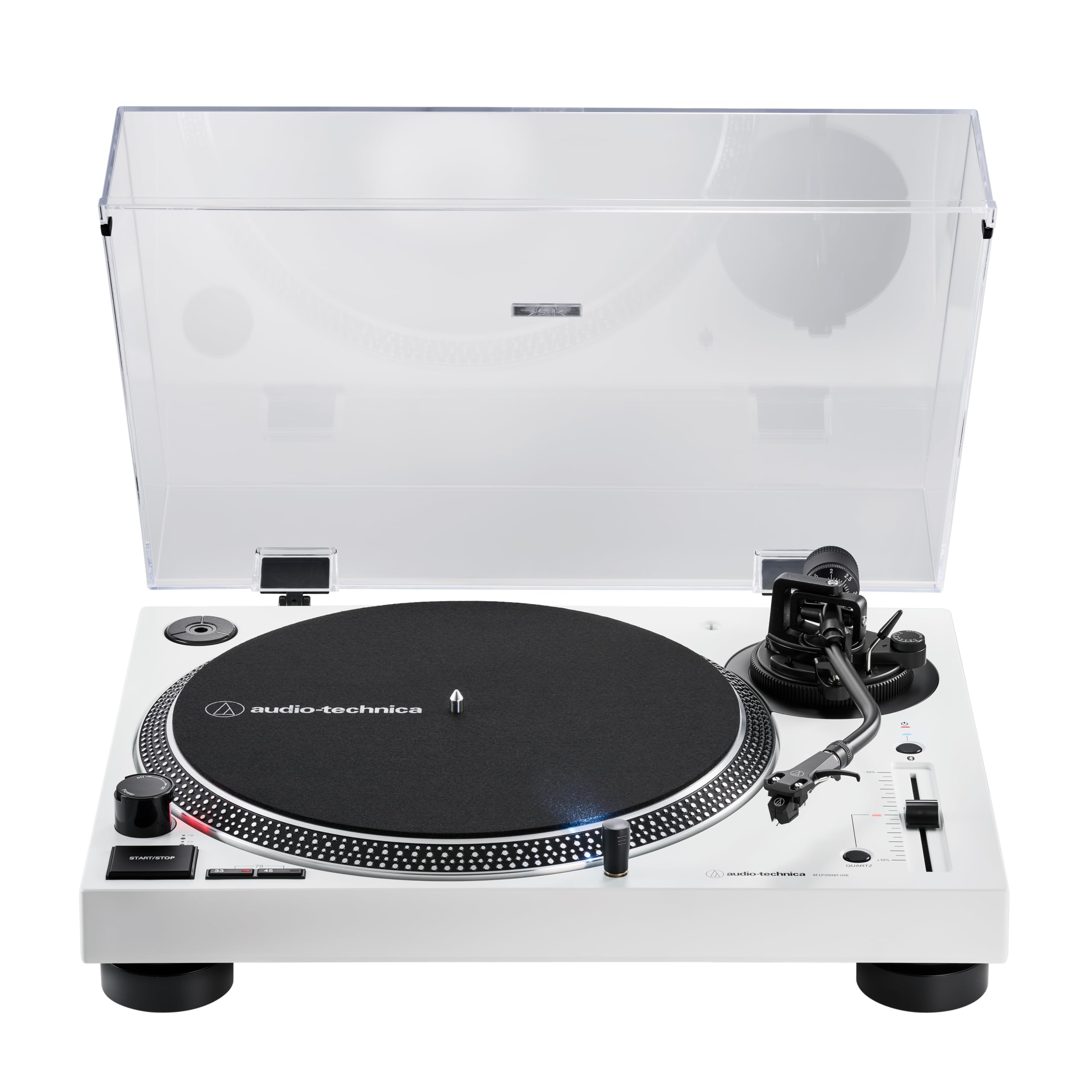
Audio-Technica AT-LP120XUSB

95 /100
Sound Score Outstanding

Key details

Speeds
33/45/78 RPM
Tonearm
Balanced S-shaped tonearm
Connectivity
USB, switchable phono/line
Motor & Torque
Direct-drive DC servo
View on Amazon

The AT-LP120XUSB pairs a switchable phono/line preamp with USB ripping and an included AT-VM95E cartridge in a 3-speed direct-drive deck. The DC servo motor holds speed well across 33, 45, and 78 RPM, and the balanced S-shaped tonearm with hydraulic damped lift keeps cueing controlled. Sound is clean and composed for the price, with the cartridge providing the signal character before a receiver or powered speakers take over.

Setup is a counterweight and anti-skate adjustment, then a flip of the PHONO/LINE switch. The counterweight and anti-skate controls are marked clearly, so calibrating the tonearm for the included cartridge takes a few minutes. LINE feeds powered speakers or an aux input; PHONO routes to an external stage or a receiver's phono input. USB output captures the same signal for computer recording, so one deck covers listening and digitizing. The 78 RPM setting is uncommon in this price tier.

This works best for a first-time vinyl buyer who wants a wired direct-drive deck with USB recording and already has powered speakers or a stereo receiver. It is not for buyers who expect automatic tonearm operation or auto-return; the tonearm is fully manual. It is also not a scratch deck, since torque is set for home listening rather than DJ work. The built-in phono preamp is adequate but not high-end; an external phono stage is the usual upgrade for listeners chasing more detail.

The AT-VM95E cartridge tracks cleanly out of the box, and the platter stays steady during playback. The deck's weight, metal top plate, and damped tonearm lift give records a planted feel, while the switchable outputs let it move between a living-room stereo and a computer desk without swapping cables. The visual finish also reads as more expensive than the price.

This variant sticks to wired connections. The wireless sibling in the same direct-drive family swaps USB for aptX Bluetooth, so buyers who want speaker pairing should look there; the AT-LP120XUSB is the one to choose when digitizing matters more. For a home hi-fi setup, the wired connection keeps the signal path simple and avoids an extra wireless conversion step.

💡 With powered speakers, set the rear switch to LINE so the internal preamp sends a line-level signal; when adding an external phono stage later, switch to PHONO.

Pros

  • Heavy platter and damped tonearm give a stable, planted feel during playback.
  • Clean, composed sound from the included AT-VM95E cartridge.
  • One deck covers listening, USB recording, and phono/line outputs.
  • Counterweight and anti-skate are simple to set, with the cartridge pre-mounted.
  • Metal top plate and balanced tonearm make it look more expensive than the price.

Cons

  • Internal phono preamp is serviceable but not high-end; an outboard stage can add detail.
  • Motor and platter behavior can vary in isolated units, so check the deck soon after unboxing.
Our verdict

The AT-LP120XUSB delivers the essential direct-drive package — switchable preamp, USB ripping, and a capable included cartridge — at a price that undercuts typical hi-fi alternatives.
Check Latest Price
2

Best for Wireless Listening

Audio-Technica AT-LP120XBT

93 /100
Sound Score Outstanding

Key details

Speeds
33/45/78 RPM
Tonearm
Balanced S-shaped tonearm
Connectivity
Bluetooth aptX, USB, RCA
Motor & Torque
Direct-drive DC servo
View on Amazon

aptX Adaptive Bluetooth joins the AT-VM95E cartridge and direct-drive motor, turning the familiar AT-LP120 platform into a wireless-ready deck. Pairing is quick, and the wireless connection stays stable during normal listening. The switchable phono/line preamp stays on board, so you can connect powered speakers, a stereo receiver, or a Bluetooth speaker without adding a separate phono stage.

Sound stays clear through the included cartridge, and the direct-drive motor keeps platter speed steady at 33, 45, or 78 RPM. The AT-VM95E keeps vocals and instruments distinct, and the deck preserves the detail that draws people to vinyl. For a casual wireless setup, this behaves like a wired table with Bluetooth added.

This is for someone building a wireless vinyl setup around Bluetooth speakers or headphones. The torque is tuned for home listening, not DJ scratching, so club-oriented back-cueing and pitch tricks are outside its scope. If your plan is scratch routines, a dedicated DJ deck with higher torque fits better.

The wireless convenience costs a sensible premium over the wired sibling while keeping the same core quality. For a home listener, that extra cost buys freedom from a wire between turntable and amp, which is the main reason to choose this version.

Pros

  • Bluetooth pairing is quick and holds a stable connection with aptX Adaptive speakers or headphones.
  • The included AT-VM95E cartridge delivers clear, satisfying sound that outdoes basic all-in-one turntables.
  • Build quality is solid, and setup takes little time out of the box.
  • Offers strong value for a Bluetooth direct-drive turntable in its price tier.

Cons

  • If you split time between Bluetooth speakers and wired amplifiers, the rear selector requires reaching behind the deck to switch.
Our verdict

The wireless convenience costs a sensible premium over the wired sibling while keeping the same core quality. For a living-room listener who wants the record playing through a Bluetooth speaker, that premium is worth paying.

Check Latest Price
3

Best for Professional DJs

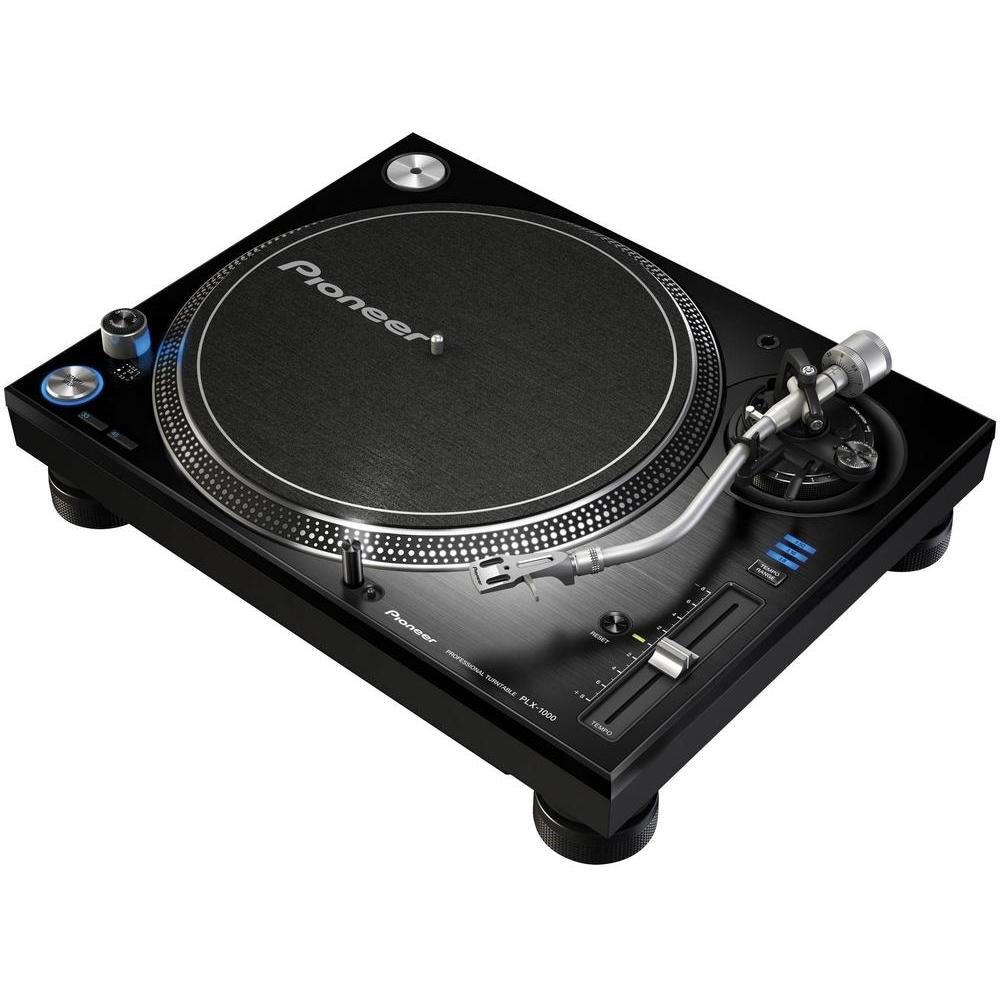
Pioneer DJ PLX-1000

87 /100
Sound Score Excellent

Key details

Speeds
33/45 RPM
Tonearm
S-shaped tonearm
Connectivity
RCA phono output
Motor & Torque
High-torque direct drive
View on Amazon

The PLX-1000 pairs a heavy high-rigidity chassis with high-torque direct drive, giving working DJs the familiar Technics-style layout without the badge premium. The motor gets records up to speed quickly and holds pitch steady during long mixes, and the S-shaped tonearm follows the geometry that turntablists already know.

Playback stays quiet: platter noise is low enough that songs sound dead silent between tracks, and the mass keeps the deck planted even during aggressive scratching. DVS users get the tactile response of real vinyl while timecode software controls tempo and pitch. That combination makes the PLX-1000 a genuine club tool rather than a living-room ornament.

The heavy body also resists feedback from loud monitors, which matters when the booth is cramped, and replaceable tonearm components support long-term maintenance.

This is a tool for working DJs, turntablists, and DVS users who expect to set up their own gear. It is not a plug-and-play hi-fi table for casual listening. Beginners who want a preamp and USB ripping should consider the friendlier Pioneer deck in this lineup.

Pros

  • Quiet, high-torque motor keeps platter noise low and holds pitch steady.
  • Heavy high-rigidity chassis stays planted while scratching and resists booth vibration.
  • Club-grade performance without the Technics badge premium, at a lower cost.

Cons

  • No cartridge is included, so first-time buyers need to budget for one.
  • Tonearm bearing can arrive loose and need adjustment before tracking is accurate.
Our verdict

For working DJs and DVS users who want a heavy, high-torque deck, the PLX-1000 delivers club-style performance at a lower price than the alternative.

Check Latest Price
4

Best Premium Hi-Fi

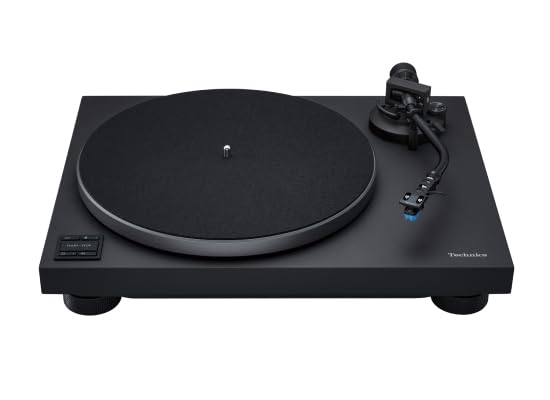
Technics SL-40CBT

82 /100
Sound Score Excellent

Key details

Speeds
33/45/78 RPM
Tonearm
Aluminum S-shaped tonearm
Connectivity
Bluetooth, wired
Motor & Torque
Coreless direct-drive motor
View on Amazon

Technics' coreless direct-drive motor is the SL-40CBT's defining feature, giving the platter quiet rotation and the music a clean, powerful sound. The minimalist plinth and aluminum S-shaped tonearm place it firmly in home hi-fi territory, not a DJ booth. There is no pitch slider, no high torque, and no scratch-friendly adjustment here — just a record player that connects by wire or Bluetooth.

Setup is easy: mount the platter, attach the headshell with the AT-VM95C, balance the tonearm, and choose your speed. The deck runs steadily at 33, 45, or 78 RPM, and no motor hum leaks into the signal. Wired output serves a traditional stereo; Bluetooth covers wireless listening when you don't want to sit next to the turntable. Once the stylus is in the groove, the package stays quiet and forgettable — which is exactly what a hi-fi deck should do.

This is for buyers who want a Technics direct-drive with Bluetooth in a clean, modern form. DJs needing heavy torque, pitch control, or scratch ability should look elsewhere. The motor is tuned for home listening, and the deck's manual-control tradeoffs are part of the package; for an attentive vinyl listener, the motor quality and minimalist design still make it a strong wireless alternative to the top pick's USB-first approach.

Pros

  • Coreless direct-drive motor keeps platter vibration low for clean playback.
  • Rich, clean sound with detailed output and enough power to fill a room.
  • Premium build quality and minimalist appearance fit a hi-fi rack.
  • Quick setup with stable playback and no motor noise.

Cons

  • Cue lever feel is less premium than the rest of the deck, though the lowering action is smooth.
  • Fully manual operation means no auto-stop; a record side plays on until the arm is lifted.
Our verdict

The SL-40CBT is the Technics coreless motor and Bluetooth convenience in a minimalist home deck, positioned as the wireless alternative to the top pick's USB recording.

Check Latest Price
5

Best for Turntablists

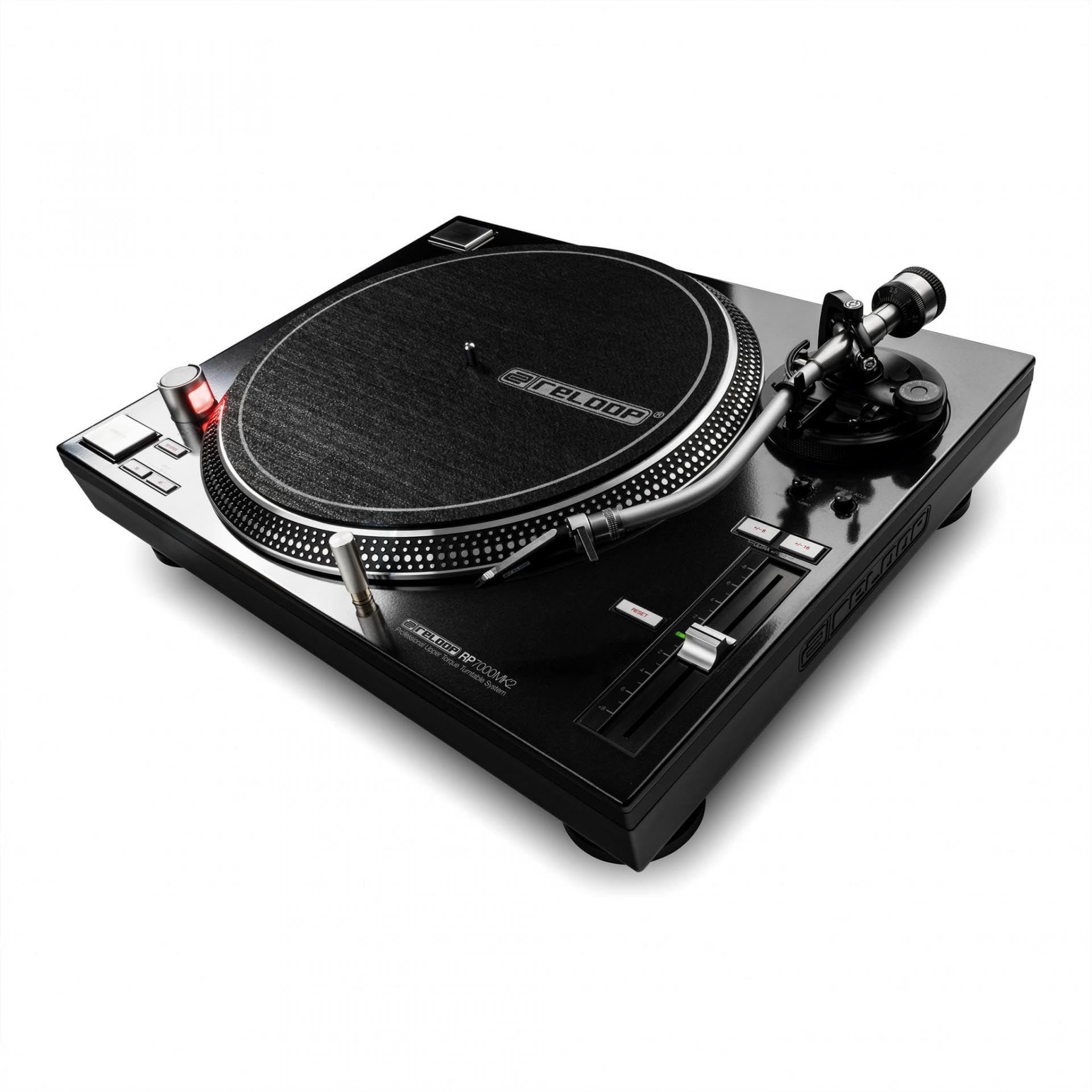
Reloop RP-7000 MK2

83 /100
Sound Score Excellent

Key details

Speeds
33/45/78 RPM
Tonearm
S-shaped, VTA adjustable, anti-skate
Connectivity
RCA phono output
Motor & Torque
Power-torque direct drive
View on Amazon

The RP-7000 MK2 pairs an upper-torque direct-drive motor with a VTA-adjustable S-shaped tonearm and a heavy anti-resonant body — a combination aimed at serious scratching, not casual listening. Where entry-level direct-drive decks use lighter construction and modest torque, this Reloop is a specialized instrument for DJs who already have a mixer in the signal path.

The motor holds platter speed through back-cueing and beat-matching, and the heavy chassis stays planted during aggressive hand use. The statically balanced S-shaped tonearm allows fine VTA adjustment for different cartridges, while pitch control with forward/reverse covers standard beat-matching and 78 RPM support extends the deck beyond the usual DJ set. The LED needle light and anti-skate control keep cueing work manageable in low-light booths.

This is a deck for turntablists and scratch DJs who want performance-oriented controls without paying for a flagship badge. It is not for home listeners who need a built-in phono preamp or USB output; an external phono stage or mixer is required. A setup-dependent hum can appear when the deck is connected to certain preamps or cable runs — a fair trade for DJs who already have the signal chain sorted. New buyers looking for a plug-and-play first turntable should start elsewhere.

💡 Use shielded audio cables and keep them away from power supplies.

Pros

  • Heavy, high-rigidity body stays planted during cutting and scratching.
  • Upper-torque direct drive keeps speed steady through back-cueing and beat-matching.
  • VTA-adjustable S-shaped tonearm allows fine-tuning for different cartridges.
  • Forward/reverse, pitch control, and 78 RPM support expand the deck's range.

Cons

  • With certain preamps or cable positioning, a low-level hum can surface.
Our verdict

For DJs who already have a mixer, this Reloop delivers a serious scratch deck without the usual club-badge premium.

Check Latest Price
6

Beginner DJs

Pioneer DJ PLX-500

92 /100
Sound Score Outstanding

Key details

Speeds
33/45/78 RPM
Tonearm
S-shaped tonearm
Connectivity
USB, phono/line outputs
Motor & Torque
High-torque direct drive
View on Amazon

Pioneer's PLX-500 gives beginner DJs a high-torque direct-drive motor, USB ripping, and switchable phono/line outputs without pushing into PLX-1000 pricing. The S-shaped tonearm, 33/45/78 speeds, and line-level output let a home user play records through powered speakers or digitize vinyl with minimal setup. What holds it below the club-grade deck is the same tradeoff: lower torque and a lighter build, which working scratch DJs will notice at the platter. Audiophiles face an entry-level tonearm and cartridge that cap critical listening. For a first direct-drive deck or a casual home listener, that boundary is acceptable.

Pros

  • USB recording captures vinyl directly to a computer, adding digitization without a separate interface.
  • Switchable phono/line outputs connect to powered speakers or a mixer, removing the need for an external preamp.
  • The 33/45/78 speed range includes older records, broadening playback beyond standard two-speed options.

Cons

  • The tonearm and cartridge package stops short of the detail retrieval audiophiles expect from premium decks.
  • Scratch DJs moving from a club setup will feel lower start-up torque and less chassis mass than the PLX-1000.
Our verdict

The PLX-500 fits a beginner DJ or home user who wants USB ripping and Pioneer's familiar deck layout, as long as the lower torque and entry-level tonearm are acceptable boundaries.

Check Latest Price
7

Budget Beginners

Reloop RP-2000 MK2

78 /100
Sound Score Very Good

Key details

Speeds
33/45 RPM
Tonearm
S-shaped, hydraulic lift, anti-skate
Connectivity
USB, built-in preamp
Motor & Torque
Quartz-driven direct drive
View on Amazon

Reloop's RP-2000 MK2 brings a quartz-locked direct drive, USB output, and an Ortofon OM Black cartridge together in a budget-friendly package. Home listeners get a direct path to digitize records, and beginner DJs get pitch control that holds tempo while they learn to match beats. The quartz lock is the main draw at this price, making speed adjustments more predictable. Plastic construction and lower torque place it in entry territory, which is exactly why it stays below more rugged direct-drive decks. For casual mixing and straight vinyl playback, those boundaries are acceptable.

Pros

  • Quartz-locked direct drive gives beginners consistent speed for beatmatching.
  • USB output records vinyl to a computer without an external interface.
  • Included Ortofon OM Black cartridge and built-in phono preamp reduce first-time setup cost.

Cons

  • Hi-fi buyers used to heavier decks will find the cabinet light.
  • Back-cueing and scratch practice will push past what this deck is built for.
Our verdict

Fits budget buyers and beginner DJs who want USB recording and quartz-locked pitch control without club-deck pricing.

Check Latest Price

How to Choose

Motor & Torque

High-torque direct-drive motors lock to a stable speed quickly, which is why DJs use them for scratching and pitch work. That same torque adds cost and weight, and it usually ships without the preamp a home listener needs.

For home listening, low-vibration coreless motors like the one in the Technics SL-40CBT minimize motor noise at the stylus. For DJs, torque and braking matter more than absolute silence. Choose torque if you plan to scratch, and quiet rotation if you plan to sit and listen.

Tonearm Design

Tonearms are the contact point between record and cartridge. An S-shaped arm provides familiar geometry and stable tracking, while a J-shaped arm like the AT-LP5X's reduces tracking error on inner grooves.

VTA adjustment lets you fine-tune the arm's vertical angle to match cartridge height; anti-skate counteracts inward pull on the groove. Without those controls, a deck is still fine for casual listening but less predictable for serious setup work.

Supported Speeds

Most records spin at 33 or 45 RPM, but 78 RPM matters if you collect older shellac records. A deck with all three speeds replaces the need for a separate 78 player.

If you only play modern vinyl, 33/45-only decks save you nothing in practice, but they limit future flexibility. The price difference between 2-speed and 3-speed models is usually small enough that 78 support is worth having.

Connectivity

Wired phono/line outputs connect to a receiver or powered speakers, with the phono stage handling the RIAA equalization. USB digitization records vinyl to a computer, while Bluetooth aptX sends audio to wireless speakers or headphones.

The catch is switching: a rear-mounted Bluetooth/line selector makes daily toggling awkward, and wireless convenience can carry a small signal-path compromise. Decide whether you'll mostly use wired or wireless before buying.

Cartridge & Preamp

A decent bundled cartridge like the AT-VM95E gets you listening immediately; a deck that ships without a cartridge or preamp adds hidden cost and setup time. DJ decks often omit both because they assume you own a mixer and a cartridge.

If a deck has a built-in preamp, check whether it's switchable, because a fixed phono-only output means you need an external phono stage. Buyers who already own a quality external preamp can ignore the built-in and upgrade the cartridge instead.

Frequently Asked Questions