9 Best Automatic Turntable of 2026: No Speaker Surprises

The best automatic turntable options for wired, Bluetooth, and all-in-one setups, so your first record plays on the speakers you actually own.

Automatic turntables promise the simplest path into vinyl: press start, drop the needle, and let the tonearm return on its own. The more common frustration is not the mechanism itself, but the moment a buyer realizes a Bluetooth model may not stream vinyl to Bluetooth headphones, or that a deck with a built-in phono preamp still needs powered speakers.

This guide sorts automatic decks by how they actually connect and what they require in the room, from wired entry models to all-in-one systems and hi-res wireless picks. The point is not to crown one feature set as universally right, but to match the turntable to the speakers, receiver, or headphones you already own.

That matters because a tonearm can remove vinyl's fiddly parts, but the wrong connection path creates a new one before the first record spins.

About the Sound Score: This comparative score is calculated from a product's published customer rating and review volume. It is not a laboratory measurement or a hands-on test result.

1

Best Overall

Audio-Technica AT-LP60XBT

93 /100
Sound Score Outstanding

Key details

Operation
Fully automatic belt-drive
Phono Preamp
Switchable phono/line
Built-In Speakers
External speakers required
Cartridge / Stylus
Dual Magnet, replaceable diamond stylus
View on Amazon

Fully automatic start/stop/return removes the need to cue or lift the tonearm by hand, and Bluetooth aptX output carries vinyl playback to powered speakers, soundbars, or wireless headphones. The switchable phono/line preamp provides a phono-level signal for receivers with a phono input or a line-level signal for active speakers and aux inputs. That output path matters for automatic-deck shoppers who want wireless convenience without moving to an all-in-one speaker cabinet.

Operation stays close to one button at 33 1/3 and 45 RPM. The belt-drive mechanism starts, plays, and returns the tonearm, so new owners do not need to handle a cueing lever. Setup primarily involves seating the die-cast aluminum platter and belt, placing the dust cover, and setting the preamp switch to match the connected audio gear. The deck gets listeners to the first record quickly without demanding a receiver or separate phono stage.

This is the right fit for first-time vinyl buyers who already own Bluetooth speakers, soundbars, or headphones and want the automatic mechanism to handle the record. It assumes an external output path: there are no built-in speakers, so the deck must connect to powered speakers, a receiver, or Bluetooth audio gear. Buyers who want adjustable tracking force or cartridge upgrades should look elsewhere, since the tonearm and cartridge keep those adjustments off the table. Bluetooth pairing can be finicky with some speaker or receiver combinations, so a one-time pairing setup is the realistic expectation rather than seamless switching among multiple sources.

For wired systems, the RCA output remains available, making Bluetooth an option rather than a requirement. The replaceable diamond stylus keeps long-term maintenance limited to swapping that part when it wears. Compared with the wired upgraded-cartridge automatic deck in this set, the LP60XBT trades cartridge-swap potential for Bluetooth output and automatic operation.

The sound quality lands on the livelier side of entry-level Bluetooth decks, with clear vocal presence and enough detail to reward good pressings. It does not promise high-mass tonearm tuning or moving-coil cartridge resolution, but it plays records cleanly enough for casual listening sessions and music discovery.

💡 Keep the turntable and Bluetooth speaker or receiver within clear line of sight during first pairing, and re-pair from the turntable if the connection drops after switching sources.

Pros

  • Bluetooth aptX output pairs with powered speakers, soundbars, and wireless headphones for cable-free playback.
  • Fully automatic start, stop, and return handles tonearm cueing at 33 1/3 and 45 RPM.
  • Switchable phono/line preamp connects to receivers, powered speakers, or aux inputs without a separate phono stage.
  • Beginner-friendly operation removes cartridge alignment and speed calibration for first-time vinyl owners.
  • Entry-level price keeps the automatic Bluetooth deck cost-effective for casual record playback.

Cons

  • Plastic chassis and dust cover can feel lightweight next to heavier decks.
  • Bluetooth pairing can be finicky with some speakers or receivers and may require re-pairing.
Our verdict

The AT-LP60XBT suits vinyl beginners who already own a Bluetooth output path and want record handling to stay automatic.
Check Latest Price
2

Best All-In-One Automatic

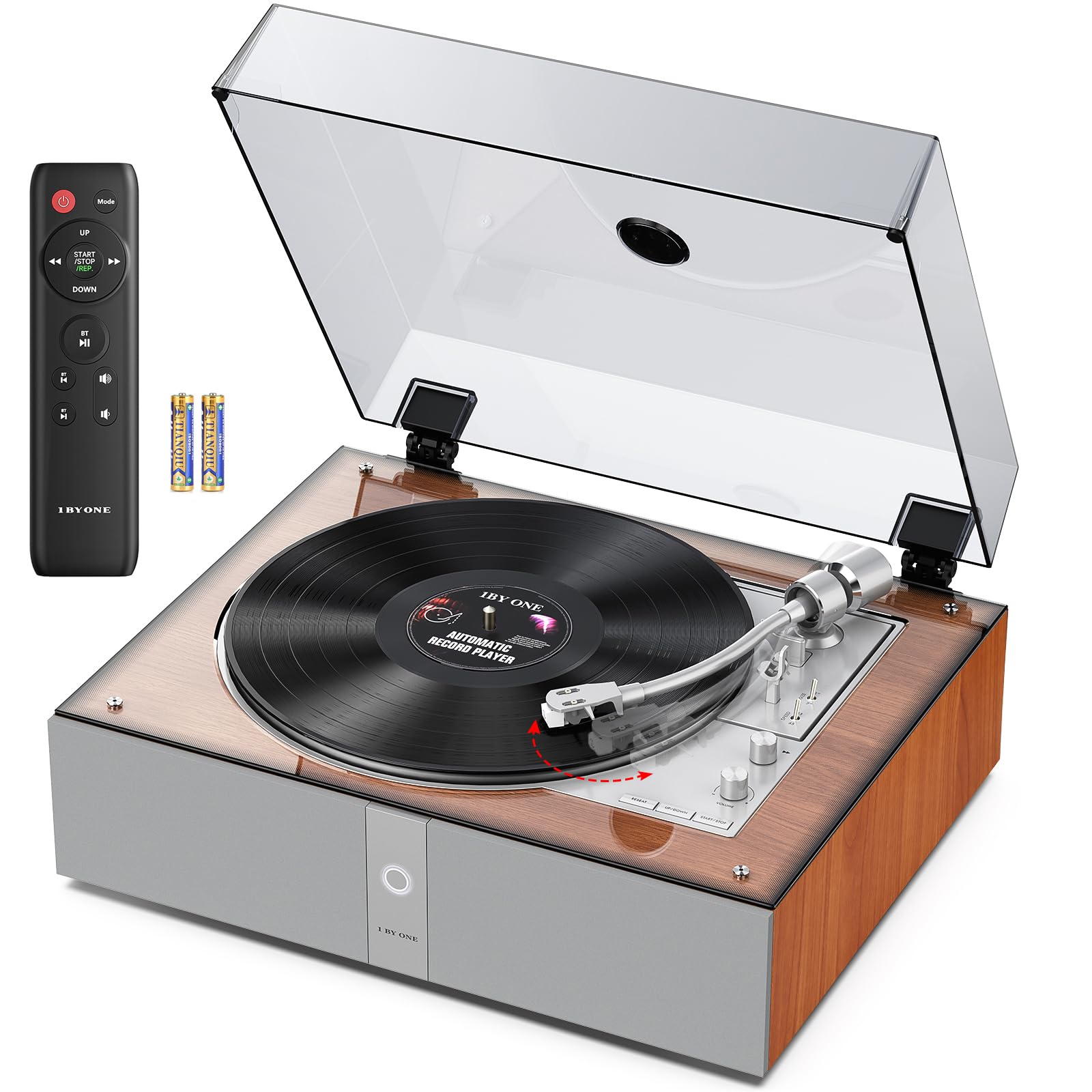
1byone AT02

89 /100
Sound Score Excellent

Key details

Operation
Fully automatic with repeat
Phono Preamp
—
Built-In Speakers
Built-in quad-speaker DSP
Cartridge / Stylus
AT-3600L
View on Amazon

The built-in quad-speaker system makes this one of the few automatic turntables in the set that can play vinyl without an amplifier or powered speakers. The remote control adds distance control over start, stop, and repeat, which is uncommon at this budget level. Setup stays simple: place the platter, connect power, and play.

The sound from the built-in speakers leans warm and balanced, with enough presence for a living room or bedroom without extra gear. Build quality feels substantial for a budget-friendly automatic deck, from the platter to the physical controls.

The AT-3600L cartridge and fully automatic operation handle start, stop, and return on 33 1/3 and 45 RPM records. The repeat function keeps a side cycling for background music, and the headphone jack and RCA output add wired paths for private listening or a future speaker change.

This is aimed at gift buyers and casual listeners who want a self-contained automatic record player with the speakers built in. It fits setups where one cabinet and a remote are more useful than a separate receiver or speaker wires. The Bluetooth feature is input only, so it streams phone audio into the turntable but cannot send vinyl to Bluetooth headphones or speakers; the Bluetooth-output alternative in this set handles that case.

Pros

  • Warm, balanced all-in-one sound from the built-in speakers fills a room without extra gear.
  • Build quality feels solid for a budget-friendly automatic turntable.
  • Setup and daily operation stay simple, so gift buyers can start playback quickly.
  • Remote control adds useful start, stop, and repeat convenience from across the room.

Cons

  • The fixed cartridge design leaves no upgrade path for buyers who want to swap cartridges later.
  • The tonearm offers no counterweight or anti-skate adjustment, so tracking force cannot be fine-tuned.
Our verdict

The 1byone AT02 is the self-contained automatic choice when the priority is getting from box to playing records without a receiver or speaker search.

Check Latest Price
3

Best Wired Upgrade Pick

Audio-Technica AT-LP70X

88 /100
Sound Score Excellent

Key details

Operation
Fully automatic belt-drive
Phono Preamp
Switchable phono/line
Built-In Speakers
External speakers required
Cartridge / Stylus
AT-VM95C, upgradable VM95 stylus
View on Amazon

The AT-LP70X leads with the AT-VM95C cartridge and a J-shaped tonearm, which puts it above older entry-level AT automatic decks. The VM95 Series stylus can be replaced without changing the whole cartridge, and the switchable phono/line output feeds powered speakers or a receiver directly. Automatic start, stop, and return keep operation simple, while the black and bronze finish gives the deck a more current look.

Sound is clear and detailed, with the VM95C pulling more texture from vocals and instruments than basic conical cartridges on older entry-level automatics. Setup is minimal: set the preamp switch, connect to a receiver or powered speakers, and place the record on the platter. For a wired listening path, this is close to set-and-forget operation.

This is the right match for listeners who want a simple modern automatic turntable with upgraded AT-VM95C sound and a stylus path, provided they already own powered speakers or a receiver. Skipping can occur on some records, especially new vinyl, and there is no adjustable counterweight or anti-skate to correct it. Buyers who need Bluetooth, built-in speakers, or adjustable tracking force should look elsewhere in this set.

💡 If a new record skips, clean the vinyl and verify the turntable is level first.

Pros

  • Clear and detailed sound quality from the AT-VM95C cartridge.
  • Easy setup with fully automatic start, stop, and return.
  • VM95 Series stylus provides an easy future upgrade path.
  • Black and bronze finish gives the deck a modern look.

Cons

  • Chassis can feel plasticky or lightweight on some units.
  • No adjustable counterweight or anti-skate to correct tracking issues.
Our verdict

The AT-LP70X is the wired automatic pick for listeners who want clearer AT-VM95C sound and a stylus upgrade path without moving to a manual deck. Bluetooth-only and adjustable-tracking setups have better matches in this set.

Check Latest Price
4

Best Audiophile Automatic

Dual CS429

82 /100
Sound Score Excellent

Key details

Operation
Fully automatic belt-drive
Phono Preamp
—
Built-In Speakers
External speakers required
Cartridge / Stylus
Ortofon 2M Red
View on Amazon

The Dual CS429 moves automatic vinyl playback into adjustable-audiophile territory. It ships with a factory-aligned Ortofon 2M Red cartridge and a counterweight plus anti-skate dial, so the tonearm can be set around different cartridges rather than locked to one budget position. The result is a lively, detailed presentation that rewards a decent system.

The deck also covers records that many automatics skip. Speed selection includes 33 1/3, 45, and 78 RPM, and the layered MDF chassis with elastomer isolation helps keep the sound clean. The universal headshell leaves room for later changes, which is not always the case on entry-level automatic turntables. This speed flexibility is rare among automatic decks in this category.

Fully automatic start, stop, and return remain at the core, but setup is comparatively easy for a higher-end automatic deck. Adjustable tracking force and anti-skate give the CS429 more setup flexibility than fixed tonearm automatics, and the mechanical operation is the convenience layer on top of that adjustability.

Listeners who already have a good phono stage or powered speakers and a wired-only component setup will get the most from the CS429. For a mixed vinyl collection with 78 RPM records, the third speed and cartridge quality are the reasons to choose it.

Pros

  • Lively, detailed sound from the factory-aligned Ortofon 2M Red cartridge.
  • Fully automatic operation with adjustable counterweight and anti-skate.
  • Plays 33 1/3, 45, and 78 RPM records, including older collections.
  • High build quality with layered MDF chassis and elastomer isolation.

Cons

  • Premium-priced compared with entry-level automatic decks, so budget-focused buyers may find it hard to justify.
  • No Bluetooth output or built-in speakers for wireless or all-in-one setups.
Our verdict

The CS429 sits above the entry-level automatics because it asks you to bring the rest of the system and rewards that effort with a cartridge and tonearm that can grow with your setup.

Check Latest Price
5

Best Hi-Res Wireless Automatic

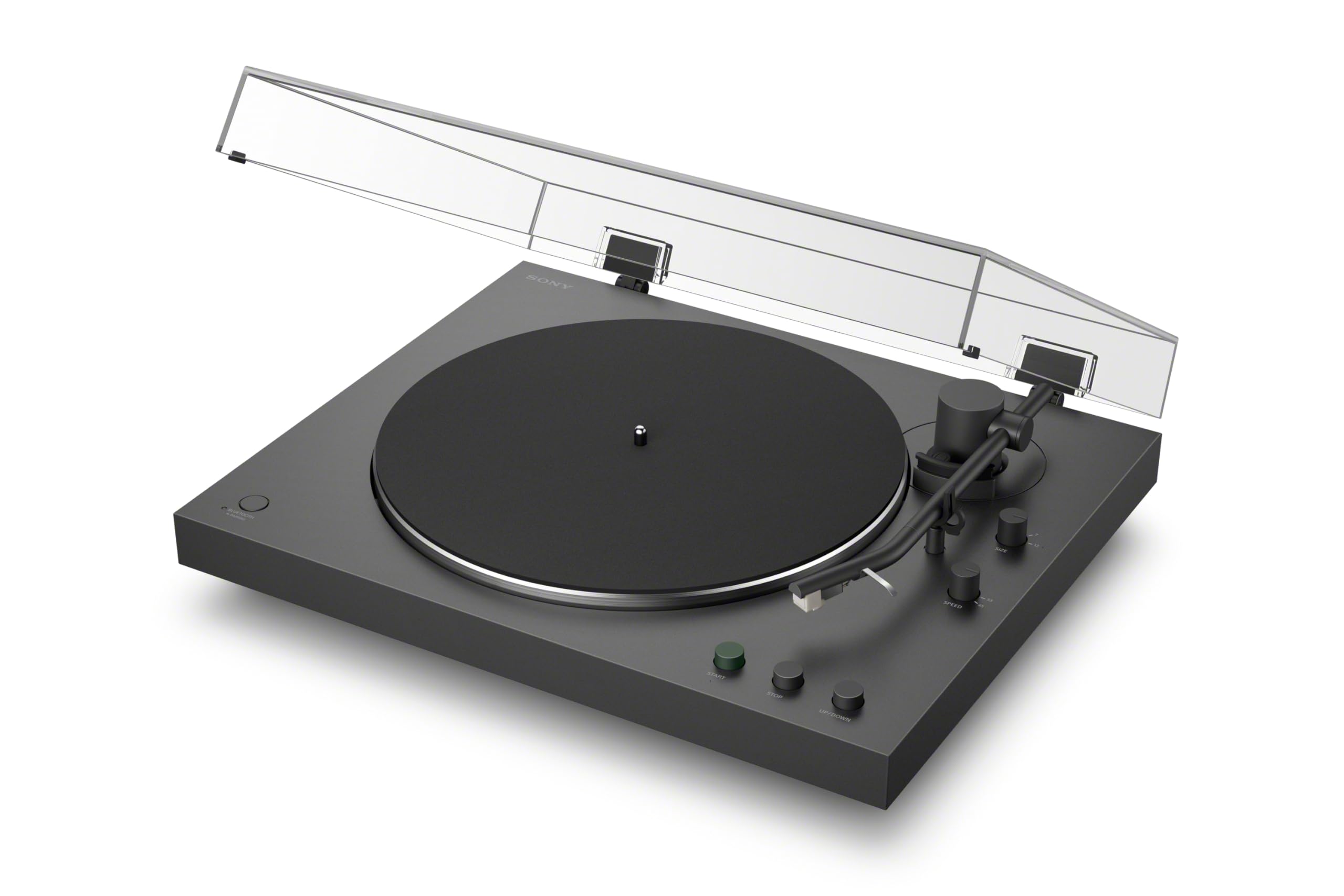
Sony PS-LX3BT

87 /100
Sound Score Excellent

Key details

Operation
Fully automatic start, stop, return
Phono Preamp
Built-in phono EQ
Built-In Speakers
External speakers required
Cartridge / Stylus
—
View on Amazon

The Sony PS-LX3BT makes aptX Adaptive Bluetooth the core connection path for vinyl playback, alongside a wired RCA output with built-in phono EQ. Full automatic start, stop, and return removes manual cueing, so the deck behaves as a set-and-play source.

Automatic operation is the main daily benefit. The tonearm lowers at the start of a side and returns at the end, which helps when the turntable sits near a soundbar or across the room. Bluetooth pairing with soundbars and Sonos speakers is direct, and wired output works with powered speakers or a receiver without a separate phono preamp. The aluminum die-cast platter and tonearm keep the deck clean and stable.

The aptX Adaptive codec matters most with Sony wireless headphones and soundbars that support it. In those setups, the Bluetooth signal retains more fine detail than a basic SBC connection. Listeners without an aptX Adaptive receiver can still use standard Bluetooth output or switch to RCA.

This fits Sony ecosystem owners and buyers who already have a soundbar, powered speakers, or Bluetooth headphones and want vinyl playback without manual cueing. It is not for anyone wanting built-in speakers or a tonearm built for manual adjustment. Shelf layouts with easy power-switch access will have the smoothest time.

Pros

  • Pairs cleanly with soundbars and Sonos speakers over Bluetooth
  • Automatic start, stop, and return handle the full record side
  • Built-in phono EQ and RCA output work with powered speakers or a receiver

Cons

  • Power switch placement may be awkward in tight cabinets or low shelves
Our verdict

This is the deck for Sony and soundbar owners who want aptX Adaptive Bluetooth and full automatic vinyl playback without built-in speakers.

Check Latest Price
6

Bluetooth Output

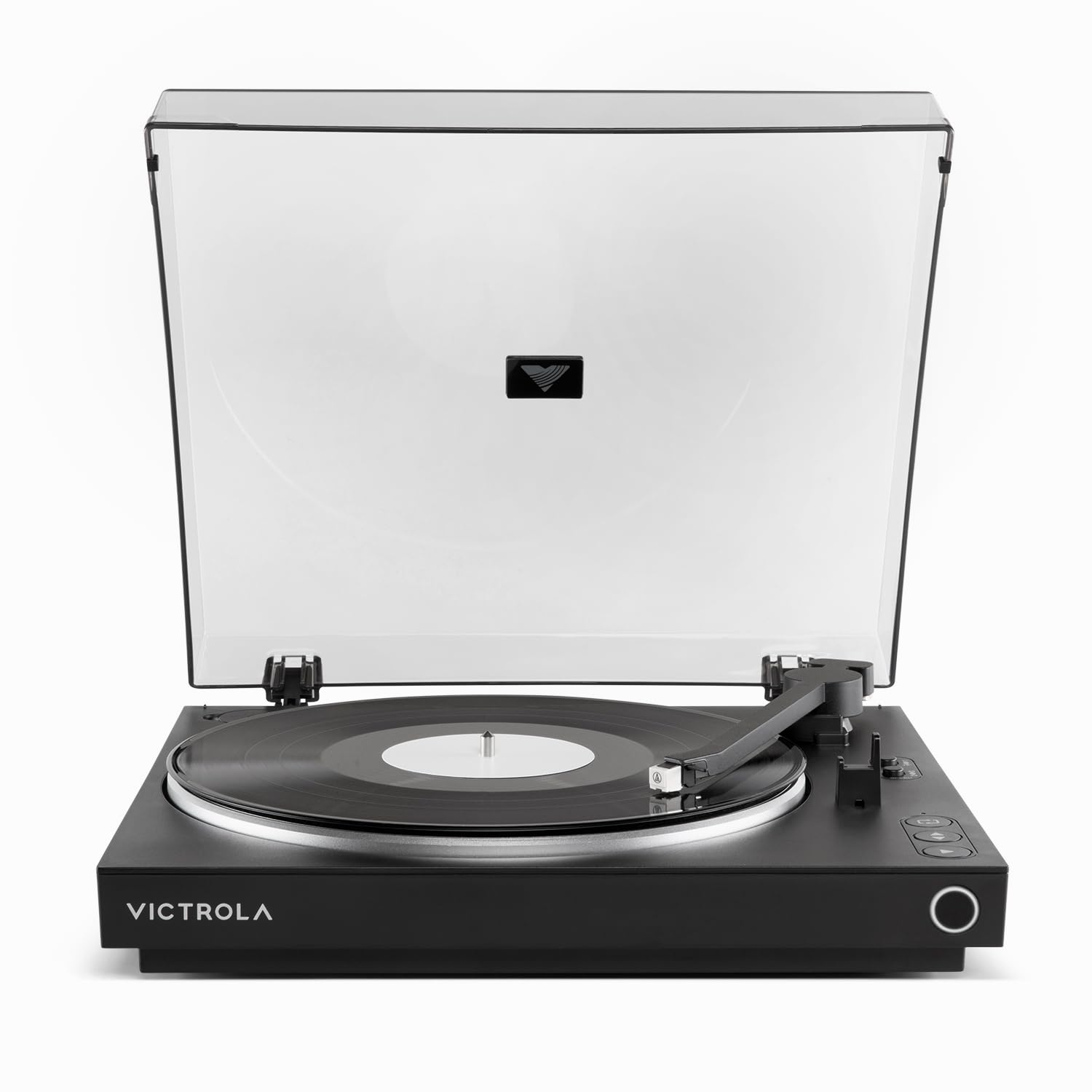
Victrola Automatic

82 /100
Sound Score Excellent

Key details

Operation
Fully automatic with repeat
Phono Preamp
Switchable preamp
Built-In Speakers
External speakers required
Cartridge / Stylus
ATN3600L
View on Amazon

The Victrola Automatic combines a sleek, low-profile design with fully automatic start, stop, and return, plus a repeat function that keeps long listening sessions moving without constant handling. VINYLSTREAM Bluetooth output sends vinyl to existing powered speakers or headphones, while the switchable RCA preamp covers wired setups. Build quality is respectable for the price, and setup is simple. The dividing line is wireless consistency: some speaker combinations may pair but produce no audio, or may not connect at all, so Bluetooth playback can require troubleshooting. That makes this deck best for listeners who are okay with a wired fallback or willing to confirm pairing with their specific speaker setup.

Pros

  • Sends vinyl to existing powered speakers or headphones over Bluetooth
  • Fully automatic operation with repeat playback keeps records cycling during long sessions
  • Slim, clean appearance fits neatly on media furniture

Cons

  • Performance can vary between units, with occasional short-lived or non-working decks
  • Bluetooth pairing and audio output can vary across speaker combinations
Our verdict

Choose this model when a slim automatic profile and repeat playback for long sessions fit a powered speaker setup you already use.

Check Latest Price
7

Budget Wired

Denon DP-29F

82 /100
Sound Score Excellent

Key details

Operation
Fully automatic with manual lifter
Phono Preamp
Built-in RIAA phono equalizer
Built-In Speakers
External speakers required
Cartridge / Stylus
Moving magnet cartridge
View on Amazon

The Denon DP-29F keeps automatic vinyl playback simple: place the record, press start, and the tonearm sets down and returns on its own. A built-in RIAA phono equalizer lets it feed an amplifier or powered speakers without a separate phono stage, and the diecast aluminum platter with moving magnet cartridge provides acceptable clarity for casual listening. The tradeoff is a lightweight plastic chassis and speed consistency that can vary, so audible flutter or rattle can surface on some units. That caps its ceiling for listeners who notice pitch irregularities.

Pros

  • Built-in RIAA phono equalizer accepts a receiver or powered speakers without another component.
  • Fully automatic start, stop, and return reduces handling steps for casual vinyl sessions.
  • Delivers clean, balanced sound for a budget automatic deck.

Cons

  • Without existing amplified speakers or a receiver, the lack of Bluetooth output or built-in speakers means extra gear is required.
  • For listeners wanting to fine-tune tracking, the fixed tonearm skips counterweight and anti-skate adjustment.
Our verdict

This budget-friendly automatic deck fits a casual wired vinyl setup that already includes amplification.

Check Latest Price
8

Budget Bluetooth

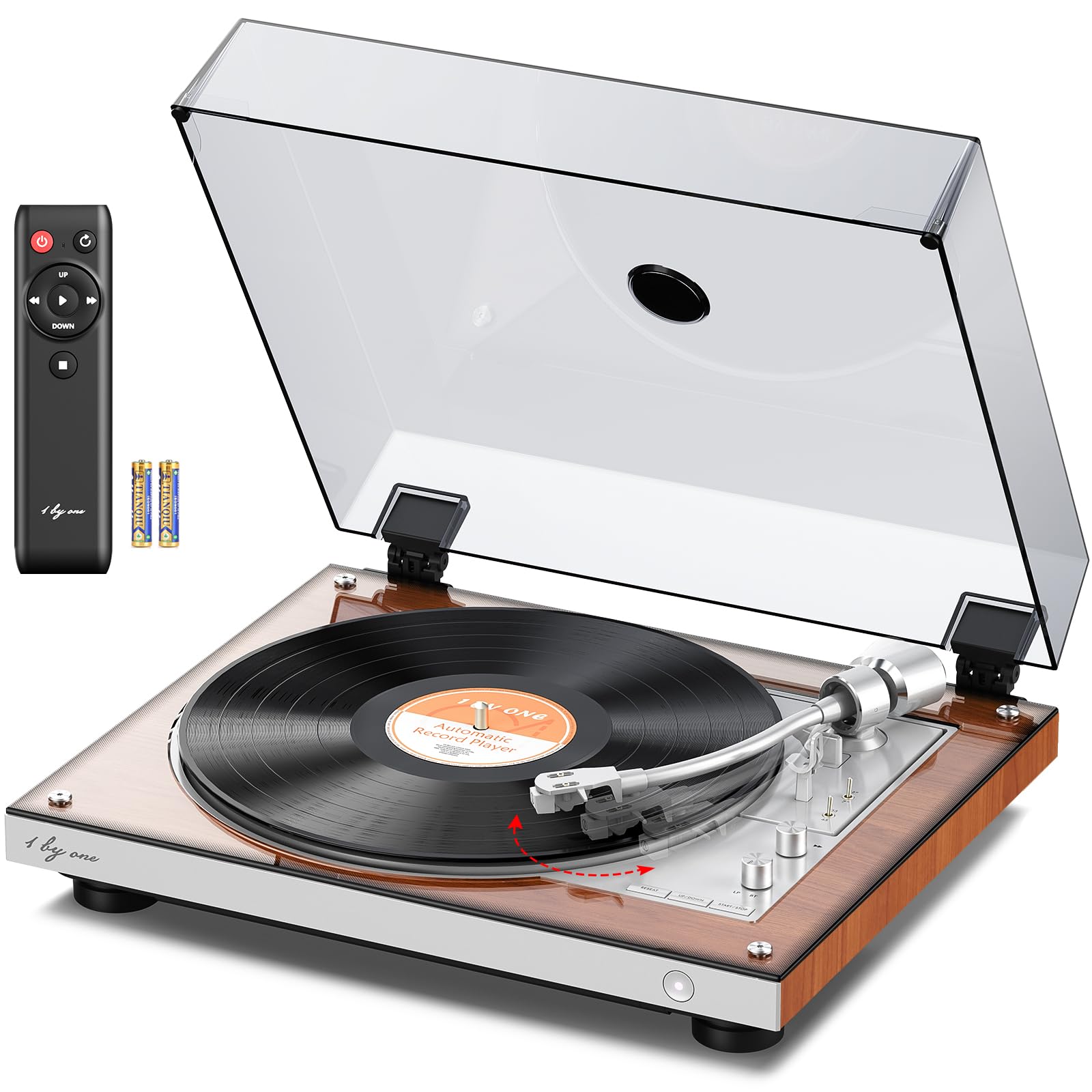
1byone AT01-N

84 /100
Sound Score Excellent

Key details

Operation
Fully automatic with repeat
Phono Preamp
Built-in preamp
Built-In Speakers
External speakers required
Cartridge / Stylus
AT-3600L
View on Amazon

The AT01-N transmits vinyl through Bluetooth output to powered speakers or headphones, with a built-in preamp, remote control, and repeat playback. Fully automatic start, stop, and return keep record handling hands-off, and the wood-look cabinet gives it a vintage-inspired appearance that reads above its price.

The tradeoff is a fixed platform: no counterweight, anti-skate, or pitch/speed adjustment. That means tracking force is set at the factory and speed cannot be corrected, so cartridge upgrades and fine pitch tuning are off the table. Style-conscious buyers who want automatic wireless playback without tinkering can work within those boundaries.

Pros

  • Bluetooth output feeds existing powered speakers or headphones without a wired receiver connection.
  • Remote control and repeat playback add convenience for hands-off record handling.
  • Vintage-inspired wood look reads as more expensive than the budget price.

Cons

  • No built-in speakers; requires powered speakers, Bluetooth headphones, or a receiver.
  • No counterweight, anti-skate, or pitch/speed adjustment; speed can vary slightly on some units.
Our verdict

Pick this deck if you already have powered speakers or Bluetooth headphones and want automatic operation with remote control and repeat playback.

Check Latest Price
9

Budget All-In-One

MYKESONIC YY1632

82 /100
Sound Score Excellent

Key details

Operation
Fully automatic belt-drive
Phono Preamp
—
Built-In Speakers
Built-in stereo speakers
Cartridge / Stylus
AT-3600L
View on Amazon

Built-in stereo speakers give this fully automatic belt-drive turntable a plug-and-play footprint for casual vinyl listening. The AT-3600L cartridge and automatic start/stop keep record playback low-effort. Bluetooth input and output add flexibility that some all-in-one decks in this set lack, supporting both wireless streaming into the cabinet and vinyl output to a paired speaker or headphones. The compact speaker system is balanced for small rooms, though it does not replace a larger hi-fi setup. The ceiling is speed behavior: pitch or speed stability can be inconsistent on some units, and piano-heavy records may expose tempo drift. That makes this a casual all-in-one rather than a critical listening deck.

Pros

  • Budget built-in speakers deliver clearer sound than expected for a compact all-in-one cabinet.
  • Automatic start and stop removes manual cueing during record changes.
  • Bluetooth input and output add wireless connection options without extra wires.

Cons

  • Cartridge and tonearm adjustments are not user-serviceable, leaving the fixed AT-3600L configuration as the only option.
Our verdict

For a small-room setup with casual listening and wireless convenience, this all-in-one covers the automatic basics without separate components.

Check Latest Price

How to Choose

Automatic Operation Type

Fully automatic start, stop, and return is the feature that separates true hands-off decks from partially manual players. The mechanism lifts and returns the tonearm at the end of a side, which reduces stylus wear and keeps the needle from sitting in the runout groove overnight. If you often leave the room between sides or fall asleep to records, this is the spec that matters most.

Connectivity Direction

Check whether Bluetooth is an input, an output, or both before deciding. Input-only Bluetooth plays phone or streaming audio through the turntable, but will not transmit vinyl to wireless headphones or speakers. Output-only Bluetooth sends the record signal out, which suits powered speakers and wireless headphones but offers no incoming streaming.

Built-In Speakers vs Separate Speakers

Built-in speakers simplify setup, but they share the same cabinet as the platter and stylus. As volume increases, driver vibration can reach the tonearm and create feedback or muddier low-end separation. Separate powered speakers or a receiver keep vibration away from the record path, which is why they dominate wired and wireless picks for listeners who care about clarity.

Cartridge and Stylus Path

Entry-level automatic decks often ship with the Audio-Technica AT-3600L or a similar conical stylus. It is forgiving, easy to replace, and fine for casual playback, but it retrieves less high-frequency detail than elliptical or VM95-series styli. If you plan to upgrade sound later, look for a deck with a removable cartridge or a stylus path that moves beyond the bundled needle.

Phono Preamp

A phono cartridge produces a quiet signal with an RIAA equalization curve. Without a phono preamp, that signal cannot directly feed most powered speakers or line-level inputs. A built-in switchable preamp gives you a simple start, and the bypass mode preserves the option to use a better external phono stage later without fighting internal equalization.

Tonearm Adjustability

Fixed tonearms with preset tracking force are common on budget automatic decks, which simplifies setup but leaves no correction for warped or bass-heavy records. Adjustable counterweight and anti-skate allow you to set tracking force to the cartridge's specification and reduce uneven groove wear. Pitch or speed controls go one step further for listeners who can hear drift on sustained piano notes.

Frequently Asked Questions