9 Best Turntable of 2026: Sound Quality Without the Guesswork

Find a turntable that matches your listening setup, from all-in-one players for casual vinyl to component decks for powered speakers and USB digitizing.

A turntable can look right on a shelf and still disappoint the first time you drop the needle. The category is full of stylish all-in-one players that earn high ratings as gifts or casual furniture pieces. Those ratings do not always describe sound quality. Too many buyers discover only after setup that the built-in speakers are thin, the platter runs slightly fast, or Bluetooth flows only one direction.

The better way to shop is to separate what a deck needs to do for your listening. An all-in-one in a dorm room has different demands than a component turntable feeding powered bookshelf speakers. A hobbyist digitizing records needs motor stability and manual control. A first-time owner often benefits from an automatic tonearm.

About the Sound Score: This comparative score is calculated from a product's published customer rating and review volume. It is not a laboratory measurement or a hands-on test result.

1

Best Overall

Audio-Technica AT-LP60X

91 /100
Sound Score Outstanding

Key details

Speaker Setup
External required
Tonearm Operation
Fully automatic
Bluetooth Direction
—
Drive & Speed Accuracy
Belt drive, 33/45 RPM
View on Amazon

The AT-LP60X strips vinyl setup down to a fully automatic tonearm, a switchable phono/line preamp, and a replaceable Dual Magnet stylus. The tonearm lifts, lands, and returns without manual cueing, so a first play starts with one button. The built-in preamp handles both phono and line output, so the component chain stays short. That automatic behavior removes the setup anxiety that keeps some newcomers away from manual turntables.

The belt drive holds 33 and 45 RPM, and the built-in preamp sends a line-level signal to powered speakers or a receiver. Clean, clear playback is the typical result when the deck feeds a decent pair of speakers, with the cartridge tracking clean records without constant inner-groove distortion. High-volume bass stays controlled but does not turn this entry-level deck into a full-range replacement for larger systems.

Setup follows the same low-effort path. The platter and belt slip into place, the switchable preamp works with either a phono input or an auxiliary line input, and the replaceable stylus keeps long-term upkeep simple. There is no USB output, no pitch slider, and no built-in speaker, which keeps the signal path simple but sets clear boundaries for buyers who want more control.

The matte black finish and compact platter keep the footprint tidy on a media console. Fully automatic start and stop also protects the stylus when a side ends, so casual listening does not require hovering near the turntable between tracks.

This is for first-time vinyl owners who already have powered speakers or a stereo receiver. It is not for listeners who want an all-in-one with built-in speakers, nor for hobbyists who want manual pitch control or USB recording. Buyers should inspect the dust cover and stylus after unboxing, since transit damage can occur. External speakers or a receiver are required before first play.

The automatic operation is the main reason to choose this over a manual direct-drive turntable with pitch control and USB output. The tradeoff is fewer hands-on adjustments, but that fits a listener who wants records playing quickly rather than a tinkering project. If the goal is digitizing vinyl or learning manual cueing, this is not the right deck.

Pros

  • Clean, clear playback makes entry-level vinyl engaging without a separate phono stage.
  • Setup is quick for first-time owners; one button handles start and auto-return.
  • Entry-level build feels stable enough for everyday home use.
  • The automatic design suits beginners and casual vinyl owners.
  • Clean, modern appearance fits a media console without visual clutter.

Cons

  • Some units may arrive non-functional; test all functions right after unboxing.
  • Early operation can stop unexpectedly; keep the return window in mind.
Our verdict

For a first turntable paired with powered speakers or a receiver, the AT-LP60X keeps vinyl playback low-effort and clean without pushing newcomers into manual tonearm adjustments.

Check Latest Price
2

Best for Manual Control & USB Digitizing

Audio-Technica AT-LP120XUSB

95 /100
Sound Score Outstanding

Key details

Speaker Setup
External required
Tonearm Operation
Fully manual
Bluetooth Direction
—
Drive & Speed Accuracy
Direct drive, 33/45/78 RPM
View on Amazon

Direct-drive speed control, 78 RPM support, and manual pitch adjustment define the AT-LP120XUSB. Compared with the automatic entry-level model, it trades convenience for hands-on control, and the switchable phono/line preamp keeps powered-speaker or receiver connections flexible. The USB output adds an archiving path without a separate phono interface.

The deck's mass and motor stability are apparent with old or slightly warped records, which track without obvious pitch swings. Sound is clear and full enough for a dedicated vinyl setup, and the included controls make it easier to dial in a cartridge than a fully automatic deck typically allows. The speed selector and pitch control sit within easy reach for small corrections.

Build quality extends to the platter, which spins with minimal wobble, and the design looks more expensive than its price tier suggests. The deck looks at home on a dedicated stereo shelf rather than a portable setup. The direct-drive motor also gives the record a stable foundation when the stylus is in the groove.

This is for vinyl hobbyists who value manual operation and analog-to-USB archiving above set-and-forget playback. It is not aimed at background listeners. Buyers who prefer a fully automatic tonearm should stay with the top pick and its managed record endings.

Pros

  • Substantial, stable build that does not feel flimsy during record changes
  • Clear, powerful sound gives vinyl a lively but controlled presentation
  • Strong direct-drive USB package with pitch control and 78 RPM support
  • Approachable setup for a deck with this many manual controls

Cons

  • USB recording can require computer-specific setup, particularly on macOS
  • Manual tonearm means no auto-return or auto-stop when a side finishes
Our verdict

Hands-on vinyl hobbyists get direct-drive stability, 78 RPM playback, pitch control, and USB archiving without paying for automatic features that would sit unused.

Check Latest Price
3

Best All-In-One with Built-In Speakers

1byone Belt-Drive Turntable

89 /100
Sound Score Excellent

Key details

Speaker Setup
Built-in speakers
Tonearm Operation
Auto-off
Bluetooth Direction
Input/receiver
Drive & Speed Accuracy
Belt drive
View on Amazon

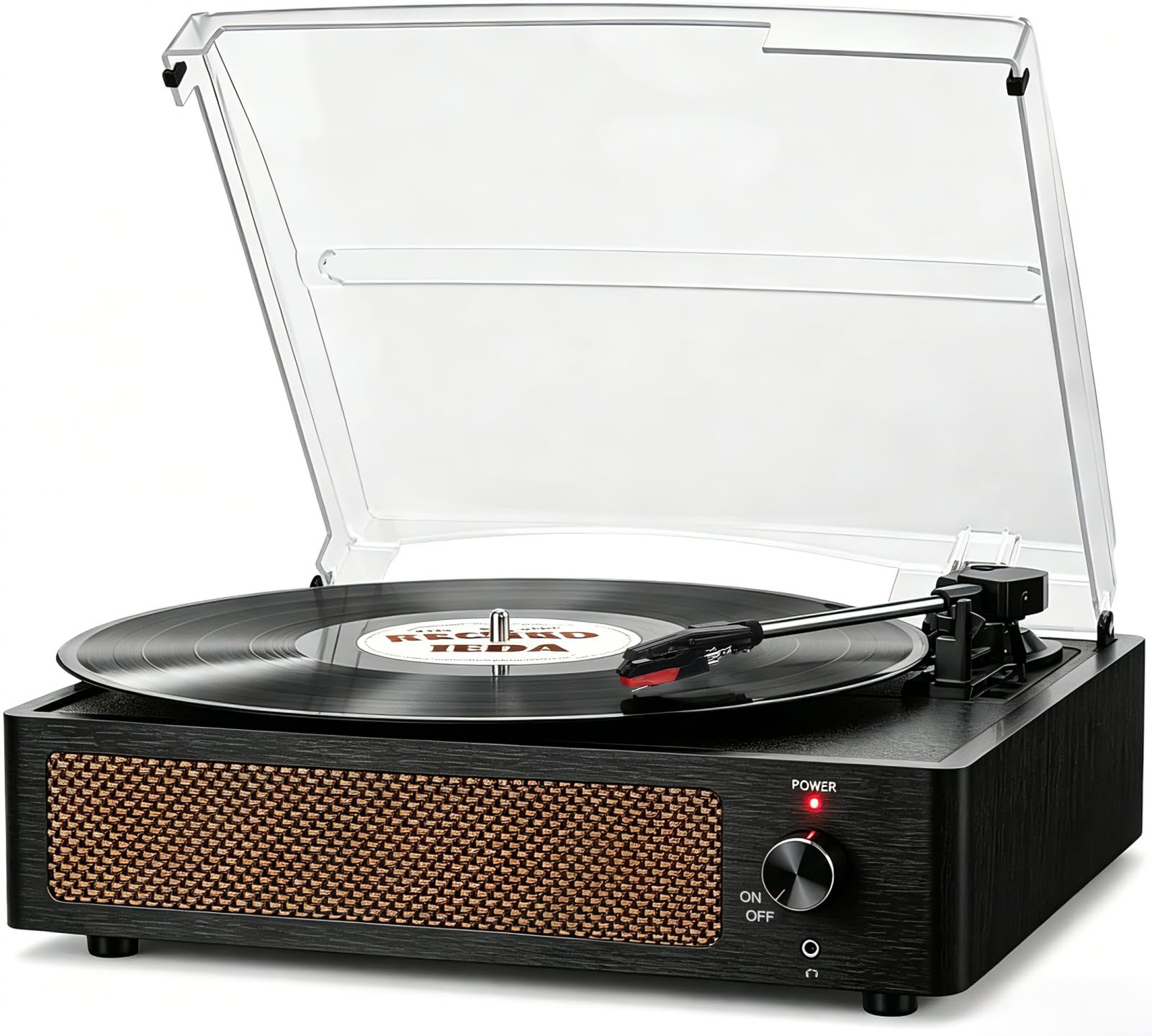
The 1byone Belt-Drive Turntable takes the all-in-one route: a wood-look cabinet with built-in speakers, Bluetooth input, an adjustable counterweight, and a magnetic replaceable-stylus cartridge. That removes the need for an amplifier and separate speaker pair, which sets it apart from the separates-based starter option in this set. For a living room or office where extra components are unwanted, the compact footprint is the main reason to consider it.

The built-in speakers deliver clear, full sound in small and medium rooms, and the adjustable counterweight plus replaceable stylus give this deck a more substantial feel than budget portable record players. Phone audio over Bluetooth works cleanly for casual listening. The cabinet looks like furniture rather than audio gear, which helps it sit naturally in shared spaces.

This suits buyers who want a wood-look all-in-one for a living room, den, or office without a separate amplifier and speaker setup, and who plan to stream from a phone occasionally. It is not the right fit if you already own high-quality passive speakers or if you prioritize a long-term reliability track record; reliability feedback is mixed.

Pros

  • Clear, full sound from built-in speakers without needing a separate amp.
  • Solid wood-look cabinet that sits neatly in a living room or office.
  • Simple setup with an adjustable counterweight and replaceable stylus.
  • Bluetooth input streams phone audio when you are not spinning records.

Cons

  • Built-in speakers may not fill large open rooms; small and medium spaces are the sweet spot.
  • Bluetooth input can be inconsistent on some units and may require re-pairing; occasional units may need service after initial use.
Our verdict

This is the no-extra-gear vinyl setup for buyers who want one cabinet rather than a component chain. Check the return option before purchase.

Check Latest Price
4

Best Budget Portable Suitcase Player

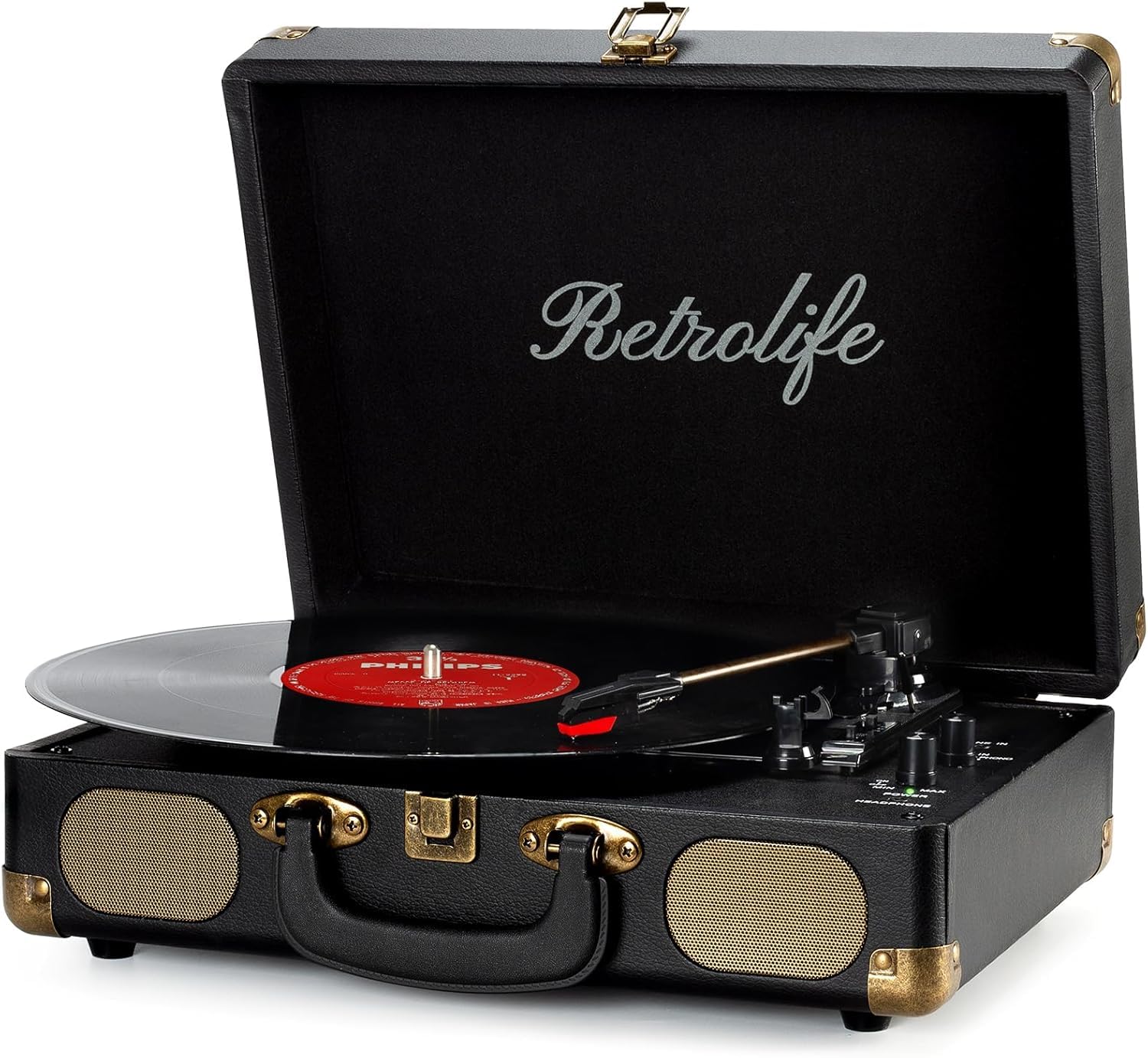
Retrolife Suitcase Player

91 /100
Sound Score Outstanding

Key details

Speaker Setup
Built-in speakers
Tonearm Operation
Auto-stop
Bluetooth Direction
Input/receiver
Drive & Speed Accuracy
3-speed, 33/45/78 RPM
View on Amazon

The three-speed design, integrated handle, and self-contained speakers make this the most portable option in this set. A suitcase body with auto-stop and Bluetooth input keeps setup simple: place it on a dresser, close the lid, and carry it to another room. Compared with the high-volume retro all-in-one in this set, it leans harder into portability and gift-friendly styling than stationary room-filling output.

The built-in speakers are clear enough for small rooms and background playback, though they stay compact in scale. At moderate volume, vocal music and older records come through with enough presence for casual listening. Bluetooth input works cleanly for streaming from a phone, but the speaker system is not meant to satisfy critical listening. That is the expected category boundary.

This player suits casual vinyl fans, teens, dorm rooms, and gift buyers who want an attractive all-in-one without separate components. It also fits small spaces where a component system would be overkill. Built-in speakers are limited, and some units may fail after a short period; treat it as occasional-use gear rather than a daily heavy-use deck.

💡 Keep volume moderate for the cleanest sound from the built-in speakers.

Pros

  • Very good sound for a portable all-in-one with built-in speakers
  • Suitcase styling with a handle makes it easy to move between rooms
  • Bluetooth input streams cleanly from a phone without extra cables
  • Three-speed playback covers 33, 45, and 78 RPM records

Cons

  • Built-in speakers stay compact in scale and bass
  • Some units may fail after a short period
Our verdict

A portable, attractive entry point for casual vinyl listening in small spaces and gift setups.

Check Latest Price
5

Best Wireless Automatic with AptX

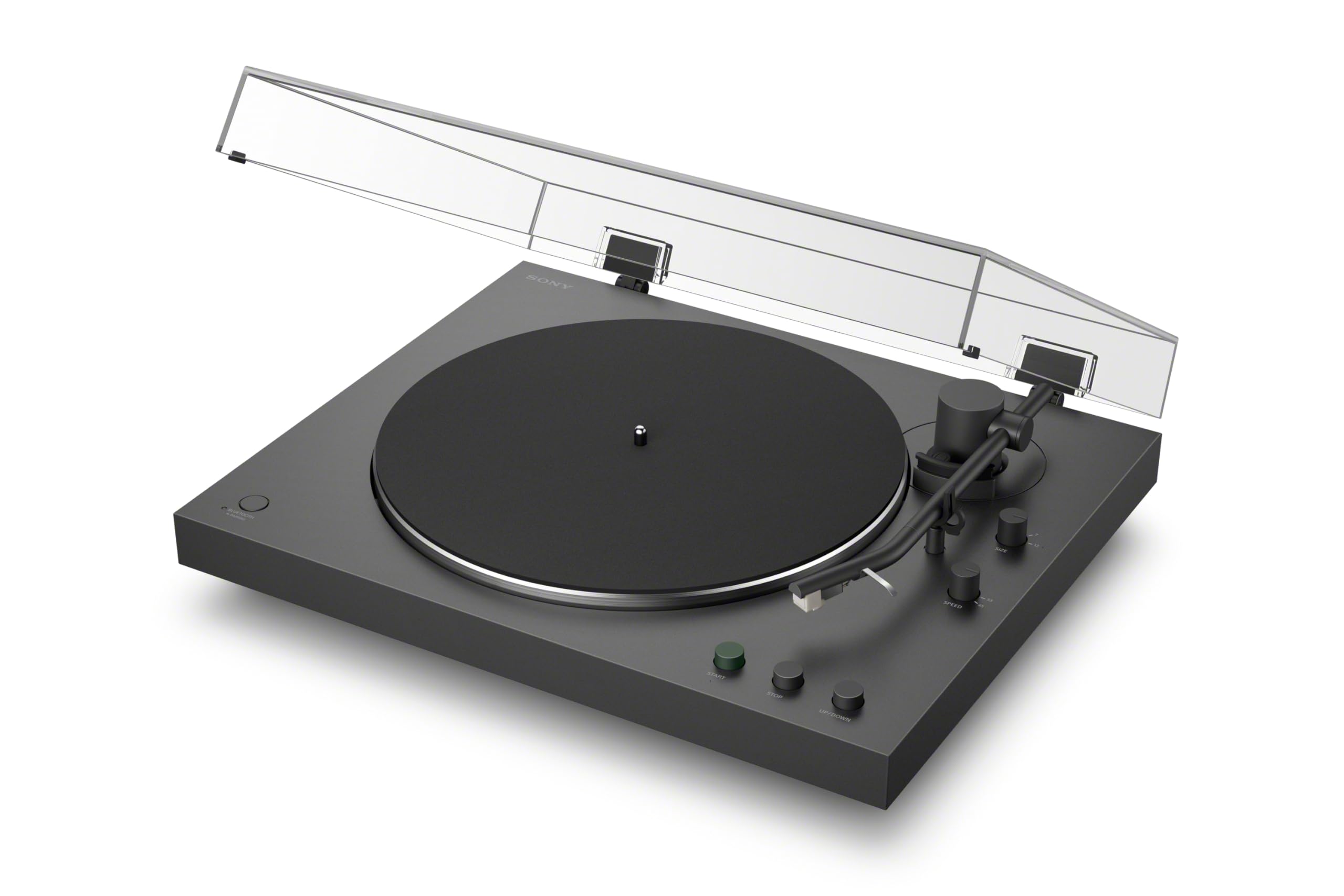
Sony PS-LX3BT

87 /100
Sound Score Excellent

Key details

Speaker Setup
External required
Tonearm Operation
Fully automatic
Bluetooth Direction
Output aptX Adaptive
Drive & Speed Accuracy
Belt drive, 33/45 RPM
View on Amazon

The Sony PS-LX3BT sets itself apart from the wireless automatic sibling in this group by pairing fully automatic playback with aptX Adaptive Bluetooth output. The built-in phono preamp removes the need for a separate phono stage. That combination targets wireless modern setups rather than buyers shopping for a speaker-equipped all-in-one record player. It is the more wireless-forward option among automatic turntables in this set.

Fully automatic playback handles start, stop, and tonearm return, so home listening does not require manual cueing. Bluetooth output connects cleanly to soundbars and Sonos speakers, and aptX Adaptive preserves more wireless detail than basic Bluetooth transmission. The belt-drive deck covers 33 and 45 RPM, which fits standard vinyl collections and removes the need for manual speed adjustment. This makes home setup cleaner for wireless listening.

This deck is for Sony-leaning buyers who already have powered speakers or a Sony soundbar and want automatic startup without fuss. It requires external audio rather than built-in speakers. It also suits listeners who value aptX Adaptive wireless quality over a wired-only connection. The tradeoff is that long-term durability is less documented than older class leaders.

Pros

  • Bluetooth output connects cleanly to soundbars and Sonos speakers.
  • Fully automatic playback handles start, stop, and tonearm return without manual cueing.
  • Built-in phono preamp supports direct connection to powered speakers or a receiver.
  • AptX Adaptive wireless output preserves more detail than basic Bluetooth.

Cons

No consistent drawbacks identified in the available review data.

Our verdict

Pick this deck when aptX Adaptive wireless and full-auto Sony operation fit an existing soundbar or powered speaker setup with minimal wiring.

Check Latest Price
6

Best Premium Direct-Drive Bluetooth

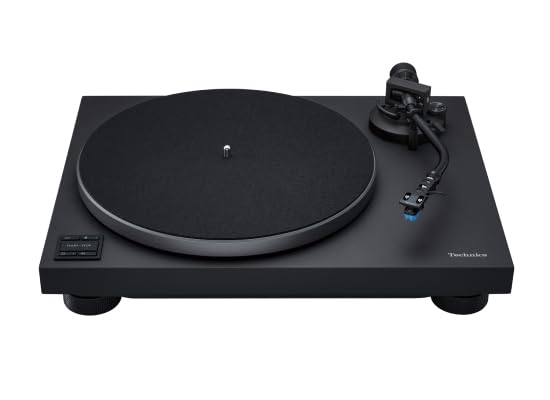
Technics SL-40CBT

82 /100
Sound Score Excellent

Key details

Speaker Setup
External required
Tonearm Operation
Manual
Bluetooth Direction
Output
Drive & Speed Accuracy
Direct drive
View on Amazon

The coreless direct-drive motor, aluminum S-shaped tonearm, and Audio-Technica AT-VM95C cartridge put this deck in a different lane from the hands-on direct-drive turntable with USB recording in this set. Bluetooth output and a compact plinth make pairing with powered speakers or a small hi-fi system simple.

Sound favors a rich, detailed presentation rather than a clinical read. Voices and instruments keep separation without giving up the warmth that makes vinyl engaging. The direct-drive motor holds steady speed during listening, and the aluminum tonearm feels planted when lowering the stylus.

Build quality supports the premium feel. The plinth is clean and compact, controls sit flush, and setup from box to first record is quick. The deck is a standalone table, so it needs powered speakers or a receiver to complete playback.

This suits vinyl listeners who want a compact premium direct-drive deck and do not need automatic arm return. The manual design asks you to cue and lift the tonearm after each side, which suits attentive listening over background convenience. Design-conscious buyers pairing with high-end powered speakers get the intended benefit from Bluetooth output and the minimal footprint.

💡 Use the cue lever gently and return the tonearm to its rest after each side to avoid accidental stylus contact.

Pros

  • Rich, detailed sound quality from the direct-drive motor and AT-VM95C cartridge
  • Premium feel with solid build quality across the plinth and controls
  • Sleek, minimalist appearance that fits compact high-end setups
  • Easy setup from unboxing to playing records

Cons

  • Cue lever can feel light when lowering the stylus, asking for a steady hand
Our verdict

This is the compact direct-drive deck for listeners who want Bluetooth output and a premium manual feel without moving to a DJ-style turntable.

Check Latest Price
7

Complete Starter System

1byone HiFi Turntable System

91 /100
Sound Score Outstanding

Key details

Speaker Setup
External bookshelf included
Tonearm Operation
—
Bluetooth Direction
Input/receiver
Drive & Speed Accuracy
Belt drive, 33/45 RPM
View on Amazon

The 1byone HiFi Turntable System pairs a belt-drive turntable with dedicated 36-watt bookshelf speakers, a magnetic cartridge, switchable preamp, and USB recording. The result is a component-oriented starter package with clear room-filling sound and Bluetooth input that pairs with phones or tablets. The tradeoff is out-of-box predictability: some units can shut down unexpectedly, and first-time owners may find counterweight setup instructions unclear. Buyers who want separate speakers and USB digitizing will see the appeal, but the top pick remains smoother for a first vinyl system.

Pros

  • Clear room-filling sound from the dedicated 36-watt bookshelf speakers.
  • Strong quality for the price in a complete starter package.
  • Bluetooth input pairs with phones or tablets without extra gear.

Cons

  • Setup instructions can confuse first-time owners, especially counterweight adjustment.
  • Some units can shut down unexpectedly during playback.
Our verdict

This system fits buyers who want dedicated bookshelf speakers and USB recording in a starter vinyl package, and who accept a more hands-on start.

Check Latest Price
8

Casual All-In-One

Cotsoco Vintage Record Player

88 /100
Sound Score Excellent

Key details

Speaker Setup
Built-in speakers
Tonearm Operation
—
Bluetooth Direction
Input/receiver
Drive & Speed Accuracy
Belt drive, 33/45/78 RPM
View on Amazon

The Cotsoco Vintage Record Player wraps Bluetooth input, built-in stereo speakers, and three-speed playback into a retro cabinet that keeps a vinyl setup simple. Setup is quick for first-time owners, and the styling carries the budget price well. The built-in speakers can sound thin or bass-light as volume climbs, so this works best as a casual or gift deck rather than a critical listening system; connecting external powered speakers through the RCA or headphone output opens up fuller sound. Unit consistency can vary, and a unit may stop working after light use, which places it below the portable suitcase player for ownership predictability. That tradeoff is acceptable for newcomers who prioritize style and convenience over hi-fi depth.

Pros

  • Bluetooth input lets you stream phone or tablet audio through the built-in speakers.
  • Three-speed playback covers new records and older 78s without extra hardware.
  • The retro all-in-one cabinet keeps a vinyl setup compact and visually easy to live with.

Cons

  • At higher volumes, the built-in speakers can sound thin or bass-light.
  • After light use, needle issues may require attention.
Our verdict

This fits gift buyers and casual vinyl newcomers who want a stylish, no-extra-gear start, provided expectations stay on occasional listening and Bluetooth convenience.

Check Latest Price
9

Compact Retro Listening

Seasonlife Retro Turntable

87 /100
Sound Score Excellent

Key details

Speaker Setup
Built-in speakers
Tonearm Operation
Auto-stop
Bluetooth Direction
Input/receiver
Drive & Speed Accuracy
3-speed, 33/45/78 RPM
View on Amazon

Auto-stop, Bluetooth input, and a compact retro cabinet make this an easy shelf-top player for casual vinyl listening. It handles older records with little setup and streams phone audio without extra gear. The built-in speakers can sound thin or toy-like at higher volume, and some units may not last beyond a few months of light use. That keeps it below the larger retro all-in-one in this set for room-filling output, but it fits a compact bedroom or gift listener who wants moderate volume and simple operation.

Pros

  • Auto-stop brings the tonearm back at record's end, reducing manual attention.
  • Bluetooth input streams phone audio through built-in speakers without extra cables.
  • The retro cabinet and compact footprint suit shelf displays and gift setups.

Cons

  • Built-in speakers can sound thin at higher volume and won't fill a large room.
  • Long-term durability can vary, with occasional early issues after a few months.
Our verdict

The right fit is a shelf, dorm, or gift where compact size, retro styling, Bluetooth input, and moderate-volume playback matter more than full-room audio or longevity.

Check Latest Price

How to Choose

Drive Type & Speed Accuracy

Belt-drive decks isolate motor vibration with a rubber belt, which can lower background noise but may drift in pitch as the belt stretches. Direct-drive decks spin the platter without a belt, giving stronger speed stability and more consistent torque, but the motor sits closer to the stylus and needs tighter engineering to avoid rumble.

If you cannot tolerate even slight pitch wobble, prioritize a quartz-locked or servo-regulated direct-drive deck. For clean records and low background noise, a well-made belt drive is enough.

Built-In vs External Speakers

Built-in speakers make a turntable feel like a one-box purchase, but their small drivers sit close to a vibrating platter. That coupling can produce thin bass and limit usable volume, especially in suitcase-style players.

Separate powered speakers or a receiver let you choose a larger soundstage and keep amplification away from the stylus. If sound quality matters, plan for external audio even when the deck includes speakers.

Automatic vs Manual Tonearm

An automatic tonearm lifts and returns at the end of the side, which prevents the stylus from sitting in the runout groove. A manual tonearm asks you to cue and lift by hand but usually allows more adjustment for cartridge alignment and tracking force.

Choose automatic for background listening or everyday convenience. Choose manual when you want fine control over playback and are willing to handle the tonearm each time.

Cartridge & Stylus Replacement

The cartridge holds the stylus and converts groove movement into an electrical signal. Magnetic cartridges are common on component decks and offer replaceable styli, while fixed ceramic cartridges on many budget all-in-ones track heavily and produce limited detail.

A replaceable stylus extends ownership because the most wear-prone part can be swapped without replacing the whole deck.

Bluetooth Input vs Output

Bluetooth input means the turntable receives streaming from your phone and plays it through its own speakers. Bluetooth output sends vinyl audio to wireless speakers or headphones.

The two directions are easy to confuse, and choosing the wrong one can leave you with no way to connect the speakers you own. If wireless listening is the goal, check for the words Bluetooth output or a specific codec like aptX.

Frequently Asked Questions