9 Best Soundbar for Dialogue in 2026: Clear Voice, No Guesswork

Find the best soundbar for dialogue that makes TV speech easy to understand, whether you need voice boost, a center channel, or simple HDMI ARC setup.

Most 'dialogue mode' soundbars are just an EQ preset that lifts the treble. That can help, but it doesn't solve the real problem: when the center speaker is weak or the subwoofer is driving the mix, speech gets buried under effects and score.

The fix is choosing a bar with either a dedicated center channel or voice-boost processing that actively amplifies speech frequencies. You also need to think about how the bar connects to your TV, because HDMI ARC is what lets the TV remote control volume without extra remotes.

This guide sorts through those trade-offs — voice-boost depth versus modern connectivity, compact size versus subwoofer-driven bass — so you can pick a bar that matches the way you actually watch TV.

About the Sound Score: This comparative score is calculated from a product's published customer rating and review volume. It is not a laboratory measurement or a hands-on test result.

1

Best Overall for Dialogue

ZVOX AccuVoice AV157

85 /100
Sound Score Excellent

Key details

Config & Sub
2.0/3.1 no sub
Dialogue Tech
AccuVoice 12 levels
EQ & Controls
Voice levels, tone
HDMI ARC/eARC
None (optical/analog)
View on Amazon

Twelve AccuVoice levels give the AV157 a genuine advantage over soundbars that label a single EQ preset 'dialogue mode.' The voice lift comes from hearing-aid-derived processing and a three-full-range-speaker layout, so you can tune speech without dragging the entire mix toward the treble. At 17 inches, it fits neatly under a typical TV while keeping voices anchored to the screen.

Setup is a two-cable job: connect optical or analog audio from the TV, plug in power, and pick a voice level. The bar's controls and remote are minimal, which suits buyers who have no interest in an app or automated room correction. It produces enough clean output for a medium-size living room, though bass stays modest.

The AV157 is for dialogue-first viewers: hearing-impaired listeners, people who watch with subtitles off, or anyone tired of riding the remote during quiet scenes. It requires a TV with optical or analog audio output; Bluetooth and HDMI ARC are not part of the feature set, so this is not the bar for wireless streaming or eARC control.

Overall TV sound is fuller than a TV's built-in speakers, and the 12 voice-boost levels plus SuperVoice mode cover a wide range of material. If your priority is heavy bass for action movies, a bar with a subwoofer is the better tool; the AV157 earns its place by treating speech as the main event.

💡 Use the optical input when your TV has one; analog works, but optical carries the cleaner signal.

Pros

  • Clear dialogue for hard-of-hearing listeners and anyone bothered by muffled speech.
  • Solid overall TV sound in a compact cabinet.
  • Simple, app-free setup and controls.
  • Twelve voice-boost levels and SuperVoice mode provide broad adjustability.

Cons

  • Voice boost can raise treble and overall volume rather than acting as a separate dialogue channel.
  • No Bluetooth or HDMI ARC; the AV157 connects only through optical or analog audio.
  • Durability varies between units; a subset may go silent after months of use.
Our verdict

For viewers who put speech clarity above all else, the AV157 is the dialogue specialist in this group — provided the TV has an optical or analog output. That's the only condition; within those limits, it delivers more usable voice control than any compact bar here.
Check Latest Price
2

Best All-In-One with HDMI ARC

Fire TV Soundbar Plus

86 /100
Sound Score Excellent

Key details

Config & Sub
3.1, built-in sub
Dialogue Tech
Dedicated center channel
EQ & Controls
EQ, dialogue mode
HDMI ARC/eARC
HDMI eARC/ARC
View on Amazon

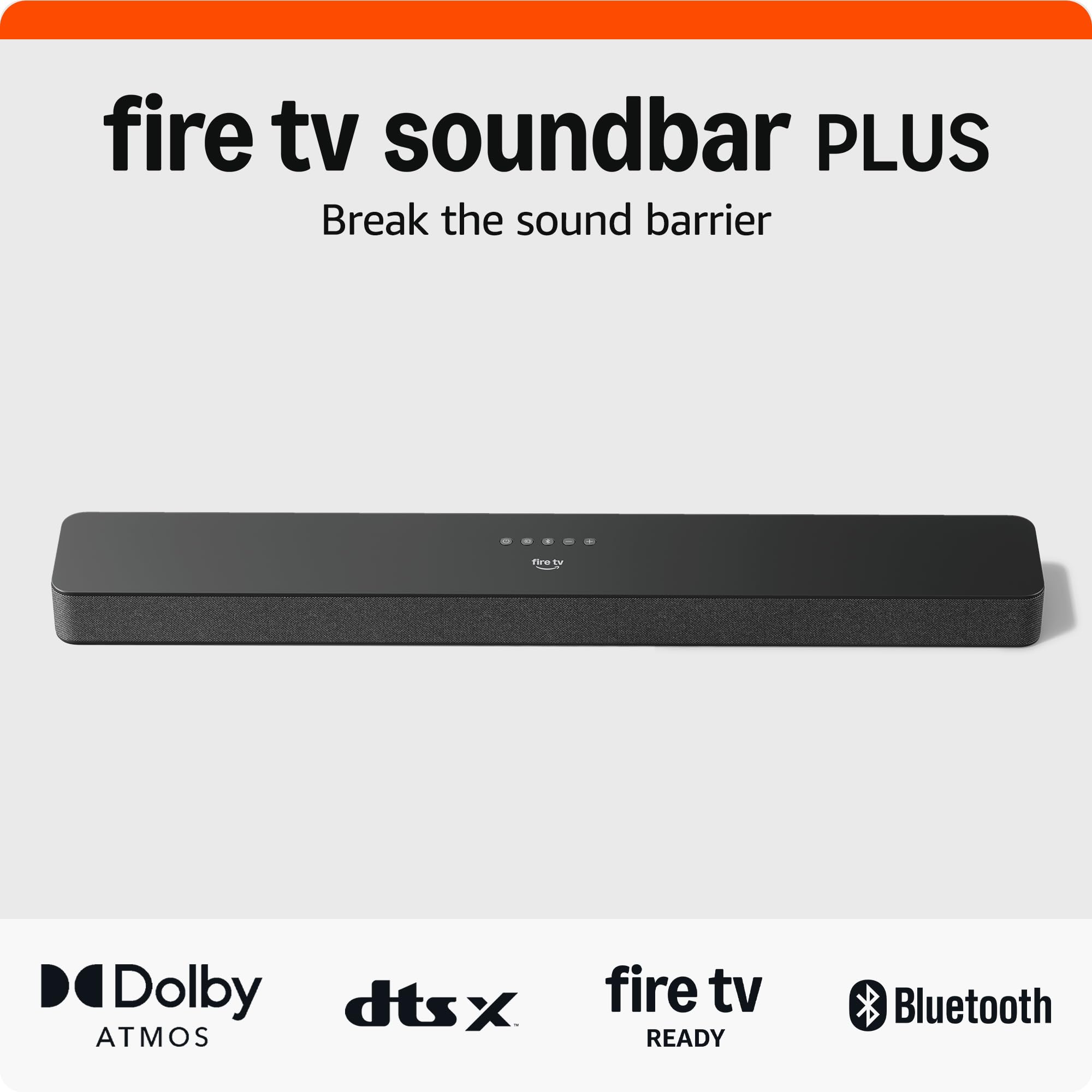
The Fire TV Soundbar Plus combines a 3.1-channel layout with a dedicated center channel and built-in subwoofer in one cabinet. HDMI eARC handles modern TV connection, Dolby Atmos adds spatial cues, and the adjustable dialogue enhancer gives speech a focused boost without extra boxes. DTS:X support widens the compatibility net beyond the usual Atmos-only bars.

The center channel keeps voices anchored when effects and score get heavy, and the built-in sub fills action scenes with bass that a 2.0 bar cannot match. For typical streaming and broadcast mixes, the center channel delivers the midrange emphasis that makes dialogue easier to follow. Movie, Music, Sports, and Night modes plus a clear-dialogue setting cover the main TV listening situations, while the Night mode tames loud peaks for late viewing.

This is the pick for Fire TV households that want a single bar under the display with a true center channel and modern eARC connection rather than the top pick's hearing-aid-derived voice tuning. Connection drops and occasional auto-shutoff are the boundaries here, so the fit is strongest for buyers who can accept those hiccups. The built-in sub adds weight without a separate box, which keeps the setup compact.

💡 Connect through eARC rather than Bluetooth for a steadier audio path.

Pros

  • Dedicated center channel pins dialogue to the screen during dense action mixes.
  • Built-in subwoofer delivers bass without a separate box, keeping the setup compact.
  • Adjustable EQ and clear-dialogue mode provide practical voice tuning for streaming dialogue.

Cons

  • HDMI or Bluetooth audio can cut out mid-scene, so a wired eARC hookup is the steadier path.
  • Long-term behavior can vary between units, so a returnable seller is worth having.
Our verdict

For a Fire TV household that wants real center-channel dialogue and built-in bass in one cabinet, this is the cost-effective way to get Dolby Atmos without separate boxes.

Check Latest Price
3

Best for Samsung TV Owners

Samsung HW-B630F

86 /100
Sound Score Excellent

Key details

Config & Sub
3.1, wireless sub
Dialogue Tech
Dedicated center channel
EQ & Controls
Voice Enhance, Adaptive Sound
HDMI ARC/eARC
HDMI ARC
View on Amazon

The HW-B630F is a 370W 3.1 soundbar with a dedicated center channel, a wireless subwoofer, and Samsung one-remote control. That combination separates it from the entry-level 2.0 Samsung bar in the places dialogue matters: voices stay anchored to the screen while bass handles action-movie weight.

Dialogue clarity relies on the center channel plus Voice Enhance Mode and Adaptive Sound. The system keeps conversation audible on news and movies without constant volume changes, and the wireless sub adds low-end punch to action sequences.

The best fit is a Samsung TV household that finds built-in speakers muddy on dialogue. Setup with a recent Samsung TV is quick, though the subwoofer may need a power-cycle after a TV update before it re-pairs; HDMI-ARC handshake can also require re-selecting the input on some TVs.

The price lands in the mid-range for a 3.1 system, which is fair for a dedicated center channel and wireless sub. A separate receiver isn't required, and the bar stays low-profile under a 50-inch-and-up display. Non-Samsung TVs still get Bluetooth and HDMI-ARC, but the tightest integration is inside Samsung's ecosystem.

Pros

  • Dedicated center channel keeps dialogue locked to the screen even when effects and score get loud.
  • Wireless subwoofer adds bass weight and helps action scenes feel fuller.
  • Samsung TV owners get quick pairing and control from the existing TV remote.
  • Delivers a 3.1 setup at a price that matches the hardware inside.

Cons

  • The connection is HDMI-ARC rather than eARC, so high-bandwidth audio from newer TVs won't pass through.
  • In larger rooms, output can run lower than earlier Samsung bars.
Our verdict

Samsung TV owners who want dialogue clarity plus bass in one box have their match here.

Check Latest Price
4

Best Surround/Atmos Value

ULTIMEA Poseidon M60

90 /100
Sound Score Outstanding

Key details

Config & Sub
5.1, wired sub
Dialogue Tech
5.1 center channel
EQ & Controls
App EQ, 121 presets
HDMI ARC/eARC
HDMI eARC
View on Amazon

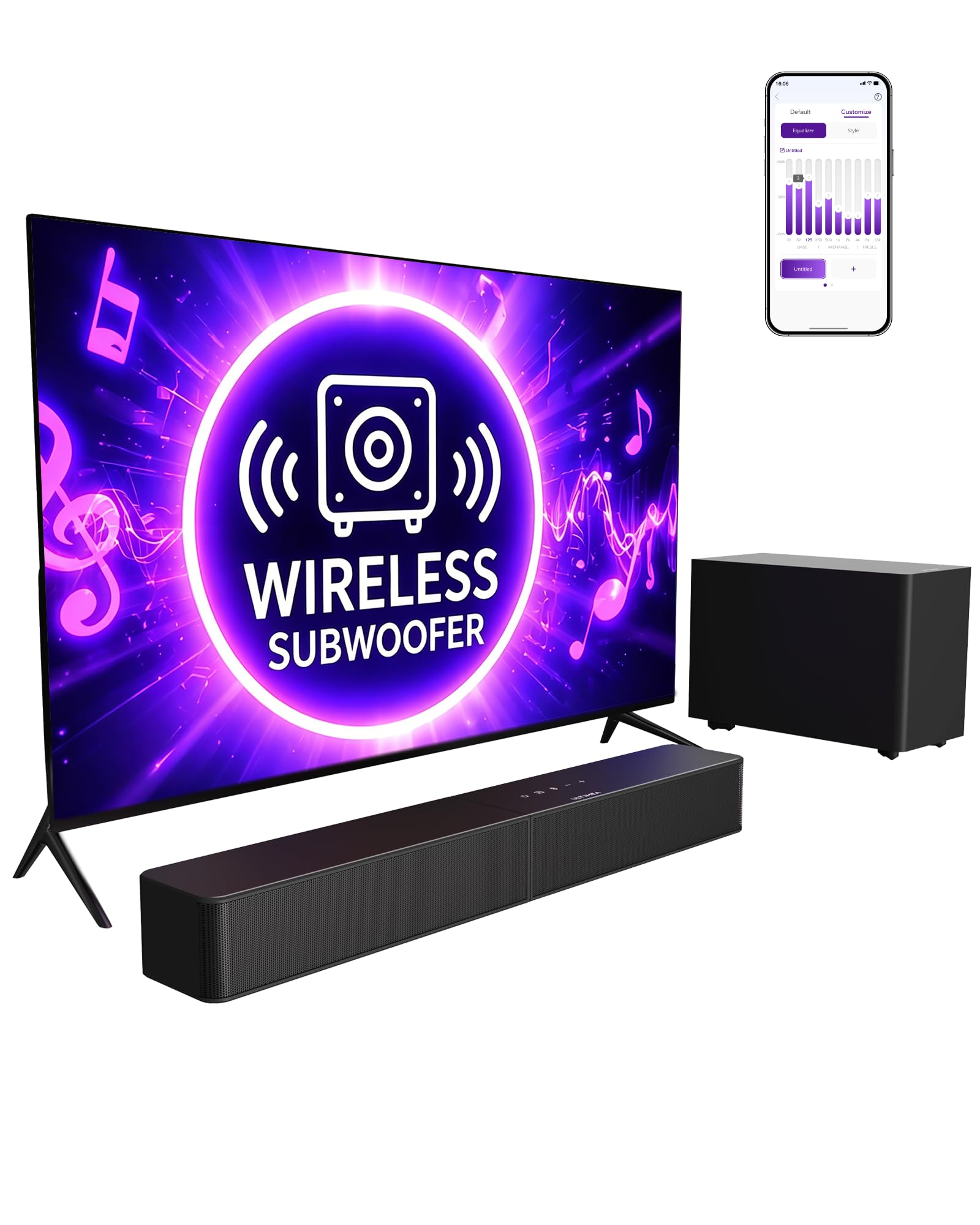
Poseidon M60 takes the VoiceMX speech processing found in ULTIMEA's compact 2.1 bar and expands it into a full 5.1-channel Atmos layout. A wired wooden subwoofer supplies low end that smaller bars can't match, while the app's 10-band EQ and 121 presets give direct control over the center range.

Dialogue-heavy movies and streamed TV are where VoiceMX shows its value: vocals stay lifted without sounding hollow, and HDMI eARC passes audio with a single cable. The sub fills a medium room with usable bass, though it needs a floor or shelf spot, so this is not a wall-hugging setup.

The M60 is for movie streamers and gamers who want surround depth without paying a premium for it. A floor or shelf spot for the wired sub is part of the fit, and buyers should be comfortable with some unit-to-unit variability in a budget Atmos bar.

💡 Keep the wired sub on the same side of the room as the TV to shorten the cable run and simplify placement.

Pros

  • Full 5.1 Atmos creates a wide soundstage with clear dialogue at the center.
  • Setup via HDMI eARC or optical takes minutes, and Bluetooth 5.4 handles phone audio.
  • The app's 10-band EQ and 121 presets make it easy to tune for dialogue-heavy content.
  • VoiceMX keeps speech intelligible in dialogue-heavy movies without dulling the mix.

Cons

  • The wired subwoofer is tied to the soundbar by a cable, so placement is limited by the distance between them.
  • A unit can develop connection drops or a silent channel after months, so long-term consistency varies.
Our verdict

For the price, the M60 gives you a true surround experience with speech you can follow, a balance few bars in this class manage.

Check Latest Price
5

Best Compact Brand Option

Bose TV Speaker

88 /100
Sound Score Excellent

Key details

Config & Sub
2.0, no subwoofer
Dialogue Tech
No center, dialogue mode
EQ & Controls
Dialogue mode
HDMI ARC/eARC
HDMI ARC
View on Amazon

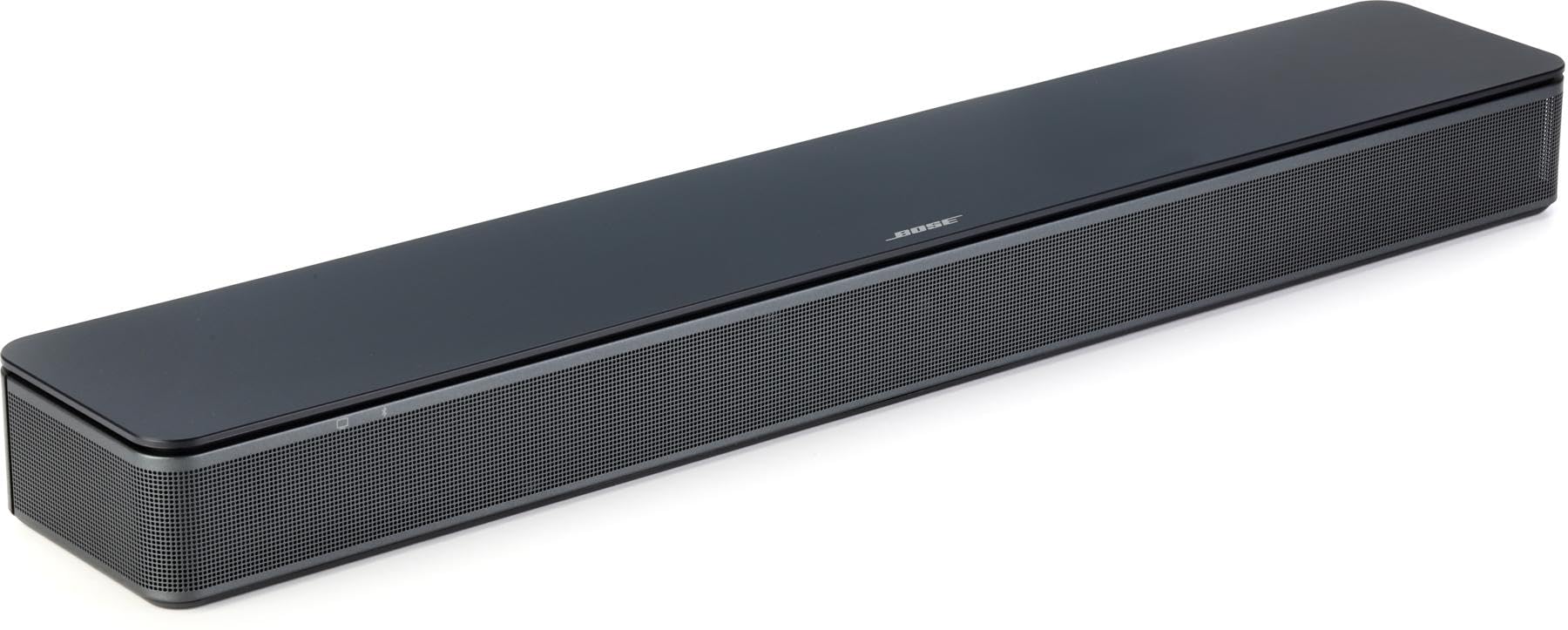
The Bose TV Speaker is built around a simple idea: make TV dialogue easier to hear without asking you to assemble a multi-piece system. Its 23.4-inch cabinet and 2.2-inch height fit neatly under a 50-inch screen, while the angled full-range drivers aim voices toward the listening position. One HDMI ARC cable handles audio and lets the TV remote control volume, so the bar stays out of the way visually and operationally.

Dialogue mode is the practical feature here. When engaged, it pulls speech forward so mumbled lines and quiet conversations stay intelligible, and the same drivers deliver clear, crisp music playback at moderate volumes. During effects-heavy scenes, the setting cuts through the layers of score and sound design without pumping up the whole mix. Setup is essentially plug-and-play with ARC, with optical and AUX available for older TVs.

This is a match for small-to-medium rooms and for viewers who want a simple, voice-forward TV sound upgrade from a familiar brand. Bluetooth streaming can be inconsistent, output runs out of steam in large open living areas, and long-term behavior can vary from unit to unit — tradeoffs that matter less if you plan to use HDMI ARC as the primary connection. Bose loyalists will recognize the tuning, but the bar is best treated as an everyday TV companion rather than a home-theater centerpiece.

💡 An HDMI ARC connection is the more stable way to hear the bar's dialogue-focused tuning.

Pros

  • Dialogue mode reduces muffled speech, making voices easier to follow in TV shows and movies.
  • Easy setup via HDMI ARC, optical, or AUX gets the bar running in minutes.
  • Compact 23.4-inch cabinet fits neatly in small and medium entertainment spaces.
  • Angled full-range drivers give vocals a focused presence without needing a separate center channel.

Cons

  • Output is adequate for small and medium rooms but thins out in larger open spaces.
  • Bluetooth streaming can drop or resist pairing; an HDMI ARC connection avoids that friction.
  • Some units may power down unexpectedly or miss the signal to wake from standby.
Our verdict

The Bose TV Speaker is the compact choice for a simple, dialogue-first TV upgrade in a modest room.

Check Latest Price
6

Best Premium Smart Soundbar

Sonos Beam Gen 2

88 /100
Sound Score Excellent

Key details

Config & Sub
2.0, no subwoofer
Dialogue Tech
No dedicated center
EQ & Controls
Sonos app, Trueplay
HDMI ARC/eARC
HDMI eARC
View on Amazon

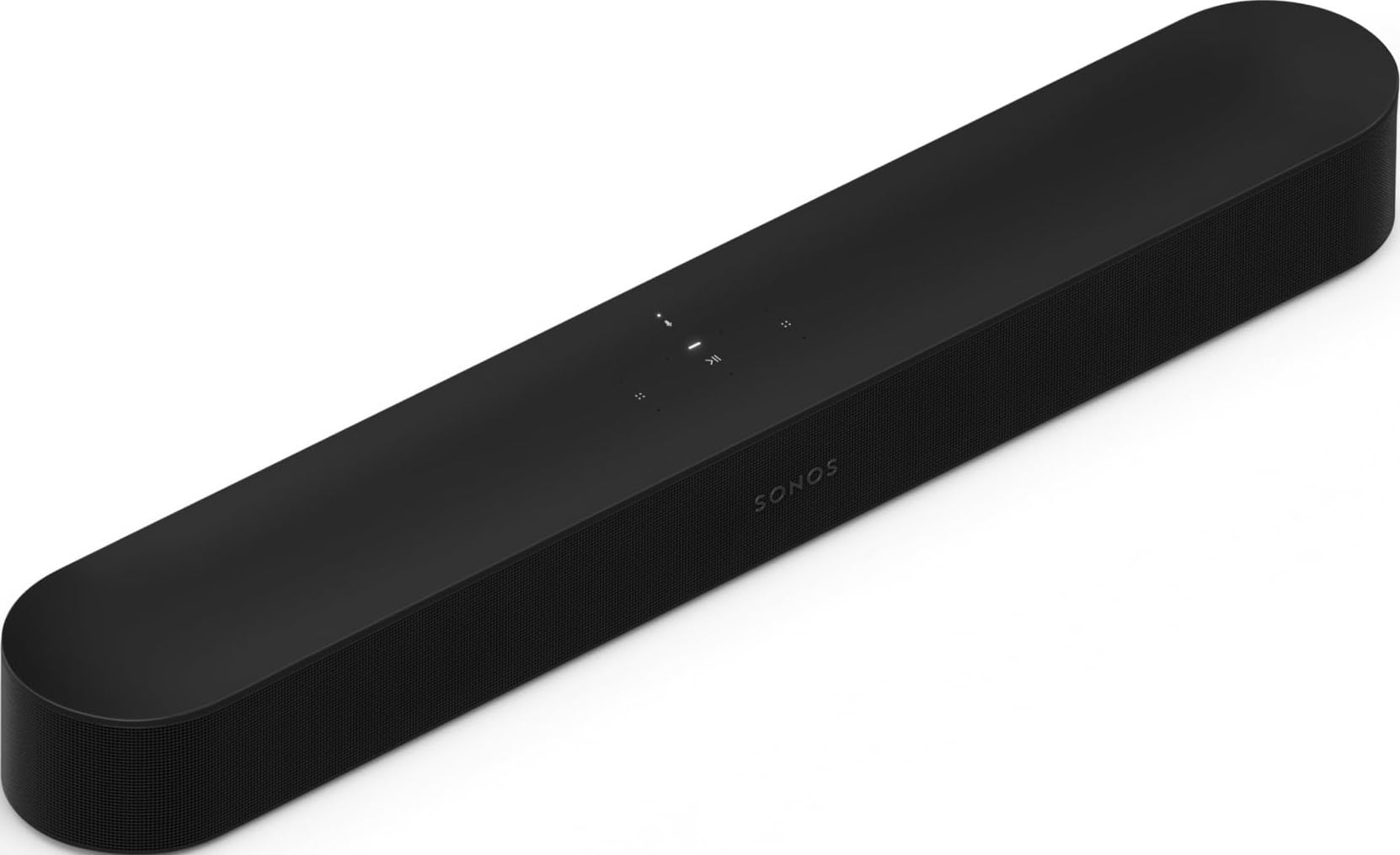
The Sonos Beam Gen 2 wraps balanced sound, clear dialogue, and Sonos multi-room integration into a compact bar that suits small-to-medium rooms. It pairs with AirPlay 2 and groups with other Sonos speakers, which makes it a more natural fit for an existing Sonos household than the simpler compact bars in this lineup. The footprint is small enough for tight TV stands, yet the 200W output gives TV and music enough body to carry a living room.

This is a Sonos ecosystem play: existing owners get multi-room grouping, voice-assistant control, and Trueplay room tuning in one small package. Buyers outside that ecosystem should weigh the app-based, Wi-Fi-dependent setup, the possibility of an individual unit becoming unresponsive after roughly a year, and a price well above dialogue-first competitors. Within the Sonos system, those caveats are easier to absorb.

TV audio connects through HDMI ARC/eARC, and the 200W output handles movies without a separate sub. Trueplay room tuning adjusts the response to your space when run from an iOS device. For a single-bar setup, the Beam keeps speech intelligible without forcing you to raise the volume to catch quiet lines.

Pros

  • Compact frame fits tight TV stands while still filling a small-to-medium room.
  • Dialogue stays clear and distinct from effects in TV and movie scenes.
  • AirPlay 2 and Sonos multi-room grouping make it a natural part of a whole-home system.
  • Balanced tuning keeps playback even across music and television.

Cons

  • No Bluetooth for direct phone playback; Android owners rely on the Sonos app.
  • No dedicated center driver; dialogue is digitally processed from a 2.0 array rather than a separate channel.
Our verdict

For Sonos households, the Beam Gen 2 is the compact dialogue-forward bar that integrates cleanly with the rest of the system.

Check Latest Price
7

Large-Screen TV Users

ZVOX AccuVoice AV855

82 /100
Sound Score Excellent

Key details

Config & Sub
2.0, dual subwoofers
Dialogue Tech
AccuVoice 20 levels
EQ & Controls
20 levels, Output Leveling
HDMI ARC/eARC
HDMI ARC
View on Amazon

The AV855 pairs 20-level AccuVoice tuning with dual built-in subwoofers and HDMI ARC in a 33.7-inch low-profile bar, so dialogue stays clear in larger rooms. At moderate voice-boost settings, voices separate cleanly from soundtrack effects, and the ARC input gives modern TVs a single-cable hookup.

This premium-priced bar suits 50-inch-and-up TV households where hard-of-hearing listeners need more voice control than the compact top pick provides. Occasional HDMI-ARC or app quirks can surface with certain TV and streaming combinations, which keeps it behind that smaller top pick for dialogue-first buyers; it is for those willing to work through one cable or input hiccup rather than expect a set-and-forget setup.

Pros

  • 20-level AccuVoice lets hard-of-hearing viewers tune speech up to the level they need without pushing overall volume.
  • HDMI ARC is a single-cable connection for modern TVs, with optical, analog, and USB inputs as backups.
  • Dual built-in subwoofers add low-end body to a low-profile bar that fits under larger screens.

Cons

  • No Bluetooth or wireless subwoofer output; the AV855 stays a wired TV soundbar.
  • At high voice-boost settings, tonal balance can turn thin and sound treble-forward.
Our verdict

This is the ZVOX for large-screen households that want 20 dialogue levels and a wired HDMI ARC hookup; smaller rooms can stay with the compact top pick.

Check Latest Price
8

Budget Bass Seekers

TCL S55H

86 /100
Sound Score Excellent

Key details

Config & Sub
2.1, wireless sub
Dialogue Tech
No center, AI Sonic
EQ & Controls
AI Sonic calibration
HDMI ARC/eARC
HDMI eARC/ARC
View on Amazon

The TCL S55H pairs a wireless subwoofer with Dolby Atmos and DTS Virtual:X at an entry-level price, and the sub handles bass so the main bar can keep voices clear in small-to-medium rooms. AI Sonic auto room calibration adjusts the sound automatically, which helps midrange presence without requiring manual EQ. HDMI eARC makes it a tidy match for TCL TVs. Volume behavior can be non-linear, with jumps to 0% or 100% in some cases, and long-term dependability may vary between units, so this is a value-first purchase rather than a set-and-forget investment.

Pros

  • Wireless subwoofer included at a budget price, adding bass without a separate purchase.
  • Setup is quick with automatic subwoofer pairing and HDMI eARC for TCL TVs.
  • Dolby Atmos and DTS Virtual:X processing adds a wider movie soundstage at a budget price.

Cons

  • App and remote controls are basic; there's no polished mobile companion for EQ or voice tuning.
  • No adjustable voice-boost mode or dedicated center channel; dialogue clarity relies on automatic room calibration.
Our verdict

A reasonable budget pick when wireless bass and simple HDMI ARC setup are the priority.

Check Latest Price
9

Small-Room Budget Buyers

ULTIMEA Poseidon M30

86 /100
Sound Score Excellent

Key details

Config & Sub
2.1, wireless sub
Dialogue Tech
VoiceMX, no center
EQ & Controls
App EQ, 121 presets
HDMI ARC/eARC
HDMI ARC
View on Amazon

VoiceMX dialogue processing gives the Poseidon M30 a clear midrange focus for TV and movie speech, and the included wireless sub fills out bass in a way that comparably sized bars don't. Setup over HDMI ARC or optical takes minutes, and the app's 10-band EQ lets you fine-tune voice presence if a show still sounds muddy. This is a small-room value pick rather than an immersion machine: the 2.1 layout can't match the surround immersion or dialogue separation of the larger M60 in the same lineup. Wireless sub and Bluetooth connections can drop in busy RF environments, and occasional units may need a warranty exchange within a few months, so a generous return policy makes sense.

Pros

  • VoiceMX keeps TV and movie speech clear without needing the volume pushed.
  • Strong value for money for a small-room home theater setup.
  • HDMI ARC, optical, and Bluetooth make setup fast for a bedroom TV.

Cons

  • Wireless sub/Bluetooth connectivity can be intermittent in some rooms.
  • Unit-to-unit QC can vary, so individual units may behave differently.
Our verdict

For a bedroom or den TV, the M30 delivers clear speech and bass in a compact setup for budget-minded viewers.

Check Latest Price

How to Choose

Center Channel or Voice Boost

A dedicated center channel anchors the vocal track to the screen and plays it through its own driver, so it doesn't compete with music and effects. Multi-level voice boost amplifies the midrange frequencies where speech lives, often using hearing-aid-derived processing.

A small-room viewer can get by with good voice boost. In a noisy room or with action-heavy movies, a center channel is the stronger choice because it separates dialogue from the rest of the mix.

HDMI ARC/eARC

HDMI ARC lets the TV remote control volume and power over the same cable. Without it, you may need a second remote or an optical setup that adds frustration.

eARC adds bandwidth for lossless audio, but ARC is enough for normal TV dialogue. If your TV only has optical, make sure the soundbar accepts remote commands over that connection.

Channel Config & Subwoofer

A 2.0 bar with no sub is fine for news and sitcoms, but action-heavy effects push into the bass and mask voices. Adding a subwoofer offloads that low-frequency work so the main drivers can focus on the midrange where dialogue sits.

That is why many dialogue-focused systems use a 3.1 layout: center channel for speech, sub for effects. In a small room, an all-in-one 3.1 bar delivers this without a separate sub box.

Wireless Options

Bluetooth is convenient but is the least stable way to connect a TV soundbar. Wireless subwoofer links and HDMI ARC handshakes also use radios; crowded networks and metal furniture can cause dropouts.

Prefer HDMI ARC/eARC for TV audio and treat Bluetooth as a secondary input. For a wireless sub, keep it within a few feet of the bar and avoid placing large metal objects between them.

EQ, Modes & App Control

Generic 'dialogue mode' is often just a treble boost, which can sound thin. Useful voice processing gives multiple boost levels or a tunable EQ that matches your hearing.

App control adds convenience, but app-dependent setup is a risk: if the app or network misbehaves, the TV-remote basics are what you fall back on.

Frequently Asked Questions