8 Best Bluetooth Turntable of 2026: Picks That Actually Stream Vinyl Wirelessly

Find the Bluetooth turntable that truly sends vinyl to wireless speakers — automatic, manual, budget, and all-in-one options matched to how you listen.

The word 'Bluetooth' on a turntable box doesn't always mean what you expect. Some models send vinyl out to your wireless speaker. Others only receive Bluetooth from your phone to play through their built-in speakers. That difference changes which machine fits your setup.

The right pick comes down to one question first: do you want to stream your records out to existing wireless speakers, or do you simply want a single box that plays vinyl and streams phone music through its own speakers? Once you answer that, the rest is about automatic vs manual operation, cartridge quality, and whether you need USB ripping.

This guide matches turntables to how people actually listen — from first-time buyers who want one-button simplicity to vinyl hobbyists who want room to upgrade. The focus stays on the features that matter in daily use: stable pairing, solid speed, and a cartridge that doesn't make you reach for the return button.

About the Sound Score: This comparative score is calculated from a product's published customer rating and review volume. It is not a laboratory measurement or a hands-on test result.

1

Best Overall

AT-LP60XBT Wireless

93 /100
Sound Score Outstanding

Key details

Preamp
Built-in
Speeds
33, 45 RPM
Cartridge
Integrated Dual MM
Automatic Vs Manual
Fully automatic
View on Amazon

Fully automatic operation starts the side at the touch of a button and lifts the tonearm when the record ends. aptX Bluetooth output carries the signal to a wireless receiver or speaker without a cable run across the room, while the RCA outputs remain available for a conventional stereo. Setup is minimal: the platter and belt are already oriented from the factory, and the integrated Dual Moving Magnet cartridge arrives pre-mounted and aligned. For a first-time buyer, this is the least fiddly path from unboxing to spinning vinyl.

The deck pairs with a single receiver quickly, and aptX keeps the wireless signal stable across a typical living room. The RCA outputs feed a powered speaker set without preamp guesswork, making the wired route just as simple as the wireless one. Between the one-button start and the automatic tonearm return, there is little to oversee once a record is playing.

Buyers must supply their own powered speakers or Bluetooth headphones; this deck does not include built-in speakers. That makes it a match for someone who already has a wireless speaker or stereo receiver and wants a turntable that behaves like a modern appliance rather than a vintage project. It is not the tool for audiophiles who need adjustable counterweight or VTA, and anyone expecting sound from the box itself should look at all-in-one models. For the first-time buyer with audio gear already in place, the automatic start, auto-stop, and 33/45 RPM switching cover the basics without setup anxiety.

The belt-drive platter and integrated cartridge produce a warm, forgiving sound that suits the way typical people listen to vinyl at this level: whole albums, background music, and first-time upgrades from digital streaming. The black chassis is compact and unobtrusive, so it fits a shelf or credenza without demanding a dedicated audio console. For the money, the combination of wireless output, auto operation, and a replaceable stylus keeps the upgrade path simple.

Pros

  • Warm, vinyl-like audio with enough detail to make records fun without exposing every flaw.
  • Entry-level build quality that feels solid for the price.
  • aptX Bluetooth pairs quickly with compatible receivers and speakers.
  • Minimal assembly; platter and belt arrive mostly ready to play.
  • Fully automatic operation and wireless output at entry-level pricing.

Cons

  • In households with several active Bluetooth devices, the turntable may occasionally need to be re-paired before a session.
Our verdict

For anyone with powered speakers or Bluetooth headphones, the AT-LP60XBT is the entry-level automatic turntable that makes wireless vinyl listening a one-button process.

Check Latest Price
2

Best for Vinyl Enthusiasts

AT-LP120XBT USB

93 /100
Sound Score Outstanding

Key details

Preamp
Switchable phono/line
Speeds
33, 45, 78 RPM
Cartridge
AT-VM95E upgradeable
Automatic Vs Manual
Fully manual
View on Amazon

The AT-LP120XBT USB combines direct drive, 78 RPM support, USB ripping, and aptX Adaptive Bluetooth in one manual deck. A pro-style tonearm and the bundled AT-VM95E cartridge sound crisp and capable out of the box, and the cartridge's upgrade path separates this from the top pick's simpler pickup.

Bluetooth pairing is quick, and the aptX link keeps streaming to wireless speakers or headphones steady during normal listening. The switchable phono/line preamp lets you run directly into powered speakers or bypass the built-in stage when you already have a separate preamp.

This deck suits vinyl hobbyists who want one table for 33, 45, and 78 RPM, plus USB archiving without cutting Bluetooth out of the chain. You cue and lift the tonearm yourself for every side, so the top pick's automatic model remains the easier default for anyone who wants records to start and stop by themselves. For a listener who treats playback as a hands-on ritual, this is the more rewarding setup.

💡 Set the phono/line switch to line when using Bluetooth or powered speakers; switch to phono only if you connect a separate preamp.

Pros

  • Crisp, capable sound with enough detail to keep listening interesting.
  • Sturdy chassis and heavy platter feel built for years of use.
  • aptX Adaptive pairing sends vinyl to wireless speakers or headphones without a tangle of cables.
  • Direct drive, 78 RPM, USB, and an upgradeable cartridge in one package for a fair premium price.

Cons

  • No built-in speakers: you'll need powered speakers or Bluetooth headphones before you can hear anything.
Our verdict

A Bluetooth turntable for vinyl hobbyists who want direct drive, 78 RPM, and USB archiving without leaving the wireless listening setup behind.

Check Latest Price
3

Best Automatic with USB

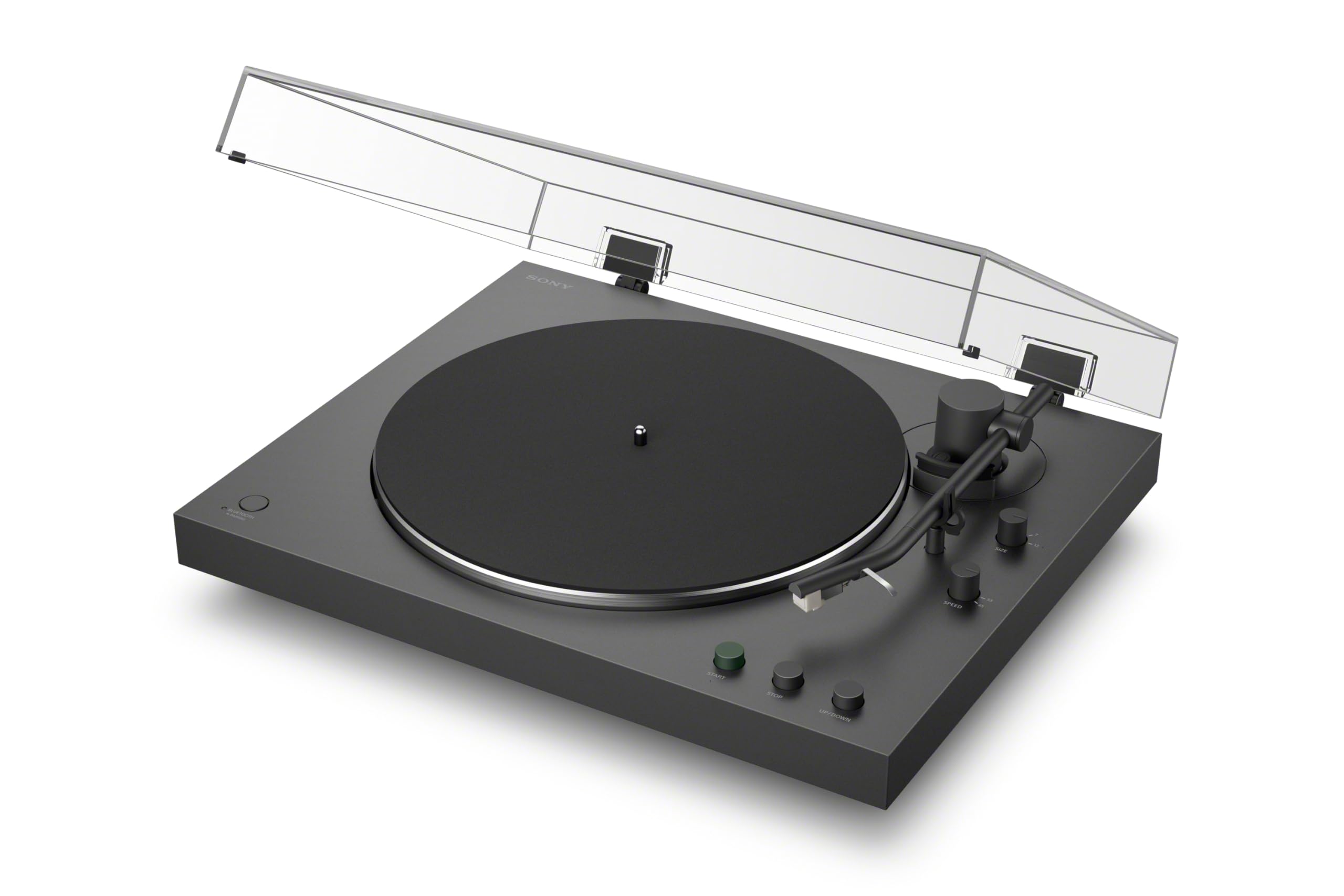
Sony PS-LX310BT

91 /100
Sound Score Outstanding

Key details

Preamp
Switchable, 3 gain
Speeds
33, 45 RPM
Cartridge
Moving magnet
Automatic Vs Manual
Fully automatic
View on Amazon

With fully automatic playback, USB ripping, and a switchable preamp, the Sony PS-LX310BT covers everyday vinyl listening without needing a phono receiver. Its Bluetooth output pairs with the speakers or soundbar already in the room, and the three gain settings help match the signal to whatever system is connected.

Pairing behaves cleanly with typical Bluetooth speakers and soundbars. The belt-driven platter keeps motor noise low during playback, and the automatic tonearm returns at the end of a record, so you can let it run without hovering over the tonearm.

This is for Bluetooth speaker and soundbar owners who want automatic operation plus USB digitizing. The shell can feel lighter than the price implies, and a subset of units may arrive non-functional or develop issues early, so it is worth checking the deck as soon as it arrives. Audiophiles needing 78 RPM or adjustable VTA should look elsewhere; casual listeners get the convenience without the learning curve.

💡 Set the preamp switch to line for powered speakers; use phono only with a receiver that has a phono input.

Pros

  • Clean, quiet playback suits casual listening without making records sound harsh.
  • Pairs easily with Bluetooth speakers and soundbars, so it fits a wireless setup.
  • One-button automatic start, stop, and tonearm return keeps the ritual simple.
  • USB ripping and a switchable preamp add real utility for the price.

Cons

  • The shell can feel lighter and more plastic-like than the price implies, noticeable in setups where heft is expected.
  • A subset of units may arrive non-functional or develop issues early, making an exchange possible.
Our verdict

The Sony PS-LX310BT is the right automatic Bluetooth turntable when USB ripping matters as much as wireless playback; the light shell is the tradeoff for that convenience.

Check Latest Price
4

Best Budget Manual

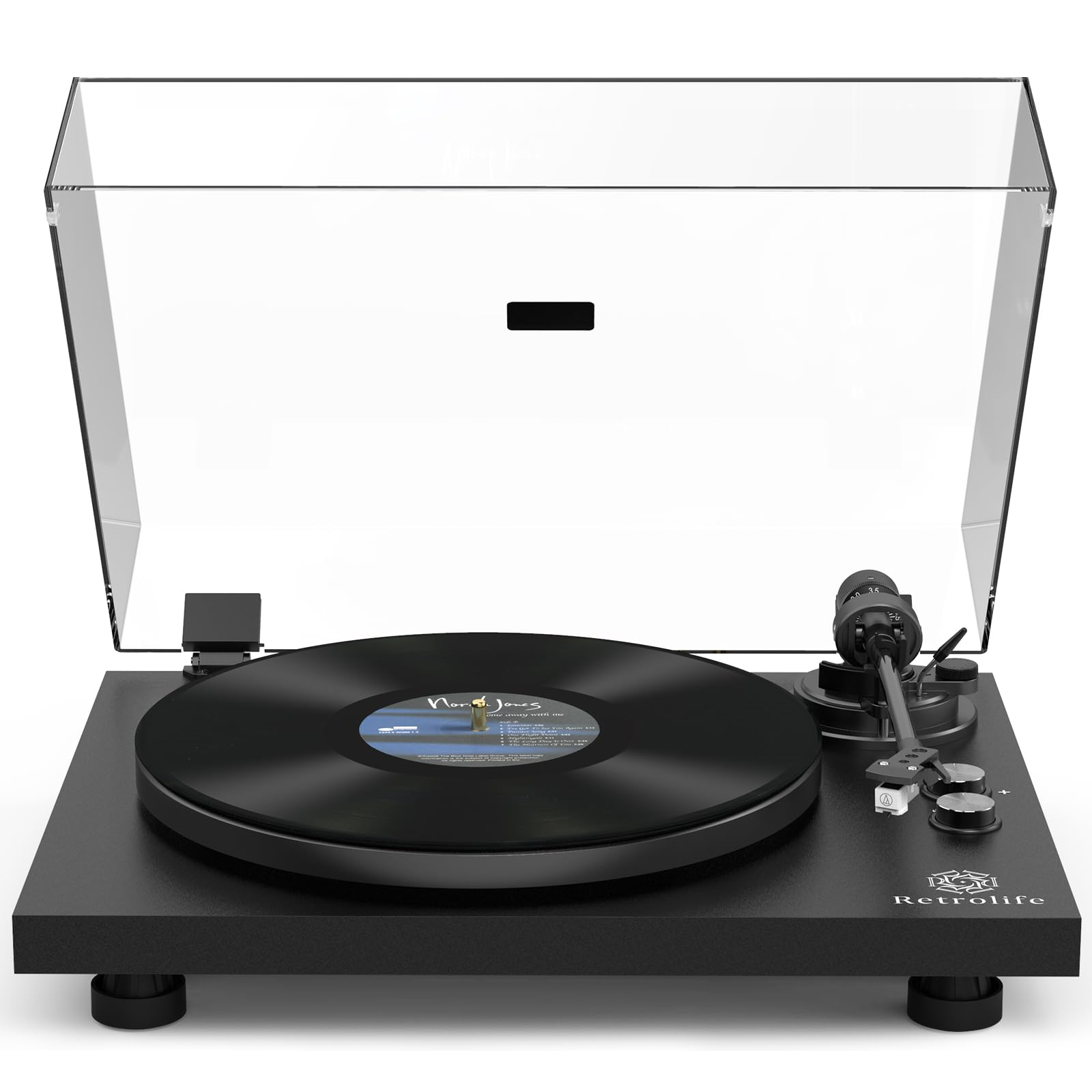
Retrolife HQ-KZ006 BT

86 /100
Sound Score Excellent

Key details

Preamp
Built-in
Speeds
33, 45 RPM
Cartridge
AT-3600L MM
Automatic Vs Manual
Manual
View on Amazon

The Retrolife brings a carbon fiber tonearm, anti-skate, and pitch control to the budget Bluetooth turntable category, and its Bluetooth 5.3 output sends vinyl directly to wireless speakers or headphones. The vintage-style cabinet and sturdy plinth give it more presence than the usual entry-level deck, while the manual tonearm keeps cueing decisions in your hands.

Sound quality is the strongest part of the package. The AT-3600L cartridge delivers a warm, articulate presentation that stays composed across a range of records, and the pitch control permits fine-tuning while the record plays. Setup is easy enough for anyone comfortable balancing a tonearm.

This is for manual turntable fans who want the feel of hand-cued playback and don't need auto-start or auto-return. It also fits buyers with Bluetooth speakers or headphones who are willing to run a strobe disc or phone app after setup to confirm platter speed; the pitch control is there if the deck arrives slightly off. If you prefer a one-button experience, the automatic deck in this lineup is a better match.

Pros

  • Sound quality punches above the budget price with a lively, full-bodied presentation.
  • Bluetooth 5.3 output pairs without trouble with receivers and wireless speakers.
  • Sturdy plinth and classic cabinet give it a more expensive appearance.
  • Carbon fiber tonearm, anti-skate, and pitch control at an entry-level price.

Cons

  • Bluetooth pairing may be problematic with certain soundbars, so check compatibility before relying on wireless audio.
  • Speed consistency can vary between individual units, so a strobe check is part of setup.
Our verdict

The Retrolife is the budget manual pick for vinyl fans who want Bluetooth output and don't mind hand-cueing; set aside a minute for a speed check on arrival.

Check Latest Price
5

Best All-In-One with Built-In Speakers

1byone All-in-One BT

89 /100
Sound Score Excellent

Key details

Preamp
Built-in
Speeds
33, 45 RPM
Cartridge
AT diamond stylus
Automatic Vs Manual
Manual
View on Amazon

This is the one-box record player: a wood cabinet with built-in speakers that fills a medium room without any extra gear. It sits in contrast to the top pick, which needs separate powered speakers or headphones. Buyers who want a single piece of furniture that plays records immediately get that here, along with an Audio-Technica cartridge and adjustable counterweight.

The Bluetooth label needs a boundary: Bluetooth is an input, not an output. You can stream phone audio to the cabinet, but the tonearm will not send vinyl to wireless headphones or Bluetooth speakers. This suits casual listeners who want records spinning in a living room with no external speaker setup.

That makes it a fit for people who value wood styling and a room-filling volume from one unit, and who prefer not to manage separate speakers. It works best as a living-room centerpiece for background music and weekend spins.

Build quality leans on solid wood and metal, and the vintage appearance is a strong point for living-room placement. The built-in speakers are the main reason to choose it over a turntable that expects external amplification. For its price tier, the combination of built-in amplification and wood furniture styling makes it a cost-effective one-box choice.

Pros

  • Built-in speakers fill a medium room without external components.
  • Wood cabinet and metal chassis give it a vintage look that suits a living room.
  • Setup moves quickly for a belt-drive deck, with an adjustable counterweight.
  • Built-in Bluetooth accepts phone music, giving the speakers a second source beyond records.

Cons

  • The lowest volume step can still be loud in a quiet room.
  • Power-on issues may appear after months of use.
Our verdict

If you want records and speakers in one wood cabinet, this all-in-one gives you a practical path to spinning vinyl in a living room.

Check Latest Price
6

Best Mid-Range Automatic with Repeat

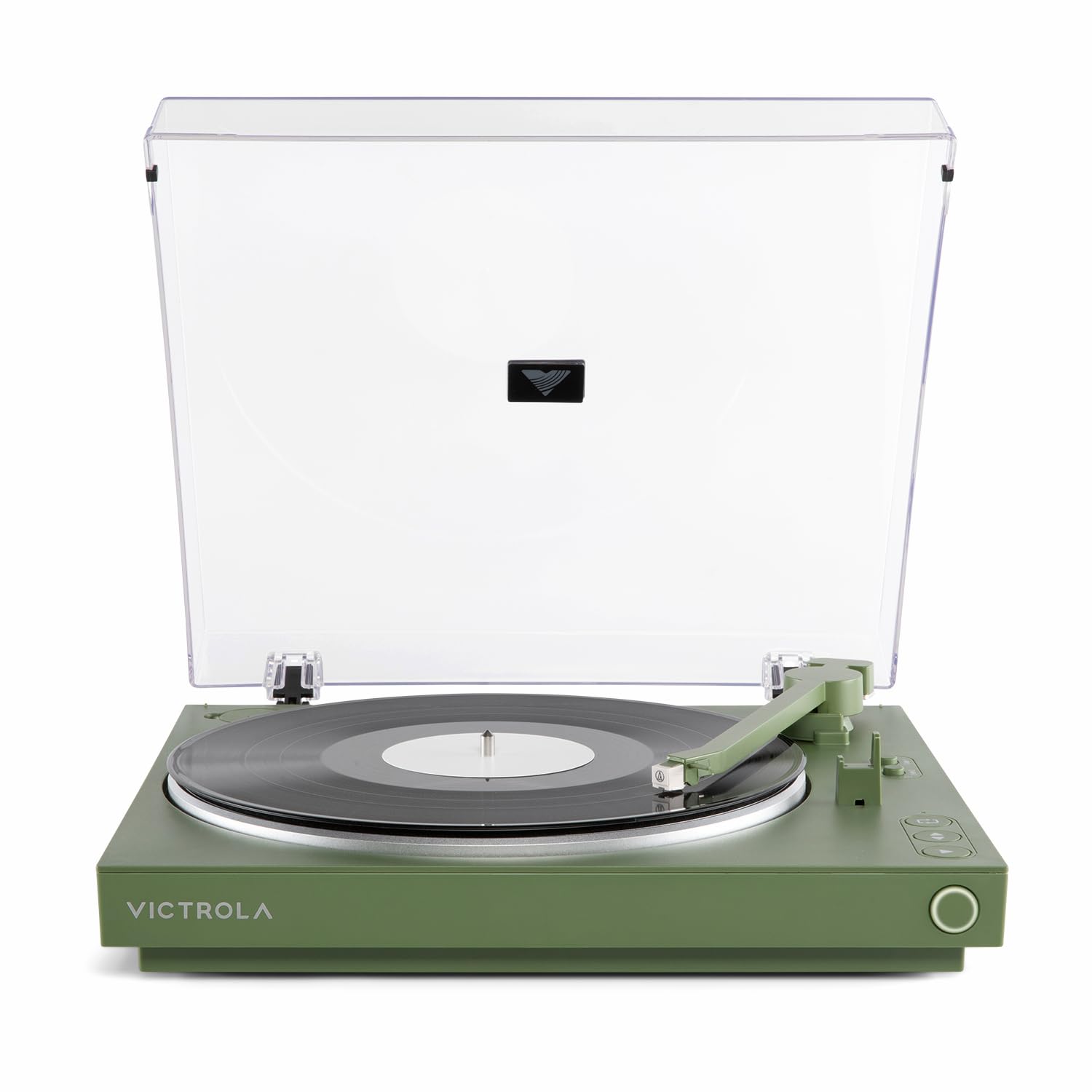
Victrola Automatic

82 /100
Sound Score Excellent

Key details

Preamp
Switchable
Speeds
33, 45 RPM
Cartridge
AT-3600L
Automatic Vs Manual
Fully automatic
View on Amazon

The fully automatic Victrola Automatic pivots its lineup around a repeat-side function you rarely see at this price. Set a side playing, and the tonearm returns to the start when it finishes, which suits background listening in a living room or at a low-key gathering. The bundled Audio-Technica cartridge keeps playback clean enough that you won't feel the need to swap it out right away.

The switchable preamp and RCA outputs connect to powered speakers or an existing stereo receiver, and setup is quick for a belt-drive deck. One-button start and stop handle the day-to-day routine, while the green finish keeps the table from looking like test equipment.

Choosing repeat removes the temptation to flip the record at a quiet pause; it simply comes back to the top until you stop it. That makes this model a better companion for long reading sessions than a standard automatic turntable.

Beginners who already have powered speakers or a receiver are the right audience; wired RCA is the safer primary connection, and wireless output is a convenience rather than the main hook. The fully automatic behavior and repeat function matter more here than critical listening or portable use. If a single box with built-in speakers is the goal, this model is not that product.

Pros

  • Repeat-side playback keeps a single LP side looping without touching the tonearm.
  • Bundled Audio-Technica cartridge delivers clean, balanced sound through powered speakers.
  • Switchable preamp and RCA output connect quickly to most stereo receivers.
  • Green finish stands out without dominating a living-room setup.

Cons

  • Bluetooth pairing can be inconsistent in a room with several active devices; the RCA output sidesteps that variable.
Our verdict

For listeners with powered speakers already in place, the repeat-side feature and bundled cartridge make this a fair mid-range automatic turntable — as long as you treat Bluetooth as a bonus, not the main connection.

Check Latest Price
7

Newest Sony Automatic

Sony PS-LX3BT

87 /100
Sound Score Excellent

Key details

Preamp
Built-in
Speeds
33, 45 RPM
Cartridge
Moving magnet
Automatic Vs Manual
Fully automatic
View on Amazon

Bluetooth pairing is straightforward, and the aptX Adaptive output locks onto soundbars and Sonos speakers without extra fuss. The fully automatic belt drive handles start and return, so you can play a record without cueing the tonearm by hand. The aluminum platter and transparent dust cover give the deck a tidy, modern look. The existing Sony automatic remains the default in this category, so this deck's appeal rests on its current design and transparent dust cover rather than a functional edge. For wireless playback into existing Bluetooth speakers, this automatic handles the job cleanly.

Pros

  • Pairs easily with soundbars and Sonos speakers for wireless vinyl playback.
  • Auto start/return begins and ends a record without manual tonearm handling.
  • Belt drive and aluminum platter keep the playing sequence smooth.

Cons

  • For anyone with 78 RPM records, this deck will not spin them; it handles 33 1/3 and 45 only.
  • No USB output for ripping records; digitizing your vinyl requires a separate audio interface.
Our verdict

For wireless vinyl playback into a soundbar or Sonos system, this is the Sony automatic to choose if you prefer the current design and transparent dust cover.

Check Latest Price
8

Portable Gift Buying

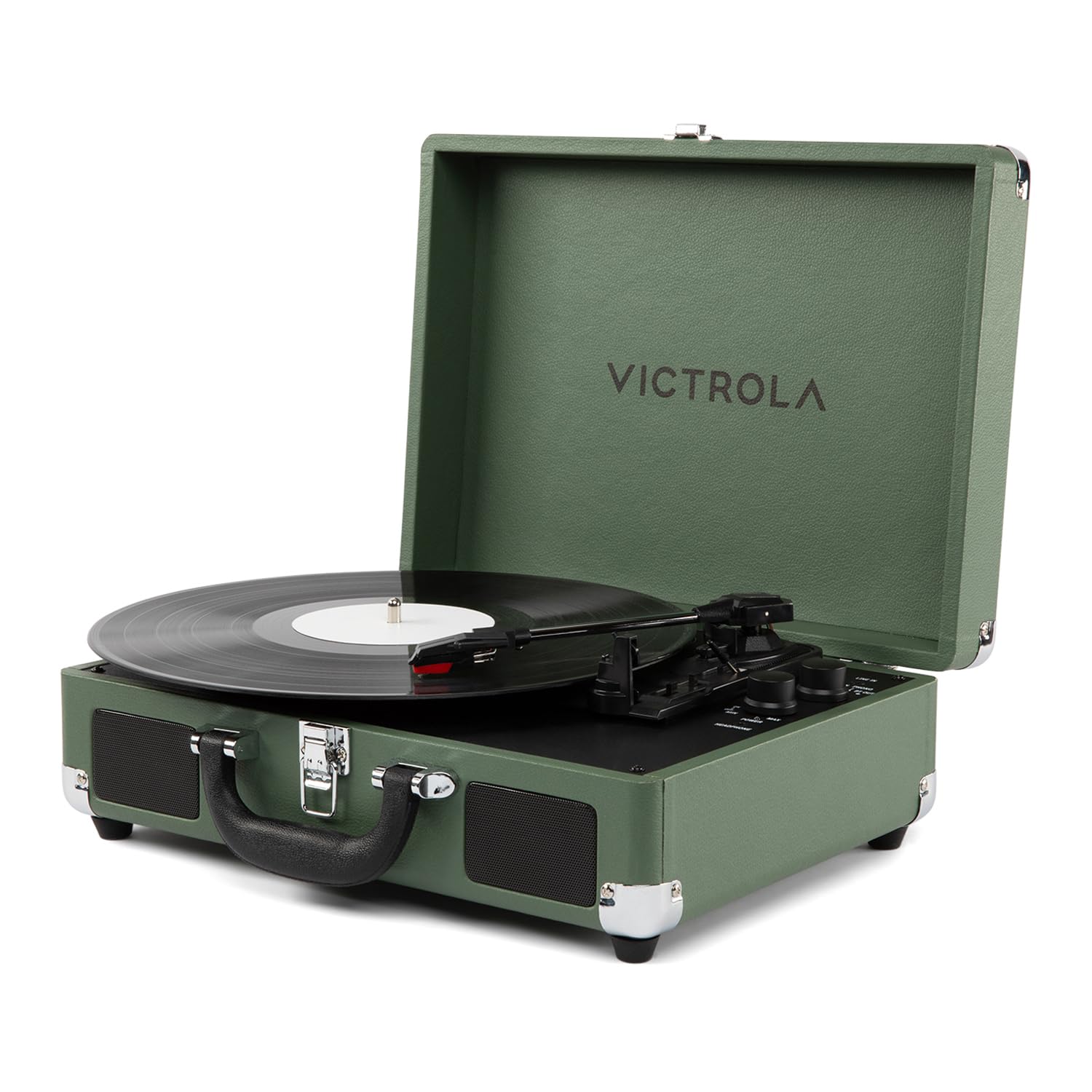
Victrola Journey II

86 /100
Sound Score Excellent

Key details

Preamp
Built-in
Speeds
33, 45, 78 RPM
Cartridge
Ceramic
Automatic Vs Manual
Manual
View on Amazon

The Victrola Journey II is a genuinely easy-to-use portable player. It pairs quickly with wireless speakers or headphones for vinyl playback, and it also accepts Bluetooth input, so a phone can stream through the built-in speakers. Setup takes under a minute, and the suitcase form factor travels well. The compact speaker system is the reason it sits below the fuller-sized all-in-one in this set for room-filling sound; for a bedroom or nursery, the convenience and portability still make it an easy first player.

Pros

  • Built-in speakers deliver surprisingly clear sound for a suitcase player.
  • Sets up in minutes with no complicated adjustments.
  • Dual Bluetooth sends vinyl to wireless speakers and streams phone audio.

Cons

  • Not suited for critical listening or serious vinyl collectors.
  • A unit may show minor fit-and-finish issues on arrival, so a quick once-over is worth it.
Our verdict

For a child's first player or a casual picnic rig, the Journey II's dual Bluetooth and built-in speakers make it an easy, affordable first record player.

Check Latest Price

How to Choose

Bluetooth Direction

Bluetooth direction is the most overlooked spec in this category. Models with Bluetooth output transmit the audio from the stylus to your wireless speaker or headphones. Models with Bluetooth input only receive music from your phone and play it through the turntable's built-in speakers — they cannot send vinyl to your existing wireless speaker.

If you already own a Bluetooth speaker or soundbar you like, choose a turntable with Bluetooth output. If you want a single-box system and do not care about wireless vinyl streaming, an input-only all-in-one is acceptable. The box may say Bluetooth either way.

Automatic vs Manual Tonearm

Automatic turntables start the platter and place the tonearm at the press of a button, then lift and return the tonearm at the end of the record. Manual turntables require you to cue the tonearm over the groove and lift it yourself.

For casual listeners, a fully automatic deck removes the anxiety of dragging a stylus across a record. Manual turntables appeal more to hobbyists who see setup and handling as part of the ritual. Automatic mechanisms add complexity and cost, but reviews consistently show that buyers who choose automatic rarely regret it.

Cartridge Quality and Upgradability

The cartridge is the part of the turntable that physically reads the grooves — its stylus shape and compliance directly affect tracking, surface noise, and how much detail you hear. Entry-level turntables often use an integrated cartridge with a replaceable stylus, which keeps costs low and maintenance simple. Higher-end models use a removable cartridge (like the Audio-Technica VM95 series) so you can swap in a better stylus without replacing the whole headshell.

If you plan to keep a turntable for years, choose one with a standard mount cartridge and an upgradeable stylus path. A replaceable stylus is a minimum; a full cartridge upgrade is the difference between being stuck at a sound quality ceiling and being able to grow with the deck.

Built-In Preamp and Wired Outputs

A phono preamp boosts the cartridge's tiny electrical signal to normal line level. Turntables with a built-in switchable phono/line preamp can connect directly to powered speakers, a receiver, or a soundbar without extra hardware. If the preamp is not switchable, you may need to buy an external one or use a receiver with a phono input.

Having both Bluetooth and wired RCA outputs gives you flexibility: wireless convenience when you want it, and a stable, time-aligned wired connection when you do not. Bluetooth is convenient, but a wired connection avoids compression, dropouts, and pairing quirks.

Speeds and Extra Features

Most vinyl is 33 1/3 RPM albums or 45 RPM singles. If you have 78 RPM records, you need a turntable that supports that speed — not all do. USB output is a useful addition if you want to digitize your records, but it adds cost and complexity. It also typically requires PC software and a wired USB connection; do not mistake it for wireless ripping.

Before choosing a turntable, check your record collection for 78s and decide whether digitizing is a real need. Many buyers overestimate how often they will rip vinyl, but 78 RPM support is a hard requirement nobody can retrofit.

Frequently Asked Questions