7 Best Coaxial Car Speakers of 2026: Match Your Stock Radio

Find coaxial car speakers that actually deliver clean sound and volume on factory power, without overpaying for inflated wattage specs.

Factory speakers are the weakest link in most car audio systems. They are typically made with paper cones and small magnets, so they distort early and lose detail at highway speeds. Swapping them for a proper coaxial speaker is the most direct fix, but the category is full of inflated wattage claims and vague marketing language.

The real specs are RMS power and sensitivity. Peak wattage numbers are marketing, while RMS tells you how much continuous power the speaker can handle and sensitivity tells you how loud it will play from a stock radio. A 92dB speaker with 30W RMS will often sound louder and cleaner than an 80dB speaker with 100W peak claims.

This guide covers the sizes and power levels that matter for factory replacements, from 4-inch dash speakers to 6.5-inch door upgrades. You will find options that balance clarity, efficiency, and installation ease, so you can pick the right tool for your vehicle and your listening habits.

About the Sound Score: This comparative score is calculated from a product's published customer rating and review volume. It is not a laboratory measurement or a hands-on test result.

1

Best Overall

Pioneer TS-A1681F 6.5"

92 /100
Sound Score Outstanding

Key details

Size
6.5"
RMS Power
80W
Key Feature
4-way, adapters
Sensitivity
91dB
View on Amazon

The TS-A1681F pairs 80W RMS with 91dB sensitivity and a four-driver array, which places it at the front of the 6.5-inch factory-upgrade group. The 4-way layout adds a dedicated super-tweeter that extends response to 29kHz, while the woofer carries the low end without the strain that budget coaxials show when pushed. The result is a balanced signature: deep bass, defined mids, and crisp highs that stay composed as volume climbs. That combination matters in a category where peak-power marketing can overshadow continuous performance; here the 80W RMS figure is the one doing the work.

Installation starts with the supplied multi-fit adapters, which align with Toyota, GM, and other standard 6.5-inch openings. The driver sits flush in factory locations with minimal fuss, and the 91dB sensitivity produces meaningful volume straight from a stock radio. At higher volume, the 80W RMS rating keeps distortion under control, and there is room to add an external amplifier later without swapping speakers. Buyers who want a simple drop-in replacement will find the stock-radio performance enough on its own; buyers who plan an amplifier later will not hit the speaker's ceiling first.

This is a mid-range buy for listeners who want a step up from factory cones, not just a functional replacement. It costs more than entry-level 6.5-inch coaxials, and casual listeners may not use the extra 4-way driver detail. If that sounds like you, the value-optimized A-Series option covers the basics at a lower price. The extra money here buys headroom and a cleaner top end for anyone who actually turns the volume up.

The TS-A1681F separates itself from the value-oriented sibling at higher output levels. That version shares the same 91dB sensitivity and adapter kit but steps down to 70W RMS and drops the fourth driver. The extra 10W and the super-tweeter become apparent when you cross into serious listening: the cone stays controlled, and cymbals and vocal sibilance remain crisp. The 35Hz–29kHz response range covers kick-drum weight and high-hat detail, so the speaker suits all-around listening rather than a narrow genre. For the buyer who treats car audio as part of the drive rather than an afterthought, this is the stronger all-around factory upgrade.

Pros

  • Balanced sound with deep lows and crisp highs across music genres.
  • Solid construction that feels secure in door panels.
  • Fits Toyota, GM, and other standard 6.5-inch openings cleanly.
  • Multi-fit adapters remove installation guesswork.
  • Strong output from a stock radio, with room to add an amp later.

Cons

  • The 350W peak spec is not continuous output; sustained handling sits at 80W RMS.
  • For minimal-power replacements, the 80W RMS headroom is more than you'll use.
Our verdict

The TS-A1681F is the 6.5-inch coaxial that turns a factory door location into the strongest part of the system without forcing an amp.

Check Latest Price
2

Best Value Mid-Range

Pioneer TS-A1671F 6.5"

92 /100
Sound Score Outstanding

Key details

Size
6.5"
RMS Power
70W
Key Feature
3-way, adapters
Sensitivity
91dB
View on Amazon

The TS-A1671F is the value-optimized 6.5-inch A-Series, pairing the same 91dB sensitivity and multi-fit adapters as the top pick with a more affordable price. That efficiency suits stock head units well, letting the speakers produce meaningful volume without an external amplifier. The 70W RMS rating is enough for typical daily listening and light aftermarket use.

Crisp highs and a full midrange make this a clear step up from aging factory paper cones. The 3-way layout keeps vocals clear at highway speeds, and the included adapter set and brackets simplify mounting in common 6.5-inch openings, including older vehicles that would otherwise need custom work. The compact frame also fits dash, headrest, and other tight spaces, so it works as a direct factory replacement in more than just door locations.

This is the right 6.5-inch upgrade for value-focused buyers replacing factory speakers in classic or modern vehicles. Some units have been noted to crack or distort when driven hard at sustained high volume — a boundary that matters at extreme volume, and a reason for buyers who cannot accept any durability variation to step up to the top pick. Casual listeners on stock radios will stay well clear of that limit, and typical factory replacement jobs need little extra hardware.

Pros

  • Crisp highs and strong loudness from a 6.5-inch speaker.
  • Fits a wide range of vehicles, including classics, with included adapters.
  • Cost-effective replacement for aging factory speakers.
  • Clear installation with included adapters and brackets.

Cons

  • High-volume listeners will hit the ceiling sooner than with the top pick's 4-way, 80W design.
Our verdict

The TS-A1671F makes the most sense as a straight factory swap at a price that leaves room for other audio upgrades.

Check Latest Price
3

Best Budget 6.5-Inch

JVC CS-J620 6.5"

89 /100
Sound Score Excellent

Key details

Size
6.5"
RMS Power
30W
Key Feature
2-way, high sensitivity
Sensitivity
92dB
View on Amazon

The JVC CS-J620 is the 6.5-inch coax that gets loud on a factory radio without needing an amplifier. Its 92dB sensitivity and 30W RMS deliver enough output for daily driving, and the pre-arranged mounting holes make it a direct swap into stock openings. It is the cost-conscious route to replacing blown or tired OEM speakers without reworking the doors.

At moderate volume, the sound is clean and balanced, with a smooth tweeter that keeps vocals and classic rock coherent. The clarity is a clear step up from tired factory speakers, and the 92dB sensitivity is what makes factory-power volume possible; you do not need to upgrade the head unit to hear a difference.

This fits the shopper replacing blown or worn stock speakers on a budget, particularly in rear doors where factory 6.5-inch openings are standard. Budget construction and 30W RMS mean high-volume durability is limited, so treat this as a normal-volume daily-driver upgrade rather than a bass machine. First-time upgraders running the factory stereo get a low-cost entry point that does not demand an amp or custom wiring. That makes it a sensible first step for anyone who wants better sound without changing the rest of the car.

💡 Run them from the factory stereo at moderate volume; the 30W RMS is best suited to that.

Pros

  • Clear, balanced sound that improves on OEM speakers without harsh treble.
  • Strong value for an entry-level set of two 6.5-inch speakers.
  • Mounting holes and included hardware make installation easy in factory openings.
  • Works as a direct replacement for old OEM speakers with no extra parts.

Cons

  • The 30W RMS rating caps bass-heavy output; not a speaker for high-volume SPL.
  • In some cases, premature audible wear can appear within months.
Our verdict

If you need a simple 6.5-inch swap for factory speakers and listen at normal volumes, this JVC gives you clear sound without forcing an amp or wiring upgrade.

Check Latest Price
4

Best Premium Upgrade

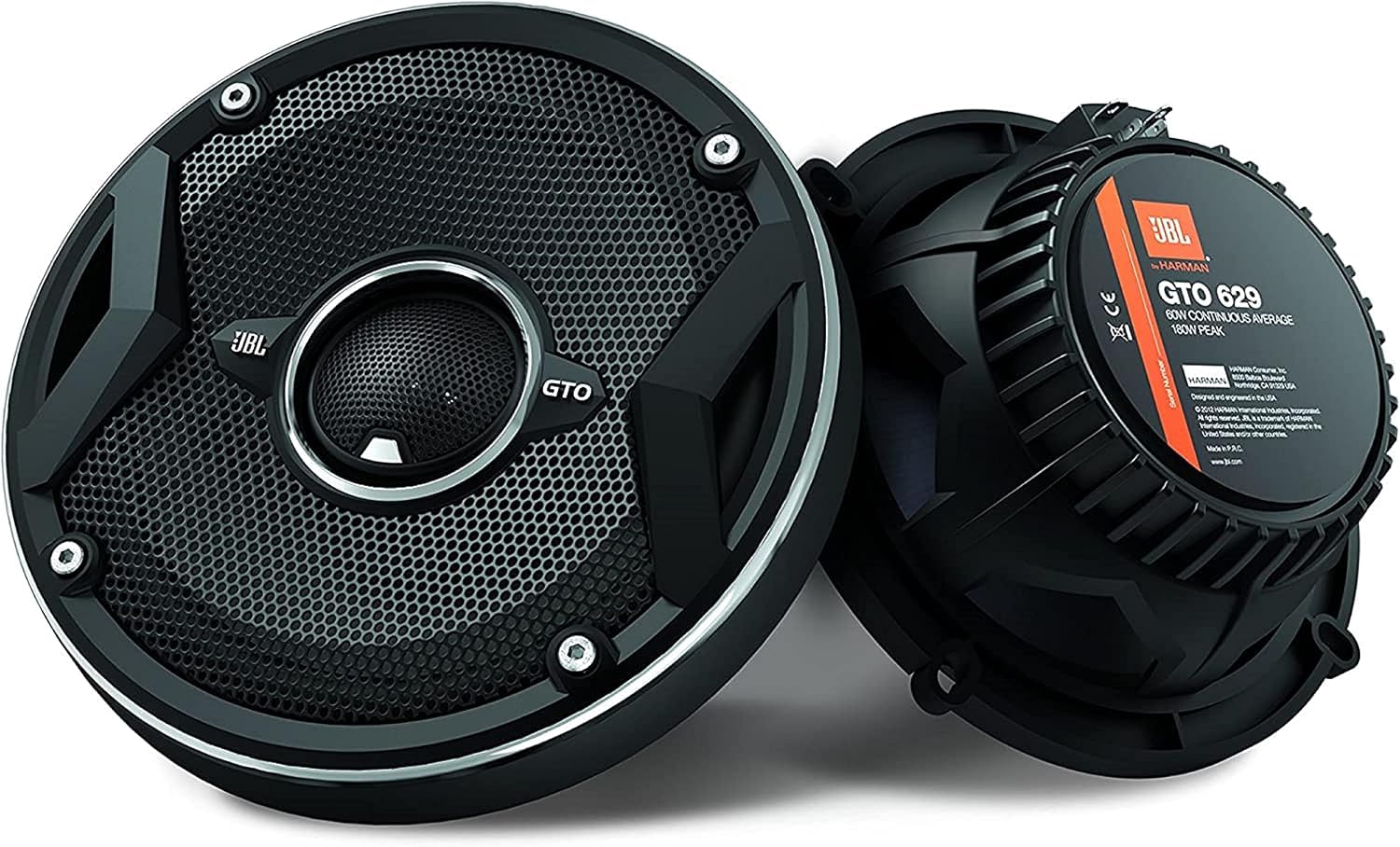
JBL GTO629 6.5"

88 /100
Sound Score Excellent

Key details

Size
6.5"
RMS Power
Key Feature
UniPivot tweeter
Sensitivity
View on Amazon

The 3-ohm impedance and adjustable UniPivot tweeter separate the JBL from the rest of this set. Factory head units get more usable volume without an amp, and the tweeter can be aimed toward the listener for refined high-frequency detail. The performance-focused 4-way in this group offers more RMS headroom, but the JBL's edge is compatibility and control.

Sound quality is a clear step above factory paper cones. The carbon-injected Plus One cone and 12dB/octave crossover keep midrange and treble clean, and mounting in common 6.5-inch door openings takes standard hardware. It is a direct replacement for standard factory locations, with no extra brackets needed in typical doors. For buyers who want crisp highs without adding an amp, the JBL delivers.

This is a stock-radio upgrade for listeners who want aimable tweeters and extra volume from a 3-ohm design. It is best for 6.5-inch factory replacements where the factory head unit stays in place and high-frequency control matters more than raw power. The premium price and occasional long-term durability reports after about a year are the tradeoffs for that targeted upgrade.

💡 Angle the UniPivot tweeter before installing the door panel to get the intended high-frequency tuning.

Pros

  • Aimable UniPivot tweeter directs high-frequency detail toward the listening position.
  • Crystal-clear sound quality that is a meaningful upgrade over factory speakers.
  • Worth the premium price for buyers who prioritize sound quality and JBL build.
  • Installation in common 6.5-inch door openings takes standard hardware.

Cons

  • The 3-ohm impedance is optimized for factory head units, so aftermarket radio owners may not get the same output boost.
  • Bass output is typical for a 6.5-inch coaxial; subwoofer-level low end needs a dedicated sub.
Our verdict

For stock-radio owners who want high-frequency control and a factory-speaker upgrade, the JBL's 3-ohm design and aimable tweeter deliver a specific tuning advantage.

Check Latest Price
5

Best 4-Inch Compact

CT Sounds BIO-4-COX 4"

86 /100
Sound Score Excellent

Key details

Size
4"
RMS Power
40W
Key Feature
Complete kit, grilles
Sensitivity
View on Amazon

This 4-inch CT Sounds kit bundles grilles, wires, and mounting hardware with silk-dome tweeters, so a factory speaker swap needs no extra parts. It works well in dash panels, Jeep-style sound bars, and other tight 4-inch openings.

The 4-inch format limits bass and power by nature; this is a clarity upgrade, not a loudness weapon.

Buyers replacing 4-inch factory coaxials in dash panels, sound bars, and compact panels get a clean, balanced install with all hardware included. It suits daily-driving needs and keeps the original dashboard layout intact.

💡 In exposed sound-bar mounts, keep the included grilles in place to protect the speaker cones.

Pros

  • Silk-dome tweeters deliver clear highs and a distinct upgrade over stock 4-inch speakers.
  • Grilles, wires, and mounting hardware included keep the swap to a single purchase.
  • Compact 4-inch footprint fits dash panels, sound bars, and tight factory openings.
  • Budget-friendly price with solid performance for casual listening.

Cons

  • Vehicles with 6.5-inch door openings need a different speaker size; this kit is strictly for 4-inch locations.
Our verdict

For a tight 4-inch factory opening, this kit's included hardware and silk-dome tweeters make it a simple, budget-friendly upgrade.

Check Latest Price
6

Budget 3-Way

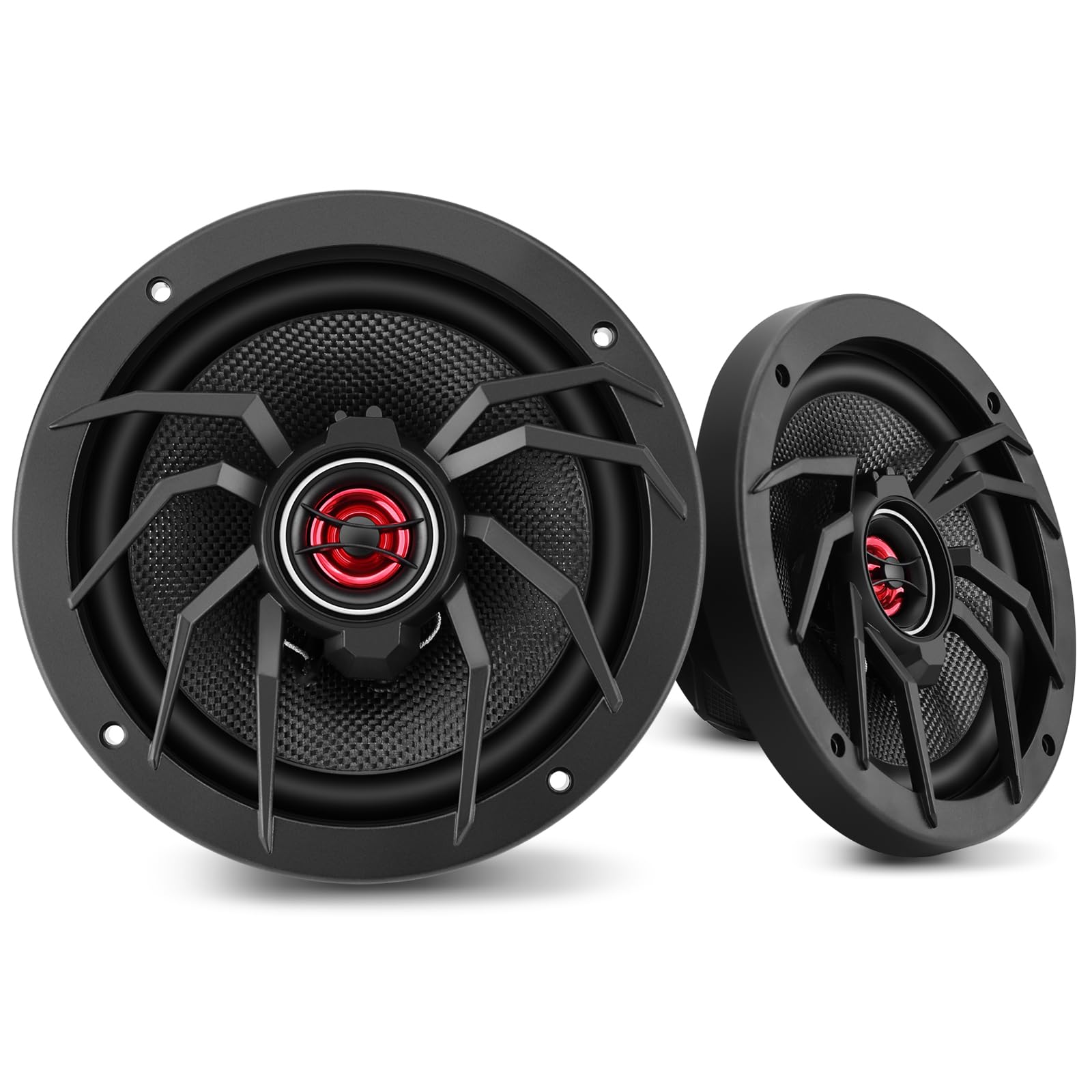
BOSS CH6530 6.5"

88 /100
Sound Score Excellent

Key details

Size
6.5"
RMS Power
Key Feature
3-way, bright treble
Sensitivity
90dB
View on Amazon

Bright treble and a budget-friendly price make the BOSS CH6530 a tempting drop-in replacement for blown 6.5-inch door speakers on factory power. The 3-way design stays clean at casual listening levels and is a real step up from stock paper cones. Fitment needs a tape measure: the outer diameter exceeds some factory openings, so tight cutouts can be a dealbreaker. Longevity under heavy volume is less certain, and a pushed unit may not last. For a basic factory replacement, the BOSS still gets the job done; the JVC budget pick is the stronger all-around choice.

Pros

  • Bright treble response is the standout for a budget-priced 6.5-inch coax.
  • Entry-level price makes it a painless replacement for blown factory speakers.
  • Drops into compatible door openings with minimal effort.

Cons

  • 90dB sensitivity is 2dB below the JVC budget pick, so it needs a bit more power for the same loudness.
  • High-volume output can distort when pushed, so casual listening is the sweet spot.
Our verdict

As an entry-level 6.5-inch replacement, it makes sense when the priority is price and treble clarity.

Check Latest Price
7

High-Power Claim

CLES ZYZ 6.5" 1000W

80 /100
Sound Score Excellent

Key details

Size
6.5"
RMS Power
250W
Key Feature
Glass fiber woofer
Sensitivity
View on Amazon

CLES ZYZ targets the budget end of the 6.5-inch coaxial segment with a 250W RMS rating, a glass-fiber woofer, and plug-and-play terminals that keep factory-speaker replacement simple. At moderate volume, the sound is clear and the bass response is respectable for the price, which is exactly the profile a casual factory upgrade needs. The power figure is also why this pair stays in the also-consider group: 250W RMS at this price sits far outside typical category output, so treat that number as marketing math rather than a continuous-output guarantee. That suits buyers replacing worn factory speakers at modest listening levels, not critical listeners who plan to push a high-powered amplifier to its limits.

Pros

  • Clear, well-balanced sound with convincing bass response for the price.
  • Strong value for money as an entry-level factory-speaker replacement.
  • Plug-and-play terminals simplify wiring for DIY replacements.

Cons

  • Advertised 250W RMS is far outside typical 6.5-inch category output; realistic continuous handling is lower.
  • A powerful aftermarket amp can easily exceed this driver's comfortable range, so keep gain settings modest.
Our verdict

For a straight factory-speaker swap at moderate volume on a tight budget, this pair works; ignore the wattage sticker when choosing an amplifier.

Check Latest Price

How to Choose

Speaker Size and Mounting Depth

Size determines whether a speaker physically fits your vehicle. Most modern cars use 6.5-inch door speakers, while older cars, dashboards, and rear decks commonly use 4-inch, 5.25-inch, or 6x9-inch openings. The outer diameter, mounting depth, and screw pattern must all match your factory location.

A speaker that is too deep can hit the window mechanism or door panel when installed. Many 6.5-inch speakers require adapters or spacers because factory mounting holes vary between manufacturers. Measure the opening depth before ordering, and look for kits that include adapters to avoid a second parts order.

RMS Power Handling

RMS is the continuous power a speaker can handle without distortion or damage. A speaker rated for 80W RMS can accept more power from an aftermarket amplifier than one rated for 40W RMS, but if you are running a stock radio, the radio's built-in amplifier typically sends only 10-20W per channel.

A high-RMS speaker will not sound better on a stock radio if its sensitivity is low. The real risk is pairing a low-RMS speaker with a powerful amplifier and turning it up until the voice coil overheats. Match the speaker's RMS to your amplifier's output, not to the peak numbers on the box.

Sensitivity

Sensitivity measures how loud a speaker plays with 1 watt of power at 1 meter distance. Every 3dB increase represents a doubling of perceived output, so a 92dB speaker sounds meaningfully louder than an 86dB speaker on the same stock radio.

For buyers keeping the factory head unit, sensitivity is the most important spec. A high-sensitivity speaker turns low power into usable volume; a low-sensitivity speaker can sound weak and lifeless even if it has high power handling. This is why a JVC with 92dB sensitivity often sounds punchier than a premium speaker with 86dB sensitivity when both are driven by a stock radio.

Impedance

Impedance is the electrical load a speaker presents to the amplifier. Most car speakers are 4 ohms, but some are 2 ohms or 3 ohms. A lower impedance draws more current from the amplifier, which can produce more output if the amp is designed for it.

Factory stereos are usually stable at 3-4 ohms, and many aftermarket head units handle 2-ohm loads as well. The JBL GTO629 uses a 3-ohm design to extract extra power from factory wiring, but pairing a 2-ohm speaker with a weak stock radio can cause the amp to run hot and distort early. Check your head unit's rated impedance before choosing a low-impedance speaker.

Included Adapters and Hardware

The difference between a 30-minute install and a full afternoon project often comes down to the included mounting hardware. Some speakers ship with universal mounting adapters, grilles, wiring harnesses, and screws; others require you to buy spacer rings, custom brackets, or wire connectors separately.

Vehicles with unusual mounting patterns are the most likely to benefit from a complete kit. A speaker with a smaller outer diameter than the factory opening needs a spacer ring, while a speaker that is too large may require cutting the mounting hole. Included adapters remove most of the guesswork and make the upgrade reversible.

Frequently Asked Questions