7 Best Digital Audio Player 2026: Match the Player to Your Music

The best digital audio player for your music library and streaming habits, from budget Bluetooth MP3 players to premium Android DAPs.

A digital audio player is one of those products where the spec sheet and the listening experience can drift apart. 'HiFi' and 'lossless' get attached to devices that barely handle MP3, and Bluetooth is the most unpredictable feature across budget and mid-priced models. The goal is not to avoid the category; it is to buy a player that actually matches your library and listening habits.

If your music lives as FLAC files on a microSD card, format support and storage expansion matter more than a flashy screen. If you stream from Tidal or Qobuz, app compatibility and a stable wireless connection take priority. Wired listeners should focus on outputs and amplifier power instead.

The practical trade-off is between convenience and fidelity: a player that does a little of everything usually gives up something somewhere. Knowing which limitation you can live with separates a smart buy from a quick return.

About the Sound Score: This comparative score is calculated from a product's published customer rating and review volume. It is not a laboratory measurement or a hands-on test result.

1

Best Overall

HiBy Music R1

80 /100
Sound Score Excellent

Key details

Outputs
3.5mm headphone out
Storage
microSD only, up to 2TB
Bluetooth
LDAC, aptX, AAC, SBC
Format Support
DSD256, PCM 384kHz
View on Amazon

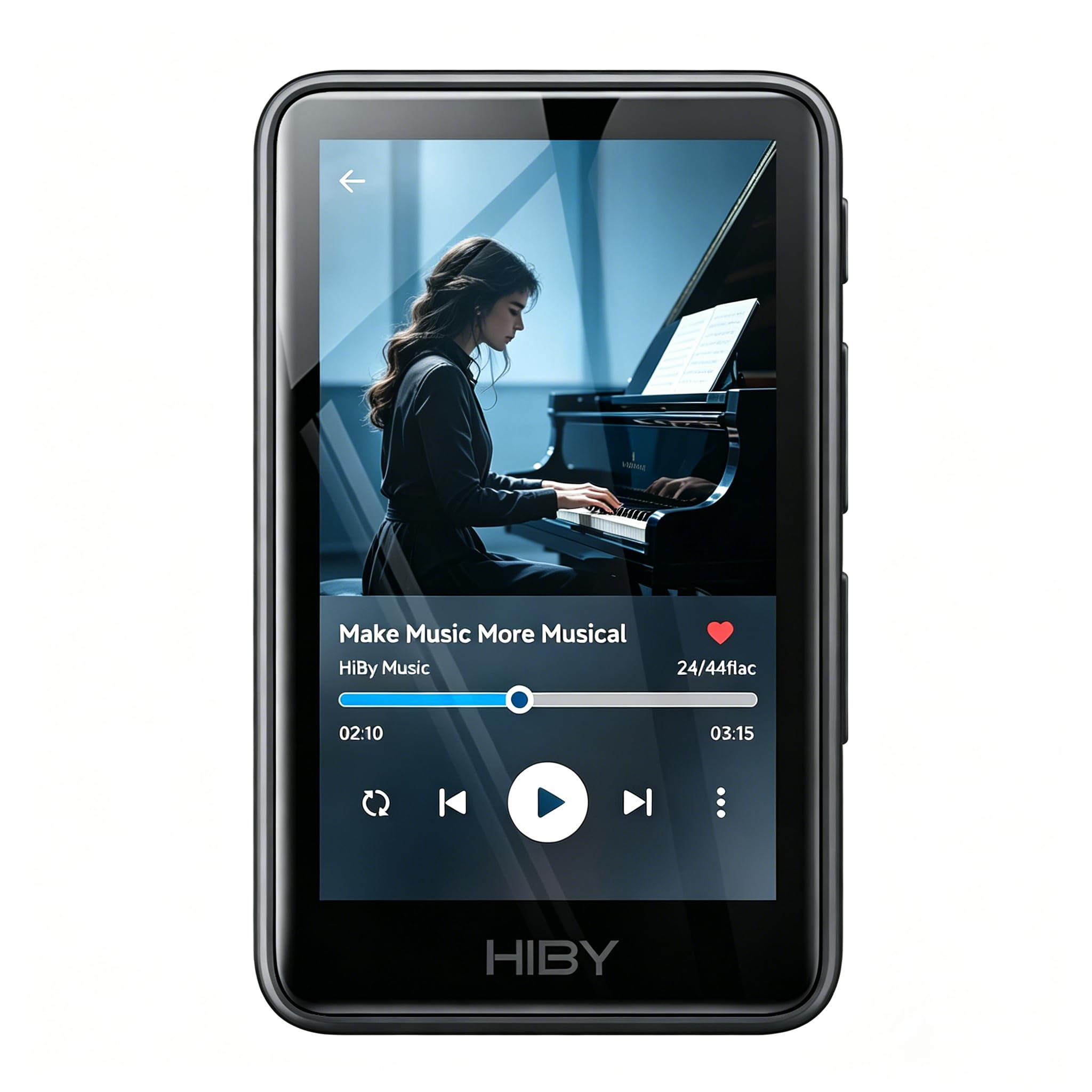
Dual Hi-Res certification covers DSD256 and PCM 384kHz/32bit, and the Bluetooth side includes LDAC, aptX, AAC, and SBC. That combination puts high-resolution playback on both wired and wireless paths, which is rare at entry-level pricing. LDAC support means wireless listening does not automatically drop to SBC or a lower bitrate. The dedicated audio OS keeps the focus on local files and Wi-Fi streaming rather than Android app clutter. For a buyer coming from a phone, music playback becomes the whole interface, and the DAC section is the center of the device.

The shell feels solid and compact, with a hand feel that avoids the hollow plastic seen at lower price points. Touch response can be uneven, and the interface may occasionally freeze long enough to need a restart. That is a minor interruption for a device that mostly sits on a desk or in a jacket pocket while music plays. The screen is small and utilitarian, but acceptable for track navigation. Battery life is rated at 15.5 hours, which covers a full day of listening without hunting for a charger.

This suits budget audiophiles, Tidal/Qobuz streamers, and wired or wireless headphone users who want one compact DAP for local Hi-Res files and lossless streaming. It assumes you already have a microSD library and a Wi-Fi connection for streaming. If you need Spotify, the R1 is not that machine. It is also not the pick for anyone who wants a full Android app store or a balanced 4.4mm output; those capabilities live in pricier models. For wired listeners, the headphone output is simple; wireless listeners get LDAC support that preserves hi-res over Bluetooth.

The R1 covers a specific lane rather than every DAP category. It trades app-store freedom for a focused music experience, and that trade makes sense when your listening is mostly local files plus Tidal/Qobuz over Wi-Fi. At entry-level pricing, the feature set reaches beyond typical DAPs without forcing you into Android complexity. That makes it a sensible pick for a buyer who wants high-resolution audio in both wired and wireless modes without spending several times more.

💡 Pair LDAC-compatible headphones to get the full wireless resolution; aptX and AAC remain available.

Pros

  • Hi-Res playback is apparent: DSD256 and 384kHz/32bit support shows up in the listening experience, not just the spec sheet.
  • Build quality feels solid and compact, with a shell that does not betray the entry-level price.
  • Entry-level pricing that covers Hi-Res, LDAC, and Tidal/Qobuz streaming in one unit.
  • Tidal and Qobuz are built in, so lossless streaming does not need a phone or Android overhead.

Cons

  • Touch response can lag or freeze momentarily, which interrupts navigation more than playback.
  • Tidal and Qobuz streaming requires Wi-Fi; offline downloads are not supported.
  • A microSD card is required before loading any music; there is no built-in memory.
Our verdict

A dual Hi-Res DAP with LDAC Bluetooth and Wi-Fi lossless streaming at entry-level pricing — right for listeners who want high-resolution audio without Android DAP costs.
Check Latest Price
2

Best Retro-Style Budget DAP

FiiO Echo MINI

79 /100
Sound Score Very Good

Key details

Outputs
3.5mm + 4.4mm balanced
Storage
8GB + microSD 256GB
Bluetooth
5.3, SBC only
Format Support
DSD, FLAC, WAV, APE
View on Amazon

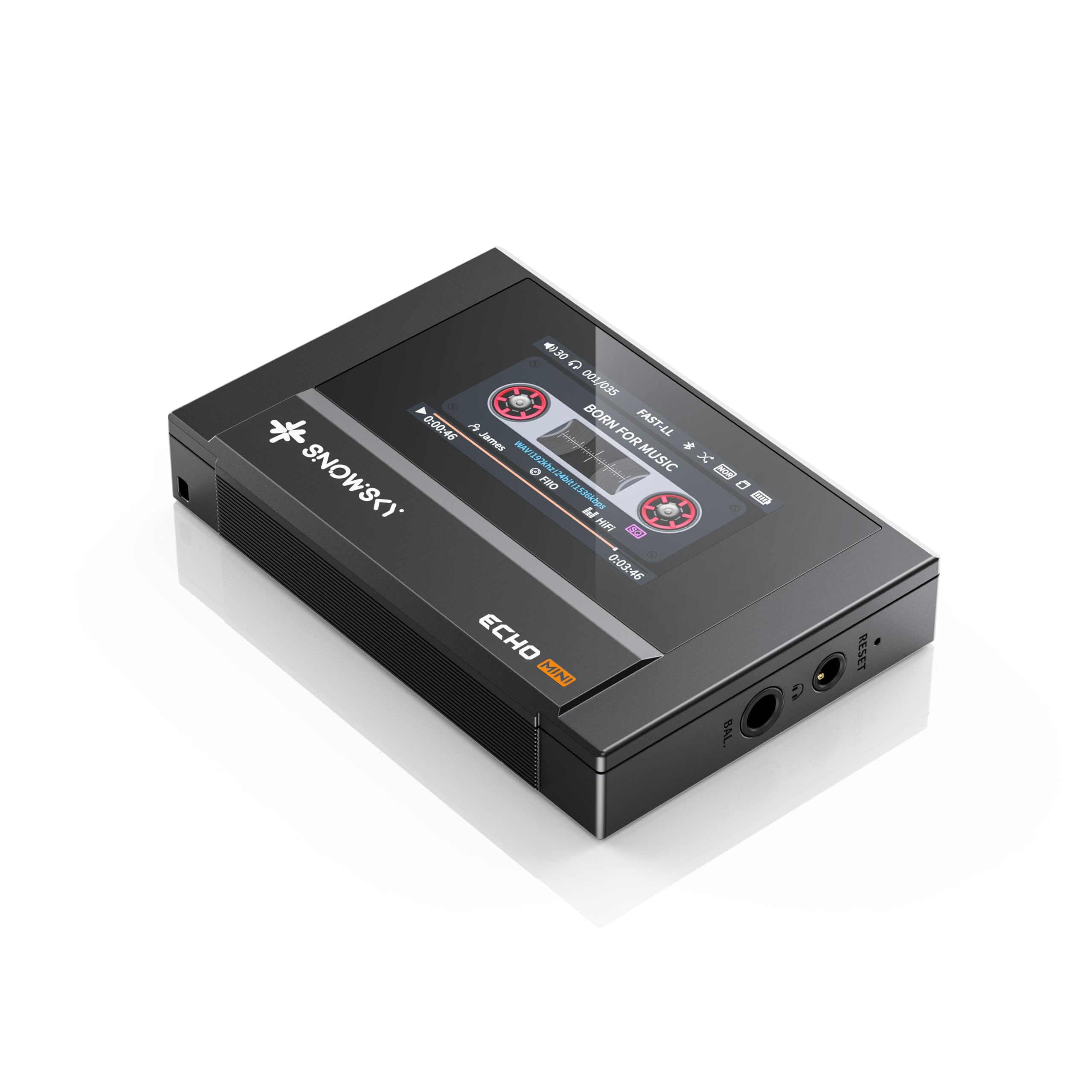
FiiO's Echo MINI pairs a cassette-era shell with a balanced 4.4mm output and clean sound at an entry-level price. That combination is rare in this class; the body is small enough for a jeans pocket and light enough to disappear inside a bag. This is a take-everywhere companion for wired listening.

Sound quality is the main draw. The 3.5mm output handles everyday earbuds without fuss, while the 4.4mm balanced output gives pricier wired IEMs extra headroom. Local playback supports DSD, FLAC, WAV, APE, MP3, M4A, and OGG, so a well-organized microSD library is all you need. Battery life around 15 hours covers commutes and travel without demanding a nightly charge. The balanced output is the standout for anyone who has already invested in a 4.4mm cable.

This is a starter DAP for wired listeners who keep their music on a microSD card and want a pocketable player without Android overhead. Bluetooth is present but auxiliary; wired output is the focus. There are tradeoffs: menu navigation can be clunky, and occasional freezes or resets can interrupt playback. Those rough edges matter less when the device is treated as a dedicated offline player rather than a do-everything gadget.

💡 Load a microSD card before your first listening session; the 8GB internal memory fills quickly with lossless files.

Pros

  • Retro cassette-style shell that stands out at a budget-friendly price point.
  • Balanced 4.4mm output on a budget player gives wired IEMs extra headroom.
  • Pocketable, lightweight body that slips into a jeans pocket without adding bulk.
  • Clean, satisfying sound for a budget DAP across local lossless files.

Cons

  • Bluetooth connections can be inconsistent, so wired output is the more direct listening path.
  • Skipping tracks on the move can take two presses rather than one.
Our verdict

A pocketable balanced-output DAP for wired listeners who want the retro look without the Android overhead.

Check Latest Price
3

Best Budget All-Rounder

Aiandcc 64GB BT MP3

80 /100
Sound Score Excellent

Key details

Outputs
3.5mm + built-in speaker
Storage
64GB + microSD 128GB
Bluetooth
5.3
Format Support
MP3, WAV only
View on Amazon

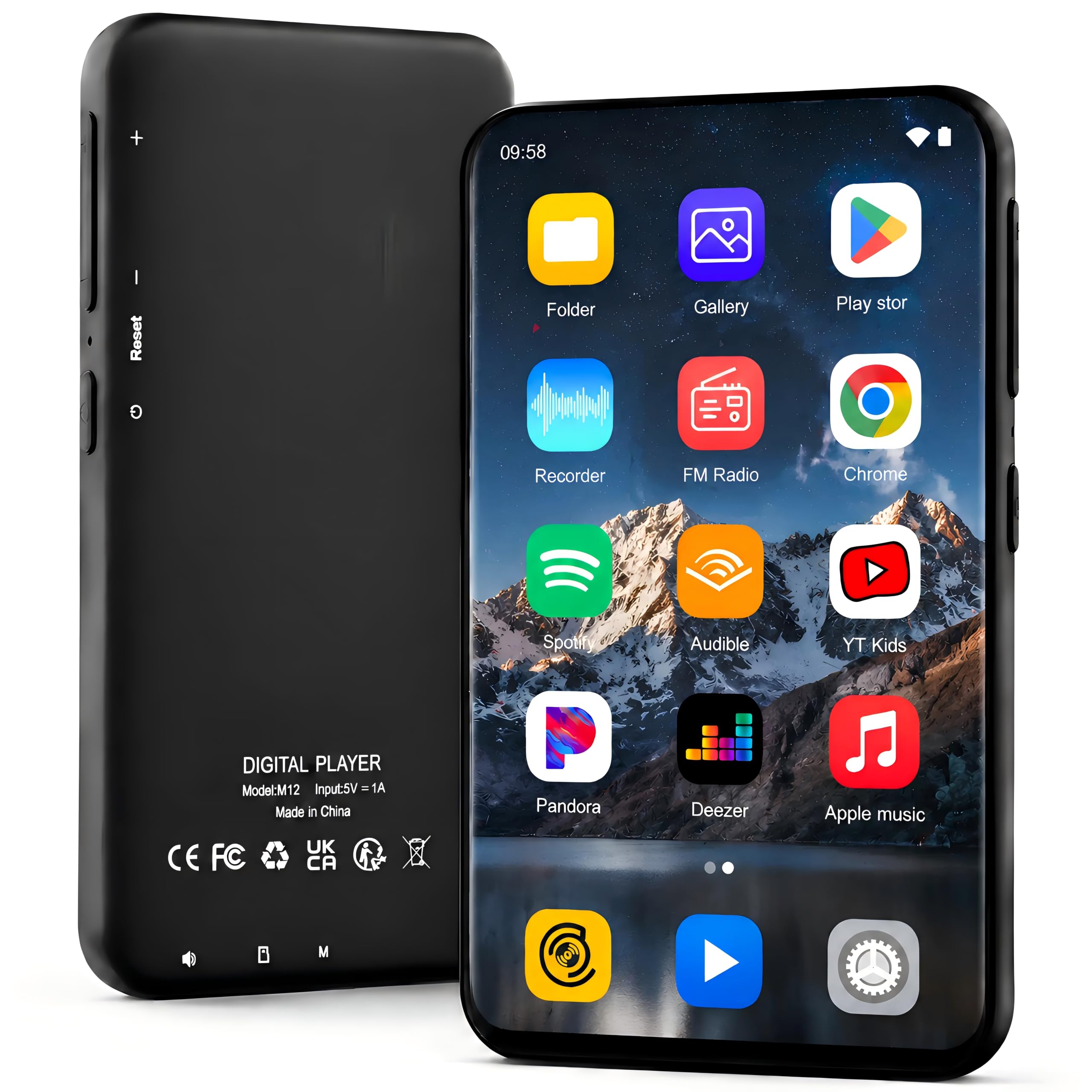
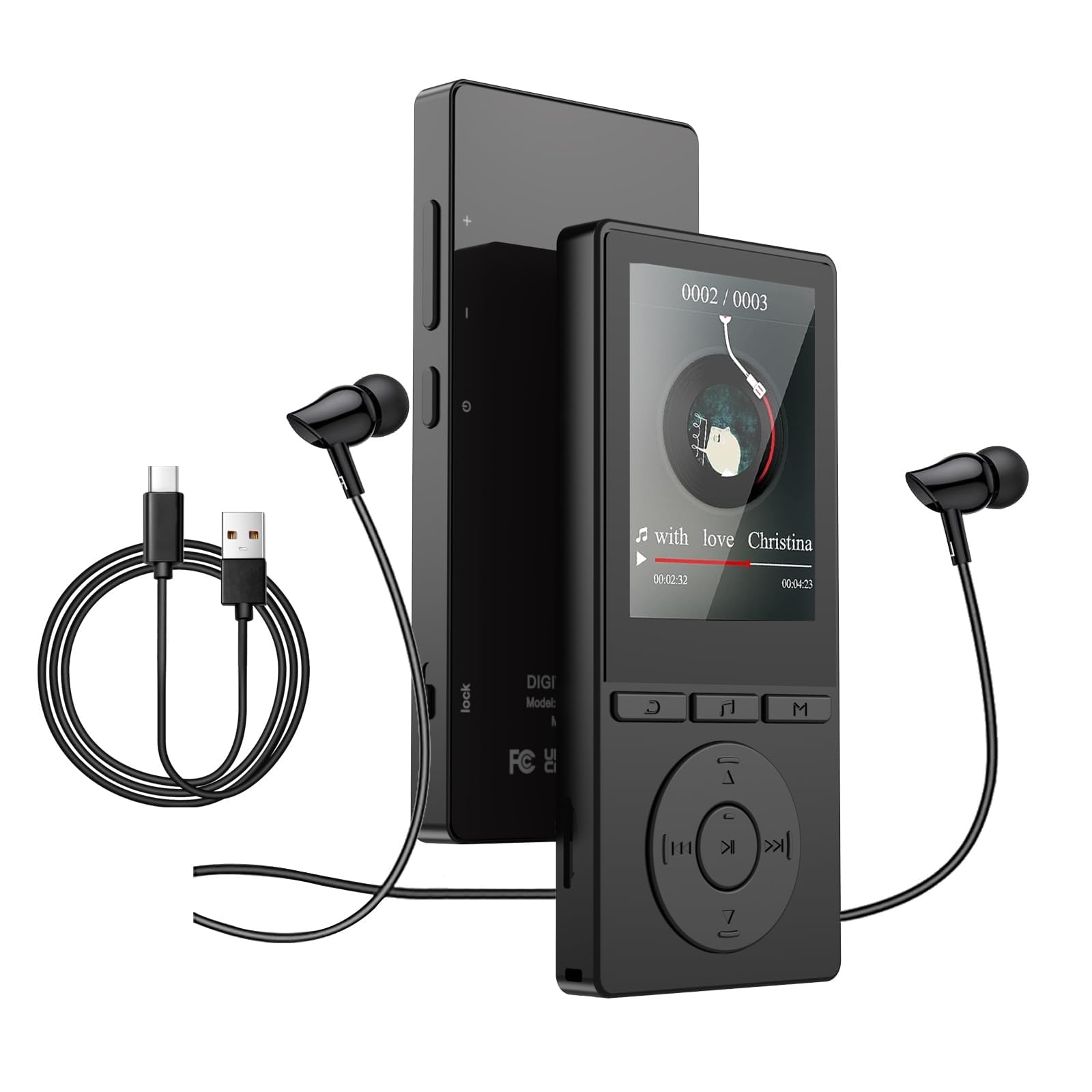
The Aiandcc 64GB MP3 Player pairs a built-in speaker, FM radio, and long battery with 64GB of internal storage inside a compact metal shell. Unlike the streaming-focused top pick, it keeps playback local: load MP3 or WAV files onto the internal drive or a microSD card and press play. That makes it a utility player for casual listening rather than a Hi-Res or app-driven device. The control layout uses dedicated physical keys, so skipping tracks, adjusting volume, and switching to FM radio are all one-button actions.

The built-in speaker fills a bedroom or patio with enough volume for everyday listening, and the 3.5mm output stays clean at moderate levels. FM radio provides a second audio source, and battery life carries through a full day away from a charger. The metal case gives the player a dense, sturdy feel that fits a pocket without flex.

This player suits runners, outdoor listeners, kids, and seniors who want physical buttons, a speaker, radio, and simple file loading. Bluetooth can drop or struggle to pair, and the headphone jack can become intermittent after months of use, so buyers who need wireless certainty or a long-term wired connection will want a different device.

Pros

  • Good audio from the built-in speaker and headphones for the price.
  • Long battery life supports all-day listening away from a charger.
  • 64GB built-in storage plus microSD expansion holds large music libraries.
  • Physical buttons and a simple interface are easy to operate without looking.

Cons

  • For libraries that include AAC or lossless files, the MP3/WAV-only playback means extra conversion work.
  • On the physical buttons, a press may need a second click before it registers.
Our verdict

For casual listeners with large MP3 libraries, this budget pick delivers the essentials - speaker, radio, storage - without app or subscription.

Check Latest Price
4

Best Premium Android DAP

FiiO M21

80 /100
Sound Score Excellent

Key details

Outputs
3.5mm, 4.4mm, S/PDIF
Storage
64GB ROM + microSD
Bluetooth
LDAC, aptX HD
Format Support
DSD, PCM up to 384kHz
View on Amazon

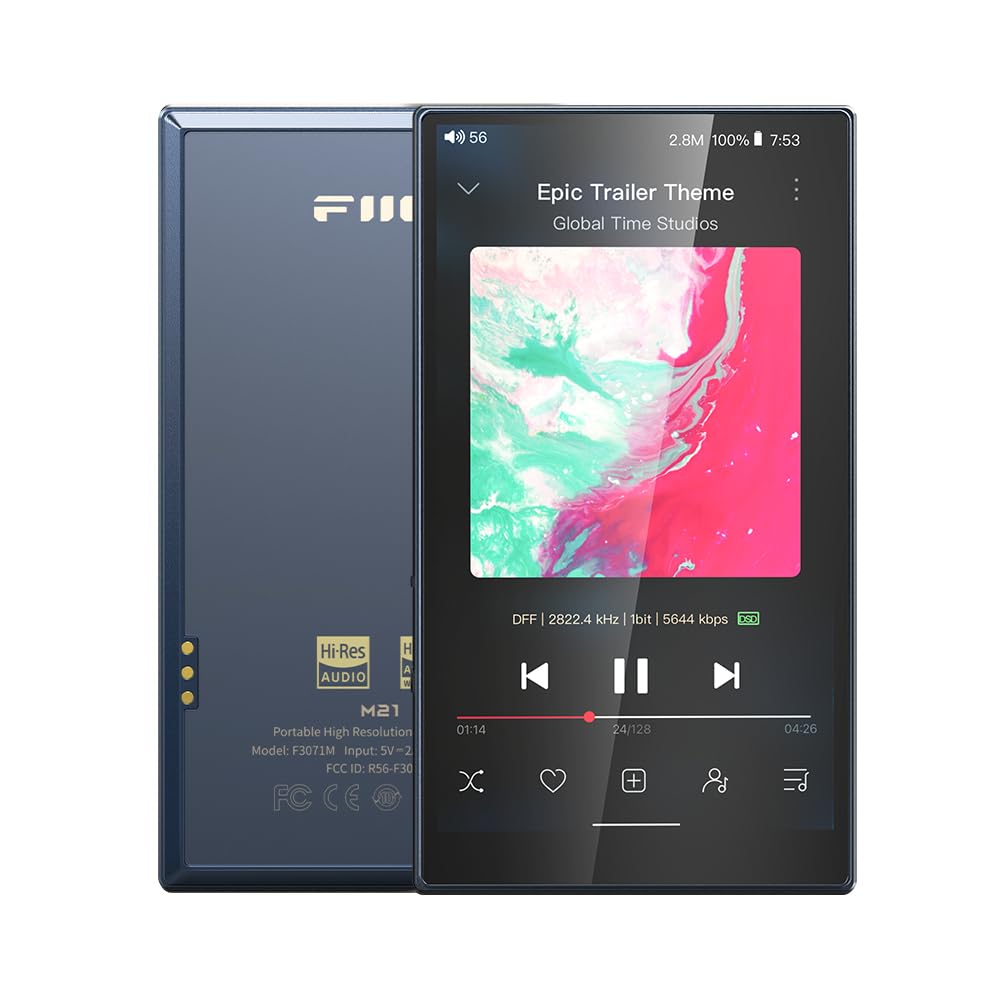
Four CS43198 DAC chips feed a balanced 2-stage amp, making this the highest-output Android player in the lineup. The Snapdragon 680, 4GB of RAM, and Android 13 keep Tidal, Qobuz, and Spotify running smoothly, while desktop mode turns the M21 into a fixed music source when it is not traveling. LDAC and aptX HD Bluetooth cover wireless listening, though the wired outputs are clearly the main event.

Battery life lands around 15 hours, strong enough for a full day of commuting or a long flight. The 4.4mm balanced output is the main reason to step up from the retro-styled budget FiiO; it delivers noticeably more headroom for planars and low-sensitivity IEMs. The 3.5mm output doubles as line-out, and USB/SPDIF expands its role as a bedside source.

This M21 suits Android streamers who want a dedicated player with app access and enough balanced power for demanding headphones. The screen is compact for an Android device, so app-heavy browsing and playlist editing feel cramped; software glitches can surface after extended use, which matters less if you treat the player as a focused music tool rather than a mini tablet.

Pros

  • Quad DAC staging creates a wide, detailed soundstage with clean instrument separation.
  • Snapdragon 680 and Android 13 keep app switching and music playback quick.
  • Aluminum body feels solid and comfortable in the hand.
  • Cassette mode, DSD capability, and desktop mode extend the feature set.

Cons

  • Bluetooth range can drop when the phone sits in a back pocket or across the room.
  • Battery drain can become more noticeable after several months of daily use.
Our verdict

This is the player to choose when your music lives in Android apps and your headphones want balanced headroom. Budget-focused listeners will find better value in the entry-level tier below it.

Check Latest Price
5

Best Offline Hi-Res Workhorse

Surfans F20

82 /100
Sound Score Excellent

Key details

Outputs
3.5mm + line-out
Storage
64GB card included
Bluetooth
5.2
Format Support
32-bit/384kHz, DSD128
View on Amazon

The Surfans F20 is built around the ESS ES9018K2M DAC and an included 64GB card, turning large FLAC/DSD libraries into loud, detailed playback with gapless transitions. Physical scroll-wheel controls keep track changes quick, and the player stays deliberately offline.

Sound quality is the main reason to choose it over a phone: high-res files get enough headroom to sound open rather than harsh, and gapless playback keeps albums flowing without gaps. The line-out feeds a car stereo or powered speakers directly, turning the F20 into a dedicated high-res source without an extra adapter.

Broad format support covers common lossless files without conversion, and the card slot accepts up to 512GB for large DSD collections. The metal case gives it a sturdy feel that matches its audio focus.

This is for listeners with a curated offline library who want physical controls and don't need streaming apps. Bluetooth is best treated as a backup, the menus take some getting used to, and battery life varies with file format and volume.

Pros

  • Loud, detailed Hi-Res playback with gapless transitions across FLAC and DSD files.
  • Line-out output turns the F20 into a wired source for car and home stereos.
  • Metal case and solid construction give it a sturdy feel.
  • DAC-equipped Hi-Res playback at a budget-friendly price.

Cons

  • A unit may freeze or skip during extended local playback.
Our verdict

For offline listeners with large lossless libraries, the F20 delivers high-res playback and line-out utility at a budget-friendly price.

Check Latest Price
6

Budget Streaming Touchscreen

ZAQE 80GB Touchscreen

83 /100
Sound Score Excellent

Key details

Outputs
Storage
80GB total, up to 1TB
Bluetooth
5.0 + dual-band Wi-Fi
Format Support
View on Amazon

The ZAQE 80GB Touchscreen gives budget buyers a large 4.02-inch HD touchscreen, dual-band Wi-Fi, and direct access to Spotify, Amazon Music, and Audible on a dedicated portable player. The 80GB total storage and SD expansion accommodate offline libraries, while the 35-hour battery rating suits longer listening days. Its touchscreen streaming focus makes it a credible alternative to Android DAPs at a lower price. The reason it sits below the top pick is that long-term behavior is not established, so this is a convenience-first player for streamers who value app access and screen size over audiophile certainty.

Pros

  • The 4.02-inch touchscreen and dual-band Wi-Fi put Spotify, Amazon Music, and Audible on a budget-priced portable.
  • The 80GB total storage and SD expansion support offline libraries alongside streaming apps.
  • The 35-hour battery rating suits long listening days away from a charger.

Cons

  • Bluetooth 5.0 is specified without LDAC or aptX, so high-bitrate wireless streaming is not guaranteed.
  • Audiophiles who need verified Hi-Res performance should treat this as a streaming device, not a critical listening tool.
Our verdict

For streamers who want a touchscreen player with Spotify, Amazon Music, and Audible without paying Android-DAP prices, the ZAQE fits a narrow but practical lane.

Check Latest Price
7

Kids First-Time Users

AGPTEK M3

83 /100
Sound Score Excellent

Key details

Outputs
3.5mm + speaker
Storage
64GB + microSD 128GB
Bluetooth
5.3
Format Support
MP3, WAV, FLAC, APE
View on Amazon

At this price, the AGPTEK M3 packs a lot into a small metal body: 64GB of built-in storage, a microSD slot, FM radio, line-in, a pedometer, and a speaker that makes it a pick-and-go player for someone who doesn't want to manage a phone. Physical buttons and sturdy build suit kids, teens, or gym lockers. The Bluetooth can drop or cut out, and the interface can freeze mid-menu, which is why this stays a secondary option rather than a main recommendation. For wired, low-stakes listening at home or in the gym, the tradeoff is manageable; the headphone output is fine for casual ears, but audiophiles should look at the higher-tier picks.

Pros

  • Sturdy build quality for a budget player, with a reassuring weight that doesn't feel cheap.
  • Long battery life suits casual listening sessions or gym use without constant charging.
  • Good value for money given the storage, speaker, and extra features included.

Cons

  • Bluetooth can drop or cut out during listening, so the 3.5mm output is the steadier path.
  • The interface can freeze or become unresponsive, interrupting playback until a reset.
Our verdict

Best as a budget first player or gym companion when Bluetooth is a bonus rather than a requirement, and you are comfortable with wired listening.

Check Latest Price

How to Choose

Format Support

Flash memory is cheap, but decoders are not. A player can advertise 'lossless' while only handling WAV, leaving FLAC and DSD silent or converted. Check the exact format list before buying.

If your library is built around DSD or high-sample-rate FLAC, you need explicit DSD256 or PCM 384kHz support. Without it, files won't open or get downsampled, and the detail you paid for disappears.

Storage and Expandability

Built-in memory is convenient but fixed; microSD support decides whether your library can grow. Some players omit internal storage entirely, so the first purchase is a card. Card speed matters too: slow cards can stutter on high-bitrate tracks.

Choose a known-brand card that fits the player's maximum capacity. If you plan to carry thousands of albums, 64GB fills fast no matter the player's price tier.

Bluetooth Codec and Reliability

Bluetooth is the most inconsistent spec in this category. Version numbers describe the radio, not antenna placement or shielding inside a metal chassis. LDAC or aptX keeps more audio data intact; plain SBC downgrades everything.

Treat Bluetooth as a convenience, not the default for critical listening. If one pair of headphones drops, try another before blaming the player. Wired output remains the dependable baseline.

Ports and Outputs

The output stage determines which headphones your player can actually drive. A 4.4mm balanced output doubles power and lowers crosstalk, but only helps with balanced cables. A weak 3.5mm jack sounds thin with high-impedance headphones.

Line-out sends a fixed signal to a home amplifier or car stereo, bypassing the volume circuit. With powered speakers or a separate amp, line-out replaces another source component.

Streaming Apps and Battery Life

Android DAPs run a full operating system, and that changes battery expectations. Quoted playback time usually comes from local files with the screen off; streaming over Wi-Fi or Bluetooth burns power faster. Check that the player supports the app you pay for.

Some players limit streaming to a custom interface with no offline downloads, which is fine with a signal and a problem on planes or trains. Decide where you will listen most, then weigh local storage against online access.

Frequently Asked Questions