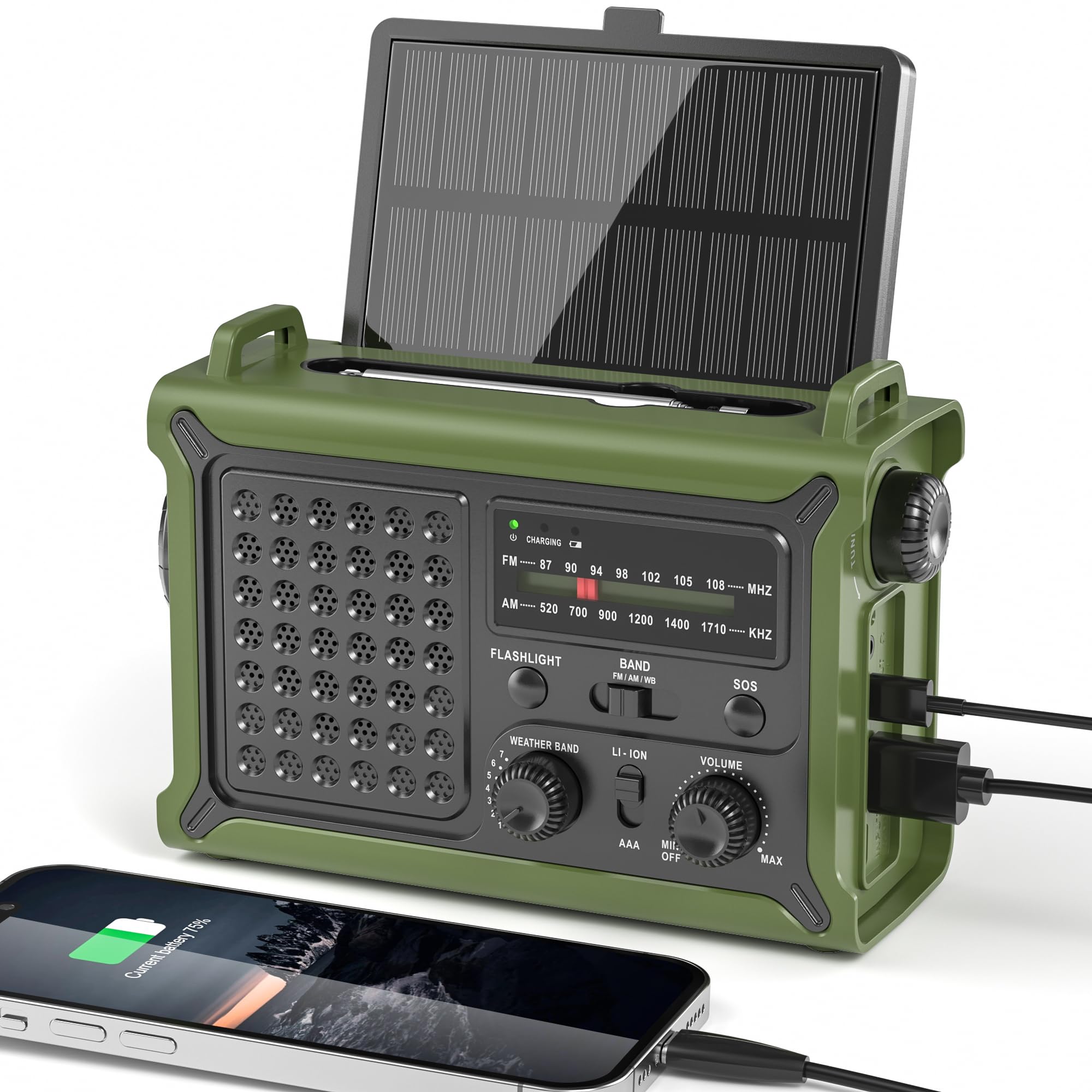
9 Best Emergency Radio of 2026: Pre-Charge Before the Storm

Buying the best emergency radio for storm season means matching battery capacity, NOAA reception, and charging reality to your actual outage plan.

Emergency radios advertise solar panels and big mAh numbers like they will refill themselves during a storm. In practice, solar and hand-crank output are slow backup methods, not primary charging. The radio that helps most is the one you charge by USB before the outage and that actually holds the charge.

The real trade-off is reserve power versus simple, proven basics. A large 12000mAh cell and an oversized solar panel can keep a phone alive for days, but only if the battery was full when the storm hit. A simpler, cheaper radio with fewer parts to rely on is the safer choice when the goal is just AM/FM and NOAA alerts in a go-bag.

NOAA reception and tuner design matter just as much: awkward controls can turn an alert check into a flashlight-in-teeth struggle. Match capacity and controls to your actual setup — a storm household needs reserve power, a car kit needs something easy to operate under stress.

About the Sound Score: This comparative score is calculated from a product's published customer rating and review volume. It is not a laboratory measurement or a hands-on test result.

1

Best Overall

Mesqool 12000mAh Radio

92 /100
Sound Score Outstanding

Key details

Extras
2-mode flashlight, reading lamp
Phone Charging
USB-C output
Reception And Tuner
AM/FM/NOAA
Battery And Charging
12000mAh, solar, crank, USB-C, AAA
View on Amazon

The Mesqool pairs five power inputs — solar, hand crank, USB-C, three AAA batteries, and its internal 12000mAh cell — with a solar panel larger than the ones on comparable emergency radios, giving it a practical power-bank role in an outage. The housing is sturdy enough to live in a storm kit or sit on a campsite table without feeling fragile, and the AM/FM/NOAA tuner holds stations with steady clarity.

Pre-charged through USB-C, the battery holds its charge well over days on standby and can run the radio through repeated weather-alert cycles while still topping off a phone. The two-mode LED flashlight and reading lamp cover both wide-area and close-up lighting, which matters during a nighttime outage.

This is built for hurricane and storm households, off-grid campers, and anyone assembling a serious survival kit who wants stored power on hand. Solar and hand-crank recharging are slow backup methods, so pre-charge via USB before an outage to get the full 12000mAh reserve.

The 12000mAh reserve changes what the device can do in a real outage: the radio can stay on weather alerts overnight and still deliver phone charges the next morning. A compact emergency radio keeps you informed, but it can't double as a power bank.

Pros

  • Five power inputs and a real 12000mAh battery give it a practical power-bank role during multi-day outages.
  • Sturdy construction holds up in a storm kit or campsite without feeling hollow.
  • Clear speaker with strong volume keeps NOAA broadcasts and AM/FM stations easy to hear.
  • Solid AM/FM/NOAA reception that does not require a fully extended antenna.
  • Two-mode LED flashlight and reading lamp cover area lighting and close-up tasks.

Cons

  • The body is too large for a pocket or small go-bag; it suits a storm kit, car, or campsite.
  • The mid-range price is above entry-level NOAA radios, which matters if the battery reserve and phone charging are not priorities.
Our verdict

Storm households and off-grid campers get a radio that keeps weather alerts playing and phones charged across an extended outage.
Check Latest Price
2

Budget Workhorse

FosPower A1 Emergency Radio

93 /100
Sound Score Outstanding

Key details

Extras
1W flashlight, 4-LED reading light
Phone Charging
USB output
Reception And Tuner
AM/FM/NOAA
Battery And Charging
7400mWh, solar, crank, AAA, USB-C
View on Amazon

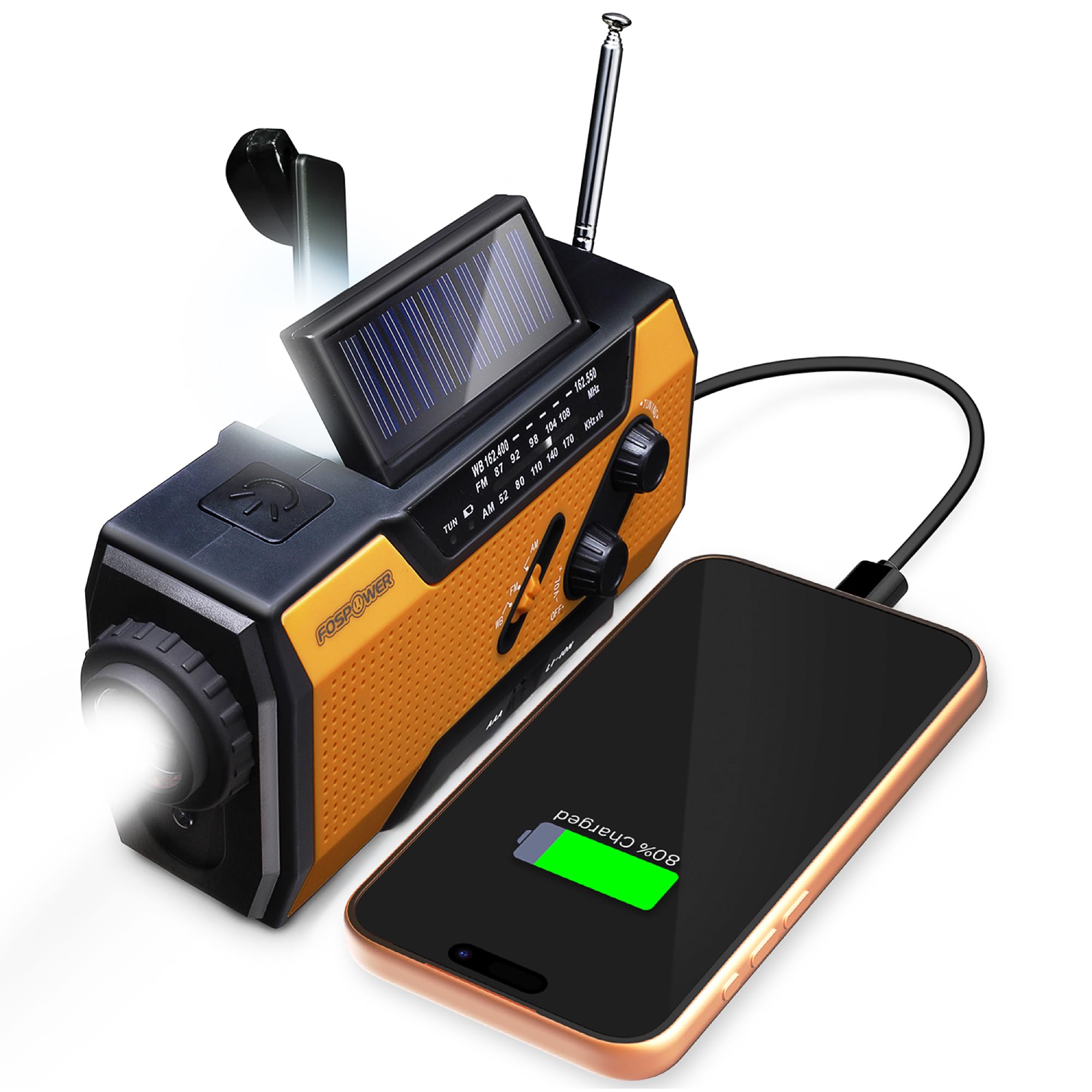
The FosPower A1 is the compact budget workhorse for emergency kits, pairing NOAA/AM/FM with solar, hand crank, AAA battery, and USB-C backup. It is smaller and less expensive than the larger-capacity top pick in this lineup, which makes it a natural fit for car kits, backpacks, and first-time storm-preparation setups. The shell feels solid for the price and the flashlight and reading light add practical coverage without making the unit bulky.

Radio, light, and crank functions do what the controls promise, and the speaker keeps weather alerts audible over typical household noise. AM and weather reception can be position-sensitive; rotating the unit or changing your grip can bring the signal back, while FM is less picky. The flashlight and reading light cover both broad and close-up tasks, and the hand crank works as a fallback when AAA batteries are not available.

This is a good match for first-time emergency-kit builders, car kits, and grab-and-go bags where compact size and entry price matter most. Phone charging is best treated as an emergency trickle; the 7400mWh internal cell is built for radio sessions, flashlight use, and a small top-up rather than multi-day phone power. Anyone focused on weather alerts and a go-bag radio will find the A1 fits the kit without taking over, while buyers who need several days of phone charging from one box should look toward the larger-capacity models in this category.

💡 Pre-charge the A1 over USB-C before a storm; solar and crank are maintenance options, not fast refills.

Pros

  • Tight footprint slips into go-bags, backpacks, and emergency kits without crowding.
  • Radio, lights, and hand crank respond as expected for a budget emergency tool.
  • Build quality feels solid for the price, with a body that suits car and gear-bag use.
  • Speaker output is loud enough for weather alerts to cut through common household noise.

Cons

  • AM and weather reception may drop when the antenna is not oriented optimally; moving the radio can restore it.
  • USB output can be inconsistent for phone charging; an emergency trickle, not a full power bank.
Our verdict

A budget-friendly go-bag radio with loud NOAA/AM/FM reception and flexible backup power; keep charging expectations modest and it fits a storm-season kit well.

Check Latest Price
3

Premium Reliability Choice

Midland ER310 Weather Radio

93 /100
Sound Score Outstanding

Key details

Extras
NOAA scan/alert, flashlight, dog whistle
Phone Charging
USB output
Reception And Tuner
AM/FM/NOAA with alert scan
Battery And Charging
6 AA, solar, crank, USB
View on Amazon

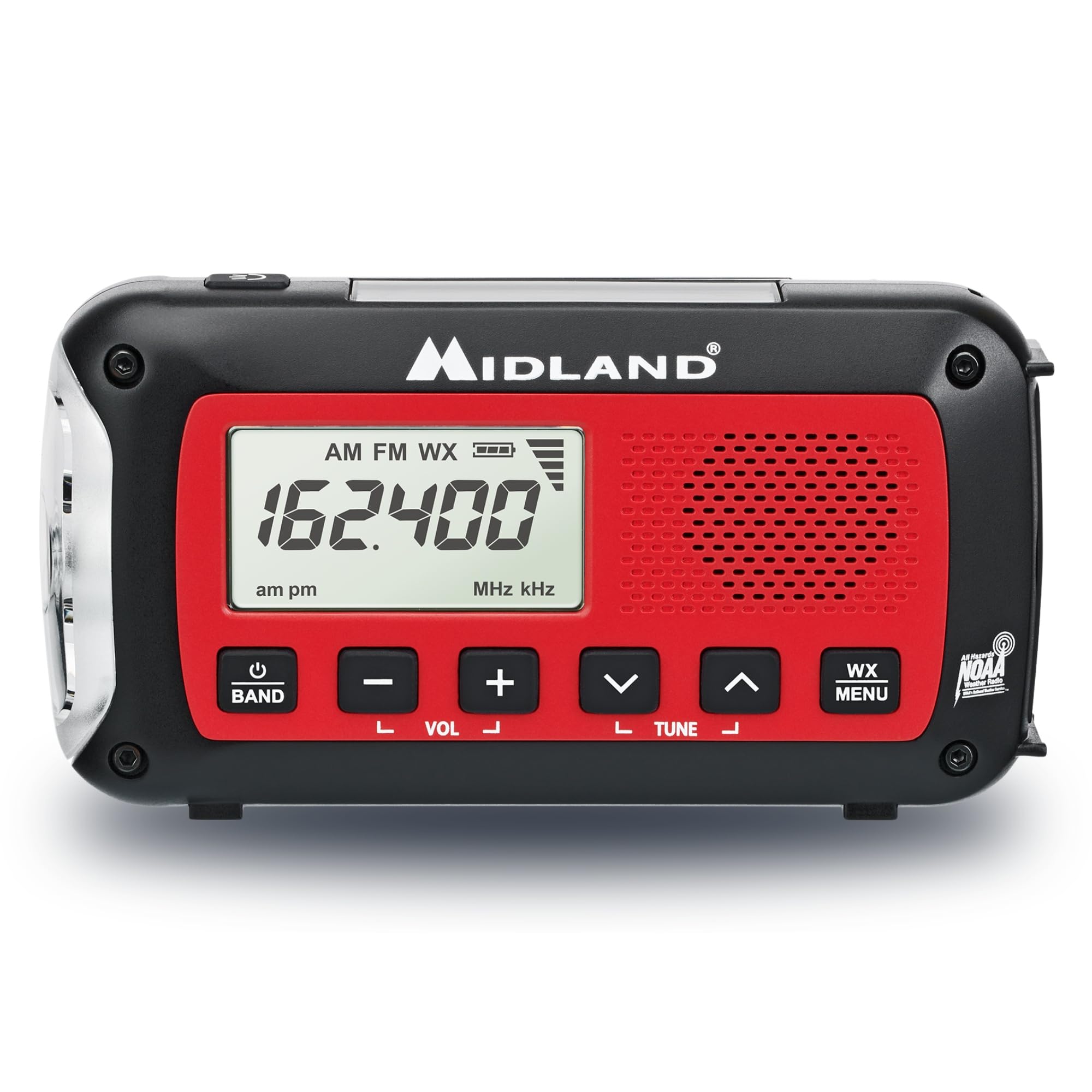
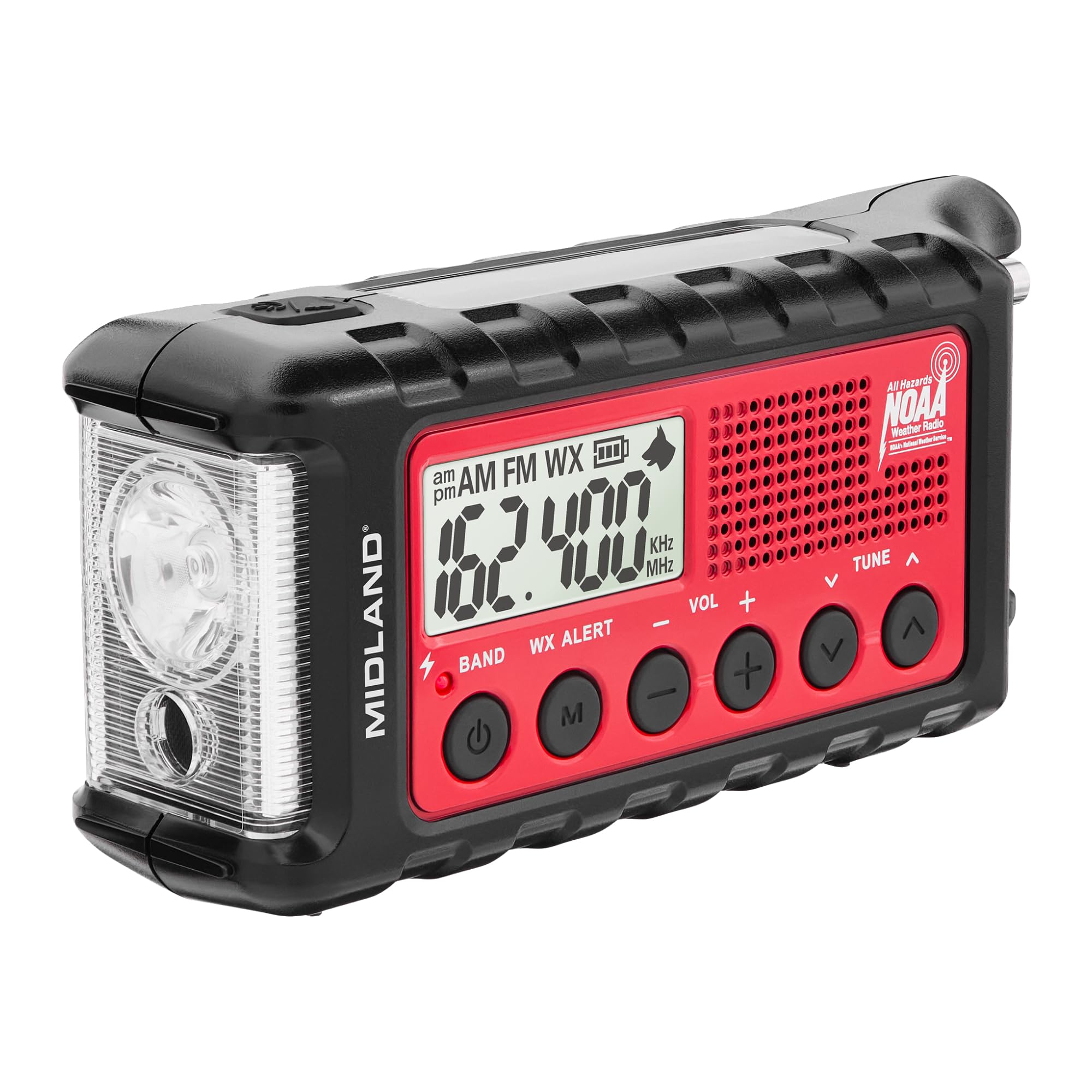
The ER310 is the full-size Midland for storm shelters, with a dedicated NOAA Weather Scan and Alert button and controls that don't demand a manual read during an outage. It shares the established brand construction with the slimmer Midland in this roundup, but keeps larger dials, audible alerts, and a more noticeable weather-alert system. The battery-capacity crown belongs elsewhere; this radio is about simple operation and a long service record.

For hurricanes and power outages, the NOAA scan locks onto the nearest weather channel and sounds an alert without manual searching. AM/FM reception holds up well in typical locations, and the audio is loud enough to understand over the sound of wind or rain. The built-in flashlight covers a dark room well enough for moving around, and the hand crank and solar inputs are useful top-ups, though USB or six AAs are the more dependable ways to bring it back to full charge.

This is the right radio for a storm shelter or a senior household member who wants one button for weather and no menu system. Battery charge management can vary, and some units drain faster than expected in standby, so it suits buyers who keep spare AAs nearby or check the charge before hurricane season.

Pros

  • Dedicated NOAA Weather Scan and Alert locks onto broadcasts and sounds warnings without manual tuning.
  • Clear, loud audio keeps weather alerts and AM/FM understandable when the room is noisy.
  • Spacious, legible controls work well for older hands and low-light operation.
  • Dense, solid build that feels at home in a storm shelter.

Cons

  • Full-size housing won't hide in a pocket or a minimal go-bag.
  • Premium price is a bigger ask for budget-focused households.
Our verdict

The ER310 is the storm-shelter radio for buyers who care more about NOAA alert automation and full-size controls than about power-bank capacity.

Check Latest Price
4

Best for NOAA Alerts & Digital Tuning

Raynic CR1009Ultra Radio

91 /100
Sound Score Outstanding

Key details

Extras
Auto NOAA alert, 3W flashlight
Phone Charging
USB output
Reception And Tuner
AM/FM/SW/NOAA, digital tuning
Battery And Charging
12000mAh, AC, solar, crank, USB
View on Amazon

The Raynic brings automatic NOAA alerts and an LCD digital tuner to a 12000mAh emergency radio, with six power inputs ranging from AC adapter to solar, crank, USB, internal cell, and 3 AAA backup. That combination makes it the digital-tuning alternative to the full-size Midland shelter radios, and the display takes the guesswork out of finding a weather broadcast.

Buyers who sleep through storm warnings are the clearest match: the automatic alert mode does the listening for you, and the LCD tuner lets campers or RV users enter AM/FM/SW frequencies directly. Standby battery drain can be significant, so this radio belongs in households that can put it on a monthly charge rotation before hurricane season; if you are likely to skip that check, you may find less reserve than expected when the lights go out.

The 12000mAh cell holds enough charge for long stretches of news and weather monitoring, and the USB output can top off a phone while the radio continues to run. Sound stays clear for talk programming, the 3W flashlight and reading lamp work independently of the speaker, and the controls are simple enough to operate in the dark.

Pros

  • Automatic NOAA alerts sound before a storm reaches your area.
  • 12000mAh internal battery handles long outages and can top off a phone.
  • LCD digital tuning lets you enter AM/FM/SW/NOAA frequencies directly.
  • Six power inputs including AC adapter allow flexible charging before and during outages.

Cons

  • Solar and hand-crank inputs are best treated as top-ups, not full recharges.
  • In weak-signal areas, weather and AM reception can be staticky; antenna position matters.
Our verdict

The Raynic is the digital-tuning pick among 12000mAh emergency radios, especially for users who want NOAA alerts to do the listening for them.

Check Latest Price
5

Best All-Rounder Power Bank

Leaton 10000mAh Weather Radio

91 /100
Sound Score Outstanding

Key details

Extras
Compass, flashlight, reading lamp
Phone Charging
USB-C output
Reception And Tuner
AM/FM/NOAA, manual tuning
Battery And Charging
10000mAh, solar, crank, USB-C
View on Amazon

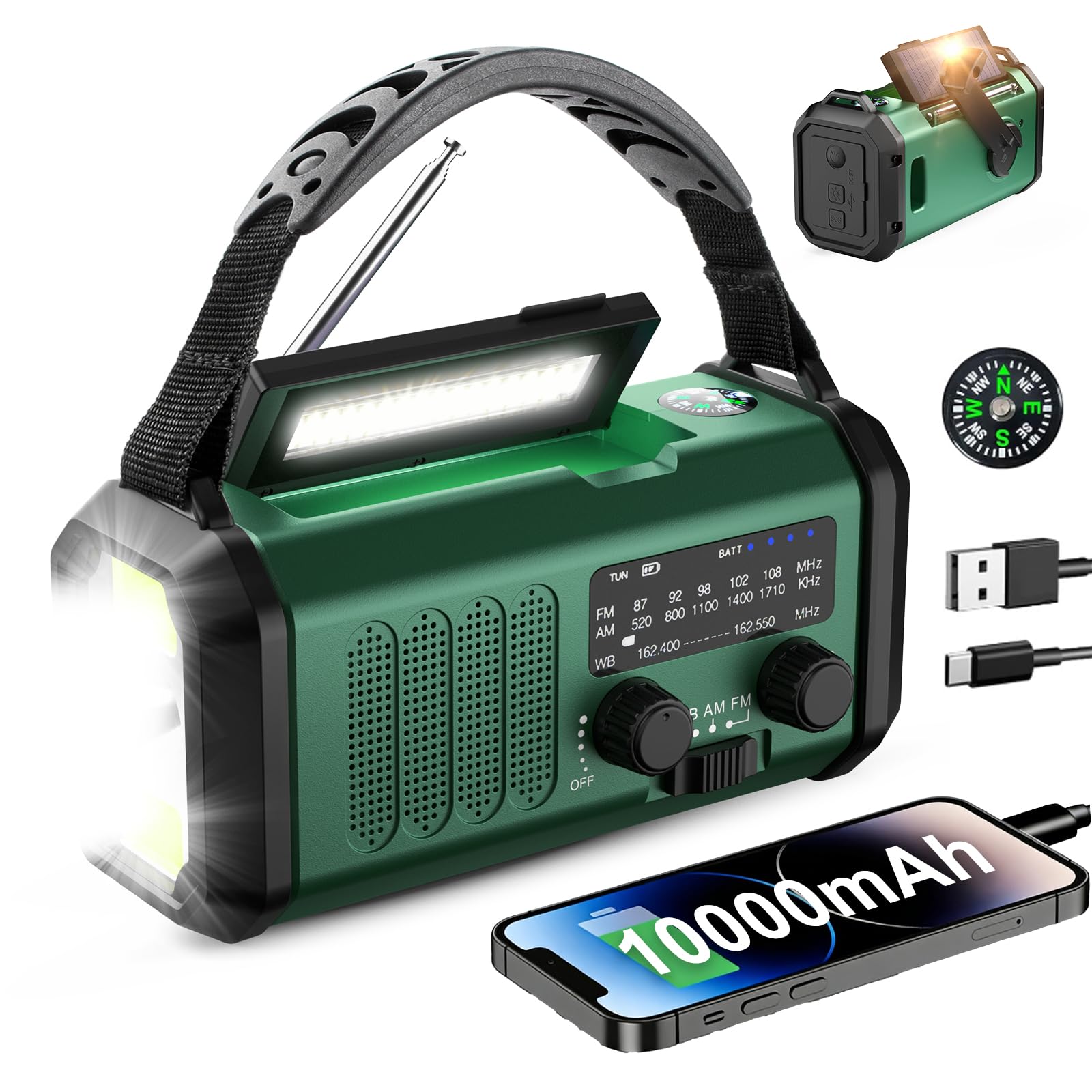
The Leaton combines a 10000mAh battery, IPX6 splash resistance, and a built-in compass in one unit that fits a family emergency kit. Its reserve is smaller than the category's leading 12000mAh radios, but the splash-resistant shell and compass give it a practical edge for households that want one device to handle radio, light, and phone charging. The package covers navigation and lighting without extra accessories.

The radio, flashlight, and USB-C charging work as one unit during outages. A full pre-charge provides a long reserve for radio and flashlight use, and the 3-mode flashlight plus reading lamp cover wide-area and close-up lighting. The build holds up to regular trips in and out of a go-bag. AM/FM/NOAA reception stays clear on the stations you set, and the speaker carries weather bulletins clearly enough to hear over household noise.

Manual NOAA tuning means you must set your local weather band station ahead of time; this radio won't issue automatic SAME alerts for your county. If location-specific warnings are a requirement, the Leaton is the wrong tool. For campers, RV owners, and families building a power-outage kit who don't mind setting the frequency once, the 10000mAh reserve, compass, and IPX6 body make it a strong mid-tier choice.

Pros

  • A 10000mAh reserve powers phone top-ups and lengthy radio and flashlight use during outages.
  • Compact, portable body fits in camping bins and emergency kits without adding weight.
  • AM/FM/NOAA reception produces clear speech for weather bulletins and news.
  • For the asking price, the radio, light, compass, and charging functions deliver strong value.

Cons

  • Solar and hand-crank charging are maintenance inputs; USB-C pre-charge is the practical way to fill the battery.
  • Some units can develop crank or charging issues over time, so checking the battery before a storm is worthwhile.
Our verdict

The Leaton is the family-kit choice among high-capacity weather radios, pairing IPX6 protection and a compass with enough reserve to cover an extended outage.

Check Latest Price
6

Best Built-In Charging Cables

yesiwtc Crank Radio w/Cables

91 /100
Sound Score Outstanding

Key details

Extras
Flashlight, 6-LED reading light
Phone Charging
Lightning, USB-C, Micro
Reception And Tuner
AM/FM/NOAA
Battery And Charging
7400mWh, solar, crank, USB-C, AAA
View on Amazon

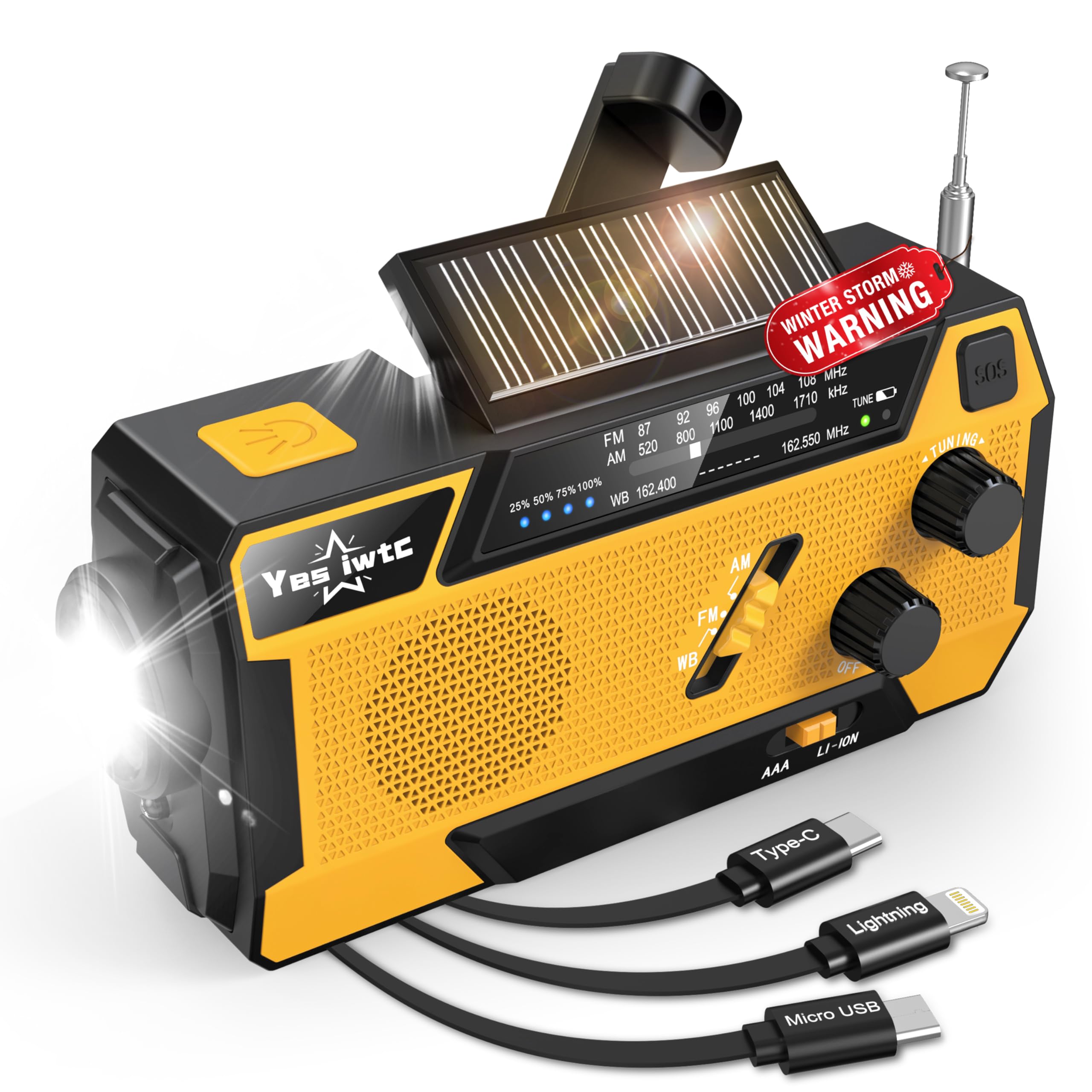
The yesiwtc Crank Radio is the mixed-cable household's emergency grab: Lightning, USB-C, and Micro-USB leads live right in the body, so there are no adapters to hunt for when the power goes out. AM/FM/NOAA coverage, a 3-mode flashlight, and a 6-LED reading light fit into a shell that feels dense and solid for the price.

The 7400mWh cell stores enough for a long radio session and a partial phone top-off, which puts the built-in cables to work sooner than a bigger reserve with no cable attached. It is not a 12000mAh power bank, but for this size it keeps the radio going through an evening of outage listening. Charging over USB-C before a storm is the fastest path to full power; the hand crank adds reserve on the move and the AAA slot extends the run beyond the internal cell.

This is a go-bag or apartment-kit radio for families with mixed phones who want one unit that covers NOAA/AM/FM alerts, a bright light, and a cable for whatever device is in the room. The compact shell is the tradeoff: cable flexibility and a small storage footprint are the priority; big controls and solar-first charging are not. Buyers with large hands or solar-heavy expectations should consider the higher-capacity pick in this set.

💡 Keep the internal cell topped off over USB-C before storing it; the hand crank and solar panel are reserve power rather than fast-charge options.

Pros

  • Built-in Lightning, USB-C, and Micro-USB cables make it a practical emergency-kit addition for mixed-phone families.
  • Dense, solid shell feels durable enough for a go-bag.
  • Speaker output is loud enough for alert tones and basic listening.
  • Flashlight and reading light are both bright for close tasks or dark rooms.

Cons

  • Compact shell leaves a small FM dial and tightly packed controls, which can be awkward for larger hands.
  • Solar panel output is a slow top-up; USB-C is the more practical charge path before an outage.
Our verdict

A cable-first, budget-friendly NOAA radio for mixed-device homes that don't mind a compact layout and will pre-charge before the next outage.

Check Latest Price
7

Emergency Grab-Bags

Emgykit Hand Crank Radio

91 /100
Sound Score Outstanding

Key details

Extras
80 dB SOS, 3-LED flashlight
Phone Charging
USB output
Reception And Tuner
AM/FM/NOAA
Battery And Charging
2000mAh, solar, crank, USB-C
View on Amazon

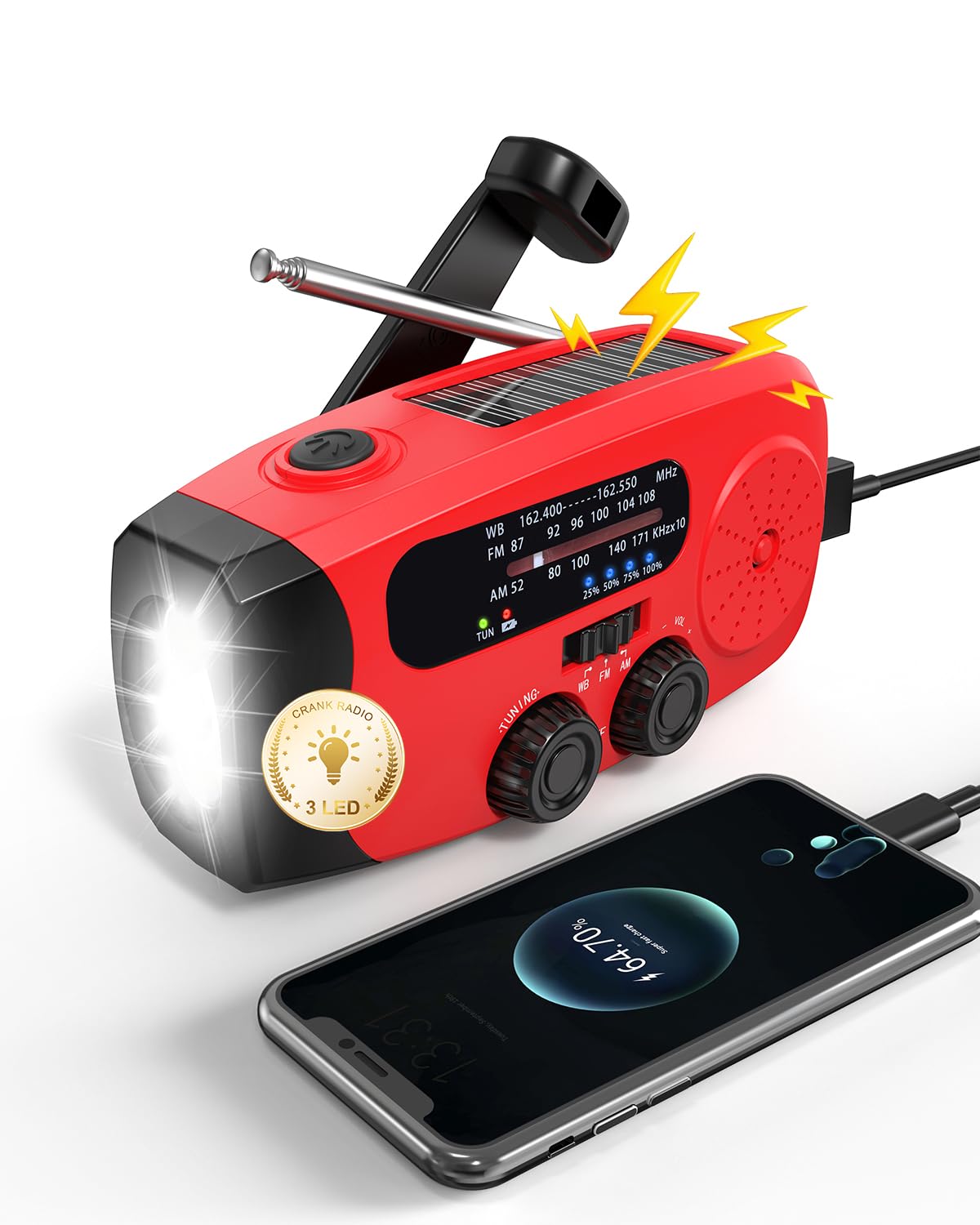
The Emgykit Hand Crank Radio is a capable ultra-budget starter for an emergency grab-bag, pairing AM/FM/NOAA reception with a bright 140-lumen flashlight and an 80 dB SOS alarm. Multiple input methods—USB-C, solar, and hand crank—cover the basics without pushing the price up, and the audio stays clear enough for weather updates. It sits below the main picks because it prioritizes low cost and compact size over reserve capacity and ruggedness; the right buyer is someone who wants a pocketable backup for a car, tent, or grab-bag during short outages.

Pros

  • Multiple input options—USB-C, solar, and hand crank—keep the radio topped up before an outage.
  • The compact body feels more substantial than the price suggests, fitting easily into a go-bag.
  • The 140-lumen flashlight is strong enough to use as a primary light during a power cut.

Cons

  • The antenna housing can be damaged when the radio is stuffed into a packed bag; pack it carefully.
  • The 2000mAh cell keeps the radio going for short outages, but phone charging is a trickle at best.
Our verdict

For a pre-charged grab-bag, car kit, or tent setup that needs basic NOAA alerts and a flashlight on short notice, this is a budget-friendly emergency companion.

Check Latest Price
8

Compact Emergency Kits

PRUNUS J-369 Crank Radio

90 /100
Sound Score Outstanding

Key details

Extras
SOS alarm, flashlight, reading lamp
Phone Charging
Micro USB output
Reception And Tuner
AM/FM/NOAA
Battery And Charging
11100mWh, AA, crank, solar
View on Amazon

The PRUNUS J-369 is the compact, AA-friendly option in this group. It delivers solid AM/FM/NOAA reception, a usable flashlight and reading lamp, an SOS alarm, and solar, crank, and Micro USB power inputs in a shell that fits small emergency kits without adding bulk. Build quality is above what the budget price suggests. This radio is best for users who want AA compatibility and are willing to store spare batteries; for a compact grab-and-go kit, that makes it a sensible addition.

Pros

  • Build quality feels solid for the price, so it survives being tossed in a go-bag.
  • Useful right out of the box for storms, outages, and camping trips.
  • AM/FM/NOAA reception pulls in stations clearly enough for weather updates.

Cons

  • 3000mAh internal cell is a radio reserve, not a phone power bank.
  • Built-in charging can be hit-or-miss, making AA batteries the practical backup.
Our verdict

For an AA-first emergency kit, this compact radio is a cost-effective fit.

Check Latest Price
9

Compact Car Kits

Midland ER40 Weather Radio

85 /100
Sound Score Excellent

Key details

Extras
NOAA alert, flashlight, LCD display
Phone Charging
USB output
Reception And Tuner
AM/FM/NOAA
Battery And Charging
2600mAh, solar, crank, USB
View on Amazon

The ER40 is the compact Midland for car kits and small spaces: NOAA weather alerts are easy to reach, the flashlight is genuinely useful, and the housing feels dense enough for a packed bag. It is the smaller alternative to the full-size Midland in this lineup, with a trimmed feature set, and budget rivals with bigger batteries undercut it on value. For a grab-and-go radio that favors Midland's alert behavior over raw capacity, this fits; for a shelter-in-place power hub, look to the bigger options.

Pros

  • Dense compact build suits a car glovebox, go-bag, or small household emergency kit.
  • NOAA alerts are easy to reach, so the weather-radio core works without fuss.
  • Weather-band reception holds up well in a compact body, and NOAA alerts are simple to pull up.

Cons

  • Crank and solar recharging are slow enough that USB pre-charging is the effective routine before an outage.
  • The 2600mAh battery is small next to power-bank radios, so off-grid listening time is limited without a USB recharge.
Our verdict

For a compact car kit that favors Midland's NOAA alert behavior over power-bank capacity, this is the size to grab. Pack it as a focused weather-alert companion, not a household power reserve.

Check Latest Price

How to Choose

Reception and Tuner Ease

NOAA weather radio is a narrowband FM signal, not a strong AM/FM broadcast. It works best with line of sight toward the transmitter, so extended antenna length and a spot near a window matter more than brand. Some models have a dedicated weather scan button; others require manual tuning, which is harder to operate in the dark.

The hidden trade-off is position sensitivity: moving a radio a few feet can make or break a weather alert. If you plan to rely on NOAA warnings, pick a model that stores weather frequencies and has a one-touch scan rather than a crowded analog dial.

Battery and Charging

Battery capacity decides how long the radio can run and how much it can top off a phone, but the way you fill it matters just as much. Solar panels and hand cranks deliver small amounts of power over long periods; they are maintenance inputs, not fast refueling. USB is the only practical way to fill a large internal battery before a storm.

That means a 12000mAh radio is only an advantage if you remember to pre-charge it. Check the model's standby behavior: some units drain themselves in weeks, so schedule a charge before every storm season or after long storage.

Phone Charging Output

The mAh rating says how much energy is stored, but the USB output determines whether your phone will actually accept it. Many compact radios deliver around 1A, which modern phones may treat as too slow and refuse to charge from at all. Test the radio's USB port with your specific phone before an emergency, especially if your phone draws more power than usual.

Built-in Lightning, USB-C, and Micro-USB cables are a practical advantage because they remove the need to pack cords. The trade-off is that a built-in cable limits where and how the radio is stored, and cable length is usually short.

Build and Durability

The antenna, crank, and housing are the exposed mechanical parts on any emergency radio. A telescoping antenna can bend or crack if a radio is packed loosely in a bag, and a crank that feels rough at first may worsen with use. Compact models are easier to store but often have smaller control surfaces and more fragile antennas.

Look for a radio with a recessed antenna channel or a crank that folds flush, plus a case that does not flex when you turn the crank. For a go-bag, a boxier profile protects antenna stowage better than a slim one.

Lighting and Alerts

During an outage, the flashlight and reading lamp are used more often than the tuner, so their beam quality and placement matter. A separate reading lamp that rotates or angles can illuminate a table without blinding everyone in the room. An SOS strobe is a distress tool, not a convenience, and a loud alert tone only helps if the weather band is easy to activate.

If you rely on storm warnings, automatic NOAA alert mode is the difference between a radio that informs you and one that just plays static. Make sure the alert toggle is labeled clearly enough to find in the dark without turning on the flashlight.

Frequently Asked Questions