9 Best Floorstanding Speakers of 2026: Real Pairs for Real Rooms

Understand which floorstanding speakers are sold as true pairs, which need a subwoofer, and which fit modest amplifiers before you buy.

Floorstanding speakers look like the easiest path to bigger sound, but two details get overlooked until after purchase: whether the listing is for one tower or a pair, and how much deep bass the drivers actually produce. Those two questions decide whether a speaker is a deal or a project.

A well-reviewed floorstander sold individually can double in price when you buy a second. At the same time, dual 6.5-inch woofers and passive radiators often deliver punchy mid-bass but still need a subwoofer for movie LFE. Matching the speaker to your room size, amplification, and listening habits matters more than the advertised cone count.

The picks in this guide are organized around those real-world choices: pairs vs. singles, efficiency vs. power needs, and music vs. home theater. Each recommendation is a usable match for a specific setup, not a vague list of specifications.

About the Sound Score: This comparative score is calculated from a product's published customer rating and review volume. It is not a laboratory measurement or a hands-on test result.

1

Best Overall

Klipsch R-610F Pair

92 /100
Sound Score Outstanding

Key details

Impedance
8 ohms
Woofer Setup
Dual 6.5-inch
Configuration
Pair
Bass Extension
Sub often added
View on Amazon

With a 94dB sensitivity rating, the R-610F pair gets loud on far less power than typical floorstanding speakers. The 1-inch aluminum LTS tweeter on the 90x90 Tractrix horn delivers crisp, articulate highs, and the dual 6.5-inch copper-spun woofers keep instruments and voices present at low listening levels. The horn waveguide also controls dispersion, keeping the sound focused forward and reducing side-wall reflections in smaller rooms. That combination gives the R-610F a lively, immediate character that works well for dialogue-heavy movies and acoustic music, and it means a modest AVR or vintage receiver can drive them without strain.

Pair packaging is a bigger deal in this category than it should be, and the R-610F ships as two towers from the start. The 8-ohm load is easy on budget receivers, and the cabinets feel solid with a finish that reads above the price point. Binding posts accept bare wire or banana plugs, so hookup is easy. Set the speakers a few feet from the wall, connect the posts, and the balance is immediate; the horn keeps voices articulate without requiring the volume knob to be pushed into uncomfortable territory.

The R-610F is for the buyer moving from bookshelf speakers or a soundbar to real floorstanding presence without upgrading a receiver or adding external amplification. The horn voicing is forward and bright, so fans of warm, laid-back treble should audition before committing. The dual 6.5-inch woofers deliver solid musical bass, but the lowest movie-theater effects call for a subwoofer; buyers who want floor-shaking low end from the towers alone will need larger drivers.

Compared with feature-laden towers, the R-610F is deliberately uncomplicated: no height channels, no wireless modules, no powered subwoofer built into the cabinet. That simplicity keeps the cost down and directs the engineering toward the crossover and driver integration. This is not a speaker that tries to cover every job; it handles two-channel music and home-theater fronts without gimmicks. The tradeoff is that peak power ratings should be read with a skeptical eye; the continuous rating is the more realistic reference for daily listening.

💡 In a home-theater setup, set the receiver's crossover to 80Hz and let a subwoofer take over the lowest effects.

Pros

  • Horn-loaded tweeter keeps dialogue and instruments clear at low volume, which suits modest gear and late-night listening.
  • True pair packaging covers both channels in one purchase, so budget buyers are not shopping for a second tower later.
  • 94dB sensitivity pairs well with vintage receivers or low-power integrated amplifiers, keeping the amplifier requirement modest.
  • Solid cabinet build and a finish that reads above the entry-level price point for the category.

Cons

  • Clipping can occur at high volume with modest amplification; staying near the continuous rating keeps things clean.
  • Low-bass output is modest for action-movie effects; a subwoofer handles the deepest octave in home theater.
Our verdict

The R-610F pair is the natural starting point for budget floorstanding sound: high efficiency, true pair packaging, and a lively midrange that flatters modest receivers.

Check Latest Price
2

Best for Immersive Home Theater

Klipsch R-26FA Pair

92 /100
Sound Score Outstanding

Key details

Impedance
8 ohms
Woofer Setup
Dual 6.5-inch
Configuration
Pair
Bass Extension
View on Amazon

Built-in up-firing Dolby Atmos drivers make this the floorstanding pair that adds height channels without separate modules or ceiling speakers. Each tower pairs a 1-inch aluminum compression tweeter with a Tractrix horn and dual 6.5-inch copper-spun woofers, plus the elevation driver on top. The result is a crisp, room-filling soundstage with dialogue that stays distinct in dense movie mixes, and height effects that carry overhead convincingly in a 5.1.2 or larger setup.

The 8-ohm load and 100W continuous/400W peak handling make the pair an easy match for mid-range AVRs. The copper-spun woofers and horn give the speakers a distinctive look, and the cabinets feel substantial. Because the height driver is built into each tower, this is a cost-effective way to get Atmos in a floorstanding format rather than buying separate up-firing modules.

This pair works best for home-theater buyers building a 5.1.2 or larger system who want floorstanding mains and Atmos channels in one package. Heavy floorstanding cabinets need a second person during placement. Strict two-channel listeners who never play Atmos content should consider a simpler tower pair, because the integrated height drivers add cost and weight they won't use.

Pros

  • Crisp, room-filling sound with clear dialogue and integrated height effects.
  • One-box Atmos value: no separate modules or ceiling speakers required.
  • Distinctive Klipsch look with copper-spun woofers and a substantial cabinet.

Cons

  • Cabinets are heavy and bulky; placement can require a second person.
Our verdict

For a floorstanding home-theater pair that includes Atmos height channels without separate modules, this is the one-box answer; two-channel purists should skip the height drivers.

Check Latest Price
3

Best Full-Range Music Towers

Fluance XL8FW Pair

89 /100
Sound Score Excellent

Key details

Impedance
8 ohms
Woofer Setup
3-way, 8-inch down-firing
Configuration
Pair
Bass Extension
35Hz
View on Amazon

The XL8FW is a passive 3-way floorstander with two down-firing 8-inch subwoofers built into each tower, so the low end comes from the speaker itself rather than a separate box. It ships as a pair, which removes the single-tower surprise found elsewhere in this category. The silk-dome tweeter and woven fiber mids deliver natural, transparent sound, and the internally braced cabinet keeps resonance low.

Rated from 35Hz to 25kHz into an 8-ohm load, the pair works with a typical receiver or integrated amp without exotic power requirements. Magnetic grilles and floor spikes are the practical details that make the size easier to live with. Fluance's lifetime support is a useful safety net for a passive speaker purchase.

Two-channel music listeners with an existing amp or receiver are the natural audience; they get full-range bass without adding a sub for stereo. The built-in drivers are tuned for balance rather than chest-thumping impact; heavy LFE is outside their brief. Compared with the slimmer high-res option in this set, the Fluance offers deeper integrated bass in exchange for a larger cabinet. The furniture-grade finish also matters in rooms where speakers are part of the decor.

Pros

  • Natural, transparent sound with minimal cabinet resonance across vocals and instruments.
  • Furniture-grade cabinets look at home in a living room rather than a dedicated listening space.
  • Solid internal bracing and floor spikes deliver stable placement and good value for a true 3-way pair.

Cons

  • Requires a separate receiver or integrated amp; no amplifier is built in.
  • A dedicated subwoofer still helps for the very lowest movie effects.
Our verdict

For two-channel listeners with a receiver or integrated amp, this pair delivers integrated musical bass in a furniture-grade cabinet.

Check Latest Price
4

Best Premium Hi-Fi Tower

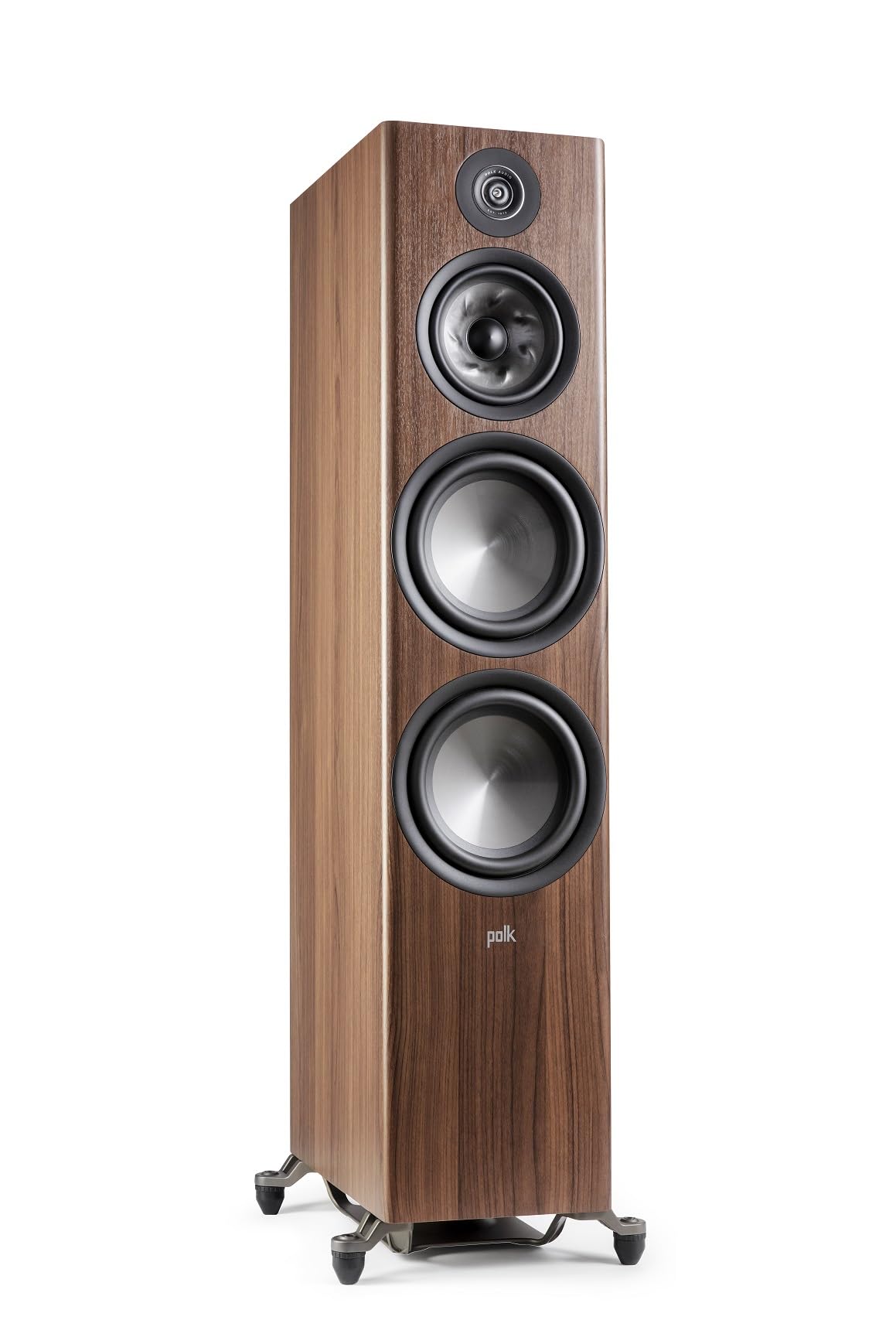
Polk Reserve R700

87 /100
Sound Score Excellent

Key details

Impedance
Woofer Setup
Dual 6.5-inch plus 8-inch
Configuration
Single tower
Bass Extension
Down-firing Power Port
View on Amazon

The R700 is Polk's high-res Reserve upgrade in tower form. A 1-inch Pinnacle ring-radiator tweeter, dual 6.5-inch Turbine Cone woofers, and dual 8-inch bass drivers place it a clear step above the entry-level Monitor sound. Dolby Atmos and IMAX Enhanced compatibility keep it useful for home-theater setups as well as stereo listening.

Sound is accurate and high-resolution, with strong bass and clear highs. The down-firing Power Port 2.0 with X-Port keeps the dual 8-inch bass drivers composed at moderate volumes, while the ring-radiator tweeter adds top-end detail that Polk's older designs hold back. Hi-Res Certified status matches the speaker with high-resolution streaming sources.

This is aimed at Polk Monitor owners who want the brand's high-res step-up for two-channel listening. It assumes the amplifier question is already settled, and it expects a buyer to check cabinet corners at delivery. The modern cabinet and down-firing port layout also make placement easier than rear-ported alternatives.

Upper-tier value comes through in the way the R700 balances resolution and bass weight without demanding flagship money. That balance separates it from budget towers and makes it a realistic next step for existing Polk fans. It is a premium-priced tower that earns its position through driver engineering rather than marketing extras.

Pros

  • Accurate, high-resolution sound with strong bass and clear highs.
  • Upper-tier performance at a price below flagship towers.
  • Attractive modern cabinet with down-firing Power Port bass.

Cons

  • Sold as a single tower; a stereo pair requires two orders.
  • A quality amplifier is required to reach full dynamics; modest receivers leave it short.
Our verdict

The R700 pairs audiophile driver hardware with musical bass at a price that undercuts flagship towers.

Check Latest Price
5

Best Powered Convenience

Fluance Ai81 Powered

83 /100
Sound Score Excellent

Key details

Impedance
Woofer Setup
Dual 6.5-inch
Configuration
Powered pair
Bass Extension
Sub out
View on Amazon

The Ai81 is one of the few floorstanders in this group that arrives as a pair and powers itself: each cabinet carries a 150W amp, and the back panel brings RCA, optical, Bluetooth 5, and a subwoofer out. No receiver needs to sit between the source and the speaker.

The cabinets have real weight, setup stops at connecting source cables and plugging in, and stereo imaging stays clean across a medium room. The 1-inch tweeter and dual 6.5-inch woofers give vocals and instruments room to breathe, and Bluetooth 5 streaming has more substance than a portable speaker.

This pair fits a minimalist turntable or TV setup where a receiver would be clutter, and the subwoofer out leaves room to expand later. The bundled remote feels flimsy, and the low end is a mid-bass foundation — the matching sub via the sub out is the intended path to deeper lows. Anyone with a separate integrated amp already in the chain will get less value from the built-in amp.

💡 The optical input is the cleanest connection for TV audio; Bluetooth 5 works for quick streaming from a phone.

Pros

  • Powered pair needs no receiver or amplifier
  • Clean stereo imaging in a well-built cabinet with enough weight to stay planted.
  • RCA, optical, Bluetooth 5, and subwoofer out cover turntable, TV, and phone connections.

Cons

  • One optical and one RCA input; multi-source setups need an external selector.
  • No built-in phono preamp; a turntable without its own phono stage needs an extra box.
Our verdict

For a listener who wants a true tower pair without a receiver, the Ai81 delivers a self-contained stereo in two boxes, suited to a minimalist room where a receiver would be extra furniture.

Check Latest Price
6

Budget Home Theater

Polk T50 Tower

92 /100
Sound Score Outstanding

Key details

Impedance
6 ohms
Woofer Setup
6.5-inch plus dual passive
Configuration
Single tower
Bass Extension
Dual passive radiators
View on Amazon

The Polk T50 brings warm, room-filling Polk voicing to the budget tower segment — clear highs and mids, solid build quality for the price, and easy setup with a clean look that plays well in home-theater systems. It also suits stereo music at moderate volumes. Rear passive radiators handle part of the low-end duties, though deep movie LFE still calls for a subwoofer. It ships as a single cabinet, so a stereo pair costs twice the entry price — acceptable for buyers building one speaker at a time, though the top Klipsch pick delivers a genuine pair for similar money.

Pros

  • Clear highs and mids with a warm, room-filling balance.
  • Exceptional value in the entry-level tower segment.
  • Good-looking, easy to set up, and home-theater friendly.

Cons

  • First-time owners may mistake the rear passive radiators for non-working drivers.
  • Under sustained use, durability can vary between units; blown drivers or cracked grilles are possible.
Our verdict

Best for budget home-theater builders who value Polk's warm voicing and prefer to grow their speaker system in stages.

Check Latest Price
7

Budget True Pair

Dayton Classic T65 Pair

86 /100
Sound Score Excellent

Key details

Impedance
Woofer Setup
Dual 6.5-inch
Configuration
Pair
Bass Extension
View on Amazon

Dayton Audio's T65 floorstanders give you a real pair of towers from a specialty audio brand: a 1-inch silk-dome tweeter, dual 6.5-inch poly woofers, gold-plated 5-way binding posts, and 150W power handling at an entry-level price. The voicing is clear and substantial for stereo and home-theater duty, and the towers are easy to match with modest amplifiers. The utilitarian finish is functional but too plain for a design-focused room, and occasional QC variance is what keeps this pair behind the top pick; check both towers after unboxing to confirm the internal connections are tight. For a strict budget buyer seeking a genuine pair, it's a smart tradeoff.

Pros

  • Clear vocal and bass reproduction for a budget floorstanding pair.
  • A genuine pair at a budget-friendly price from a specialty audio brand.
  • Sturdy build and broad amplifier compatibility make it easy to integrate into a system.

Cons

  • Plain utilitarian cabinet is better suited to a listening room than a decor-conscious living space.
  • Loose internal wiring can occur after shipping, so inspect both towers before setup.
Our verdict

A smart low-end buy when the priority is a genuine pair of towers for stereo music and home-theater use.

Check Latest Price
8

High-Res Streaming

Sony SS-CS3 Pair

87 /100
Sound Score Excellent

Key details

Impedance
6 ohms
Woofer Setup
5.12-inch woofer
Configuration
Pair
Bass Extension
Sub often added
View on Amazon

The Sony SS-CS3 pair opens up high frequencies with a dedicated super tweeter, and the stereo image stays clear across the mid-range. The slim cabinet fits narrow rooms without dominating the space, and the asking price is fair for a genuine pair of towers. It sits behind the top Klipsch pick in low-end weight and efficiency: bass is light unless a powered sub joins the system, and low-watt tube amps will not drive it well. That makes it a fit for high-res music streaming and tighter floorstander placements, not for bass-heavy home theater without extra gear.

Pros

  • Crystal-clear, open high frequencies with strong stereo imaging.
  • Good value as a complete pair at a mid-range price.
  • Slim, attractive cabinet suits tighter floorstanding placements.

Cons

  • Lower sensitivity than horn-loaded rivals means low-watt tube amps will not get full output.
  • Bass stays light until a powered subwoofer joins the system.
Our verdict

Choose the Sony SS-CS3 pair when high-res streaming and a slim footprint matter more than full-range bass; plan on adding a subwoofer and a moderately powered amp.

Check Latest Price
9

Budget Home Theater

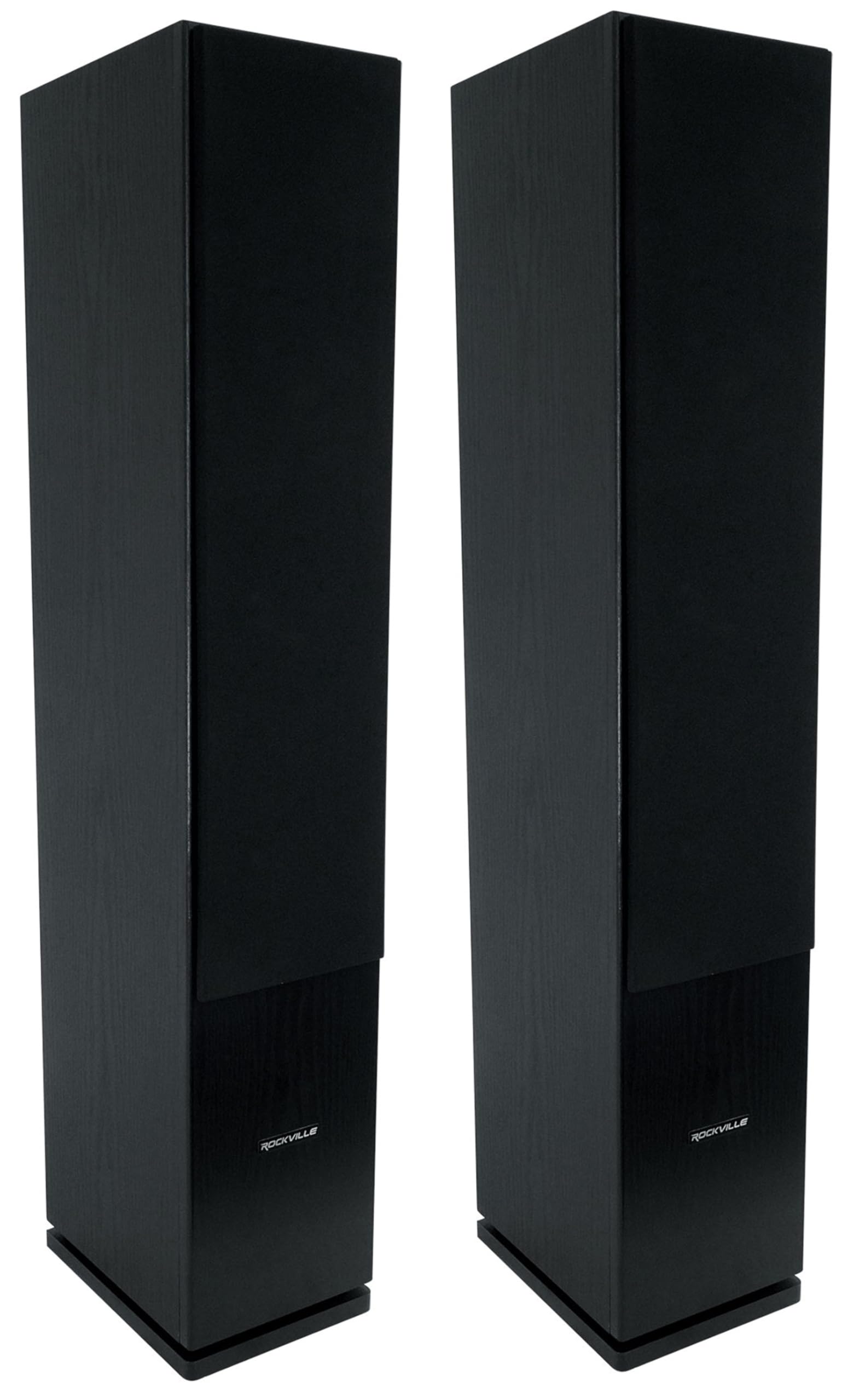
Rockville RockTower 68B

85 /100
Sound Score Excellent

Key details

Impedance
8 ohms
Woofer Setup
Dual 6.5-inch plus mid
Configuration
Pair
Bass Extension
30Hz
View on Amazon

A high-output 3-way tower pair with 500W peak handling and budget-friendly pricing gives the Rockville RockTower 68B serious home-theater muscle. Dual 6.5-inch woofers and a 6.5-inch midrange fill large rooms with distortion-free output, while the vented MDF cabinets and gold 5-way binding posts look more expensive than they are. The tradeoff is treble that lacks audiophile refinement: this pair suits TV and movie playback better than critical music listening. For buyers who care about output per dollar rather than brand prestige, the Rockvilles deliver a lot of speaker for the money.

Pros

  • A high-output 3-way design with 500W peak handling fills large rooms with powerful, distortion-free sound.
  • Vented MDF cabinets and gold 5-way binding posts feel sturdy and look more expensive than budget expectations.
  • A true pair of towers simplifies starter home-theater setup and adds immediate budget value.

Cons

  • Large tower cabinets consume floor space, so tight listening areas may not suit them.
  • Treble lacks audiophile refinement, which limits critical two-channel music listening.
Our verdict

For a budget home-theater setup that needs volume across a large room, this pair is worth serious consideration.

Check Latest Price

How to Choose

Single or Pair

Tower speakers are channels, not systems. Many budget and mid-range models list one cabinet, and a tempting sale price can double when you need a second. Confirm the product title, box contents, and terminals before checkout.

Home theater needs at least front left and right channels. A single tower can work as a center, but for stereo you need two cabinets. If your receiver has five or more channels, plan all channels before committing.

Woofer Count and Size

More woofers move more air, but cone count does not equal bass depth. Output below 50Hz depends on cabinet volume, port tuning, and driver excursion.

A dual 6.5-inch tower can sound punchy at moderate levels and still fade on deep synth or explosion effects. If your content has serious low end, treat the subwoofer as part of the system, not an option.

Sensitivity and Amp Match

Sensitivity says how loud a speaker plays with one watt at one meter, so it controls how much power your amplifier needs. A 94dB speaker can reach high volumes with 20 clean watts, while an 88dB speaker needs roughly double the power for the same output.

Low-sensitivity towers overload modest receivers before they get loud, causing clipping that can damage tweeters. High-sensitivity horn designs pair well with low-watt amps but can expose amplifier noise at low volumes.

Impedance Compatibility

Impedance is the speaker's resistance and changes with frequency. Most 8-ohm towers are safe for any receiver; a 6-ohm speaker can draw more current, pushing a budget amp into thermal protection.

If your receiver is not rated for 6-ohm loads, keep volume moderate or choose 8-ohm towers. Impedance matters less for sound quality and more for not overworking the amplifier.

Bass Extension and Subwoofers

Bass extension is where output starts to drop, not where bass stops. Passive radiators and down-firing drivers can add weight, but they still roll off before a powered sub reaches the deepest movie and synth tones.

Read the frequency response carefully: a tower rated 35Hz likely has shallow output at that point, not flat response. For acoustic music that is fine; for action films, a sub is a reliable way to fill the bottom.

Frequently Asked Questions