4 Best Google Assistant Speaker of 2026: Built-In Voice Control

Find a Google Assistant speaker with voice control actually built in, plus the right sound and size for your room, without the setup surprises.

Shopping for a Google Assistant speaker looks simple until a listing says 'compatible' instead of 'built in.' That one word changes the whole setup: a compatible speaker still needs a separate assistant device to hear your voice, while a built-in model works on its own. The same listings often mix US and international units, which explains a lot of post-purchase confusion about language defaults and plug types.

The bigger trade-off is audio. A compact puck can handle a kitchen, but it won't fill a living room; a larger speaker with real drivers costs more and may carry more software quirks. Most buyers end up choosing between convenience at a lower price and sound quality for a larger space.

The right pick comes down to where you'll use it and whether you want hands-free 'Hey Google' from the speaker itself. Match that, and the rest is just how much bass your room needs.

About the Sound Score: This comparative score is calculated from a product's published customer rating and review volume. It is not a laboratory measurement or a hands-on test result.

1

Best Overall

Google Nest Audio

85 /100
Sound Score Excellent

Key details

Multi-Room
Chromecast multi-room support
Audio Specs
30W woofer, tweeter
Form Factor
Corded shelf speaker
Connectivity
Wi-Fi, Bluetooth, Chromecast
View on Amazon

The Nest Audio fills a living room from a single cabinet. Its 30W woofer-and-tweeter arrangement delivers clear vocals, present mids, and enough low-end weight for everyday music without needing a second speaker. Google Assistant is built into the same shell, so voice control and audio streaming work as one function: ask for a playlist, set a timer, or change volume directly, no separate hub or external assistant speaker required. Sub-bass depth is not the goal, but for mainstream listening the tonal balance is right for the price.

Google Home setup connects this speaker to other Nest and Chromecast devices, and multi-room groups are managed from the same app. The far-field mic hears commands from across the room, and the touch controls handle playback and volume without pulling out your phone. Wi-Fi streaming uses Google Cast, which frees the phone once a song is queued, while Bluetooth works for devices outside the Google ecosystem. In a multi-room setup, the speaker's ability to group with Chromecast targets is what separates it from assistant-compatible speakers that only act as Bluetooth receivers.

The 3.8 lb cabinet is sized for a shelf or sideboard rather than tight corners. The speaker is corded, so it stays put once positioned, and the controls are placed for room-level interaction rather than desk-side fiddling.

This is the single-unit pick for a Google-centric household that wants one living-room speaker for voice control, streaming, and multi-room grouping without jumping to the premium 90W model. It is not aimed at audiophiles who need high-end separation or deep sub-bass, and the corded design rules out battery-powered portability. Behavior can vary from unit to unit, so buying from a return-friendly retailer makes sense.

Beside the compact budget option in this roundup, the Nest Audio adds meaningful volume and a broader stage. Beside the premium 90W alternative, it keeps the Google Assistant and Chromecast multi-room basics at a much lower cost. That middle position is what makes it the balanced choice for a single-speaker setup.

💡 Position the speaker where the Wi-Fi signal is solid, and use the Google Home app to update firmware before heavy streaming.

Pros

  • Room-filling 30W output with clear mids and highs
  • Google Assistant built in with far-field mic for hands-free voice control and streaming
  • Chromecast multi-room grouping works alongside other Nest and Chromecast speakers
  • Mid-range price undercuts premium 90W models while keeping core assistant features

Cons

  • Wi-Fi and Bluetooth playback can drop out in some cases, interrupting streamed audio.
  • A speaker can become unresponsive until restarted, which makes a power cycle part of the occasional routine.
Our verdict

For a single Google Assistant speaker, this is the balanced pick: room-filling sound, voice control, and Chromecast grouping without premium pricing. A Google household gets the most from it.

Check Latest Price
2

Premium Audiophile Pick

JBL Authentics 200

87 /100
Sound Score Excellent

Key details

Multi-Room
Chromecast, Alexa multi-room
Audio Specs
90W, 5in woofer, dual tweeters
Form Factor
Floor-standing retro design
Connectivity
Wi-Fi, Bluetooth, AirPlay, Chromecast
View on Amazon

The Authentics 200 delivers 90W into a retro floor-standing cabinet, with both Google Assistant and Alexa built in — a combination the slimmer mainstream option doesn't offer.

Bass stays controlled at higher volumes, and the 5-inch woofer plus passive radiator gives kick drums and movie effects real weight in an open living space. The white/gold finish makes it a visual centerpiece rather than a concealed puck.

Marketed as seamless, wireless streaming and voice response can vary on some units, so this is for music-first buyers in large rooms who want the 90W output and retro styling ahead of day-to-day assistant precision.

Pros

  • 90W output fills a living room with deep bass and clear detail.
  • Retro white/gold cabinet has a substantial build and a distinctive look.
  • App-guided setup gets the speaker running quickly.
  • Google Assistant and Alexa are built into the same unit.

Cons

  • The 6.9 lb floor-standing design needs a dedicated footprint in the room.
  • Premium pricing sits well above mainstream Google Assistant speakers.
Our verdict

This is the premium audio pick: 90W output and dual-assistant flexibility in a retro cabinet that anchors a living room.

Check Latest Price
3

Compact Ecosystem Pick

Google Nest Mini (2nd Gen)

86 /100
Sound Score Excellent

Key details

Multi-Room
Google Home multi-room
Audio Specs
40mm driver, 15W
Form Factor
Compact tabletop puck
Connectivity
Wi-Fi, Bluetooth
View on Amazon

The Nest Mini (2nd Gen) is the room-by-room Google Assistant speaker: a 4-inch puck that fits on a shelf and gives kitchens, offices, and bedrooms hands-free voice control. Its 40mm driver carries warm bass and clear vocals, which is more than typical for a puck this size, so podcasts and everyday tunes stay pleasant at close range.

At 4 inches square and 9.44 ounces, it disappears into a room while still answering queries, setting timers, and running smart-home routines from a nearby counter. The Google Home app handles speaker settings and linked Assistant devices from one phone.

Google ecosystem users adding voice control to every room are the target — kitchens, offices, bedrooms, and anywhere a full-size speaker would be overkill. Smart-home commands, household intercom, and quick timers shine here. The 15W output is modest for larger rooms, so this is a secondary speaker; it is not the model for premium, troubleshooting-free setup.

💡 During setup, keep the phone near the speaker and on the same Wi-Fi network to reduce the chance of a stalled pairing.

Pros

  • Built-in Google Assistant handles timers, queries, smart-home commands, and intercom messages.
  • Warm bass and clear vocals from the 40mm driver exceed expectations at this size.
  • Compact footprint fits a shelf, counter, or nightstand without taking over a room.

Cons

  • Google Home app setup and Wi-Fi pairing can be frustrating in some cases.
  • Unit-to-unit reliability can vary; an occasional factory reset may be needed.
Our verdict

Keep one in the kitchen and one in the office for quick timers and whole-house intercom at a budget price.

Check Latest Price
4

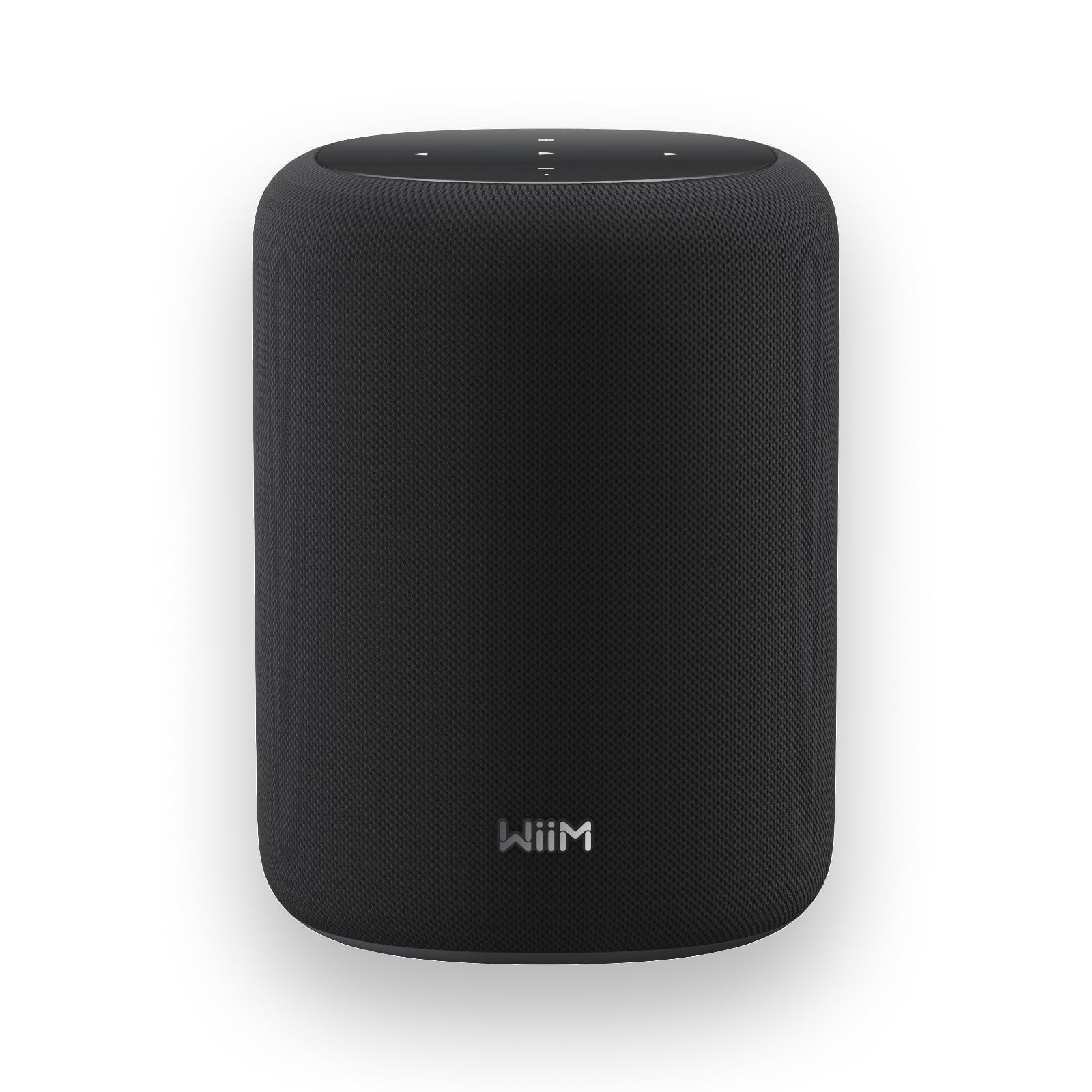
WiiM Multi-Room

WiiM Sound Lite

86 /100
Sound Score Excellent

Key details

Multi-Room
WiiM multi-room, stereo pair
Audio Specs
100W, 4in woofer, 2 tweeters
Form Factor
Tabletop smart streamer
Connectivity
Wi-Fi, Bluetooth, Aux, Ethernet
View on Amazon

The WiiM Sound Lite delivers high-resolution audio with clear detail and substantial bass for its size, and it supports Spotify Connect and Google Cast from the start. The WiiM app adds multi-room grouping, stereo pairing, and home-theater expansion, while Home Assistant integration gives automation-minded owners flexible control. That makes it a meaningful alternative for households already tied into WiiM or Chromecast audio. The tradeoff is framing, not sound: this is a multi-room streaming speaker first, so it fits the also-consider slot in an assistant-speaker roundup rather than the main picks.

Pros

  • High-resolution playback with clear detail and substantial bass for the speaker's footprint.
  • Google Cast, Spotify Connect, and Home Assistant integration give flexible streaming control.
  • Build quality holds up to regular handling.

Cons

  • Apple users get no AirPlay, so iPhone or Mac casting requires the WiiM app or a Connect-enabled service.
  • Voice control needs a separate Google Assistant or Alexa device; no assistant is built into the speaker.
Our verdict

Pick the WiiM Sound Lite when your listening setup already runs on WiiM or Home Assistant and you want high-resolution multi-room audio. The assistant-first shopper should stay with the main roundup picks.

Check Latest Price

How to Choose

Built-in vs. Compatible

A speaker with Assistant built in has a microphone array that listens for 'Hey Google' on its own. A 'compatible' speaker only streams audio; it needs a separate assistant device to receive voice commands.

If the speaker lacks a mic, you still pull out your phone or shout toward another room. That defeats the purpose of a smart speaker.

Audio Output and Drivers

Driver size and amplifier power determine how much air a speaker moves. A 40mm driver works in a kitchen but cannot pressurize a large room like a 5-inch woofer with a 90W amp.

For a living room, look for a dedicated woofer paired with a tweeter; that combination delivers the bass and separation that single-driver speakers miss.

Connectivity Options

Wi-Fi handles multi-room streaming; Bluetooth is the fallback when you do not want to depend on your network. Chromecast support matters in Google households, while AirPlay only helps Apple users.

More radios can mean more handoff issues. A strong mesh network generally keeps playback steady; a single router may cause dropouts when the speaker sits far from the access point.

Multi-Room and Stereo Pairing

Multi-room support lets speakers play in sync through an app; stereo pairing assigns left and right channels to two identical speakers for a wider soundstage.

This feature works within a single ecosystem. Stick with Chromecast grouping if you already own Chromecast speakers, or choose WiiM hardware if your system is built around WiiM.

Form Factor and Placement

Placement affects both sound and microphone pickup. A corded shelf speaker needs an outlet nearby, which can push it into a corner and dull bass; a compact puck fits neatly on a nightstand.

Think about the room before comparing specs. A floor-standing model needs space to breathe; a tabletop puck is fine for small rooms but will not fill an open floor plan.

Frequently Asked Questions