5 Best Guitar Headphone Amp of 2026: Pick the Right Bluetooth

Find the guitar headphone amp that fits your silent practice setup — including what Bluetooth can and can't do for backing tracks.

A guitar headphone amp has one job: deliver a convincing electric-guitar tone that stops at your ears instead of filling the house. The confusion starts with Bluetooth. Most of these devices stream backing tracks from your phone to the amp, but that is not the same as sending the guitar signal to wireless headphones.

The meaningful trade-off is simplicity vs. customization. A plug-in amp with a few dependable tones can get you practicing more, while a model-heavy unit with presets and app editing suits players who enjoy building and saving sounds. Buying the wrong side of that trade-off means either ignoring features you paid for or wrestling with menus when you just want to play.

Fit matters too: side-jack guitars can make bulky dongles awkward, and battery life changes where an amp is actually useful. Matching the device to your guitar and practice space matters as much as the tone engine.

About the Sound Score: This comparative score is calculated from a product's published customer rating and review volume. It is not a laboratory measurement or a hands-on test result.

1

Best Overall

Fender Mustang Micro

94 /100
Sound Score Outstanding

Key details

Form Factor
Pocket dongle
Battery Life
Rechargeable battery
App & Presets
No app, USB-C
Bluetooth Role
Audio streaming only
View on Amazon

The Mustang Micro packs 13 amp models, 12 effects, and Bluetooth backing-track streaming into a pocket-sized plug-in. The knob-driven layout delivers immediate tone choices without a phone app, and the headphone output stays musical at bedroom levels. Amp models respond quickly to pick attack, which gives silent practice a live feel, and the 12 effect combinations add usable chorus, delay, and reverb without burying the controls in menus. High-gain models carry enough bite for rock practice, while clean voices stay clear at low volume.

Bluetooth accepts music or app audio from a phone, so you can play along with tracks while the guitar stays plugged in. The guitar tone travels through the wired headphone path, keeping the core silent practice signal separate from the wireless link.

This is for electric guitarists who want pick-up-and-go silent practice without app dependence. Bluetooth is for streaming music/app audio into the unit, not wireless headphone output, so wired headphones remain part of the setup. The compact shell tucks into a case, and the rechargeable battery covers short daily sessions. The 13 amp models cover enough ground for rock, blues, and clean practice tones.

💡 Keep a USB-C cable in your case if you practice daily.

Pros

  • Believable amp tones and quick pick response make silent practice sound musical.
  • Pocket-size build feels solid enough for regular handling and case storage.
  • Bluetooth backing-track streaming keeps phone audio in sync without complicating the guitar path.

Cons

  • No built-in tuner or app-based preset editing; players who need those tools should choose the expanded Fender.
  • Bluetooth can occasionally take an extra moment to pair or drop during longer streaming sessions.
Our verdict

The Mustang Micro is the direct choice for no-menu silent practice.

Check Latest Price
2

Feature-Rich Choice

Fender Mustang Micro Plus

89 /100
Sound Score Excellent

Key details

Form Factor
Pocket dongle
Battery Life
Rechargeable, 4+ hours
App & Presets
Tone app, 100 presets, USB
Bluetooth Role
Audio streaming, app control
View on Amazon

The Mustang Micro Plus carries 25 amp models, 25 effects, and 100 editable presets into the pocket-sized Mustang format, adding an onboard tuner and Fender Tone app control that the base version leaves out. The high-gain models stand out for players who want metal and modern tones from a headphone-only practice amp.

Tone tweakers who want to save and edit presets will get the most from this version, with enough preset slots to cover multiple guitars and tunings. Bluetooth streams music and app audio only, so it will not pair with wireless headphones; players who need wireless headphone output should compare other options.

Pros

  • 25 amp models, 25 effects, and 100 editable presets suit tone tweakers who want deep tonal variety.
  • Onboard tuner and Fender Tone app editing make it a complete practice setup without extra gear.
  • Bluetooth music streaming supports backing tracks and app control during quiet practice.

Cons

  • Battery life can fall short of the stated four hours in some cases.
Our verdict

This is the Mustang to pick when presets, an onboard tuner, and app editing are the priority.

Check Latest Price
3

Best Value Modeling

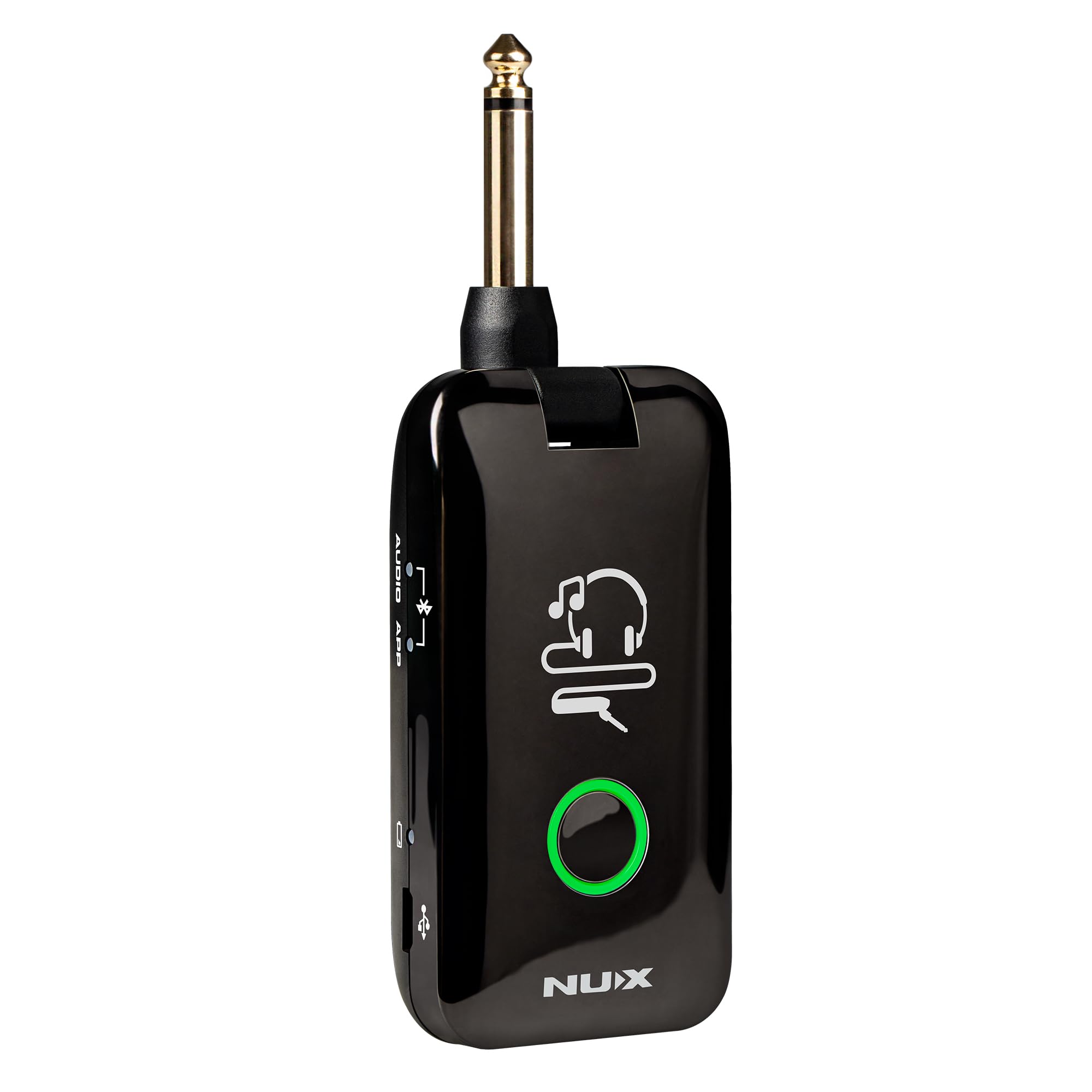
NUX Mighty Plug MP-2

87 /100
Sound Score Excellent

Key details

Form Factor
Plug-in dongle
Battery Life
LiPo 1000mAh battery
App & Presets
MightyAmp app, USB audio
Bluetooth Role
Audio streaming, app control
View on Amazon

The NUX Mighty Plug MP-2 delivers 13 amp models, 19 effects, 20 cab IRs, Bluetooth audio, and MightyAmp app control in a pocket-sized plug for guitar and bass practice. Clean and overdrive tones are genuinely usable, and bass or acoustic-electric players get acoustic IR support. Once the app connects, saving custom channels is quick.

This is the mid-range pick for players who want deep modeling control without paying premium for a multi-FX unit. It assumes app time: there is no dedicated master volume control, and Bluetooth/app pairing can be finicky. Minimalists who want a no-app plug-and-play device should look at the simpler top pick.

Pros

  • MightyAmp app control spans 13 amp models, 19 effects, and 20 cab IRs for deep preset editing.
  • Clean and overdrive tones hold up well at this price, making silent practice sound genuinely good.
  • Bass and acoustic-electric guitars fit the same unit, broadening its use beyond standard electric guitar.

Cons

  • On some guitars, the plug body protrudes noticeably, so physical fit depends on the instrument.
Our verdict

Players who want app-controlled modeling and bass support get strong mid-range value; those who prefer grab-and-go controls should consider the simpler top pick.

Check Latest Price
4

Wireless Freedom Pick

Positive Grid Spark NEO

86 /100
Sound Score Excellent

Key details

Form Factor
Headphones + transmitter
Battery Life
Up to 6 hours
App & Presets
Spark app presets
Bluetooth Role
Wireless headphone output
View on Amazon

The Spark NEO moves the amp into the headphones, so the guitar signal arrives through a wireless transmitter rather than a cable. That separates it from pocket-sized plug-in options — the over-ear build leaves room for 40mm drivers and a comfortable long-session fit. The Spark app's AI tone tools offer a guided route to new presets.

This is for couch and travel guitarists who value wireless freedom and app-driven tones more than the grab-and-go simplicity of a dongle, and who accept a premium price for that convenience. Wireless/Bluetooth connectivity can be inconsistent in some environments, and unit-to-unit variance can show up over time, so the right buyer accepts that tradeoff in exchange for a cable-free practice setup.

💡 Keep the transmitter and headphones in the same room and away from dense Wi-Fi for a cleaner wireless link.

Pros

  • Clear, amp-like sound makes silent practice feel close to playing a real amp.
  • Wireless transmitter and headphone amp remove the cable from guitar to ears.
  • Spark app AI tone tools offer a polished setup and strong preset variety.

Cons

  • Long-term build quality can vary between units, with occasional issues appearing after months of use.
  • Bluetooth audio can drop out or add static in dense wireless environments.
Our verdict

The Spark NEO fits the couch/travel player who prioritizes a cable-free, app-driven sound over the plug-in convenience of the top pick.

Check Latest Price
5

Budget Beginners

Valeton Rushead Max

91 /100
Sound Score Outstanding

Key details

Form Factor
Side-jack dongle
Battery Life
USB rechargeable, 5 hours
App & Presets
Bluetooth Role
None
View on Amazon

The Rushead Max is the budget entry point: three amp channels, five effects, aux-in jamming, and up to five hours from a USB charge. High-gain tones can sound harsh with some guitars, and the side-jack shell may feel clumsy on certain bodies. No Bluetooth or app control — fine for players who just want a cheap plug-in headphone amp.

Pros

  • Three amp channels and five effects provide flexible quiet practice tones.
  • Aux-in jamming and a five-hour USB charge suit late-night practice.

Cons

  • High-gain tones can sound harsh or unmusical depending on the guitar.
Our verdict

A good fit for budget-focused beginners who want a no-app silent practice tool and can accept the distortion character and side-jack ergonomics.

Check Latest Price

How to Choose

Amp Models & Effects

Model count does not equal usable tone range. Most players stick to a few clean, crunch, and high-gain sounds; three well-voiced channels can beat 30 presets that need menu digging.

The catch is gain character: high-gain models are where budget DSP sounds thinnest, so judge how overdrive responds to your volume knob, not the preset count.

Bluetooth Role

Bluetooth on a guitar headphone amp can mean two different things: streaming music from your phone into the amp, or sending guitar audio to wireless headphones. One does not imply the other.

Most amps stream backing tracks and talk to a companion app; only a wireless headphone rig replaces the headphone cable. Check the output type before buying.

Battery Life

These amps run on small rechargeable cells, so runtime depends on output volume and Bluetooth use. A 5-hour battery covers several practices, not a travel day.

The consequence is charging discipline: plug it in after practice, or accept a dead amp next session. Pick a unit that lasts through your longest normal practice block.

Form Factor & Fit

Plug-in amps hang off the output jack, so the guitar body carries their weight. On a Strat-style end-pin jack, a dongle sits clear; on a side-mounted Les Paul jack, it angles up and can block your arm or hide controls.

The practical fix is a short right-angle extension cable. If you play a side-jack guitar, account for dongle size rather than assuming all plugs fit the same.

App, Presets & Recording

App control adds editing and preset storage without extra buttons, but it makes the amp harder to use until the phone connects. No-app units turn on instantly; app-based units offer more depth.

USB recording is a separate bonus: if you want to track ideas silently, look for USB audio rather than just a line out.

Frequently Asked Questions