8 Best Headphone Amp for High-Impedance Headphones 2026: 600Ω Ready

Find the best headphone amp for high-impedance headphones that delivers clean gain, low noise, and real 600Ω support for desktop or portable listening.

High-impedance headphones look easy to drive on a spec sheet, but the listening reality is more specific. Many budget amps advertise 300Ω support, yet deliver weak gain or a touchy volume knob once connected to a 600Ω load. The power source can also make or break the result: a noisy computer USB port turns a clean amp into a hissy mess.

The amps here are chosen around the high-impedance use case: enough output voltage for 250-600Ω headphones, a quiet background, and controls that do not fight your level setting. The main trade-off is between a longer community track record and newer circuitry with explicit 600Ω support. Pick the one that matches your headphones' actual impedance and the environment where you listen.

About the Sound Score: This comparative score is calculated from a product's published customer rating and review volume. It is not a laboratory measurement or a hands-on test result.

1

Best Overall

Douk U3 PRO

85 /100
Sound Score Excellent

Key details

Connectivity
RCA and 3.5mm; 6.35mm out
Gain Staging
Output Power
1500mW @ 32Ω
Power Source
5V USB desktop
View on Amazon

Explicit 18-600Ω impedance support and 1500mW output put the U3 PRO ahead of budget amps that stop at 300Ω. The replaceable OP42 + BUF634 buffers add an unusual upgrade path for the price, and the amp drives 250Ω and 600Ω loads with the headroom that high-impedance headphones need.

Sound quality is clean and detailed, with better bass extension than typical budget desktop amps. The compact all-metal chassis fits neatly on a desk, and the 3.5mm and RCA inputs plus 3.5mm and 6.35mm outputs cover common analog setups.

Budget audiophiles who like op-amp rolling get more from this amp than from a sealed budget unit, and the 600Ω rating makes it a credible match for Sennheiser and Beyerdynamic models in the 250-600Ω range. The volume knob doubles as the power switch, so preferred levels can be lost on power-off; that tradeoff matters more when you change listening level between sessions.

Battery-powered portable operation is outside this amp's role. Desktop users with a 3.5mm or RCA source and a fixed listening level are the core audience.

Pros

  • Clean, detailed sound with better bass extension on high-impedance loads.
  • Ample power to drive 250-600Ω headphones without straining.
  • Replaceable OP42 + BUF634 sockets make op-amp rolling easy.
  • Strong value for a mid-range amp with explicit 600Ω support.
  • Compact all-metal enclosure fits a desktop setup cleanly.

Cons

  • Computer USB ports can introduce hum; a clean 5V adapter avoids it.
  • The volume knob doubles as the power switch, so a bump while powered off changes the next listening level.
Our verdict

High-impedance headphone owners who want explicit 600Ω headroom and op-amp tuning without spending more will find the U3 PRO a strong match.

Check Latest Price
2

Best Budget Desktop Workhorse

Douk Audio U3

85 /100
Sound Score Excellent

Key details

Connectivity
Gain Staging
Output Power
1300mW max
Power Source
DC 5-20V supply
View on Amazon

The Douk U3 is the budget desktop reference in this set for 250-300Ω loads. It drives DT990 Pro 250Ω and HD6XX-class headphones with enough current to keep dynamics intact, and it does so without the top pick's voltage-boost circuit or op-amp-swap socket. The output stage combines an NE5532 op-amp with transistor current buffers, rated at 1300mW maximum, which is the kind of practical engineering that fits a dedicated desktop amp.

At a desk, the U3 asks nothing of the user after setup. Streaming, gaming, and music all benefit from the same clean high-impedance headroom; the 6.35mm output is the main jack, and the 3.5mm jack is a secondary output for other headphones. The enclosure is a compact metal block with no flex, so it stays put under cable tension.

This is for the listener who already owns a DAC and wants a no-frills desktop amp for 250-300Ω Sennheiser or Beyerdynamic headphones. It has no explicit 600Ω rating, and USB power from a computer port can introduce hum or buzz, so a clean 5V supply or powered hub is part of the setup. With that condition met, the U3 adds high-impedance headroom without a large outlay.

Pros

  • Drives 250-300Ω Sennheiser and Beyerdynamic cans with real headroom.
  • Performance holds up for streaming, gaming, and music at a desk.
  • Value is a defining trait: it punches above its price tier.
  • Build is a solid metal block with no flex or rattle.

Cons

  • On-the-go use is out: no battery, so the U3 needs a desk and a USB source.
  • At low volumes, the knob can swing from inaudible to loud in a short turn.
Our verdict

For the desktop buyer with a DAC and 250-300Ω cans, the U3 is the value pick that keeps high-impedance headroom within reach. Feed it clean USB power and it will sit on your desk and do the job.

Check Latest Price
3

Best Budget Portable

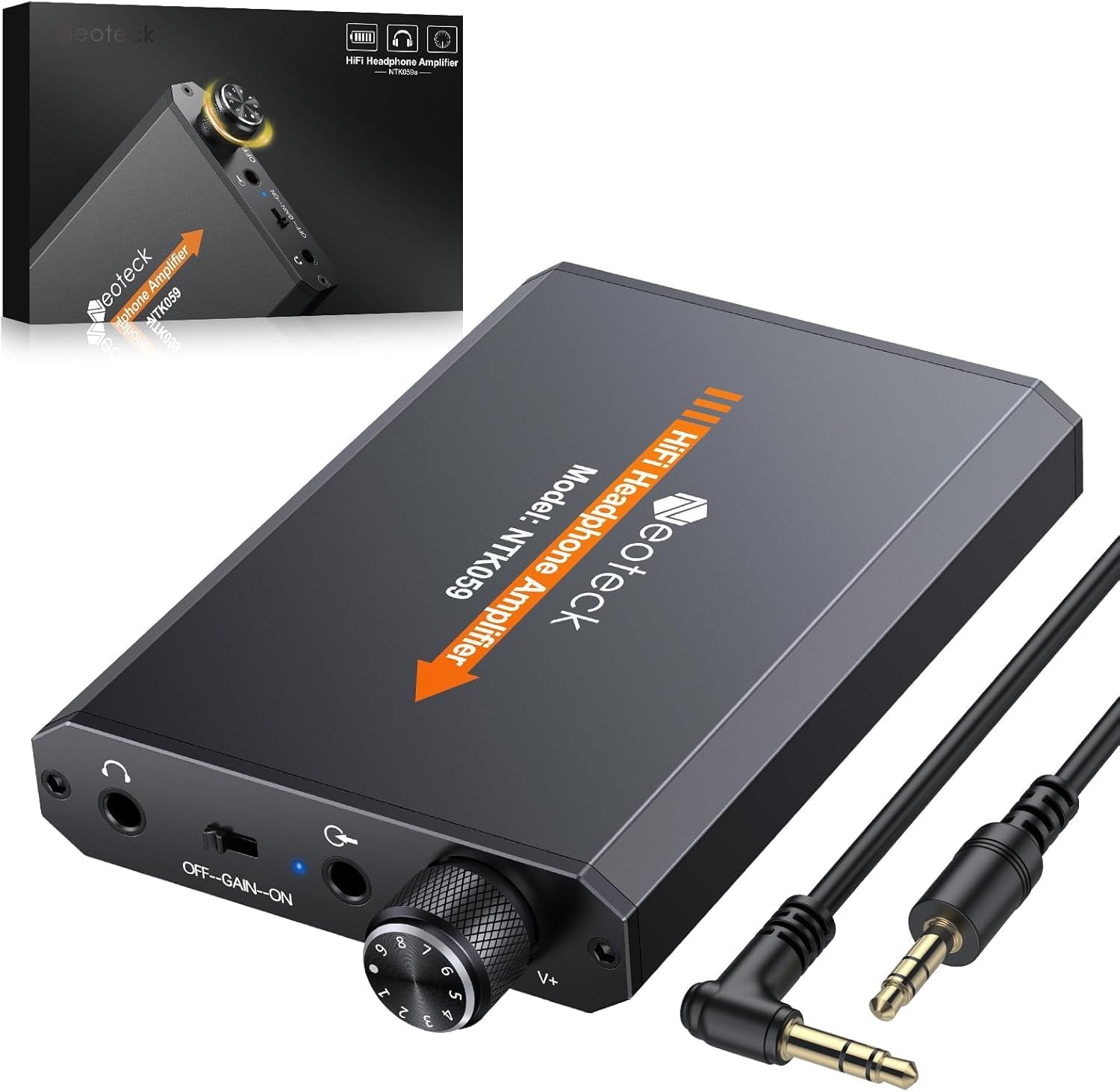
Neoteck Portable Amp

87 /100
Sound Score Excellent

Key details

Connectivity
3.5mm in / out
Gain Staging
Two-stage gain
Output Power
Power Source
1500mAh battery
View on Amazon

The Neoteck portable keeps the signal path wired and analog, pairing a two-stage gain switch with a 16–300Ω impedance range. It gives 250–300Ω Sennheiser and Beyerdynamic headphones enough clean voltage from any 3.5mm source, and it keeps that drive in a body small enough for a jacket pocket. The sound comes across as fuller than a direct headphone jack, with more weight in the bass and lower mids.

The 1500mAh battery is rated for about 12 hours, which lines up with a multi-day commute or a long flight. The aluminum shell feels dense and rugged, and the gain switch covers the common gap between low-impedance IEMs and 300Ω over-ears. If you normally listen at moderate levels, the low gain setting is enough; the high setting adds headroom for quieter recordings or harder-to-drive cans.

This is aimed at commuters and travelers who own high-impedance headphones and want a simple rechargeable 3.5mm amp instead of a desktop stack. It tops out at 300Ω, so 600Ω studio cans are outside its reach, and the wired-only 3.5mm path means Bluetooth fans should look at the wireless version in this lineup; balanced-output users will need a different amp. Around fluorescent lighting or with a noisy source, a faint buzz may appear; in a clean electrical environment the background stays quiet, which fits its intended use as an on-the-go amp.

Pros

  • Two-stage gain switch lets one pocket amp drive both low-impedance IEMs and 250–300Ω over-ears.
  • Full, clear sound with more robust bass and mids than a direct phone or laptop jack.
  • Aluminum body feels dense and is small enough to ride in a bag.
  • Battery lasts roughly a full day of travel, so recharging is not a daily chore.

Cons

  • Near fluorescent lights or with a noisy source, a low-level buzz can surface on sensitive headphones.
Our verdict

For wired 250–300Ω headphone use away from a wall outlet, this portable delivers the gain flexibility and battery stamina in a pocket-friendly package.

Check Latest Price
4

Best Premium Desktop DAC/Amp

Fosi Audio ZH3

87 /100
Sound Score Excellent

Key details

Connectivity
USB, optical, coaxial, 4.4mm out
Gain Staging
3-level gain
Output Power
2570mW balanced @ 32Ω
Power Source
Desktop power
View on Amazon

The ZH3 pairs an AKM4493SEQ DAC with XMOS processing, a 4.4mm balanced output rated at 2570mW into 32Ω, and a three-level gain switch covering 16-300Ω headphones. That makes it the desktop all-in-one in this set, distinct from the analog-only high-voltage amp that needs an external DAC and offers no tone controls.

Sound presentation is dynamic and cinematic, with strong stereo imaging on both headphones and powered monitors. The remote-controlled EQ adjusts the voicing without adding another box to the desk. The 6.35mm single-ended output handles lower-impedance loads alongside the balanced connection.

Digital inputs (USB, optical, coaxial) plus RCA analog input cover desktop sources from computers to CD transports. The compact chassis fits on a crowded desk without forcing a separate DAC and amp stack.

Buyers with 300Ω headphones and active speakers who want a single desktop box for DAC, preamp, and amplification should put this on a shortlist. The three-level gain switch keeps high-impedance loads in a usable volume range, and the preamp output makes powered monitors easy to integrate. Mac owners should note USB playback can truncate track beginnings, and firmware updates require a Windows machine.

Pros

  • Dynamic, cinematic sound with strong stereo imaging across headphones and powered monitors.
  • High output power gives 300Ω headphones headroom on balanced or single-ended outputs.
  • Digital and analog inputs let one compact box handle DAC, preamp, and headphone amp duties.

Cons

  • Menu navigation requires the remote; without it, no back button makes adjustments tedious.
  • For 600Ω headphone owners, the rated impedance range tops out at 300Ω.
Our verdict

A 300Ω headphone owner with active speakers gets a complete desktop hub — DAC, balanced amp, EQ, and remote — without a separate preamp.

Check Latest Price
5

Best High-Voltage Desktop Amp

Topping L30II

79 /100
Sound Score Very Good

Key details

Connectivity
RCA in; 6.35mm out
Gain Staging
Three gain settings
Output Power
37Vpp output
Power Source
Desktop power
View on Amazon

The L30II brings 37Vpp of output swing, the kind of voltage headroom 250-600Ω headphones need to keep dynamics intact. The chassis is strictly analog: RCA in, 6.35mm out, three gain settings, and a 0.3µVrms noise floor that keeps the background silent even at high gain. It leaves the all-in-one DAC, EQ, and remote duties to the fuller-featured desktop unit in this roundup.

The -9.9dB / 0dB / 9.5dB switch covers both sensitive IEMs and power-hungry over-ears. Planar and high-impedance dynamic headphones get enough voltage swing to hold their composure at louder listening levels, while the low gain step avoids wasted gain on IEMs. The sound is neutral and clean, with no audible hiss or hum in the background. The measured performance backs that up: a 141dB dynamic range and 37Vpp output leave the headphones as the main variable.

If you already own a DAC and want a transparent high-voltage amp without Bluetooth, EQ, or remote clutter, this fits. The small case runs warm during sustained high-volume sessions, so it is a poor fit if you dislike warm-running electronics. Unit-to-unit variance can exist as with any mass-produced electronics, so checking the volume knob and channel balance on arrival is reasonable.

💡 Start at the -9.9dB gain setting for sensitive IEMs and move up only when 250-600Ω headphones need more voltage.

Pros

  • Clean, neutral output keeps high-impedance cans sounding open without added coloration.
  • High voltage swing drives 250-600Ω and planar headphones to healthy listening levels.
  • Background stays silent even on high gain, which matters for sensitive IEMs.
  • Measured performance and output voltage are strong for the mid-range asking price.

Cons

  • In a tight desk stack, the small case can become noticeably warm during long high-volume sessions.
  • Some units can show channel dropout after warm-up or arrive with a damaged volume knob, so an arrival check is worth doing.
Our verdict

For headphone owners with an existing DAC who need high-voltage headroom for 250-600Ω loads, the L30II is a compact, low-noise analog amp that gets out of the way.

Check Latest Price
6

Ultra-Budget Portable

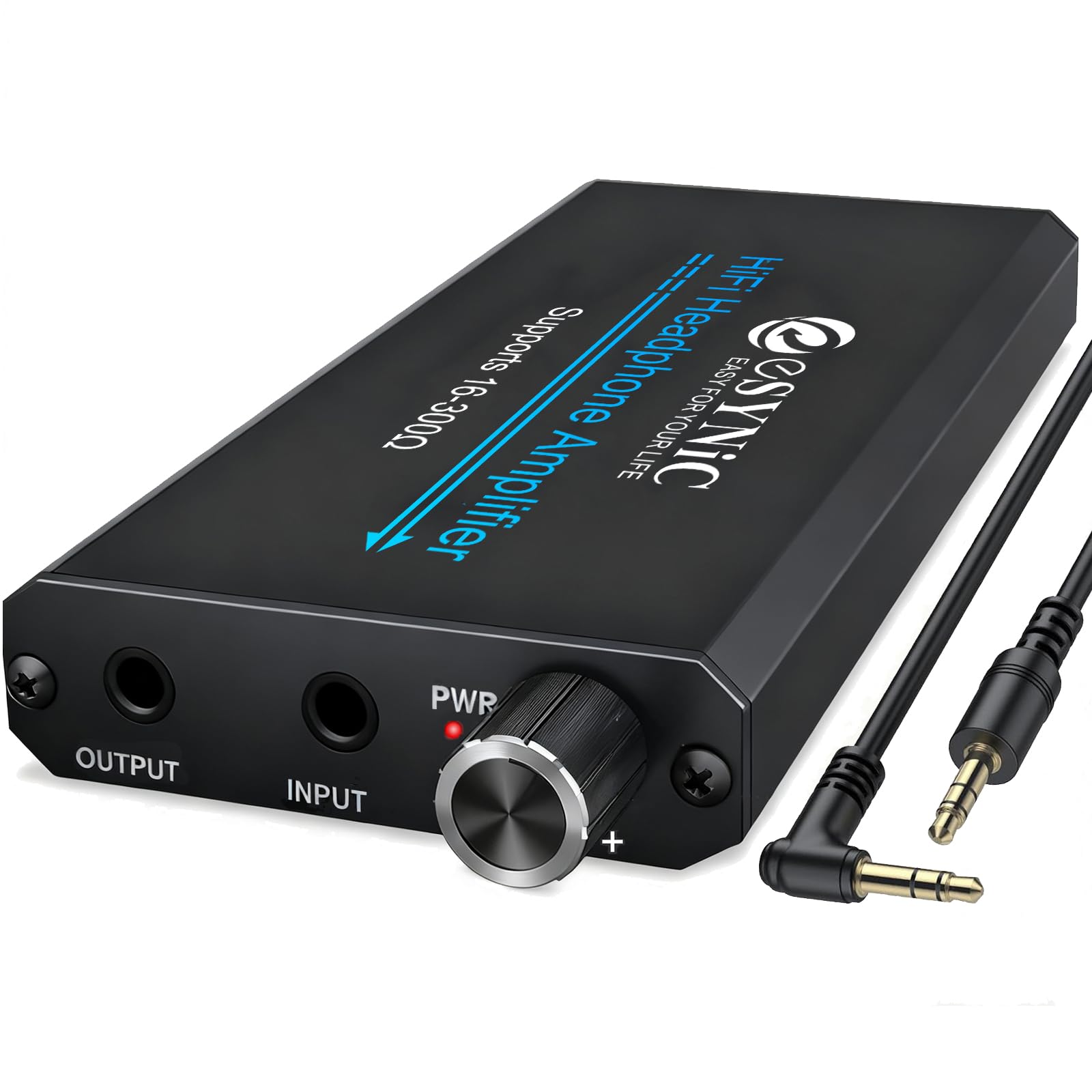
eSynic Portable Amp

86 /100
Sound Score Excellent

Key details

Connectivity
3.5mm in / out
Gain Staging
Two-stage gain
Output Power
350mW max
Power Source
1000mAh battery
View on Amazon

The cheapest entry point to 300Ω portable amplification, this all-metal amp uses a two-stage gain switch and a rechargeable battery to drive high-impedance headphones with loud, clear output. It delivers more volume than its size suggests and suits ultra-budget buyers who want a simple AUX boost. The tradeoff at this price is a less forgiving noise floor and looser QC than the main portable in this set, which places it a step lower here despite solid performance.

Pros

  • Loud, clear output with volume headroom for 300Ω headphones.
  • Compact all-metal body with a two-stage gain switch at an entry-level price.
  • Built-in battery lasts through extended listening and recharges quickly.

Cons

  • Sensitive headphones can reveal background hiss in quiet passages.
  • Some units can develop loose jacks or crackle during short-term use.
Our verdict

Fits ultra-budget buyers who prioritize entry price and a rechargeable 300Ω-capable amp above all else.

Check Latest Price
7

Wireless Headphone Users

Neoteck BT Amp

82 /100
Sound Score Excellent

Key details

Connectivity
Bluetooth 5.0 + 3.5mm
Gain Staging
Two-stage gain
Output Power
Power Source
1500mAh battery
View on Amazon

Bluetooth 5.0 input pairs with a two-stage gain amp in a rechargeable aluminum chassis, giving high-impedance wired headphones a genuinely wireless option. Clean volume boost drives 250-300Ω loads well, so this is a practical bridge between a phone without a headphone jack and cans that need more voltage. The tradeoff sits in the wireless stage: range can cut out when the source is in a pocket, and jack seating can loosen over time. That is why it trails the wired-only portable in this lineup unless Bluetooth input is the deciding factor.

Pros

  • Clean volume boost with enough power for high-impedance headphones.
  • Easy pairing turns wired headphones into a wireless setup.
  • Solid build quality for the price.

Cons

  • Charging can add a soft hiss or buzz in quiet listening environments.
  • Bluetooth range can cut out when the source is kept in a pocket.
Our verdict

Bluetooth input has to be the deciding factor for this one; without that need, the wired-only portable in this lineup is the more predictable route.

Check Latest Price
8

Bass-Boost Listeners

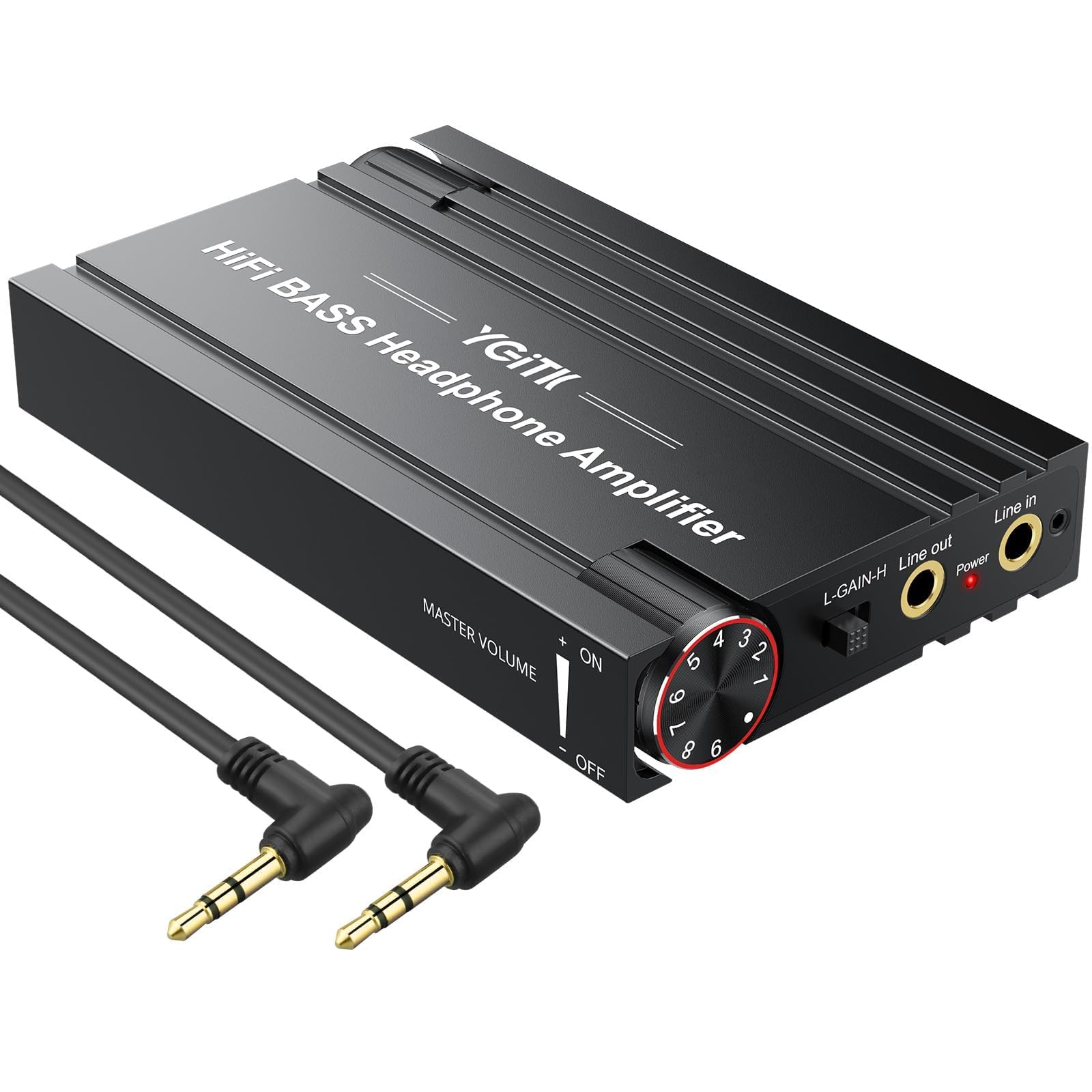
YGiTK Bass Amp

79 /100
Sound Score Very Good

Key details

Connectivity
3.5mm in / out
Gain Staging
L/H gain switch
Output Power
Power Source
1350mAh battery
View on Amazon

The YGiTK Bass Amp is the budget portable with the clearest 600Ω claim in this set: a 16–600Ω impedance range, an adjustable bass knob, and an L/H gain switch. The bass control shifts the low end noticeably, and the aluminum housing keeps it pocket-friendly.

Casual listeners driving 250–300Ω Sennheiser or Beyerdynamic cans at moderate volumes get a simple travel amp with real tone shaping. Occasional channel dropout can appear in individual units, and the 600Ω rating is best read as compatibility rather than unlimited power, so this fits as a bass-first travel amp more than a permanent desktop anchor.

Pros

  • Surround-style soundstage and bass-heavy tuning make portable listening feel larger than the size suggests.
  • The bass knob offers a genuine low-end adjustment, not just a preset toggle.
  • Budget-friendly price delivers noticeably more presence and control than expected.

Cons

  • On inefficient 600Ω headphones, maximum volume can sit lower than expected.
  • Long-term consistency under heavy use is a known vulnerability.
Our verdict

Fits casual listeners who want an inexpensive portable amp for 250–300Ω cans and value a real bass knob over a permanent desktop anchor.

Check Latest Price

How to Choose

Impedance Range

An amp's impedance rating tells you which headphone loads it was engineered to drive. A 600Ω-rated amp has enough voltage swing to keep distortion low at the higher load; a 300Ω-rated amp may sound thin or run out of headroom past that point. Check the fine print before assuming a high wattage figure covers every impedance.

Portable amps often list 16-300Ω support, which is fine for 250Ω and 300Ω models but not for 600Ω studio cans. If you own 600Ω headphones, look for explicit 600Ω support rather than a broad 'compatible with high-impedance' claim.

Output Power and Voltage

At high impedance, the amp's output voltage is what pushes the driver to a given loudness. A 32Ω power figure can look enormous while the same amp struggles to deliver enough voltage at 300Ω. Look for mW ratings at higher impedance or a maximum output voltage like Vpp.

In practice, a 300Ω headphone needs roughly double the voltage of a 150Ω model, and a 600Ω model needs even more. If a listing only shows 32Ω power, treat the high-impedance performance as unverified.

Gain Staging

Gain switches let you match the amp's amplification to the sensitivity of the headphone. High gain is useful for 250-600Ω over-ears; low gain prevents sensitive in-ear monitors from picking up hiss. Without a gain switch, a fixed circuit has to serve both extremes, which usually means a compromise in noise or volume range.

A well-designed gain stage also keeps the volume knob in a usable range. If the amp goes from silent to very loud in a quarter turn, low-level matching becomes frustrating no matter how clean the sound is.

Connectivity

RCA inputs pair with a desktop DAC, while 3.5mm inputs suit a phone or laptop. Balanced 4.4mm outputs can deliver more power and lower crosstalk, but only if your headphone cable and source chain are actually balanced.

If you already own a DAC, a simple analog amp with RCA input is enough. If you need a single desktop hub, a DAC/amp with USB, optical, and coaxial inputs reduces cable clutter but adds menu complexity.

Power Source

USB-powered amps are convenient, but the noise on a computer USB port can enter the signal path and cause hum or buzz. A clean 5V wall adapter with enough current usually solves this, while a battery-powered amp avoids ground-loop issues entirely.

Desktop amps with an AC supply offer the most stable voltage, which matters for high-impedance headphones that need consistent headroom. Portable amps trade some of that stability for convenience and need to be recharged.

Frequently Asked Questions