Best Overall

Tendak ARC to Optical/Coax/RCA
Key details
- CEC
- Not specified
- Outputs
- Optical, coaxial, RCA, 3.5mm
- Audio Formats
- PCM/LPCM; no Dolby/DTS
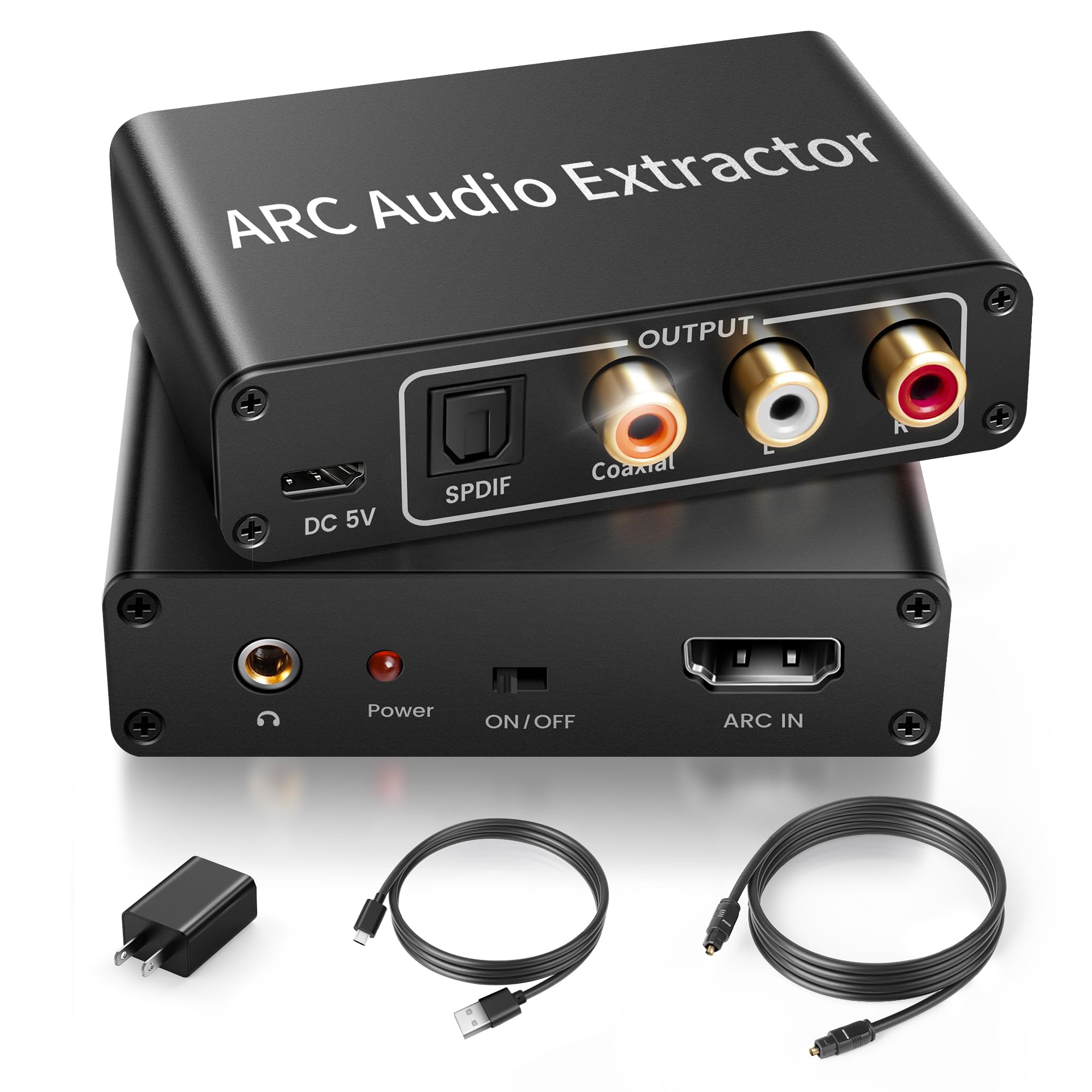
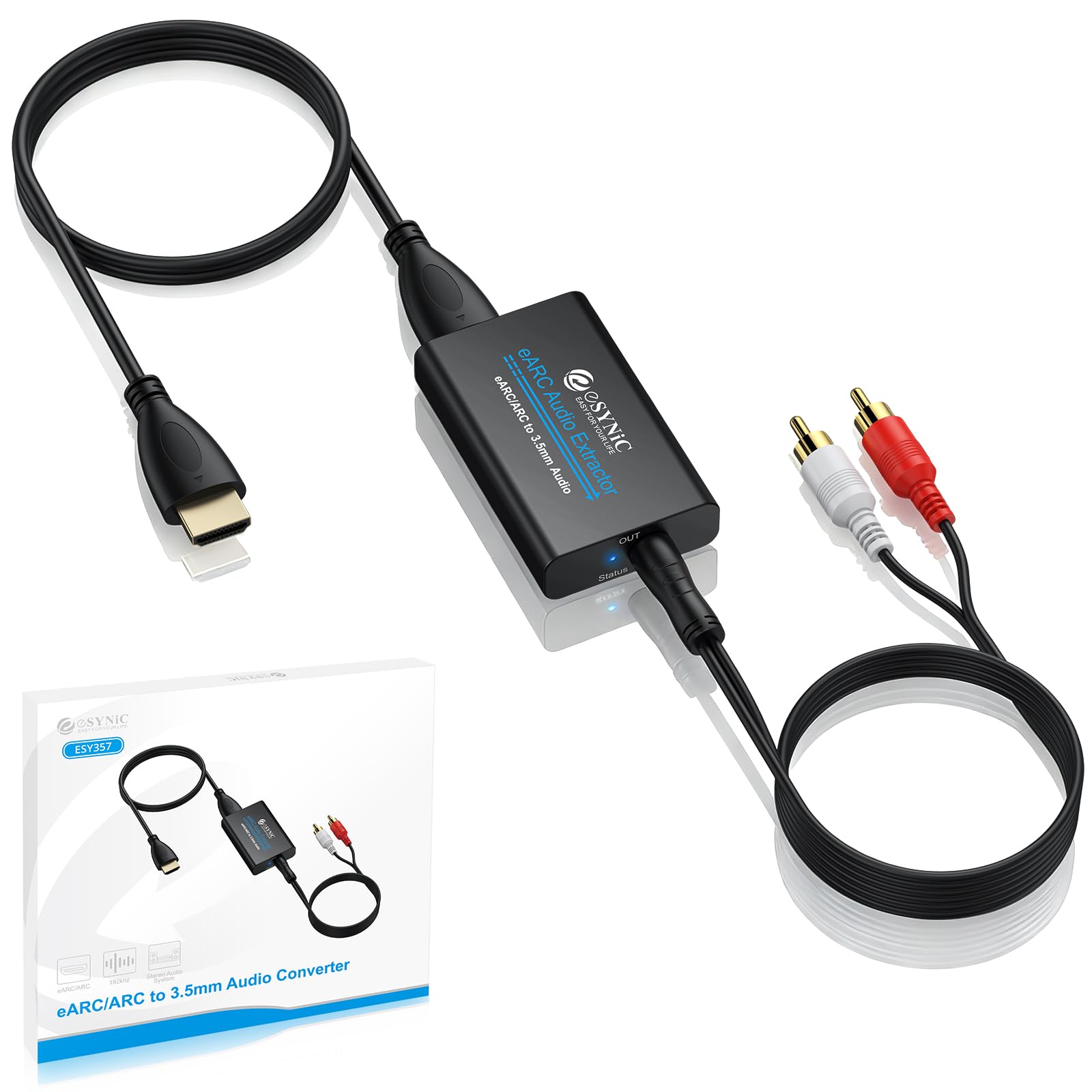
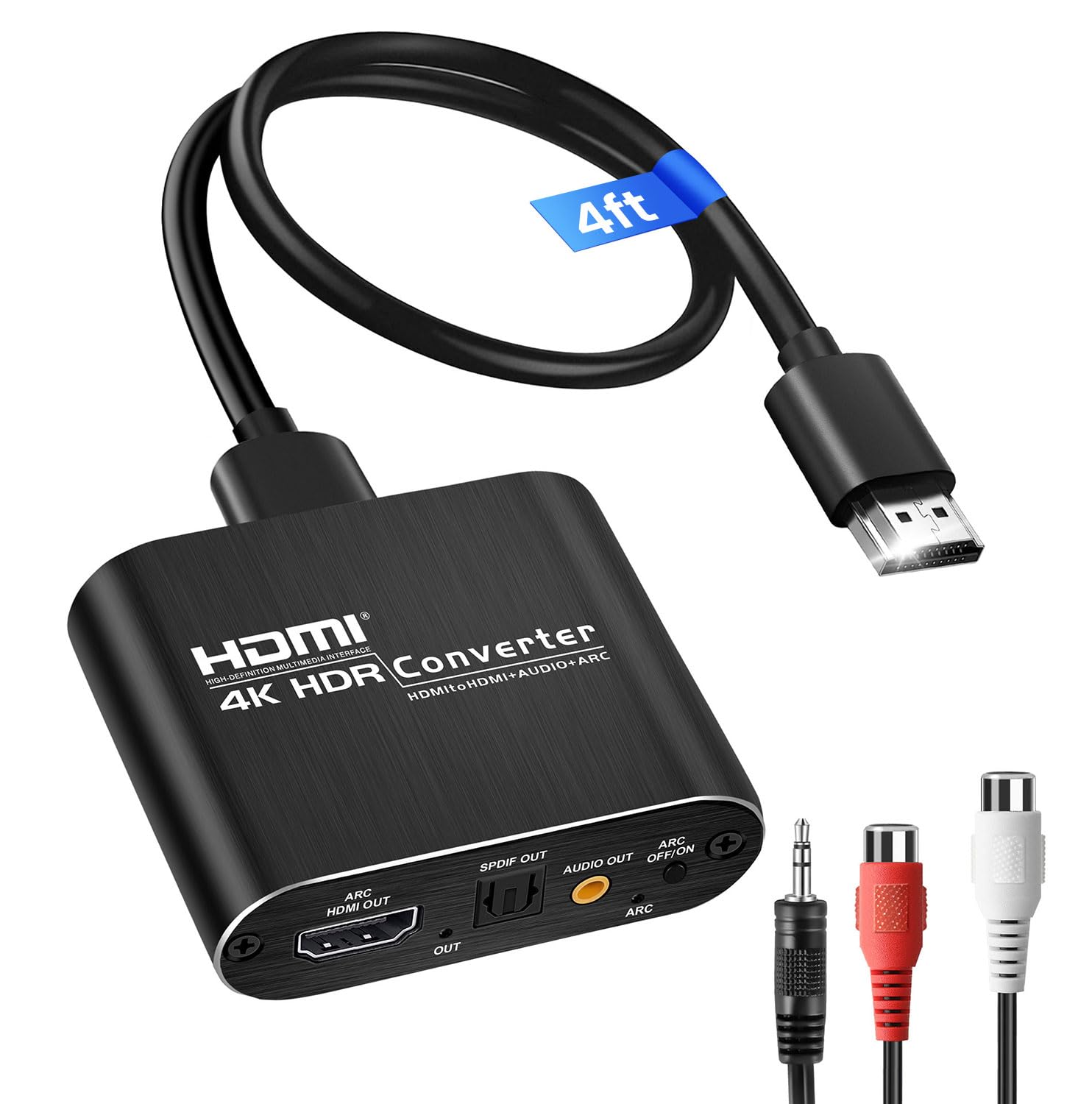
Tendak's extractor drives optical, coaxial, RCA, and 3.5mm outputs simultaneously from a single HDMI ARC connection. That is the broadest output set in the budget category, so one TV port can feed a stereo amplifier, powered speakers, and an older DAC at the same time without a switcher or splitter. All four outputs stay active, which means every connected device can remain wired and ready. The 192kHz/24-bit PCM support covers CD-quality and higher stereo sources, so headroom is not an issue for TV dialogue or music playback. The optical and RCA outputs alone cover the typical receiver plus powered-speaker combo.
ARC extraction holds across LG TVs, Edifier speakers, and older amplifiers. The digital path is the consistent side of the box, and the optical and coaxial inputs work as a standalone DAC for non-ARC sources like CD players or game consoles. That second input set adds flexibility when the TV's ARC port is not involved. In a mixed setup, the digital outputs are the safer bet for keeping an old receiver working without touching TV menus, while the analog jacks cover speakers that need a direct connection. The unit keeps the audio signal clean at ordinary listening volumes.
The metal housing and USB power make placement easy behind a TV stand or media console. The unit draws power from a phone charger or a TV USB port, and the small footprint leaves room for the HDMI and optical cables that connect to it. When ARC is active, a separate optical cable from the TV is unnecessary, which removes one cable-run headache.
This fits ARC TV owners who want one converter for multiple legacy audio systems, such as an old receiver on optical and powered speakers on RCA. It also suits users who need headphone output from a TV that only has ARC and optical. The boundary conditions are specific: the 3.5mm and RCA outputs may stay silent unless the TV is set to PCM, and Samsung TVs have been noted to need an HDMI cable re-seat after a connection drop. If you stay in stereo PCM, the analog path is stable; if you feed it a bitstream signal, you may need to adjust the TV's audio format.
A dedicated optical-only converter is easier to troubleshoot when you only need one output, but it cannot replace separate digital and analog feeds at once. For anyone juggling an old stereo amp and modern powered speakers, this box does the work of several converters. It is the rare budget unit that leaves every input and output available rather than forcing a choice between digital and analog.
Pros
- Optical, coaxial, RCA, and 3.5mm outputs all run at once from one ARC port.
- ARC extraction holds across LG TVs, Edifier speakers, and older amplifiers.
- Setup is quick and the metal housing feels substantial for the price.
- Optical and coaxial inputs double as a standalone DAC for non-ARC sources.
Cons
- On some TVs, the ARC connection can override other audio inputs, redirecting sound unexpectedly.
- Digital outputs pass PCM/LPCM only, so Dolby/DTS or 5.1 sources won't carry surround.
For mixed stereo systems needing optical, coaxial, RCA, and 3.5mm from one ARC port, this converter covers the widest ground at a budget-friendly price.