9 Best Headphones for Glasses in 2026: That Clear Your Temples

Which headphones for glasses actually avoid frame pressure — open-ear, clip-on, and low-clamp over-ear picks matched to how you wear your glasses.

The phrase 'glasses-friendly' appears on plenty of headphone listings, but the real test is physical clearance. On-ear cushions press the temple arms into your head, and tight over-ear clamps turn an afternoon of meetings into a headache. The models that work avoid the temple zone or use deep, low-pressure pads that sit around the frame instead of on top of it.

The practical trade-off is acoustic. Open-ear and bone-conduction designs preserve awareness and keep pressure off glasses, but they give up the bass and isolation of a sealed over-ear. Over-ears keep the full sound and add ANC, but only if the clamping force matches your head size and frame thickness. Buying the right form factor matters more than any feature list.

This guide separates true frame-clearance designs from marketing claims. Each pick is tied to a specific way you wear glasses, and the trade-offs are stated up front. You end up with a headphone that disappears during wear instead of one that demands you choose between comfort and sound.

About the Sound Score: This comparative score is calculated from a product's published customer rating and review volume. It is not a laboratory measurement or a hands-on test result.

1

Best Overall for Glasses Wearers
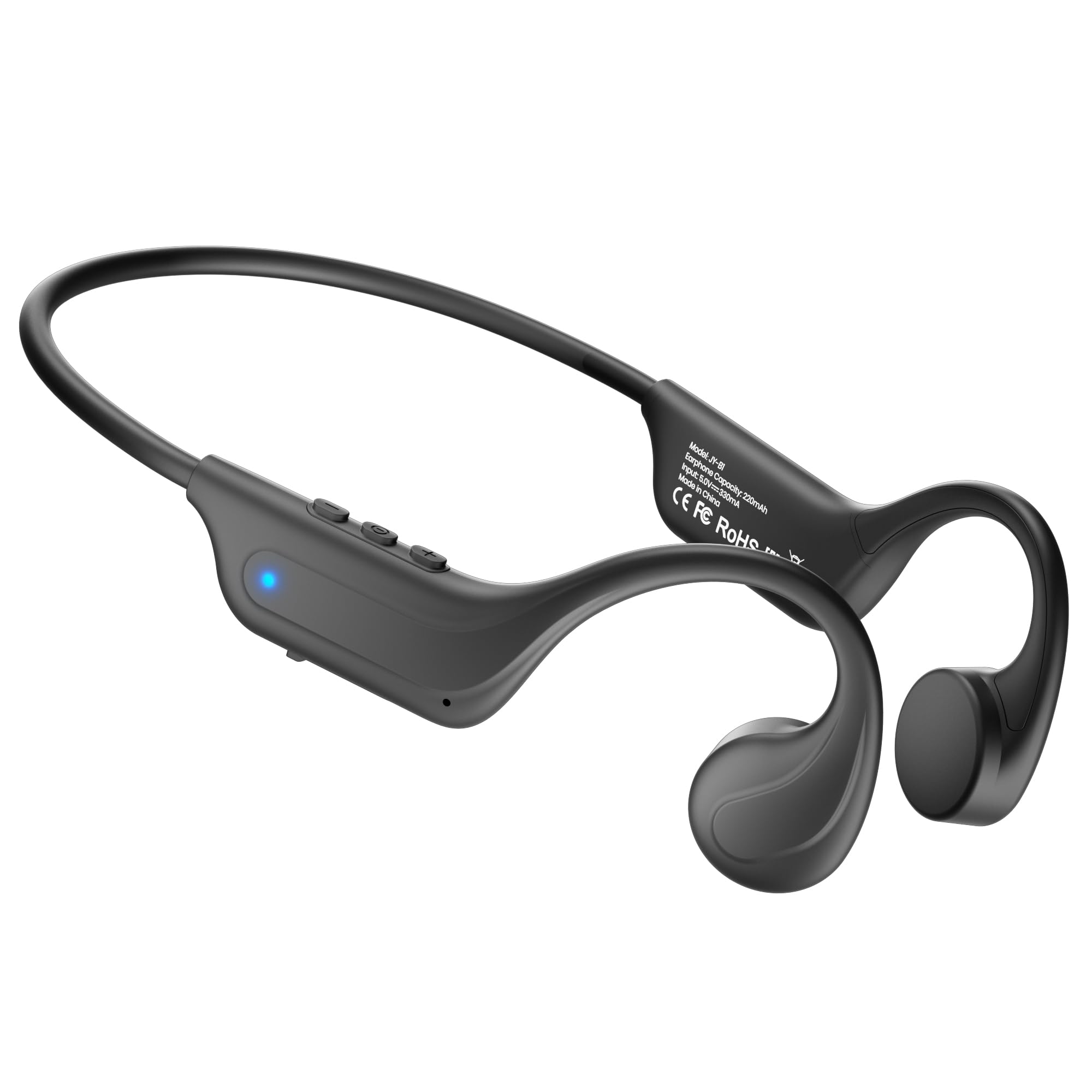
Gavhaio JY-B1 Bone

85 /100
Sound Score Excellent

Key details

Form Factor
Open-ear bone conduction
Battery Life
10 hours
Weight & Hook
25g frame
Earpads & Clamp
No earcups
View on Amazon

The JY-B1 is a 25g open-ear frame that leaves the temple area completely empty. The ear hook passes behind the ear and the bone-conduction driver rests on the cheekbone, so there is no cushion or clamp pressing against a glasses frame. That structural choice is what makes it the clearest glasses-first fit in this set. Bluetooth 6.0 handles dual-device connections, IP65 shrugs off sweat and rain, and the open-ear position keeps the ear canal unblocked. A 25g frame means little pressure on the cheekbone even after hours of wear.

Call quality is the strongest audio trait. The microphone isolates speech well enough for outdoor calls, and podcasts and navigation prompts stay intelligible without the hollow tone some open-ear drivers produce. The lack of ear tips removes the plugged-up feeling that comes with long sealed-ear sessions. Music leans toward mids and highs, with defined vocals and guitars while deep bass steps back. That balance suits spoken audio and moderate-volume listening better than bass-heavy club tracks.

Fit security holds up through running, cycling, and quick head turns. The frame stays put without the squeeze of a headband, and the open ear keeps traffic noise and conversation audible at normal volumes. Since the frame doesn't contact the glasses temple, all-day wear avoids the pressure points that on-ear cushions can create. The flexible bridge absorbs small shocks instead of transferring them to the glasses, and ears stay dry during warm-weather workouts.

For glasses wearers, the practical benefit shows in the details: no temple pressure, no hinge interference, and no need to re-seat frames after putting the headphone on. The flexible bridge tolerates different head sizes and frame thicknesses, which matters more than any spec sheet. Thick acetate arms and thin wire frames both pass through the same open slot. After an hour, the frame becomes easy to forget.

Who this works for: commuters, runners, and cyclists who want to stay aware of their surroundings while keeping glasses comfortable. The tradeoff is that bone conduction cannot match sealed over-ears for bass or noise isolation, and it lacks a charging case. For someone whose priority is frame clearance and situational awareness, that is a fair boundary to accept.

Pros

  • Crisp, clear bone-conduction sound with strong call quality on outdoor calls.
  • Pressure-free open-ear fit that leaves the temple completely clear for glasses wearers.
  • Secure and stable during runs, rides, and workouts.
  • Battery life holds up well for daily commuting and exercise.
  • Ultra-lightweight 25g frame that becomes easy to forget.

Cons

  • Daily commuting sits comfortably inside the 10-hour runtime, but long travel days will need a charging stop.
  • On a loud street or train platform, the open-ear driver may not get loud enough to keep pace with the environment.
Our verdict

The JY-B1 is the top pick for glasses wearers who want a headphone that never touches the temple and keeps the outside world audible. Frame clearance comes first, and this frame delivers it at 25 grams.

Check Latest Price
2

Best Clip-On for Small Ears & Glasses

KingLucky i121 Clip-On

86 /100
Sound Score Excellent

Key details

Form Factor
Open-ear clip-on
Battery Life
7 hrs, 50 w/case
Weight & Hook
5.2g earbuds
Earpads & Clamp
Open-ear hooks
View on Amazon

The extended slim hooks wrap over the outer ear and hold each driver just outside the canal, so glasses temples stay completely clear. Each side runs about 7 hours, and the charging case brings total playtime to around 50 hours, enough for a commute-heavy week without reaching for a cable.

Audio comes through clean and balanced for an open-ear design, with vocals and podcasts clear at moderate volumes while surrounding sound remains audible. At 5.2g per bud, the fit stays comfortable through gym sessions and jogs, and the IPX5 rating covers sweat and light rain. The open construction avoids the plugged-ear feeling of in-ear models, keeping approach sounds from buses and coworkers present.

This is for glasses wearers with small ears who have had earbuds pop out or over-ears squash their frames. The volume ceiling is modest in loud traffic or a crowded gym, so it suits everyday commutes and workouts where you do not need to drown out the room. Battery and Bluetooth behavior can vary between units, so seating the buds fully in the case and pairing once before a long trip is a sensible check.

Pros

  • Secure clip-on fit stays put without pushing on glasses temples or small ears.
  • Open-ear audio remains clear and balanced for calls, podcasts, and mid-volume music.
  • Build quality feels tighter than the budget price suggests.
  • Charging case, IPX5 sweat resistance, and long combined battery cover everyday use.

Cons

  • Loud streets and gyms can overpower the peak volume, so this open-ear clip-on is better for moderate-noise settings.
  • Bluetooth handoff can stutter occasionally on some units during calls or audio playback.
  • Charging consistency can vary between units, and one bud may run low early unless it seats cleanly in the case.
Our verdict

For glasses wearers with small ears, the KingLucky clip-on is the stay-put alternative to an open-ear frame, with case convenience that suits daily commutes.

Check Latest Price
3

Best Over-Ear for Office & Travel

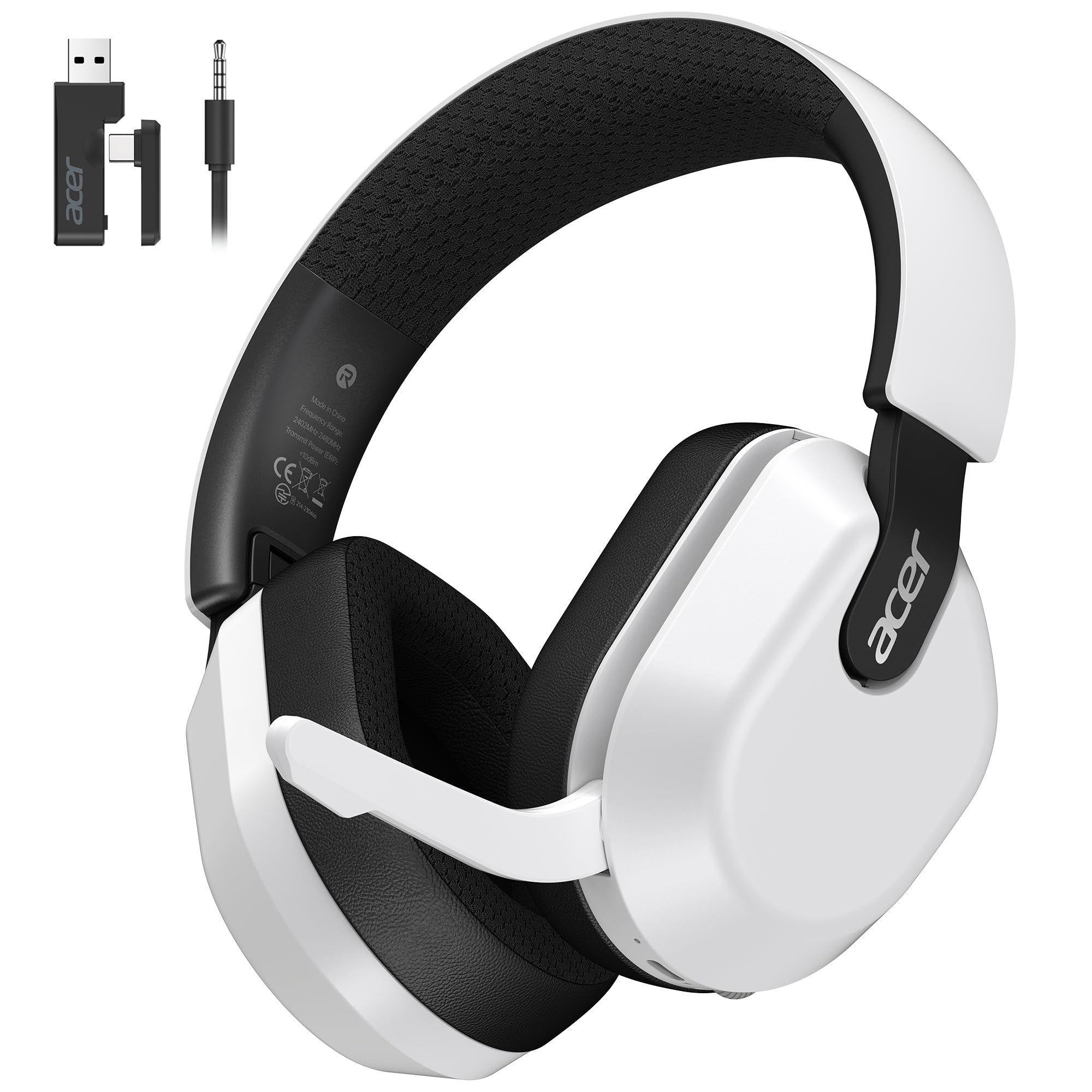
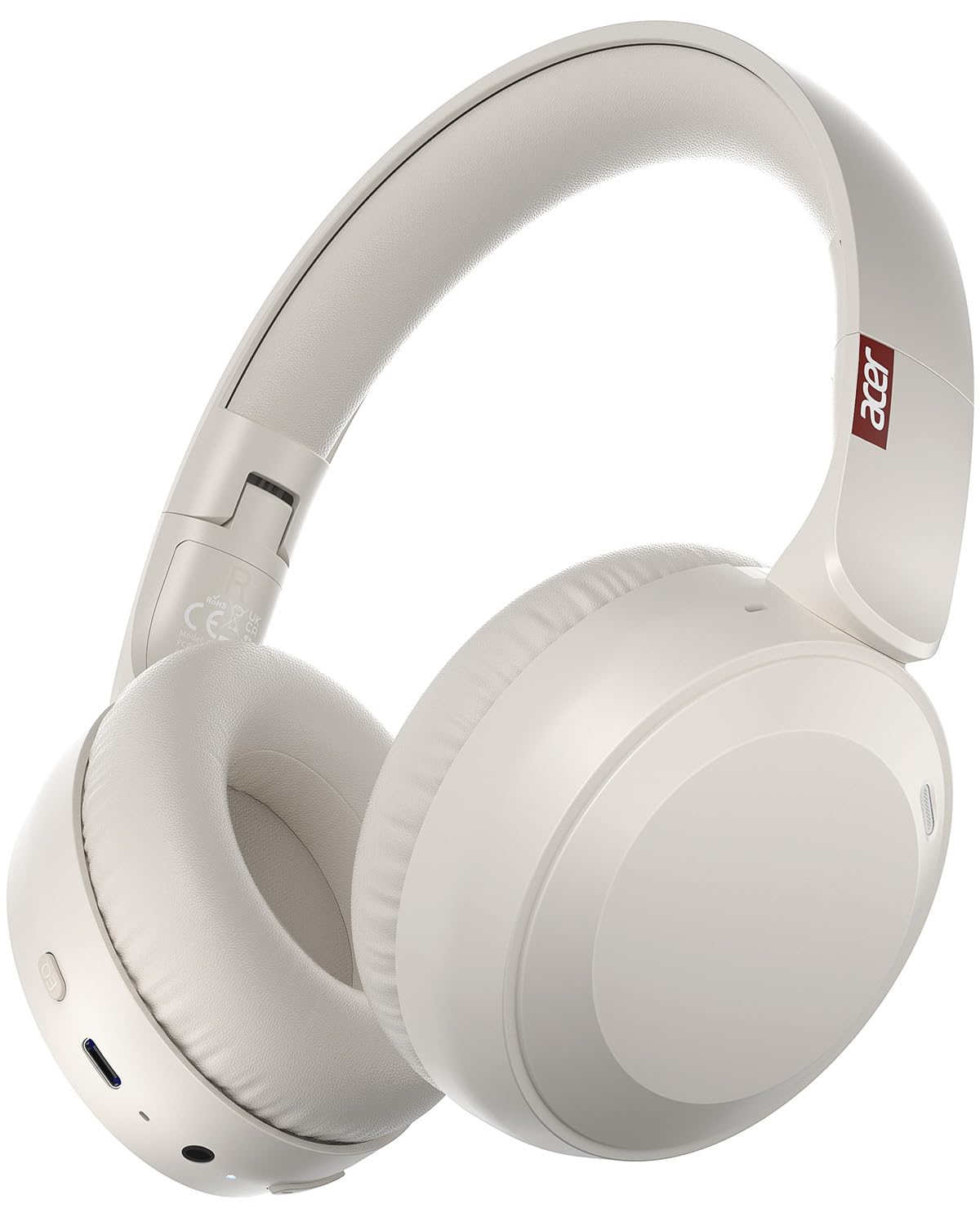
Acer OHR205 Over-Ear

83 /100
Sound Score Excellent

Key details

Form Factor
Foldable over-ear
Battery Life
70 hours
Weight & Hook
Earpads & Clamp
Memory foam
View on Amazon

The Acer OHR205 takes a different route to glasses comfort from the open-ear top pick: memory-foam earpads clear frames while the headset still covers your ears. A low clamping force helps the pads sit around glasses without pushing the arms into your head. The foldable frame adds a wired cable option for low-battery moments, and 70-hour wireless playback covers a full work week or a long-haul flight without hunting for a charger.

The 40mm dynamic drivers produce clear, detailed sound with enough separation to keep voices and instruments distinct on calls, podcasts, and background music. Multipoint Bluetooth pairs a laptop and phone at once, so switching between a video meeting and a personal call does not require re-pairing. The wired input also keeps a desk session alive when Bluetooth is not available.

This lands as the everyday over-ear for office workers and students who wear glasses and need a budget headphone that does not press frames. A fresh unit may need a full charge before Bluetooth pairing settles, and the volume ceiling is moderate rather than loud. Those limitations fit a desk or library context, where battery stamina and multipoint matter more than raw output.

Pros

  • Clear, detailed sound with good separation at a budget-friendly price.
  • Memory-foam earpads keep pressure off glasses frames without squeezing temples.
  • 70-hour battery covers long work weeks or travel days without a charger.
  • Multipoint Bluetooth switches between laptop and phone without re-pairing.

Cons

  • Maximum volume stays moderate
  • Bluetooth pairing on a fresh unit can take a few attempts until the first full charge.
Our verdict

For glasses-wearing office workers, students, and travelers who want an over-ear with battery stamina and a wired fallback, this is the practical runner-up.

Check Latest Price
4

Best Wireless Gaming Headset for Glasses

Acer OHR641 Gaming

80 /100
Sound Score Excellent

Key details

Form Factor
Over-ear gaming headset
Battery Life
70 hours
Weight & Hook
282g frame
Earpads & Clamp
Hybrid cushions
View on Amazon

The Acer OHR641 is a lightweight over-ear gaming headset that keeps glasses frames clear of the earcups. Hybrid cushions and a low-clamp frame reduce temple pressure during long sessions.

The 50mm drivers deliver clear, immersive audio with 3D surround when the game supports it, and a flip-to-mute mic gives console players a quick way to cut voice.

The 70-hour battery covers multiple days of play, and the 20ms 2.4GHz dongle keeps game audio in sync on PS5 and PC. Bluetooth 6.0 adds a secondary connection for music or calls.

This is for PS5 and PC players who wear glasses and want low-latency wireless audio without a tight over-ear fit. The wireless range is the main boundary: the signal can drop once you move beyond roughly 10 feet from the dongle, so keep the console or PC within reach. PS5 chat can sound quiet or muffled in some cases. For casual and single-player sessions, the comfort, battery, and low-latency link cover the core use case.

💡 Keep the flip mic down and close to your mouth for better PS5 chat pickup.

Pros

  • Glasses-ready over-ear frame keeps temple clearance comfortable for long sessions.
  • 50mm drivers with 3D surround produce clear, immersive game audio.
  • Build quality feels sturdy for the price.
  • Wireless feature set and long battery deliver strong gaming value.

Cons

  • Xbox players who expect full wireless chat support are outside the target use.
  • Streamers and competitive players will want a dedicated mic for voice work.
Our verdict

Glasses-wearing PS5 and PC players get comfort, low-latency wireless, and long battery life in a focused gaming headset.

Check Latest Price
5

Best ANC Upgrade Over-Ear

JLab JBuds Lux ANC

93 /100
Sound Score Outstanding

Key details

Form Factor
Over-ear
Battery Life
40+ hrs with ANC
Weight & Hook
Earpads & Clamp
Cloud Foam cushions
View on Amazon

Hybrid ANC up to 35dB, Cloud Foam earcups, and 40-plus hours of noise-canceled playback make the JBuds Lux the over-ear pick for glasses wearers who want the room blocked out rather than heard. The cushioning clears ordinary glasses arms, giving this set a sealed-in comfort that the open-ear top pick cannot match. Priced in the mid-range, it sits above budget ANC models but stays short of flagship territory.

Home-office workers and frequent flyers get the most from this headset: multipoint keeps a laptop and phone connected at once, and Be Aware mode lets a quick conversation in without taking the earcups off. Over-ear fit depends on clamp and frame thickness, and hard bending can shift the headset slightly, so it works best in seated or steady settings.

Sound stays clean across music and calls, and ANC reduces steady low-frequency noise such as transit rumble without muddying the midrange. A short charge session adds enough playback to cover a commute, so long battery becomes a practical buffer rather than a spec-sheet figure.

The Cloud Foam earcups are the reason the Lux works with daily glasses wear: they conform around the arms instead of crushing them against the head. For most commutes and desk sessions, that comfort holds from first call to last.

Pros

  • Clean full-range sound for music and calls with no significant leakage.
  • ANC cuts steady background noise at a level that competes with higher-priced over-ears.
  • Cloud Foam earcups stay comfortable through long workdays and clear ordinary glasses arms.
  • 40-plus hours with ANC and quick charging take battery anxiety out of daily use.

Cons

  • Very thick glasses frames may create temple pressure during extended wear.
Our verdict

For glasses wearers who want an over-ear that seals out the office or cabin, the JBuds Lux offers long battery, hybrid ANC, and cushions that clear ordinary frames.

Check Latest Price
6

Budget ANC Over-Ear

vibeadio E11 ANC

88 /100
Sound Score Excellent

Key details

Form Factor
Over-ear
Battery Life
25 hrs with ANC
Weight & Hook
Earpads & Clamp
Over-ear cushions
View on Amazon

The E11 brings hybrid ANC, 30-hour battery life, and 40mm drivers to the budget tier, making it an isolation-first alternative to the open-ear pick in this roundup. At this price, few over-ears combine noise control and battery this cleanly, and the transparency mode keeps quick conversations practical.

Bass-friendly tuning leaves vocals clear, and the build feels above its entry-level price. Hybrid ANC tames office hum and commute rumble well for the cost, while the 25-hour ANC battery covers extended workdays. Fast charging tops the battery up during a short break, and the wired 3.5mm input offers a fallback when wireless is inconvenient.

This suits budget ANC buyers with smaller heads or low-profile glasses frames who want long battery for a desk or office. The fit boundary is the same one you would expect from a tightly clamped budget over-ear, so wider heads or thicker frames should look at the open-ear pick; occasional macOS Bluetooth drops have been noted, and the aux cable covers that situation.

The physical controls are simple to operate, and voice calls come through clearly enough for office check-ins. The headphone holds its charge across a multi-day work week, so a nightly charge routine is not required. Sound output works as well for podcasts as it does for music.

💡 Keep the 3.5mm cable handy for long listening sessions; it works independent of Bluetooth.

Pros

  • Clear, bass-friendly sound for a budget ANC headphone.
  • Effective active noise cancellation for the price.
  • Build quality holds up well at this price level.
  • Long battery life with fast charging.

Cons

  • Occasional Bluetooth drops can interrupt listening on some Mac models.
  • On larger heads, the clamp can press thick glasses frames into the temples.
Our verdict

For slim-framed glasses wearers with moderate head sizes, this is the budget ANC over-ear to keep on the desk.

Check Latest Price
7

Budget Open-Ear Style

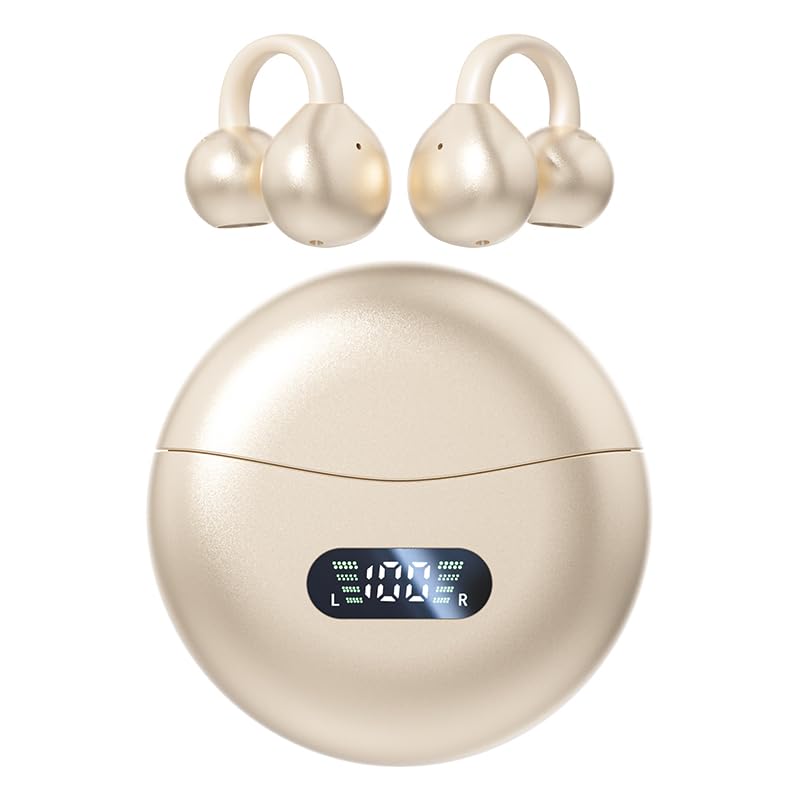
Piluyaa M79 Clip-On

81 /100
Sound Score Excellent

Key details

Form Factor
Open-ear clip-on
Battery Life
6 hrs, 24 w/case
Weight & Hook
5.3g earbuds
Earpads & Clamp
Open-ear hooks
View on Amazon

The Piluyaa M79 delivers the lowest-cost open-ear clip that keeps glasses frames clear: the 5.3g C-clip leaves the ear canal open, and the finish reads more like jewelry than tech. Sound is clear and capable for the price. Clip fit depends on ear shape, so it suits everyday listening over intense workouts, and Bluetooth can be intermittent on individual units. That fit variability is why it sits below the more secure clip-on in this set.

Pros

  • Open-ear C-clip leaves the ear canal clear and keeps glasses frames out of the pressure zone.
  • Sound stays clear and capable for the price.
  • The 5.3g build feels solid and looks more like jewelry than audio gear.

Cons

  • Charging can become uneven between the two earbuds on individual units.
  • The 6-hour per-charge battery is limiting for all-day wear.
Our verdict

For budget-focused glasses wearers who want open-ear sound with a light, stylish clip, this delivers the core idea at a lower entry cost.

Check Latest Price
8

Wired PC Gaming

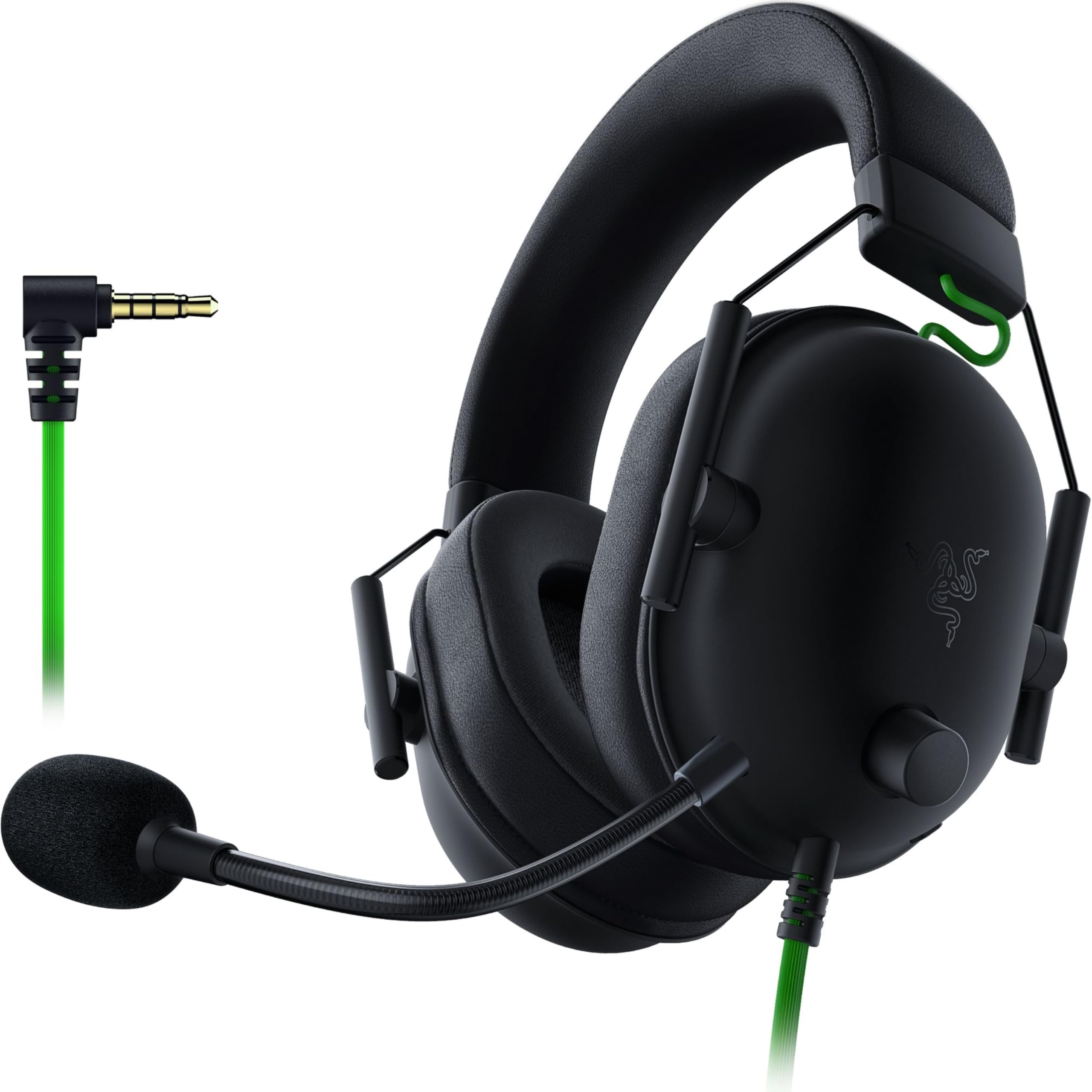
Razer BlackShark V2 X

89 /100
Sound Score Excellent

Key details

Form Factor
Wired over-ear
Battery Life
Weight & Hook
240g frame
Earpads & Clamp
Memory foam
View on Amazon

Razer BlackShark V2 X pairs 50mm Triforce drivers with a 240g frame and memory-foam earcups, delivering clear positional audio for PC and console play at a budget-friendly price. The wired-only 3.5mm connection keeps things light and removes charging concerns, though it is not a wireless glasses-friendly option. For wearers with thinner frames, the memory-foam cushions can clear the temple without digging in, but clamp pressure depends on head size and frame thickness. Mic pickup can range from crisp to muffled between units, and headband or cable durability may be uneven under heavy use. That puts it behind the wireless low-latency gaming headset in this guide when frame clearance is the primary need.

Pros

  • Clear positional audio and 50mm Triforce drivers make directional cues easy to read in games.
  • Lightweight 240g frame and memory-foam earcups support long-session comfort.
  • Cost-effective wired option with a simple 3.5mm connection and broad PC/console compatibility.

Cons

  • Headband and cable durability can be uneven, with occasional damage appearing after a few months of use.
  • Mic pickup can vary from crisp to muffled across units, and microphone output may drop out after extended use.
Our verdict

For PC and console players with thinner glasses frames who want a budget-friendly wired headset, the BlackShark V2 X can work; if frame clearance is the main priority, the wireless low-latency gaming headset in this guide is the direction to take.

Check Latest Price
9

Casual Wired Use

Sony MDR-ZX110

91 /100
Sound Score Outstanding

Key details

Form Factor
Wired on-ear
Battery Life
Weight & Hook
9.12 oz
Earpads & Clamp
Cushioned on-ear
View on Amazon

Classic wired on-ear with clear, punchy audio and soft cushioned earpads, at a budget price that makes it an easy spare or student headphone. The on-ear form places it outside the frame-clearance boundary: cushions sit directly on the ears, so this is not the answer if glasses-frame pressure is your main concern. Light or occasional glasses wear may find the fit acceptable, but the strict glasses-comfort search should look to the memory-foam over-ear in this set. Unit-to-unit durability can also vary, which makes this a low-cost backup rather than a long-haul daily driver.

Pros

  • Crisp, punchy audio for the price, with enough clarity for podcasts and casual music.
  • Soft cushioned earpads support longer listening stretches without hard pressure points.
  • Simple wired design plugs into nearly anything with a 3.5mm jack.

Cons

  • Under-frame pressure can build during long sessions because the earpads sit on the ears.
  • Cord and jack issues may appear early in some units.
Our verdict

The right fit is a spare for a student or casual listener who does not wear glasses, or for short sessions with light frames.

Check Latest Price

How to Choose

Form Factor

Open-ear and bone-conduction models clear the temple area entirely, making them the most dependable frame-compatible designs. Clip-ons wrap around the outer ear. Over-ears only work when the earcup is deep and the headband pressure is low enough to avoid driving the cushion into glasses arms. The acoustic trade-off: open-ear designs give up bass and isolation, so they suit runners and commuters more than office workers who need to block conversation.

Earpads and Clamp Pressure

Earpad softness is only half the equation; clamping force decides whether glasses frames dig in. Memory foam conforms around a lens arm instead of crushing it against the skull. A tight headband with plush pads still hurts after thirty minutes, while a low-clamp design can last a full workday. On-ear pads leave no room for temple arms, so skip them.

Weight and Ear Hook Design

Weight determines whether a headphone disappears during wear. A 25g bone-conduction frame or 5g clip-on does not pull on the ear or shift glasses; heavier over-ears make clamp pressure the dominant comfort factor. For clip-ons, extended slim hooks anchor small ears and clear frames, while generic round clips depend on ear shape.

Battery Life and Charging Case

Battery life follows form factor. Over-ears run 25 to 70 hours and rarely include a case; clip-ons deliver six to eight hours per charge and rely on a case for all-day use; bone-conduction headsets sit around ten to twelve hours with no case. A long single-charge over-ear suits desk work, while a case matters for mobile earbud use.

Water and Sweat Resistance

Sweat resistance matters only for active use. An IP65 bone-conduction headset handles rain and workouts; IPX5 clip-ons handle splashes but not submersion. Desk-bound over-ears do not need a water rating, so prioritize clamp pressure and battery there.

Frequently Asked Questions