9 Best Headphones for Running in 2026: Open-Ear Picks for Safety

The best headphones for running keep you aware of traffic without sacrificing fit or battery — matched to your route, ears, and budget.

The main tradeoff in running audio is between staying aware of your surroundings and actually hearing your music. In-ear earbuds isolate you from traffic, wind, and other runners; open-ear and bone-conduction designs leave your ears free but give up bass and volume. Most disappointment in this category comes from choosing the wrong side of that tradeoff.

The practical fix is to match the design to your route and session. Road runners and cyclists usually need open-ear awareness, while treadmill and gym athletes can get away with in-ear isolation and stronger bass. The other recurring problem is durability: sweat-resistant shells do not always protect charging contacts, so the cheapest pair can stop charging after a few months.

The sweet spot is a secure hook or frame, IPX5 or better, and enough battery for a week of training. You trade some bass and isolation, but the pair stays put, survives sweat, and lets you hear the car behind you.

About the Sound Score: This comparative score is calculated from a product's published customer rating and review volume. It is not a laboratory measurement or a hands-on test result.

1

Best Overall

Shokz OpenRun Pro 2

89 /100
Sound Score Excellent

Key details

Fit System
Bone-conduction frame
Battery Life
12 hours
Outdoor Volume
Ambient noise competes
Water Resistance
IP55
View on Amazon

The DualPitch architecture combines a bone-conduction driver with an air-conduction driver, giving the OpenRun Pro 2 noticeably fuller bass than typical single-driver bone-conduction sound while keeping both ears open. Bass notes have body without turning into the thump of an in-ear driver, and that balance is what makes the open-ear format work for music, not just for phone calls. The result is a warmer, less buzzy signature that holds together at the pace where open-ear earbuds can go thin. A 12-hour charge covers a full week of daily runs or a long race day without a mid-week charger stop, which means less time checking the battery and more time training.

At 30.3g, the frame is light enough to disappear during tempo work, and the wrap-around hook holds position through hard intervals and longer rides. The fit does not rely on a tight clamp; it rests against the side of the head with enough contact to stay put but not enough to create pressure points. The IP55 rating shrugs off heavy sweat and light rain, while Bluetooth 5.3 maintains a stable connection when the phone is in a pack rather than a pocket.

This is for runners and cyclists who make traffic awareness part of their training routine. The open-ear design means no noise isolation; in very loud settings the volume will not match in-ear ANC earbuds, so music stays in the background of a busy street rather than drowning it out. Runners who value hearing an approaching car, a cyclist coming from behind, or a group member calling out a hazard will see that as the core feature, not a flaw. The same openness that keeps traffic audible works well in group runs, where instructions pass between runners without stopping the music. If you want sealed, isolating audio for a loud gym, this is the wrong category. If you want situational awareness and a secure all-day fit, that tradeoff is the intended function.

The step up from the entry-level Shokz frame is clear: the Pro 2 adds a second driver and roughly doubles the runtime, which matters for runners who train daily rather than occasionally. Because the headphone charges as a single piece, there is no extra case to keep track of before a session. Music stays clear without the tinny edge that once defined bone conduction, so the OpenRun Pro 2 fits training playlists as well as longer rides without asking for a second pair.

💡 For group runs and road cycling, leave the volume at conversation level so you can hear instructions and traffic without stopping.

Pros

  • Dual-driver sound delivers fuller bass than typical bone-conduction audio without closing off the ears.
  • Secure 30.3g frame holds position through interval sessions and long rides.
  • 12-hour battery lasts through a week of daily runs between charges.
  • IP55 sweat and rain protection suits outdoor training in changeable weather.

Cons

  • Premium price puts this above budget-friendly open-ear alternatives.
  • Very loud streets can overpower the open-ear sound.
Our verdict

The OpenRun Pro 2 is the benchmark for runners who want dual-driver sound, 12-hour stamina, and a frame that stays out of the way during training.

Check Latest Price
2

Best Budget Open-Ear

TOZO OpenEarRing

89 /100
Sound Score Excellent

Key details

Fit System
Open-ear clip
Battery Life
10h + 30h case
Outdoor Volume
Ambient noise competes
Water Resistance
IPX5
View on Amazon

The TOZO OpenEarRing drops the neckband and the bone-conduction perch for a 5.1g clip that hooks over the outer ear, leaving the ear canal open so traffic and gym announcements stay audible. It is the least expensive way in this running roundup to get open-ear awareness without giving up battery: 10 hours per charge plus a 30-hour case. Compared with the dual-driver open-ear benchmark, the sound is clear and forward — a fine match for spoken cues, podcasts, and mid-volume music.

Glasses wearers and runners who dislike in-ear pressure will find the clip gentle for all-day wear, and the IPX5 sweat rating covers training runs. Long-term durability varies at this price; charging contacts can develop intermittent connection issues and one earbud may lose audio after months of heavy sweat exposure. Runners who replace budget gear every couple of seasons get the benefit with little downside.

The 40-hour total battery is generous for this price tier, and Bluetooth 5.4 keeps pairing simple. For road runs, gym sessions, and commutes, the OpenEarRing delivers open-ear awareness without the premium cost.

Pros

  • Clear, airy sound for spoken audio and mid-volume music.
  • 5.1g clip-on earbuds hold through runs for a wide range of ear shapes.
  • Open-ear design keeps traffic audible and feels gentle with glasses.
  • Budget-friendly price with 40-hour total battery and Bluetooth 5.4.

Cons

  • Open-ear tuning keeps bass light; bass-heavy tracks won't hit as hard as they do in in-ear models.
  • Clip fit depends on ear shape; some ears feel sore after long sessions or less secure during sprints.
Our verdict

The OpenEarRing is the budget route to open-ear running audio for runners shopping on price.

Check Latest Price
3

Best for ANC + Heart Rate

Beats Powerbeats Pro 2

84 /100
Sound Score Excellent

Key details

Fit System
Earhook true wireless
Battery Life
45h total with case
Outdoor Volume
Isolation boosts volume
Water Resistance
IPX4
View on Amazon

The Powerbeats Pro 2 bring ANC, Transparency, heart-rate monitoring, and an earhook fit into an Apple-native package. That places them as the feature-packed in-ear option in this running roundup, the natural counterpoint to the open-ear bone-conduction benchmark. They deliver noise control and biometric feedback without leaving the Apple ecosystem.

Class 1 Bluetooth keeps a stable connection with an iPhone during intervals, and the hook holds through strides and gym work. The charging case extends total playback to 45 hours, and the main fit question is comfort rather than security. It slips into a running belt pocket.

Apple-ecosystem athletes who want heart-rate data without a separate armband fit these earbuds best. The heart-rate sensor streams to Apple Watch or HealthKit, going beyond playback. Sensitive outer ears should weigh the fit carefully, and budget-focused buyers have cheaper open-ear alternatives.

The in-ear seal blocks surrounding noise unless you switch to Transparency, so this is not an open-ear safety pick. For runners who want isolation plus workout metrics, that tradeoff is the point. If the fit works, it is the feature-dense true wireless option in this set.

💡 Try the hook fit on a short run before committing to longer distances.

Pros

  • Battery life reaches 45 hours with the charging case, so midweek recharges are rarely necessary.
  • ANC and Transparency handle gym and street noise, with a quick mode switch when you need surroundings.
  • The earhook locks in during sprints and intervals, holding position when other true wireless earbuds shift.
  • Heart-rate monitoring streams workout data to Apple Watch or HealthKit without a separate armband.

Cons

  • Charging issues, one-sided audio, or Bluetooth drops can appear in some units.
  • The earhook geometry can cause pressure or soreness behind the ears for some wearers.
Our verdict

For Apple users who want workout earbuds with ANC, heart-rate tracking, and a hook fit, this is the in-ear alternative to the open-ear benchmark. The earhook fit will decide whether the premium is worth it.

Check Latest Price
4

Best Adjustable-Fit Open-Ear

Soundcore V20i

89 /100
Sound Score Excellent

Key details

Fit System
Adjustable open-ear hooks
Battery Life
8h + 28h case
Outdoor Volume
Ambient noise competes
Water Resistance
IP55
View on Amazon

Four-position adjustable ear hooks are the defining feature at this price point: each side clicks through four angles, so the driver sits a little differently relative to your ear opening. That customization makes the V20i easier to settle into than the slimmer open-ear alternative in this roundup, and the Soundcore app's five-band EQ lets you tune the sound rather than accept a factory preset.

This is the running earbud for budget buyers who want to hear traffic, footsteps, and conversation without taking the buds out. The open-ear air conduction carries more bass than its non-occluding design suggests, but it is not a bone-conduction frame; the driver sits outside the ear canal, so strong wind or heavy traffic can crowd the audio at maximum volume. Some units can also develop right-side charging or audio issues, so a quick charge-and-listen test in the first week makes sense before trusting them on a long run.

Battery life covers a full training week: eight hours in the buds and another 28 in the case, with quick-charging that adds listening time when you are heading out the door. Bluetooth 5.4 with multipoint pairs quickly and switches between a phone and a watch or laptop without opening the settings menu.

The ear hooks click into position and hold during strides, and the IP55 rating shrugs off sweat and light rain. That makes the V20i easy to live with for road, trail, and treadmill sessions.

💡 Use the EQ to boost upper mids before heading onto noisy roads; presence carries further than raw volume in an open-ear driver.

Pros

  • Four-position ear hooks lock into a secure, non-occluding fit that suits different ear shapes.
  • Open-ear sound is clear and tunable, with stronger bass than typical air-conduction buds at this price.
  • Eight-hour bud battery plus a 28-hour case carries through a long training week.
  • Bluetooth 5.4 multipoint pairs quickly and switches between phone and watch without menu digging.

Cons

  • At maximum volume, open-ear drivers can be outweighed by wind and traffic noise on busy routes.
  • Right-side charging and audio consistency can vary between units, so it is worth testing both buds early.
Our verdict

The V20i is the budget open-ear pick for runners who want an adjustable fit, app EQ, and long battery life without paying for a bone-conduction frame. Stay with it for everyday runs in moderate noise, and save the loud-traffic sprints for something with more output.

Check Latest Price
5

Best Budget Bone Conduction

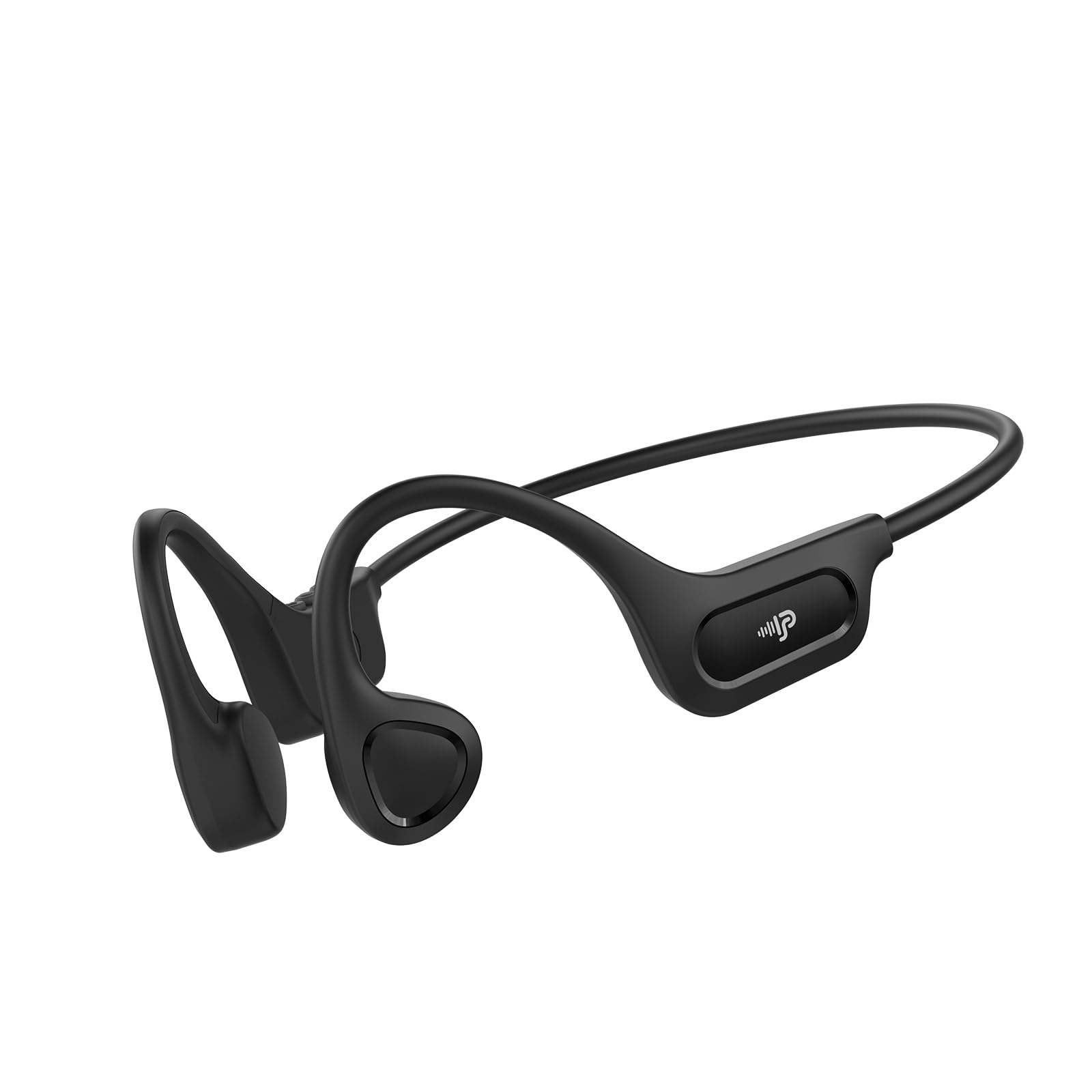
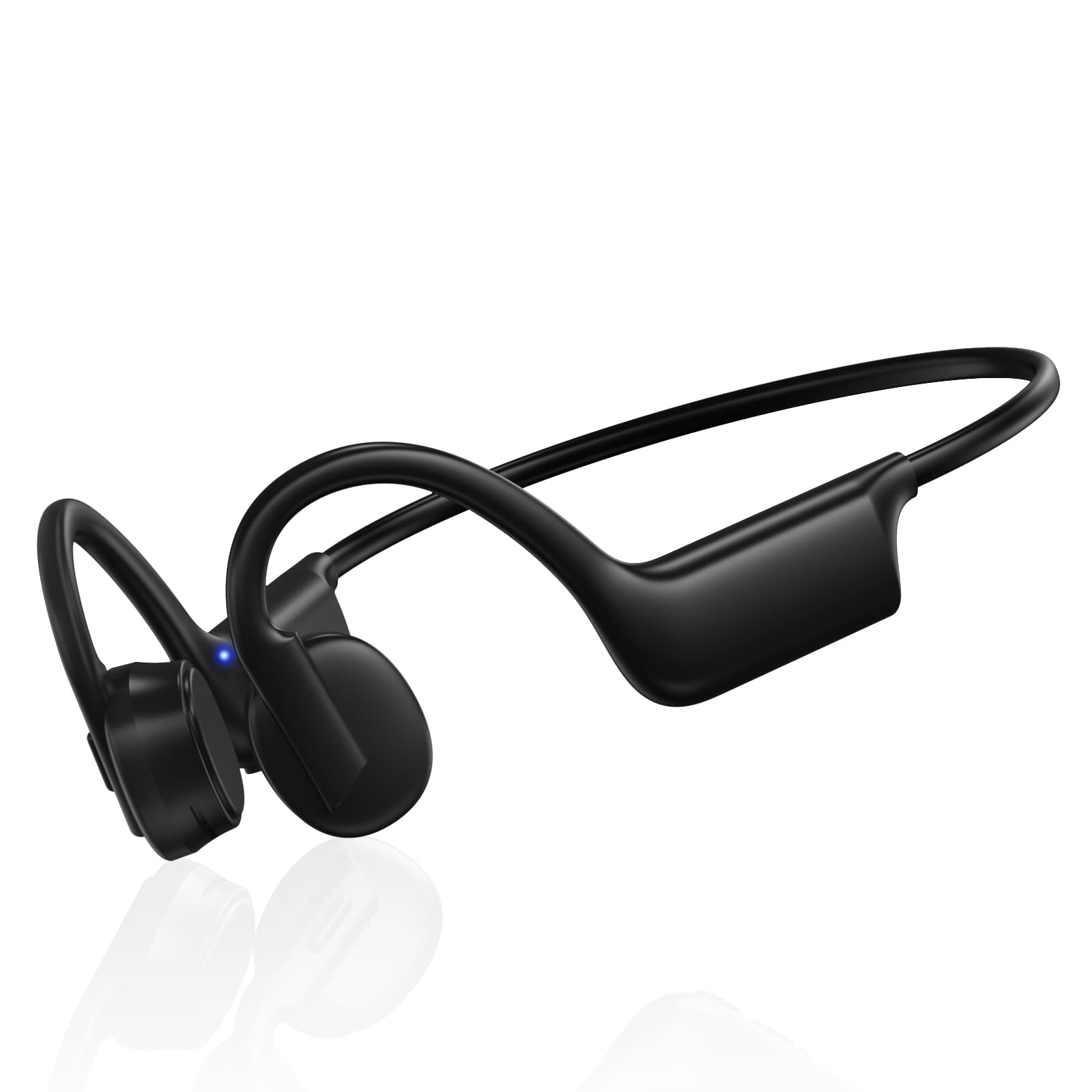
PSIER Bone Conduction X23

83 /100
Sound Score Excellent

Key details

Fit System
Bone-conduction frame
Battery Life
10 hours
Outdoor Volume
Ambient noise competes
Water Resistance
IPX5
View on Amazon

The PSIER X23 is the least obtrusive way to start with bone-conduction running audio: a 23g frame that sits lightly over long sessions and a 10-hour battery that covers a training week without hunting for a charger. It remains an entry-level pick rather than chasing premium output, which is exactly why the price stays friendly and the fit makes the strongest impression.

Fit is the X23's strongest point. The frame holds its position during runs and bike rides, with no shifting at higher cadence, and because nothing plugs the ear, traffic noise stays in the mix at normal volume. Runners who need to hear cross-traffic or an approaching cyclist will appreciate the open design.

Budget-conscious runners who want a low-cost introduction to bone conduction will get the most from this set, especially cyclists and road runners who treat environmental awareness as a requirement rather than a nice extra. It pairs with glasses or helmets without adding pressure, and it makes no claim to be a sealed earbud.

Compared with in-ear earbuds or pricier bone-conduction frames, bass and maximum volume are modest; the X23 trades that output for a light, aware fit. On a quiet loop it sounds clear and balanced, but the volume ceiling is not meant for heavy traffic.

Pros

  • Clear bone-conduction sound with minimal audio leakage for a budget set.
  • Featherlight 23g frame stays comfortable for long sessions.
  • Secure open-ear fit holds up during running and cycling.
  • 10-hour battery with fast Type-C charging and useful charge out of the box.

Cons

  • Controls can trigger accidentally when adjusting the frame during a run.
  • The frame may be too large for very small head sizes.
Our verdict

The X23 is the budget-friendly bone-conduction starter for runners who prioritize lightness and awareness over in-ear isolation. It makes the open-ear category approachable without a premium price.

Check Latest Price
6

Best Battery Life Open-Ear

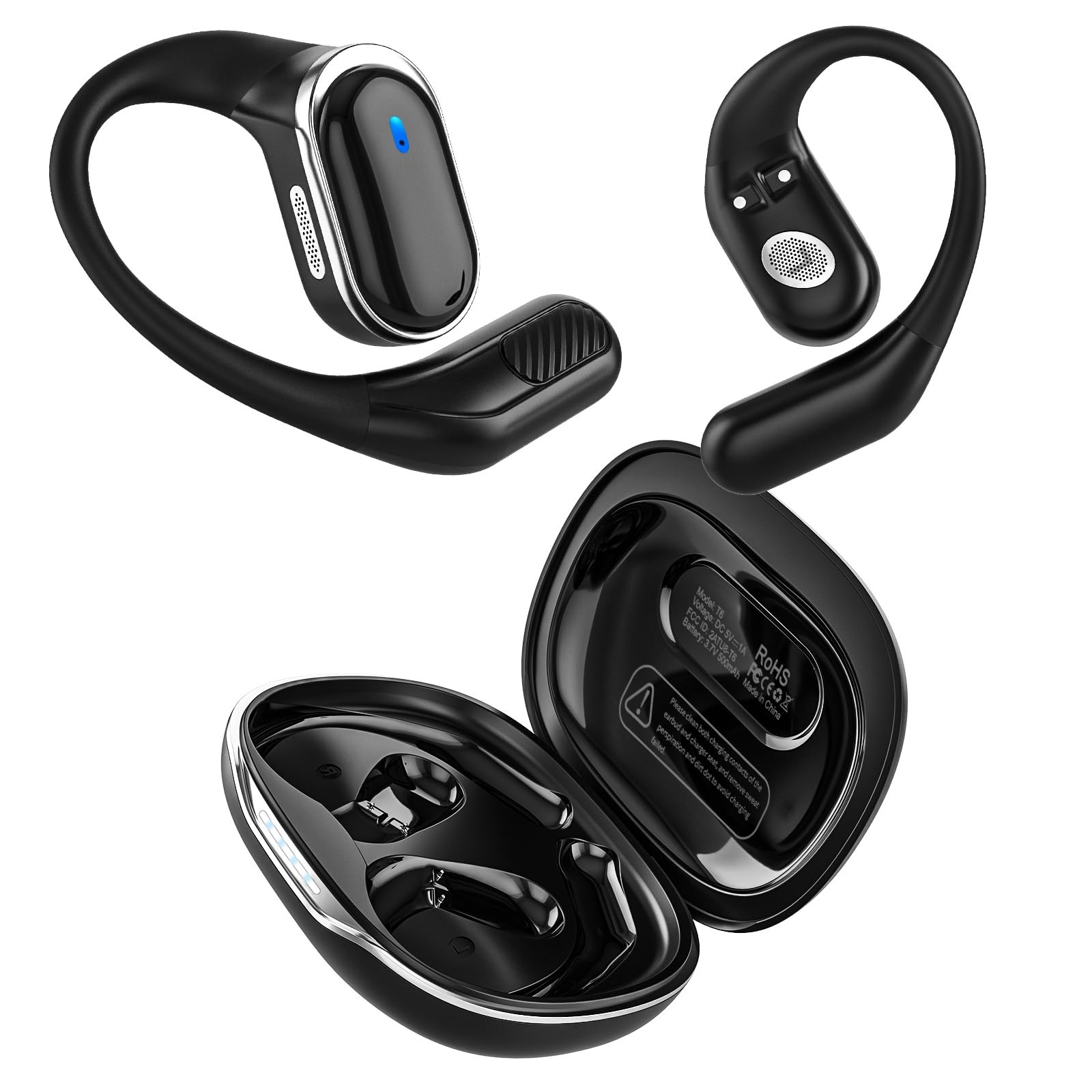
TRAUSI T6

92 /100
Sound Score Outstanding

Key details

Fit System
Open-ear earhooks
Battery Life
80h total
Outdoor Volume
Ambient noise competes
Water Resistance
IPX7
View on Amazon

The TRAUSI T6 is the open-ear pair for runners who hate charging. Where the top pick uses bone conduction, the T6 stays with lightweight hooks and an open fit. The payoff is an 80-hour total battery, IPX7 sweat and rain protection, and Bluetooth 5.4 that pairs quickly and holds a steady connection, so weekly charging becomes an occasional task.

This pair suits runners who value traffic awareness and don't want to charge every night. The open-ear form factor supports road and trail safety, helping you hear a car before it passes. It is not the pair for loud gyms, where crowd noise competes with the music. That awareness is why this style suits runners more than gym-goers.

For the money, the T6 delivers crisp highs and solid bass from an open-ear hook, with no harshness that can creep into budget audio. The lightweight hooks hold their position through sprints and intervals, and the touch controls sit within easy reach. After an hour on the road, the lack of ear pressure is a meaningful comfort win — a combination that budget earbuds can struggle to match, and one that holds up without mid-run adjustments.

💡 Position the hooks firmly before a run so the open-ear soundstage stays consistent.

Pros

  • Crisp highs and solid bass from an open-ear hook, rare in the budget tier.
  • 80-hour total battery plus a charging case that recovers quickly between runs.
  • Bluetooth 5.4 pairs fast and holds a steady connection.
  • Lightweight earhooks stay secure through sprints and intervals without pressure points.

Cons

  • Open-ear hooks let ambient sound in, so in-ear isolation is not part of the package.
Our verdict

This is the budget open-ear pick for runners who want traffic awareness and long stretches between charges.

Check Latest Price
7

Mid-Range Open-Ear

Shokz OpenMove

89 /100
Sound Score Excellent

Key details

Fit System
Bone-conduction frame
Battery Life
6 hours
Outdoor Volume
Ambient noise competes
Water Resistance
Sweat-resistant
View on Amazon

The OpenMove is Shokz's entry-level bone-conduction set, and it carries the brand's core strength: open-ear audio that keeps traffic and trail sounds present while you run. The 29g frame and sweat-resistant build handle routine training, and at this price it undercuts the running-specific top pick by a wide margin.

What keeps it out of the top spot is the dated hardware: Bluetooth 5.1 and a 6-hour battery trail the top pick's 12-hour runtime, and the one-size frame can drift for narrower head shapes. As a mid-range bone-conduction entry point, it covers the essentials without the premium features.

Pros

  • Clear bone-conduction audio with enough clarity for music and calls during runs.
  • Lightweight 29g frame with sweat resistance and Shokz build quality at a mid-range price.
  • Open-ear design preserves situational awareness for road and trail safety.

Cons

  • On narrower head shapes, the one-size frame can drift during faster runs.
  • Charging inconsistencies may develop over months of use, shortening the 6-hour runtime.
Our verdict

For runners who want Shokz's bone-conduction design at a mid-range price, the OpenMove is a workable entry point when the 6-hour battery and one-size frame are acceptable limits.

Check Latest Price
8

Comfort-First Runners

Ogogrs K08

89 /100
Sound Score Excellent

Key details

Fit System
Bone-conduction frame
Battery Life
10 hours
Outdoor Volume
Ambient noise competes
Water Resistance
IP55
View on Amazon

Ogogrs K08 is a lightweight titanium bone-conduction headphone built around comfort. The open-ear frame keeps traffic audible, the IP55 rating handles sweat and light rain, and the 10-hour battery covers a full training week. Calls sound clear enough for a quick check-in mid-run. It covers the running-specific essentials cleanly, but the feature scope stays minimal: this is a comfort-first open-ear model, not a control center. Runners who want a barely-there fit and open-ear awareness will find the simplicity easy to live with.

Pros

  • Clear sound with enough volume for outdoor runs.
  • Lightweight titanium frame stays comfortable through long runs.
  • Handles running, walking, and phone calls without extra fuss.

Cons

  • No app EQ means the sound signature is fixed; you cannot tune for extra bass or treble.
  • In loud city traffic, the open-ear design keeps you aware but does not block surrounding noise.
Our verdict

For runners who prioritize fit and traffic awareness above all else, the K08 is a cost-effective open-ear companion.

Check Latest Price
9

Budget Gym-Goers

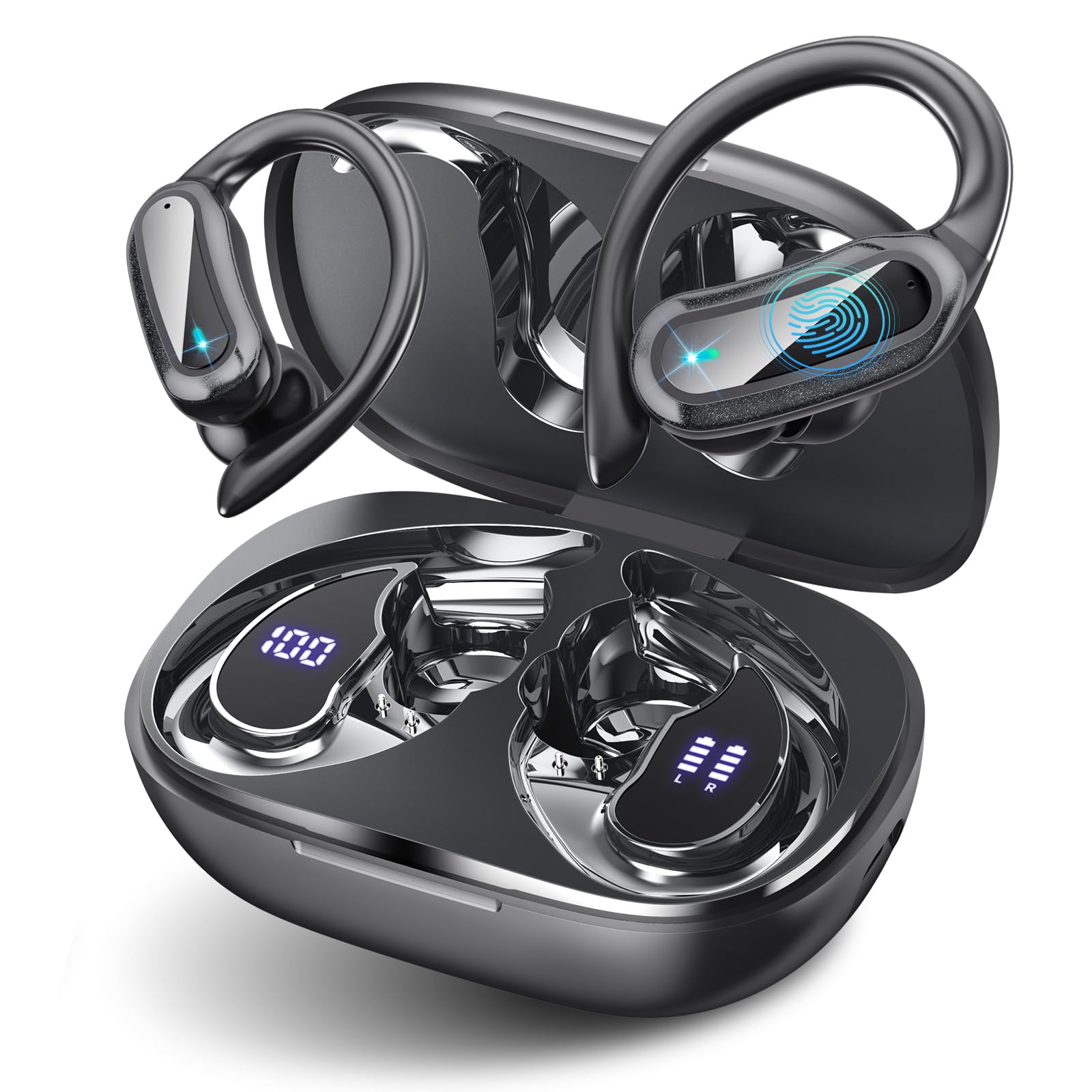
TRAUSI i27

89 /100
Sound Score Excellent

Key details

Fit System
Earhook true wireless
Battery Life
6h + 48h case
Outdoor Volume
Isolation boosts volume
Water Resistance
IPX7
View on Amazon

TRAUSI i27 delivers the secure hook fit and IPX7 sweat protection that gym runners need, with a 54-hour case for week-long training. The bass-forward sound and stable Bluetooth 5.4 connection make it a low-cost alternative to the open-ear pairs in this roundup, but the in-ear design is the dividing line: you get more isolation and noise blocking, less traffic awareness. For treadmill intervals, track repeats, and strength circuits, that tradeoff is fine. For open-road mileage, the open-ear benchmark in this guide is the safer fit. The i27 is best treated as a budget in-ear training piece rather than an all-round running companion.

Pros

  • Ear-hook frame locks the buds in place through sprints, jumps, and kettlebell swings.
  • IPX7 rating handles heavy sweat, rain, and quick rinses after a hard session.
  • Bass-forward sound adds weight to workout playlists without burying the mids.

Cons

  • The earbuds themselves last about six hours, so a full trail day depends on the case for top-ups.
  • Passive noise isolation can't fully hide the low thump of gym speakers or heavy footfall.
Our verdict

If your running happens mostly indoors or on closed paths, the i27 covers the essentials without the open-ear premium.

Check Latest Price

How to Choose

Fit and Security

Ear hooks, clips, and bone-conduction frames all keep audio near your ear without plugging it. The catch: no spec sheet tells you how a hook will sit on your specific ear. A frame that locks in for one runner can press on another's head.

Choose a design that spreads pressure across cartilage or around the head rather than pinching one point, and buy from a seller with easy returns. Even a highly rated pair can produce pressure points on certain ear shapes.

Water and Sweat Resistance

IPX5 handles sweat and rain; IPX7 survives submersion. The rating covers the outer shell, not charging contacts.

Once sweat reaches exposed pins or magnetic connectors, corrosion can kill charging even while the speakers still work. This is the most common long-term complaint across price tiers.

Battery Life

Open-ear frames have no case, so per-charge life is the real number; a 6-hour model needs daily charging. True wireless earbuds can lean on a case, making total battery the better comparison.

Ratings assume moderate volume; high outdoor volume drains faster, and heat plus charge cycles degrade lithium cells over time.

Situational Awareness

Open-ear designs leave ear canals unblocked, so you hear horns and approaching bikes at full level. In-ear models, even in transparency mode, rely on mics and can muffle spatial cues in wind.

Road runners should prioritize open designs; treadmill and trail runners can accept isolation.

Outdoor Volume

Open-ear sound competes with wind and traffic, and bone conduction vibrates bone rather than pressurizing the ear canal, capping bass and maximum loudness.

An in-ear seal blocks noise and makes volume feel louder at a lower level, but that same seal removes you from the road.

Frequently Asked Questions