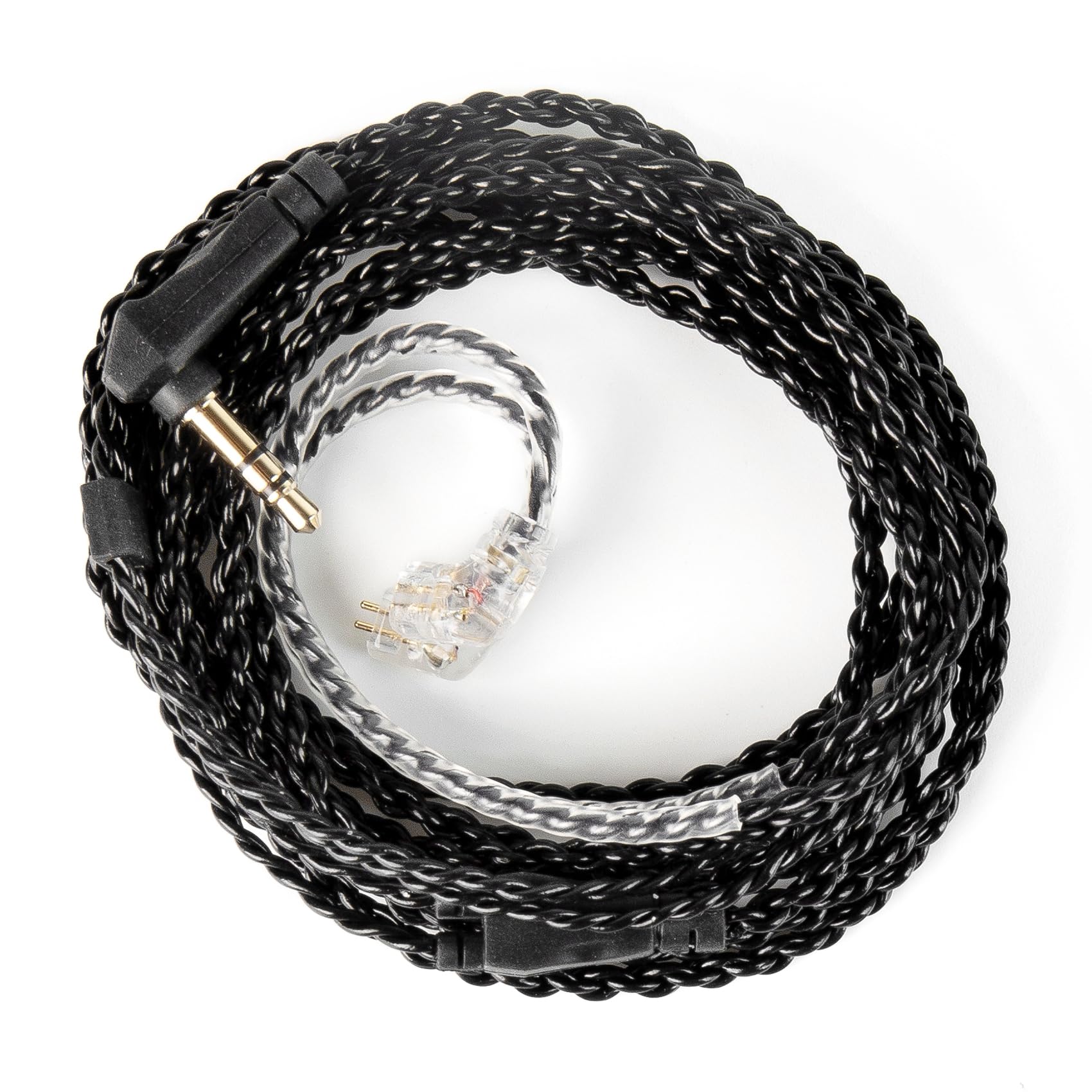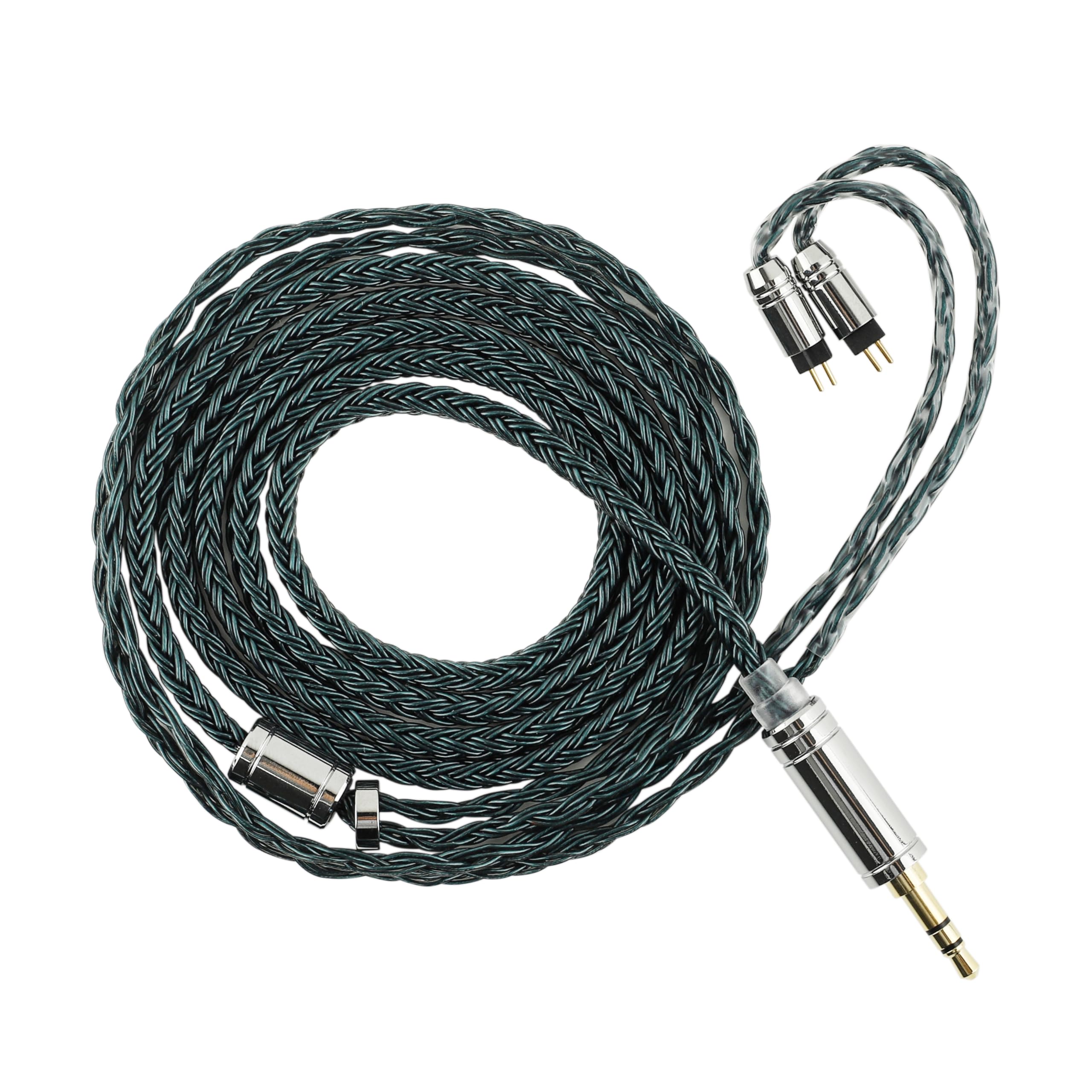
8 Best IEM Cable of 2026: Match Connector, Fit, and Feel

Find the best IEM cable for your setup by matching connector type, termination, and cable feel — before you buy.

IEM cable listings love to lead with silver-plated copper and crystal structures. In daily use, what actually matters is whether the connector seats flush, how the earhook holds, and whether the splitter drags on your collar.

Durability at the jack and y-splitter is the most common weak point across price tiers, but that is a maintenance and handling issue rather than a reason to avoid upgrading. A cable with clean strain relief and the right connector geometry will outlast one chosen on conductor marketing alone.

So this guide is built around connector compatibility, termination flexibility, and physical behavior — not conductor buzzwords. Match those three to your IEM and source, and you will know exactly which cable belongs in your kit.

About the Sound Score: This comparative score is calculated from a product's published customer rating and review volume. It is not a laboratory measurement or a hands-on test result.

1

Best Overall

Tripowin Zonie 16-Core

92 /100
Sound Score Outstanding

Key details

Conductor
16-core SPC
Termination
3.5mm
Cable Length
1.25m
Connector Type
0.78mm 2-pin
View on Amazon

The Tripowin Zonie 16-Core is a soft, tangle-resistant cable that upgrades the feel of a stock IEM before any sound kicks in. Its 16-core silver-plated copper conductor and pre-shaped memory earhooks give it a more composed fit than the usual budget throw-in cable, and the 0.78mm two-pin end sits firmly on a wide range of IEMs. For anyone coming from twisted stock wire, the first hand-feel alone is enough to recommend it.

Sound-wise, the Zonie keeps the tuning neutral while giving bass and treble a slightly firmer outline. It doesn't change the IEM's character, but it can reduce the softness you get from thin stock conductors. The braid moves smoothly against clothing, and the memory hooks hold their curve without pressing hard on the outer ear. The extra clarity is subtle, but it comes through on busy tracks with layered bass and cymbals.

The cable stays manageable in daily use: it loops easily, stays flat behind the head, and the 3.5mm jack fits standard phone and DAP cases without a right-angle adapter. Strain relief at the jack and 2-pin ends keeps the critical points from bending too sharply, which helps during casual carries. The memory hooks can be bent once to match a smaller ear, and the low-friction jacket doesn't snag on shirt collars.

Fit compatibility is a big part of its appeal. The 0.78mm two-pin interface is widely used on budget IEMs, and the pins seat with a clean click on standard sockets. The same fit works across several brands, so one Zonie can serve multiple IEMs in a collection. Just confirm your IEMs use standard 0.78mm spacing rather than a recessed connector before ordering.

This is the cable for 0.78mm two-pin IEM owners who use a standard 3.5mm jack. Pick it when you want a comfortable everyday braid for a 3.5mm source. Durability can vary between units, and the y-splitter weight can pull on lightweight shells, so check both connections when you switch IEMs.

The construction quality also holds up against cables at twice the price: the 16-core braid is dense, the pre-formed earhooks keep their shape, and the 3.5mm plug is compact enough for phone cases. It is a low-cost upgrade with a clear ceiling — it does the single-ended job well enough that the remaining limits are about features, not daily comfort.

Pros

  • Feels more premium than the price suggests, with a dense braid and clean connectors.
  • Can sharpen bass and treble definition compared with stock IEM cables.
  • Soft, smooth jacket that stays tangle-free in a pocket or bag.
  • 0.78mm two-pin fits a wide range of IEMs without forcing.
  • Genuinely useful everyday upgrade at a budget price.

Cons

  • No balanced 2.5mm or 4.4mm termination for listeners with balanced sources.
  • No inline microphone or remote for calls, gaming, or track changes.
Our verdict

A listener with 0.78mm IEMs and a 3.5mm jack gets the comfort and cable quality of far pricier options without paying for modular plugs they won't use.

Check Latest Price
2

Best Modular Termination

Tripowin Amber Modular

90 /100
Sound Score Outstanding

Key details

Conductor
16-strand OFC
Termination
2.5/3.5/4.4mm
Cable Length
1.2m
Connector Type
0.78mm 2-pin
View on Amazon

The Amber Modular stands apart from the fixed-termination cables in this roundup because the plug assembly swaps between 2.5mm, 3.5mm, and 4.4mm by hand. The 16-strand OFC conductor keeps a soft, silky flex through the PVC jacket, and the 0.78mm 2-pin connector seats firmly in standard IEMs. That pairing of swappable plug and soft handling puts the convenience in reach without a heavy premium.

The Amber fits a listener who owns both a single-ended phone or dongle and a balanced DAP and wants one cable for both. That flexibility is the main reason to choose it over the fixed-plug options in this set, but it comes with two behaviors to respect: grip the modular collar when swapping, and give the no-memory jacket a loose loop in a bag. For a desktop or commuter setup where the cable stays plugged in, neither becomes a burden.

Build quality feels dense at the y-split and the pre-formed earhooks keep the 0.78mm pins stable during extended listening. The soft texture also reduces friction against clothing, so the added convenience of multiple termination options does not drag or stiffen the cable. At this price, it undercuts comparable interchangeable-plug models without sacrificing connector fit or plug retention.

💡 Swap plugs by the collar and store the cable in a loose loop to avoid stressing the modular junction.

Pros

  • Interchangeable 2.5mm, 3.5mm, and 4.4mm plugs cover balanced and single-ended sources with one cable.
  • Soft, silky PVC jacket flexes easily around ears and stays comfortable in long sessions.
  • Good build quality at the connector, splitter, and earhooks for the price.
  • Cost-effective for a modular cable with this level of connector fit and plug retention.

Cons

  • The no-memory jacket coils loosely rather than holding a snug wrap, so packed cables can catch.
  • The swappable plug can separate from the cable if you pull by the wire instead of the barrel.
Our verdict

The Amber Modular is the runner-up for listeners who need one cable across single-ended and balanced sources and want a soft, comfortable jacket.

Check Latest Price
3

Best Long 2M Cable

KBEAR ST16-Plus

86 /100
Sound Score Excellent

Key details

Conductor
5N OCC silver-plated
Termination
3.5mm
Cable Length
2m
Connector Type
0.78mm 2-pin
View on Amazon

The ST16-Plus gives desktop and studio listeners a real 2m run of 5N OCC silver-plated 224-core conductor, a step up from the usual 1.2m budget cable. The soft jacket keeps desk routing comfortable, and the gold-plated 3.5mm plug with rubber strain relief seats firmly in standard headphone outputs. That reach is the core reason to choose it over the common budget all-rounder.

The cable adds no audible hiss or handling noise, which matters when a long run sits next to a monitor or amplifier. The 0.78mm 2-pin connector fits standard IEM sockets, and the braid stays manageable across a desk. This is a quiet, no-frills signal path for sensitive monitors.

At a budget price, this cable offers more conductor cores and longer reach than a basic stock replacement, so it suits a fixed listening station better than a pocket dongle setup. The 2m length is the point: you can place your DAC or amp wherever you want and still reach your headphones.

This is for desktop and studio owners with standard 0.78mm 2-pin IEMs who need 2m of reach and want an affordable silver-plated upgrade. If your IEMs use recessed QDC sockets, select the QDC connector variant rather than the standard 2-pin. The softer build can feel less rugged than stock cables, and the splitter weight can pull at ear loops — a tradeoff that matters less on a desk than in a pocket.

Pros

  • Full 2m reach routes around desktop gear without pulling the IEMs from your ears.
  • Silver-plated 224-core conductor gives a clean signal path with no added hiss.
  • Braid and connector finish feel better than the price suggests.
  • Cost-effective long upgrade for listeners who need the extra reach.

Cons

  • The splitter's weight can pull at the ear loops, especially on larger ears.
  • The soft jacket can feel less rugged than stock cables under rough handling.
Our verdict

For desktop listeners who need 2m of cable, the ST16-Plus delivers the reach and clean signal path without stretching the budget.

Check Latest Price
4

Best OEM MMCX Replacement

Shure EAC64CL

92 /100
Sound Score Outstanding

Key details

Conductor
Termination
3.5mm TRS
Cable Length
1.6m
Connector Type
MMCX
View on Amazon

The EAC64CL is the exact Shure OEM cable for SE215, SE315, SE425, and SE535 IEMs, matching the original MMCX connector and 3.5mm termination. This is the cable to choose when guaranteed compatibility with Shure's fitment matters more than aftermarket conductor upgrades or swappable plugs.

This cable suits Shure SE-series owners who want a stock replacement without checking pin sizes or connector tolerances. The MMCX connectors are nickel-plated and the 3.5mm TRS termination is standard, so it fits the original fitment exactly. Buyers who need balanced terminations or an inline mic should look elsewhere; aftermarket cables offer those features but don't match the OEM part. The strain relief can weaken at the connector or jack under heavy use, so gentle handling extends its service life.

Swapping the cable takes under a minute: align the MMCX connector, push until it seats, and the 64-inch length routes easily behind the ear. The 2-year warranty covers manufacturing defects, which matters for a cable that goes through daily bending at the connector. This is a stock replacement first, not an upgrade cable for balanced sources.

💡 For cable longevity, unplug by the connector body rather than yanking the cord.

Pros

  • Exact OEM fit for Shure SE215, SE315, SE425, and SE535 MMCX ports.
  • Installs without tools or adapters; align and push the connector until it seats.
  • Direct replacement match with the same length and 3.5mm termination as the original.
  • Stock Shure construction as a factory replacement cable.

Cons

  • No balanced termination or inline microphone; buyers needing those features need another cable.
  • Strain relief can weaken at the connector or jack with heavy tugging or sharp bends.
Our verdict

Shure SE owners who want the factory cable and don't need balanced or mic features get a direct replacement with a 2-year warranty.

Check Latest Price
5

Best QDC/KZ 2M Cable

KBEAR ST12 Plus 2M

89 /100
Sound Score Excellent

Key details

Conductor
4N OFC silver-plated
Termination
3.5mm, 4.4mm option
Cable Length
2m
Connector Type
Recessed QDC 2-pin
View on Amazon

The KBEAR ST12 Plus is the silver-plated QDC option in this set: a 2m 14-core 4N OFC conductor in an eight-core braid with a recessed 2-pin connector that seats flush in KZ/CCA sockets. That placement makes it the long-cable choice for people who need more reach than the basic copper replacement offers, and the 14-core build is a clear step up in conductor count from that entry-level cable. For stage use, the flush QDC fit is the reason to choose this over a standard 0.78mm cable.

The conductor keeps the signal clean without pushing treble forward, and the 22AWG braid is firm enough to hold its shape on a desktop while still routing easily around a headphone stand. The recessed pins are the main event: they lock into KZ-style sockets without the wobble that can show up with universal 0.78mm pins. A 4.4mm balanced version is available for sources that need it.

This cable is for KZ/CCA owners who use a fixed amp, interface, or stage setup and want a connector that seats securely. Standard 0.78mm 2-pin IEMs are outside its range. Signal loss in one channel is possible, so checking both channels when it arrives is worthwhile.

Pros

  • Recessed QDC fit keeps KZ/CCA IEMs locked in place.
  • Silver-plated 14-core conductor preserves the IEM's tonal balance.
  • 2m length gives desktop and stage users plenty of reach from a fixed source.

Cons

  • The outer jacket can feel tacky or sticky when it contacts sweat, a downside for stage and hot rooms.
  • For portable use, the 2m run is more cable than necessary and needs coiling before pocketing.
Our verdict

When you need a 2m QDC cable for KZ/CCA monitors and want a connector that stays put, the ST12 Plus is the long-cable pick for fixed listening positions.

Check Latest Price
6

Calls with 2-Pin

Moondrop MC2 Mic Cable

79 /100
Sound Score Very Good

Key details

Conductor
OFC + SPC Litz
Termination
3.5mm
Cable Length
1.2m
Connector Type
0.78mm 2-pin
View on Amazon

Moondrop's MC2 adds an isolated audio circuit and inline controls to 0.78mm 2-pin IEMs, wrapped in a thicker braid that feels more substantial than the budget cotton-yarn mic cable in this set. The core cable preserves signal clarity when the remote is unused, which is the main reason to choose it over a standard copper replacement. The mic output and connector durability are the two areas that need checking: some units deliver quiet call audio, and the jack and 2-pin ends can develop intermittent contact over time. Those tradeoffs make it a niche fit for IEM owners who need the remote and are willing to verify their cable early.

Pros

  • Thicker braid gives it a more premium feel than budget mic cables.
  • Audio remains clean when the inline controls are not in use.

Cons

  • Mic output can be too quiet for some call environments.
  • Jack and 2-pin connectors can develop intermittent contact over time.
Our verdict

For 0.78mm 2-pin owners who need an inline remote and prefer a firmer braid, the MC2 fits — but test mic volume and connector contact early.

Check Latest Price
7

Ultra-Budget KZ Replacement

H HIFIHEAR 4-Core KZ/CCA

85 /100
Sound Score Excellent

Key details

Conductor
4-core high-purity copper
Termination
3.5mm
Cable Length
1.2m
Connector Type
0.75mm 2-pin
View on Amazon

This 1.2m high-purity copper cable is the no-frills replacement for KZ/CCA owners who want a lightweight spare. The four-core build feels solid for the price and swaps in cleanly on standard 0.75mm 2-pin shells. Because the pins can sit short or loose on some IEMs, it is best treated as a backup rather than a primary cable; that fit caveat, along with the bare copper jacket, is why it stays below the top tiers. For a budget spare, that tradeoff is easy to accept; for a daily cable with a guaranteed snug fit, longer QDC alternatives suit better.

Pros

  • Four-core copper build feels solid for a budget cable.
  • Swaps in cleanly as a replacement for a worn stock KZ/CCA cable.
  • Can bring a slightly fuller tone than stock with some KZ/CCA models.

Cons

  • 0.75mm 2-pin only
  • Pins can sit short or loose on some IEMs, causing an intermittent connection.
Our verdict

Keep this as a short, budget backup for KZ/CCA IEMs when 2m reach isn't needed.

Check Latest Price
8

Budget QDC 2M

KZ ZS10 Pro Cable 2M

83 /100
Sound Score Excellent

Key details

Conductor
4N high-purity OFC
Termination
3.5mm
Cable Length
2m
Connector Type
QDC/0.75mm 2-pin
View on Amazon

At 2m, this is one of the longer budget QDC cables for KZ/CCA IEMs. The length suits desktop and bed listening where a short stock cable would be too tight. Standard 0.78mm two-pin IEMs need a different cable, so this is best for KZ/CCA owners who want a quick long replacement. Performance consistency can vary between samples, so this is not the cable to rely on when every channel has to stay solid; that keeps it behind the more deliberate long QDC cable in this lineup - a backup pick rather than a primary recommendation.

Pros

  • Useful 2m reach for desktop, bed, or studio listening without extension adapters.
  • QDC pins seat securely in KZ/CCA recessed sockets, reducing accidental disconnects.

Cons

  • No inline mic means callers need a separate headset.
  • Some units can develop intermittent channel dropouts.
Our verdict

For KZ/CCA owners who need a long spare for desktop listening, this fits the recessed QDC socket and covers the distance a stock cable can't.

Check Latest Price

How to Choose

Connector Type

Standard 0.78mm 2-pin sockets are common, but recessed QDC sockets use shorter, flared pins. A standard 2-pin in a QDC socket can sit loose or angle, causing intermittent audio.

If your IEM has a recessed socket, buy a QDC-specific cable; standard sockets stay with standard 0.78mm. Shure and other MMCX IEMs need a twist-lock MMCX connector, not a push-in 2-pin. Check the socket type before ordering.

Termination

Termination must match the source output. 3.5mm single-ended works with nearly all laptops, dongles, and entry-level DAPs; balanced 2.5mm or 4.4mm outputs need a balanced cable to unlock extra power.

Modular cables with swappable plugs add versatility, but each joint is a wearing point. If you mainly use one device, a fixed 3.5mm plug is simpler. USB-C termination suits phones without a headphone jack, but the plug contains a small DAC, so sound quality depends on that circuit.

Conductor Material

Conductor material changes resistance and capacitance slightly, but the audible difference between modern OFC and silver-plated copper is subtle. Bigger gains come from cable geometry and termination quality.

Silver-plated copper is marketed as bright and OFC as warm, but most listeners feel flexibility and weight before they hear a change. A 16-core braid handles more softly than a stiff 4-core design, which matters on long sessions.

Cable Length

A 1.2m cable suits portable use because it reaches from a pocket or waist bag without excessive slack. A 2m cable belongs on a desktop amp, studio rack, or stage setup.

Longer cables add capacitance, weight, and more surface area for rubbing against clothing. Match length to the distance between player and ears; carrying 2m on a commute is unnecessary bulk.

Inline Mic/Remote

An inline mic/remote adds convenience, but it also adds a control board and extra conductors. Those extra parts create more joints where signal can drop after heavy use, and chest-level mics are fine for calls but not recording.

If you do not need a mic, a pure audio cable is the lower-maintenance choice. If you do, keep the audio path isolated from the mic circuit and expect the mic module to wear first.

Frequently Asked Questions