9 Best KZ IEMs in 2026: Proven Picks That Fit and Last

Which KZ wired IEMs deliver reliable sound, secure fit, and real value for music, gaming, and monitoring.

KZ has built a reputation on packing multi-driver hybrids into inexpensive shells, but the review sections tell a more complicated story. Fit varies wildly, stock cables are often too short or stiff, and a small but persistent number of owners report one side dying after a few months.

The trick is not to avoid KZ altogether but to pick the models with the most forgiving shells, the most proven tuning, and the easiest upgrade path. A better set of ear tips and a replacement cable solve most of the common complaints without pushing the total cost past what the big-name brands charge for a single dynamic driver.

If you are choosing between a cheaper model with a massive review base and a newer one with tuning switches, the proven performer is usually the safer buy. The adjustable models are fun, but the extra features only matter if the shell fits your ears and the QC holds up.

About the Sound Score: This comparative score is calculated from a product's published customer rating and review volume. It is not a laboratory measurement or a hands-on test result.

1

Best Overall

KZ ZS10 Pro

89 /100
Sound Score Excellent

Key details

Cable
Detachable 2-pin, 3.5mm
Tuning
Fixed
Impedance
24 ohm
Sensitivity
111 dB
View on Amazon

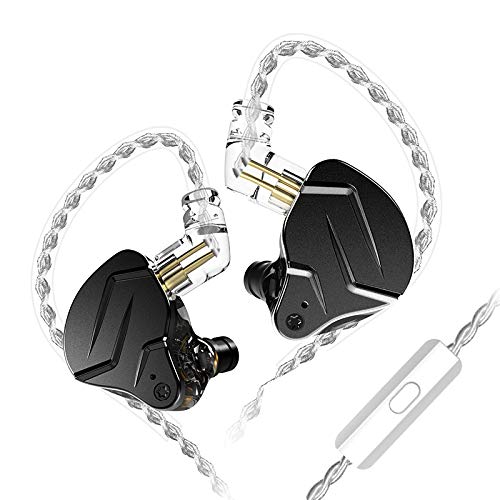
The ZS10 Pro sets the reference for KZ's five-driver hybrids. Its 4BA+1DD layout delivers a crisp, lively signature: the balanced-armature array keeps cymbals, vocals, and guitar harmonics articulate, while the dynamic driver supplies low-end weight without pushing into the midrange. The 7 Hz to 40 kHz frequency range is wider than what most listeners can hear, but it shows the drivers are not struggling at either end. The 24-ohm impedance and 111 dB sensitivity mean it reaches high volume from a phone dongle or laptop, so it does not need a separate amp. The detachable 2-pin connector also turns the cable into a user-serviceable part, which matters more than the driver count alone.

The shell is compact and comfortable for long wear, and the 26 dB noise isolation helps in loud listening spaces. It is not a replacement for active noise cancellation, but it cuts enough background chatter for a stage wedge or a shared room. On stage, the high sensitivity makes vocal cues and monitor mixes easy to follow; in games, the BA array separates footsteps from gunfire without making the treble tiring. Bass response has real body rather than bloat, so kick drums and bass guitars hold their own without covering the rest of the band. The tuning is lively enough for music listening but balanced enough for monitoring, which is why this model carries across those use cases.

The best home for the ZS10 Pro is a budget audiophile, live musician, or gamer who wants monitor-grade clarity without paying premium IEM prices. Unit-to-unit QC is a real boundary, so buy from a seller who accepts returns. This is also a monitor for buyers who treat the stock cable as a starting point rather than a permanent fixture.

On a mid-range price point, this five-driver hybrid outperforms far pricier IEMs in clarity and imaging, and the tuning stays useful across music, gaming, and stage monitoring. For a model in this price tier, it competes with IEMs that cost considerably more, especially when paired with a source that can feed it cleanly. That combination makes it the benchmark to compare other KZ hybrids against.

Pros

  • Crisp, lively hybrid sound with strong detail retrieval.
  • Strong value for a five-driver hybrid at this price.
  • Comfortable shell and solid build for long listening sessions.
  • High sensitivity and low impedance keep phone-dongle sources usable.

Cons

  • The stock cable is short and can feel cheap, so a replacement cord is the standard workaround.
  • For buyers planning to keep one pair for years, durability can vary; some units may need replacement around the five-month mark.
  • Some units can develop one-sided audio, so checking both channels after unboxing is a sensible habit.
Our verdict

The ZS10 Pro is the benchmark KZ hybrid for budget audiophiles, musicians, and gamers: five-driver clarity, easy driving, and a tuning that works across music, gaming, and stage monitoring at a mid-range price.

Check Latest Price
2

Best Tunable Hybrid

KZ ZS10 Pro 2

86 /100
Sound Score Excellent

Key details

Cable
Detachable silver-plated, 3.5mm
Tuning
4-level switch
Impedance
25 ohm
Sensitivity
108 dB
View on Amazon

Four-level tuning switches and a silver-plated cable make the ZS10 Pro 2 the adjustable version of KZ's familiar 1DD+4BA layout. The low end stays full while balanced armatures keep layered details in rock mixes and game audio easy to follow. It refines the older ZS10 formula instead of replacing the entry-level benchmark.

The four-position switch covers bass-heavy, balanced, treble-tilted, and vocal-forward voicings, so buyers who dislike EQ get immediate control. This is a seated-listening model for average-to-large ear canals; very small ears and belt-pack stage users should check fit and cable reach before committing. Larger ear cavities let the hybrid sit deeper, and the detachable cable keeps replacements simple.

Build quality keeps pace with the mid-range price: metal faceplate, detachable plugs, and a more polished shell than older KZ hybrids. The 25-ohm impedance and 108 dB sensitivity drive cleanly from a phone dongle or budget DAC. Switching between positions changes the response clearly, so the tunability is not decorative. For a mid-range IEM, it handles rough recordings with more composure than budget hybrids.

💡 Keep a 3.5mm extension or aftermarket cable for belt-pack stage work; the stock length favors seated listening.

Pros

  • Four-position switch covers bass-forward and vocal-forward signatures without EQ.
  • Hybrid tuning delivers a full low end while BA drivers add detail through the mids and treble.
  • Detachable silver-plated cable and machined shell hold up to regular handling.

Cons

  • Changing eartips can shift the inner speaker mesh, so tip swaps need a steady hand.
  • The stock cable may leave tall or belt-pack players without enough slack.
  • The shell can feel bulky in smaller ear cavities over longer sessions.
Our verdict

The ZS10 Pro 2 turns a practical tuning switch into real sonic variety while keeping the low-end weight of the ZS10 lineage. Buyers who want voicing options in a mid-range hybrid will find the added control worthwhile.

Check Latest Price
3

Best Budget All-Rounder

KZ ZST

91 /100
Sound Score Outstanding

Key details

Cable
Detachable, 3.5mm
Tuning
Fixed
Impedance
18 ohm
Sensitivity
106 dB
View on Amazon

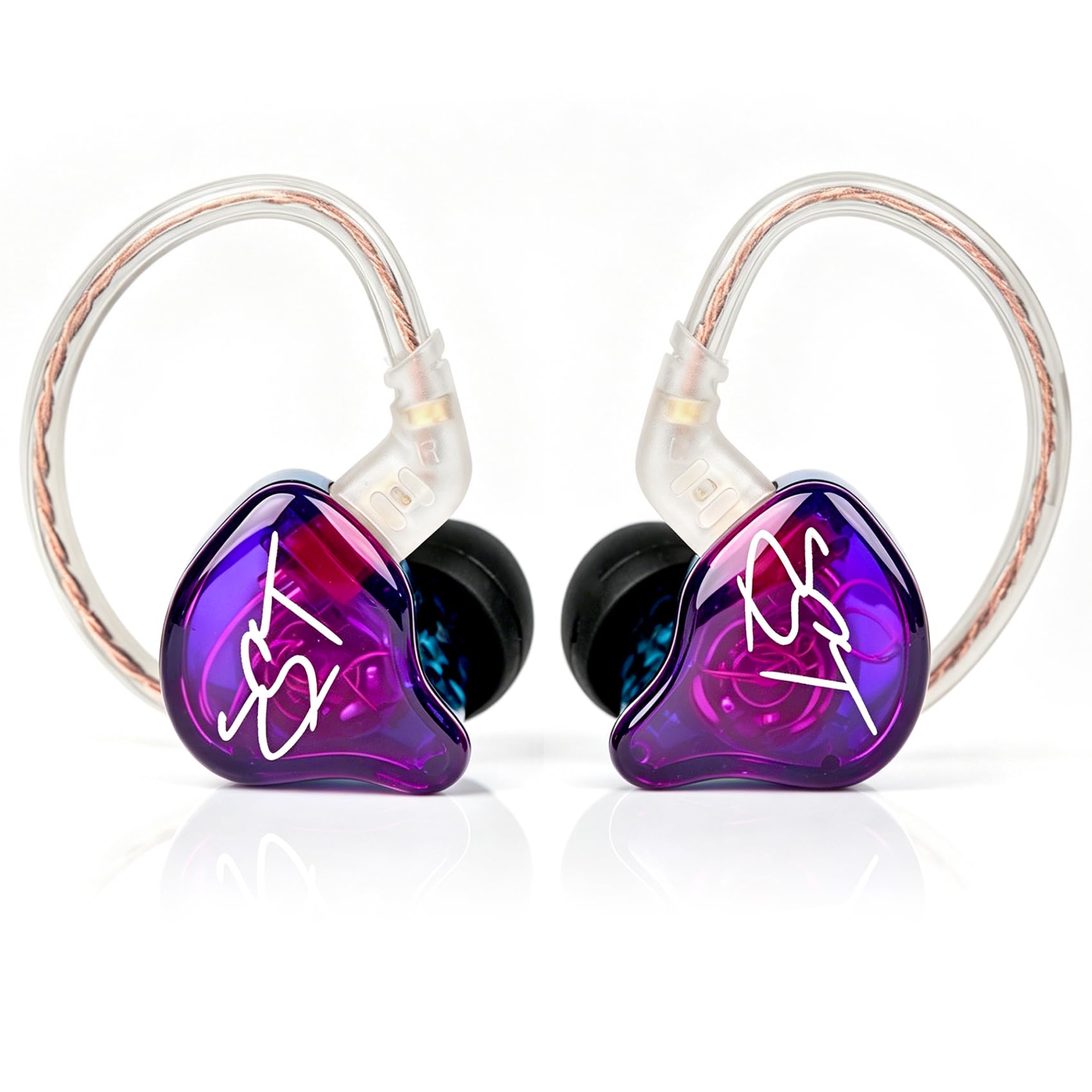
The KZ ZST is the budget hybrid that made dual-driver tuning accessible; it delivers crisp balance-armature treble and a punchy dynamic low end without demanding a higher budget. Its role in the lineup is the general all-rounder, not the gaming specialist or the detail-monitor specialist; that separation keeps the recommendation simple.

The hybrid tuning keeps vocals clean and cymbal hits crisp while the dynamic driver adds enough low-end weight for rock, electronic, and game audio. It isn't a basshead tuning, but it also isn't thin; the balance leans slightly toward energetic without turning harsh.

The 18-ohm impedance and 106 dB sensitivity reach normal volume from a phone, laptop, or basic dongle, so the tuning is easy to appreciate on everyday gear. It is comfortable for long sessions once you find a tip that seals, and the transparent shell gives the dual-driver layout a visual edge over typical opaque budget housings.

This is the right first IEM for budget listeners who want a spare pair for music, podcasts, and casual gaming, or for musicians keeping a cheap monitor in a gig bag. The stock cable and jack should be treated as replaceable at this price, and if your ear canals are on the smaller side, the top-heavy shell is the boundary to weigh before buying.

💡 For smaller ears, a shorter eartip or over-ear routing helps the angled shell sit more securely.

Pros

  • Crisp, balanced hybrid sound with clear vocals and a punchy low end.
  • Outstanding value for money in the entry-level wired IEM tier.
  • Comfortable for long sessions after the right eartip is fitted.
  • Transparent shell and angled nozzle give it a distinctive look at a low price.

Cons

  • The angled shell can feel top-heavy in smaller ears and may shift during long sessions.
  • Some heavily used pairs develop channel imbalance at the jack or driver connection; swapping the cable is the first test.
Our verdict

The ZST is the cheapest way to learn what a hybrid IEM does right: clear sound, low impedance, and a cable you can replace.

Check Latest Price
4

Best Budget Gaming Pick

KZ ZST Pro X

91 /100
Sound Score Outstanding

Key details

Cable
Detachable, 3.5mm
Tuning
Fixed
Impedance
40 ohm
Sensitivity
Not listed
View on Amazon

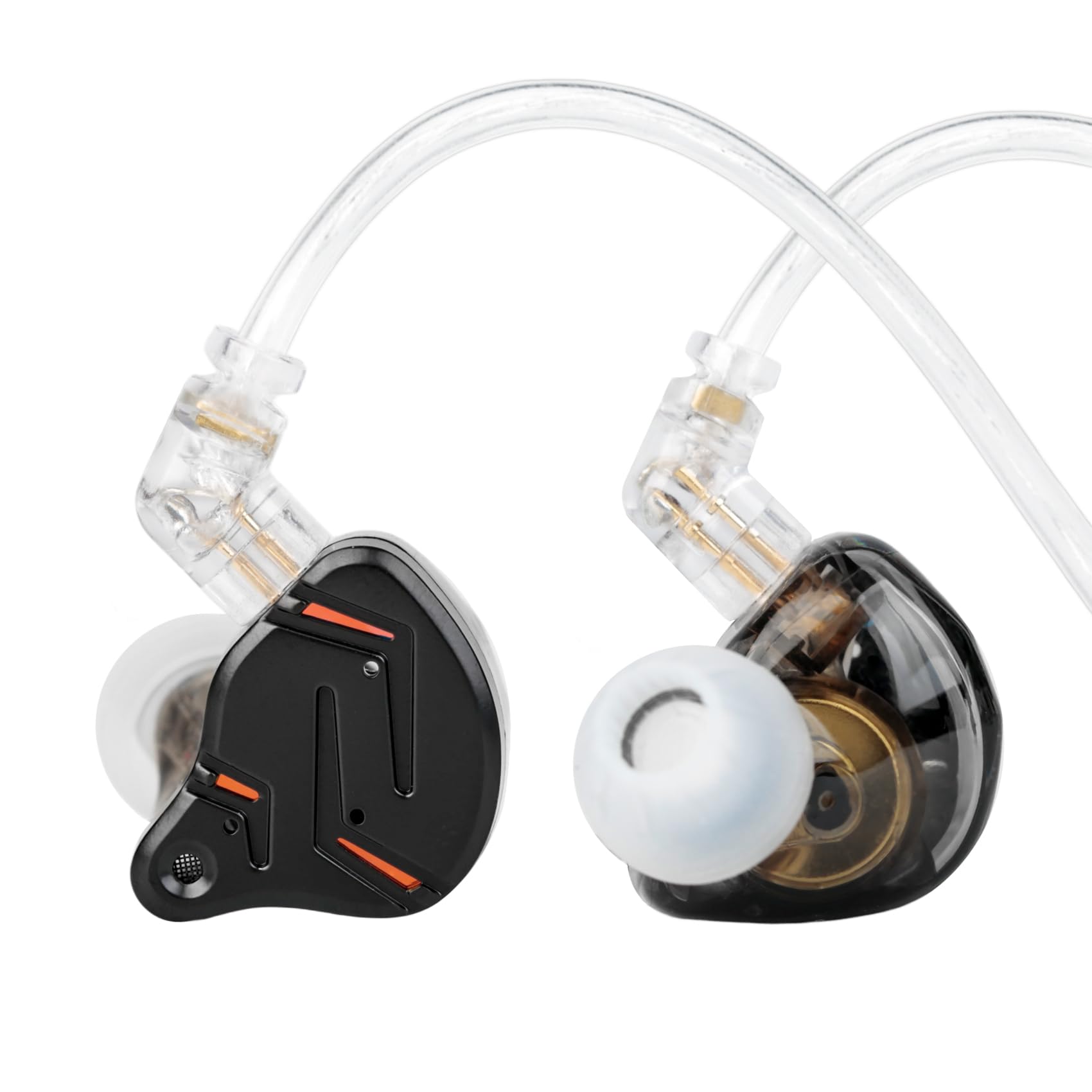
The ZST Pro X sits in the lineup as the FPS-oriented KZ: imaging and a bright, detailed tuning put footsteps and reload cues in a distinct spatial position, which is the core of what a competitive player needs. The hybrid driver stack combines a balanced armature for crisp highs and a dynamic driver for punch, and that contrast helps separate gunfire from environmental audio. The metal faceplate adds stiffness to the shell, and the over-ear hooks keep it from shifting during longer matches.

At 40 ohms, the ZST Pro X is easy to drive from a phone, console controller, or budget dongle without extra amplification. The detachable 3.5mm cable also makes a longer replacement a simple upgrade rather than a repair, which matters for a budget IEM where the stock accessory is the weakest link.

Best suited to FPS players and budget-conscious musicians who prefer a brighter, detailed sound and can accept a short stock cable, source-dependent hiss, and a bulky shell that may not seat well in smaller ears. Anyone needing a long cable for a tall desktop setup or a dead-quiet noise floor for critical listening should factor those limits into the decision.

💡 Keep a longer replacement cable on hand if your desk layout places the audio jack out of reach.

Pros

  • Clear, loud sound with good imaging for gaming.
  • Strong value for the price.
  • Quality build and comfortable long-session wear.
  • Holds up under daily use for a budget IEM.

Cons

  • The bulky shell can prevent a secure seal in smaller ears.
  • In quiet rooms, passive isolation varies and some sources add a hiss floor.
  • The stock cable is short for desktop and tall-player setups.
Our verdict

For FPS players on a budget, the ZST Pro X is the imaging-first wired pick over generic gaming headsets.

Check Latest Price
5

Best Tunable Budget

KZ Castor

88 /100
Sound Score Excellent

Key details

Cable
Detachable 2PIN-C, 3.5mm
Tuning
2 switches, 16 profiles
Impedance
31 ohm
Sensitivity
105 dB
View on Amazon

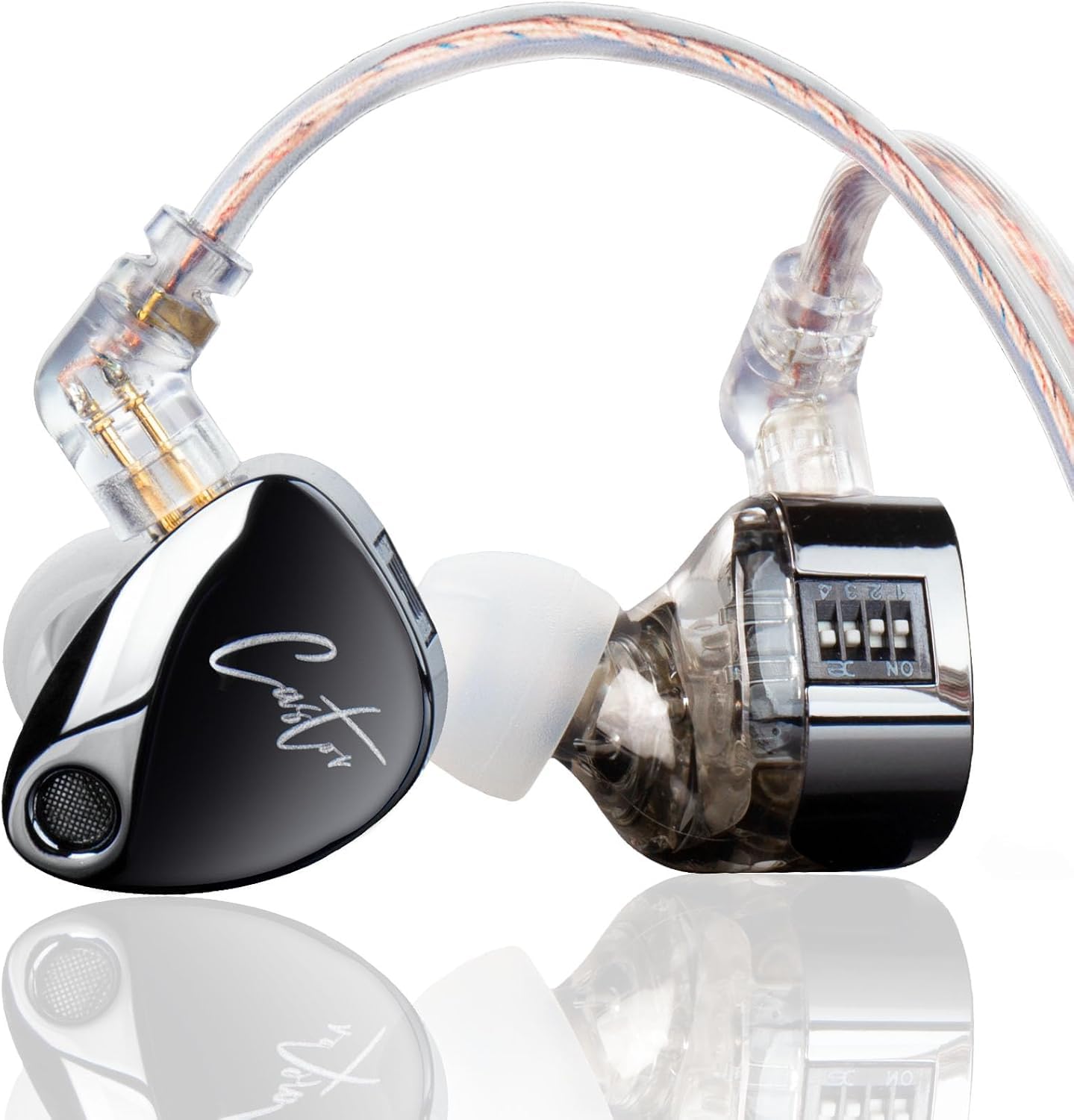
Two physical switches shape the KZ Castor's dual-dynamic output across sixteen profiles, giving budget buyers hands-on bass and treble control without reaching for an EQ. This is not a neutral all-rounder; the Castor leans into low-end weight and rewards listeners who like to match the tune to the source. Next to the more standard KZ hybrids in this lineup, it trades broad familiarity for a more personalized voicing.

The low end carries real sub-bass weight without smearing the midrange at moderate volumes, and the shell stays locked in place during workouts or live-band sets. The two-stage switches click into position cleanly and produce audible changes in voicing, so the tuning is not just a spec-sheet add-on. Bass-heavy genres get the intended punch, while the fit keeps the pair stable. For closed monitoring situations, the Castor feels more immediate than the all-rounder picks.

Best for budget listeners, bass fans, and performers who want a secure fit and are comfortable treating the stock cable and tips as replaceable. The bundled cord is short, and durability can vary across units, so a longer 2-pin cable is a practical add-on. Buyers who want an out-of-box do-everything KZ should compare the more neutral hybrid options here; the tuning-switch crowd gets more value from the Castor.

💡 Keep the detachable cable and tips in mind as the first upgrade points.

Pros

  • Dual 10mm drivers deliver clear sub-bass weight with enough punch for bass-first music and live monitoring.
  • Contoured shells stay put through exercise and stage work without constant adjustment.
  • Two physical switches create sixteen audible profiles, so bass and treble changes are immediate and repeatable.
  • One tuning handles everyday listening, workouts, and live-band duties from a single budget shell.

Cons

  • Stock tips can irritate sensitive ear canals; replacing them is the standard workaround.
  • Wire connections can loosen over time, so a spare cable is worth keeping.
Our verdict

The Castor is a cost-effective way to get sixteen tonal profiles and real sub-bass weight from a budget IEM. It sits as a specialized runner-up for tinkerers rather than the default KZ recommendation.

Check Latest Price
6

Best USB-C Pick

KZ Gale USB-C

77 /100
Sound Score Very Good

Key details

Cable
Detachable 2-pin, USB-C
Tuning
Built-in DSP
Impedance
16 ohm
Sensitivity
116 dB
View on Amazon

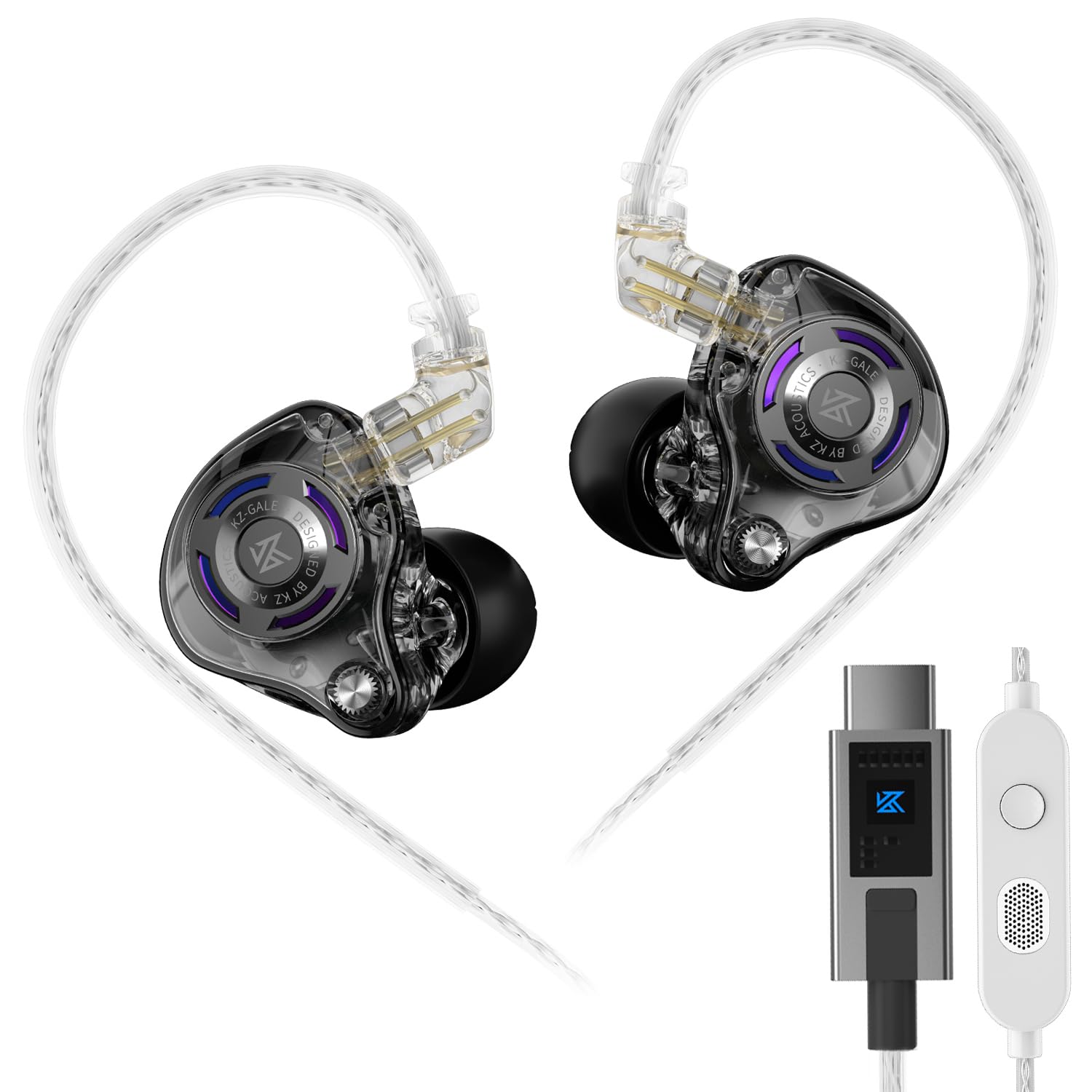
With a built-in DAC and USB-C connector, the Gale delivers wired IEM comfort without needing a 3.5mm adapter on modern phones and laptops. Compared with the top pick's conventional 3.5mm cable, this is the dongle-free route into KZ's 2-pin ecosystem, and the detachable cable keeps replacement options open.

Build quality is the strongest part of this budget package. The shells feel dense and solid, and the fit is comfortable enough for long sessions. Passive isolation is effective against office chatter and commute rumble, which is a practical benefit at this price.

This is for smartphone users and laptop gamers on USB-C-only devices who want a wired connection without a dongle. The DSP tuning is consumer-oriented rather than reference-neutral, some units can introduce a high-pitched hiss or channel imbalance, and the cable is short for desktop use. Naturally, that leaves out anyone still on 3.5mm-only sources, and it does not replace the top pick's conventional 3.5mm hybrid tuning — it covers the USB-C niche instead.

Pros

  • Built-in DAC and USB-C connector remove the need for a 3.5mm adapter on modern phones and laptops.
  • Build quality holds up well at a budget price.
  • Comfortable shell supports long listening sessions.
  • Passive isolation cuts office and commute noise.

Cons

  • Cable reach is about three feet, short for desktop setups.
  • Unit-level sound can vary, with some hiss or channel imbalance possible.
Our verdict

For dongle-free USB-C listening, the Gale is the practical wired pick in KZ's budget lineup.

Check Latest Price
7

Budget Hybrid

KZ ZSN Pro X

86 /100
Sound Score Excellent

Key details

Cable
Detachable 0.75mm 2-pin, 3.5mm
Tuning
Fixed
Impedance
25 ohm
Sensitivity
112 dB
View on Amazon

KZ ZSN Pro X is a compact budget hybrid with clear highs and mid-bass punch, and its shell can suit smaller ears more easily than larger KZ hybrids. The detachable 0.75mm cable adds practical value at this price, and the tuning carries enough energy for casual music, gaming, and phone use. Fit is polarizing, though: stock tips may not provide a secure seal for every ear shape. Durability also varies between units, so this model is best treated as a low-cost entry point rather than a long-term main pair.

Pros

  • Clear highs and mid-bass punch give hybrid sound a lively character.
  • Build quality is impressive for the price, with a detachable cable.
  • Price-to-sound ratio is strong for entry-level hybrid buyers.

Cons

  • Stock tips may not hold a secure seal in every ear shape, which reduces bass response.
  • Long-term durability can vary between units, so a backup pair is worth considering for heavy daily use.
Our verdict

Best for budget listeners who want a low-cost hybrid with a detachable cable and do not mind adjusting the fit.

Check Latest Price
8

Tunable Bass, Mic

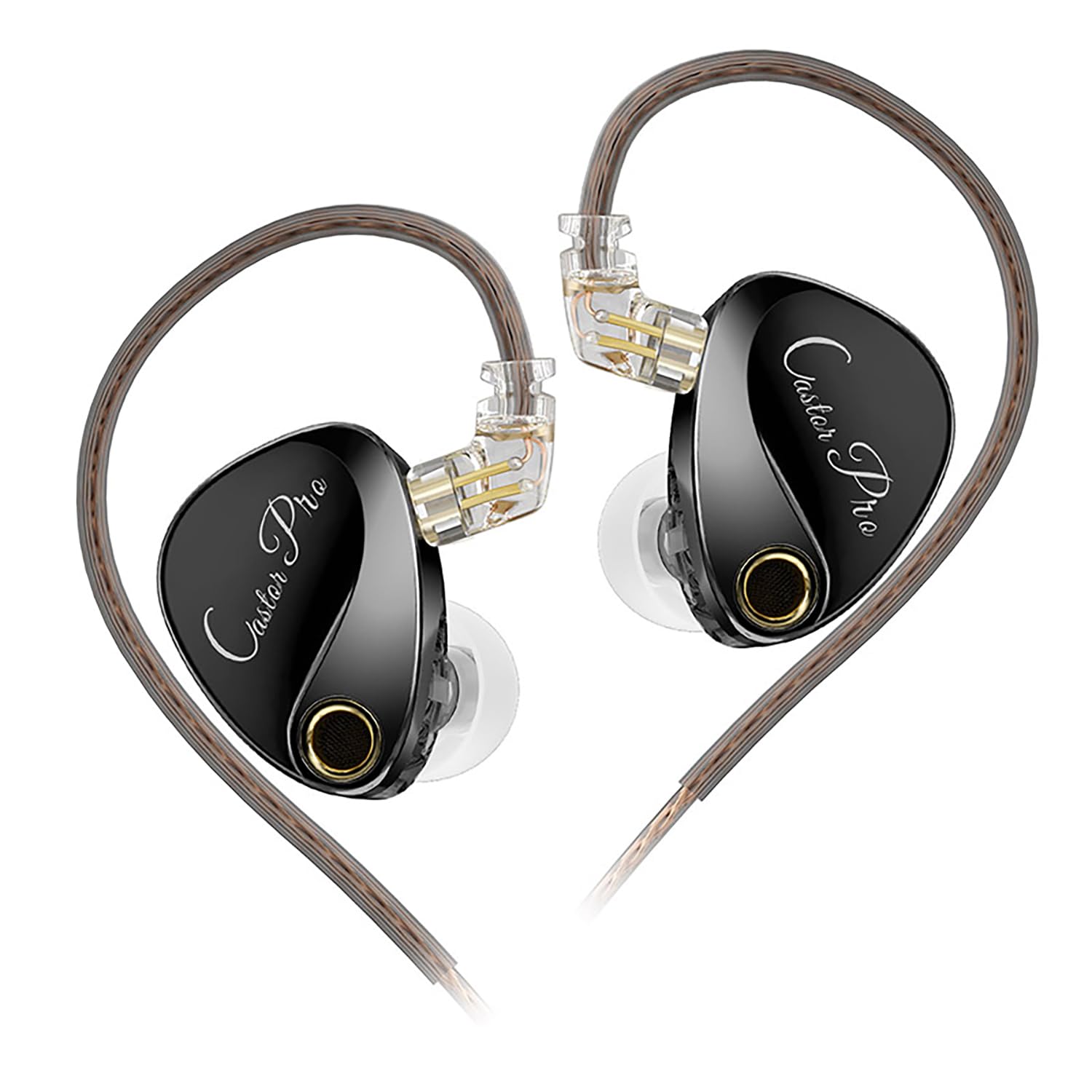
KZ Castor Pro

85 /100
Sound Score Excellent

Key details

Cable
Detachable 2PIN-C, 3.5mm
Tuning
4 switches, 16 profiles
Impedance
16 ohm
Sensitivity
Not listed
View on Amazon

The KZ Castor Pro takes the same dual-dynamic, four-switch tuning board as the standard Castor and adds a microphone option, so bass-first listeners can shape the sound across sixteen profiles without EQ. The low 16-ohm impedance keeps it easy to drive from a phone or laptop, and the detachable 2PIN-C cable means the stock cord is replaceable. Occasional static discharge from certain wired sources has been noted, which is what keeps this behind the standard Castor for buyers who do not need the mic. Long-term durability under heavy use is a known vulnerability, so this is best treated as a budget tunable spare for bass fans who want the mic.

Pros

  • Tunable dual-dynamic sound with four switches gives bass-focused listeners sixteen profiles without EQ.
  • Detachable 2PIN-C cable and the shell feel solid for a budget IEM.
  • The four-switch tuning board delivers useful tonal flexibility for a budget price.

Cons

  • Stock eartips can irritate the ear canal; swapping tips is worth doing.
  • Very small ear canals may not get a secure seal.
Our verdict

For bass-first listeners who specifically want the tunable Castor sound on a cable with a mic, this is the version to buy.

Check Latest Price
9

Ultra-Budget Backup

KZ DQS

86 /100
Sound Score Excellent

Key details

Cable
Detachable 0.75mm 2-pin, 3.5mm
Tuning
Fixed
Impedance
14 ohm
Sensitivity
110 dB
View on Amazon

Crisp dynamic sound and an aluminum build make the KZ DQS a strong ultra-budget backup. The single-dynamic tuning keeps the signature simple: clear highs, satisfying low-end response, and enough sensitivity to run well from a phone. For gaming, casual listening, or a rehearsal bag, it delivers clean output without fuss. Its value depends on accepting it as a cheap spare rather than a primary monitor; the detachable cable’s stock length is short, and unit consistency is not guaranteed. Those boundaries keep it from a higher recommendation.

Pros

  • Crystal-clear sound with good low-end performance.
  • Strong value for money at an entry-level price.
  • Good build quality for the price.

Cons

  • Plan on a longer third-party cable for desktop or stage use.
  • Expect backup-duty behavior, not primary-monitor certainty.
Our verdict

For ultra-budget buyers and musicians who want a cheap spare, the KZ DQS delivers clean dynamic sound in a compact metal shell.

Check Latest Price

How to Choose

Driver Architecture

KZ sells single-dynamic, all-balanced-armature, and hybrid models. Dynamic drivers move air and produce bass punch; balanced armatures excel at detail and treble extension. A hybrid pairs both, but the crossover design determines whether the result sounds cohesive or disjointed.

More BA drivers do not automatically mean better sound. A well-tuned single-dynamic can outperform a poorly integrated sixteen-BA stack, especially at lower volumes or with noisy sources. Choose driver count based on the texture you want, not as a scoreboard stat.

Impedance and Sensitivity

Impedance and sensitivity together tell you how loud and how clean the IEM will sound from a given source. Low-impedance, high-sensitivity models like the Castor Pro are easy to drive from a phone dongle but can expose hiss from cheap laptop jacks. Higher-impedance models like the ZST Pro X tend to be more forgiving with noisy sources but need a bit more volume.

If you mostly plug into a phone or console controller, a low-impedance model is fine. If you use a desktop amplifier or audio interface, check the impedance to make sure the IEM does not pick up hum or static from the output stage.

Tuning Switches

Several recent KZ models include physical switches or filter boards that change bass and treble levels. The Castor's two switches give sixteen profiles; the ZS10 Pro 2 uses a four-level switch for more discreet adjustments. These controls alter the tuning before the signal reaches the driver, so they behave predictably across all your devices.

The trade-off is that extra switches and boards add more components to the signal path. If you just want a set-and-forget IEM, a fixed-tuning model like the ZS10 Pro is simpler and has a longer track record.

Detachable Cable and Connector

Every serious KZ model uses a detachable two-pin cable. That means you can replace the stiff, short stock cord with a longer aftermarket cable for under twenty dollars. The connector standard matters: 0.75mm and 0.78mm two-pin plugs look similar but are not always interchangeable.

Check the exact connector on the listing and matched replacement cables before buying. A detachable cable also makes it easy to switch between a 3.5mm cable for a DAC and a USB-C cable for a modern phone, extending the life of the IEM past the failure of any single cable.

Connector Type

The 3.5mm analog connector still works everywhere, but USB-C IEMs like the KZ Gale skip the dongle entirely. The Gale's built-in DAC and DSP handle digital-to-analog conversion inside the cable, which helps if your phone or laptop has no headphone jack. The catch is that the tuning is locked to the cable's DSP, so you cannot upgrade the cable for better sound.

If your source is mostly a modern smartphone or laptop, USB-C is convenient. If you rotate across a desktop amp, a switch, and a phone, the detachable 3.5mm route gives you more flexibility.

Frequently Asked Questions