5 Best Sony Earbuds of 2026: Picks That Fit and Last

Choose Sony earbuds by fit and real-world reliability, not marketing specs — whether you need true wireless, neckband, wired, or open-ear.

Sony's earbud lineup spans everything from entry-level wired spares to flagship noise cancelers, and the spec sheets all look similar: long battery, water resistance, Bluetooth. In daily use, the differences that matter are smaller and less visible. Fit decides whether a pair feels secure or slips, and long-term reliability determines whether it still works in six months.

The trade-off most buyers face is between endurance and convenience: a neckband with 25 hours of playback versus a compact true-wireless pair with a charging case. One gives you days of listening without hunting for a charger; the other is easier to carry and wear. Both are useful, but only one fits most daily routines.

This guide separates the models worth buying from the ones that show their weaknesses after weeks of use. It focuses on fit, battery, and reliability — the traits that keep earbuds in your ears and out of the drawer.

About the Sound Score: This comparative score is calculated from a product's published customer rating and review volume. It is not a laboratory measurement or a hands-on test result.

1

Best Overall

Sony WF-C510 True Wireless

87 /100
Sound Score Excellent

Key details

Ear Tip Fit
Silicone tips
Form Factor
True wireless
Battery Life
11h per charge, 22h total
Noise Control
Passive isolation
View on Amazon

The WF-C510 is a compact true-wireless pair that makes a strong everyday case without leaning on noise cancellation. It runs up to 11 hours on a single charge, stretches to 22 hours with the charging case, and switches between two paired devices through multipoint. The tuning is clear and articulate, with vocals up front and enough separation for pop, rock, podcasts, and video calls. Per-charge runtime is near the top of the true-wireless class, so you are not reaching for the case by lunchtime. The case is genuinely pocketable, and quick charging adds useful listening time when you are heading out the door.

Comfort is the standout. The rounded shell fits into the outer ear without the hard pressure that larger buds create, and the included tips keep the earbuds in place during walks, commutes, and meetings. Fit is consistent enough that you do not spend time adjusting them, and the lightweight build makes long listening sessions easy. Build quality also feels better than the price suggests: the case hinge is firm, the lid lines up cleanly, and the finish does not immediately show scuffs. IPX4 water resistance covers light rain and gym sweat without adding bulk.

This is a no-ANC product, so buyers expecting noise cancellation should look at Sony's flagship tier. The WF-C510 suits everyday listeners who want a compact set for work, errands, and travel without paying for silence. Multipoint makes it useful for anyone splitting time between a phone and a laptop, and the small case slides into a front pocket without a bulge. Comfort-focused buyers who find conventional earbuds uncomfortable by mid-morning are the core audience. Passive isolation handles office chatter but not engine rumble; this is a daytime and home-office companion more than a plane pick.

The neckband alternative in this lineup stretches to 25 hours, but it lives around your collar between listening sessions. The WF-C510 gives up some runtime in exchange for true-wireless freedom and a case that slips into a pocket. That trade makes sense for anyone who wants the buds themselves to be the only thing on their ears. The larger neckband gives you extra endurance for long travel days, but the C510 is the pair you will reach for on a normal day. For daily commuting and desk-to-desk switching, this is the better middle ground.

Pros

  • Clear neutral-to-bright sound carries vocals and instrumental detail without needing heavy EQ.
  • Compact shell and secure fit make long listening sessions comfortable, even for smaller ears.
  • Battery life covers a full workday, and quick charging adds useful runtime before heading out.
  • Build quality feels firmer than the price suggests, with a solid case and clean finish.

Cons

  • Out-of-the-box tuning is neutral and bright; bass-heavy listeners should budget time for the app EQ.
  • Bluetooth can drop or stutter on individual units, especially during reconnection.
  • Charging or power issues can appear on individual units after months, so early testing is worthwhile.
Our verdict

The WF-C510 fits the buyer who wants true-wireless convenience, multipoint, and all-day comfort without paying the ANC premium.

Check Latest Price
2

Best Budget Neckband

Sony WI-C100 Neckband

86 /100
Sound Score Excellent

Key details

Ear Tip Fit
Silicone tips
Form Factor
Wireless neckband
Battery Life
25 hours built-in
Noise Control
Passive isolation
View on Amazon

The Sony WI-C100 stretches a single charge to 25 hours, making it the endurance leader among the budget wireless options in this roundup. It skips the charging case and noise canceling of true-wireless models and instead keeps both earbuds tethered to a light neckband. For buyers who have never warmed to fishing two tiny earbuds out of a pocket, the format is a practical alternative.

This is the right fit for commuters and call-heavy listeners who want wireless freedom without the small-parts shuffle. The IPX4 coating handles light rain, the 9 mm drivers remain clear at moderate volume, and the built-in mic keeps calls audible in normal street noise. Ear-tip selection matters more here than on other Sony models; swapping to the right size can mean the difference between a secure fit and a commute spent nudging buds back in.

Bluetooth 5.0 pairing is straightforward, and the cable tether means the two buds are never separate, so the lost-earbud scenario disappears. The neckband's slim shape slips over a shirt collar without adding bulk, and the battery outlasts the top pick's case-and-buds total. If true-wireless freedom or active noise canceling is the priority, the top pick and premium ANC option in this lineup cover that ground; the WI-C100 owns the battery-first neckband lane instead.

Pros

  • 25-hour playback covers a full workweek of commutes without hunting for a charger.
  • Clear, lively sound with enough low-end character for daily listening at a budget price.
  • Build quality reads better than its price suggests, with solid cable and clasps.
  • At this price, the battery-to-performance ratio makes it an easy recommendation for budget shoppers.

Cons

  • The light neckband can slide on smooth collars, so it may need a quick reposition after movement.
  • Bluetooth pairing can occasionally require re-selection or a power cycle on some units.
  • Some units develop one-sided audio or housing strain after months of regular use.
Our verdict

The WI-C100 is the value pick for budget buyers who put battery life and a tangle-free tether above true-wireless convenience; for that audience, the 25-hour runtime and low price are the story.

Check Latest Price
3

Best Premium ANC

Sony WF-1000XM5

81 /100
Sound Score Excellent

Key details

Ear Tip Fit
Silicone tips
Form Factor
True wireless
Battery Life
8h per charge, 24h total
Noise Control
Active noise canceling
View on Amazon

Adaptive noise canceling and high-fidelity output place the WF-1000XM5 in the commute-first lane of Sony's true-wireless lineup. When the included ear tips form a tight seal, the ANC quiets steady transit rumble while vocals and instruments stay separated. The included tip sizes leave room to adjust for different ear shapes, and the charging case extends listening to a full day. Quick charging adds playtime between legs of a trip, and the IPX4 rating handles light rain.

Ear retention can be problematic for small ears, and ANC weakens without a consistent seal. That makes the XM5 a fit-dependent premium product: tip swapping is a setup step, not an optional tweak. The adaptive noise canceling can adjust to changing transit noise, but it cannot overcome a loose fit.

Commuters and travelers who want adaptive ANC and are willing to experiment with ear tips are the right audience. Sony fans who value high-fidelity output over all-day comfort will find the value here. The compact everyday true-wireless alternative fits a broader set of buyers, while this pair stays in the premium, travel-first lane. Budget-conscious buyers should treat the price as the cost of flagship ANC rather than a general-purpose earbud buy.

💡 Start with the largest ear tips that feel comfortable; a good seal is what makes the ANC work.

Pros

  • High-fidelity tuning keeps vocals and instruments clear once the ear tips provide a secure fit.
  • ANC quiets commute and transit noise effectively when the ear-tip seal stays intact.
  • Charging case covers a full day of listening, and quick charging restores playtime between trips.

Cons

  • Ear-tip fit can loosen during movement, so reseating the earbuds may be needed.
  • Bluetooth can stutter or pause in dense wireless zones; a quick reconnect usually follows.
  • Charging consistency can vary between individual units, so a warranty exchange may be needed in some cases.
Our verdict

The WF-1000XM5 is the Sony true-wireless flagship for ANC-minded commuters, provided the ear-tip seal works for your ears. Comfort-first or budget-first buyers should look to the compact everyday option.

Check Latest Price
4

Best Open-Ear Clip

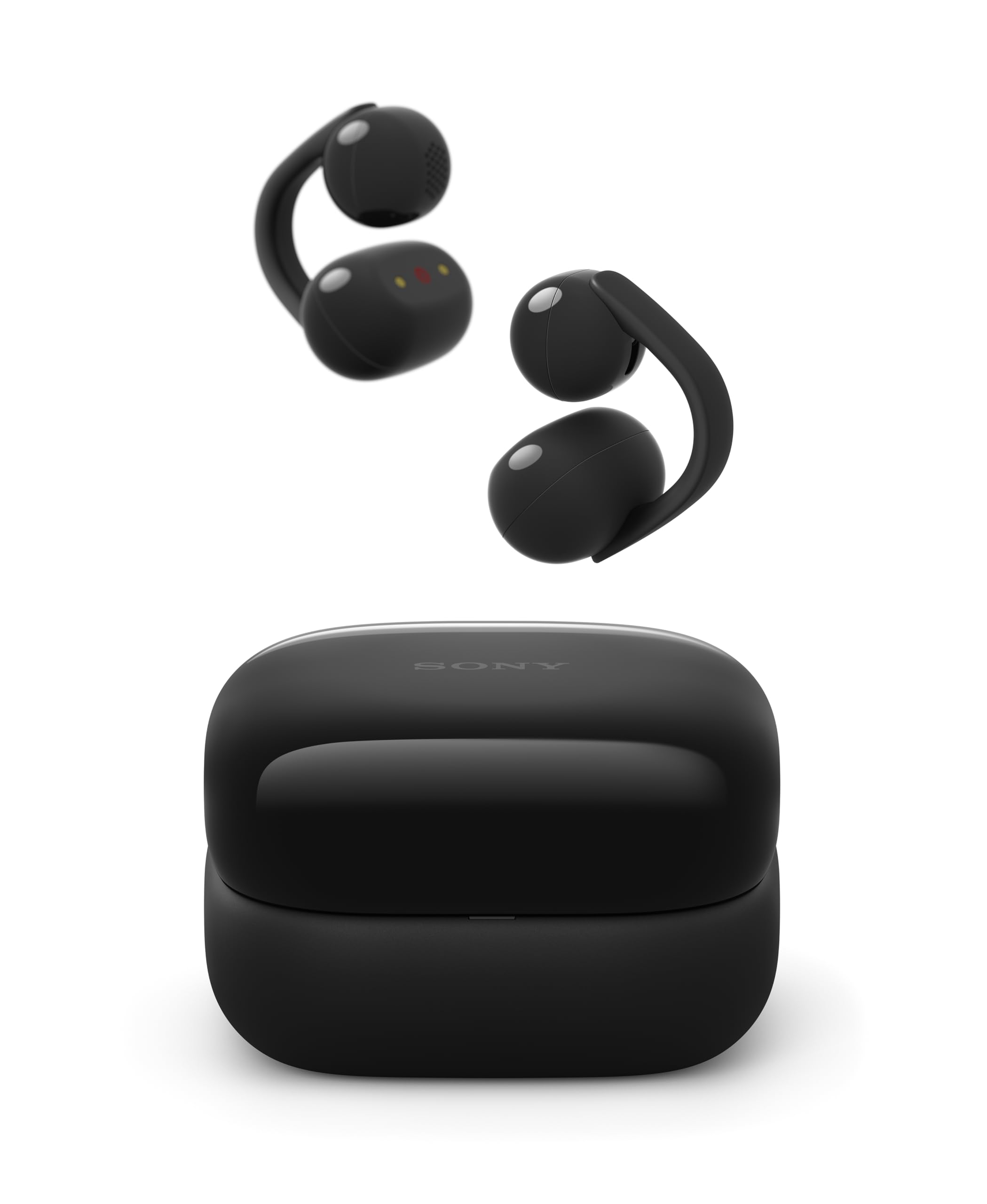
Sony LinkBuds Clip

82 /100
Sound Score Excellent

Key details

Ear Tip Fit
Open-ear clip
Form Factor
Open-ear clip
Battery Life
9h per charge, 37h total
Noise Control
None (open ear)
View on Amazon

The LinkBuds Clip is the one Sony earbud that keeps ambient sound fully present while holding firmly to the ear. Unlike the top pick's sealed in-ear fit, this open-ear clip-on leaves the ear canal open, so traffic, office chatter, and announcements stay audible. Mids and highs are clear enough for podcasts and acoustic music, and the feather-light frame reduces the pressure that in-ear tips can create.

The clip-on mechanism is what makes the design work. It hooks around the outer ear and stays in place through running, cycling, and quick head turns. At a few grams per side, the earbuds are easy to forget during a full work session or long commute. Bluetooth 5.3 and two-device multipoint simplify switching between a phone and laptop, while IPX4 water resistance covers sweat and light rain.

This is the right Sony pair for runners, cyclists, open-office workers, and anyone who finds in-ear tips uncomfortable. The tradeoff is no isolation and touch controls can feel fiddly; bass-heavy listening is not this pair's strength. Expect to use a phone for volume changes if the multi-tap controls don't click with you. Open-ear awareness is the main feature here, and it is delivered without the pressure or plugging of a sealed design.

Pros

  • Open-ear design keeps traffic, office chatter, and announcements audible while music plays.
  • Clip-on fit stays secure through running, cycling, and head movement.
  • Feather-light frame keeps all-day sessions comfortable without ear-canal pressure.
  • Mids and highs come through clearly for an open-ear pair.

Cons

  • Battery runtime can fall short of the rated nine hours with high volume or multipoint enabled.
  • Charging or connection quirks may leave one bud unresponsive until it is returned to its case.
Our verdict

If hearing the room matters more than isolation, the LinkBuds Clip is the Sony earbud to buy. Buyers who need a sealed fit should look at the top pick instead.

Check Latest Price
5

Best Wired Deep Bass

Sony MDR-EX110AP

88 /100
Sound Score Excellent

Key details

Ear Tip Fit
Silicone tips
Form Factor
Wired in-ear
Battery Life
No battery (wired)
Noise Control
Passive isolation
View on Amazon

The MDR-EX110AP uses 9 mm dynamic drivers to produce deep, lively bass and a weighty low end that standard budget earbuds miss. The wired 3.5 mm connection means no charging, no pairing, and no battery management. With the right tips, passive isolation holds back background noise for commutes or shared rooms.

The shell is light and low-profile, so it stays comfortable through long listening sessions and works for side-sleepers because nothing presses hard into the ear. The cable routes easily around a pillow or collar, which suits a wired pair that does not need to be cradled in a charging case.

This is a wired purist's Sony: deep bass, no charging routine, and compact comfort. Buyers who have already moved away from wired audio or need a long-term daily driver are better served by the true-wireless and neckband options in this lineup. Some units can develop one-side audio dropouts after months, and durability is moderate, so treat this as a bass-first wired pair rather than an indefinite keeper.

Alongside the true-wireless and neckband models, the EX110AP is the simplest option: no firmware, no charging case, and no pairing. That simplicity makes it a sensible backup or a fixed bedside setup, where the cable is a feature rather than a compromise.

Pros

  • Deep, lively bass from a compact wired design.
  • Light, low-profile shell stays comfortable for long wear.
  • Passive isolation cuts background noise with a good tip seal.
  • Strong low-end sound at a budget-friendly wired price.

Cons

  • Active noise canceling is absent; very loud spaces rely on the seal alone.
  • The 3.5 mm connection needs an adapter for source devices without a headphone jack.
Our verdict

A bass-first wired Sony pair for listeners who want deep low-end without a charging case.

Check Latest Price

How to Choose

Choose Your Form Factor

True wireless earbuds put no cable between your ears, but every earbud has to stay in on its own and fit a battery inside a small shell. Neckband and wired models keep the heavier components away from your ear, which lets the earbuds stay tiny and less likely to get lost. Open-ear clips attach outside the ear canal, trading isolation for awareness.

Read Battery Life Correctly

Per-charge and total battery are two different numbers. A true-wireless pair may claim 22 total hours with the case, but each earbud only lasts around 11 hours before needing a recharge. High volume, ANC, and audio codecs drain the battery faster.

A neckband with 25 hours has no charging case to manage, but the whole unit needs to be recharged at once. Wired models skip the battery question entirely, which is still a meaningful advantage if you hate charging.

Match Noise Control to Your Space

Active noise canceling uses microphones and anti-phase sound, but it only works as well as the seal around your ear. If the tips are too small or the earbud shifts, low-frequency noise gets through and ANC sounds weak. Passive isolation does the same job for high frequencies but cannot remove engine rumble.

Ambient sound modes are not noise cancellation; they intentionally let sound in. For commuters and travelers, ANC matters. For office alertness or outdoor safety, an open-ear or ambient mode may be the better choice.

Test Fit Before You Trust It

Ear canal shape varies more than spec sheets admit. A tip that seals one person's ear may feel loose or painful in another, and the nozzle angle determines whether an earbud sits shallow or deep.

Try multiple tip sizes before judging a pair. Foam tips compress and expand to fill the canal, while silicone tips are easier to clean but rely on a precise match. If a model moves during talking or chewing, look for ear fins or an open-ear clip.

Weigh Multipoint Against Stability

Multipoint keeps two devices connected at once, which is convenient for phone and laptop, but sharing the radio can cause dropouts when both devices push audio. Bluetooth version and antenna placement matter more in crowded places than on paper.

True wireless pairs also coordinate left and right earbuds, so occasional interference is normal. Frequent disconnects usually point to a faulty unit or a bad environment, not something you can fix in settings.

Frequently Asked Questions