5 Best Marantz Receiver in 2026: Match Power to Your Room

Find the Marantz receiver that fits your room, speakers, and channel needs. Power per channel and HEOS behavior decide which one truly fits.

Most of the attention around Marantz receivers centers on the warm sound signature and porthole design. Between the slim and full-size models, the specs that actually change your experience are power per channel and HEOS behavior. A 50W receiver driving inefficient towers in a large room will sound strained long before a 75W or 100W model does.

Channel count matters too. A 2-channel network receiver gives music listeners HDMI ARC, phono, HEOS, and lower cost; a 5.2 or 7.2 AV receiver adds surround processing, but slim versions often share the same 50W output. Matching the receiver to the room volume, speaker efficiency, and actual speaker layout matters more than the badge.

This guide sorts Marantz receivers by that fit: multichannel models for compact living rooms, a full-size 7.2 for dedicated theaters, and stereo models for music-first listeners. Choose by power, channel count, and streaming behavior first; the 'Marantz sound' only helps if the amp has enough headroom for your speakers.

About the Sound Score: This comparative score is calculated from a product's published customer rating and review volume. It is not a laboratory measurement or a hands-on test result.

1

Best Overall

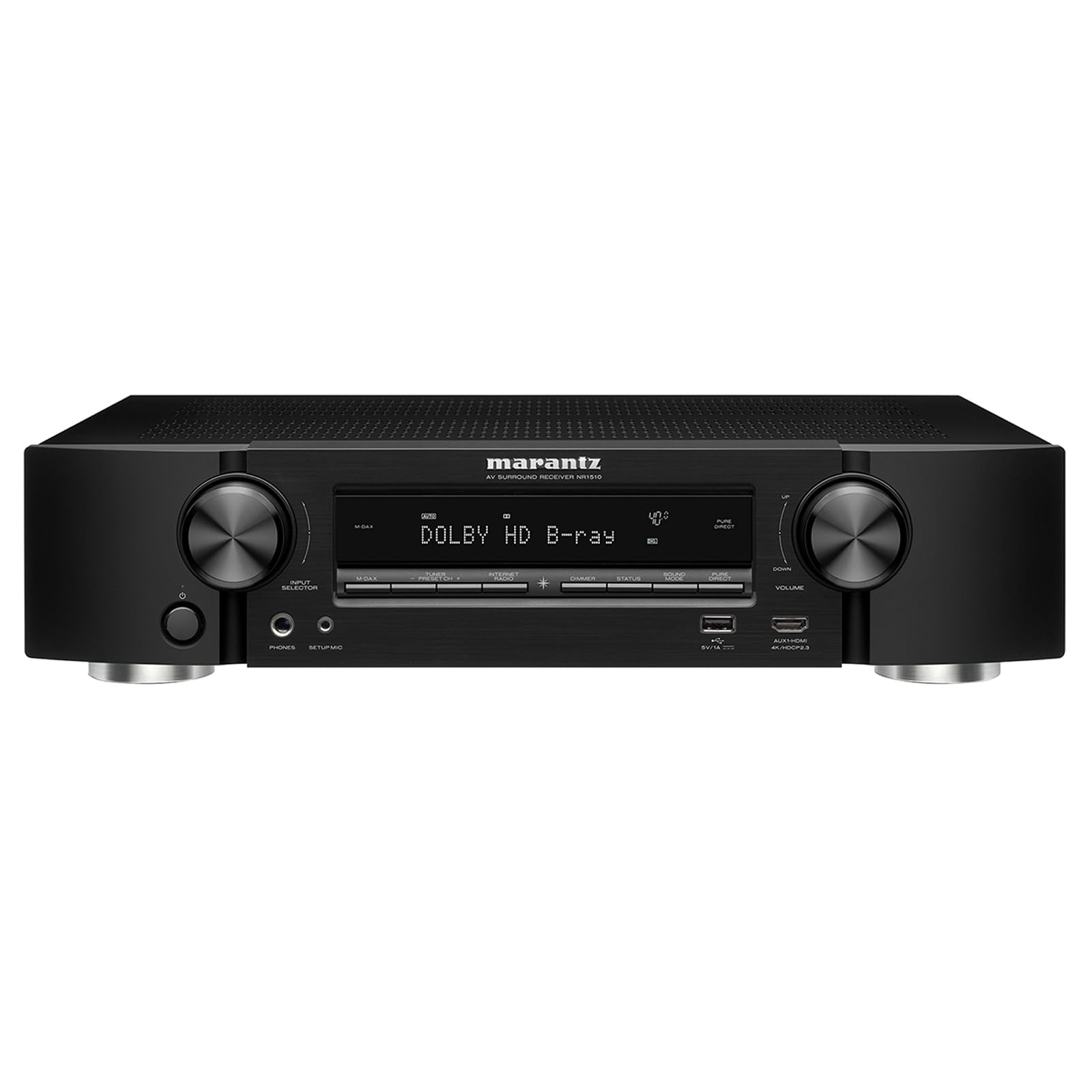
Marantz NR1510

85 /100
Sound Score Excellent

Key details

HDMI & 8K
6-in/1-out, 4K HDR
Streaming
HEOS, Wi-Fi, Bluetooth
Form And Room EQ
Slim, Audyssey setup
Power Per Channel
50W per channel
View on Amazon

The NR1510 gives you 5.2 channels, HEOS streaming, a phono input, Audyssey calibration, and a slim chassis at a mid-range price. Its sound leans warm and clear, with a tonal balance that carries dialogue-heavy movies and music equally well. Audyssey's room correction is part of that balance, tightening bass response and keeping the center channel intelligible in rooms with less-than-ideal acoustics. This is a 5.2-channel design, not a 7.2 processor, so it stays centered on what a living-room surround system actually uses. In a small-to-medium room, this is the Marantz character without the bulk or price of the full-size Cinema-series models.

The on-screen setup assistant handles speaker distances, levels, and crossover, and the compact height fits low media consoles. The chassis and front controls have the dense, premium feel associated with Marantz, which is one of the reasons this receiver feels like a step up from generic black-box AV gear. The remote is simple but usable, and the front display is legible without being large. Six HDMI inputs support HDCP 2.2, 4K HDR, Dolby Vision, HLG, and eARC, so current sources connect cleanly. The eARC output returns audio from TV apps to the receiver, which matters when streaming services live inside the television. USB and MM phono round out the connections.

HEOS multi-room streaming is the control center for music around the house, working over Wi-Fi and Bluetooth with Alexa control. You can group it with other HEOS equipment or stream services directly from the app without turning on the TV. The built-in MM phono stage lets a turntable sit beside TV sources without an extra preamp, making this a true one-box hub for living-room playback. Two subwoofer outputs open up a 5.2 layout, which is more bass placement flexibility than Marantz's two-channel receivers give you.

This receiver targets small-to-medium living rooms with efficient bookshelf speakers and a TV that needs 5.1 or 5.2 surround from one box. The 50W per channel ceiling limits headroom with low-sensitivity speakers in large rooms, so that combination belongs elsewhere. It is a better match for a combined TV-and-music space than for a dedicated home theater with multiple rows.

For Marantz shoppers comparing models, the NR1510 sits between the two-channel stereo receiver and the Cinema line. The two-channel Marantz stereo receiver offers more watts per dollar for music-only listeners, but it cannot process surround. The NR1510 adds surround processing and two subwoofer outputs for a modest step up in price, without the cabinet height or price of the full-size Cinema models. That middle position makes it the sensible first Marantz receiver for a typical living room.

Pros

  • Warm, clear sound balances movie dialogue and music, with Audyssey helping the tonal match in a real room.
  • Dense, premium chassis and front controls carry the Marantz build feel at this price.
  • Guided setup and slim height make low-cabinet installation and first-time setup easier.
  • Inputs include HDMI/ARC, USB, MM phono, and HEOS, so TV audio, vinyl, and streaming share one receiver.

Cons

  • A protect-mode loop or setup lockout can appear on some units, so a reasonable return policy is sensible.
  • No 7.2 Atmos or 8K HDMI switching; this is a 5.2/4K receiver, so those buyers need a Cinema model.
Our verdict

The mid-range price buys the Marantz sound, MM phono input, and HEOS in a package that fits a normal living-room cabinet — no Cinema-series bulk required. That makes it the right Marantz receiver for a compact living-room surround setup.
Check Latest Price
2

Best for Dedicated Home Theater

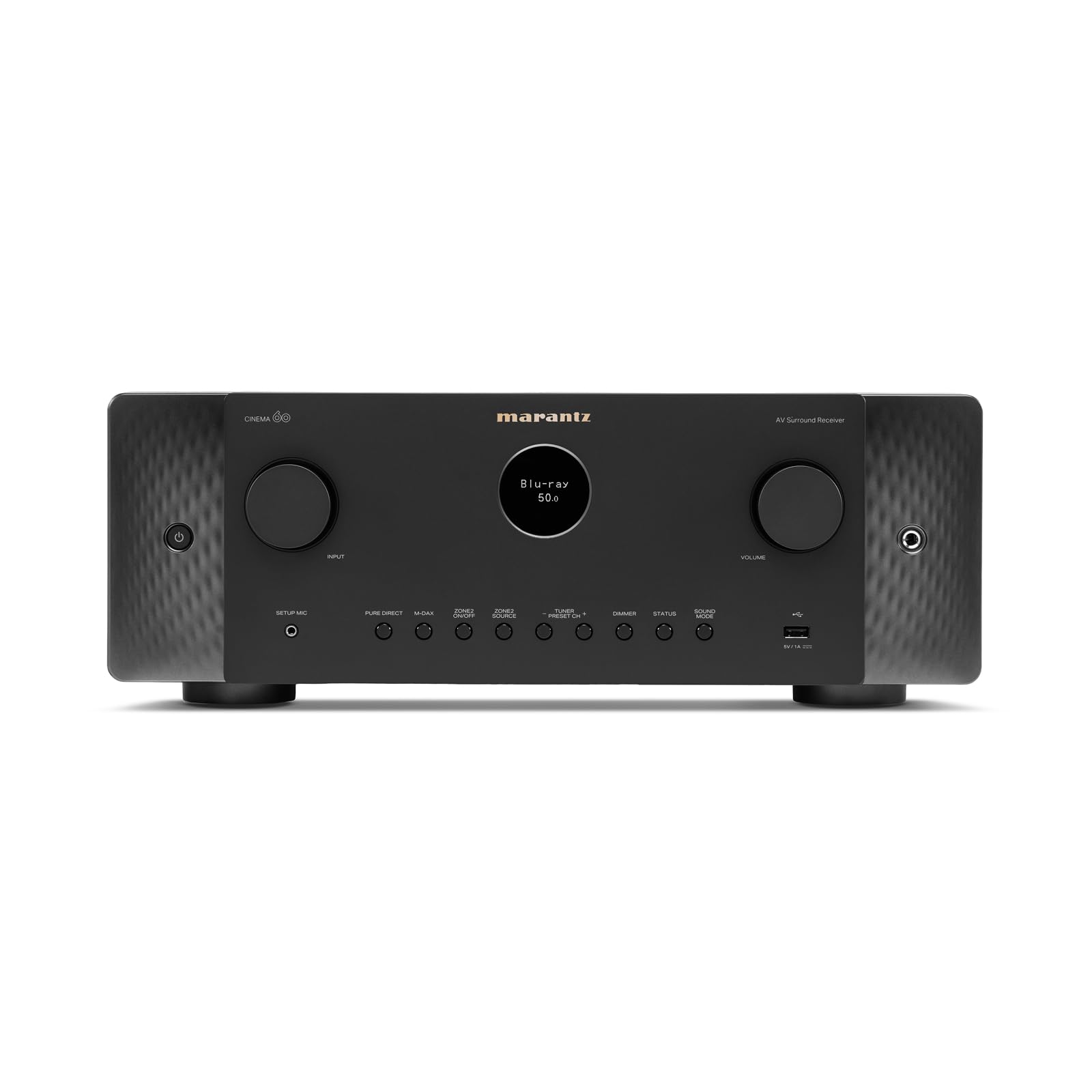
Marantz Cinema 60

83 /100
Sound Score Excellent

Key details

HDMI & 8K
6-in/1-out, 8K
Streaming
HEOS, AirPlay 2, Wi-Fi
Form And Room EQ
Full-size, Audyssey XT
Power Per Channel
100W per channel
View on Amazon

The Cinema 60 is the full-size Marantz receiver in this lineup: 7.2 channels, 100W per channel, and three 8K HDMI inputs. Its clean, powerful surround presence and solid casework give it the premium feel buyers expect from the brand, with enough headroom to drive a full 7.2 speaker layout without strain. The 8K HDMI inputs keep it aligned with current consoles and future display upgrades.

With 7.2 Atmos or DTS:X sources, the receiver places effects with clean separation across the room. Audyssey MultEQ XT tailors the output to the listening space, which removes most of the guesswork from the final adjustment step. HEOS, AirPlay 2, Bluetooth, and Wi-Fi cover both theater soundtracks and daily music listening. This makes it a practical fit for both movie playback and music.

This is for a dedicated home-theater room or a large living space with full-size speakers and a 7.2 layout. It needs a normal-height cabinet, and the first-use firmware update should be completed before the menus and streaming settle into routine behavior. Neither is a dealbreaker in the right room, but both are worth planning around.

Pros

  • Clean, powerful surround presence with enough headroom for a full 7.2 Atmos or DTS:X speaker layout.
  • Full-size build quality and elegant cabinet design fit a dedicated home-theater rack or credenza.
  • Audyssey MultEQ XT and three 8K HDMI inputs cover room correction and current-source switching.

Cons

  • The premium price is higher than the 5.2 and slim 7.2 Marantz receivers in this set.
  • Buyers who mainly need stereo or small-room surround won't use the 7.2 processing and 100W on tap.
Our verdict

Choose the Cinema 60 when a dedicated 7.2 theater and full-size Marantz power are the goal, not a compact living-room compromise.

Check Latest Price
3

Best Stereo Music Receiver

Marantz NR1200

84 /100
Sound Score Excellent

Key details

HDMI & 8K
ARC, 4K HDR
Streaming
HEOS, Bluetooth, AirPlay 2
Form And Room EQ
Slim, no Audyssey
Power Per Channel
75W per channel
View on Amazon

The NR1200 puts 75W per channel into a two-channel design and adds HDMI ARC, MM phono, HEOS streaming, and AirPlay 2 — the most affordable way into the Marantz receiver range for listeners who don't need surround.

Music playback is where the receiver does its best work. The pure direct mode bypasses tone controls and extra processing, and the sound has the open top end and depth that define the brand. The chassis feels denser than typical budget AV gear, and the front display and remote layout are easy to live with. Setup is simple enough for a first-time receiver buyer, even for those new to Marantz, and the HEOS app puts streaming services within reach after a short learning period.

This receiver fits buyers who already have two good speakers and want a hub for a turntable, TV, and streaming without paying for channel count they won't use. Bluetooth pairing and network discovery can be finicky, and random shutdowns have been noted on some units; AirPlay 2 or a wired connection offers a steadier path for streaming.

The rear panel covers the essentials: six HDMI inputs with ARC, a MM phono stage, digital and analog inputs, and Zone 2 output. The spread of connections is what makes the receiver feel like more than a simple amp, and the layout leaves room for substantial cables.

Pros

  • Music-first clarity with refined highs and depth; pure direct mode keeps the signal path clean.
  • Build quality reads as a hi-fi component rather than a budget AV box.
  • HDMI ARC, MM phono, HEOS, and AirPlay 2 cover TV, turntable, and streaming from one unit.

Cons

  • Strictly 2-channel; a 5.1 or 7.1 speaker package won't find a place here.
  • 75W per channel may run out of headroom with low-sensitivity speakers in large rooms.
Our verdict

The NR1200 is the Marantz for music-first owners who want HDMI ARC, phono, and HEOS without paying for surround processing.

Check Latest Price
4

Best Slim 7.2 Atmos Receiver

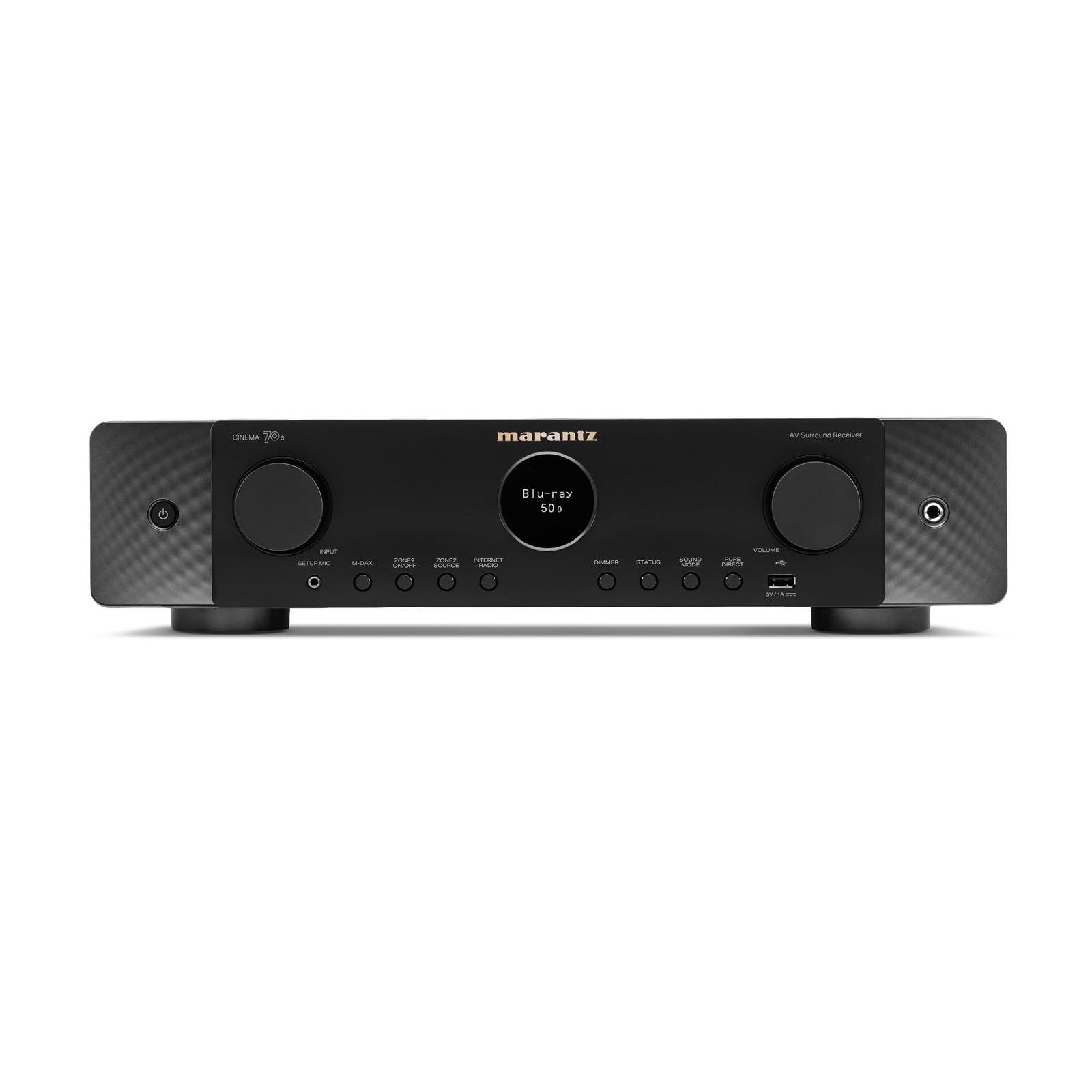
Marantz Cinema 70s

81 /100
Sound Score Excellent

Key details

HDMI & 8K
6-in/1-out, 8K
Streaming
HEOS, AirPlay 2, Bluetooth
Form And Room EQ
Slim, Audyssey
Power Per Channel
50W per channel
View on Amazon

The Cinema 70s pairs 7.2-channel Dolby Atmos/DTS:X processing with three 8K HDMI inputs in a chassis just over 4 inches tall. That combination separates it from the 5.2-channel top pick in this guide: you get modern surround formats and future video switching without moving to a full-size component. The low height also fits racks and open shelves where a taller Cinema 60 will not.

With efficient speakers and normal living-room listening levels, Atmos object placement stays distinct and the 7.2 stage sounds complete rather than boxy. The porthole display and aluminum front controls give the receiver a deliberate, premium feel that blends into a furnished space. The three 8K HDMI inputs let an 8K TV pass current-gen video through a single output without an extra switch.

The right buyer has an 8K display and a shallow cabinet, and cares about the look of the AV stack. This is a premium-priced Marantz, and 50W per channel needs efficient speakers and moderate listening levels. Buyers with a 100W-class requirement should move up the Marantz line instead.

Pros

  • Delivers 7.2-channel Dolby Atmos/DTS:X processing in a just-over-4-inch chassis.
  • Audyssey MultEQ calibration handles speaker setup quickly and adjusts sound to the room.
  • Slim aluminum-and-porthole styling stands out without dominating a cabinet.

Cons

  • Headphone output and network/app control can be inconsistent in some setups.
  • 50W per channel caps high-volume headroom in large rooms or with low-sensitivity speakers.
Our verdict

The Cinema 70s solves the cabinet-space problem without sacrificing Atmos or 8K.

Check Latest Price
5

CD Collectors

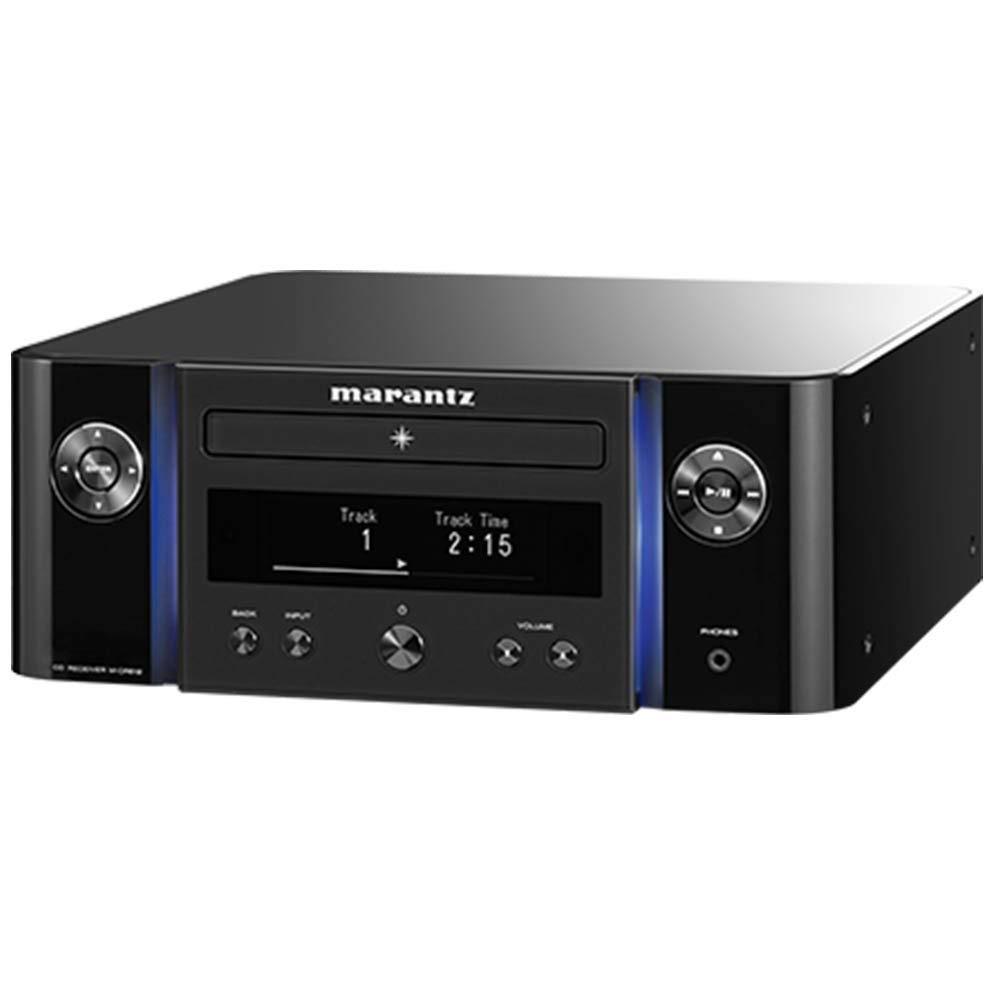
Marantz M-CR612

79 /100
Sound Score Very Good

Key details

HDMI & 8K
Streaming
HEOS, Bluetooth, AirPlay 2
Form And Room EQ
Compact, no Audyssey
Power Per Channel
60W x 2
View on Amazon

The M-CR612 is the only Marantz receiver with a built-in CD transport, AM/FM, HEOS streaming, and 60W amplification in one compact chassis. That makes it a practical hub for a legacy CD collection in a kitchen, office, or second-room stereo. With efficient bookshelf speakers, it sounds satisfying at moderate levels; the buyer here is a CD-focused listener, not a high-volume living room. HEOS setup can be tedious, and network behavior may occasionally need a restart, which is why the control layer holds it back from a higher spot in this comparison.

Pros

  • Compact chassis houses CD, AM/FM, HEOS, and amplification without needing a full AV receiver.
  • Delivers satisfying sound with efficient bookshelf speakers at moderate volumes.

Cons

  • Remote menu navigation and text entry can be slow when switching sources.
  • Output can run out of steam above moderate volume with low-sensitivity speakers.
Our verdict

This is the pick for CD collectors with a compact second-room stereo; it fits when a full AV receiver is overkill.

Check Latest Price

How to Choose

Surround Channels

Channel count must match the speaker layout you will actually install. A 2-channel receiver serves music-only listeners; a 5.2 model powers center and surrounds; a 7.2 model adds height or rear channels for Atmos. More channels spread the same amplifier budget, so a 7.2 receiver at 50W per channel is not inherently louder than a 2-channel model at 75W.

Power Output per Channel

Per-channel wattage sets the volume ceiling before distortion. Low-sensitivity speakers need double the power for each 3dB of extra output, so a 50W receiver can strain in a large room with tower speakers. Choose 75W or 100W when you listen beyond ten feet or at high volume; 50W is fine with efficient bookshelf speakers at normal listening distances.

HDMI and 8K

HDMI inputs handle video switching and eARC audio return. 4K HDR with HDCP 2.2 covers current streaming boxes and consoles; 8K adds headroom for future sources, but it does not change picture quality on a 4K display. The trade-off is budget: an 8K receiver spends money on video bandwidth that could go to amplifier quality or room correction.

Streaming and App Control

HEOS is useful when the network cooperates, but AirPlay 2 and Bluetooth provide stable alternatives. A wired Ethernet connection beats Wi-Fi for continuous streaming. Treat app control as convenience, not the receiver's core function; physical controls and HDMI switching keep working when the app drops.

Form Factor and Room Correction

Slim receivers fit low cabinets, but a shorter chassis limits heat-sink size and power-supply capacity. Full-size models run cooler and sustain output better. Audyssey calibration smooths speaker response at the listening position, but it cannot create headroom the amplifier does not have.

Frequently Asked Questions