9 Best Speaker Wire of 2026: Pick Copper That Lasts

A buyer-focused guide to speaker wire: OFC vs CCA, 14 vs 16 AWG, and CL2/CL3 ratings so you match the cable to your room and your budget.

Shopping for speaker wire looks simple until you notice that many best-selling spools are copper-clad aluminum, not copper. The listing may say 'premium,' but the conductor behaves differently when you solder it or pull it through a damp wall. The right choice depends on where the wire lives, run length, and how much current your speakers draw.

Copper-clad aluminum (CCA) works fine for many budget systems and routes easily, but it resists solder and corrodes faster in wet or coastal locations. Oxygen-free copper costs more, yet it strips, terminates, and lasts the way most buyers expect. The main decision is budget versus longevity.

Gauge and jacket rating settle the rest. Thicker 14 AWG handles longer runs without voltage drop; CL2 or CL3 jackets separate a code-compliant in-wall install from one an inspector will flag. Match those specs to the actual room and the wire will outlast the receiver you connect it to.

About the Sound Score: This comparative score is calculated from a product's published customer rating and review volume. It is not a laboratory measurement or a hands-on test result.

1

Best Overall

Amazon Basics 14 AWG OFC 200ft

95 /100
Sound Score Outstanding

Key details

Gauge
14 AWG
Length
200 ft
Conductor
99.9% OFC copper
Jacket Rating
Not CL rated
View on Amazon

A 200-ft, two-conductor spool of 99.9% oxygen-free copper sets this apart from the budget bulk-wire pack. The 14 AWG conductors carry a clean signal from receiver to passive speakers, and the copper takes solder without the hesitation you get with aluminum-core CCA. That gauge is the sensible middle ground between 16 AWG and 12 AWG: enough current for medium-length speaker runs without the extra mass and cost of 12 AWG. For a surround-sound receiver feeding five or seven speakers, this single spool covers the job and leaves slack for a miscut or a route that runs long.

Once terminated, the cable is a straight pass-through: no added brightness, no hum, just the signal the amplifier sends. The gauge keeps resistance low over the 20- to 40-foot runs typical of a living-room theater, so speakers see the full amplifier output rather than a thinned-down version.

The jacket holds its shape during pulls, which protects the copper when routing around cabinets, baseboards, and doorframes. That stiffness is the tradeoff: stripping, bending, and tight-radius routing take more effort than a flexible CCA spool. The jacket is thick enough to feel substantial in hand, yet it does not hug corners on its own. Buyers who pre-cut lengths and use a proper wire stripper will manage it; installers who need a limp, easy-bend cable for cramped spaces should look at the softer spools in this lineup.

This spool fits a home-theater receiver wired to passive speakers in one room, or a two-channel setup with 20- to 40-foot runs. The 14 AWG gauge is heavy enough for mid-length whole-system wiring, and the OFC core is the reason to choose it over budget copper-clad aluminum: stripped ends stay cleaner for soldered or banana-plug connections, and copper is a better long-term choice in a damp basement or garage. The two-conductor layout lands directly in receiver binding posts or banana-plug connectors, so the install stays simple.

The per-foot cost lands between budget CCA and premium audiophile spools, making this the value pick for the middle of the market. It is not a budget entry-level cable, and it is not a boutique brand; it is the practical choice when you need 200 feet of true copper in one box. Most pure-copper spools at this length carry a premium over this price, which is why the value verdict comes down on the side of the OFC core.

Pros

  • Well-built spool with consistent 14 AWG conductors and a clean jacket finish.
  • Genuine OFC copper at a mid-range price
  • Works across a full surround-sound setup without signal loss.
  • Outer jacket protects the copper when pulled through baseboard and cabinet routes.
  • Delivers clean, undistorted audio to passive speakers.

Cons

  • No CL rating
  • Outer jacket is thick enough to make stripping and tight bends laborious.
Our verdict

A home-theater build that needs 200 feet of true 14 AWG copper gets that in one spool, without the CCA asterisk or a boutique-cable price.

Check Latest Price
2

Best Budget 14 AWG

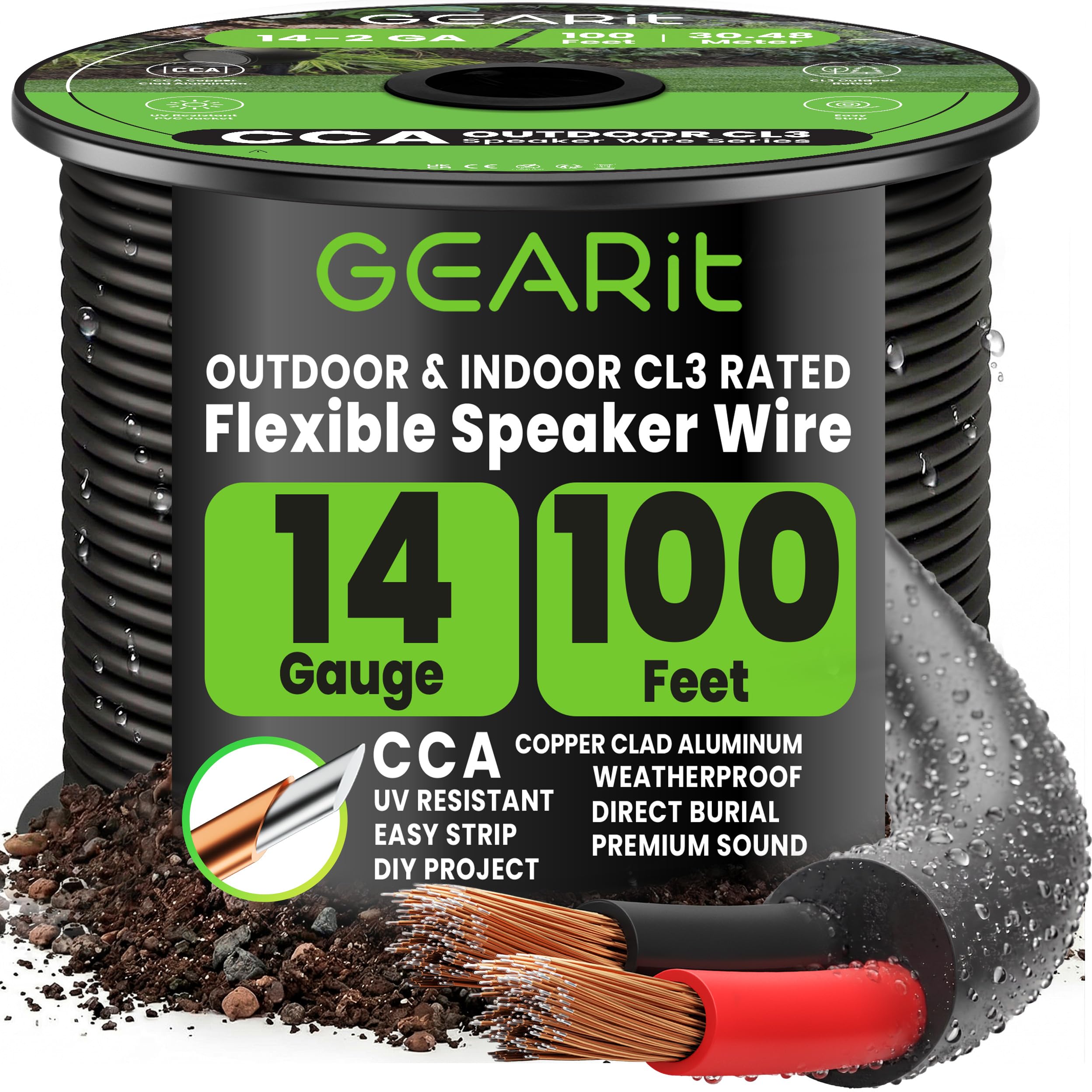
GEARit 14 AWG 100ft

96 /100
Sound Score Outstanding

Key details

Gauge
14 AWG
Length
100 ft
Conductor
CCA
Jacket Rating
Not CL rated
View on Amazon

The flexible jacket and clean-stripping conductors set this 14 AWG CCA spool apart from stiffer budget wire; it routes around furniture and pulls through simple cable paths without kinking. Against the oxygen-free copper option in this lineup, it is easier to route and more budget-friendly for buyers who don't require a pure-copper conductor.

Best matched to budget home and car audio setups that value handling over long-term coastal durability; the copper-clad aluminum core is not pure copper, so corrosion can develop over time in damp settings. The wire is not CL-rated for in-wall work, so keep it in exposed runs. The thicker jacket is the other tradeoff to accept, and for bookshelf speakers, garage systems, or moderate-length car audio cables, the handling and price make it an easy pick.

Sound quality holds up for typical listening distances: vocals stay clear, bass stays controlled for a 14 AWG CCA wire, and the polarity stripe makes left/right wiring easy to track. Splicing to existing wire, fitting banana plugs, and cutting to length are all manageable with standard tools, so installations stay quick.

💡 For very tight terminals, pin or spade connectors are an easy fit.

Pros

  • Good sound quality for the price across typical home and car speaker runs.
  • Splices, solder, and banana plugs are all manageable with this wire.
  • Soft jacket routes easily around furniture and tight corners.
  • Strips cleanly with standard tools, leaving a tidy conductor.

Cons

  • Soldering requires more attention to heat than a pure-copper conductor.
  • In very narrow terminal slots, the insulation can be too bulky for a clean fit.
Our verdict

For typical home and car audio runs, the OFC upgrade is optional; this spool handles the job with less effort.

Check Latest Price
3

Best Value Long Spool

Install Link 14 AWG 250ft

95 /100
Sound Score Outstanding

Key details

Gauge
14 AWG
Length
250 ft
Conductor
CCA
Jacket Rating
Not CL rated
View on Amazon

At 250 ft, this spool gives a multi-room setup enough 14 AWG to reach rear speakers or a second zone without stepping up to a pure-copper premium. The soft-flex red/black jacket routes around corners with less effort than stiffer budget wire, and the conductor strips and solders without extra fuss. That length-plus-handling package is the main reason to choose it over a shorter coil.

Buyers wiring a receiver to passive speakers across several rooms, or running a car audio build that needs 250 ft of slack, will get the distance they need at a cost that keeps the overall project reasonable. The CCA strands are flimsier than pure copper, so pull tension should stay moderate during routing and stripping.

For surround systems, the 14 AWG size handles the distances typical for rear channels without excessive resistance, and the red/black polarity markings keep left/right connections clear. The spool also leaves enough cable to redo a mistake or extend a run, which matters more in multi-room work than in a single pair of bookshelf speakers.

The value depends on how much of the 250 ft you actually use. A short two-speaker desk setup pays for leftover spool, but a whole-home or car project makes the per-foot cost hard to beat.

Pros

  • 250 ft of 14 AWG covers multi-room and car-audio runs without buying multiple smaller spools.
  • Soft-flex jacket routes around corners with less effort than stiffer budget cable.
  • Strips cleanly and accepts solder, so terminations go faster.
  • Feeds surround receivers and passive speakers across typical room-length cable runs.

Cons

  • Buyers who insist on oxygen-free copper will want the OFC top pick instead.
  • Not CL-rated, so concealed in-wall runs need a code-rated cable.
Our verdict

Use this for budget-friendly multi-room and car-audio runs that need 14 AWG; it brings the length and easy stripping that make bulk installs less tedious.

Check Latest Price
4

Best In-Wall / Whole-Home

NavePoint 14/2 CL2 500ft

92 /100
Sound Score Outstanding

Key details

Gauge
14 AWG
Length
500 ft
Conductor
CCA
Jacket Rating
CL2
View on Amazon

The NavePoint 14/2 CL2 500 ft spool is the bulk in-wall option that pairs a 14 AWG CCA core with a fire-rated jacket and a pull box. The box keeps the coil under control during long runs, so routing through studs and joists stays straightforward. The 500 ft length means fewer splices and less waste when running a distributed audio system. This is the format for whole-home media wiring rather than a quick single-room fix.

This is best for contractors and dedicated DIYers who will use all 500 ft across multiple rooms. The CCA conductor is the cost tradeoff: it suits dry, conditioned interior walls, not damp or coastal environments, and the occasional taped segment is worth checking before a pull. If your project is one zone, a shorter spool will be easier to store and leave less unused cable.

The 14 AWG conductors carry typical amplifier output for residential speaker runs, and the CL2 jacket clears in-wall fire-code requirements. The pull box works without a separate spindle, so a solo installer can feed cable from a stable surface without kinking. This spool can cover a multi-room layout in a single purchase.

💡 Use crimp or clamp connectors rather than solder for the most durable terminations on this CCA core.

Pros

  • Full 500 ft of CL2-rated 14 AWG at a per-foot cost that suits large projects.
  • Pull box feeds cleanly, so long in-wall runs stay manageable without tangles.
  • Cable is well made and strips cleanly for terminations.
  • Matches multi-room media wiring jobs where CL2 in-wall rating is required.

Cons

  • For one-room setups, a 500 ft spool leaves a large unused coil; shorter spools cost less.
  • CL2 covers fire safety, not burial or outdoor runs; underground or exterior use needs a different cable.
Our verdict

This is the bulk spool for multi-room in-wall work that already calls for CL2 and 14 AWG.

Check Latest Price
5

Best Outdoor-Rated

GEARit 14 AWG CL3 100ft

92 /100
Sound Score Outstanding

Key details

Gauge
14 AWG
Length
100 ft
Conductor
CCA
Jacket Rating
CL3
View on Amazon

The GEARit spool pairs 14 AWG with a CL3 jacket, giving covered patio runs and wall-cavity installations the fire rating that a basic bare-wire spool lacks. That rating matters for anyone passing wire through a wall with a required fire-resistance rating. The 100-foot length covers a pair of outdoor speakers or one in-wall zone, and the thick outer jacket holds up to routing around corners without kinking.

Stripping is clean with a standard wire stripper, and the conductors stay protected inside the jacket while you pull them through conduit or along wall framing. At 14 AWG, the cable handles ordinary receiver-to-passive-speaker runs at this length without the current-capacity concerns of thinner 16 AWG options. The jacket flexes enough for tight bends near a speaker terminal, and the spool unwinds smoothly when you measure out a specific distance.

This spool fits buyers running 14 AWG to speakers in a covered patio, garage, or rated wall cavity where a CL3 jacket is specified. It is a CCA cable, so in damp-ground or buried runs terminations can corrode over time; CL3 is not a waterproofing rating. Buyers who want maximum conductor longevity should choose the OFC top pick instead.

Pros

  • Thick protective jacket holds up during pulls and keeps the CL3 rating available for in-wall runs.
  • Handles outdoor patio and garden speaker runs without kinking while routing.
  • Easy to run, strip, and terminate with standard tools.
  • Cost-effective way to get a CL3-rated 14 AWG spool for zone-specific installs.

Cons

  • Direct-burial underground installations are outside the cable's intended scope.
Our verdict

The GEARit CL3 spool makes sense when a 14 AWG outdoor or in-wall run needs a fire-rated jacket and the route stays above damp soil.

Check Latest Price
6

Best Entry-Level / Most Popular

Amazon Basics 16 AWG 100ft

95 /100
Sound Score Outstanding

Key details

Gauge
16 AWG
Length
100 ft
Conductor
CCA
Jacket Rating
Not CL rated
View on Amazon

The 16 AWG Amazon Basics spool is the no-frills bulk option for connecting an amplifier or receiver to passive speakers in a small room. It cuts and strips cleanly, and the clear jacket makes it easy to inspect both conductors before hookup. Where the top pick spends more on thicker 14 AWG pure copper, this is the lighter-duty budget route for shorter runs.

At normal listening levels, a typical home receiver driving bookshelf or surround speakers gets clear audio without audible strain. The cable is easy to route around entertainment stands and baseboards. Keep runs modest: 16 AWG is sized for short-to-medium paths, so high-power amps and very long full-range pulls belong on the 14 AWG top pick.

This spool suits a first-time installer who wants one 100-foot reel for exposed wiring between a receiver and passive speakers. It is copper-clad aluminum rather than pure copper, and the polarity stripe can be faint. It also lacks a CL rating, so keep it to surface runs or raceways. Buyers who need pure copper for soldered or long high-power runs should step up to the OFC top pick; within those boundaries, the entry price is hard to beat.

💡 Use a marker to label the striped conductor at both ends before pulling a long run.

Pros

  • Connects everyday receivers to passive speakers in small rooms with no audible issues.
  • Jacket cuts and strips cleanly, which keeps first-time installs quick and frustration-free.
  • Delivers clear sound at normal power levels without adding distortion.
  • No-frills construction does the intended job at a budget price.

Cons

  • The white polarity stripe can be faint, so positive and negative take an extra moment to confirm.
  • Copper-clad aluminum complicates soldering and offers less long-term corrosion resistance than pure copper.
Our verdict

For small-room stereo and home theater setups that do not need CL-rated in-wall cable or pure copper, this is the budget 16 AWG spool to start with.

Check Latest Price
7

Compact DIY Installs

Install Link 16 AWG 100ft

96 /100
Sound Score Outstanding

Key details

Gauge
16 AWG
Length
100 ft
Conductor
CCA
Jacket Rating
Not CL rated
View on Amazon

Install Link's 16 AWG CCA spool uses a soft-flex jacket that pulls easily through tight spots, and the clear red/black stripe makes polarity obvious when matching amp to speaker. The CCA conductor is the boundary: it handles moderate-power home receiver runs without issue, but high-current car audio belongs to OFC. This is a compact starter option for small rooms and simpler installs, and the same brand's 250-foot 14 AWG spool is the step-up when a project needs more reach. For what it is — a budget 100-foot 16 AWG cable — it covers everyday speaker hookups cleanly.

Pros

  • Soft-flex jacket routes easily around baseboards and through tight spaces.
  • Clear red/black stripe removes guesswork when matching polarity on amp and speaker terminals.
  • Budget price keeps the cost of a 100-foot spool low for small setups.

Cons

  • Not CL-rated, so in-wall installation calls for a different cable.
  • 100-foot length is best for one compact zone; multi-room layouts need a larger spool.
Our verdict

Pick this when the job is a small living room, a garage pair, or a single zone on a budget — and step up to the 14 AWG 250-foot spool if the run gets longer.

Check Latest Price
8

Multi-Room Short Runs

NavePoint 16/2 CL2 500ft

90 /100
Sound Score Outstanding

Key details

Gauge
16 AWG
Length
500 ft
Conductor
CCA
Jacket Rating
CL2
View on Amazon

The 500-foot pull box delivers enough CL2 16 AWG to wire multiple rooms without stopping to buy another spool mid-project. The jacket strips cleanly and the box keeps the coil manageable while pulling through studs. For a high-volume install with short-to-medium in-wall runs, this is a cost-effective way to get code-rated cable on the walls. The 16 AWG conductor is best for those shorter paths, and CCA corrosion risk in damp or coastal environments means dry interior walls are the intended setting. Installers who need pure copper for soldered connections should choose an OFC spool.

Pros

  • 500 ft in a pull box keeps multi-room in-wall installs organized and reduces wasted cable.
  • Per-foot cost works well for large projects that need a full spool of CL2-rated wire.
  • Pulls cleanly and strips well for surround and ceiling speaker runs.

Cons

  • Longer or high-current runs need the 14 AWG spool; 16 AWG is best for short to medium paths.
  • In coastal or damp environments, CCA conductor corrosion can make terminations brittle; dry interior walls avoid it.
Our verdict

For a budget whole-home install with short-to-medium in-wall runs in a dry climate, this 500-foot CL2 spool delivers the quantity and code rating this kind of project needs.

Check Latest Price
9

Short Bookshelf Runs

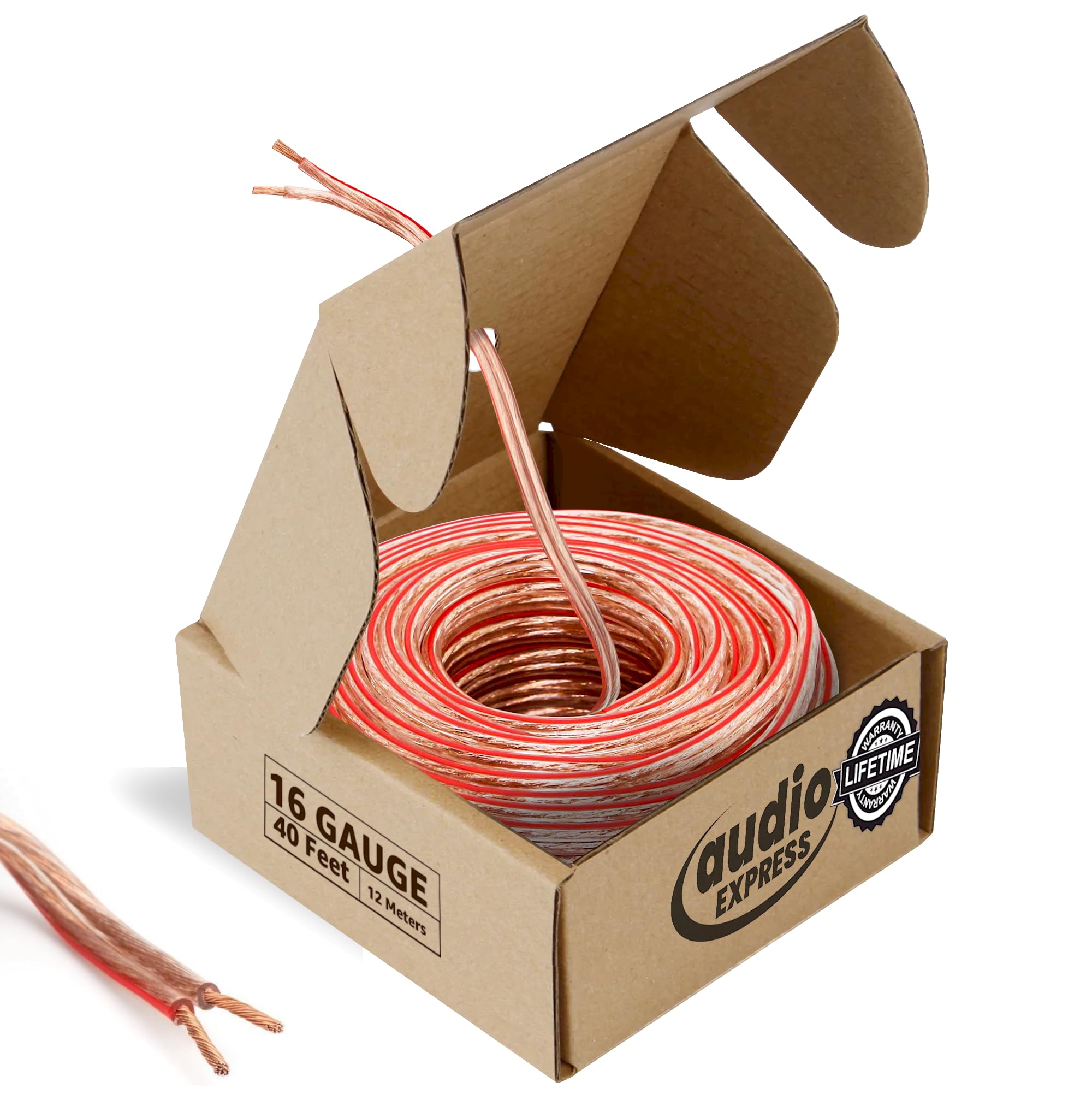
Audio Express 16 AWG 40ft

90 /100
Sound Score Outstanding

Key details

Gauge
16 AWG
Length
40 ft
Conductor
CCA
Jacket Rating
Not CL rated
View on Amazon

The 40-foot spool fits one compact system: a pair of bookshelf speakers, a garage receiver, or a small repair job gets enough cable without the expense of a bulk roll. The 16 AWG CCA conductors strip cleanly, and the clear jacket makes polarity easy to read. CCA is not pure copper, so damp or coastal locations can accelerate corrosion at the terminations; dry indoor and garage use avoids that exposure. This is not a whole-home spool: 40 feet runs out before the second room. For a single compact stereo, that is enough.

Pros

  • Short 40-ft roll keeps the upfront cost low for one pair of speakers.
  • Suits compact bookshelf and garage setups without a larger leftover spool.
  • Conductors strip easily and the clear jacket shows polarity at a glance.

Cons

  • Unrated jacket keeps this spool out of in-wall runs; it belongs in accessible spaces.
  • Per-foot cost runs higher than larger bulk spools, so long-run buyers pay a premium for the small roll.
Our verdict

Keep this spool for a single compact stereo or repair job; move to a bigger roll once a second room enters the plan.

Check Latest Price

How to Choose

Gauge

Gauge is conductor thickness. 16 AWG suits runs under about 50 feet at normal receiver power; 14 AWG adds headroom for longer pulls and lower-impedance speakers; 12 AWG is for very long, high-current runs. The trade-off is workability: thicker cable is heavier and stiffer, which matters when bending around baseboards.

Conductor Material

OFC (oxygen-free copper) strips cleanly, solders well, and resists corrosion. CCA (copper-clad aluminum) keeps cost down with an aluminum core, but solder takes poorly to it and corrosion can form where the copper layer is exposed. Indoors, CCA is a reasonable budget pick; for damp garages, coastal rooms, or outdoor speakers, OFC is worth the extra money.

Jacket Rating

CL2 and CL3 are fire-safety ratings for in-wall installation, not waterproofing. CL2 is standard for residential in-wall speaker cable; CL3 permits higher voltage and suits outdoor or plenum-adjacent runs. A CL3 jacket can still let moisture reach CCA conductors in wet ground, so use it for covered patios and conduit, not direct burial.

Length and Spool Size

Match spool length to the project: 100 feet covers a small stereo, 250 feet handles multi-room setups, and 500 feet makes sense for whole-home installs. Cost per foot drops on bigger spools, but only if you use most of it. Packaging matters too — a pull box feeds cleanly, while a cheap coil can twist and tangle.

Polarity and Flexibility

A clear polarity stripe keeps left and right channels consistent at both ends; reversed speakers cancel bass and blur the soundstage. If the stripe is faint, use a multimeter or battery test and mark the ends yourself. Insulation flexibility is the other workability factor: soft PVC routes easily, while thick jackets endure wall pulls but make stripping harder.

Frequently Asked Questions