12 Best Wireless Interview Microphone of 2026: Phone-Ready Kits

Find a wireless interview microphone that connects to your phone, camera, or computer without pairing headaches, dead batteries, or processed-sounding audio.

Wireless interview mics are usually sold on two numbers: maximum range and audio specs. In real interviews, the details that matter more are the receiver's connector, the charging case's total runtime, and how the noise filter treats a human voice.

The closest competition here comes down to a trade-off between two practical priorities: a kit that connects to both camera and phone without extra adapters, or a kit with an even lighter transmitter and app-based tuning. Choose based on where your recording actually happens, not on the longest line-of-sight figure.

The right system powers both transmitters through a full session, pairs without a second thought, and keeps dialogue clear without making it sound processed. Those factors decide whether a wireless kit becomes a permanent part of your bag or a drawer filler.

About the Sound Score: This comparative score is calculated from a product's published customer rating and review volume. It is not a laboratory measurement or a hands-on test result.

1

Best Overall

DJI Mic Mini

95 /100
Sound Score Outstanding

Key details

Battery Life
48 h with case
Wireless Range
400 m line-of-sight
Noise Cancelling
2-level noise cancelling
Transmitter Setup
2 TX, receiver, case
View on Amazon

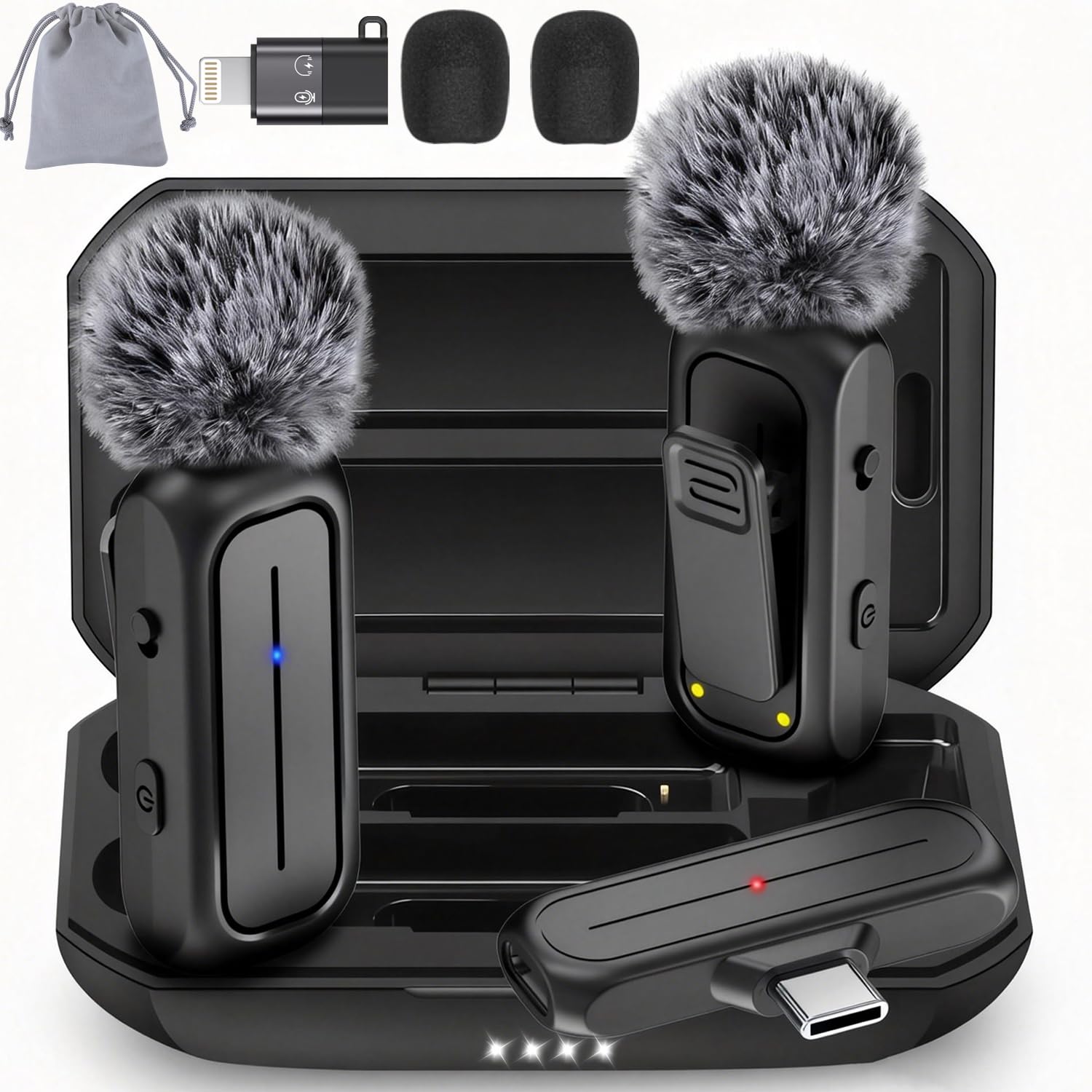
Dual 10g clip-on transmitters, a receiver, a 3.5mm camera cable, and a USB-C phone adapter come together in one charging case, so a two-person interview can move from a camera to a phone without extra accessories. The 48-hour case battery and 400m line-of-sight range cover a full day of outdoor shooting.

Bluetooth and DJI OsmoAudio add dongle-free phone recording, while 48kHz/120dB SPL capture keeps interview voices clear. Two-level noise cancelling helps in crowd-heavy spaces without mangling speech.

This is the right fit for camera/phone hybrid interviewers and vloggers who want a discreet two-person kit at mid-range. No 32-bit float internal recording exists on the transmitters, and range/noise-cancelling specs are best-case line-of-sight numbers — in a controlled setup with clear sight lines, those boundaries matter less.

Pros

  • Two 10g transmitters plus camera, USB-C phone, and charging-case connections cover interview setups in one box.
  • 48-hour charging case keeps the pair powered through multi-day location shoots.
  • Audio quality holds up across phone and camera workflows, with a large buyer base matching expectations.

Cons

  • Noise-cancelling is set only by the two-level transmitter switch; there is no app-based fine-tuning after the fact.
  • The 400m range is line-of-sight; walls and RF congestion can shorten usable distance.
Our verdict

This is the kit to grab for a two-person interview day that starts on a camera and finishes on a phone.

Check Latest Price
2

Best Smartphone-Creator Alternative

Hollyland Lark M2

94 /100
Sound Score Outstanding

Key details

Battery Life
30 h with case
Wireless Range
1,000 ft line-of-sight
Noise Cancelling
App-adjustable noise cancelling
Transmitter Setup
2 TX, receiver, case
View on Amazon

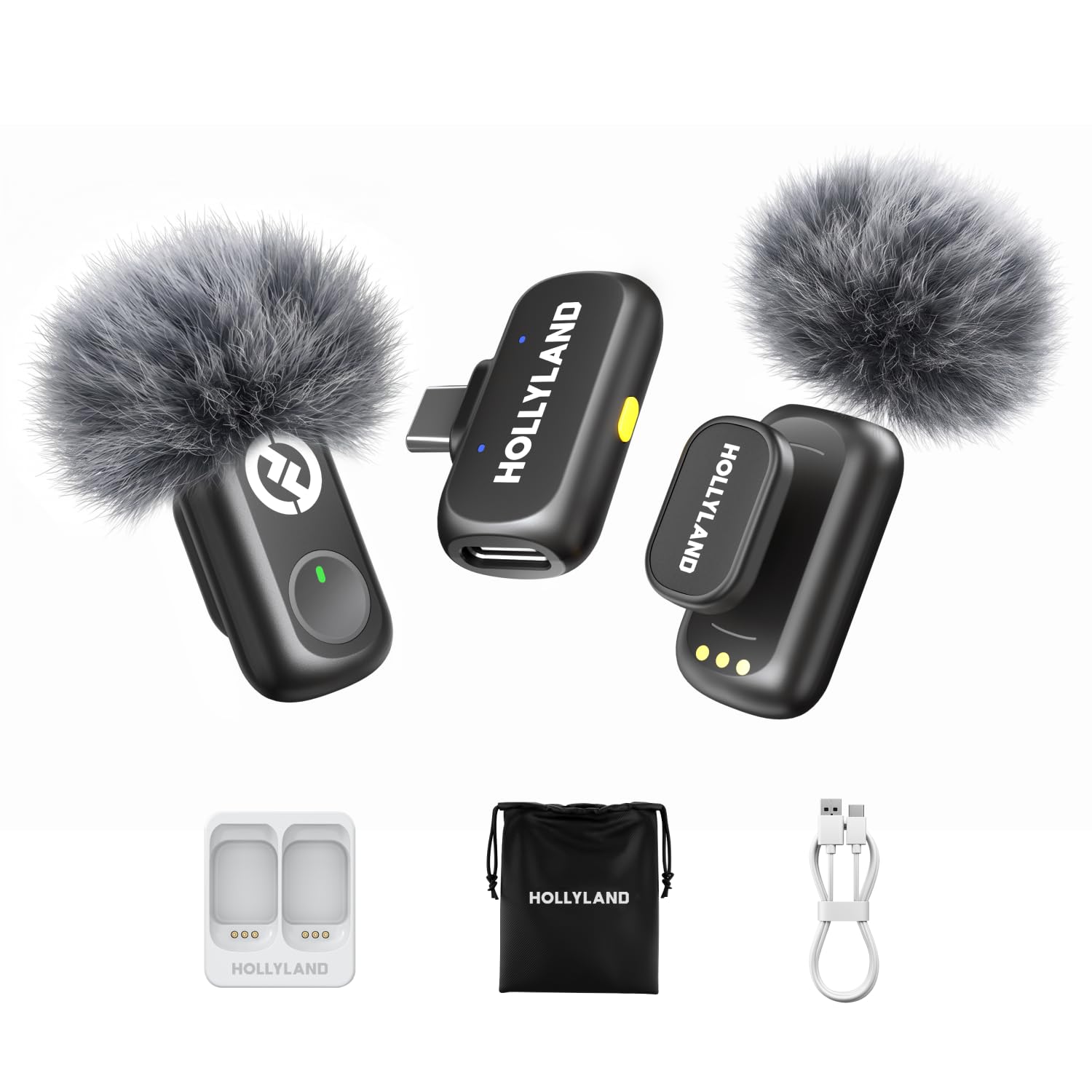
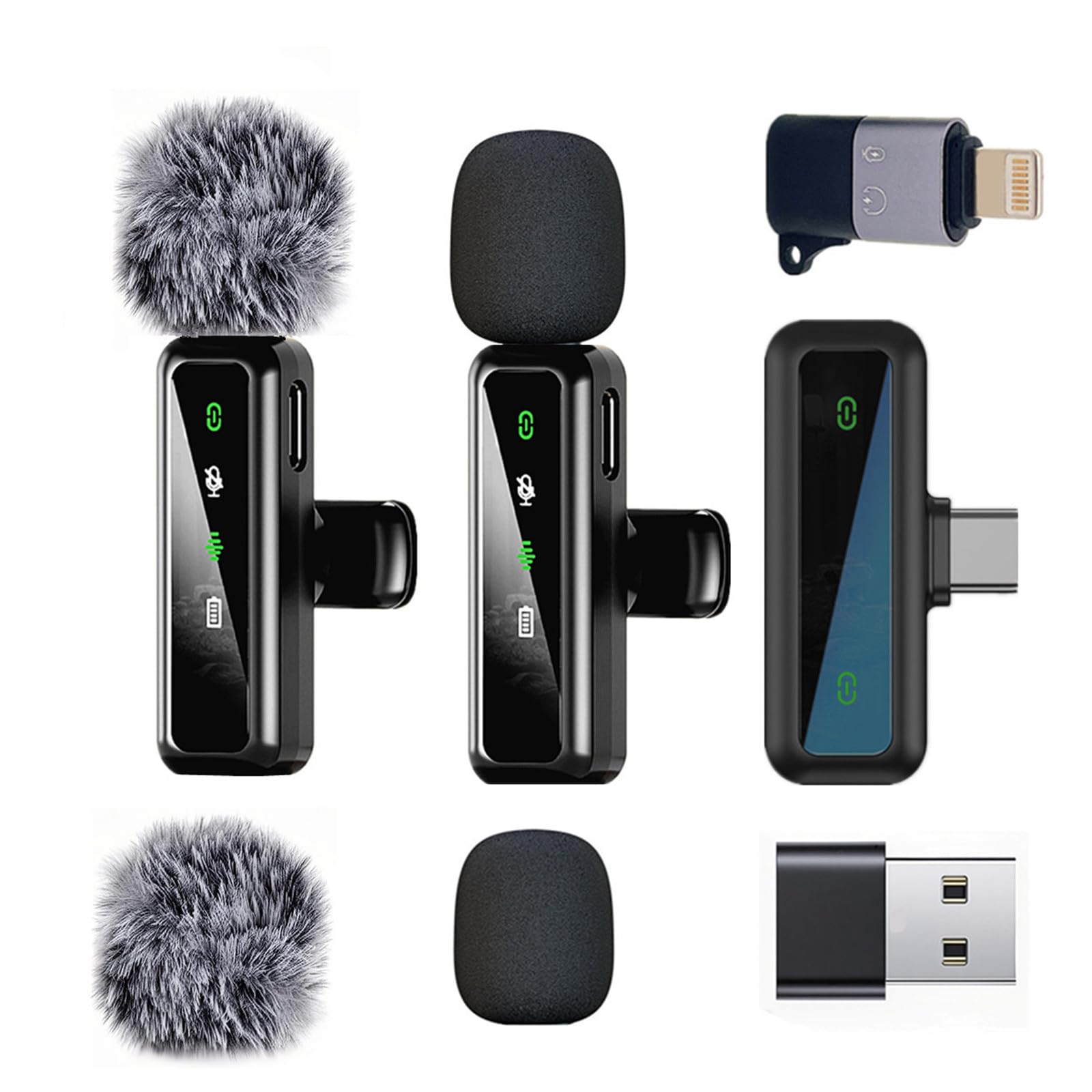
The Lark M2's 9g transmitter is the smallest clip in this class, and the companion app adds adjustments beyond the built-in controls. Pairing to the USB-C receiver takes seconds, audio captures conversation at 48kHz/24-bit with a 70dB signal-to-noise ratio, and the charging case extends total runtime to 30 hours.

This kit is built for smartphone-first vloggers, podcasters, and mobile journalists who want the lightest possible lavalier and prefer app-based control. If a camera body with a 3.5mm jack is part of your workflow, the M2's USB-C/Lightning receiver won't connect to it; that setup points toward the top pick's camera cable.

Pros

  • Button-size 9g transmitter is easy to hide on a collar or lapel.
  • Clear voice capture at 48kHz/24-bit with usable headroom for interviews and vlogs.
  • Charging case extends total runtime to 30 hours across multi-location shoots.

Cons

  • Noise cancellation can sound processed or leave background noise in some environments.
  • Unit-to-unit durability can vary over months of use.
Our verdict

Phone-first interviewers get clean dialog without weighing down the subject, and the charging case keeps the kit ready between locations.

Check Latest Price
3

Best for Pro Camera Work

DJI Mic 2

93 /100
Sound Score Outstanding

Key details

Battery Life
18 h with case
Wireless Range
250 m line-of-sight
Noise Cancelling
Intelligent noise cancelling
Transmitter Setup
2 TX, receiver, case
View on Amazon

The DJI Mic 2 is the camera-first interview kit in this group: 32-bit float internal recording on each transmitter, an OLED receiver for at-a-glance monitoring, and a 250m line-of-sight range. The whole setup is compact enough for travel. Crisp, detailed audio and intelligent noise cancelling make interview vocals clear, and the charging case stretches a session to about 18 hours.

This is for working videographers, documentary makers, and interviewers who want a safety recording channel and a screen on the receiver. Phone compatibility can be inconsistent for some users, and the premium price overkills casual phone clips.

Pros

  • Crisp, detailed audio gives interview voices a clean, present tone.
  • Intelligent noise cancelling reduces background noise while keeping voice natural.
  • Charging case with fast charging supports long shoot days.

Cons

  • Audio performance can vary between individual units after initial use.
Our verdict

The Mic 2's backup recording and receiver screen make it a strong fit for camera interviews where a lost take is not an option. Phone-first shooters are better served by the lighter Mic Mini kit.

Check Latest Price
4

Best Budget Camera/Phone Hybrid

NEEWER CM28

91 /100
Sound Score Outstanding

Key details

Battery Life
9 h TX, case recharges
Wireless Range
200 m line-of-sight
Noise Cancelling
Transmitter Setup
2 TX, receiver, case
View on Amazon

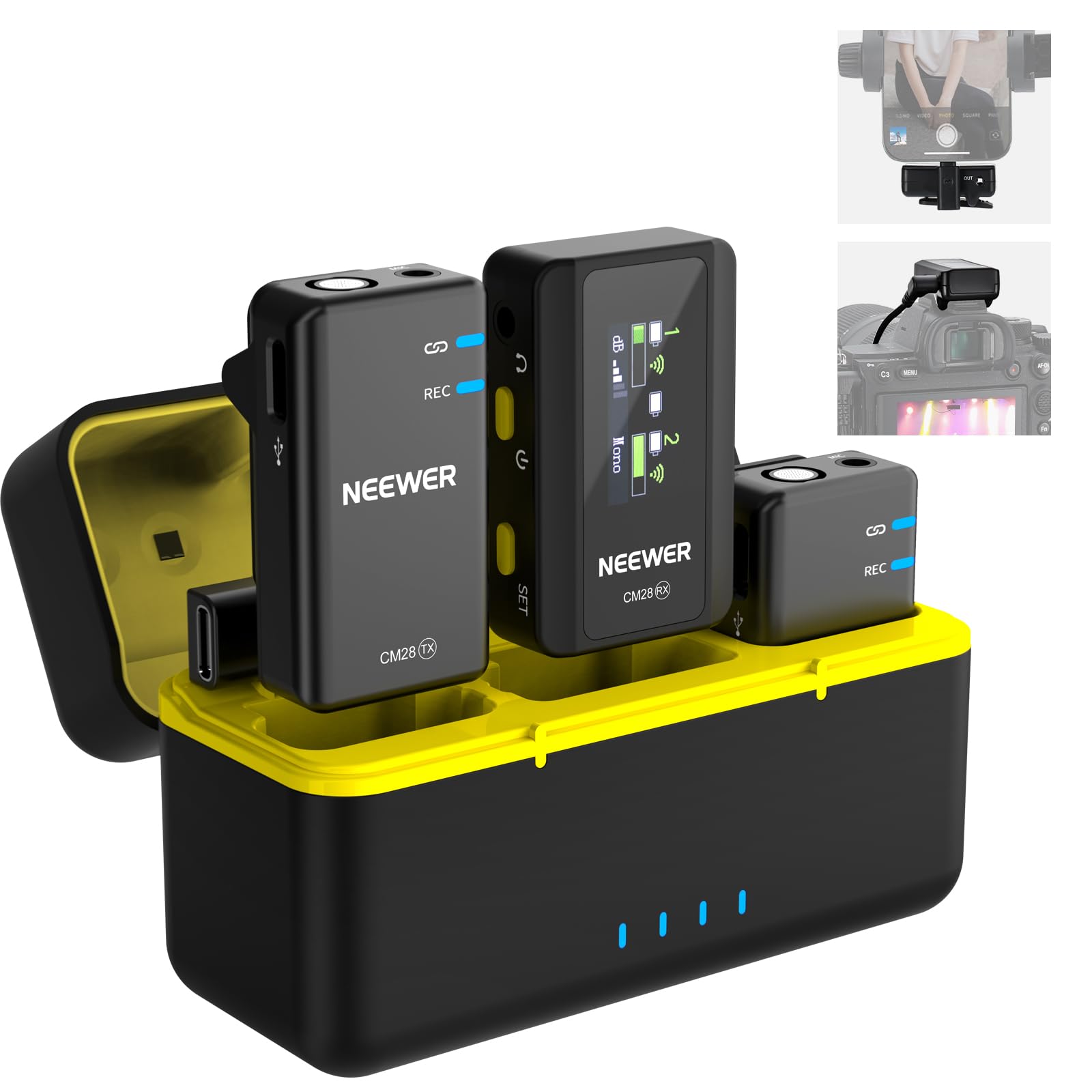
The CM28 packs internal WAV recording and a camera 3.5mm cable into a system that costs far less than comparable camera-ready kits. Each transmitter stores 4GB of 48kHz/16-bit WAV backup audio, so a dropout or a phone connection blip doesn't erase the take. Setup is quick: clip on a mic, plug the receiver into a camera, phone, or computer, and go. The charging case tops up both transmitters and the receiver between sessions.

This kit suits first-time creators and small teams who want a camera/phone interview setup with internal backup recording, without paying for premium extras they won't use. Receiver power and charge behavior can vary between units, so bench-check the RX before a paid shoot.

💡 Handle the phone adapters gently and avoid twisting them during connect/disconnect.

Pros

  • Clear spoken-word audio in normal rooms, with strong capture for interviews.
  • Easy setup across camera, phone, and computer via included cables and adapters.
  • Charging case and long on-board battery cover multi-hour shoots without hunting for outlets.

Cons

  • Phone adapters can feel fragile after repeated connect/disconnect cycles.
Our verdict

For first-time interview teams, the CM28 is a cost-effective way to add internal backup recording and camera connectivity without stepping up to a higher price tier.

Check Latest Price
5

Best Smartphone-Only Plug-And-Play

Rode Wireless Micro

89 /100
Sound Score Excellent

Key details

Battery Life
18 h with case
Wireless Range
Noise Cancelling
Transmitter Setup
2 TX, receiver, case
View on Amazon

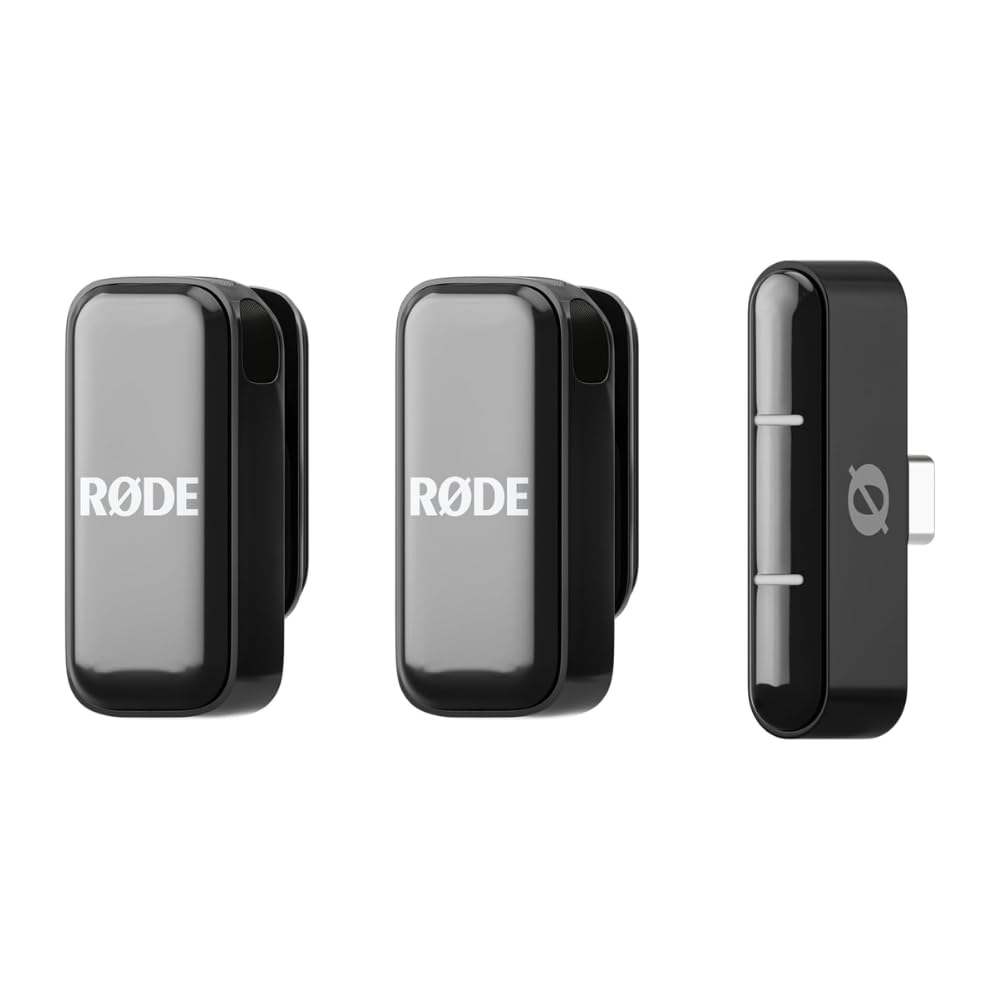
The Wireless Micro puts the whole audio chain on a USB-C dongle receiver: plug into a phone, clip on one of the two compact transmitters, and automatic gain handles levels while the 18-hour charging case keeps both mics ready to record.

This is a phone-first kit for smartphone streamers, vloggers, and mobile journalists who want Rode's clean workflow without menu-diving. The transmitters are small enough for a shirt collar, and the case is pocket-friendly. The receiver has no 3.5mm camera output, so DSLR and cinema shooters should pass; typical interview and vlog sound levels stay clean.

Pros

  • Crystal-clear phone audio with automatic gain levels for hands-off interview and vlog capture.
  • Sturdy Rode build with compact transmitters and a charging case that travels well.
  • Setup takes seconds: plug in the dongle, clip on a mic, start recording.

Cons

  • In very loud environments, noise processing can be less aggressive, so room tone can creep into interview audio.
Our verdict

For phone-first creators who value Rode's polish and a no-fuss workflow, this is the easy call.

Check Latest Price
6

Best Budget for Beginners

Hollyland Lark A1

88 /100
Sound Score Excellent

Key details

Battery Life
54 h with dock
Wireless Range
200 m line-of-sight
Noise Cancelling
3-level noise cancellation
Transmitter Setup
2 TX, USB-C RX, dock
View on Amazon

The Lark A1 keeps interview speech clear with three-level noise cancellation and a magnetic clip that hides under a collar. The 48kHz/24-bit capture is clean for phone and computer recordings, and the 200m line-of-sight range claim is more than a USB-C kit needs in real rooms.

This suits students, hobbyists, and streamers on a tight budget who record on USB-C phones or laptops. It is not a camera kit — the USB-C receiver has no 3.5mm output — and buyers who need guaranteed pairing with every phone model should confirm compatibility first.

Pros

  • Three-level noise cancellation keeps interview vocals clear in noisy indoor spaces.
  • Magnetic transmitter stays tucked on a collar without a bulky clip.
  • Entry-level price makes a two-mic setup affordable for casual creators.

Cons

  • Battery runtime may fall short of the 54-hour case estimate on longer shoots.
  • Pairing can be inconsistent with some iPhone and Android models.
Our verdict

For USB-C phone recording on a tight budget, the Lark A1 delivers the audio and noise-cancellation value that matters most.

Check Latest Price
7

Budget iPhone Users

Mini Mic Pro

88 /100
Sound Score Excellent

Key details

Battery Life
6 h, pass-through charging
Wireless Range
Noise Cancelling
Noise reduction
Transmitter Setup
2 TX, receiver
View on Amazon

Budget-friendly dual-mic kit with USB-C and Lightning adapters and pass-through charging gives iPhone-first creators clear social-video audio at a low entry price. Android and camera connections can be inconsistent, and audio quality can vary between units, but as an iPhone-first starter kit it still works.

Pros

  • Good overall audio for the price, with two transmitters for interviewer and guest.
  • Transmitters are compact and pocket-friendly for everyday carry.

Cons

  • Battery runtime can vary between units.
Our verdict

For a starter iPhone social-feed kit, the low entry cost makes the caveats acceptable.

Check Latest Price
8

Budget Android Creators

GoorDik J3

87 /100
Sound Score Excellent

Key details

Battery Life
6–12 h per TX
Wireless Range
20 m line-of-sight
Noise Cancelling
2-mode active denoise
Transmitter Setup
2 TX, receiver, no case
View on Amazon

USB-C receiver includes USB-A and Lightning adapters, expanding connection options beyond a single cable. Active denoise tames room tone in quiet-to-moderate indoor settings. Durability is the limiting factor: clips and receiver ports can sustain damage under routine use. A reasonable first wireless mic on a tight budget.

Pros

  • Vocals come through cleanly in interview recordings, needing little cleanup afterward.
  • Fast two-mic setup: plug in the USB-C receiver and capture audio right away

Cons

  • With certain Android phones or GoPro cameras, the USB-C receiver may not work at all.
Our verdict

It fits best as a low-stakes introduction to wireless mic recording for USB-C phone creators.

Check Latest Price
9

Social Media Creators

NPTCL K1

89 /100
Sound Score Excellent

Key details

Battery Life
24 h with case
Wireless Range
70 ft line-of-sight
Noise Cancelling
DSP noise reduction
Transmitter Setup
2 TX, receiver, case
View on Amazon

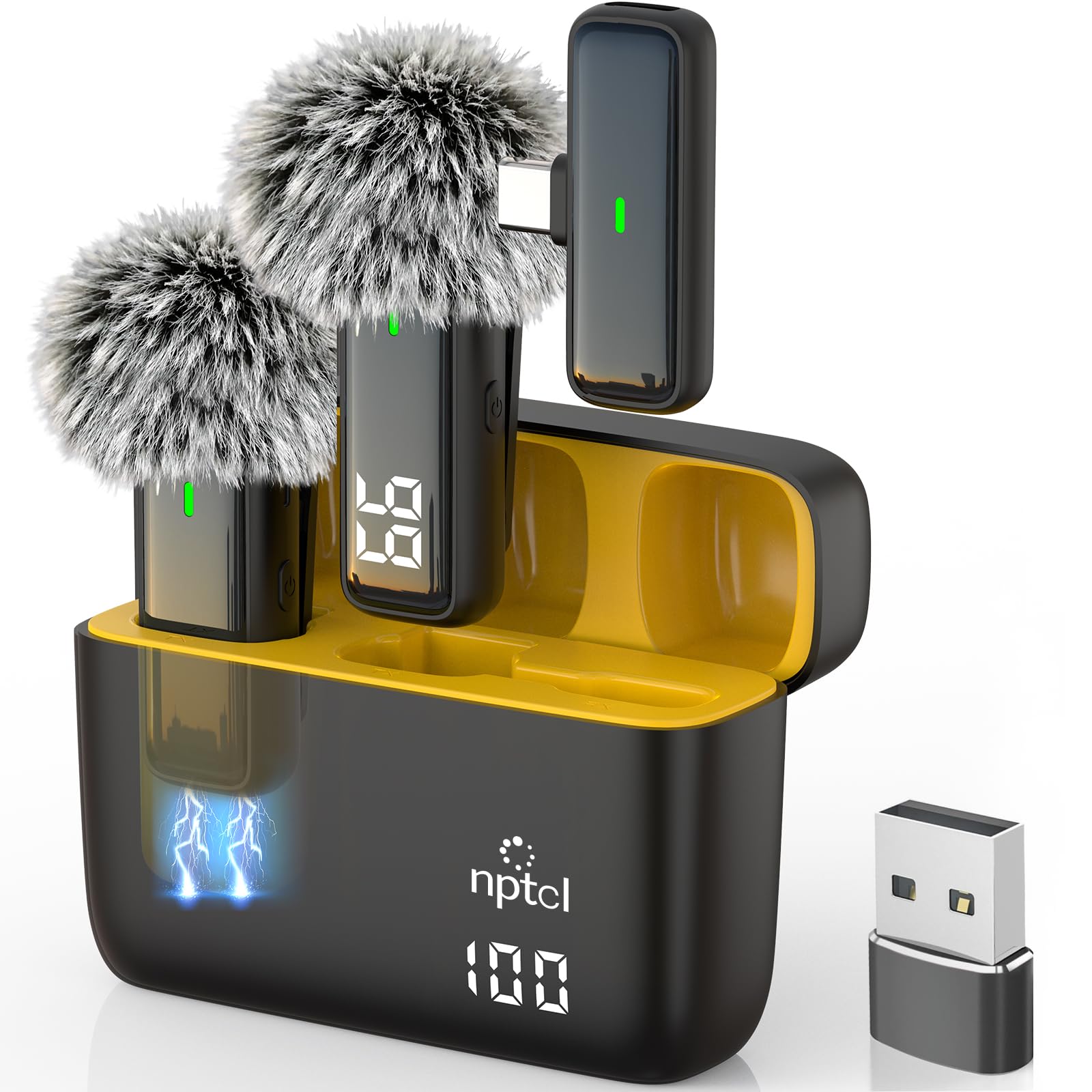
Two clip-on transmitters, a charging case, and a USB-C/USB-A receiver get phone and tablet interviewers recording within minutes. Clear sound and easy setup cover the basics. Unlike the Lightning-first kit in this set, this one uses USB-C and USB-A. Noise cancellation can be inconsistent in louder venues, so this suits social clips and calm-room interviews.

Pros

  • Clear voice capture for interviews and social clips.
  • Charging case extends total battery well beyond six hours per mic.

Cons

  • 3.5mm camera output is absent, so camera-only shooters need a different receiver.
Our verdict

For social clips and phone interviews in calm rooms, this two-mic kit and charging case cover the essentials.

Check Latest Price
10

Beginner Content Creators

Bulatry WM261

87 /100
Sound Score Excellent

Key details

Battery Life
6 h per TX, case
Wireless Range
65 ft line-of-sight
Noise Cancelling
AI noise reduction
Transmitter Setup
2 TX, receiver, case
View on Amazon

For new creators recording simple phone interviews, the Bulatry WM261 captures clear speech with easy out-of-box pairing, a dual-transmitter charging case, and AI noise reduction that helps in moderately noisy rooms. Connectivity can be inconsistent with some devices, which keeps it below the top value picks.

Pros

  • Clear, loud sound for interview videos and vlogs.
  • Two transmitters and a charging case keep two-person interviews simple to set up.

Cons

  • The clip doesn't rotate; forcing it can crack the clamp under strain.
Our verdict

For a beginner on a budget recording casual phone interviews, this kit works when compatibility is confirmed before checkout.

Check Latest Price
11

Budget iPhone Interviewers

Ecomxia WM300

87 /100
Sound Score Excellent

Key details

Battery Life
7–8 h per mic
Wireless Range
70 ft line-of-sight
Noise Cancelling
3-mode denoise
Transmitter Setup
2 TX, receiver, case
View on Amazon

The Ecomxia WM300 is a low-cost Lightning-first kit with dual transmitters, a charging case, and long battery life — a practical starting point for budget iPhone/iPad interviewers. The receiver can drop the signal on some devices, and noise cancellation may leave background noise in louder rooms; those boundaries keep it below the main picks, and Android compatibility is not guaranteed.

Pros

  • Clear audio quality for a budget price.
  • Simple two-mic setup that beginners can handle.

Cons

  • Build quality skews budget-leaning compared with mid-range kits.
Our verdict

For budget-conscious iPhone/iPad interviewers, the two-mic setup and clear audio cover the essentials.

Check Latest Price
12

First-Time iPhone Users

ordele H63

85 /100
Sound Score Excellent

Key details

Battery Life
6 h per mic
Wireless Range
20 m line-of-sight
Noise Cancelling
Noise reduction
Transmitter Setup
2 TX, receiver, no case
View on Amazon

The ordele H63 is the lowest-cost way in this lineup to get USB-C, Lightning, and USB-A adapters in one kit, and its audio stays clear enough for short clips. It suits first-time TikTok or YouTube users, but iPhone compatibility can be inconsistent on some models and real-world battery runtime can land around three hours.

Pros

  • Clear, crisp audio for the cost keeps dialogue understandable in short clips.
  • Plug-and-play setup with included Lightning, USB-C, and USB-A adapters gets you recording quickly.

Cons

  • No low-battery warning, so you may not know the transmitter is nearly out.
Our verdict

A fine first wireless lapel experiment or casual weekend clip kit for anyone staying within short recording sessions.

Check Latest Price

How to Choose

Transmitter Setup

Two transmitters cover a two-person interview without a second kit; a single transmitter only forces a swap mid-session. The real difference is what happens between takes: transmitters that charge only over cable can be left behind or run dry, while a case tops everything up when closed.

Receiver configuration matters just as much. A dongle-style receiver is lighter for phone work, but a receiver with a screen and physical output gives you monitoring and camera flexibility that a dongle cannot.

Device Compatibility

Compatibility is a physical connector issue, not a Wi-Fi pairing issue. A USB-C receiver works with many phones and tablets, but not with cameras that have a 3.5mm jack unless the kit includes a camera cable.

Lightning and USB-C receivers are not interchangeable, and some budget kits claim Android support but only ship a Lightning dongle. Check the receiver's connector and included cables before buying; the cheapest kits often fit only one device family.

Battery Life

Battery life with a charging case is a better spec than raw transmitter runtime. A 6-hour transmitter can last a full day if the case recharges it between interviews; a 10-hour transmitter without a case is still limited by when you next find power.

Charging cases also affect workflow. They add bulk and need their own charge state, but they turn a two-mic kit into something you can toss in a bag and trust for a week of short sessions. When comparing numbers, look at total case runtime rather than per-mic claims.

Noise Cancellation

Noise cancellation is a voice-processing tool, not a background-noise eraser. It applies filtering that can reduce hum and room tone, but in wind or crowd noise it can leave artifacts or make the voice sound thin.

Some systems offer adjustable levels; others hardwire one setting. That matters for interviewers who move between quiet rooms and loud venues, because a fixed aggressive filter can hurt speech intelligibility even while it removes noise.

Wireless Range

Range figures are line-of-sight. Real handheld interviews rarely hit them because bodies, bags, and camera-phone bodies absorb and reflect RF signal; 20 m of honest range is often more useful than 200 m that drops behind a shoulder.

Look for stable signal behavior at the distances you actually use — a few meters across a table or across a room. If a system drops out in that zone, its maximum range number does not matter.

Frequently Asked Questions