10 Best Android Microphone of 2026: Clean Audio Without the Gimmicks

The best Android microphones for vlogging, interviews, and streaming — and which wireless lavs actually deliver clean sound instead of hype.

A wireless lavalier microphone should be the easiest part of an Android video setup. The marketing specs usually look better than real-world results: range drops when the phone is in a pocket, and noise cancellation can make a voice sound thin or synthetic. The gap between the spec sheet and the recording is where buyers get let down.

This guide centers on the trade-off that matters most: a mic that connects instantly and preserves voice quality beats one with an inflated range figure and an extra processing mode you will probably switch off. Battery endurance, transmitter size, and internal recording all pull in different directions. The right fit depends on whether you are a casual vlogger, a multi-hour interviewer, or a creator who needs a file-level backup.

The 'first try' test filters out exaggerated noise-cancellation claims faster than any spec sheet. It also separates casual shooters from creators who need internal recording backup. That distinction is the decision that matters.

About the Sound Score: This comparative score is calculated from a product's published customer rating and review volume. It is not a laboratory measurement or a hands-on test result.

1

Best Overall

DJI Mic Mini

95 /100
Sound Score Outstanding

Key details

Wireless Range
400m
Battery Life With Case
48h with case
Compatibility And Adapters
USB-C plug-and-play
View on Amazon

At 10g per transmitter, the Mic Mini is light enough to disappear under a collar, and the 48-hour charging case keeps it ready through multi-day shoots. The USB-C receiver connects directly to Android phones and tablets without adapters, while two-level noise cancellation smooths wind and room tone without burying the voice. For streamers and interviewers, the receiver is small enough to stay mounted on a phone while moving between takes.

Automatic limiting keeps loud interview moments from clipping, and the 400m line-of-sight range covers typical vlogging and streaming spaces. The receiver footprint is small enough to stay mounted on a phone during sit-down conversations, and the transmitter sits lightly on a guest's lapel without adding noticeable weight. Sudden speech and laughs stay controlled enough to keep a take usable.

This is the all-round pick for Android vloggers and interviewers who want a compact wireless lav for everyday video. Without onboard recording, a wireless dropout ends that take, so creators who need backup for one-take interviews should look at the pro tier.

Pros

  • 10g transmitter clips or hides easily and stays comfortable through long recording sessions.
  • 48-hour charging case keeps the kit ready for multi-day shoots without an outlet.
  • Two-level noise cancellation reduces wind and room tone while keeping voice natural.

Cons

  • Multi-mic interviews are capped at two transmitters; larger panels need the pro-tier system.
  • Mid-range price sits above entry-level lav kits, so minimum-spend buyers should look at budget options.
Our verdict

For everyday Android video work, the Mic Mini turns a simple USB-C connection and tiny transmitters into a full shooting day without battery worry.
Check Latest Price
2

Best for Pro Creators

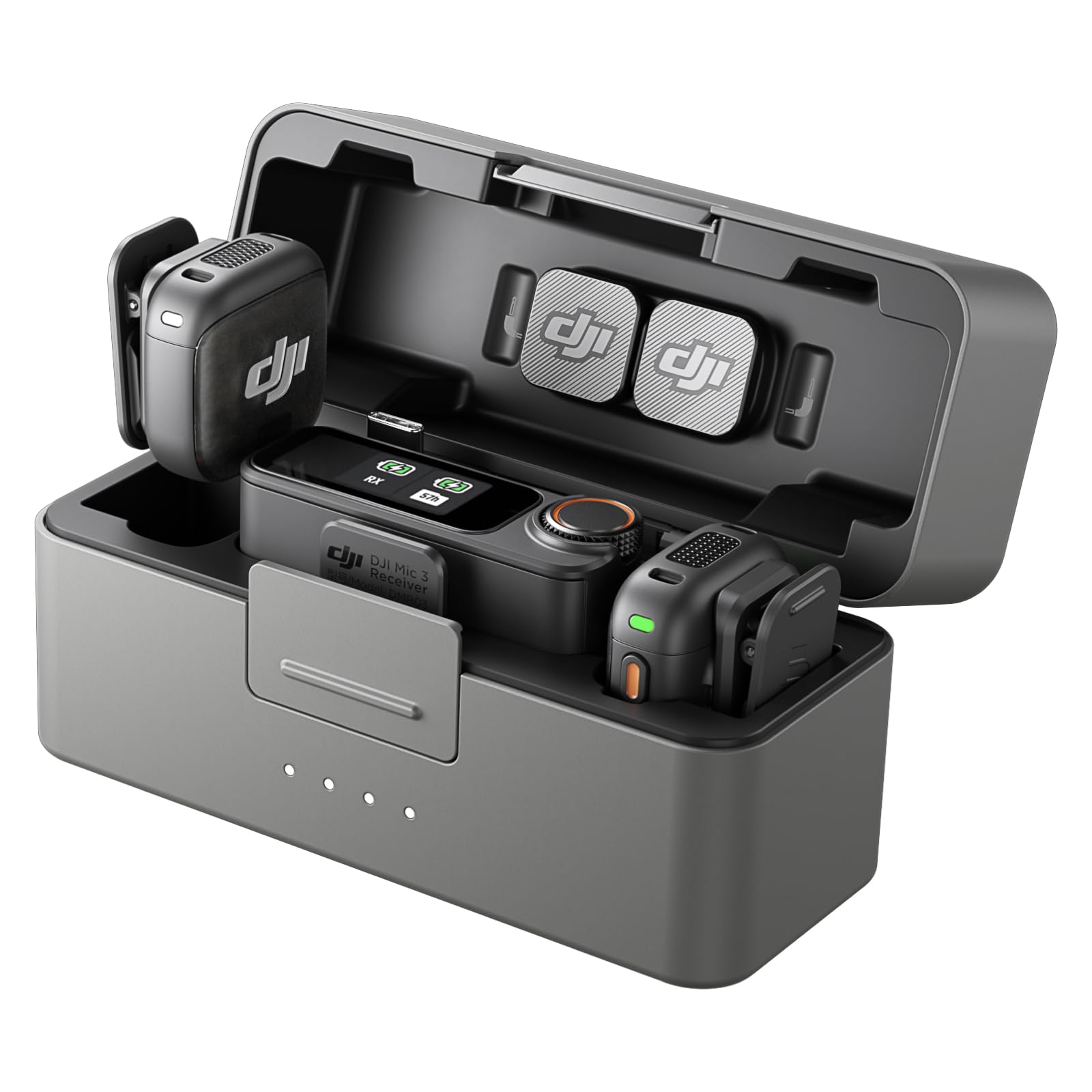
DJI Mic 3

92 /100
Sound Score Outstanding

Key details

Wireless Range
Dual-band anti-interference
Battery Life With Case
28h with case
Compatibility And Adapters
USB-C, OsmoAudio
View on Amazon

The DJI Mic 3 brings 32-bit float dual-file recording to Android phone and tablet recordings, so clipped interview audio has a recoverable backup instead of a lost take. Adaptive gain keeps levels steady, dual-band transmission reduces dropouts in busy wireless environments, and the system expands to four transmitters for panel podcasts.

This is for Android creators who will use the companion app and internal recording. The premium price and added complexity only pay off if backup recording is part of the workflow; casual phone vloggers will get more from the lighter all-round kit in this comparison with its 48-hour case and smaller transmitters. Non-DJI transmitters are locked out of Osmo direct-connection features, so staying inside DJI's transmitter lineup is part of the deal.

💡 Enable internal recording in the companion app before the take; the 32-bit float safety net lives there.

Pros

  • Clear, crisp voice capture in noisy environments.
  • Strong multi-mic feature set for interviews and podcasts.
  • Compact setup pairs quickly on phones and tablets.

Cons

  • The 28-hour charging case trails the lighter all-round kit's 48-hour endurance for multi-day shoots.
Our verdict

This runner-up fits Android creators who run multi-mic interviews or podcasts and want a recoverable backup track; daily solo vloggers are better served by the lighter all-round kit.

Check Latest Price
3

Best Compact Hi-Fi for Android

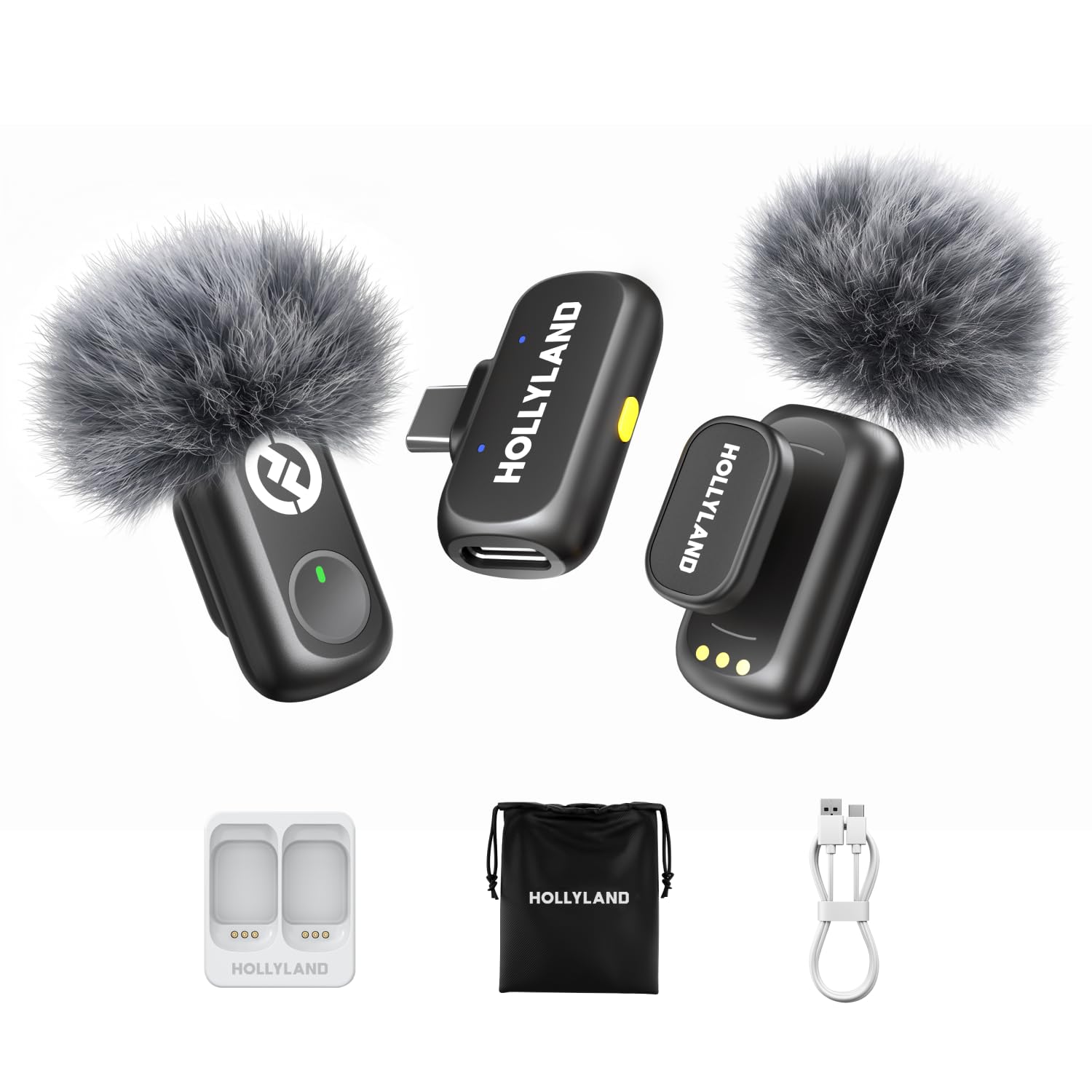
Hollyland Lark M2

94 /100
Sound Score Outstanding

Key details

Wireless Range
1000ft line-of-sight
Battery Life With Case
30h with case
Compatibility And Adapters
USB-C plug-and-play
View on Amazon

The Lark M2 delivers studio-grade 48kHz/24-bit audio from a 9g transmitter, and the USB-C receiver connects to Android phones without an app. That combination makes it the smallest way to get clear voice capture on a phone mount, while the 1,000-foot line-of-sight range gives interviewers room to move.

It is the better fit for Android creators who prioritize portable size and long wireless range over a larger charging case. Noise cancellation can make voices sound processed in loud environments, and long-term connection issues can surface after months of heavy use — trade-offs that matter less for solo vloggers shooting in controlled spaces.

💡 Let the noise-cancellation mode stay off for a more natural voice, and enable it only when background noise is unavoidable.

Pros

  • Captures voice with clear, professional detail in a 9g transmitter.
  • Solid build with consistent audio performance across typical shooting environments.
  • USB-C receiver connects to Android phones with no extra setup or app.

Cons

  • Noise cancellation can add static or make voice sound processed in loud spaces.
  • Long-term durability can vary, with connection issues possible after months of regular use.
Our verdict

For Android vloggers and interviewers, the 9g transmitter and long range make this the easiest ultra-compact upgrade; use noise cancellation only when the space demands it.

Check Latest Price
4

Best Budget Studio Sound

Hollyland Lark A1

88 /100
Sound Score Excellent

Key details

Wireless Range
200m
Battery Life With Case
54h with case
Compatibility And Adapters
USB-C receiver
View on Amazon

Hollyland's Lark A1 brings 48kHz/24-bit capture and a strong magnetic clip to the budget dual-mic market, with a 54-hour charging case at a price that sits below typical rivals. The three-level noise cancellation handles busy streets and cafés better than its entry-level price suggests.

Android vloggers and streamers who want clean voice without paying for pro gear get the essential audio quality of pricier kits. Battery and pairing consistency can vary between units, so this kit suits creators who confirm their gear before a take and keep the case handy, not those who expect a set-and-forget mic across long sessions.

Pros

  • Clean, natural voice capture at a budget-friendly price.
  • Strong magnetic clip keeps the transmitter planted on collars and lapels.
  • Three-level noise cancellation cuts street and crowd noise effectively.

Cons

  • Occasional units show faster-than-expected battery drain, so the case is worth keeping close.
  • Pairing can be inconsistent between sessions; a quick audio check before recording is wise.
Our verdict

The Lark A1 gives Android creators the clean voice capture they came for, at a price that leaves room for other gear.

Check Latest Price
6

Best App-Controlled Audio

MAONO Wave T5

90 /100
Sound Score Outstanding

Key details

Wireless Range
300m open area
Battery Life With Case
30h with case
Compatibility And Adapters
USB-C receiver
View on Amazon

The Wave T5 sets itself apart with app-level audio control: 14 levels of noise cancellation and four voice presets let Android creators shape their sound before recording. The 300m open-air range and 30-hour charging case cover long interview days, and the app keeps adjustments quick. It is not the lightest transmitter here, but the tuning options go beyond the slimmer sets in this lineup.

This kit suits Android creators who will spend time in the companion app to customize voice and ENC, not buyers looking for a plug-and-play lav. Occasional receivers have been noted to lose output entirely, so test both units before a paid shoot. The app-first design is the tradeoff: without it, the extra control is wasted.

Pros

  • Voice comes through clearly even in loud settings, with natural dialogue reproduction.
  • App control keeps noise cancellation and voice presets easy to adjust on the fly.
  • Noise cancellation reduces background chatter without thinning the voice.

Cons

  • USB-C receiver can sit loose in certain phone ports, so movement may cause dropouts.
Our verdict

The Wave T5 is the Android mic to reach for when voice-shaping control matters more than the smallest transmitter.

Check Latest Price
7

Budget Android Vloggers

BOYA BY-V20

91 /100
Sound Score Outstanding

Key details

Wireless Range
328ft
Battery Life With Case
9h per TX
Compatibility And Adapters
USB-C charge-through
View on Amazon

Pairs two small transmitters with a USB-C receiver that charges your phone while recording — rare at this price. Voice capture is clear for interviews and vlogs, and 9-hour transmitters cover full shoots. Noise reduction is modest, so a windy scene can keep more bleed than the top picks. Android compatibility varies by model, so verify USB-C audio before buying.

Pros

  • Clear voice capture at a price that fits a tight budget.
  • Two transmitters pair quickly for two-person interviews on one receiver.

Cons

  • In a windy or loud space, ambient bleed can remain even with noise reduction on.
Our verdict

For budget Android vloggers recording two-person interviews, the BY-V20 is a capable kit if your phone supports USB-C audio.

Check Latest Price
8

Long-Run Interviews

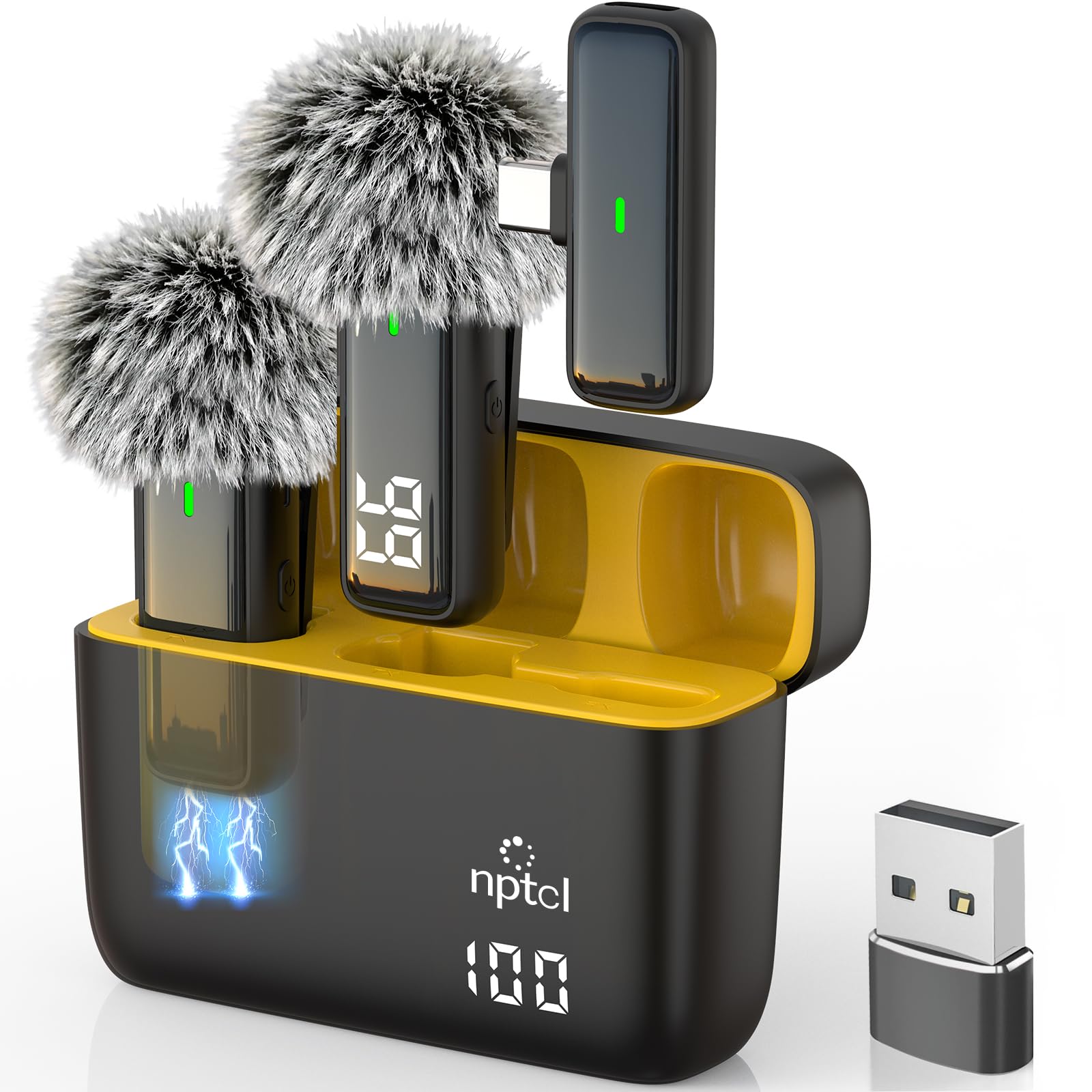
NPTCL K1

89 /100
Sound Score Excellent

Key details

Wireless Range
70ft
Battery Life With Case
24h with case
Compatibility And Adapters
USB-C, USB-A
View on Amazon

Android interviewers get clean out-of-box audio, two transmitters, and a 24-hour charging case for long sessions. The USB-C/USB-A receiver is built for phone-first work. Noise cancellation varies between units, so outdoor or windy shoots may need manual cleanup, but phone-first creators who want case endurance still get strong value.

Pros

  • Captures clear voice audio immediately with two transmitters included.
  • 24-hour charging case supports long interview days without a power source.

Cons

  • Receiver bulk can crowd adjacent laptop ports, so check port spacing before relying on it with a laptop.
Our verdict

Best for Android interviewers who need two clean mics and a 24-hour charging case for long phone-first sessions.

Check Latest Price
9

Multi-Device Shooters

PGDLOF WM339

88 /100
Sound Score Excellent

Key details

Wireless Range
70ft
Battery Life With Case
7h per mic
Compatibility And Adapters
USB-C, Lightning, 3.5mm
View on Amazon

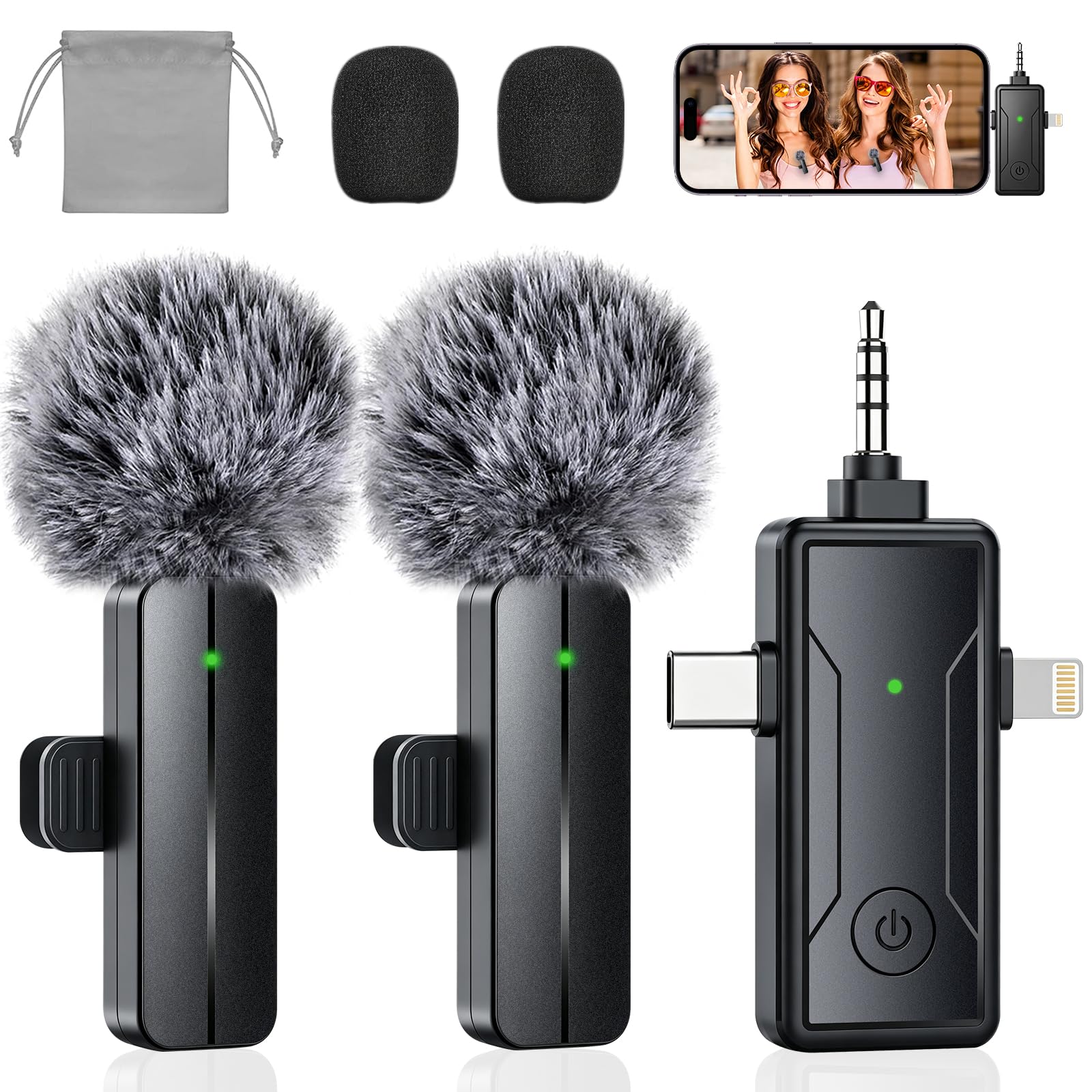
The one receiver handling USB-C, Lightning, and 3.5mm is the main reason to buy this kit. Voice capture stays clear with low latency, and the 7-hour transmitters get through long interviews. Noise reduction is modest, and dropouts can occur at moderate range, so this kit favors close-range work in quieter settings.

Pros

  • Voice capture stays clear with minimal background noise in everyday vlogs and interviews.
  • Single receiver covers USB-C, Lightning, and 3.5mm, so one kit handles Android, iPhone, camera, and tablet setups.

Cons

  • The feature set is slimmer than the runner-up kits, so advanced users may outgrow it.
Our verdict

This fits best for mixed-device households that want a single budget kit for basic vlogs and interviews.

Check Latest Price
10

Mixed-Device Households

WARM BOX WM-J3

89 /100
Sound Score Excellent

Key details

Wireless Range
100ft
Battery Life With Case
7h per mic
Compatibility And Adapters
USB-C, Lightning, USB-A
View on Amazon

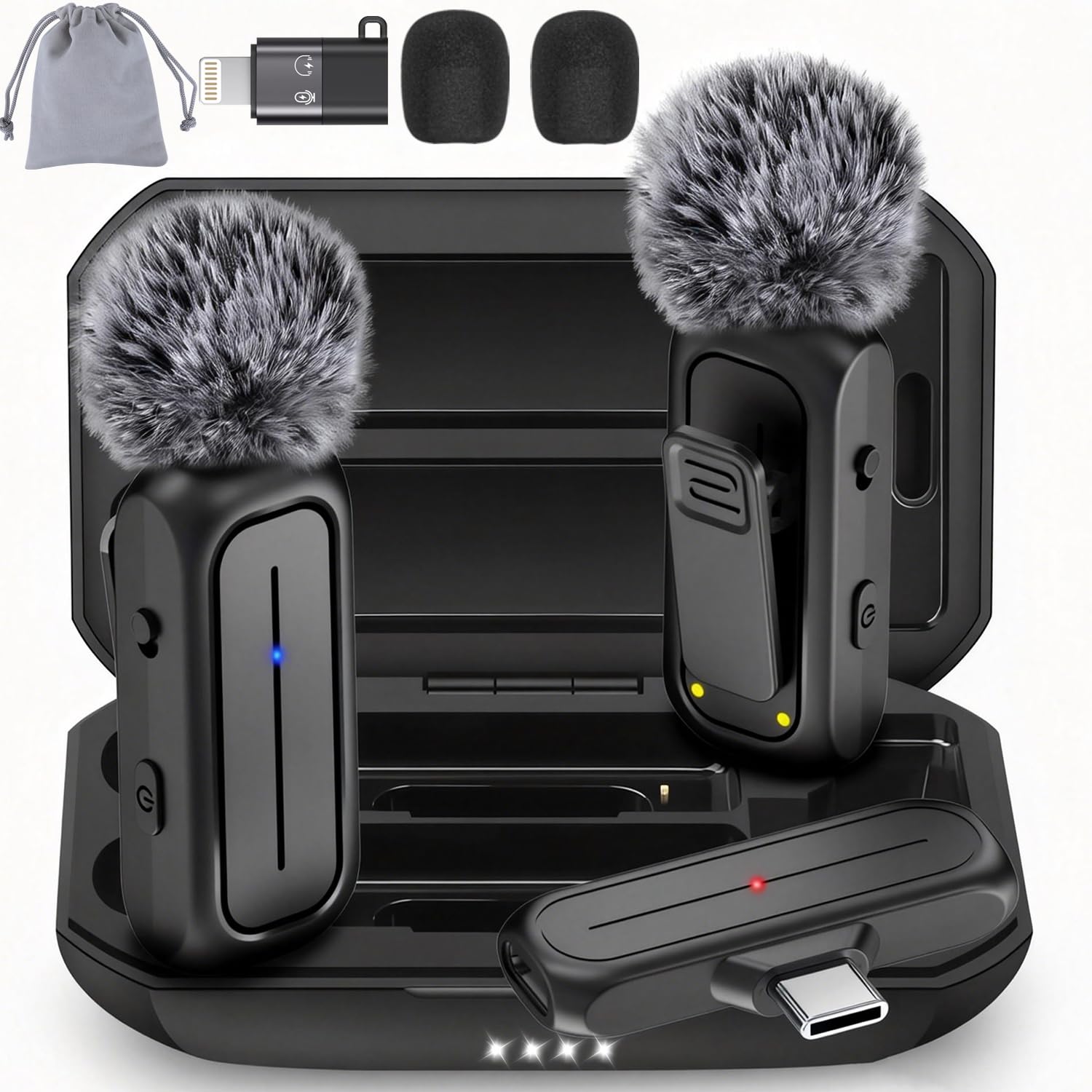
WM-J3 bundles USB-C, Lightning, and USB-A adapters, so mixed iPhone/Android households get easy pairing with phones and tablets. Voice is clear for casual vlogging, streaming, and podcast starts. Noise-cancellation modes may not work as advertised on all units, so quiet spaces are the safer default. This is a convenience-first kit, not a pro workload tool.

Pros

  • USB-C, Lightning, and USB-A adapters included, so the same kit works with Android phones, iPhones, and tablets.
  • Clean voice capture at a budget-friendly price for casual recording.

Cons

  • Clip security can be less certain when moving; stationary interviews and tabletop setups are a safer fit.
Our verdict

Best for budget creators in mixed iPhone/Android households that want one kit to connect everything; pick it for quiet-room podcasts and casual vlogging, not for critical outdoor shoots.

Check Latest Price
11

Casual Creators

Bulatry WM261

87 /100
Sound Score Excellent

Key details

Wireless Range
65ft
Battery Life With Case
6h, case 8 charges
Compatibility And Adapters
View on Amazon

Two six-hour wireless mics with a charging case that refills them eight times deliver low-latency audio for casual Android vlogs. Pairing can be inconsistent on some Android phones, and the clip can snap if rotated forcefully. For creators who leave mics clipped the same way, this is a convenient budget entry.

Pros

  • Clear, loud voice capture for the price, with two mics and six-hour transmitters.
  • Charging case refills both mics eight times, so they stay ready for casual shoots.

Cons

  • Clip does not rotate, so mounting angles are fixed.
Our verdict

Best for casual Android vloggers and podcasters who want two wireless mics plus a charging case on a budget.

Check Latest Price

How to Choose

Battery Life With Charging Case

Wireless lavalier transmitters draw power even when idle, so a charging case is worth more than a slightly larger internal battery. A case tops both mics up automatically and keeps charging contacts protected. A 48-hour case can cover a week of short shoots without a dedicated charging session.

Wireless Range

Advertised range is measured in open space with a clear line of sight. A phone in a pocket, a subject facing away, or a crowded room changes that number; bodies block the 2.4GHz signal and metal reflects it. For most vloggers, a stable 70 feet is more useful than a 300m figure that only appears outdoors.

Audio Quality

Sample rate and bit depth define the recording format, but the signal-to-noise ratio and SPL ceiling matter more in a lavalier. A 120dB SPL rating means the capsule can handle a raised voice without clipping. That headroom is what keeps interview recordings clean when someone gets excited.

Noise Cancellation

Most lavalier noise cancellation is DSP-based, not a physical barrier against wind or handling. Aggressive processing subtracts predicted noise, and that subtraction can leave the voice sounding metallic or muffled. Use the lightest effective setting, and fix placement and wind before touching the processing menu.

Android Compatibility and Adapters

Android phones treat USB-C audio differently depending on the phone's audio class implementation and OTG settings. Some receivers appear instantly; others need the phone to be switched to external audio mode. A dedicated USB-C receiver is safer than a kit that depends on a Lightning-to-USB-C adapter.

Transmitter Size and Weight

Lighter transmitters hide under a collar and stay put on lightweight fabric, but they carry smaller batteries and often shorter range. Heavier units can hold a bigger battery and antenna, yet they pull at a shirt or show through thin material. The real trade-off is invisibility versus endurance, not sound quality.

Frequently Asked Questions