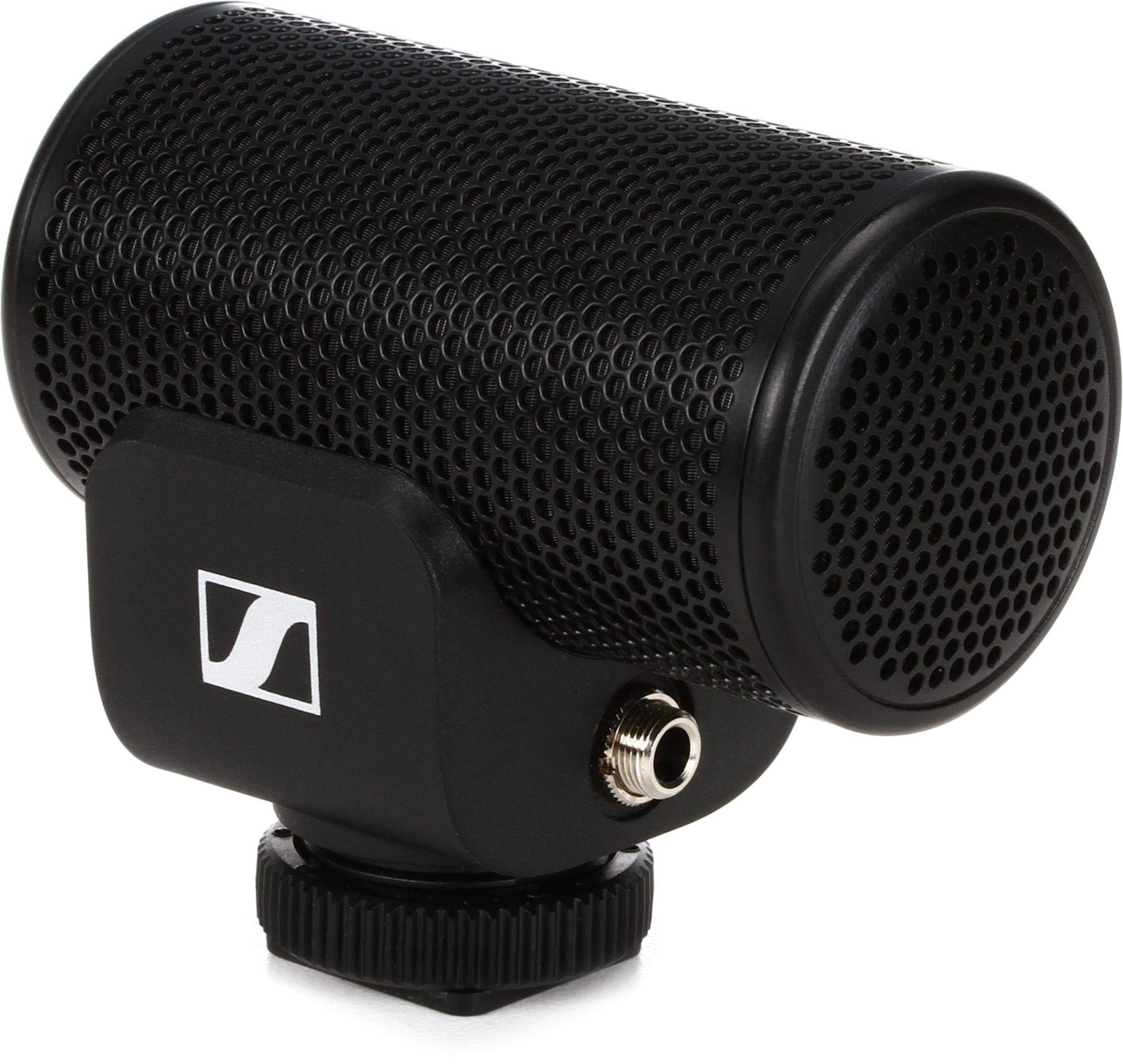
Best Overall

Rode VideoMic GO II
Key details
- Connectivity
- 3.5mm TRS + USB-C
- Power Source
- No battery required
- Size / Weight
- 60g
- Directionality
- Supercardioid
The VideoMic GO II pairs a 3.5mm analog output with a USB-C digital output in a 60g body that runs on plug-in power, so there is no battery to charge or swap. The supercardioid capsule keeps dialogue present, and the mic can move from a mirrorless camera to a phone, tablet, or laptop without changing the audio chain. That dual-output arrangement is the core advantage here: one mic serves a camera rig and a USB-C mobile or desktop setup, with no adapter or interface in between.
On a camera, the sound is clean and the background stays controlled enough for street scenes or busy rooms. Connected over USB-C, the companion app unlocks a high-pass filter, high-frequency boost, and pad, which gives the same small mic two distinct working personalities: a fixed analog shotgun for camera work and a tunable digital mic for phone or computer capture. For quick run-and-gun video, the default sound is ready to go; for a podcast or indoor interview, the filter can pull out rumble before recording.
Streamers and podcasters can treat the USB-C leg as a desktop microphone that plugs straight into a computer, while filmmakers get a body light enough to sit on a small rig without fuss. The analog path works with any camera that supplies plug-in power, and the USB-C path bypasses an audio interface for computer use. That combination is what moves it ahead of lighter, single-output shotguns in the same lineup.
The right owner is a hybrid creator who already works with USB-C devices, such as a mirrorless camera plus a USB-C phone or laptop, or a streamer who wants one mic for desk and field use. Older iPhones and some cameras may not use the digital output, so the analog 3.5mm connection remains the fallback for those hosts.
At a mid-range price, the feature set is measured against budget shotguns that lack the digital output and against larger filmmaker mics that add battery and weight. The 60g body and no-battery operation make it easy to keep in a bag, and the app gives it tone shaping that other compact shotguns leave out. This is where the value sits: one microphone covers camera audio and USB-C desktop audio without asking you to carry two mics.
💡 Adjust the app-based tone controls during a USB-C connection, then mount the mic for the camera shoot.
Pros
- Clear dialogue capture with well-controlled background noise in active settings.
- Consistent Rode build quality and fast setup across camera and USB-C sources.
- 60g body with battery-free operation means less weight and no power prep.
- Camera and phone background noise handling works without additional processing.
Cons
- Tone controls are app-only; the mic body has no physical switches for high-pass, boost, or pad.
- USB-C connection is not guaranteed on every device, so the app's tone controls may be out of reach on some hosts.
The VideoMic GO II covers a camera's 3.5mm input and a USB-C device's digital input in a 60g body with no battery. Hybrid creators get one mic for both jobs.