12 Best Voice-Over Microphones of 2026: Get Clean Spoken-Word Audio Without Hype

Find the right voice-over mic for your room, setup, and budget: USB convenience, XLR studio tone, or a hybrid path between them.

Most voice-over microphone listings lean heavily on RGB, noise-cancelling, and studio-grade language, but the real divider is capsule type and your room. Dynamic mics forgive untreated spaces; condensers reward quiet ones.

Many negative reviews trace back to placement and gain mistakes rather than defective hardware. A sensitive condenser placed too far from the mouth can pick up keyboard clatter and HVAC hum, while a dynamic mic used at arm's length sounds thin and distant.

The practical choice comes down to what your recording space actually allows: plug-and-play USB for immediate results, XLR for a cleaner upgrade path, or a hybrid that lets you start one way and move later.

About the Sound Score: This comparative score is calculated from a product's published customer rating and review volume. It is not a laboratory measurement or a hands-on test result.

1

Best Overall

Logitech Blue Yeti

93 /100
Sound Score Outstanding

Key details

Connection
USB-A
Capsule Type
Condenser
Pickup Pattern
Cardioid, omni, bidirectional, stereo
Onboard Controls
Gain, mute, headphone volume, pattern
View on Amazon

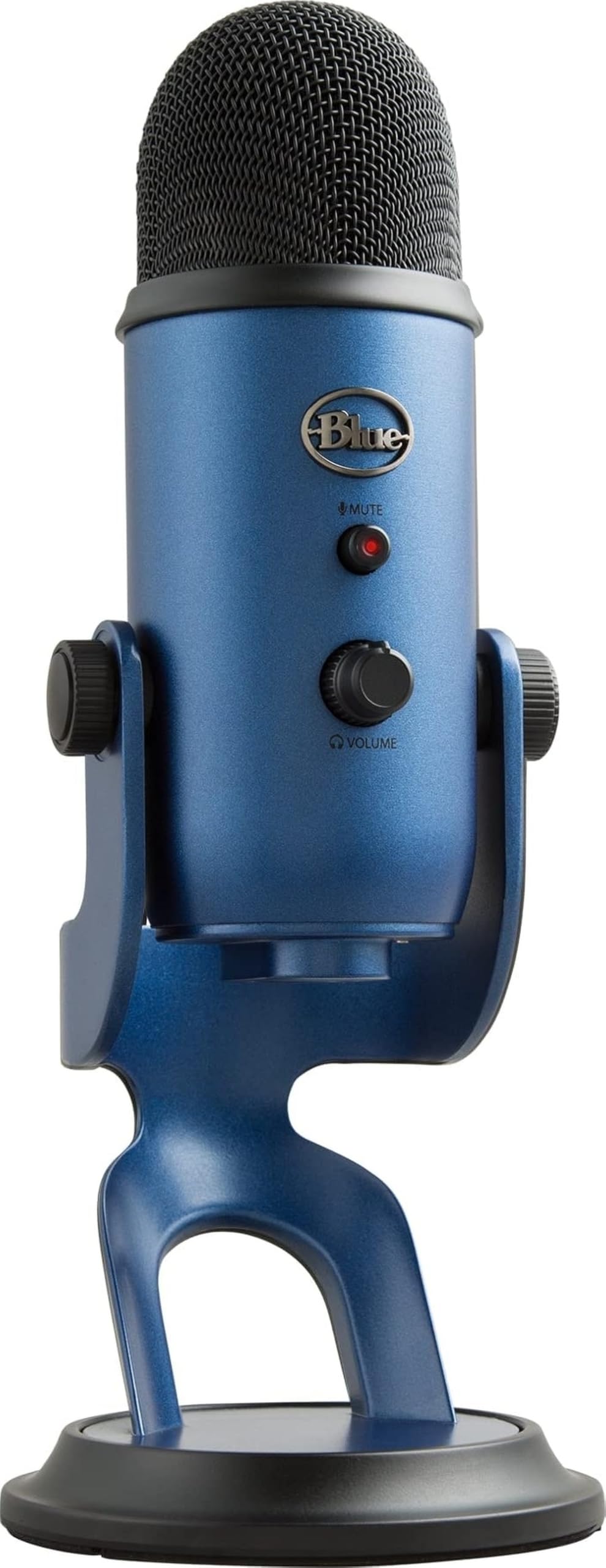
The Blue Yeti delivers broadcast-style clarity for voice from a tri-capsule array, with cardioid, omni, bidirectional, and stereo patterns that cover solo podcasting, two-person interviews, and wide-room capture through one USB connection. The metal body and heavy base give it a permanent-studio feel, and front-mounted gain, mute, headphone volume, and pattern controls keep adjustments quick without opening a software mixer.

Vocal reproduction stays crisp for narration, streaming, meetings, and voice-over takes, and the gain range handles close-mic delivery well. Onboard headphone volume makes live monitoring easy, so you can check a take before it reaches post. This is a condenser mic, so it rewards deliberate placement: keep the source close and the gain moderate for a full, clean spoken-word tone.

This is the pick for first-time podcasters, streamers, YouTubers, and home-office users who want one USB microphone that handles several content tasks without an interface. It is USB-only, so an XLR-only studio chain is off the table. Its condenser capsule will reveal room noise and keyboard clatter when gain is high or placement is poor; in that kind of space, a dynamic XLR microphone is the stronger choice for background-noise rejection. With a quiet room and sensible gain, the Yeti covers solo narration, interviews, and live streaming without extra hardware.

💡 Set gain so your loudest line lands near -12 dB and keep the mic a hand-span from your mouth for a clean voice-over take.

Pros

  • Clear vocal capture for podcasts, streaming, narration, and voice-over.
  • Metal build and heavy base feel at home in a permanent recording setup.
  • Plug-and-play USB setup works out of the box with no interface needed.

Cons

  • Mute button and tension knobs can feel stiff during quick mid-session adjustments.
  • Condenser sensitivity narrows the working distance, so clean takes depend on close-up delivery.
Our verdict

For spoken-word creators who want one USB microphone that covers solo podcasts and two-person interviews without an interface, this is the practical pick.
Check Latest Price
2

Professional Broadcast Choice

Shure SM7B

96 /100
Sound Score Outstanding

Key details

Connection
XLR
Capsule Type
Dynamic
Pickup Pattern
Cardioid
Onboard Controls
None
View on Amazon

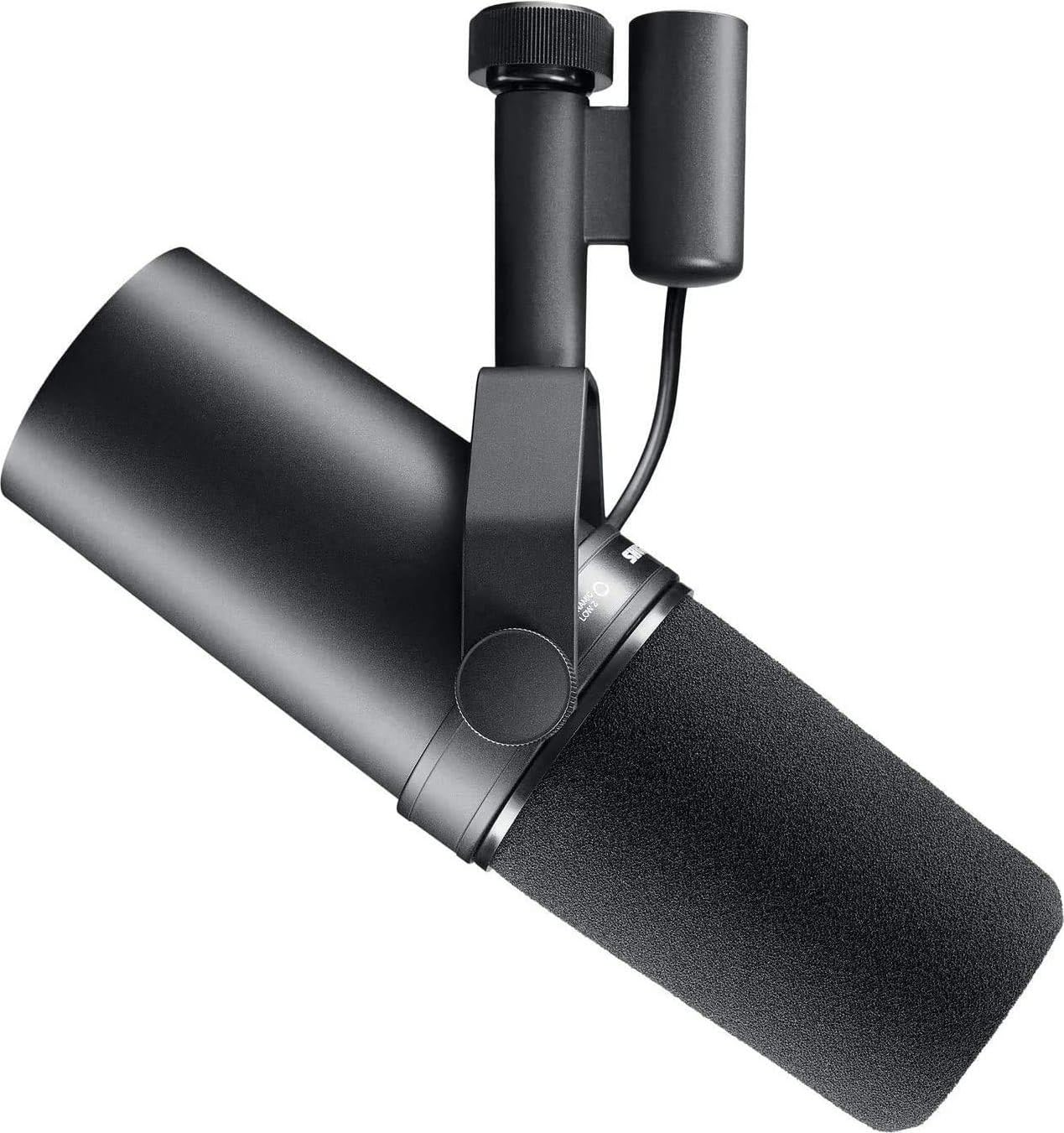
The SM7B is the industry-standard dynamic microphone for voice-over work. Its cardioid pickup and internal shock isolation keep background noise out of the signal, which matters in an untreated room. The voiced midrange flatters speech without harshness, and the all-metal body is built for daily studio use. It handles long sessions without fatigue, which matters for podcast and audiobook work.

This is for podcasters, streamers, and voice artists who already have a quality XLR interface with sufficient gain. Close-mic delivery suits untreated rooms, and the SM7B keeps narration free of room tone and keyboard clatter. Buyers without that chain should look at USB options.

💡 Keep the mic within a few inches of the mouth for the full broadcast voicing.

Pros

  • Warm, balanced broadcast tone that flatters spoken word and vocals.
  • Dynamic cardioid pickup suppresses room noise, keyboard clatter, and ambient hum.
  • Rugged all-metal body built for long studio sessions.

Cons

  • No USB connection, so plug-and-play desktop recording is not possible.
Our verdict

The SM7B remains a studio fixture for spoken-word broadcast and narration.

Check Latest Price
3

Best XLR Studio Condenser Value

Audio-Technica AT2035

96 /100
Sound Score Outstanding

Key details

Connection
XLR
Capsule Type
Condenser
Pickup Pattern
Cardioid
Onboard Controls
High-pass filter, pad
View on Amazon

The AT2035 captures spoken word with natural, transparent detail and a low self-noise floor, while the 10 dB pad and 80 Hz high-pass filter give voice-over artists practical control over loud moments and room rumble. It carries a mid-range price but sounds like a far more expensive studio condenser.

The AT2035 is XLR-only and needs 48V phantom power, so it fits voice-over artists, podcasters, and streamers who already own or plan to buy an audio interface. Condensers of this sensitivity reward a quiet or treated room; in an untreated space, a dynamic microphone remains the safer choice.

Pros

  • Natural, transparent voice capture with enough detail for narration and vocal takes.
  • Low self-noise keeps quiet passages clean, which suits podcast and voice-over work.
  • Brings studio-level clarity to a mid-range price point.

Cons

  • Ships without an XLR cable, so setup cost includes an extra purchase.
Our verdict

Spoken-word recordings take on a clean, finished character with the AT2035.

Check Latest Price
4

Best Budget USB Kit

FIFINE T669

93 /100
Sound Score Outstanding

Key details

Connection
USB
Capsule Type
Condenser
Pickup Pattern
Cardioid
Onboard Controls
Mute, volume
View on Amazon

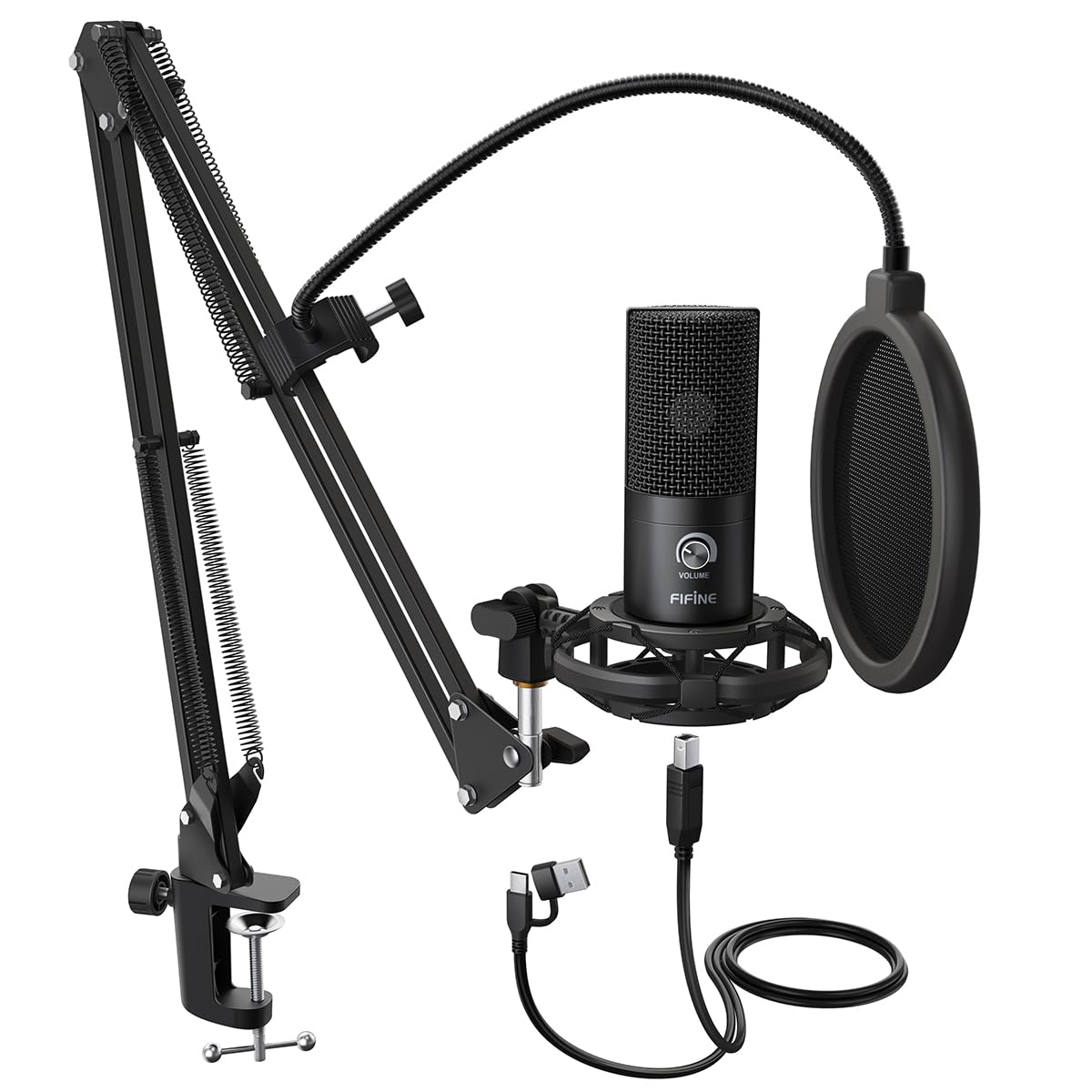
The T669 is the rare budget mic that arrives as a complete desktop setup: cardioid USB condenser, shock mount, pop filter, and boom arm all in the box. Voice pickup is clear and crisp for spoken-word recording, and setup is plug-and-play with no drivers to install.

This bundle suits new podcasters, streamers, and Discord users upgrading from a headset or webcam mic on a tight budget. The bundled boom arm can lose tension and sag over time on some units, which is the main compromise; keep expectations realistic at this price.

Pros

  • Complete kit with boom arm, shock mount, and pop filter
  • Clear, crisp voice pickup for podcasting, streaming, and Discord sessions.
  • Plug-and-play USB setup with no drivers or additional software.

Cons

  • The condenser picks up fan hum and mechanical keyboard clatter in a normal room.
Our verdict

This is the budget bundle to start with if you are coming from a headset mic and want a real desktop setup without chasing separate parts.

Check Latest Price
5

Affordable Dynamic XLR

Shure MV7X

92 /100
Sound Score Outstanding

Key details

Connection
XLR
Capsule Type
Dynamic
Pickup Pattern
Cardioid
Onboard Controls
None
View on Amazon

The MV7X is a compact XLR dynamic microphone that brings Shure's broadcast-style vocal presence to a lower price point. Its all-metal build, cardioid pattern, and integrated shock mount deliver focused speech and strong background-noise rejection in rooms that would expose a condenser mic.

This is for podcasters and voice-over artists already on an XLR path, especially those recording in untreated rooms. It requires an interface with enough gain; very low-gain inputs may call for a booster, and a pop filter is recommended for plosives. If you want USB plug-and-play convenience, this is not the mic.

💡 Add a pop filter for plosive-heavy scripts and give the dynamic capsule enough gain from your interface.

Pros

  • Clear, crisp vocal sound with focused articulation for podcast and voice-over use.
  • Compact all-metal body with an integrated shock mount handles everyday studio use.
  • Cost-effective way to get broadcast-style dynamic tone on an existing XLR setup.

Cons

  • XLR-only dynamic output may require sufficient interface gain, and low-gain inputs may need a separate booster.
Our verdict

For creators already on an XLR path and recording in untreated rooms, the MV7X delivers the Shure broadcast tone without the full-size studio mic's price tag.

Check Latest Price
6

Cleanest Condenser Kit

Rode NT1 Signature

92 /100
Sound Score Outstanding

Key details

Connection
XLR
Capsule Type
Condenser
Pickup Pattern
Cardioid
Onboard Controls
None
View on Amazon

The Rode NT1 Signature is the cleanest studio condenser kit for voice-over work: a 4 dBA self-noise floor and cardioid pickup keep spoken word transparent, and the included shock mount, pop filter, and XLR cable cover the accessory list.

This is for narrators and home-studio vocalists who can control their environment; the capsule rewards a treated or naturally quiet room. A live or echoey space will bring reflections and ambient noise into the recording, so room treatment matters as much as the mic. That makes it a precision tool for a dedicated voice-over workspace rather than a casual desktop mic.

Pros

  • Clean, low-noise voice capture keeps spoken word transparent for narration and podcasting.
  • Complete kit with shock mount, pop filter, and XLR cable included.
  • 10-year warranty with registration backs long-term studio use.

Cons

  • Requires a separate audio interface with 48V phantom power, so USB-only setups need extra gear before recording.
Our verdict

For narrators and home-studio vocalists recording in a treated or naturally quiet space, this kit delivers clean spoken-word capture without extra accessory costs.

Check Latest Price
7

Best Hybrid USB/XLR Upgrade Path

FIFINE K688

91 /100
Sound Score Outstanding

Key details

Connection
USB / XLR
Capsule Type
Dynamic
Pickup Pattern
Cardioid
Onboard Controls
Mute, gain, headphone volume
View on Amazon

The K688 pairs dual USB and XLR connectivity with dynamic background-noise suppression and practical controls at a budget price. It offers a broadcast-style close-mic tone without requiring an interface on day one, and the XLR output leaves room to move up later.

This suits streamers, podcasters, and voice-over beginners who work close to the mic; the dynamic capsule helps in untreated rooms. Keep the capsule 2–6 inches from your mouth, the level drops if you move away, and the onboard USB controls are inactive when you switch to XLR.

💡 Keep the capsule 2–6 inches from your mouth for consistent level; this dynamic mic favors close-up delivery.

Pros

  • Clean, crisp vocal tone for streaming, voice-over, and vocals.
  • Dual USB and XLR connectivity covers USB now and an interface upgrade later.
  • Budget-friendly dynamic tone that resists background noise in untreated rooms.

Cons

  • USB controls are inactive in XLR mode; gain and mute must be handled on an interface.
  • Close-mic placement is required; output gets quieter if you move away.
Our verdict

A budget hybrid that gives spoken-word creators a broadcast-style dynamic tone now and an XLR path when they outgrow USB.

Check Latest Price
8

Budget Kit Buyers

MAONO A04

91 /100
Sound Score Outstanding

Key details

Connection
USB
Capsule Type
Condenser
Pickup Pattern
Cardioid
Onboard Controls
Mute, volume
View on Amazon

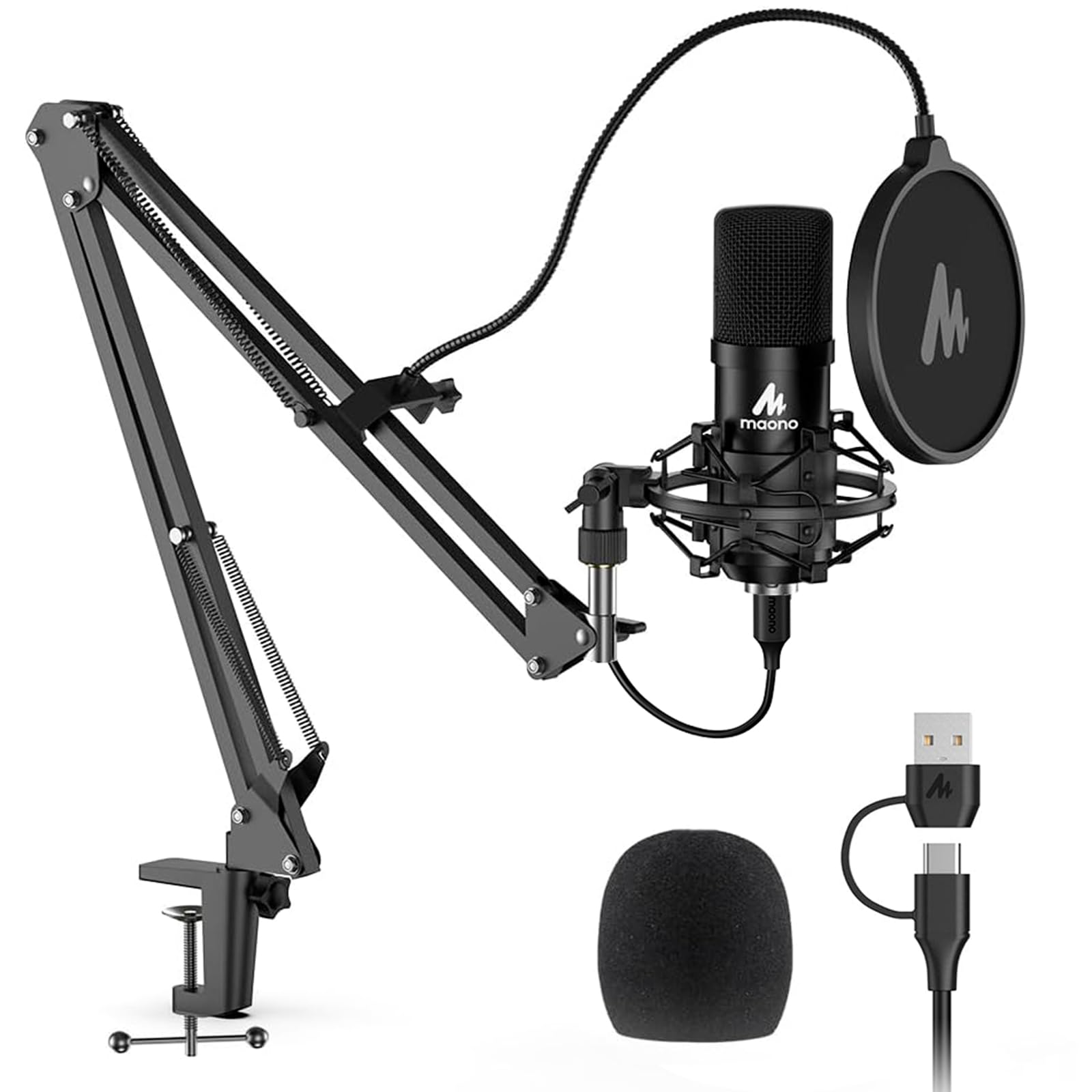
This USB condenser kit gives first-time podcasters and streamers a complete desktop rig — boom arm, shock mount, pop filter — with clean spoken-word capture at a budget price. It plugs into Mac, PC, PS4, or PS5 with no driver fuss. The bundled arm and clamp can be flimsy on thicker desks, and QC varies between units.

Pros

  • Full kit with boom arm, shock mount, and pop filter for clean entry-level podcasting.
  • Plug-and-play USB setup works with Mac, PC, PS4, and PS5 without driver hassle.

Cons

  • Bundled boom arm and desk clamp can be flimsy on thicker desks.
Our verdict

Fits first-time podcasters and streamers who want a complete USB rig and are willing to work around its budget arm.

Check Latest Price
9

RGB Streamers

MAONO DGM20S

93 /100
Sound Score Outstanding

Key details

Connection
USB
Capsule Type
Condenser
Pickup Pattern
Cardioid
Onboard Controls
Tap mute, gain, headphone monitoring
View on Amazon

This USB condenser delivers clear voice capture for Discord and Twitch, with tap-to-mute, gain control, and zero-latency headphone monitoring out of the box. The one-key noise reduction helps in typical gaming rooms. Boom arm tension can vary between units, and occasional audio dropouts have been noted, so it is not positioned for dedicated voice-over work.

Pros

  • Clear voice capture for Discord and streaming with simple plug-and-play setup.
  • One-key noise reduction lowers background noise in typical gaming spaces.

Cons

No consistent drawbacks identified in the available review data.

Our verdict

If your primary need is affordable streaming and Discord audio with RGB personality, this covers it — but treat it as a gaming-room tool, not a voice-over workhorse.

Check Latest Price
10

First-Time Podcasters

SUDOTACK ST-800

91 /100
Sound Score Outstanding

Key details

Connection
USB
Capsule Type
Condenser
Pickup Pattern
Cardioid
Onboard Controls
Mute, volume
View on Amazon

This kit gives new podcasters a complete boom-arm bundle with solid construction and clear spoken-word tone. Setup is plug-and-play, so a first stream can start without extra gear. It trails the runner-up on bundled hardware durability and room-noise rejection, a tradeoff that is manageable for a beginner budget.

Pros

  • Solid construction and a professional look at a budget-friendly price.
  • Clear voice pickup for podcasts and streaming right after plugging in.

Cons

  • With frequent repositioning, the bundled arm can lose tension; in untreated rooms, keyboard and room noise may bleed through.
Our verdict

For first-time podcasters who want one box with everything, this kit is a practical entry point.

Check Latest Price
11

Ultra-Budget Desk Use

TONOR TC-777

88 /100
Sound Score Excellent

Key details

Connection
USB
Capsule Type
Condenser
Pickup Pattern
Cardioid
Onboard Controls
None
View on Amazon

At an entry-level price, the TC-777 works for occasional video calls, classroom chats, and casual podcast attempts. The included tripod, shock mount, and pop filter make it ready to use. The tradeoff: it is a budget backup rather than a professional voice-over mic, with background noise possible in untreated rooms, output that may run low, and durability varying between units.

Pros

  • Great value for a budget USB mic, with tripod, shock mount, and pop filter included.
  • Plug-and-play setup that Windows and macOS recognize immediately.

Cons

  • No on-mic mute, and the included tripod is compact rather than a boom-arm mount.
Our verdict

For extreme budget buyers who need a basic USB mic for occasional spoken-word recording and expect to upgrade soon, the TC-777 is a usable stopgap.

Check Latest Price
12

Mobile Creators

ZealSound K66

89 /100
Sound Score Excellent

Key details

Connection
USB + mobile adapters
Capsule Type
Condenser
Pickup Pattern
Cardioid
Onboard Controls
Gain, monitor volume, echo
View on Amazon

The K66 packs mobile adapters, gain, mute, monitor, and adjustable echo into a budget-friendly USB body, with clear voice capture for podcasting and narration. Noise rejection can be inconsistent in untreated rooms, and some units may power down unexpectedly — that keeps it below the main picks for studio-first buyers.

Pros

  • Clear voice capture for podcasting, narration, and calls.
  • Affordable bundle with mobile adapters and gain, mute, monitor, and echo controls.

Cons

  • Mobile/Mac compatibility can be inconsistent, so a different adapter or port may be needed.
Our verdict

Best for mobile-first podcasters and ASMR/voice experimenters who want gain, mute, monitor, and echo control in one budget mic. Treat it as a portable creator tool, not a studio centerpiece.

Check Latest Price

How to Choose

Connection Type

USB microphones include an analog-to-digital converter and a preamp in the body, so they work the moment you plug them into a computer. XLR microphones send a low-level analog signal that needs an external interface or mixer to boost it to line level and convert it to digital.

The practical consequence is cost and flexibility. A USB mic is the fastest path to a clean recording, but it locks you to the built-in electronics. An XLR mic lets you upgrade the preamp, interface, or converter over time without replacing the capsule. If you plan to grow a home studio, XLR is the lasting investment; if you need a working setup this week, USB removes the entire setup curve.

Capsule Type

Condenser capsules use a thin diaphragm that responds to subtle air pressure changes, which is why they capture detailed, open-sounding vocals. That same sensitivity means they also capture room reflections, keyboard clicks, HVAC rumble, and traffic noise.

Dynamic capsules use a moving coil and a heavier diaphragm, so they respond less to distant and off-axis sound. They sound less airy than a condenser, but they reject room noise far better and tolerate louder sources without distortion. For untreated bedrooms and home offices, a dynamic mic is usually the difference between usable audio and constant noise cleanup.

Pickup Pattern

Cardioid captures sound primarily from the front and rejects most sound from the rear, which makes it the default for single-voice recording. Multi-pattern microphones add omni, bidirectional, and stereo modes, letting one mic handle interviews, group discussions, or room ambience.

The hidden trade-off is that off-axis rejection is never absolute. A cardioid mic still picks up sound bouncing off a wall behind you and direct noise from the sides, and the pattern changes with frequency. Close placement and a treated reflection point matter more than the pattern name printed on the box.

Bundled Accessories

A boom arm positions the capsule close to your mouth without cluttering your desk, and a shock mount decouples the mic from vibrations traveling through the desk and stand. Pop filters stop plosive bursts from hitting the capsule with excess air pressure.

The catch is that bundled accessories are often the cheapest way to meet a price point. Several budget kits sound surprisingly good for the money, but the included arm can sag, loosen, or break after months of repositioning. If you plan to move the mic around frequently, budget for a separate arm even if the kit includes one.

Onboard Controls

Gain, mute, and headphone monitoring on the microphone body let you adjust levels without digging into software. That matters in live streams, podcast recordings, and calls where you need to react quickly without breaking the recording flow.

The trade-off appears in hybrid XLR/USB models: controls wired through the USB interface may not work when the mic is connected over XLR. If you buy a hybrid for a future XLR upgrade, check whether the mute and gain knobs stay active in both modes or only in USB mode.

Frequently Asked Questions