9 Best Audio Interface for Drums of 2026: Match Preamps to Your Kit

Find the audio interface for drums that fits your kit — from two-channel e-drum rigs to eight-mic acoustic kits — without overpaying for unused inputs.

Most drummers shopping for an interface discover that two XLR inputs are the default, even though a single acoustic kit needs at least kick, snare, and overheads. That mismatch shows up after the first session, when you run out of preamps long before you run out of drum mics. The fix is to shop by channel count first, not brand polish.

Marketing pages emphasize sample rates and software bundles, but what determines whether drums actually record cleanly is preamp count, clean gain, and driver stability after OS updates. Two-channel units work well for e-drums or a minimal two-mic setup. Four or more preamps make a real acoustic kit practical.

The sensible trade-off is convenience against capacity: a polished two-input interface is easier to use, but a four-input model unlocks the classic kick, snare, and overheads arrangement. Choose the one that matches the kit you actually track.

About the Sound Score: This comparative score is calculated from a product's published customer rating and review volume. It is not a laboratory measurement or a hands-on test result.

1

Best Overall for Drum Recording

Behringer UMC404HD

92 /100
Sound Score Outstanding

Key details

MIDI/Line I/O
MIDI I/O, 4 ins
Phantom Power
Yes, +48V
Mic Preamp Count
4 XLR
View on Amazon

Four Midas-designed preamps make this the first budget interface that can run kick, snare, and overheads simultaneously without repatching. The preamps stay quiet when driving dynamic mics, the metal chassis holds up on a crowded desk, and 192 kHz conversion leaves room above standard sample rates. MIDI I/O keeps a drum module or synth connected in the same session, and the four combo XLR/TRS jacks accept line gear without a separate DI.

Gain, pad, and +48V controls sit on top with per-channel status LEDs, and the four-input layout fits a small studio without rack gear. Setup is quick: after driver installation, the DAW sees four separate inputs, so routing kick, snare, and overheads to individual tracks takes minutes.

This is the right box for drummers and small home studios that have outgrown two-input interfaces. Four combo XLR/TRS inputs and MIDI cover a compact acoustic kit, an electronic kit with its module, or a couple of mics plus hardware synths. Quality control can vary between units, so run signal through all four inputs and toggle +48V before the first full tracking session. If your kit needs more than four mics, the eight-input sibling in this lineup is the next step.

Pros

  • Four Midas preamps deliver warm, low-noise gain for kick, snare, and overheads at a budget-friendly price.
  • Four combo inputs plus MIDI I/O handle a mic kit, drum module, or hardware synths without extra boxes.
  • Solid metal chassis keeps the desktop unit stable under cable tension.

Cons

  • Startup pops or device-recognition hiccups can appear on some computer setups until drivers are settled.
  • Phantom-power or channel faults can surface on a fresh unit.
Our verdict

Track four mics now, add MIDI gear later; that is the practical budget path to a home drum recording setup.
Check Latest Price
2

Best Compact 2-Channel for E-Drums

Focusrite Scarlett 2i2

92 /100
Sound Score Outstanding

Key details

MIDI/Line I/O
No MIDI, 2 ins
Phantom Power
Yes, +48V
Mic Preamp Count
2 XLR
View on Amazon

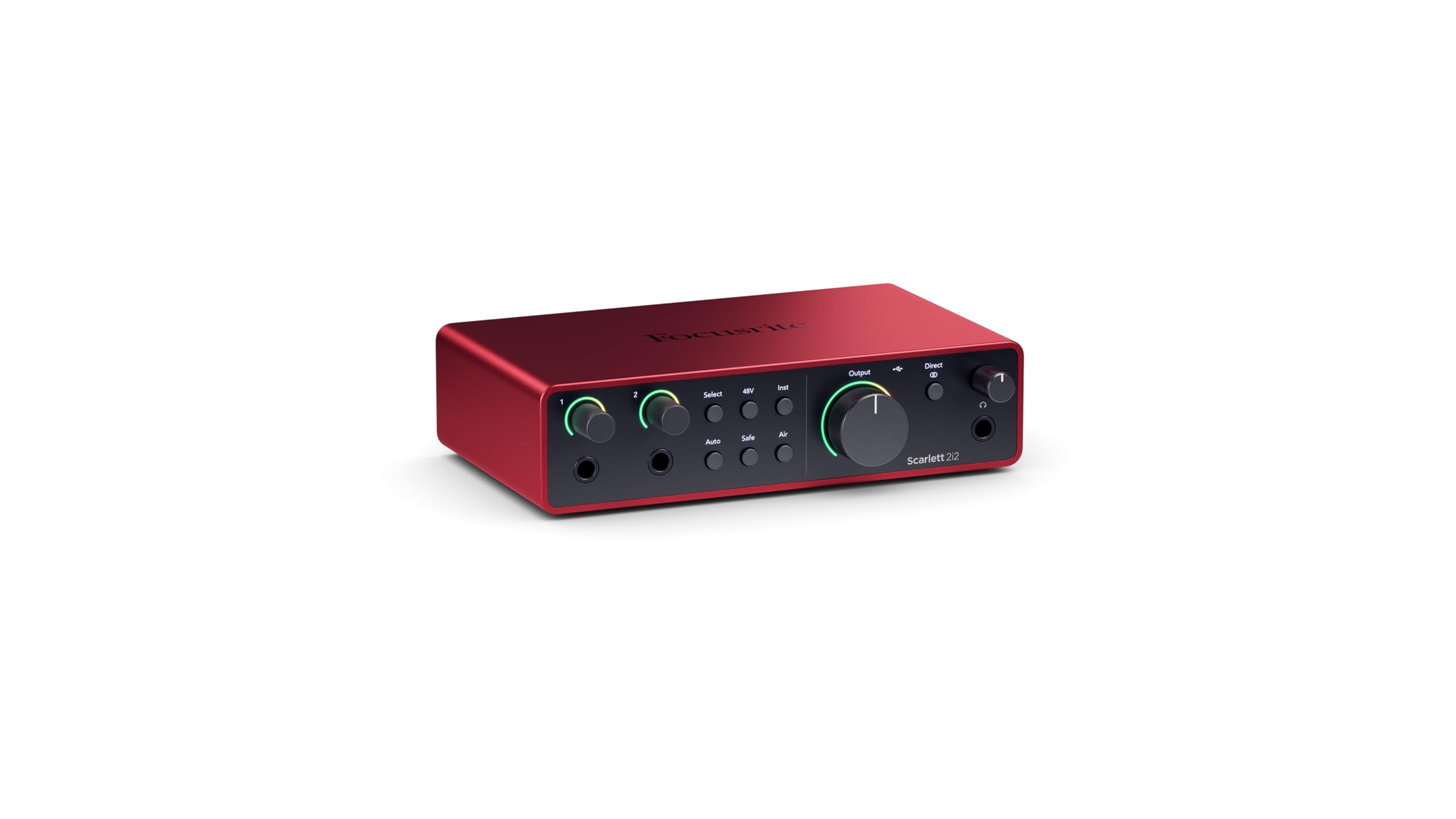
The Scarlett 2i2 pairs two 4th-gen preamps with Auto Gain and Clip Safe, so setting drum levels takes seconds rather than gain-staging guesswork. Its 120 dB dynamic range keeps electronic drum outputs quiet, global phantom power covers condenser mics, and the bundled Pro Tools Intro, Ableton Live Lite, Cubase LE, and Hitmaker Expansion cover recording, beats, and mixing without extra purchases.

That makes it the natural two-channel pick for e-drummers who want a single stereo feed into a DAW, and for singer-songwriters tracking one mic plus a guitar DI. A full acoustic kit with kick, snare, and overheads will need more than two XLR preamps, so this compact interface is not the multi-mic drum workhorse.

Pros

  • Auto Gain and Clip Safe set levels in seconds, so a first-time e-drummer can start recording without gain-staging guesswork.
  • The 4th-gen preamps and converters keep e-drums, vocals, and guitar DI clean at home-studio levels.
  • Independent input levels and loopback make stereo recording and streaming setup flexible.

Cons

  • During a session, an OS update can interrupt audio until the matching driver is reinstalled.
  • In a DAW session, some units can disconnect or stop being recognized.
Our verdict

E-drummers and singer-songwriters get a fast, clean two-channel recording path with a software bundle that covers the first projects.

Check Latest Price
3

Best Value 8-Preamp Interface

Behringer UMC1820

88 /100
Sound Score Excellent

Key details

MIDI/Line I/O
MIDI, ADAT I/O
Phantom Power
Yes, +48V
Mic Preamp Count
8 XLR
View on Amazon

The UMC1820 moves drum recording beyond four mics: eight XLR preamps, ADAT expansion, and 18x20 I/O put a full kit into one DAW session. The Midas preamps stay clean on snare transients, and multi-channel latency remains manageable while tracking eight inputs.

This is for home drummers who want kick, snare, and overheads tracked in one pass, with room to add tom mics via ADAT later. It needs wall power, so mobile bus-powered recordists should look elsewhere. Some units arrive with channel noise or power-supply issues; test each input and inspect the adapter on delivery.

💡 Run a tone through all eight inputs and check the adapter before the first full tracking session.

Pros

  • Eight Midas preamps let a full drum kit be tracked in a single pass.
  • ADAT optical expansion adds eight more inputs when the kit grows.
  • Preamp voicing handles drum transients without harshness.

Cons

  • Some channels can introduce noise, clipping, or hum; a quick gain test on each input will reveal it.
  • The included power adapter can arrive faulty or missing, so confirm it works before a session.
Our verdict

For home drummers whose kit outgrows four mics, this is the cost-effective way to stay in one DAW session and still leave room to expand.

Check Latest Price
4

Best Hybrid Synth/Drum-Machine Hub

Focusrite Scarlett 4i4

91 /100
Sound Score Outstanding

Key details

MIDI/Line I/O
MIDI, 4 line ins
Phantom Power
Yes, +48V
Mic Preamp Count
2 XLR
View on Amazon

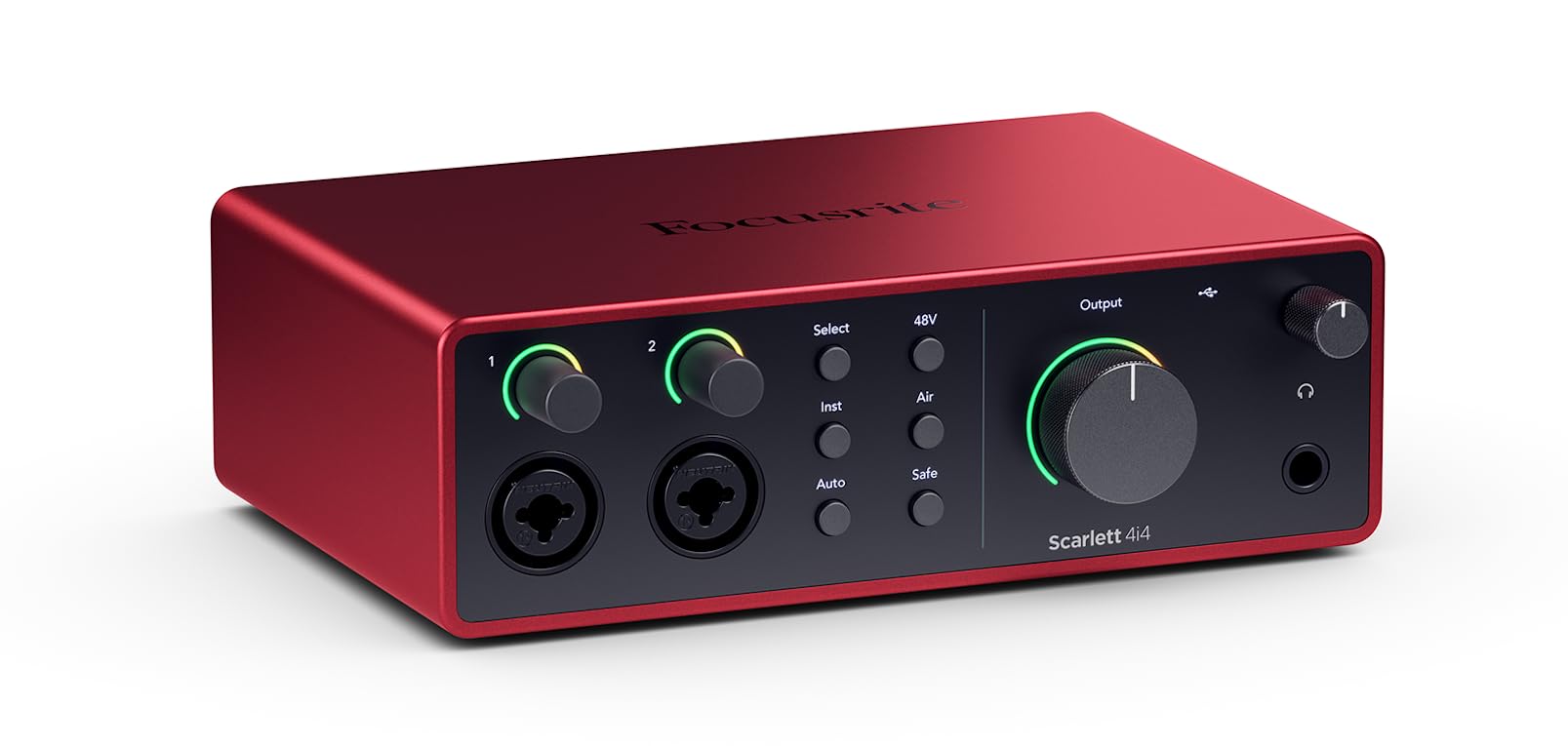
The Scarlett 4i4 4th Gen gives hybrid musicians a desktop hub pairing two clean 4th-gen mic preamps with four line inputs, four outputs, and MIDI I/O. Those extra line inputs do not expand mic count; they serve synths, drum machines, and outboard effects. That makes it a bigger option than the two-channel Focusrite for producers who want mics and hardware in the same session.

This fits the drummer recording e-drums plus a vocal or acoustic mic while keeping drum machines in the chain. The boundary is two XLR preamps — the other inputs are line-level, so a full acoustic kit still needs a four-preamp interface.

Pros

  • Two 4th-gen mic preamps plus four line inputs and four outputs give hybrid musicians one desktop hub.
  • Setup and routing software get mics, synths, and MIDI gear into a DAW session without a learning curve.
  • 5-pin MIDI I/O plus Mac/Logic connectivity suits hardware sequencers and e-drums.

Cons

  • Specific host/OS combos can produce hot output or crackling in the monitor path.
  • Wake-from-sleep or host app conflicts can drop the audio driver until a reboot.
Our verdict

A compact hub for sessions where a couple of mics sit alongside drum machines and outboard effects.

Check Latest Price
5

Best Vintage Preamp Color

Universal Audio Volt 2

90 /100
Sound Score Outstanding

Key details

MIDI/Line I/O
MIDI I/O, 2 ins
Phantom Power
Yes, +48V
Mic Preamp Count
2 XLR
View on Amazon

The Volt 2 stands apart from the four-preamp drum interface with UA 610 tube-emulation preamp color, clean conversion, and a LUNA/UAD plugin bundle in a portable two-channel box. USB-C, MIDI I/O, and phantom power cover e-drums or a two-mic setup without crowding a desktop. The included software bundle provides LUNA, UAD plugins, and Ableton Live Lite, so the first session doesn't require extra purchases.

This suits e-drummers, mobile musicians, and home vocalists/guitarists who want UA's vintage preamp tone without pulling a rack into the room. Some units can produce audible monitor-output noise in sensitive setups, and low-output dynamic mics may need an inline booster.

Pros

  • UA 610 tube-emulation preamp color adds vintage warmth to vocals, guitar, and e-drum tracks.
  • LUNA, UAD plugins, and Ableton Live Lite cover recording and processing right out of the box.
  • USB-C and iPad/iPhone compatibility keep mobile recording simple on a desk or on location.

Cons

  • Only two XLR preamps, so full acoustic drum kits need more inputs.
Our verdict

For e-drummers and two-mic home studios, the Volt 2 brings vintage preamp color and a complete plugin starter kit to a compact USB-C interface.

Check Latest Price
6

Best Premium 2-Channel for Monitoring

Solid State Logic SSL 2 MKII Plus

90 /100
Sound Score Outstanding

Key details

MIDI/Line I/O
MIDI, 4 line outs
Phantom Power
Yes, +48V
Mic Preamp Count
2 XLR
View on Amazon

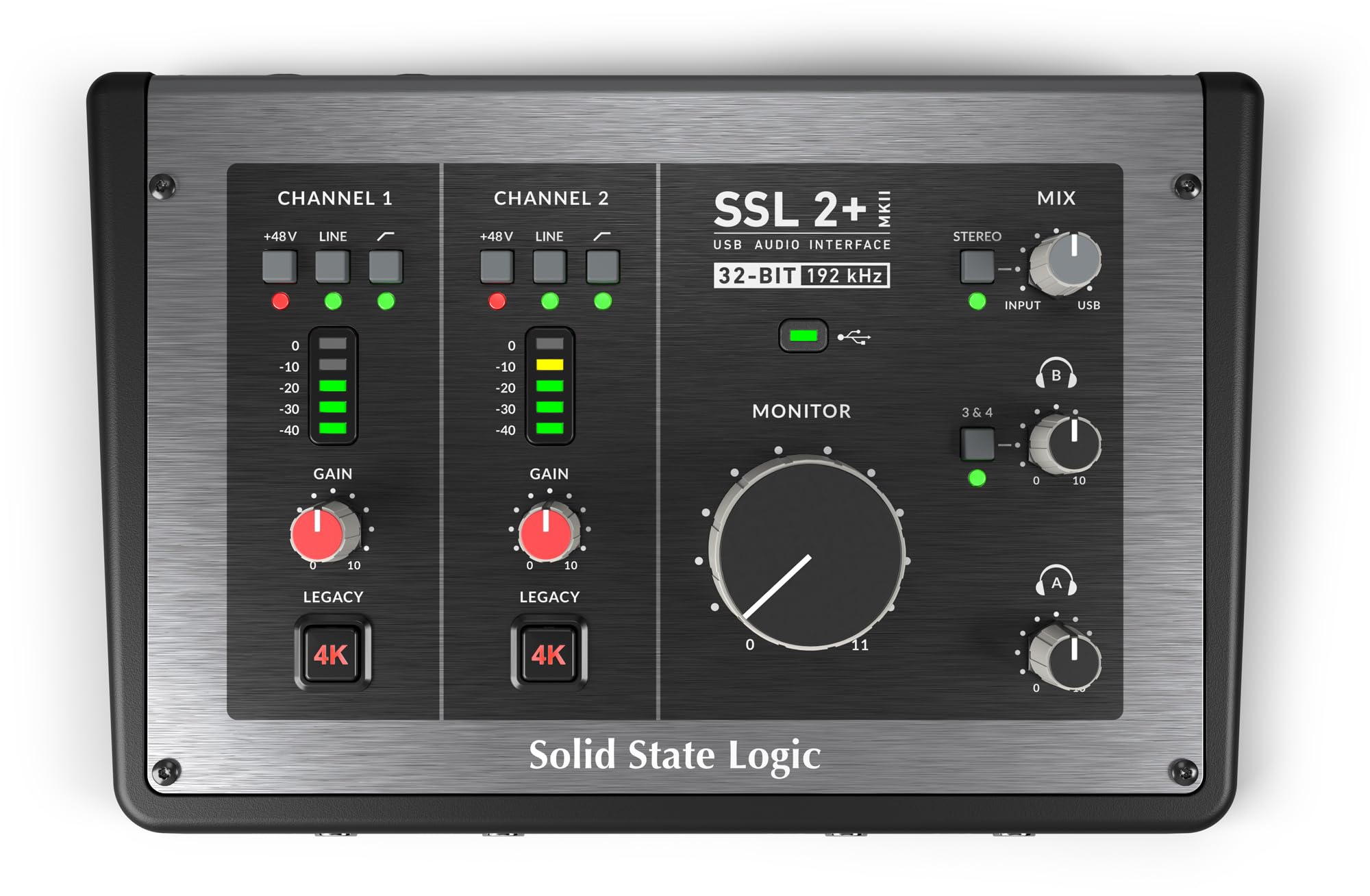
SSL's Legacy 4K preamps deliver clean, low-noise gain on two mic channels, while four balanced outputs and two independent headphone feeds let a drummer and engineer hear separate mixes. The 5-pin MIDI I/O keeps a drum machine or hardware synth in the same session, and that routing flexibility is what separates it from the four-preamp top pick.

This fits producers tracking e-drums, a single overhead, or two mics plus line sources. The two XLR inputs are the boundary for full acoustic kits, and Mac users who expect independent level control on all four outputs should plan for a separate monitor controller.

💡 Keep a monitor controller between outputs 3/4 and powered speakers for Mac-based sessions.

Pros

  • Legacy 4K preamps capture drums with clean gain and low noise.
  • Four outputs and dual headphone feeds keep monitor and performer mixes separate.
  • 5-pin MIDI I/O connects drum machines and synths without a separate MIDI interface.

Cons

  • Outputs 3/4 lack dedicated level control under macOS Core Audio.
Our verdict

The SSL 2 MKII Plus is the two-channel pick for drummers who stay on e-drums or two mics and want premium preamp tone plus clean monitor routing.

Check Latest Price
7

USB-C Desktop Use

PreSonus Studio 24c

92 /100
Sound Score Outstanding

Key details

MIDI/Line I/O
MIDI I/O, 2 ins
Phantom Power
Yes, +48V
Mic Preamp Count
2 XLR
View on Amazon

The Studio 24c pairs USB-C, low preamp noise, and Studio One Artist in a compact desktop unit. Two combo preamps with phantom power cover condenser overheads or e-drum outputs. Gain runs short for low-output dynamics like an SM7B; an inline booster handles it. Fewer routing options than the two-channel leaders keep it a supporting option here.

Pros

  • Included Studio One Artist makes this a ready-to-record desktop setup.
  • Well-built desktop design keeps a small footprint next to the computer.

Cons

  • Full acoustic kits need more than the two XLR preamps on this unit.
Our verdict

For electronic drums or a two-mic acoustic setup, this is the USB-C interface to start with in Studio One.

Check Latest Price
8

Budget Podcasters

M-Audio M-Track Duo

89 /100
Sound Score Excellent

Key details

MIDI/Line I/O
No MIDI, 2 ins
Phantom Power
Yes, +48V
Mic Preamp Count
2 XLR
View on Amazon

A budget-priced two-channel interface with direct monitoring and a layout beginners can grasp quickly. It covers e-drums or a two-mic kit setup, but not full multi-mic acoustic drum tracking. Gain taper can jump and unit-to-unit behavior varies, so it trails more consistent entry-level options; buy from a vendor with easy returns and test the phantom-power switch on arrival.

Pros

  • Solid physical quality for the price
  • Easy operation on Windows, especially for first-time users

Cons

  • macOS Sonoma can require extra driver attention before the DAW recognizes the interface.
Our verdict

If your drum setup needs only two XLR inputs and your priority is price, this fits; for full multi-mic acoustic tracking, a four-preamp interface is the better route.

Check Latest Price
9

Budget Studio One

PreSonus AudioBox 96

87 /100
Sound Score Excellent

Key details

MIDI/Line I/O
MIDI I/O, 2 ins
Phantom Power
Yes, +48V
Mic Preamp Count
2 XLR
View on Amazon

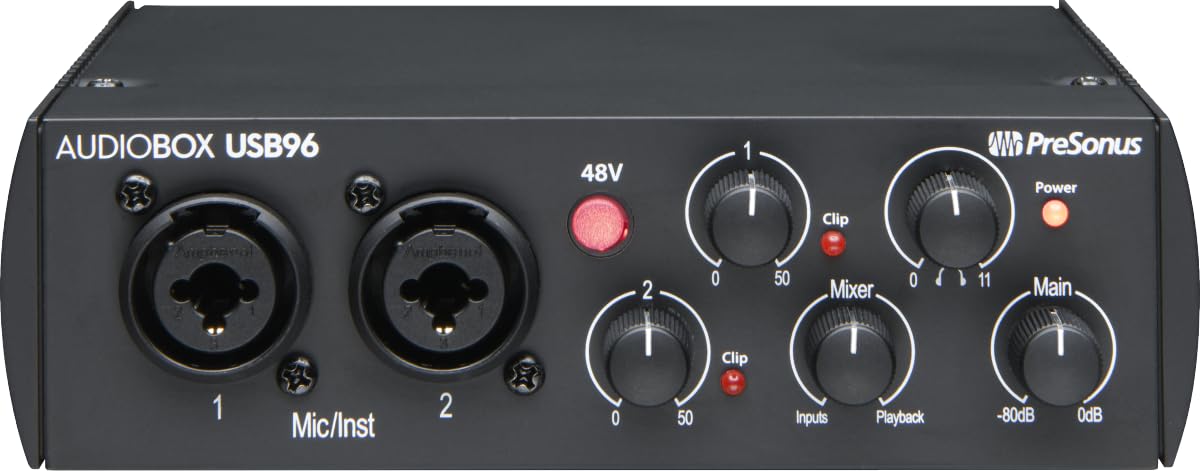
The AudioBox 96 gives budget newcomers two XLR inputs, phantom power, MIDI I/O, and a Studio One-centric bundle for e-drum recording or moderate-level miking. Preamps can expose noise in quiet acoustic takes and may clip on loud drum shells, so it remains a niche pick over the clean USB-C option in this set rather than a core drum recommendation.

Pros

  • Bundles Studio One Artist and a large plug-in suite at a budget-friendly price.
  • Simple two-XLR layout with phantom power and MIDI I/O suits beginner e-drum setups.

Cons

  • Durability and USB compatibility can vary between units.
Our verdict

If your drum source stays within its gain range, this is a cost-effective way into the Studio One plug-in bundle.

Check Latest Price

How to Choose

Count Mic Preamps First

A two-preamp interface is enough for e-drums, a single overhead, or a kick/snare pair, but it cannot handle the classic drum arrangement of kick, snare, and overheads without repatching mid-session.

Four preamps let you leave three or four mics connected and record a full groove in one take. Eight preamps cover a kit with toms or room mics.

Phantom Power and Switching

Condenser overheads and many kick-drum mics need +48V phantom power, while ribbon and some dynamic mics should not receive it. Interfaces with global phantom apply power to every XLR input at once, so connect or swap mics only with phantom off. Per-channel switches avoid this, but they are rare at this price.

Preamp Gain for Dynamic Mics

Close-miked drums are loud, so most dynamic mics need moderate gain, but low-output dynamics still expose interfaces with weak preamps. If a preamp tops out around 50 dB, you will hear noise or need an inline booster; 60 dB or more gives clean headroom for most drum miking.

A high-gain preamp matters more for quiet decays and lower-output moving-coil mics, where the difference between 50 dB and 65 dB shows up as noise.

Driver Stability and Latency

The most common frustration is an interface that disconnects, crackles, or drops audio after an OS update. This is usually the driver's interaction with the operating system's USB audio stack, not the hardware itself. Choosing a model with current driver support reduces the chance that a routine update leaves you silent.

Latency matters too. Lower buffer sizes mean faster response when recording VST drums, but some interfaces become unstable at very small buffers. A practical unit holds steady at 128 or 64 samples while tracking.

MIDI and Line I/O

Drum machines, samplers, and synth modules use line-level signals, not XLR, and many benefit from MIDI connections. An interface with line inputs lets you keep a drum machine connected without repatching; MIDI I/O lets you sync external gear from the DAW.

For a purely acoustic kit, line inputs and MIDI are optional extras. For hybrid e-drum and synth setups, they are the difference between a tidy studio and a cable tangle.

Frequently Asked Questions