6 Best Balanced Headphone Amp of 2026: Clean Sound, Real Usability

Find a balanced headphone amp that fits your headphones and desk—clean 4.4mm/XLR power, the right feature set, and no surprise usability trade-offs.

A balanced headphone amp's real value shows up in the first quiet passages: wider stereo separation, lower noise, and more controlled bass. But the category is full of listings that shout DAC chips and wattage numbers while the smaller details — volume taper, cable quality, firmware stability — decide whether you actually enjoy it daily.

The right unit balances output format, power, and everyday behavior with the headphones you already own. 4.4mm is the common balanced connection, while XLR tends to appear as line-level output for speakers; high wattage does not guarantee a smooth volume control.

This guide separates the balanced combos, preamp hubs, and tube amps that fit a particular setup from those that merely look good on paper. Buy on the interface and reliability as much as the amp stage.

About the Sound Score: This comparative score is calculated from a product's published customer rating and review volume. It is not a laboratory measurement or a hands-on test result.

1

Best Overall Balanced DAC/Amp

FiiO K7

88 /100
Sound Score Excellent

Key details

Inputs
USB, optical, coaxial, RCA
Max Power
2000mW
DAC / Format
Dual AK4493SEQ
Preamp And EQ
No preamp out
View on Amazon

The K7 pairs dual THX AAA 788+ amplifier modules with dual AK4493SEQ DACs and delivers 2000mW through the 4.4mm balanced output. That combination produces clean, detailed sound with a slight warmth, giving planar and dynamic headphones enough power for full-bodied playback without audible strain. The single-ended 6.35mm/3.5mm output remains a useful fallback for older cables, while the balanced path carries the headroom that makes the K7 operate as a true balanced desktop amp.

USB, optical, coaxial, and RCA inputs cover the common desktop sources, so the K7 can sit at the center of a PC, CD transport, or console setup without additional switching. The 6.35mm single-ended output also removes the need for adapters when using full-size headphones with non-balanced cables. The amplifier maintains a quiet background across inputs, and the 4.4mm output drives demanding planars and high-impedance dynamics without running out of steam. This input flexibility plus balanced output capability is what separates it from smaller single-source dongles.

The K7 is aimed at desktop listeners who want a single balanced DAC/amp between their computer and a pair of 4.4mm terminated headphones. It suits planar and dynamic owners with balanced cables and PC/Mac users who want a clean all-in-one upgrade over a basic USB dongle. For listeners staying exclusively on single-ended, a cheaper amp would cover the need, but the K7's 4.4mm output is the reason to step up. Those who need a 4-pin XLR headphone output are outside the target group; the K7's balanced connection is 4.4mm only.

Tonally, the K7 leans slightly warm rather than sterile, which keeps long listening sessions comfortable without sacrificing detail. The dual AK4493SEQ converters handle the front-end decoding cleanly, and the THX amp stage adds no obvious coloration of its own. No single frequency range pushes forward unnaturally, so the presentation works across acoustic, electronic, and rock without favoring one genre. It is an easy-going listen rather than a clinical one.

At this price tier, the K7's value is in doing the balanced desktop fundamentals evenly. Feature-first shoppers may be drawn to units with more power, EQ, or Bluetooth, but those extras change the workflow more than the sound. Buyers coming from a simple USB dongle will notice the extra clarity and headroom immediately, while those downsizing from a separate DAC and amp will appreciate having the same core functions in one chassis. The result is a balanced desktop setup that does not demand constant tweaking.

Pros

  • Clean, detailed sound with a hint of warmth; long listening sessions stay composed without fatigue.
  • Ample balanced power for planars and dynamic headphones on the 4.4mm output.
  • Broad one-box desktop performance: USB, optical, coaxial, and RCA inputs cover common sources.
  • Strong price-to-performance ratio for a balanced DAC/amp at this output level.

Cons

  • Stepped volume control can jump in noticeable increments, reducing fine-level adjustment at low volumes.
  • A unit can malfunction within the first weeks of ownership, so factor in a seller return window.
Our verdict

The K7 is the 4.4mm desktop benchmark at this price: THX amplification, AKM conversion, and 2000mW in a single chassis. If your headphones use a 4.4mm balanced cable, this is the unit to measure other desktop amps against.

Check Latest Price
2

Best Balanced Preamp Hub

Fosi Audio ZH3

87 /100
Sound Score Excellent

Key details

Inputs
USB, optical, coaxial, RCA
Max Power
2570mW @ 32Ω
DAC / Format
AKM4493SEQ + XMOS
Preamp And EQ
XLR/RCA pre-outs, EQ
View on Amazon

The ZH3 is the full-function balanced preamp hub of this group. It combines an AKM4493SEQ DAC, a 4.4mm headphone amplifier, and XLR/RCA pre-outs in a single desktop enclosure, with EQ, filters, and a remote included. The compact budget sibling in this set handles headphones only; the ZH3 adds powered speakers to the same workflow.

Balanced output reaches 2570mW at 32Ω, giving high-impedance headphones meaningful headroom, while the single-ended 6.35mm output still provides 640mW for less demanding models. The AKM/XMOS combination delivers wide stereo imaging and clean separation; for desktop listeners, the real gain is having the same source feed both headphones and speakers without switching connections.

This is for desktop listeners who own high-impedance headphones and powered speakers, and who want EQ and remote convenience without a separate preamp. The compact chassis can run warm/hot, and using the menu without the remote is awkward, so it suits buyers who keep the remote nearby and leave space around the unit. It will not replace a portable dongle, and the 4.4mm-only headphone output leaves out those with 4-pin XLR headphones.

💡 Keep the remote within reach for menu edits; front-panel navigation works but takes extra steps.

Pros

  • Wide stereo imaging and clean separation hold up with demanding headphones.
  • 2570mW balanced power at 32Ω gives high-impedance models real headroom.
  • XLR and RCA pre-outs let one box feed powered speakers and headphones.
  • Build quality and bundled features make the mid-range price reasonable.

Cons

  • The compact chassis can run warm/hot during long sessions.
  • Menu navigation without the remote is awkward; there is no back button on the device.
Our verdict

Listeners with high-impedance headphones and powered speakers get a one-box balanced hub with pre-outs, EQ, and remote control at a mid-range price.

Check Latest Price
3

Power & Feature Flagship

Topping DX5 II

87 /100
Sound Score Excellent

Key details

Inputs
USB, Bluetooth, optical, coaxial
Max Power
7600mW x2
DAC / Format
Dual ES9039Q2M
Preamp And EQ
Preamp line out, PEQ
View on Amazon

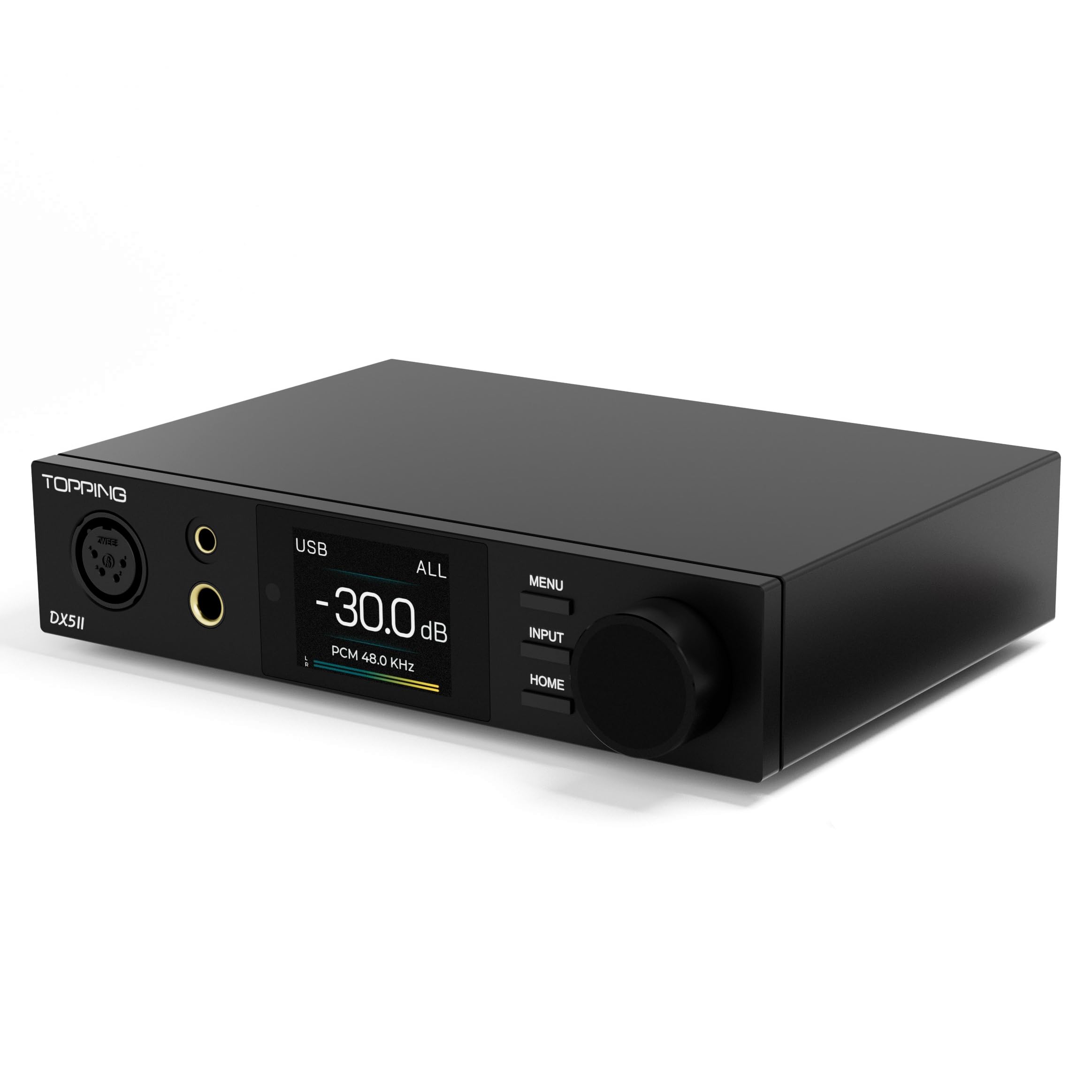
The DX5 II delivers 7600mW of balanced output, a 10-band PEQ, LDAC Bluetooth, and dual ES9039Q2M DACs in a single desktop chassis. It also decodes PCM up to 768kHz and DSD512, which puts it ahead of the top pick in raw power and format support. For planar headphones that need current and EQ tinkerers who want system-wide adjustment, this is the feature-dense option.

Across USB, Bluetooth, coaxial, and optical SPDIF inputs, the DX5 II keeps the signal transparent and quiet; the low noise floor stays silent even with demanding planar headphones at high gain. The 4.4mm balanced output is the one to use for serious listening, while the display, 12V trigger, and preamp line out make the unit a natural desktop hub. LDAC support means a phone can stream high-bitrate audio without a cable.

The DX5 II suits planar headphone owners who want high balanced power plus PEQ and Bluetooth convenience in one box. A firmware update can occasionally leave a unit unresponsive, so a flexible return policy is worth prioritizing. Buyers who prefer a more conservative all-rounder should start with the top pick.

Pros

  • Transparent, high-resolution balanced output with no added grain.
  • Accepts USB, Bluetooth, coaxial, and optical SPDIF, so pairing with nearly any source is simple.
  • High feature density for a premium price, including PEQ, LDAC, and 12V trigger.
  • High balanced power for demanding planar headphones.

Cons

  • Balanced headphone connection is 4.4mm only; XLR-headphone buyers need a different amp.
Our verdict

The DX5 II is the feature-heavy pick for planar owners who want PEQ, LDAC, and 7600mW of balanced power; buyers who prefer a conservative all-rounder should start with the top pick.

Check Latest Price
4

Best Budget Balanced Combo

FiiO K11

90 /100
Sound Score Outstanding

Key details

Inputs
USB, coaxial, optical
Max Power
1400mW
DAC / Format
PCM 384, DSD256
Preamp And EQ
RCA line out
View on Amazon

The K11 puts a genuine 4.4mm balanced output on a budget desktop chassis without cheapening the experience. The metal housing, VA status display, and clean full-resolution sound feel above the entry-level price, and the 1400mW balanced output drives high-impedance dynamic headphones with headroom to spare. The DAC section handles PCM up to 384kHz/24bit and DSD256, so it covers high-resolution library basics.

Positioned below the higher-output FiiO balanced desktop combo in the same lineup, the K11 keeps the essential 4.4mm connection while lowering the cost of entering balanced audio. That budget positioning is the point: it gives first-time buyers a real balanced desktop path without asking them to pay for a higher-tier unit they do not yet need.

This is the right fit for first-time DAC/amp owners who want a balanced 4.4mm desktop output and mainly plan to feed it from a computer. The controls stay simple enough for someone new to separate desktop audio gear.

Optical input on some units may not function, so anyone who depends on that connection should test it early or choose a different balanced DAC/amp.

Pros

  • Clean, full-resolution sound through the balanced output at a budget price.
  • Solid metal build quality that feels above its entry-level positioning.
  • Enough balanced output power for high-impedance dynamic headphones.
  • Strong overall budget value for anyone adding a 4.4mm desktop amp to their setup.

Cons

  • No EQ or wireless input; those features require a different balanced desktop unit in a higher price tier.
  • Power-hungry planar headphones will want more balanced output than the K11 provides.
Our verdict

Computer-based listeners who want a balanced 4.4mm desktop output without a big budget get a strong starting point here.

Check Latest Price
5

Best Balanced Tube Value

Apos Gremlin

90 /100
Sound Score Outstanding

Key details

Inputs
Balanced XLR
Max Power
1250mW
DAC / Format
Preamp And EQ
No preamp out
View on Amazon

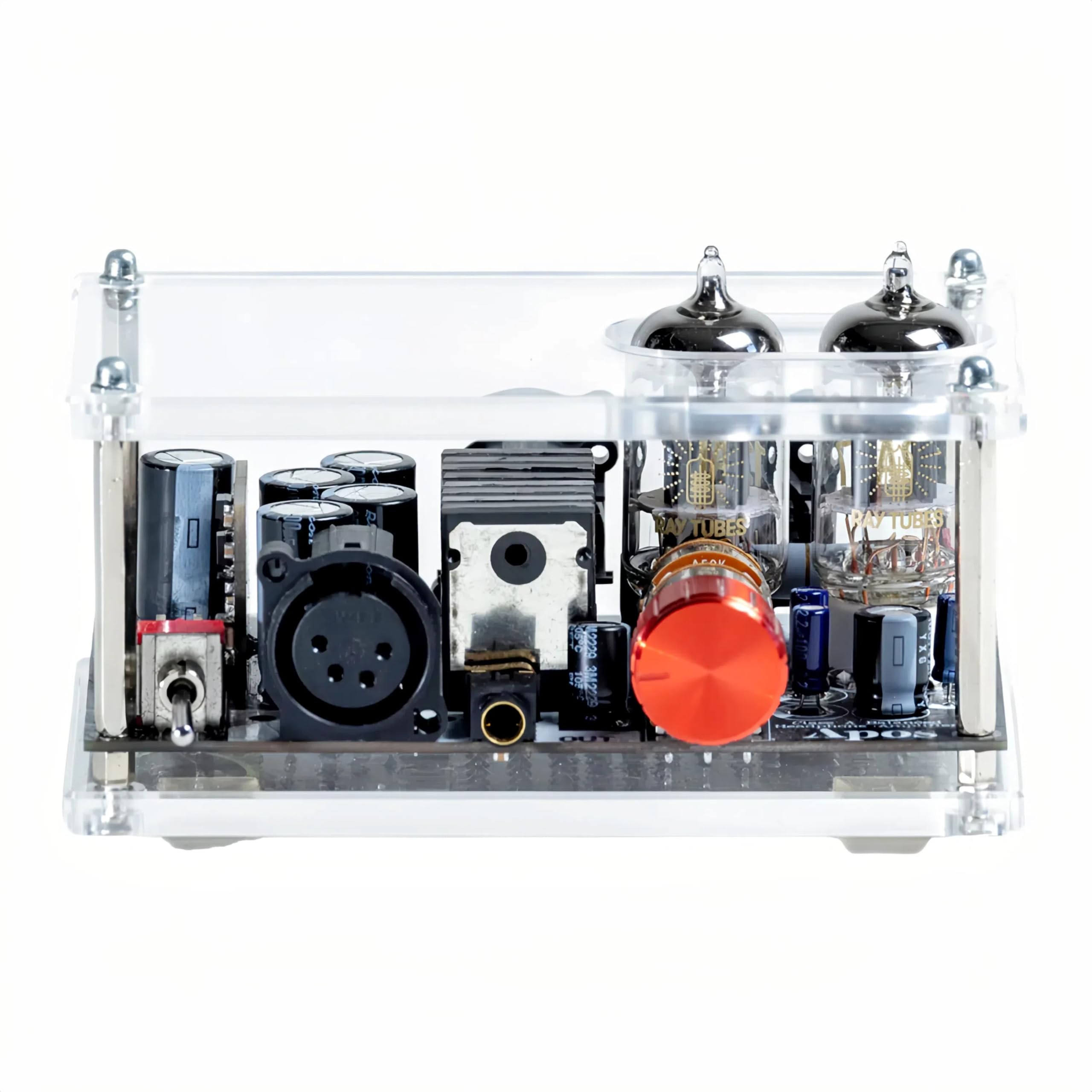
The Gremlin is a fully balanced Class A tube amp at a budget price, built around a matched Ray Tubes 12AU7 pair and delivering 1250mW through 4-pin XLR and 4.4mm outputs. Its tube stage adds harmonic richness and body without smearing detail.

The natural home for this amp is a desktop setup with an existing DAC or balanced source; the Gremlin has no built-in DAC, so it is not a one-box headphone system and needs an external source to play. That separation lets buyers spend the entire budget on the tube stage instead of duplicating conversion they already own. Listeners who want a neutral, purely solid-state reference are not the target; the warm voicing is part of its identity.

Tube rolling is a genuine extra: the 12AU7 pair can be swapped for 6922 tubes to shift the character, and the amp stays useful with everyday dynamic and planar headphones. Current-hungry planars may need more power than this Class A stage provides, but typical desktop headphones get satisfying volume.

Pros

  • Warm tube tone adds musical weight to voices and instruments without smearing detail.
  • Fully balanced Class A layout at a budget-friendly price.
  • XLR and 4.4mm outputs deliver enough power for everyday dynamic and planar headphones.
  • 12AU7/6922 compatibility makes tube rolling easy.

Cons

No consistent drawbacks identified in the available review data.

Our verdict

Tube rollers get a true balanced Class A path with the Gremlin.

Check Latest Price
6

IEMs + Small Desks

Fosi Audio SK02

87 /100
Sound Score Excellent

Key details

Inputs
USB-C, optical
Max Power
1100mW @ 32Ω
DAC / Format
ESS ES9038Q2M
Preamp And EQ
No preamp out
View on Amazon

The SK02 delivers clean, neutral sound through its ESS ES9038Q2M DAC and a 4.4mm balanced output, making it a simple plug-and-play option for USB-C or optical sources. The smooth volume knob and gain switch suit sensitive IEMs, and the compact body fits a small desk. The 1100mW balanced output and the lack of XLR/RCA preamp outputs keep it below the fuller hub in this roundup, so high-power planar owners and active-speaker users need a different setup. Unit-to-unit quality can vary, so a quick connectivity check on arrival is worth the time.

Pros

  • Clean, neutral sound for the price.
  • Compact USB/optical DAC/amp that slips into a small desk setup.
  • Big volume knob with gain switch simplifies level matching for sensitive IEMs.

Cons

  • No RCA or XLR preamp outputs, so active speakers need a separate control hub.
  • Quality control can vary between units; a prompt connectivity check is prudent.
Our verdict

For a small desk where IEMs or modest headphones are the main listen, the SK02 is a cost-effective 4.4mm entry point.

Check Latest Price

How to Choose

Balanced Output Format

4.4mm Pentaconn is the de facto balanced headphone jack on desktop DAC/amps; 4-pin XLR shows up more often as line-level output for speakers. Before buying, check whether your headphones have a balanced cable and which termination they use.

Going from 3.5mm to balanced requires a re-terminated or replacement cable. Balanced operation doubles the amp channels, which lowers crosstalk and noise, but it also halves the number of headphones that can use the output without an adapter.

Power at Real Impedances

Balanced power ratings are usually quoted at 32Ω, which flatters low-impedance headphones. High-impedance dynamics and planars need current and voltage, so compare output at 300Ω or 600Ω if provided.

Power is not the only thing that determines perceived loudness; gain structure and volume control taper matter just as much. A 2000mW amp can still feel awkward if the volume steps are too large.

DAC and Format Support

DAC chips are a starting point, not a sound-quality guarantee. A well-implemented AKM or ESS chip with solid USB receiver timing can sound cleaner than a flagship chip in a noisy layout.

Format support matters for source flexibility: PCM 384kHz/24-bit and DSD256 cover practically every streaming service; DSD512 is a bonus for rips but not required for everyday listening.

Input Flexibility

USB input is the default for desktop use, but optical and coaxial add TV, CD, or console compatibility. Bluetooth adds convenience at the cost of one more thing to pair and a possible drop in fidelity over LDAC.

More inputs means more processing paths and potential firmware bugs, so buyer feedback on input reliability matters as much as the port list.

Preamp and Tone Controls

XLR or RCA preamp outputs turn a headphone amp into a desktop hub for active speakers, letting you switch between headphones and monitors without reconnecting cables.

EQ and tone controls are useful for correcting headphone voicing, but they add menu layers. If you dislike menus, a simple gain switch and volume knob may be more satisfying than a full parametric EQ.

Frequently Asked Questions