9 Best Portable DAC of 2026: Clean Sound, Balanced Output, No Hiss

A portable DAC buyer's guide for listeners who want balanced output and clean sound from IEMs and over-ear headphones, without hiss, flaky cables, or surprise battery drain.

Portable DAC marketing leans on chip names and four-figure signal-to-noise ratios. In day-to-day use, the specs that matter are quieter ones: whether a dongle hisses with sensitive IEMs, whether the bundled cable stays connected, and whether the amp can drive the headphones you already own.

The category has split into two practical camps: tiny wired dongles that pull power from your phone, and battery-powered Bluetooth DAC/amps that free your phone but add weight. Each solves a different listening problem. Pick the wrong one and you end up with either a drained phone on your commute or a pocketful of cables at your desk.

This guide sorts that out by matching the amp stage, output power, Bluetooth capability, and EQ flexibility to real use cases — so you can buy for how you actually listen.

About the Sound Score: This comparative score is calculated from a product's published customer rating and review volume. It is not a laboratory measurement or a hands-on test result.

1

Best Overall

Qudelix-5K

92 /100
Sound Score Outstanding

Key details

Outputs
3.5mm + 2.5mm
Bluetooth
LDAC, aptX Adaptive, USB
DAC Chips
Dual ES9219
EQ Control
PEQ app
View on Amazon

The Qudelix-5K brings reference-grade clarity, stable multipoint Bluetooth, and app-based PEQ together in a 25-gram clip that works as both a USB DAC and a Bluetooth receiver. Dual ES9219 DACs drive a 2.5mm balanced output at 240mW and a 3.5mm output at 80mW, so it handles full-size headphones without strain. The sound is neutral and detailed, which suits critical listening.

Multipoint Bluetooth pairing holds a phone and laptop at once, switching between the two without rebinding. LDAC, aptX Adaptive, aptX HD, and AAC span the codec spectrum, so Android and iOS devices connect at their best supported quality. Battery life stretches from 6 to 20 hours depending on codec and output mode, enough for a full day of mixed use. The clip then adds wireless capability to wired headphones: IEMs plugged into the 3.5mm or 2.5mm output become a portable wireless setup for commutes and office walks.

App control is where the 5K stands apart. Parametric EQ adjusts specific frequency bands rather than a fixed set of tone knobs, and preset curves cover a wide range of popular headphones and IEMs. Headphone collectors can tune each pair individually and return to that tuning whenever they swap. That per-headphone flexibility makes the 5K a single hub for anyone with multiple headphones.

Build quality holds up for daily carry: the shell is dense, the clip stays anchored to a collar or bag strap, and the 25-gram weight is easy to ignore. The 2V RMS unbalanced and 4V RMS balanced outputs give it enough reach for dynamic and planar headphones, which is notable given the size. A USB-C connection to a laptop or tablet turns the same device into a wired DAC for desktop listening.

The 5K fits Bluetooth + wired hybrid listeners who want one portable DAC across phone, tablet, and laptop. Wired headphones sit at the center of the design: Bluetooth brings the signal in, and the 3.5mm or 2.5mm output drives the headphones. The app's EQ depth assumes a user willing to spend time with the controls — it is not a zero-configuration accessory. Both boundaries suit the target buyer, who already owns wired headphones and treats EQ customization as part of the purchase.

💡 Start with the headphone presets in the app, then branch into custom parametric bands as you learn the layout.

Pros

  • Reference-grade clarity with a neutral, detailed sound signature.
  • Tailor your sound per headphone with app-based parametric EQ and presets.
  • Multipoint Bluetooth pairs with a phone and laptop at once, with stable LDAC and aptX Adaptive connections.
  • Compact 25-gram clip with 240mW balanced output and a sturdy build.

Cons

  • App depth and configuration options can overwhelm plug-and-play users.
  • For wireless-headphone owners, the Bluetooth side receives only
Our verdict

The Qudelix-5K handles wired and wireless with equal seriousness, which is exactly what hybrid listeners need from a single portable DAC. It is the strongest all-rounder in this set.

Check Latest Price
2

Best High-Power Wired Dongle

FiiO KA13

87 /100
Sound Score Excellent

Key details

Outputs
3.5mm + 4.4mm
Bluetooth
No Bluetooth
DAC Chips
Dual CS43131 + SGM8262
EQ Control
FiiO Control app
View on Amazon

The KA13 leans into wired-only headroom: 550mW balanced output in Desktop Mode, driven by dual CS43131 DACs. That current reserve is enough for planars and 300-ohm dynamic headphones, while the 3.5mm output gives IEMs a simpler fallback. It is the clear high-power dongle option in the group.

Detail retrieval is the main sonic signature: cymbal texture and layered vocals stay distinct when the track gets busy. The 3.5mm output works for IEMs, and the 4.4mm balanced output is where the amplifier shows its headroom. Build quality matches the mid-range price, and the two-port layout keeps connection options simple.

Compatibility extends across Android, iOS, PC, and Mac over USB, and the FiiO Control app provides a settings layer without needing Bluetooth. The dual DAC stage decodes PCM up to 384kHz/32bit and DSD256, which covers high-resolution files from a phone, tablet, or laptop. This is a wired-tethered tool, so mobility is limited by the USB connection.

This is for balanced-headphone owners who listen from a laptop, tablet, or phone and want portable power without Bluetooth. Desktop Mode runs warm during long sessions, and noise or static can appear on some units in quiet environments, so sensitive-IEM listeners should check the unit against their setup. The target buyer still gets strong wired muscle per dollar in this comparison.

Pros

  • Detailed, powerful sound at a mid-range price, with enough separation to suit critical listening.
  • High output power handles demanding headphones without needing a desktop amp.
  • Broad USB compatibility across Android, iOS, PC, and Mac, with app control.
  • Build quality and value hold up in this price tier.

Cons

  • Surface heat builds during long Desktop Mode use, noticeable when hand-held rather than desk-bound.
  • In quiet rooms, loud buzzing or choppy audio can surface on some units, intermittent and not consistently reproducible.
Our verdict

For balanced planars and 300-ohm cans, the KA13 supplies desktop-like current from a pocket-sized wired dongle.

Check Latest Price
3

Best Budget Wired Dongle

Kiwi Ears Allegro Mini

87 /100
Sound Score Excellent

Key details

Outputs
3.5mm + 4.4mm
Bluetooth
No Bluetooth
DAC Chips
Custom chipset
EQ Control
View on Amazon

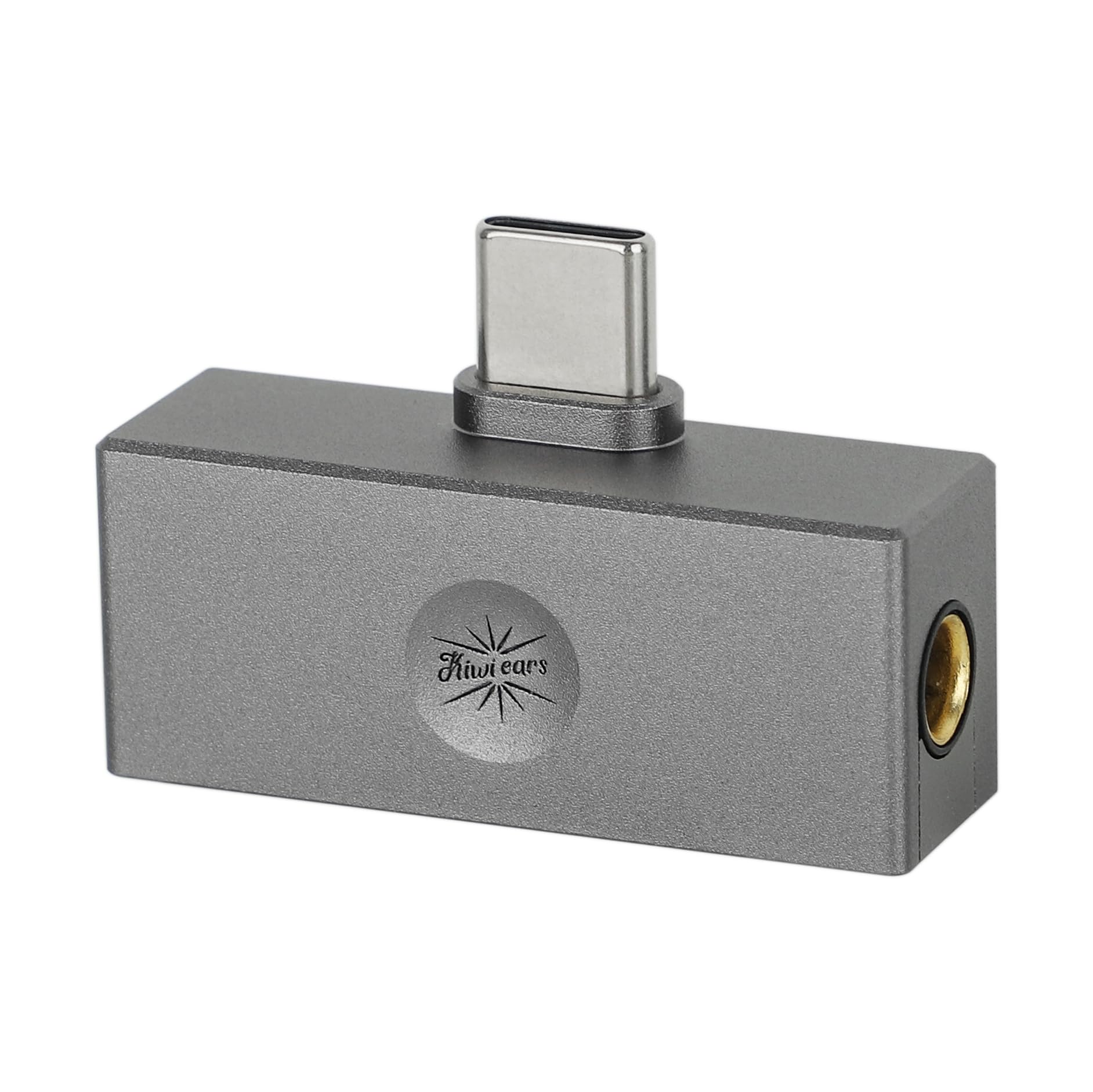
The Allegro Mini is the budget 3.5mm/4.4mm dongle that sticks to the essentials: clean IEM sound, an aluminum shell, and two output options. Some balanced dongles add apps or controls; this one keeps the signal path simple. The custom chipset handles PCM up to 32-bit/384kHz and DSD128, covering high-res PCM and DSD streams from a phone or laptop.

The balanced output stays quiet enough for sensitive IEMs, and the 0.004% THD+N figure at 32Ω supports the clean presentation. The practical effect is a dark background with clear instrument separation. That low-noise character is what separates it from stock phone dongles.

Plug-and-play over USB-C covers phones, tablets, and PCs without driver installation. The aluminum shell stays compact and rigid, so it can live at the end of a cable without feeling like it will strain the connector.

First-time dongle buyers and IEM users who want balanced output on a budget are the natural fit. The USB-C body can conflict with thick phone cases, so case-free use or a short extension cable is part of that setup. Full-size headphone owners looking for high power are better served by a larger DAC/amp.

Pros

  • Dual 3.5mm and 4.4mm outputs give budget buyers a real path to balanced listening.
  • Clean, detailed sound with a low background noise floor.
  • Plug-and-play over USB-C works with phones, tablets, and PCs.
  • Compact aluminum shell that feels solid on a cable.

Cons

No consistent drawbacks identified in the available review data.

Our verdict

The Allegro Mini is the low-risk balanced dongle for IEM users on a budget: dual outputs, a clean noise floor, and no complex setup.

Check Latest Price
4

Best Budget Bluetooth DAC/Amp

FiiO BTR13

86 /100
Sound Score Excellent

Key details

Outputs
3.5mm + 4.4mm
Bluetooth
LDAC, aptX Adaptive
DAC Chips
Dual CS43131
EQ Control
FiiO Control app
View on Amazon

The BTR13 is a Bluetooth DAC/amp that clips onto a collar and turns a wired headphone or IEM into a wireless setup. Dual CS43131 DACs keep the noise floor quiet, and the 4.4mm balanced output drives 80-ohm headphones like the DT 770 Pro with room to spare. The 3.5mm single-ended output suits sensitive IEMs without obvious hiss.

Wireless support covers LDAC, aptX Adaptive, aptX HD, and AAC, so Android and iPhone both pair with high-resolution options. The 28.6g body stays unobtrusive on a lapel or shirt pocket, and the balanced output delivers power that few Bluetooth amps in this price range can match.

Pairing is simple: one Bluetooth connection, then plug in the headphone. The FiiO app can be left closed for daily listening, though basic settings live there for those who want them.

This is for commuters who already own wired headphones, want a low-cost Bluetooth bridge, and are comfortable with a plastic shell rather than a metal chassis. It is not the app-focused, EQ-heavy alternative at the top of this guide, but it covers the wireless and balanced basics with less complexity and a lower entry price.

💡 The default 80% charge cap can be disabled before a long outing.

Pros

  • Clean, powerful sound with a quiet background across outputs.
  • Wide wireless codec support for Android and iPhone.
  • 4.4mm balanced output drives 80-ohm headphones with headroom.
  • Easy to pair, with strong value for the feature set.

Cons

  • Small, closely spaced buttons can be awkward to operate by feel.
  • Battery runtime is modest for a Bluetooth amp.
Our verdict

For the money, the BTR13 is the easiest way to add LDAC and balanced output to wired headphones you already own.

Check Latest Price
5

Best Premium Battery-Powered DAC

iFi Hip-dac 3

87 /100
Sound Score Excellent

Key details

Outputs
4.4mm + 3.5mm
Bluetooth
No Bluetooth
DAC Chips
EQ Control
XBass only
View on Amazon

The iFi Hip-dac 3 is a battery-powered reference amp for full-size headphones: 4.4mm balanced output, PowerMatch gain, iEMatch, and XBass all live in a compact aluminum chassis. Its output stage drives 250-ohm and 600-ohm headphones with clean current, which leaves pocket dongles in a different weight class.

Plug it into a phone, tablet, or laptop over USB-C and the sound leans warm and revealing, with lossless files pulling out extra detail without extra harshness. PowerMatch adjusts gain for high-impedance headphones, iEMatch keeps sensitive IEMs quiet, and XBass adds low-end weight when a track needs it. Physical controls cover gain, IEM matching, and bass without an app.

This is for listeners with demanding over-ears who want a dedicated portable DAC/amp rather than a dongle. It is not for minimalists who need a tiny pocket adapter or users who expect fast-charging compatibility with long multi-day battery life.

💡 For sensitive IEMs, start with PowerMatch low gain and iEMatch before raising volume.

Pros

  • Crisp, revealing sound with clean power for lossless files.
  • Drives 250-ohm and 600-ohm headphones without strain.
  • PowerMatch, iEMatch, and XBass adapt output to demanding cans and sensitive IEMs.
  • Aluminum build with physical controls is sturdy in a bag.

Cons

  • Carrying the wired Hip-dac setup is bulkier than a pocket dongle.
  • Battery runtime is moderate, and fast-charging adapters can disrupt charging.
Our verdict

The Hip-dac 3 fits when your headphones need real power and you want a dedicated amp with physical controls rather than a dongle.

Check Latest Price
6

Best Budget EQ Dongle

Moondrop Dawn Pro 2

83 /100
Sound Score Excellent

Key details

Outputs
3.5mm + 4.4mm
Bluetooth
No Bluetooth
DAC Chips
Dual CS43198
EQ Control
MOONDROP app PEQ
View on Amazon

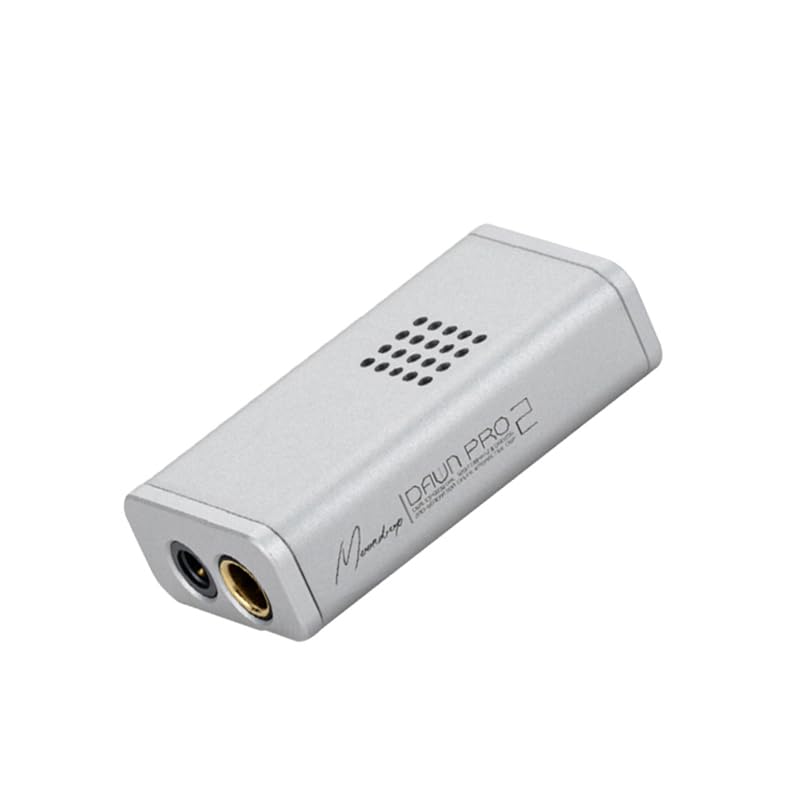
Dual CS43198 DACs, a 4.4mm balanced output, and MOONDROP app-based parametric EQ make the Dawn Pro 2 the tuning-oriented option in this roundup. Its focus is EQ control and clean output, not the highest power figures.

The right buyer is an IEM listener who wants parametric EQ from a phone and accepts the MOONDROP app as the control center. The output stage is IEM-focused, so high-impedance or planar full-size headphones belong on a different amp. Some units also come with flimsy buttons or double-clicking controls, which makes a quick arrival check worthwhile.

Sound is clear and quiet, with a low noise floor that suits sensitive IEMs. The metal body feels solid at this level, and the balanced output gives IEMs a clean, composed presentation.

💡 Use the 4.4mm balanced output for the most headroom; the 3.5mm output is enough for sensitive IEMs.

Pros

  • Clear, low-noise output pairs well with sensitive IEMs.
  • Aluminum body feels substantial for a mid-range dongle.
  • App-based parametric EQ adds real tuning control from a phone.

Cons

  • Output power favors IEMs, so high-impedance and planar full-size headphones will sound underdriven.
  • Button controls on some units can feel flimsy or register double-clicks.
Our verdict

For IEM-first listeners who want app-based parametric EQ and balanced output, the Dawn Pro 2 is the mid-range pick to compare against.

Check Latest Price
7

Budget Balanced Listening

Fosi Audio DS2

86 /100
Sound Score Excellent

Key details

Outputs
3.5mm + 4.4mm
Bluetooth
No Bluetooth
DAC Chips
Dual CS43131
EQ Control
View on Amazon

Wide, clean soundstage and 4.4mm balanced output arrive in a CNC aluminum shell at a budget-friendly price. The dual Cirrus Logic DACs work well as a laptop sound card, and power is sufficient for full-size headphones like Sennheiser HD 650s and planars. The notable tradeoffs in mobile use are dropouts from the bundled cable and phone battery drain. Those limits keep it below the runner-up tier for portable phone use, but desk use or a replacement cable sidesteps them.

Pros

  • Wide, clean soundstage and clean output across IEMs and headphones.
  • Strong value for balanced output and CNC aluminum build.
  • Powerful enough for full-size headphones like Sennheiser HD 650s and planars.

Cons

  • The bundled USB-C cable can cause intermittent audio dropouts.
  • In mobile phone use, current draw can shorten battery life noticeably.
Our verdict

For laptop-first listening and budget balanced-output buyers, the DS2 fits. Phone-heavy mobile use is better served by a more phone-oriented dongle.

Check Latest Price
8

Budget Phone Backup

JCALLY JM6 Pro

89 /100
Sound Score Excellent

Key details

Outputs
3.5mm only
Bluetooth
No Bluetooth
DAC Chips
CX31993 + MAX97220
EQ Control
View on Amazon

The JM6 Pro puts the CX31993 + MAX97220 dual-chip stack to work for clean, energetic sound that gives lower-sensitivity IEMs and portable headphones real headroom at a budget-friendly price. Compatibility spans phones, tablets, and laptops, and the build quality holds up for the money. The boundary is the noise floor: sensitive IEMs can pick up hiss in quiet passages, so it suits less sensitive monitors best. Durability also has unit-to-unit variance, which keeps it in 'consider' territory rather than a universal recommendation.

Pros

  • Clean, powerful sound gives lower-sensitivity IEMs and portable headphones real headroom.
  • Broad compatibility across phones, tablets, and laptops over USB-C.
  • Good build and light weight for the price.

Cons

  • In quiet listening, sensitive IEMs can pick up hiss; lower-sensitivity gear stays clean.
  • In a backpack-and-travel routine, durability can vary between units; early malfunction has been noted after a few months.
Our verdict

The JM6 Pro is the right budget adapter when your IEMs are not hypersensitive and your carry routine is moderate.

Check Latest Price
9

MQA Listeners

HiBy FC4

81 /100
Sound Score Excellent

Key details

Outputs
3.5mm + 4.4mm
Bluetooth
No Bluetooth
DAC Chips
Dual CS43131
EQ Control
On-device PEQ
View on Amazon

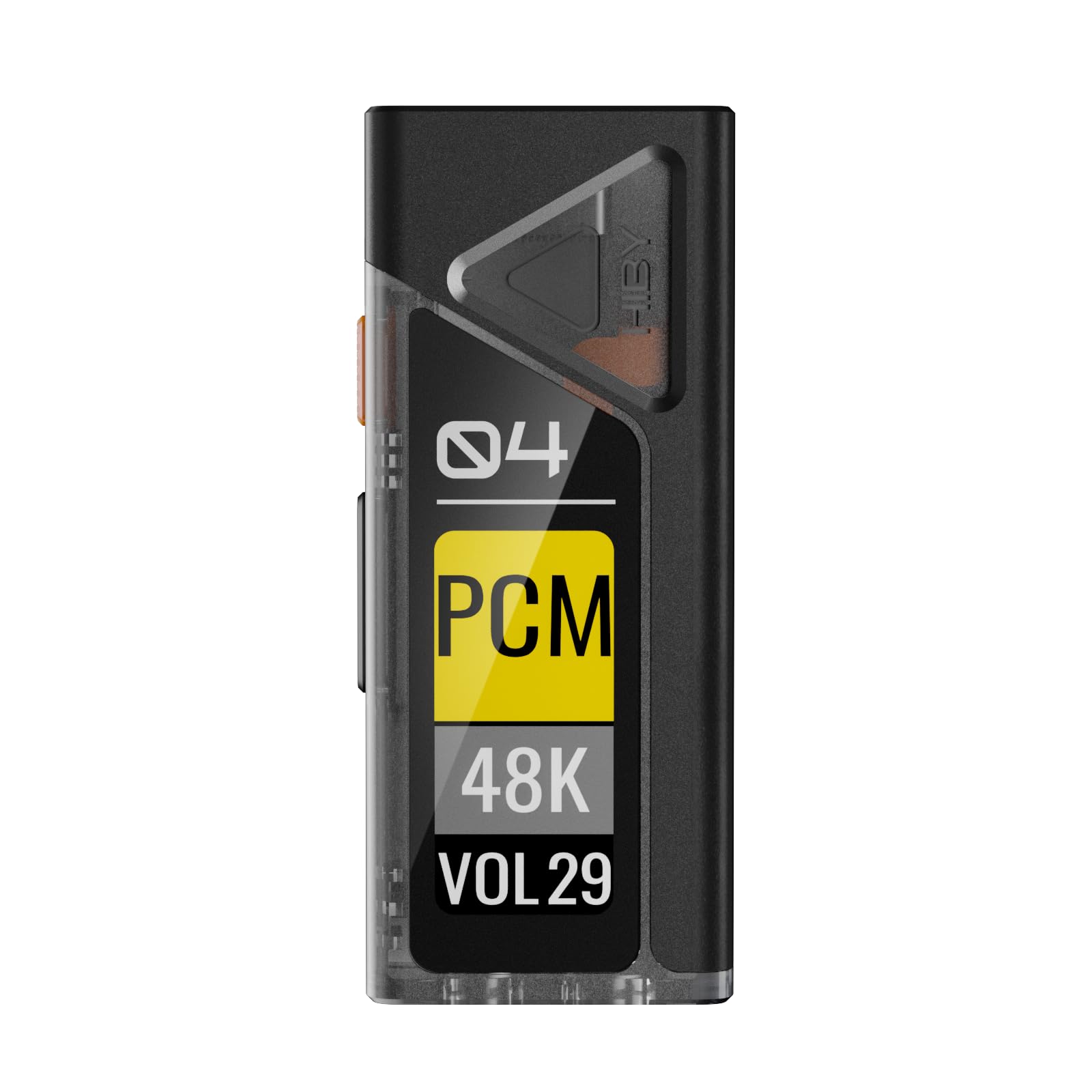
The HiBy FC4 pairs dual CS43131 DACs, MQA 8x unfolding, DSD512, and a 1.1-inch OLED in a compact aluminum body. The 4.4mm balanced output, on-device EQ presets, and gain options give IEM users a tunable upgrade over a basic 3.5mm dongle. App/device compatibility can be inconsistent: EQ may not apply in Amazon Music, and USB playback can be inconsistent with certain DAPs such as the Sony Walkman. For MQA and DSD fans this is a reasonable mid-range option; for streamers expecting a universal adapter, those quirks keep it in also-consider territory.

Pros

  • Compact aluminum body with 4.4mm balanced output
  • MQA, DSD512, and 768kHz PCM support plus on-device EQ presets in a pocketable dongle.

Cons

  • EQ may not apply in Amazon Music and USB playback can be inconsistent on some DAPs such as Sony Walkman.
Our verdict

If your library is built around MQA/DSD and you want a 4.4mm balanced IEM output with on-device EQ, the FC4 fits; otherwise, test it with your streaming app before committing.

Check Latest Price

How to Choose

DAC Chip Config

Dual DAC chips separate left and right channel conversion, which can improve channel separation and lower noise. The specific chip matters less than how the circuit is implemented; a single chip with a clean power supply can outperform a dual-chip design with noisy routing.

In portable dongles, dual-chip designs are common because they make balanced output easier, but they also draw more current. If you only need single-ended IEM listening, a single-chip design is often enough.

Outputs and Balanced

Balanced output doubles the signal path by giving each channel its own ground, which raises voltage swing for headphones that need it. That advantage only exists if the headphone cable is balanced too — a 4.4mm jack on a dongle does nothing for a standard 3.5mm cable.

For shorter IEM cables, the audible difference between balanced and single-ended is often small. Balanced matters most for full-size headphones where more voltage is required, or if the dongle's single-ended output is weak.

Output Power and Headphone Load

Output power is rated in mW at a specific impedance, usually 32Ω. That number says little about how the amp handles 300Ω headphones, which need voltage, or low-impedance planars, which need current.

A dongle that pumps 170mW into 32Ω may still sound thin on a 300-ohm pair. High-power modes also pull more current from the connected phone and can make the dongle warm, so match power to the headphones you actually use.

Bluetooth and USB Modes

Bluetooth DAC/amps pair with a phone and send audio to wired headphones; they do not transmit to Bluetooth headphones. LDAC and aptX Adaptive allow near-lossless wireless with Android, while AAC covers iPhones.

Because a Bluetooth DAC/amp has its own battery, it spares the phone's battery, but adds charging and latency. If you sit at a desk with a laptop, a USB-only dongle may be simpler and cheaper for the same sound.

EQ Control

Parametric EQ adjusts frequency bands with adjustable center frequency and width, which lets you correct peaks and valleys in specific headphones. Graphic EQ presets are simpler but less precise.

App-based PEQ is powerful but requires the app running on the connected device, and some implementations feel like they rely on the phone or computer. A dongle with on-device or browser-based EQ avoids that app-in-the-middle problem, but setup is more involved.

Frequently Asked Questions