9 Best Edifier Speakers of 2026: Match Inputs to Your Setup

The best Edifier speakers for desktop, TV, or turntable setups — and where hidden input gaps change the buying decision.

Two Edifier speakers can look nearly identical in a listing and be completely different in practice. One takes Bluetooth, optical, and a subwoofer connection. The other is strictly analog — and the product copy may not make the distinction obvious.

The real difference is the back panel. A wired-only bookshelf with a massive track record can be the right choice for a turntable or desktop setup. A similar-looking model with Bluetooth, digital inputs, and subwoofer output fits a TV or future 2.1 system better.

Match the speaker to the sources you already own, not to the model name on the box. That means deciding between simplicity and flexibility before listening. No amount of EQ can add an input that is not physically there, so the right model is the one whose rear panel matches the rest of your setup.

About the Sound Score: This comparative score is calculated from a product's published customer rating and review volume. It is not a laboratory measurement or a hands-on test result.

1

Best Overall

Edifier R1280DBs

93 /100
Sound Score Outstanding

Key details

Inputs
Bluetooth, optical, coaxial, RCA
Drivers
4-inch woofer, 13mm tweeter
Sub Out
Yes
Controls
Remote, bass, treble, Soundfield
View on Amazon

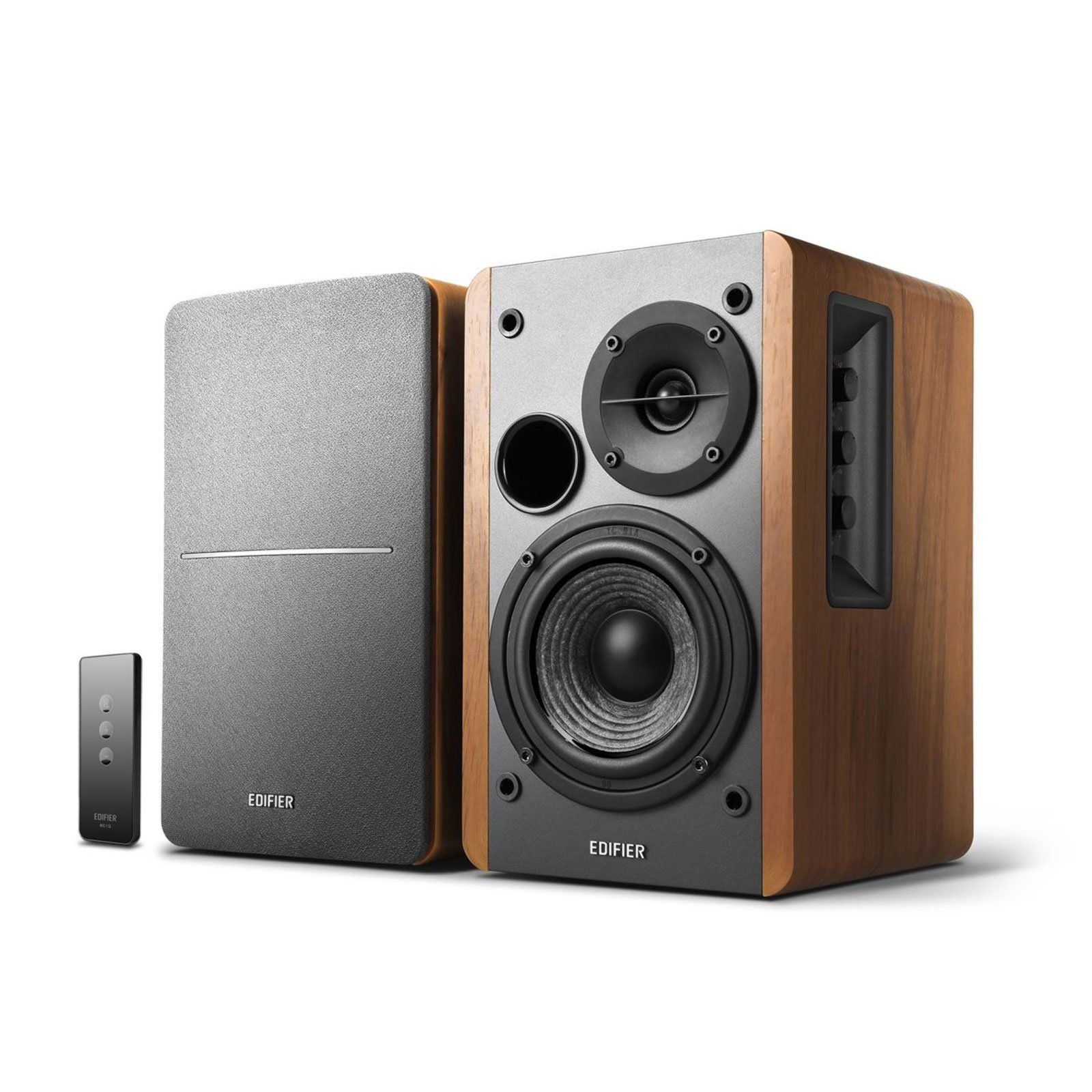
The complete R1280-series package: Bluetooth 5.0, optical, coaxial, dual RCA, and subwoofer output all live on one rear panel. That connection set covers a desktop PC, a TV, and a future 2.1 setup without switching speakers. Buyers who compare the DB and DBs versions will find the same core sound, with the DBs adding a sub-out and a newer Bluetooth radio for a modest step up in price.

Sound is clear and balanced, with crisp highs from the 13mm silk tweeter and adequate low end from the 4-inch woofer. The wood-grain cabinet looks more expensive than the price tier suggests, and the build feels substantial enough for daily use. Edifier's tuning leans toward an easy listen rather than an analytical studio sound, which fits TV dialogue, music, and desktop audio alike.

The 42W RMS output is sized for a bedroom, office, or modest living room; it fills those spaces with clean listening levels. In a large open floor plan, the R1280DBs will run out of headroom before the room does, so high-volume listeners should move up the Edifier bookshelf line. For the intended small-to-medium room, volume is not a concern. The low end is tuned for restraint rather than boom.

Bluetooth pairing from a phone or computer is easy, and the optical input makes TV hookup a single cable. Dual RCA inputs accept two wired sources at once, which suits a desktop with a PC and a separate media player. The subwoofer output turns a future 2.1 upgrade into a plug-and-play addition rather than a speaker replacement. Soundfield mode adds a small spatial widening for seated listening.

Buy this pair if you want one compact set for TV, PC, and a future subwoofer, with wireless and wired flexibility in a small-to-medium room. Remote and Bluetooth inconsistency can still appear on some units, so keep the speakers within normal listening distance for consistent behavior. Strict budget buyers can save with a wired-only model, but the subwoofer output and digital inputs are the features that make this the all-rounder. If your priority is very high volume, the 42W amplifier is the boundary to consider.

Both cabinets are active, so no separate amplifier is needed; the rear panel is the only part of the system that requires attention. The remote covers volume and input from the listening position, which is useful when the speakers are not directly beside the listener. A desktop setup can run on a single optical or RCA cable and still leave the wireless option open.

💡 Pair devices from the speaker itself and use the remote from your normal listening position for consistent behavior.

Pros

  • Balanced sound with crisp highs and a usable low end for a 4-inch woofer.
  • Cabinet build and finish feel above the price tier.
  • Rear-panel feature set covers Bluetooth, digital inputs, and subwoofer output.
  • Bluetooth pairing is easy, and wired/wireless options cover multiple setups.
  • Wood-grain finish adds a premium look at an accessible price.

Cons

  • The slim remote feels light and less substantial than the speakers.
  • Bluetooth pairing has no security, so nearby devices can connect.
  • Occasional units can arrive with no power-on response.
Our verdict

For desktop and TV setups that may grow into a 2.1 system later, the R1280DBs is the model to buy.

Check Latest Price
2

Best Bluetooth Value

Edifier R1280DB

93 /100
Sound Score Outstanding

Key details

Inputs
Bluetooth, optical, coaxial, RCA
Drivers
4-inch woofer, 13mm tweeter
Sub Out
No
Controls
Remote, bass, treble
View on Amazon

The R1280DB pairs Bluetooth with optical and coaxial inputs at a lower price than the sub-out version in the same family. That makes it the value pick for a TV or computer setup that wants digital hookups. It shares the 42W amplifier, 4-inch woofer, and 13mm silk tweeter with its siblings, so the sound is lively and open, with crisp highs and enough bass for a small to medium room.

Out of the box, hookup takes minutes: optical to a TV, RCA to a computer, or Bluetooth for phone playback. The remote changes volume and input, with bass and treble controls on the side of the active speaker.

This is the right match for someone using these as primary desktop or TV speakers with an optical connection, plus Bluetooth from a phone, and no plans to add a subwoofer. The absence of a subwoofer output is the main boundary: you get full-range bookshelf sound but no easy path to extend bass later. Control quirks are part of the bargain at this price, so buyers who want a more finished remote and wireless experience should step up to the top pick.

Pros

  • Bluetooth, optical, coaxial, and dual RCA inputs cover TV, computer, and phone at a value price.
  • Sound is lively and open with crisp highs, suited to music and TV dialogue.
  • Wood-grain cabinets look more expensive than their mid-range price.
  • Out-of-box setup is quick, with multiple hookup options.

Cons

  • Remote range can be inconsistent from across a room.
  • Bluetooth pairing can drop in some units and need re-adding.
  • At high volume, the 42W system loses composure in large rooms.
Our verdict

For TV and desktop listeners who want Bluetooth plus optical, this is the efficient R1280 choice.

Check Latest Price
3

Best Wired Bookshelf

Edifier R1280T

93 /100
Sound Score Outstanding

Key details

Inputs
Dual RCA analog
Drivers
4-inch woofer, 13mm tweeter
Sub Out
No
Controls
Remote, bass, treble
View on Amazon

The R1280T keeps the R1280 family's well-regarded tuning and directs its budget toward the drivers and cabinet rather than wireless extras. Its 4-inch woofer and 13mm silk dome tweeter produce a warm, clear near-field sound with more bass weight than the driver size suggests, and the tweeter keeps high frequencies smooth. Setup is plug-and-play: two RCA inputs and included cables get you running.

At a desk or on a shelf, the R1280T fills a near-field listening zone with clean vocals and a balanced low end. Digital sources simply need an analog connection or a DAC; line-level sources connect directly. The MDF cabinet keeps the visual profile traditional, and the front-panel bass and treble knobs make quick adjustments easy.

This pair suits buyers with a turntable, CD player, or computer audio chain already built around analog connections. Wired-only inputs and a moderate volume ceiling in large rooms are the boundaries; near-field desktop listening sidesteps both. If you need Bluetooth or digital inputs, the R1280DB covers that; the R1280DBs adds subwoofer output as well. For a purely analog signal path, the simple rear panel is a plus.

💡 Keep the R1280T within a few feet of your listening position, where the 4-inch woofer and tweeter are best balanced.

Pros

  • Warm, clear, balanced sound for near-field listening.
  • Strong price-to-performance for a powered bookshelf pair.
  • Classic wood-grain cabinet fits desktops and shelves.
  • Included cables and simple analog controls make setup nearly instant.

Cons

  • The bundled remote can miss from across a room, though it behaves fine at a desk.
  • After years of daily use, the amplifier can shut down in some units.
Our verdict

For desktop and turntable listeners, the R1280T is the pair to choose when analog simplicity comes before wireless convenience.

Check Latest Price
4

Best Power Upgrade

Edifier R1700BTs

92 /100
Sound Score Outstanding

Key details

Inputs
RCA, Bluetooth, aptX HD
Drivers
4-inch woofer, 19mm tweeter
Sub Out
Yes
Controls
Remote, bass, treble, Soundfield
View on Amazon

The R1700BTs is the first meaningful step up from the 42W R1280 family: a larger cabinet, 66W RMS, aptX HD Bluetooth, and a subwoofer output in one bookshelf pair. The 4-inch woofer and 19mm silk tweeter deliver rich, clean sound that fills a medium room, and the wood cabinet carries the high-end feel Edifier is known for.

Setup is two speaker wires and a power cord; the rear inputs are dual RCA, so a TV, DAC, or turntable connects without adapters. The Soundfield switch widens the stereo image for off-axis seating, and Bluetooth pairing is quick on Android devices with aptX HD.

One wired source can stay connected while a phone streams over Bluetooth; switching happens from the controls or the remote. The subwoofer output turns this into a 2.1 system later without replacing the speakers.

This is for medium-room music and TV listening as the primary pair, especially if you stream aptX HD from an Android phone or plan to add a subwoofer later. Give it enough shelf or stand space; the bundled remote is basic and short-range, and the volume ceiling is noticeable in a very large open space.

Pros

  • Rich, clean sound from a 66W cabinet that sounds larger than its size in medium rooms.
  • Retro wood finish and high-end build give the pair a more expensive feel than the price suggests.
  • aptX HD Bluetooth connects quickly and holds the signal during normal streaming.
  • Easy setup and sturdy, heavy cabinets that stay planted on stands.

Cons

  • The asking price sits above the R1280 models, so strict budgets should weigh the added power.
  • Bluetooth pairing has been noted to stall on some units until a power cycle.
Our verdict

The R1700BTs is the upgrade path for medium-room listeners who want aptX HD and a sub-out without moving up to the next Edifier tier.

Check Latest Price
5

Best Budget Studio Monitor

Edifier MR4

92 /100
Sound Score Outstanding

Key details

Inputs
TRS, RCA, AUX, headphone
Drivers
4-inch woofer, 1-inch tweeter
Sub Out
No
Controls
Monitor/Music switch, volume
View on Amazon

The MR4 is the budget near-field monitor in Edifier's lineup, pairing near-flat response with balanced TRS inputs and a Monitor/Music switch. Consumer bookshelf models in the same family lean warmer and louder, while the MR4 keeps midrange detail and restrained bass in focus for desktop work.

The 4-inch woofer and 1-inch silk dome tweeter resolve mix details without flattering the source material. Monitor mode holds the low end in check so level and panning decisions translate; Music mode adds a touch of presence when the same pair pulls double duty for listening. At moderate desktop levels, the imaging stays precise enough to place instruments across the stereo field.

Balanced TRS, RCA, and AUX inputs cover most studio and desktop sources, and the headphone output suits late-night checks. The MDF cabinets feel solid on a work desk, and the understated finish blends into a clean setup.

Home studio owners and desktop editors get a compact near-field monitor that reveals balance and panning clearly at close range. This is not the speaker for loud, warm living-room playback or TV use without a remote. The coarse stepped volume and possible unit-to-unit variation are the boundaries to accept at this price; keep a software fader handy and test both drivers after unboxing.

💡 Keep the speaker volume near a set point and use an interface, mixer, or OS fader for precise level adjustments.

Pros

  • Flat response and balanced TRS inputs give desktop producers an honest reference for level and tone.
  • Sturdy MDF enclosures and a restrained finish fit a working studio or clean desk.
  • Neutral tuning keeps low end controlled at close range, avoiding the exaggerated bass of consumer models.
  • Compact footprint handles small-studio and desktop setups without dominating the workspace.

Cons

  • Stepped volume control makes fine level matching between sources or projects awkward.
  • Unit behavior can vary; a driver may arrive inactive or output may drop at higher volumes.
Our verdict

The MR4 suits desktop producers who value neutral playback and balanced connections over consumer bass weight.

Check Latest Price
6

Best Compact Desktop

Edifier M60

90 /100
Sound Score Outstanding

Key details

Inputs
USB-C, AUX, Bluetooth LDAC
Drivers
3-inch mid-bass, 1-inch tweeter
Sub Out
No
Controls
Touch controls, DSP
View on Amazon

The M60 packs 66W RMS, LDAC Bluetooth, USB-C audio, and bundled aluminum stands into a small desktop footprint. The 3-inch mid-bass driver and 1-inch silk tweeter deliver a balanced, mature sound that belies the size, and the stands angle the pair for near-field listening. At a mid-range price, the finish and cabinet weight feel closer to larger Edifier bookshelves than to typical compact desktop speakers.

This is the fit for a USB-C laptop user with a tight desk who streams LDAC from an Android phone and wants a clean, contemporary look. The DSP keeps vocals and mids forward, so dialogue and acoustic music stay clear at low volume. The speaker is tuned as a consumer-desktop piece rather than a bass-heavy bookshelf or studio monitor; low-bass depth is limited next to larger cabinets, and the top-panel touch controls are part of the compact tradeoff.

At moderate near-field levels, the 66W amp drives the small drivers with more headroom than the size suggests. The bundled stands reduce unwanted desk reflections, and the heavy cabinets stay planted when you raise the volume. The larger compact model with HDMI eARC and sub-out covers TV duty, but the M60 stays desk-first with USB-C, AUX, and Bluetooth.

💡 Position the speakers so the tweeters point roughly at ear level; the slight upward angle helps near-field imaging.

Pros

  • Compact footprint with bundled aluminum stands fits tight desk setups
  • Balanced, mature sound from 3-inch driver and silk tweeter
  • Sturdy, heavy build and premium finish at a mid-range price
  • LDAC Bluetooth and USB-C cover modern laptop and Android sources

Cons

  • Lack of a physical volume knob may frustrate users who prefer tactile adjustment
  • USB-C input can be finicky with certain computers; AUX is the fallback
  • Bluetooth can drop or hesitate in crowded wireless environments
Our verdict

For a minimal USB-C desk setup with LDAC streaming, the M60 delivers strong near-field sound in a small package.

Check Latest Price
7

Budget Desktop

Edifier R980T

93 /100
Sound Score Outstanding

Key details

Inputs
Dual RCA
Drivers
4-inch woofer
Sub Out
No
Controls
Bass, treble, volume
View on Amazon

The R980T is the entry point to Edifier's powered bookshelf line: a 24W RMS pair with wooden cabinet, 4-inch woofer, and bass/treble controls. Sound stays clean and separated at desktop volumes, and the included RCA cables make hooking up a PC or turntable quick. Low end is surprisingly tight for a speaker this size. What keeps it from rating higher is headroom: 24W RMS suits near-field listening, but the volume ceiling arrives earlier in a larger room. Analog-only inputs also rule out Bluetooth. That makes it a boundary to respect, not a flaw — if your audio lives at a wired desk setup, this is the cheapest way in.

Pros

  • Clean, clear sound with solid instrument separation at desktop listening levels.
  • A low-cost entry point for anyone building their first powered speaker setup.
  • Pairs easily with turntables, PCs, and projectors using the included RCA cables.

Cons

  • Near-field output runs out of headroom sooner than some want in larger rooms.
Our verdict

For a first wired desktop setup or a small-room turntable pair, this is the budget entry point.

Check Latest Price
8

Large-Room Music

Edifier S1000MKII

90 /100
Sound Score Outstanding

Key details

Inputs
Bluetooth, optical, coaxial, RCA
Drivers
5.5-inch woofer, 1-inch tweeter
Sub Out
No
Controls
Remote, bass, treble
View on Amazon

At 120W RMS with a 5.5-inch woofer and titanium tweeter, the S1000MKII delivers serious large-room output from a handsome wood cabinet. aptX HD wireless plus optical, coaxial, and line-in inputs make it a complete audio hub with no amp needed. The sound is open, powerful, and detailed, with bass depth smaller Edifiers cannot reach.

It is a specialized model, not the default value pick: a large-room listener with a mid-premium budget who wants high output without adding an amplifier.

Pros

  • Open, powerful, detailed sound with deep bass for large-room music listening.
  • aptX HD wireless with no obvious quality loss in typical rooms.
  • Premium wood finish and large cabinet give it a high-end presence.

Cons

  • A small desk or light shelf will not accommodate the cabinet size and weight; plan for sturdy stands.
  • Some units can develop Bluetooth or amplifier issues after extended use.
Our verdict

The high-output Edifier bookshelf for large-room music listeners who already know they need more power than compact models deliver.

Check Latest Price
9

Gaming Desktop

Edifier G2000

92 /100
Sound Score Outstanding

Key details

Inputs
Bluetooth, USB, AUX
Drivers
2.75-inch full-range
Sub Out
Yes
Controls
EQ modes, RGB
View on Amazon

The G2000 is a compact desktop gaming speaker with RGB, EQ modes, Bluetooth/USB/AUX, and a subwoofer output; it delivers punchy sound for games and calls and fits easily under a monitor. The angled design and RGB add a distinct desk presence without demanding much space. Gaming-tuned EQ and styling narrow its appeal beyond desktop gaming, so it is not a primary music speaker. Maximum output is modest, making it a near-field desk speaker rather than a large-room filler.

Pros

  • Compact size fits under a monitor while still sounding punchy enough for gaming and calls.
  • Bluetooth, USB, and AUX inputs cover PC, console, and phone with no cable swapping.
  • Angled design and RGB lighting add a modern, playful look that fits gaming setups.

Cons

  • Music playback carries the gaming tuning, so neutral listening is not its strength.
  • Real low end only arrives once a separate sub is connected to the subwoofer output.
Our verdict

For a compact desk gaming setup with PC, console, and phone sources, the G2000 fits; primary music listening points to Edifier's bookshelf models.

Check Latest Price

How to Choose

RMS Power

RMS wattage tells you how much power the speaker can sustain, while peak power is a brief burst that gives no real indication of usable loudness. A 42W RMS pair handles near-field desk listening comfortably; a 66W or 120W RMS pair is a better fit for medium rooms and dynamic music.

When you push a low-power speaker into a large space, the amplifier runs out of headroom and the sound compresses or distorts. Choose RMS power to match the distance between you and the speaker, not the maximum number on the box.

Inputs

Inputs are the first thing to check because they determine which sources can connect without adapters. Bluetooth is convenient for phones, but optical or coaxial inputs are the more stable path for TVs because they bypass wireless handshake issues.

USB-C gives a laptop a direct digital link, and TRS/XLR inputs reject interference in a studio. A speaker with only RCA analog inputs is fine for a simple desktop or turntable chain, but it caps the system at whatever your source and adapter can deliver.

Subwoofer Output

A subwoofer output lets you add a powered sub later and turn a 2.0 system into 2.1 without an external amplifier or crossover. This matters because small 4-inch woofers physically cannot move enough air for deep bass.

If you watch movies or listen to bass-heavy music, buy a sub-out model now. Changing to one later means replacing speakers or adding an external crossover, which is more expensive than paying for the output up front.

Drivers and Cabinet

A larger woofer moves more air, which creates deeper bass and higher output, but it also needs a larger cabinet. A 5.5-inch bookshelf can fill a living room, while the same speaker can dominate a small desk.

Measure the surface before choosing. A 3-inch desktop speaker disappears under a monitor but cannot pressurize a large room; a 4-inch bookshelf balances output and footprint for most near-field and small-to-medium room use.

Controls and EQ

Bass and treble knobs let you adapt the speaker to the room, but they are analog tone controls. They cannot create deep bass from a small woofer or add headroom that the amplifier does not have.

DSP modes and app EQ adjust the factory tuning, which is useful on studio monitors and desktop speakers. Remote quality matters less for wired desk listening, but for TV use a weak infrared remote becomes daily friction.

Frequently Asked Questions