Best Overall
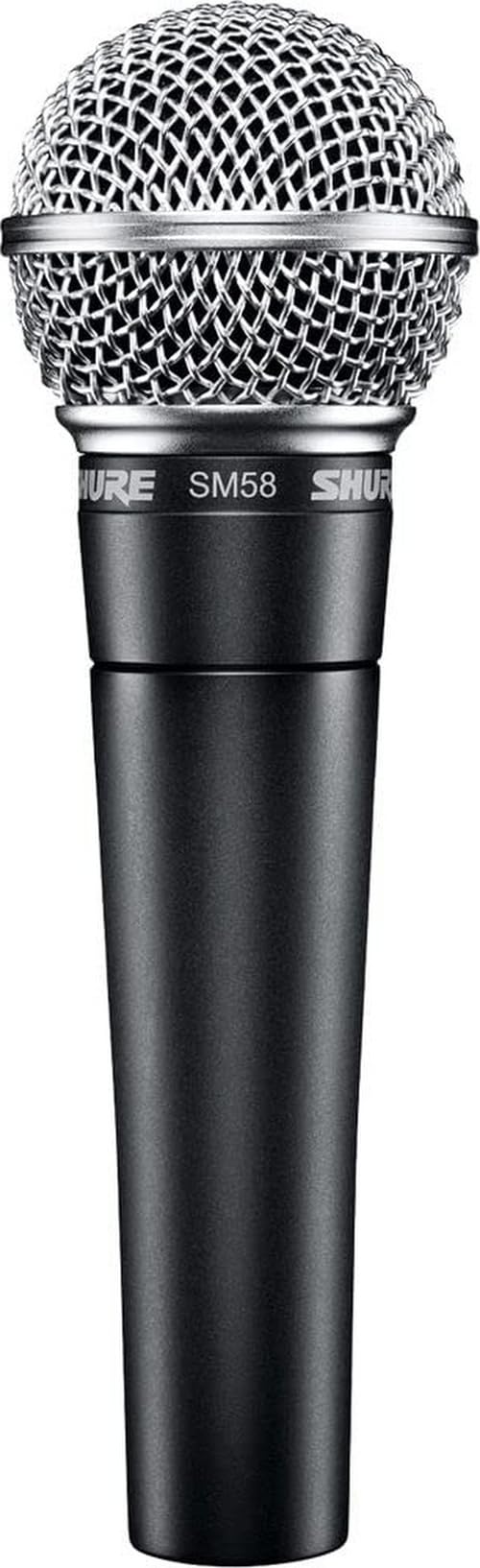
Shure SM58
Key details
- Element
- Dynamic
- Form Factor
- Handheld dynamic
- Connectivity
- XLR
- Polar Pattern
- Cardioid
The SM58’s cardioid capsule and integrated pop filter keep vocal capture focused while rejecting much of the off-axis sound that competes with a voice. Its steel grille and shock-mounted capsule tolerate handheld stage use, and the mid-forward tuning helps vocal lines cut through a live mix without heavy processing. The same tuning gives spoken voice enough body for podcasting and recording when paired with clean gain, making this one dynamic a practical anchor across several vocal uses.
Set up with a competent interface preamp, the output stays consistent across live and recorded sources. The cardioid pickup rewards singers and speakers who stay on-axis, while the built-in pop filter reduces plosive energy at close range. This makes it forgiving enough for handheld stage use and close speech without extra processing.
Live singers, public speakers, and home-studio users with an XLR interface get the broadest use from this microphone. It covers stage vocals, podcast speech, and recording sessions without demanding specialized technique. The grille mesh can bend under hard drops, so treat it as road-ready rather than indestructible. Buyers who want a dedicated instrument close-mic should look elsewhere.
Pros
- Holds up to handheld stage use and routine transport without damage.
- Delivers clear, warm vocal presence that sits well in live and recorded mixes.
- Covers live performance, podcasting, and studio recording through one XLR chain.
Cons
- XLR-only output requires an audio interface or mixer; direct USB recording is not supported.
- The grille mesh can bend if the microphone hits a hard surface.
One XLR dynamic covers most singing, speaking, and recording tasks, making it the practical default for shoppers who already own or are willing to add an interface.