10 Best In-Ear Monitors for Drummers 2026: Secure Fit & Clear Mix

In-ear monitors for drummers that stay locked in, isolate loud stages, and help you hear the band clearly without wireless complications.

Drummers often pick IEMs the way they pick cymbals: by driver count and price. The problem is that a multi-driver spec sheet does not guarantee a secure seal, and without a seal you get neither isolation nor low end.

The real differences show up in eartip fit, cable length, and connector quality. A monitor that sounds great on paper can tug at your body pack or work loose mid-set, while a simpler single-dynamic model can lock in and deliver a clean mix all night.

The monitors here balance those live-stage priorities: passive isolation, detachable cables for field repairs, and a fit that survives actual playing. Some lean toward premium detail, others toward budget fit, but every pick is judged on the same standard: can a drummer trust it on stage.

About the Sound Score: This comparative score is calculated from a product's published customer rating and review volume. It is not a laboratory measurement or a hands-on test result.

1

Best Overall

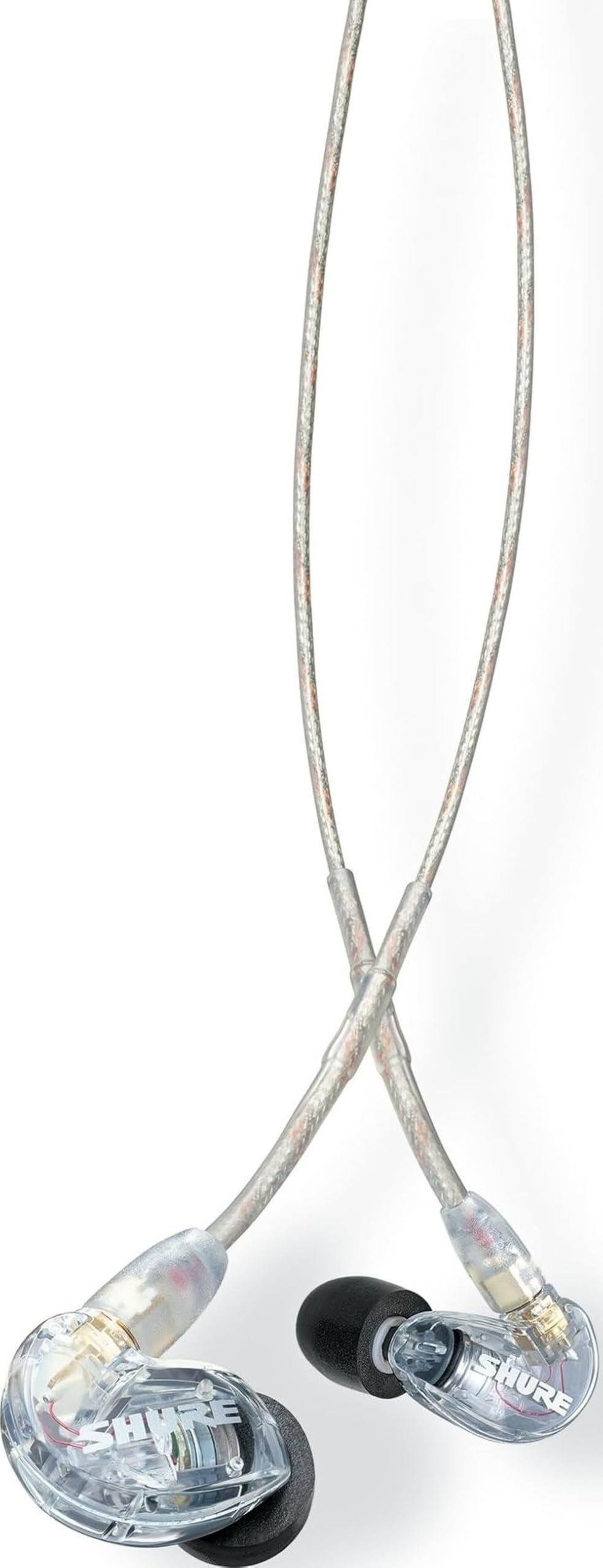
Shure SE215 PRO

89 /100
Sound Score Excellent

Key details

Connector
MMCX
Impedance
10 ohm
Isolation
Up to 37dB
Driver Config
Single dynamic
View on Amazon

The SE215 PRO's single dynamic driver produces a full, clear stage sound with bass depth that holds up when the kick drum is pounding in your ears. The low end has weight but stays controlled rather than bloated. Tuning leans toward monitoring: vocals and cymbals remain readable without the harsh edge that makes long sets tiring.

Compared with multi-driver alternatives in the same price range, it gives up some top-end air and micro-detail. What remains is a focused, centered mix that keeps the band locked together during loud sections. For a working drummer, that tradeoff is usually acceptable.

Passive isolation is where this model separates itself from general-purpose earphones. The earpieces reduce up to 37 dB of ambient stage noise without batteries, which is enough to lower the volume in your wedges and still hear the mix. That 37 dB of attenuation absorbs the clatter of drum hardware and crowd rumble before it reaches your ears. The over-ear wireform keeps the cable out of your hands and sits snug once you learn the routing. This combination matters more to drummers than extra drivers.

Detachable MMCX cables turn minor cable damage into a quick repair. A worn wire can be swapped without replacing the earpieces, and the aftermarket cable selection is large. The connector also reduces the financial risk of a worn cable at a gig. Over time this serviceability keeps the monitor working long after budget single-cable options would be set aside.

The hardware is modest on paper: one dynamic driver, a plastic shell, and a connector system that favors service over sparkle. Buyers who compare driver counts may look elsewhere, but the stage history and the replaceable cable carry the mid-range price.

This is a monitor for gigging drummers, church-band players, and live musicians who need strong isolation and a replaceable cable more than multi-driver tuning. The over-ear nozzle and rigid body can irritate small or sensitive ear canals, and the stiff cable adds to the learning curve before the fit settles. Once the fit clicks, the earpieces stay put through long sets.

Pros

  • Well-balanced, clear sound with deep bass for a single dynamic driver.
  • Passive isolation cuts up to 37 dB of stage noise for live monitoring.
  • Replaceable MMCX cable means a worn wire is a cable swap, not a new earpiece.
  • Solid value for a stage IEM with a long performance history.

Cons

  • The stock cable can hold a bent shape after heavy use; periodic re-forming keeps it tidy.
  • The stock tips may not deliver the full 37 dB seal; expect to experiment before isolation reads as advertised.
  • One-side audio drops can occur and trace back to the cable or connector.
Our verdict

It suits musicians who value isolation and serviceability over driver-count specs.

Check Latest Price
2

Best Value Multi-Driver

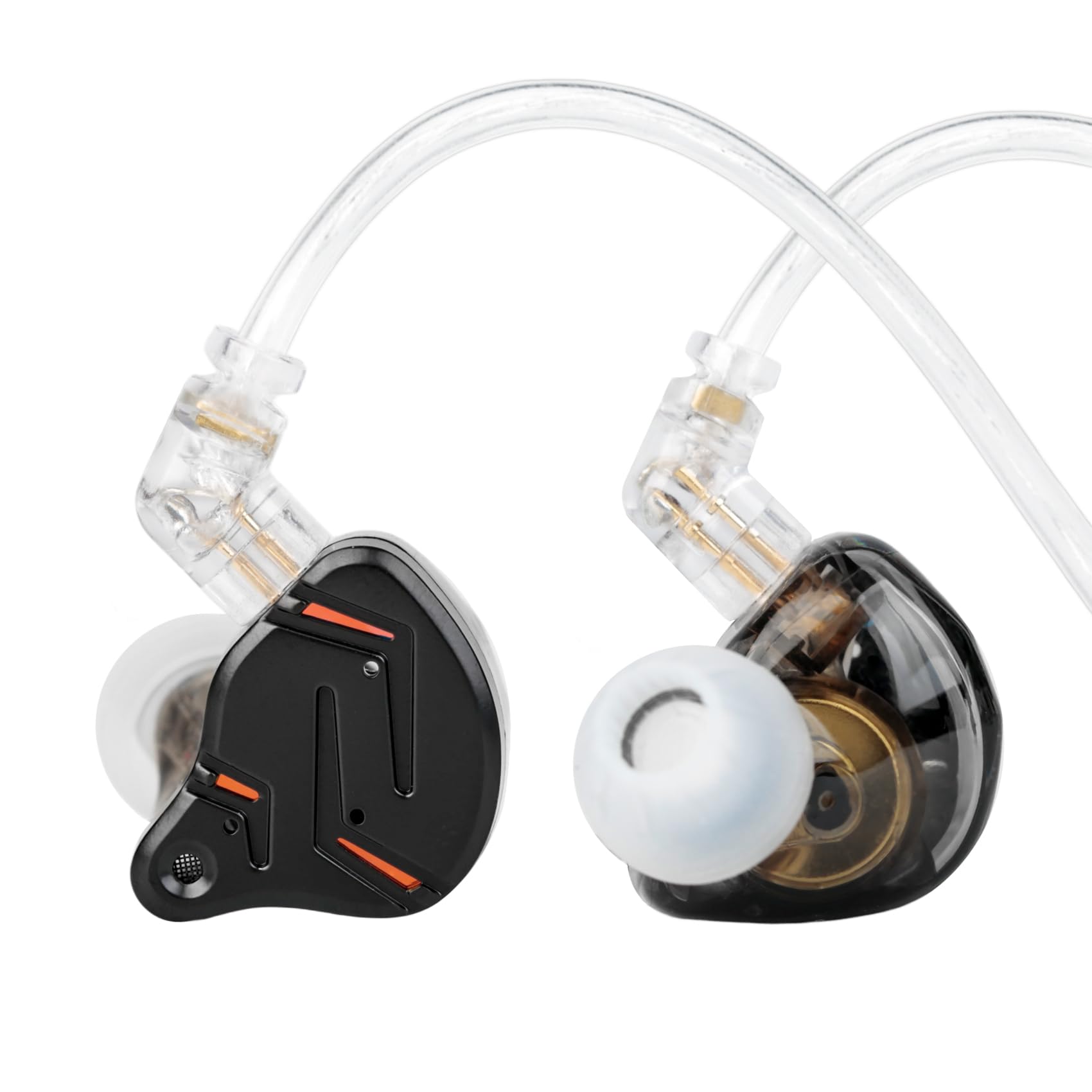
KZ ZS10 Pro Hybrid IEM

89 /100
Sound Score Excellent

Key details

Connector
2-pin
Impedance
24 ohm
Isolation
Up to 26dB
Driver Config
4BA+1DD
View on Amazon

Five drivers per side and a 24-ohm impedance make the ZS10 Pro an easy partner for body-pack transmitters. At this price, most wired monitors settle for a single dynamic driver; this KZ pairs four balanced-armature drivers with one dynamic driver per side. The hybrid tuning is crisp and dynamic: the balanced-armature drivers carry the upper mids and treble, while the dynamic driver anchors the low end. That separation is immediate, giving cymbal work and kick drum their own space instead of blending the mix into a single wash. The low impedance also keeps volume easy to match with body-pack transmitters, so you're not fighting for gain on stage.

Budget-conscious musicians who want multi-driver detail are the right audience. The stock cable is short for body-pack routing and can feel cheap, and one-side output loss at the connector has been noted; a spare 2-pin cable is the practical workaround. This is a monitor for buyers who are comfortable with aftermarket tips.

Build quality and design hold up at this price, and the detachable 2-pin connector works with standard replacement cables, so a worn lead doesn't force a full earpiece replacement. The shell feels solid in the hand, and the printed back plates give it more personality than typical all-black housings. The ZS10 Pro covers practice-room monitoring, podcasting, and general listening from one earpiece, which is a wide range of use for a monitor at this price.

💡 Start with low gain on a body-pack transmitter; the 24-ohm impedance reaches volume quickly.

Pros

  • Hybrid five-driver tuning delivers crisp, dynamic sound with clear instrument separation.
  • Strong value at a budget price for musicians moving up from single-driver earbuds.
  • Build quality and design punch above the entry-level price point.

Cons

  • Shell shape can loosen during movement in some ears, so a deep seal may require aftermarket tips.
  • Passive isolation depends on a firm eartip seal, so the 26 dB figure isn't automatic for every user.
Our verdict

Match this KZ with foam tips and it delivers five-driver detail at a price that keeps it a sensible first hybrid monitor.

Check Latest Price
3

Best Stage-Ready Accessory Pick

BASN Bmaster 2Pin

90 /100
Sound Score Outstanding

Key details

Connector
2-pin
Impedance
34 ohm
Isolation
Strong passive
Driver Config
Triple driver
View on Amazon

The BASN Bmaster 2Pin puts the complete stage kit in the box: ergonomic over-ear hooks, strong passive isolation, foam and silicone tips, and a 6.3mm adapter for consoles. That is the difference between this and a bare IEM: you can unbox it, seat the foam tips, and walk into a gig without ordering extra parts.

On stage, the over-ear hooks keep the shells anchored while drumming, and the foam tips expand to block incoming room sound. The result is a quieter monitor mix with less need to push body-pack volume. The triple-driver tuning keeps vocals clear and the stage mix balanced, without the exaggerated bass of a consumer IEM. The 34-ohm impedance also drives cleanly from a body-pack receiver, so no separate amplifier is needed.

This is for church and worship team musicians, gigging drummers, and vocalists who want one kit to cover their monitoring needs without hunting for adapters at sound check. It is not a zero-maintenance cable design; the 2-pin connector is a wear point, so keep a spare cable in the gig bag if you rely on this pair nightly.

Pros

  • Vocals come through clear and crisp, with a balanced stage mix that keeps lyrics intelligible.
  • Ergonomic shells and over-ear hooks stay planted during drumming and movement.
  • High passive isolation cuts stage volume, so you can monitor at lower levels.
  • The kit includes foam and silicone tips plus a 6.3mm adapter, covering most gig connections.

Cons

  • In loud stage settings, the 2-pin connector can deliver intermittent channel cutouts.
  • A hard-gigged unit can lose output on one side after several months of use.
Our verdict

The complete kit and on-stage comfort make this the pair to grab when you want to be ready at sound check without a drawer full of extra parts.

Check Latest Price
4

Best Budget Fit for Drummers

CCZ Yinyoo Melody

88 /100
Sound Score Excellent

Key details

Connector
2-pin
Impedance
16 ohm
Isolation
Driver Config
1DD+1BA
View on Amazon

At 2.3g per earpiece, the Melody is the lightest shell in this budget group, and the ergonomic contour holds firm without the twist-and-shove of heavier monitors. The housing sits flush enough to work around daith piercings, which is rare at any price. This is a fit-first monitor before it is a sound-first monitor, and that ordering matters for drummers who spend entire sets moving.

The 1DD+1BA tuning lands on the balanced side of the spectrum rather than a bass-forward V-shape. Cymbal wash and snare transients stay separated, and the dynamic driver adds enough low end to feel the kick without swallowing the mix. For first-time buyers, that combination reads as detailed and engaging rather than piercing or muddy. Low impedance leaves headroom when driven from a bodypack.

The shell stays put through long practice sessions and live sets, and the detachable 2-pin connector keeps replacement straightforward if the stock cable ever needs changing. The light housing also reduces ear fatigue during multi-hour rehearsals. For drummers, this is a monitor you can forget you are wearing.

Best for drummers and first-time IEM buyers who put secure, lightweight fit above all else. The tradeoff is durability: some units can develop channel imbalance or nozzle separation after months, and the stock tips do not provide high-grade isolation on very loud stages. For lighter practice use and backup duty, that balance works; heavy touring musicians should look at the top pick.

💡 Run the Melody from a clean bodypack output and keep a braided patch cable in the kit bag for the calmest stage sound.

Pros

  • Detailed, engaging sound for a budget hybrid.
  • Comfortable, ergonomic shell with a secure grip; works even with daith piercings.
  • Strong budget option for drummers.

Cons

  • The stock cable tangles easily; a braided replacement cleans up stage use.
  • Buzzing or hissing can appear with certain headphone outputs or bodypacks.
Our verdict

For drummers who want to forget the earpiece is there, this fit-first hybrid stays out of the way and sounds good doing it.

Check Latest Price
5

Best Neutral Pro-Brand Alternative

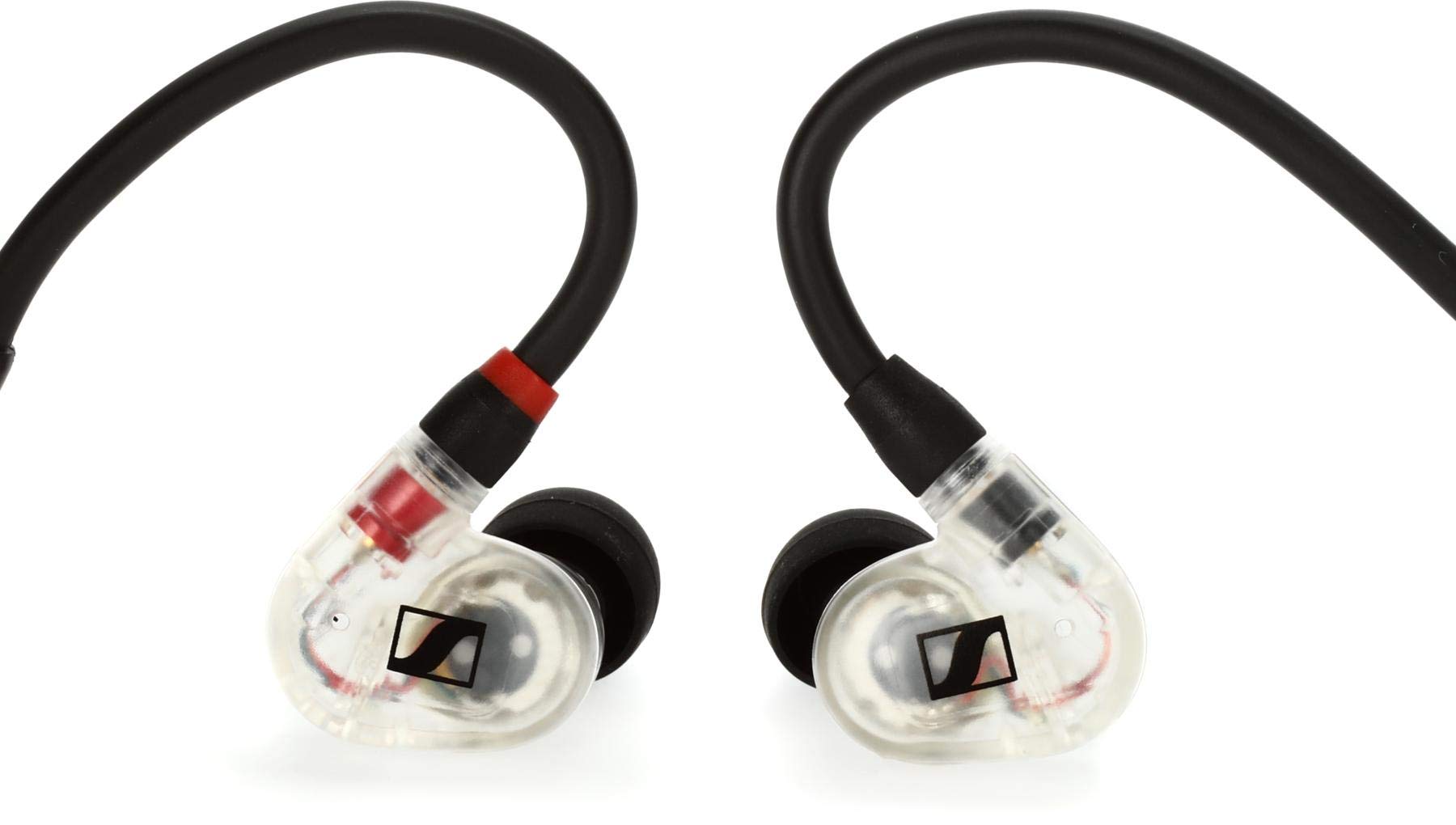
Sennheiser IE 100 Pro

85 /100
Sound Score Excellent

Key details

Connector
Detachable
Impedance
20 ohm
Isolation
Driver Config
10mm dynamic
View on Amazon

Sennheiser's clean, neutral tuning arrives in a compact single-dynamic-shell design that stays unobtrusive on stage. Where the top pick leans on low-end fullness for stage presence, the IE 100 Pro keeps the mids forward and the sound honest — a good match for vocalists who want to hear their own voice rather than the kick drum.

The midrange honesty that makes this monitor appealing is the flip side of a lean low end, and some units can develop one-sided output after months. Drummers who need hard-hitting lows should consider the top pick.

This is a strong match for vocalists and guitarists who want Sennheiser's tuning, a compact wired shell, and a detachable cable.

Pros

  • Clean, neutral Sennheiser sound with good detail across the midrange.
  • Solid value for a recognized pro-audio brand in the mid-range tier.
  • Comfortable once a proper seal is achieved; foam tips make the fit secure.

Cons

  • Earpieces can work loose on certain ear shapes; foam tips improve hold.
  • The build favors neutral tuning over maximum durability; rough use is outside its comfort zone.
Our verdict

A credible neutral monitor for vocalists and guitarists who want Sennheiser's tuning in a compact wired shell.

Check Latest Price
6

Best Premium Hybrid Upgrade

BASN Bmaster5

85 /100
Sound Score Excellent

Key details

Connector
Pentaconn
Impedance
12.5 ohm
Isolation
Good passive
Driver Config
1DD+4BA
View on Amazon

The 1DD+4BA hybrid tuning gives the Bmaster5 a layered, vocal-forward sound with controlled lows, while Pentaconn connectors and the premium aluminum case lift it above the usual plastic-bodied monitor kit. It is aimed at stage players who want the extra resolution from a five-driver array without giving up a wired, body-pack-friendly design.

At 104 dB sensitivity and 12.5 ohms, it pairs cleanly with body-pack transmitters, and the included cables keep backup options close at hand. It suits drummers and working musicians who want more mix detail than the standard stage monitor's single-driver sound and who are willing to fine-tune the eartip seal; fit varies with ear shape, so the stock tips are a starting point, not the final answer. This is not a budget stage bargain, and budget-conscious players should look to the lower-priced complete-kit alternative instead.

On stage, the Bmaster5 reads as a premium product: the hard case fits in a stick bag, the 12 tips cover most ear shapes, and the five-driver tuning holds together at high output levels. The low impedance also helps it work from a range of wired transmitters without an extra amp, keeping the setup simple for travel.

💡 Keep the spare cable in the aluminum case's secondary slot for quick swap between sets.

Pros

  • Hybrid tuning keeps vocals crisp and lows balanced in a live mix.
  • Aluminum case, two cables, and 12 tips make a complete travel kit.
  • Delivers more stage resolution than the premium price tag implies.

Cons

  • Cable wear and channel cutouts can surface during extended touring use.
  • Passive isolation is solid but not sealed enough for the loudest monitor wedges.
Our verdict

Working drummers who want a higher-resolution stage mix and a hard-shell travel kit will get their money's worth here.

Check Latest Price
7

Budget V-Shape

KZ ZST Pro X

91 /100
Sound Score Outstanding

Key details

Connector
Detachable
Impedance
40 ohm
Isolation
Driver Config
1BA+1DD
View on Amazon

Strong V-shaped tuning and clear instrument separation make the ZST Pro X a sound-first budget pick for a beginner drummer practicing with backing tracks or a module. The stock cable is short for body-pack use, yet the detachable cable design accepts a longer replacement before that becomes a stage issue. The shell is large for small ears, so fit depends on ear shape and may require a careful tip search. These boundaries hold it back from the top stage-monitor picks, but the tuning and build keep it a strong budget value.

Pros

  • Punchy V-shaped tuning with strong instrument separation for a budget price.
  • Build quality holds up well for the money.

Cons

  • Certain sources can introduce static or hiss into the signal.
  • Fit can be difficult to dial in for smaller ears.
Our verdict

For a beginner drummer who prioritizes sound and will swap in a longer cable, the ZST Pro X delivers strong budget value; smaller-eared players should look at the slimmer options in this comparison.

Check Latest Price
8

Budget Listening

CCA CRA

87 /100
Sound Score Excellent

Key details

Connector
2-pin
Impedance
25 ohm
Isolation
Driver Config
Dynamic
View on Amazon

The CCA CRA brings strong bass, clear highs, and a detachable 2-pin cable at a budget-friendly price. The V-shaped tuning sounds lively for music, gaming, and casual listening, and the lightweight shells keep long sessions comfortable. This is a listening-first earbud: shells may not stay put without deep insertion, which makes fit a boundary for stage monitoring. The tuning is fun rather than neutral, so drummers should not expect a flat monitor sound. For a cheap backup or desk-side set, that tradeoff is easy to live with.

Pros

  • Fun V-shaped tuning delivers punchy bass and clear highs for casual listening.
  • Strong sound quality for the budget, making it a low-risk backup set.
  • Lightweight shells remain comfortable over longer listening sessions.

Cons

  • The stock cable is short for body-pack or desktop monitoring, so the jack needs to sit close.
  • Some units can develop one-sided audio after months of use, so a backup pair is worth having.
Our verdict

Buy it as a budget-friendly backup for casual listening and low-stakes practice, not as your primary stage monitor.

Check Latest Price
9

Backup IEM

DCMEKA A09 Dual Driver IEM

89 /100
Sound Score Excellent

Key details

Connector
MMCX
Impedance
32 ohm
Isolation
Driver Config
Dual dynamic
View on Amazon

The A09 delivers a big, clear sound for very little money, pairing dual-dynamic drivers with a detachable MMCX cable at an entry-level price, making it a natural practice-room IEM and a sensible spare in the gig bag. Once the right eartips are fitted, it sits comfortably and stays secure for longer sessions. Reliability is the tradeoff at this price: a channel can go silent, so the A09 suits backup duty rather than a main monitor slot; that lower-stakes role is where it makes the most sense.

Pros

  • Big, clear output at a budget price, with enough detail for practice without harsh treble.
  • Detachable MMCX cable makes the connection replaceable and adds flexibility if the stock cable gets worn.
  • Comfortable and secure once the right eartips are fitted, with enough stability for longer sessions.

Cons

  • On a loud stage, the passive seal can be softer than the isolation claim suggests; quieter monitoring is its better setting.
  • The shell is not built for heavy tour schedules; repeated packing and unpacking may take a toll.
Our verdict

For practice rooms and low-stakes gigs where a spare is in the bag, the A09 is a sensible value; do not make it the only monitor you carry.

Check Latest Price
10

BA Detail

CCA KZ AS16 Pro

84 /100
Sound Score Excellent

Key details

Connector
2-pin
Impedance
15 ohm
Isolation
Driver Config
8BA per side
View on Amazon

Eight balanced-armature drivers per side deliver clean, detailed sound with bass weight that is unusual for a BA monitor, and the shell stays light enough for long sessions. That combination suits detail-focused listening, gaming, and side-stage experimentation. The larger shell is why it sits behind stage-first monitors; for listeners who can seat it comfortably, the detail retrieval is the main draw. A detachable 2-pin cable makes swapping to a longer stage cord simple. Wired, performance-style monitoring is within reach once the eartip seal is right.

Pros

  • Clean, detailed balanced-armature sound with bass weight that anchors the low end.
  • Sixteen drivers per pair for a mid-range price
  • Lightweight shell keeps long listening sessions comfortable despite the driver load.

Cons

  • Smaller ears may not hold the shell securely during stage movement.
  • Channel output can vary between units, so a quick left-right check before critical listening is worthwhile.
Our verdict

Keep it for at-home detail listening or gaming, and for side-stage experimentation if you can confirm the fit first. Stage-first drumming needs a shell that seats without extra effort.

Check Latest Price

How to Choose

Passive Isolation and Eartip Seal

Passive isolation comes from the air-tight seal between the eartip and your ear canal. Every decibel of bleed that leaks in competes with your monitor mix and forces you to turn the volume higher.

Foam tips expand to fill the canal and hold that seal when you move your head or hit hard. If the stock silicone tips do not lock in, a set of foam tips is cheaper than a new pair of monitors.

Detachable Cable and Connector

MMCX and 2-pin connectors let you replace the cable when a channel starts cutting out, which is the most common failure mode on stage. A monitor with a fixed cable is disposable; a monitor with a detachable cable is serviceable.

MMCX connectors have a twist-lock feel and swivel slightly; 2-pin connectors click in with a firmer latch. Both work, but if you plan to use aftermarket cables, confirm the connector polarity matches your body pack setup.

Driver Configuration and Tuning

Multi-driver hybrids split the frequency band between a dynamic woofer and balanced-armature tweeters, which can give you more separation and detail. A single dynamic driver cannot resolve as much micro-detail, but it delivers a cohesive, natural sound and often a simpler crossover.

For drummers, the low end matters most: a kick drum needs physical impact. Look for a tuning with solid low-end presence rather than a flat or bass-shy signature, no matter how many drivers are inside.

Cable Length

Body packs sit on your hip, so the cable needs to reach from your ear to your waist without tugging when you move. Many budget IEMs ship with a 1.2-meter cable that is fine for a phone but pulls at the connector when you turn your head toward the hi-hat.

A right-angle connector at the pack end helps keep the connection secure in a crowded rack. If the stock cable is too short, a detachable cable upgrade is easy; if it is too long, cable management gets messy.

Impedance and Sensitivity

Low-impedance, high-sensitivity monitors like the KZ ZS10 Pro (24 ohm, 111 dB) reach performance volume from almost any body pack. Higher-impedance models need more gain and may sound quiet if your monitor mixer lacks headroom.

Sensitivity matters more than impedance for the final volume: every 3 dB of sensitivity doubles the perceived output. A monitor rated below 100 dB can leave you cranking the trim during a loud chorus.

Frequently Asked Questions