9 Best in-Ear Monitors for Musicians in 2026: Cable-First Picks

Best in-ear monitors for musicians with replaceable cables, stable stage fit and strong isolation for live and rehearsal use.

Musician IEM listings are full of driver counts and HiFi claims, but the most common real-world problem is the cable, not the driver. A stiff cable or weak MMCX connection can cut one side of the mix during a gig. For most players, a detachable cable is the difference between a quick repair and replacing the entire earpiece.

The same logic applies to fit. A poor seal makes bass thin and lets full stage volume through, even with high driver counts. Foam tips usually restore low-end and isolation faster than swapping to a pricier IEM. The smarter purchase puts a replaceable cable and stable over-ear ergonomics ahead of driver marketing.

That does not mean budget monitors are right for everyone; touring players may need more robust parts. But matching the IEM to the job matters more than paying for two extra balanced armatures.

About the Sound Score: This comparative score is calculated from a product's published customer rating and review volume. It is not a laboratory measurement or a hands-on test result.

1

Best Overall

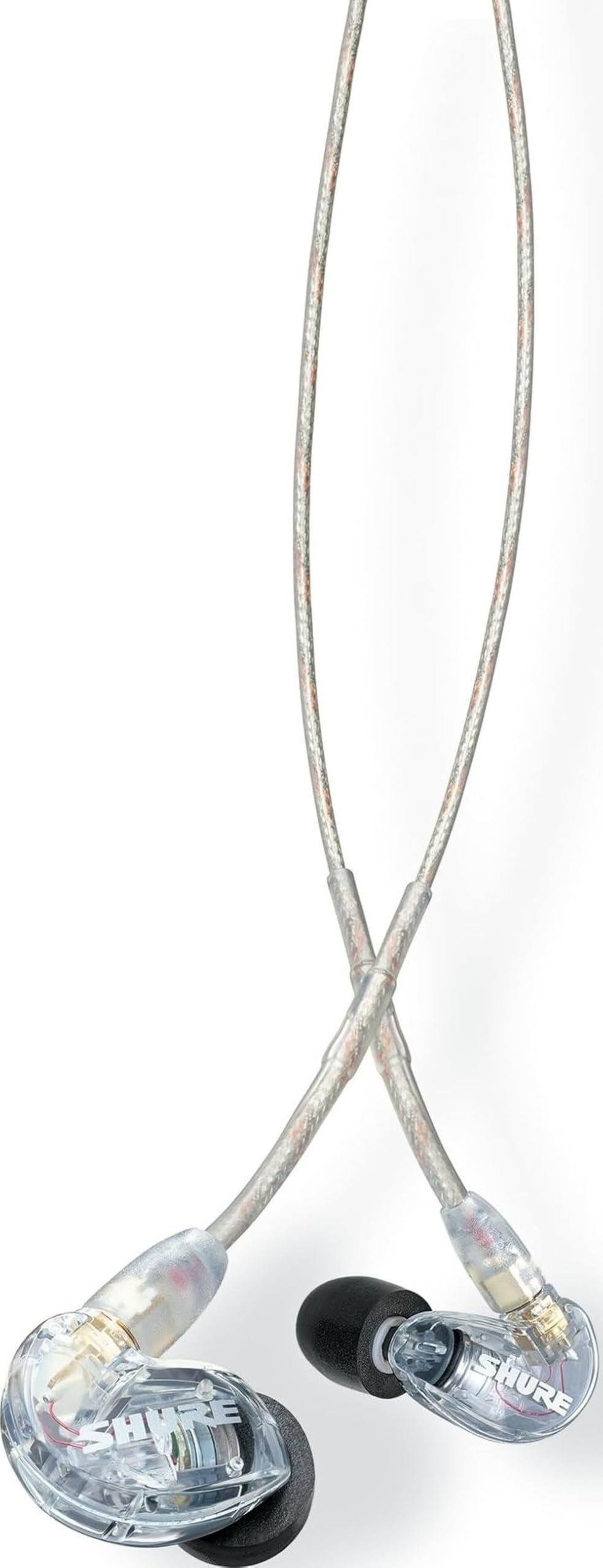
Shure SE215 Pro

89 /100
Sound Score Excellent

Key details

Detachable Cable
Detachable MMCX cable
Driver Configuration
Single dynamic MicroDriver
Noise Isolation & Tips
37 dB isolation
Impedance / Sensitivity
10 ohms
View on Amazon

Balanced single-dynamic tuning keeps the midrange and bass clear enough for stage monitoring, without the exaggerated low end of consumer-tuned earphones. The detachable MMCX connection is the practical anchor: a damaged cable can be replaced rather than forcing a full earphone swap. A single dynamic driver also avoids multi-driver crossover unevenness, so monitor mixes stay coherent even when the floor wedge is loud. The result is a monitor that favors intelligibility and isolation over showroom bass, which suits live vocals and drum mixes.

The 37 dB passive isolation rating is the headline feature for a loud stage or commute. By blocking external sound before it reaches the driver, the SE215 Pro lets you monitor at lower volume and protects your ears without relying on batteries. That sealed low end also stays intact, because ambient bleed is not there to cancel bass at moderate listening levels. That isolation also reduces how hard you have to push the driver, which keeps long sessions less fatiguing.

The over-ear wire routing and swiveling nozzles keep the shells anchored during head movement, and the included foam tips create a consistent seal for bass-correct monitoring. The shallow housing shape can sit more comfortably than deep-insertion custom-style monitors, though it asks more from tip selection. A tight seal is the main prerequisite, and the foam sleeves provide that more consistently than the silicone sleeves.

Working musicians who need wired monitoring get the strongest match: drummers and vocalists gain isolation, travelers gain passive blocking. Listeners with very small or pressure-sensitive ear canals sit outside the comfort envelope; ear shape determines whether the stock sleeves can deliver a bass-correct seal, and some ears will need foam or aftermarket options. If triple-driver clarity or a hyper-detailed treble response is the priority, the reference-grade option in this set makes the better comparison.

Against budget multi-driver hybrids that pack added balanced armatures, the SE215 Pro puts spend into serviceability and seal stability. That trade-off is deliberate: fewer drivers but a mature single-dynamic voicing, a replaceable cable, and a carrying case included in the box. For stage use, a working spare cable matters more than an extra armature, and this product makes that spare practical. That is the right hierarchy for a wired monitor earpiece.

💡 Start with the foam sleeves if the silicone tips feel shallow or lose low end, and keep a spare MMCX cable on hand for long sessions.

Pros

  • Balanced, detailed sound with class-appropriate bass keeps stage monitoring clear.
  • Passive isolation blocks stage and commute noise without needing batteries.
  • Detachable MMCX cable and carrying case support long-term professional use.
  • Quality build holds up for backline use and repeated cable routing.

Cons

  • Stock sleeve fit is ear-dependent and may require foam or aftermarket tips for a bass-correct seal.
  • Intermittent audio or one-sided driver output can appear in some units within months.
Our verdict

For stage use where isolation and serviceability decide longevity, this is the monitor to beat at its price.

Check Latest Price
2

Best Multi-Driver Value

BASN Bmaster

90 /100
Sound Score Outstanding

Key details

Detachable Cable
Two detachable MMCX cables
Driver Configuration
Triple-driver hybrid BA plus DD
Noise Isolation & Tips
Sound isolation
Impedance / Sensitivity
16 ohms
View on Amazon

The Bmaster separates itself from the dual-driver budget option in this set by adding hybrid multi-driver detail and a more vocal-forward presentation without jumping into reference armature pricing. Acoustic guitars, keys, and vocalists sit cleanly in the mix, with enough articulation to make performance cues easier to follow.

Fit stability and passive isolation are clear strengths during live use. The shell shape sits securely enough for drummers and vocalists to move without losing seal, and the isolation keeps stage bass and room wash from crowding the monitor mix. The high-frequency detail is enough to hear pick attack, cymbal bleed, and vocal diction clearly.

The included dual MMCX cables create a practical backup setup for church and rehearsal use. Because passive isolation reduces stage bleed, players can run the monitor feed at a lower level, which helps manage fatigue across long sets.

This is best matched to church, worship, and rehearsal players who want multi-driver clarity without paying for a reference triple-armature system. The tradeoff is durability consistency rather than sound quality: driver or connection performance can vary, and the cable is the first thing to check rather than the shell.

💡 Keep the second cable in your stage bag and swap at the first sign of intermittent contact to avoid losing a monitor channel during rehearsal.

Pros

  • Clear, detailed multi-driver sound with strong vocal presence for stage monitoring.
  • Secure, stable fit that holds during vocal and instrumental movement.
  • Generous accessory package with two detachable MMCX cables included.
  • Effective passive isolation for loud stage and rehearsal environments.

Cons

  • The stock MMCX cable can develop intermittent contact and may need replacement.
  • Driver or connection consistency can vary between units over extended use.
Our verdict

Choose this when you want multi-driver stage clarity and a spare cable in the box, and you are willing to treat the cable as a service item.

Check Latest Price
3

Best Budget Stage Monitor

BASN Bsinger Pro

88 /100
Sound Score Excellent

Key details

Detachable Cable
Two detachable MMCX cables
Driver Configuration
Dual-driver hybrid
Noise Isolation & Tips
38 dB isolation
Impedance / Sensitivity
20 ohms / 101 dB
View on Amazon

The Bsinger Pro pairs a dual-driver hybrid tuning with two detachable MMCX cables and a claimed 38 dB passive isolation, a practical stage-monitor package at a budget price. Against the triple-driver option in this set, it trades a measure of upper-midrange resolution for a lower entry price and a second cable in the box. That positions it as an accessible first wired IEM or backup rather than an engineer's reference monitor.

The sound is clear and direct, with enough low-end weight for bass and drums without burying vocal and snare cues. A secure fit and high passive attenuation help through long sets and loud stage environments, and the included mic cable adds practice-room convenience. This is a monitor tuned for on-stage clarity, not flat analytical listening.

Comfort holds up for long rehearsals and services, and the 38 dB isolation rating supports hearing protection in loud stage setups. Budget pricing makes it practical to keep a second pair in a backup kit.

Best for gigging musicians on a tight budget, drummers who need hearing protection with a clear band mix, and church or worship teams adding wired in-ear monitoring. A minority of units may develop intermittent connections after a few months, so keep a spare MMCX cable on hand and treat this as a backup-friendly stage monitor rather than a single premium IEM.

💡 Keep the spare MMCX cable in the gig bag and reseat the connector if the signal becomes intermittent.

Pros

  • Clear dual-driver sound with enough isolation for live band monitoring.
  • Comfortable fit and seal hold up through long sets and loud stages.
  • Strong value for gigging players, with two detachable cables included.
  • Housing quality sits above expectations for this price.

Cons

  • Stock MMCX cable can require reseating or replacement when the signal becomes intermittent.
  • Not for players seeking a single no-maintenance premium IEM rather than a backup pair.
Our verdict

The Bsinger Pro fits budget-conscious stage musicians who need clear dual-driver sound and can handle occasional cable upkeep.

Check Latest Price
4

Best Budget Upgradeable IEM

KZ ZS10 Pro

89 /100
Sound Score Excellent

Key details

Detachable Cable
Detachable gold-plated OFC cable
Driver Configuration
4 BA + 1 DD hybrid
Noise Isolation & Tips
Impedance / Sensitivity
24 ohms / 111 dB
View on Amazon

The KZ ZS10 Pro leads with a 4 balanced-armature plus 1 dynamic driver array, 111 dB sensitivity, and a detachable gold-plated OFC cable. That driver count gives it a detail-forward presentation with fast transient recovery across the 7 Hz to 40 kHz range. Compared with the stage-focused top pick, this set trades cable and fit serviceability for more monitoring information: hi-hats, string transients, and mix reverbs stay separated at a budget-friendly price.

The five-driver arrangement extracts detail that single-dynamic stage monitors may round off. Snare ghost notes, string harmonics, and spatial cues in games stay distinct even as the mix gets busy. The build holds up through routine cable swaps and tip changes, and the detachable connection makes those adjustments practical.

This is for budget audiophiles and musicians who like to tweak cables and tips, and for studio or gaming listeners who want micro-detail without a reference price. The buyer profile includes a willingness to replace a short, thin stock cable, match the larger shells to stable ear anatomy, and drive the earphones from a clean source to avoid audible hiss. If that fits, the upgrade ecosystem around this model opens up aftermarket cables, tips, and storage options.

💡 Budget for an aftermarket cable and tip set up front; the stock cable is usable but short, and the right tips do much of the fit work.

Pros

  • Five-driver hybrid extracts crisp transient detail for monitoring and gaming.
  • Budget-friendly price keeps multi-driver monitoring accessible.
  • Shell construction withstands routine cable swaps and tip changes.
  • Long listening sessions stay comfortable when tip seal and fit are locked in.

Cons

  • Stock cable runs short and thin for bodypack use out of the box.
  • High sensitivity can reveal hiss or static from a noisy source.
  • Larger shells can leave smaller ear canals without a secure seal.
Our verdict

This is a detail-first budget IEM for buyers who treat cable and tip upgrades as part of the purchase, not a flaw. It suits stationary monitoring, gaming, and practice work where micro-detail matters more than turnkey stage fit.

Check Latest Price
5

Neutral Sennheiser Stage Option

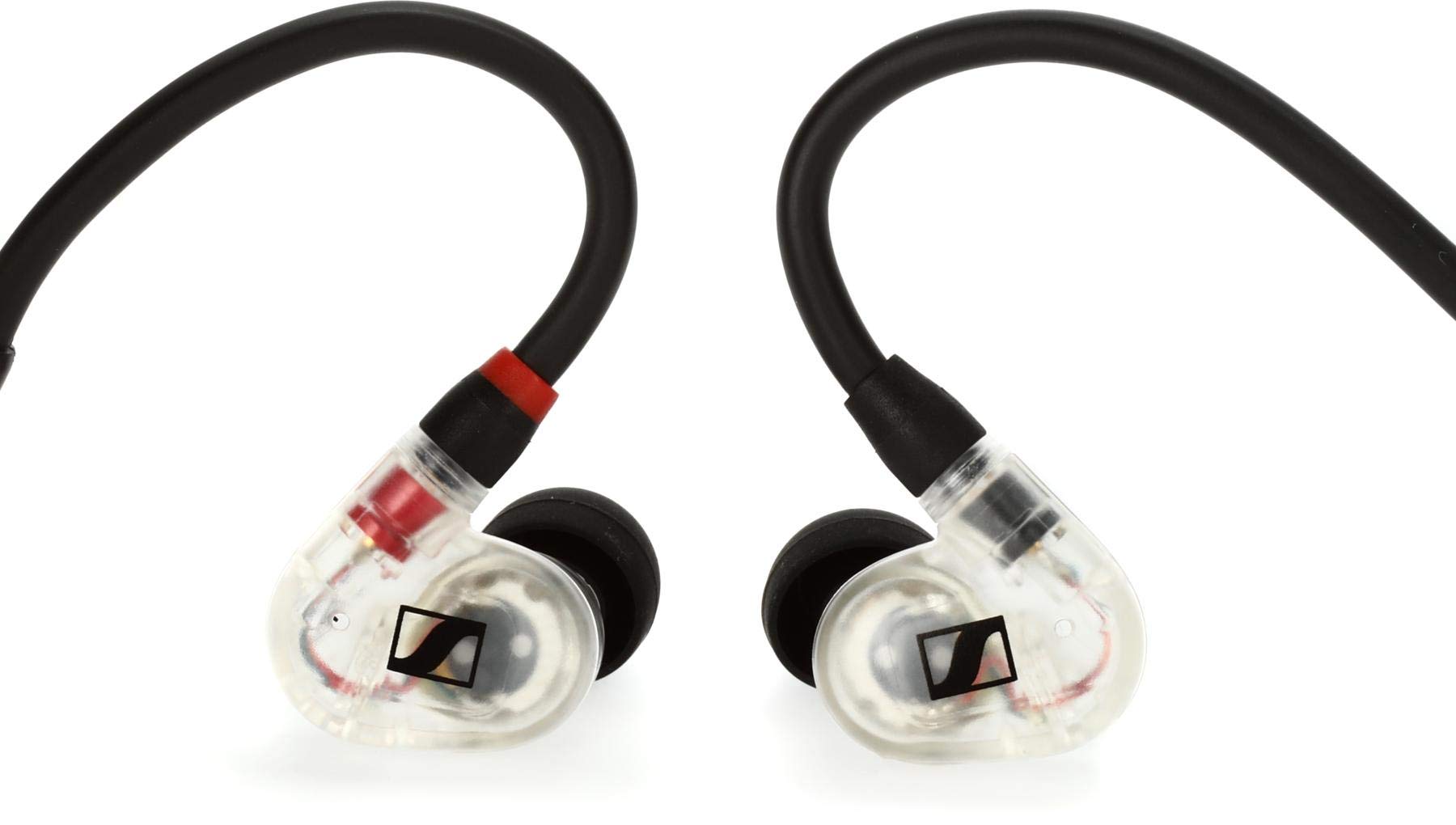
Sennheiser IE 100 Pro

85 /100
Sound Score Excellent

Key details

Detachable Cable
Detachable stage cable, ear hooks
Driver Configuration
Dynamic 10mm broadband transducer
Noise Isolation & Tips
Sound isolation
Impedance / Sensitivity
20 ohms / 115 dB
View on Amazon

The IE 100 Pro centers on a 10mm dynamic broadband transducer and a detachable stage cable, tuned for players who need an uncolored reference monitor rather than a consumer-oriented low-end. The neutral voicing delivers detail without adding the low-end lift common in consumer earphones. Its 115 dB sensitivity keeps bodypack output usable without pushing the driver hard, and the 20-ohm load works with standard headphone amps. Compared with the top pick, this Sennheiser leans into clarity and a more neutral frequency response that favors midrange consistency.

The detachable stage cable with pre-formed ear hooks keeps replacement straightforward, and the ear hooks support secure over-ear placement during movement. The broadband transducer preserves instrumental attack and vocal intelligibility in dense rehearsal mixes. Build quality is backed by the replaceable cable and a compact earpiece profile that can stay comfortable through long sessions. That makes the IE 100 Pro a practical wired option for rehearsal and home studio use.

This suits musicians who already prefer neutral, uncolored monitoring and are willing to shape seal and low-end perception through tip choice. It is not the right path for bass-heavy genres or for anyone who wants a sealed low-end without tip experimentation.

💡 Spend time with foam or aftermarket tips to get the seal and low-end perception this tuning expects.

Pros

  • Clear, balanced monitoring sound at a mid-range price.
  • Comfortable fit for varied ear shapes during long sessions.
  • Strong value for a mid-range detachable-cable stage IEM.
  • Detachable stage cable makes cable wear replaceable without swapping the earphone.

Cons

  • Lean low-end tuning can leave bass-heavy material sounding thin.
  • Stock tips may not provide a consistent seal; isolation shifts with aftermarket tip choice.
  • One earbud can lose output after extended use.
Our verdict

The Sennheiser IE 100 Pro suits musicians who want neutral monitoring and a replaceable cable without extra drivers.

Check Latest Price
6

Studio-Grade Reference

Shure SE535 Pro

86 /100
Sound Score Excellent

Key details

Detachable Cable
Detachable MMCX cable
Driver Configuration
Triple high-definition BA drivers
Noise Isolation & Tips
Sound isolation
Impedance / Sensitivity
36 ohms
View on Amazon

Shure's SE535 Pro uses a triple balanced-armature array to deliver transparent, detail-forward monitoring with high passive isolation. Its midrange and treble precision separate it from the stage-focused top pick, which trades some resolution for a more forgiving on-stage fit and lower price.

Acoustic instrumentalists, vocalists, touring musicians, and frequent flyers with quality sources and amplifiers get the most from this design. Deep-insertion fit and restrained bass make it a specialized tool for critical listening rather than a universal stage pick; players wanting a relaxed fit or bass-forward energy should expect a mismatch.

The detachable MMCX cable gives owners a service path for cable replacements, and the stable nozzle keeps isolation high when the tip seal is correct. The neutral tuning resolves layered vocals, string transients, and room ambience in dense monitor mixes. The 36-ohm load works with modern interfaces and dedicated players, letting the triple-driver array scale with cleaner amplification.

Critical listeners should treat the SE535 Pro as a monitoring instrument rather than a casual earbud. It fits dedicated stage or travel use where high isolation and midrange clarity justify the investment.

💡 A stable tip seal changes how the SE535 Pro isolates and sits; audition the included sleeves and aftermarket foam before stage use.

Pros

  • Crystal-clear, natural sound reveals fine mix detail
  • High passive noise isolation blocks stage and cabin noise
  • Premium build quality and detachable cable support long-term service

Cons

  • Long-wear comfort can vary by ear shape and tip selection
  • Left-channel output can cut out in some units
Our verdict

For acoustic players and critical listeners, the SE535 Pro is the transparent reference monitor of this set.

Check Latest Price
7

First-Time Buyers

CCZ Yinyoo Melody

88 /100
Sound Score Excellent

Key details

Detachable Cable
Detachable 2-pin 4N OFC cable
Driver Configuration
1DD + 1BA hybrid
Noise Isolation & Tips
Impedance / Sensitivity
16 ohms / 110 dB
View on Amazon

The CCZ Yinyoo Melody puts a hybrid driver setup in an entry-level shell, with clear detail and balanced low end that make practice sessions easier to read. Light shells and a secure fit help during longer student rehearsals, while the detachable cable gives it a practical spare-pair role. Durability and isolation consistency vary enough that occasional hissing or one-sided audio keep it out of touring-grade duty. It fits budget-conscious first-time buyers, students, and musicians who want a low-cost backup.

Pros

  • Clear hybrid detail and balanced low end make practice monitoring easier at an entry-level price.
  • Strong value for money justifies use as a first wired IEM or low-cost backup.
  • Light shells and a secure fit keep practice sessions comfortable.

Cons

  • In a quiet practice room, hissing or buzzing can appear on some units, so isolation is less predictable without tip changes.
  • With regular cable changes and transport, one-sided audio or nozzle separation can occur over months.
Our verdict

For practice rooms, student rehearsal, or a spare pair in a gear bag, the Melody makes sense; nightly stage monitoring calls for a harder-wearing pick.

Check Latest Price
8

Budget Drummers

DCMEKA A09

89 /100
Sound Score Excellent

Key details

Detachable Cable
Detachable MMCX
Driver Configuration
Dual dynamic drivers
Noise Isolation & Tips
Sound isolation
Impedance / Sensitivity
32 ohms / 96 dB
View on Amazon

Dual dynamic drivers in a metal shell with a detachable MMCX cable give this monitor a clear, engaging sound and a more substantial feel than its budget price suggests. The 32-ohm load is easy to drive from phones, laptops, and headphone amps, and the sealed fit provides helpful passive isolation for loud stages and commutes. It sits below the accessible dual-driver stage monitor as a spare or entry option. The main boundary is longevity: some units may lose audio in one ear within months of regular use.

Pros

  • Dual dynamic drivers deliver clear, punchy sound that outperforms the budget price.
  • Strong passive isolation and a secure fit work well for drummers, commuters, and travelers.
  • Metal shells and a detachable MMCX cable make this feel more substantial than the price indicates.

Cons

  • Extended listening sessions may cause ear soreness for some ear shapes.
Our verdict

Grab this for practice rooms, commutes, or as a backup set when low-cost isolation is the priority.

Check Latest Price
9

Premium Alternative

Xvive T9

87 /100
Sound Score Excellent

Key details

Detachable Cable
48-inch detachable cable, 1/4 adapter
Driver Configuration
Dual Knowles BA drivers
Noise Isolation & Tips
25 dB isolation
Impedance / Sensitivity
59 ohms
View on Amazon

The Xvive T9 centers on dual Knowles balanced-armature drivers, a 48-inch detachable cable, a 1/4 adapter, and 25 dB of passive isolation. That driver setup yields clear midrange detail and controlled low-end response, which helps separate vocals and instruments in a stage mix without muddying the lows. Build quality is a strong point; the shell and cable feel ready for regular monitor use. It is not the reference triple-BA monitor for critical listening, and it is not the long-established road monitor that anchors some stage kits. Long-term fit and road record are less settled than older stage IEMs, which holds it back from top-tier placement. It fits musicians who want a premium dual-BA alternative and already know their preferred tips.

Pros

  • Crisp balanced-armature detail with controlled sub-bass for clear stage monitoring
  • Solid shell and cable construction that holds up to stage use
  • Snug, isolating fit with comfortable seating

Cons

  • The single 48-inch detachable cable leaves no spare for quick on-stage swaps.
  • Rated isolation of 25 dB sits below the top pick's 37 dB, so loud stage mixes can demand foam tips.
Our verdict

Choose the Xvive T9 if you want a premium dual-BA stage monitor with controlled clarity and already know your preferred tips and cable length.

Check Latest Price

How to Choose

Driver Configuration

Single dynamic drivers tend to produce a warmer, forgiving tone and are easier to drive cleanly from a bodypack or headphone amp.

Multi-BA and hybrid designs add detail and speed, but they can expose hiss or harshness from noisy monitor mixes. A bass player may prefer a dynamic low-end shelf, while a vocalist may want the extra midrange clarity of a balanced armature.

Detachable Cable

A detachable cable turns the most common point of wear into a quick repair. MMCX or 2-pin connectors take most of the flex and tugging that happen during movement, transport, or packing.

If one side cuts out, replacing the cable usually restores the monitor without replacing the earpieces. This is essential for gigging players and worship teams who cannot wait for a repair.

Impedance and Sensitivity

Low-impedance IEMs get loud from phones and bodypacks, but high sensitivity can reveal the noise floor of a budget mixer or wireless receiver.

Higher-impedance models need more voltage and often pair better with professional headphone amps. Pairing a very sensitive IEM with a noisy source will produce audible hiss between songs.

Noise Isolation and Tips

All of these are passive-isolation IEMs: they block sound only when the tip seals the ear canal completely. Isolation ratings assume a deep, stable seal.

Foam tips isolate better and hold bass, while silicone tips are easier to clean and quicker to insert. Thin sound is usually a tip-size problem, not a driver limitation.

Fit and Ear-Hook Design

Over-ear ear hooks transfer cable force away from the earpiece and keep the monitor sealed during movement. Straight-drop designs may work at a desk but often tug loose on stage.

If you sing, drum, or move much, choose an over-ear route with memory wire or a pre-formed hook and select the largest tip that remains comfortable.

Frequently Asked Questions