9 Best In-Ear Monitors for Singers in 2026: Fit and Isolation First

Wired IEMs for singers that stay secure on stage, isolate the mix clearly, and hold up through rehearsals and gigs.

Most wired IEM listings sell driver counts and 'HiFi' tuning, but the difference between a usable stage monitor and a frustrating one comes down to fit, cable quality, and isolation. A hybrid with six drivers means little if it works its way loose during a verse or picks up static from a bodypack.

Singers need a secure over-ear fit, a good seal, and a detachable cable that can be replaced when it wears out. This guide focuses on those real-world boundaries, with budget options that respect a tight wallet and mid-range picks that add vocal clarity without requiring custom shells.

If you are choosing between more drivers and better isolation, remember that isolation wins on a loud stage. A single dynamic driver with a solid seal will serve a vocalist better than a five-driver hybrid with a loose fit.

About the Sound Score: This comparative score is calculated from a product's published customer rating and review volume. It is not a laboratory measurement or a hands-on test result.

1

Best Overall

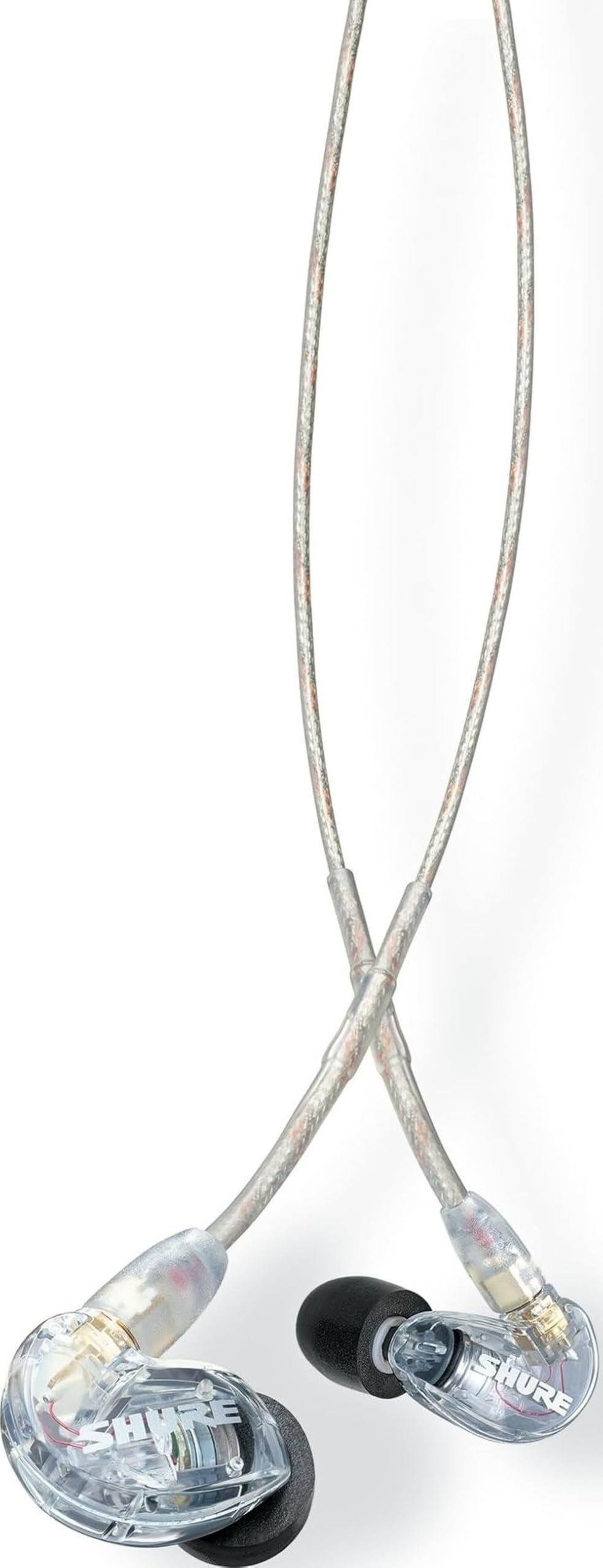
Shure SE215 Pro

89 /100
Sound Score Excellent

Key details

Impedance
10 ohm
Isolation
Up to 37 dB
Sensitivity
Driver Config
Single dynamic
View on Amazon

The Shure SE215 blocks up to 37 dB of ambient sound through a passive over-ear fit, and the detachable MMCX cable gives singers a practical way to replace a damaged cord without replacing the earpieces. Its single dynamic driver produces full-range sound with a bass-forward tilt that helps vocals sit above the band, while the high end stays controlled enough for long monitoring shifts.

The isolation depends on the seal. With the foam tips compressed, inserted, and held until they expand, the noise floor drops and the low end gains weight. The same deep-insertion nozzle is also the main fit boundary: it sits well inside the ear canal, so ears that are sensitive to pressure will notice it. Three tip sizes and foam/soft-flex sleeve options cover a range of ear shapes, and the over-ear hook keeps the cable out of the way, but a proper seal takes deliberate insertion.

This is a monitor for working vocalists, worship/band musicians, and other performers who need to hear themselves over loud stage sound. The isolation clarifies pitch, the over-ear hook keeps the cable routed cleanly, and the replaceable cable makes servicing easier than with glued-in designs. Budget shoppers and anyone with very sensitive ear canals should treat the deep-insertion fit as a boundary before buying. Long-term durability can vary between units, so the cable connection is the first thing to check if one side goes quiet.

Driver-count specs sell headphones, but they do not keep an earpiece seated during a set. The multi-driver alternatives in this price range may add treble detail, yet they can also ship with shorter cables or shells that do not lock into the ear. The SE215 gives up some raw detail in exchange for a fit kit and a user-serviceable cable, which is the trade that matters on stage.

The SE215 carries a premium price within this lineup, but that price is attached to the physical support system: three foam and flex sleeve pairs, a detachable cable, and a body shaped around monitoring use. A singer's money goes toward the parts that get handled, swapped, and adjusted, not toward a longer spec sheet.

💡 Compress the foam tips before insertion and hold them for a few seconds to confirm the seal.

Pros

  • Strong passive isolation cuts stage volume and crowd noise before they reach the mix.
  • Full-range sound with strong bass keeps vocals clear over loud accompaniment.
  • Housing and cable assembly have a professional feel for stage work.
  • The premium price stays reasonable for singers who use it nightly.

Cons

  • Long rehearsals can make the inserted nozzle pressure noticeable.
  • The nozzle sits deep in the ear canal, so a comfortable seal depends on ear shape and tip size.
  • One side can go quiet after months of use in some cases.
Our verdict

For singers and band members working on loud stages, the SE215 is the wired monitor that puts fit and cable service ahead of driver-count specs.

Check Latest Price
2

Best Value Hybrid

KZ ZS10 Pro

89 /100
Sound Score Excellent

Key details

Impedance
24 ohm
Isolation
26 dB passive
Sensitivity
111 dB
Driver Config
4BA + 1DD
View on Amazon

Four balanced armatures plus a dynamic driver deliver crisp, detailed sound that pulls vocals, guitars, and drums apart in a live mix. The tuning leans analytical rather than smooth, so this monitor suits musicians who want to hear individual parts rather than a flattened stage sound.

Gigging drummers and guitarists who want audiophile-style detail at a mid-range price are the right fit. The stock cable is short and can feel cheap, so plan to swap in a longer aftermarket cable before a wired bodypack run; unit-to-unit durability and static behavior can vary.

The 24-ohm impedance and 111 dB sensitivity let a phone dongle or bodypack drive the pair to usable stage volume without extra amplification. The detachable gold-plated connection means the included cord can be replaced without reshelling or soldering.

Pros

  • Four balanced armatures plus a dynamic driver resolve individual instruments in a busy mix.
  • Five-driver detail at a mid-range price
  • Solid build quality and a professional feel for the price.

Cons

  • The 26 dB passive isolation rating depends on tip fit; without a snug seal, stage noise leaks through.
  • One channel may go quiet in some cases; a quick left/right check after purchase is worthwhile.
Our verdict

For drummers and guitarists, the ZS10 Pro is the mid-range value pick; for vocalists on loud stages, the top pick's isolation still wins.

Check Latest Price
3

Best Beginner Stage IEM

BASN Bsinger Pro

88 /100
Sound Score Excellent

Key details

Impedance
18 ohm
Isolation
38 dB claimed
Sensitivity
Driver Config
Dual dynamic
View on Amazon

Two detachable MMCX cables and a complete accessory kit make the BASN Bsinger Pro the fullest wired starter package in this comparison, while the triple-driver sibling focuses on driver count. The included case and cleaning brush cover the shopping that usually follows a first IEM purchase.

Dual-dynamic drivers give vocals a clear, forward presence, and the low end stays controlled enough that kick drums and bass lines do not mask vocal cues. The over-ear cable routing keeps the earpieces planted during movement, which matters for drummers and worship leaders who move between instruments.

Comfort holds up through long rehearsals, and the claimed 38 dB isolation is reachable with the right tip choice. Six tip pairs are included, so most ear shapes can find a seal without ordering extra parts.

First-time IEM buyers, worship team singers, and drummers get the most from this kit because the spare cable and tip selection cover the practical details that usually force a second purchase. Cable and connector QC can vary from unit to unit, so this is better for new IEM users than for touring pros who need a multi-year monitor. If you prefer a single no-frills cable, the extra components will sit unused.

💡 Rotate each MMCX connector until it seats fully before the first set of the day.

Pros

  • Vocal-forward tuning makes lyrics and cue notes easy to follow in a live mix.
  • Two detachable MMCX cables, six tip pairs, a case, and a cleaning brush arrive in one box.
  • Comfortable shell and over-ear routing keep earpieces secure during long rehearsals and drumming.
  • Sound quality holds up at a budget-friendly price, with controlled low end that does not mask vocals.

Cons

  • MMCX connectors can feel loose on certain units, so cable swaps need a quick check that both channels are engaged.
  • Channel dropouts may surface in some units, which makes a backup cable worth keeping in the case.
Our verdict

For first-time wired IEM buyers, this bundle is the practical answer: the case already holds the backup cable and enough tips to start rehearsing immediately.

Check Latest Price
4

Best Vocal Detail

CCA C12

90 /100
Sound Score Outstanding

Key details

Impedance
24 ohm
Isolation
Sound isolation
Sensitivity
112 dB
Driver Config
5BA + 1DD
View on Amazon

The CCA C12's five balanced armatures pair with a dynamic driver for crisp, layered vocal reproduction — a level of midrange articulation that stands out in the mid-range bracket. The 112 dB sensitivity makes it easy to drive from a bodypack or headphone amp, and the detachable 8-strand OFC cable gives performers a practical upgrade path.

For stage and studio use, the C12 isolates well enough to keep live band noise from masking vocal cues. The tuning favors clarity over subwoofer slam, so it suits vocal-forward monitoring better than bass-heavy sessions. The high-frequency reach and clear upper mids help with consonants and note attacks, which is where singers get the clearest feedback.

The build quality also works in its favor: the shells carry a professional finish that looks at home on a stage. For a multi-driver hybrid in this price range, the C12 avoids the bloated lower end that can weigh down cheaper six-driver designs; the bass stays present but secondary to the vocal range.

This is a monitor for vocal-focused musicians and audiophile-leaning singers who need to hear consonants, breath, and note attacks on stage or in the studio. Fit depends on ear shape, and the included tips may be too large for smaller canals, so those buyers should plan on aftermarket tips. The driver count only pays off once the seal is right; church and gig musicians who can manage that will be well served by this tuning.

Pros

  • Crisp highs and clear mids make vocal texture and articulation easy to follow.
  • Build finish feels solid and purpose-built for regular stage use.
  • Strong passive isolation in live settings keeps vocals present over band noise.
  • Multi-driver hybrid delivers layered detail for a mid-range price.

Cons

  • Included tips run large; smaller ear canals may need aftermarket tips for a secure seal.
  • After months of regular use, a single channel can develop dropout.
Our verdict

For singers who value midrange detail over low-end weight, the C12 delivers hybrid clarity without a custom-mold price. The top pick's more predictable fit makes it the safer loud-stage default.

Check Latest Price
5

Budget Comfort Pick

KBEAR KS1

90 /100
Sound Score Outstanding

Key details

Impedance
18 ohm
Isolation
Sound isolation
Sensitivity
Driver Config
Single dynamic
View on Amazon

Punchy bass and clear vocals define the KBEAR KS1, and the over-ear shell stays put through long rehearsals. It is a single-dynamic budget monitor, so it does not chase the multi-driver detail of the hybrid alternative in this roundup; instead, its warm, forgiving tuning makes it easy to wear for hours. The snug shell also suits a range of ear shapes, which matters more on a stage than spec sheets suggest.

Church musicians, students, and budget stage users who want comfort and bass are the natural fit. The cable and long-term durability are the main limitations, so treat this as a wear-and-tear practice and backup monitor rather than a touring investment. For anyone needing an earpiece for rehearsals, choir services, or small gigs, that tradeoff is easy to accept.

At 18 ohms, the KS1 is easy to drive from a phone, a basic bodypack, or a small practice amp. The detachable 4-core OFC cable gives it a replacement path that some entry-level IEMs skip entirely. Bass stays full at moderate monitor levels, and vocals remain present without pushing the source hard, which helps singers hear themselves without adding volume.

Pros

  • Punchy bass keeps rhythm sections audible while vocals stay clear for monitoring.
  • Snug over-ear fit works for a range of ear shapes during movement.
  • Comfort holds through long rehearsals and services.
  • Budget price makes it an easy spare or first IEM for practice use.

Cons

  • Noise isolation depends on getting a firm seal with the included tips.
  • In quieter settings, some pairs may pass faint static or white noise.
Our verdict

For rehearsals, church services, and student monitoring, the KS1 is the budget pick when comfort and bass outweigh driver-count bragging rights.

Check Latest Price
6

Budget Hybrid Buyers

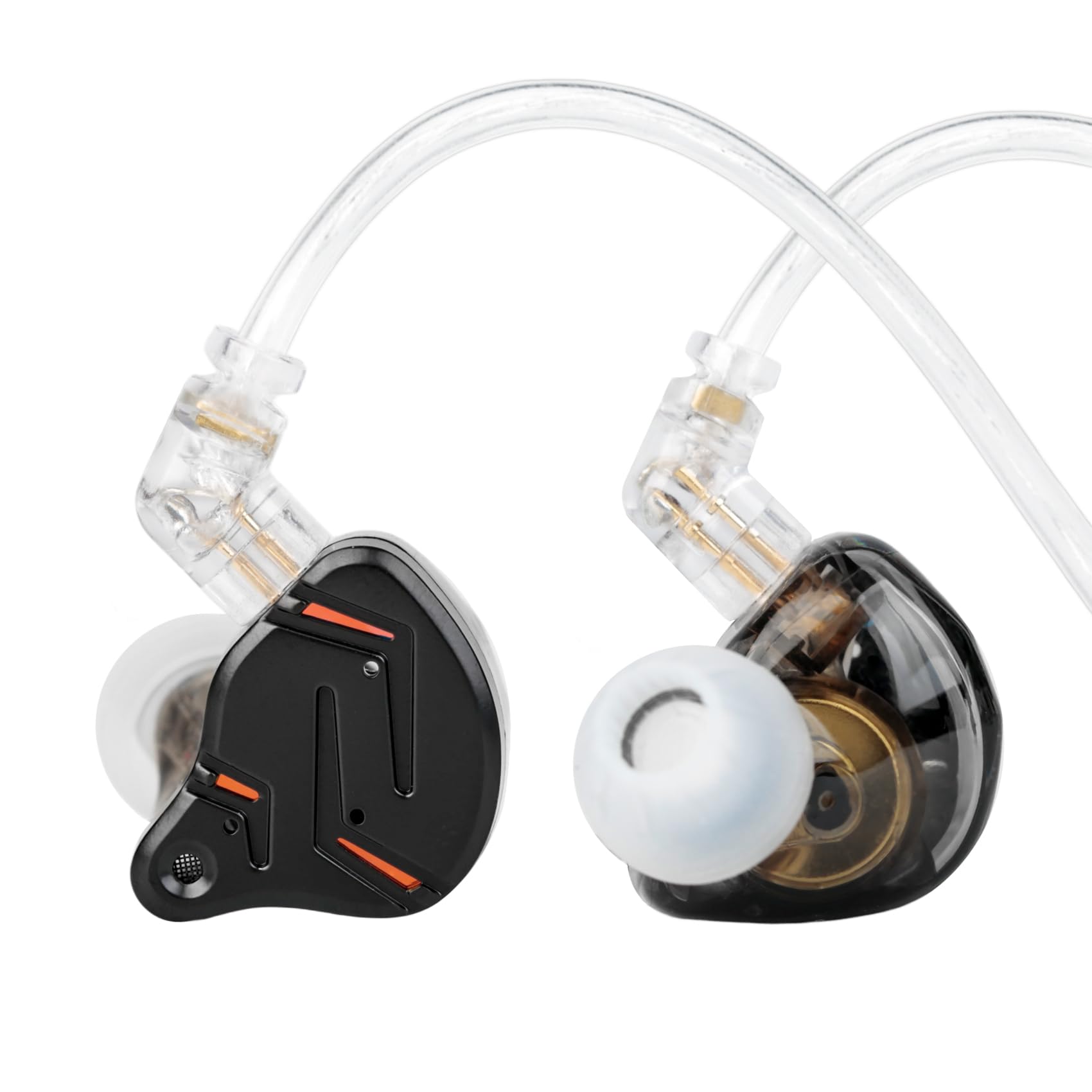
KZ ZST Pro X

91 /100
Sound Score Outstanding

Key details

Impedance
40 ohm
Isolation
Sound isolation
Sensitivity
Driver Config
1BA + 1DD
View on Amazon

Hybrid 1BA+1DD clarity with a solid metal faceplate brings detail and headroom that sits above the budget bracket, and the over-ear fit keeps a stable seal during active practice sessions. The detachable cable is a useful upgrade point. That said, the shell is on the larger side, so it may not suit smaller ears comfortably, and the stock cable is short for bodypack arrangements. Fit and cable-length tradeoffs leave it just behind the KBEAR KS1 and KZ ZS10 Pro for top-tier placement. For value-conscious musicians working at home, it is a strong hybrid alternative with real monitoring capability.

Pros

  • Hybrid 1BA+1DD tuning delivers clear, detailed sound with enough volume for noisy environments.
  • Solid metal faceplate and over-ear shape add stability for moving around during practice or gaming.
  • Holds up in live and gaming settings, with a detachable cable for future upgrades.

Cons

  • Faint static or buzz can appear with certain source pairings.
  • Under heavy gigging use, one side can lose output sooner than expected.
Our verdict

For at-home practice and bedroom recording, the ZST Pro X delivers hybrid clarity and solid build without a major investment.

Check Latest Price
7

Beginner Musicians

CCA CRA

87 /100
Sound Score Excellent

Key details

Impedance
25 ohm
Isolation
Sound isolation
Sensitivity
105 dB
Driver Config
Single 10mm DD
View on Amazon

The CCA CRA pairs a lively V-shaped sound with strong bass and clear highs, and the build quality holds up well for the price. That makes it an easy first wired monitor for practice and casual gigging. It sits below the runner-ups because the stage package is less consistent: fit can be inconsistent for smaller ears, and the cable may be short for bodypack or rack use. Those are practical boundaries for stage monitoring, not sound-quality complaints. The detachable cable keeps the upgrade path open, and the entry-level price lowers the risk for a first purchase.

Pros

  • Lively V-shaped tuning delivers strong bass and clear highs for fun, engaging practice sessions.
  • Build quality holds up well at a budget price, with a detachable cable as a bonus.
  • Comfort holds up during extended listening sessions, making it easy to wear through long practice blocks.

Cons

  • Cable may be too short for bodypack or rack routing.
  • Fit can be inconsistent in smaller ears.
Our verdict

For a first-time wired monitor on a budget, this is an easy entry point when the priority is sound and price over stage-specific ergonomics.

Check Latest Price
8

Tuneable Sound Fans

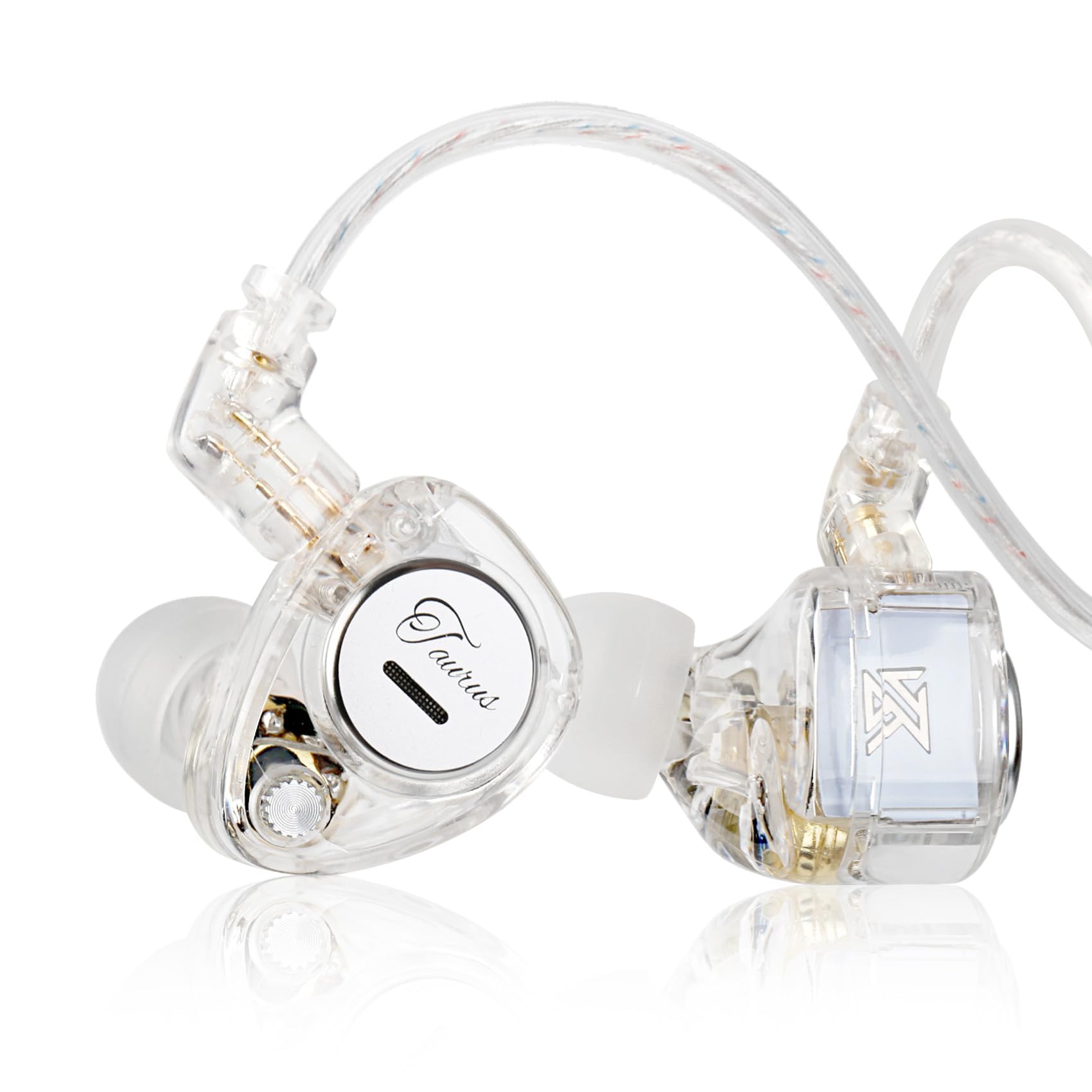
KZ Taurus

88 /100
Sound Score Excellent

Key details

Impedance
36 ohm
Isolation
Sound isolation
Sensitivity
105 dB
Driver Config
Dual 8mm DD
View on Amazon

The KZ Taurus pairs dual 8mm dynamic drivers with onboard tuning switches, giving singers a clear, loud wired monitor that can be adjusted for stage or studio mixes. The light shell holds firmly across common ear shapes, which helps during live movement, and the wired connection keeps monitoring latency-free. At this budget-friendly price, the tuning switches are a rare addition. Durability can vary between units, and the cable and earhook fit are the boundaries that keep it from a higher slot in this roundup.

Pros

  • Clear imaging and loud output make vocals and stage cues easy to follow.
  • Shell holds firmly across common ear shapes during movement.
  • Onboard switches let you adjust the tuning without extra gear.

Cons

  • Earhooks can feel stiff for some ears.
  • Stock cable may be short and stiff for some users.
Our verdict

For a singer who wants clear, loud monitor sound and on-the-fly tuning, the Taurus works best for rehearsals and shorter sets.

Check Latest Price
9

Budget Stage Users

DCMEKA A09

89 /100
Sound Score Excellent

Key details

Impedance
32 ohm
Isolation
90% ambient block
Sensitivity
96 dB
Driver Config
Dual dynamic
View on Amazon

The DCMEKA A09 puts dual dynamic drivers behind a detachable MMCX cable, delivering clear highs, deep bass, and enough isolation to block roughly 90 percent of ambient stage noise. The over-ear fit stays secure for singers and drummers, and the cable swap leaves room for a future upgrade without changing the earpieces.

It sits below established stage monitors on fit and build consistency, not on sound. That makes the A09 a budget workhorse rather than a long-haul touring monitor. Church sound teams and weekend players get the isolation and fit without paying for features they don't need.

Pros

  • Clear highs and deep bass hold up well for live vocal and drum monitoring.
  • Budget-friendly dual-driver design with MMCX cable gives room to upgrade later.
  • Over-ear fit stays secure during singing, drumming, and movement.

Cons

  • The deeper fit can create pressure points during long rehearsals for some ear shapes.
  • A single channel can go silent in isolated units, so a quick level check before sets is wise.
Our verdict

For budget-conscious singers and drummers who will check earpieces before each set, the A09 delivers dual-driver clarity with an MMCX upgrade path.

Check Latest Price

How to Choose

Driver Configuration

Single dynamic drivers produce a cohesive, natural sound and are often easier to drive consistently. Hybrid designs add balanced armatures for treble and midrange detail, which helps vocal clarity but also adds crossover complexity and more moving parts that can fail.

For stage use, a well-tuned single dynamic is often enough, but if you want crisp articulation for vocals, a hybrid like a 1BA+1DD or higher gives you that extra layering. The trade-off is that more drivers typically mean a bulkier shell and more points of failure.

Detachable Cable Standard

MMCX and 2-pin are the two common connector types. MMCX connectors rotate 360 degrees, which helps with over-ear fit, but they can become loose or develop intermittent contact over time. 2-pin connectors are simpler and often more secure, but less flexible for cable rolling.

A detachable cable is essential for singers because the cable takes the most abuse and is the cheapest thing to replace. If a cable fails on a fixed-cable IEM, the whole earpiece is dead.

Passive Noise Isolation

Passive isolation depends entirely on the seal between the tip and your ear canal. Foam tips compress and expand to fill the ear, which delivers more consistent isolation than silicone tips that may sit loosely.

A claimed 37 dB of isolation only applies with a perfect seal. If you use the wrong tip size, the actual isolation can drop by 20 dB or more, making the stage bleed through and forcing you to turn up your monitor, which risks hearing damage.

Over-Ear Ergonomics

Over-ear routing is not a comfort preference. The cable wraps around the ear to hold the shell in place against the ear canal, which prevents the IEM from slipping out when you move or sing. A shell that is too large or poorly angled will work against this design.

If you have smaller ear canals or unusual ear anatomy, look for shallow-insertion shells or models with interchangeable earcuffs. A secure fit is the difference between focusing on your vocals and constantly pushing an earpiece back in.

Sensitivity and Impedance

High-sensitivity IEMs (around 110 dB or more) are built for low-power sources like bodypack transmitters. They deliver loud, clear sound without a dedicated headphone amp. Low impedance (under 25 ohms) also helps bodypacks drive the drivers to sufficient volume.

The downside is that high sensitivity can expose noise from the monitor system, static, or hissing. If you use a noisy wireless pack, a slightly lower sensitivity like 105 dB may actually sound quieter and cleaner.

Frequently Asked Questions