12 Best Instrument Microphone of 2026: Proven Dynamics for Loud Amps

Best instrument microphone picks matched to amp, drum, horn, and acoustic recording, so you get usable gain before feedback and less handling noise.

Most instrument microphones are advertised as versatile, professional, and clear. What matters after the first session is narrower: whether the capsule handles a loud amp or close snare without distorting, how much stage bleed it rejects, and whether the cable and mount survive being thrown in a bag.

The best choice changes with the source. A dynamic that sounds right on a guitar cabinet may lack the air of a small-diaphragm condenser on acoustic strings, while a cheap clip-on can capture a sax well but develop cable trouble at the gooseneck after a few gigs.

That makes the purchase less about finding a single superhero mic and more about matching capsule, polar pattern, and form factor to how and where you play. A drummer close-miking a snare needs high-SPL headroom and tight rejection, while a fiddler needs a low-profile mount that stays put.

About the Sound Score: This comparative score is calculated from a product's published customer rating and review volume. It is not a laboratory measurement or a hands-on test result.

1

Best Overall Instrument Microphone

Shure SM57

96 /100
Sound Score Outstanding

Key details

Capsule
Dynamic
Form Factor
Stand/handheld
Polar Pattern
Cardioid
Power / Wireless
None required
View on Amazon

The Shure SM57 couples a cardioid dynamic capsule to a 40Hz-15kHz response that keeps guitar amps, snare drums, and brass instruments sounding present rather than harsh. High-SPL handling lets it sit inches from a cranked cabinet or hard-hit snare without brittle overload. The midrange contour puts guitars and drums in a mix with less corrective EQ than a thinner budget copy.

Its metal body and simple internal construction absorb the routine knocks of load-in, stand placement, and session changes without shifting the sound. That durability covers stage work and home studio setups where the same microphone moves from cab to snare to percussion between takes. Captured sources keep their body, and the mic does not demand an entire locker of alternatives for basic instrument duties.

This fits guitarists miking amps, drummers building a snare/tom setup, and home studio users who want one XLR instrument mic across sources. It does not include a cable or interface, and the top end stops at 15 kHz, so it is a workhorse tone tool rather than a high-air condenser. Brass and woodwind players will find the same body and rejection useful in close-miked live settings.

💡 Pair it with a sturdy XLR cable and an interface with enough clean gain for dynamic mics on quieter sources.

Pros

  • Covers guitar amps, snare and toms, brass, and acoustic instruments without needing separate mics.
  • Delivers present midrange and strong amp capture that sits cleanly in a live or recorded mix.
  • Tough metal construction holds up under stage and studio use.

Cons

  • Cardioid pattern may allow more off-axis bleed than a supercardioid alternative on crowded stages.
  • No USB output; computer recording requires a dedicated XLR preamp or interface.
Our verdict

For instrument miking, the Shure SM57 remains the default choice when one dynamic must cover guitar cabs, snare, toms, and brass without thinning the midrange.

Check Latest Price
2

Best Amp-Cab Workhorse

Sennheiser e609 Silver

94 /100
Sound Score Outstanding

Key details

Capsule
Dynamic
Form Factor
Amp-hanging flat body
Polar Pattern
Supercardioid
Power / Wireless
None required
View on Amazon

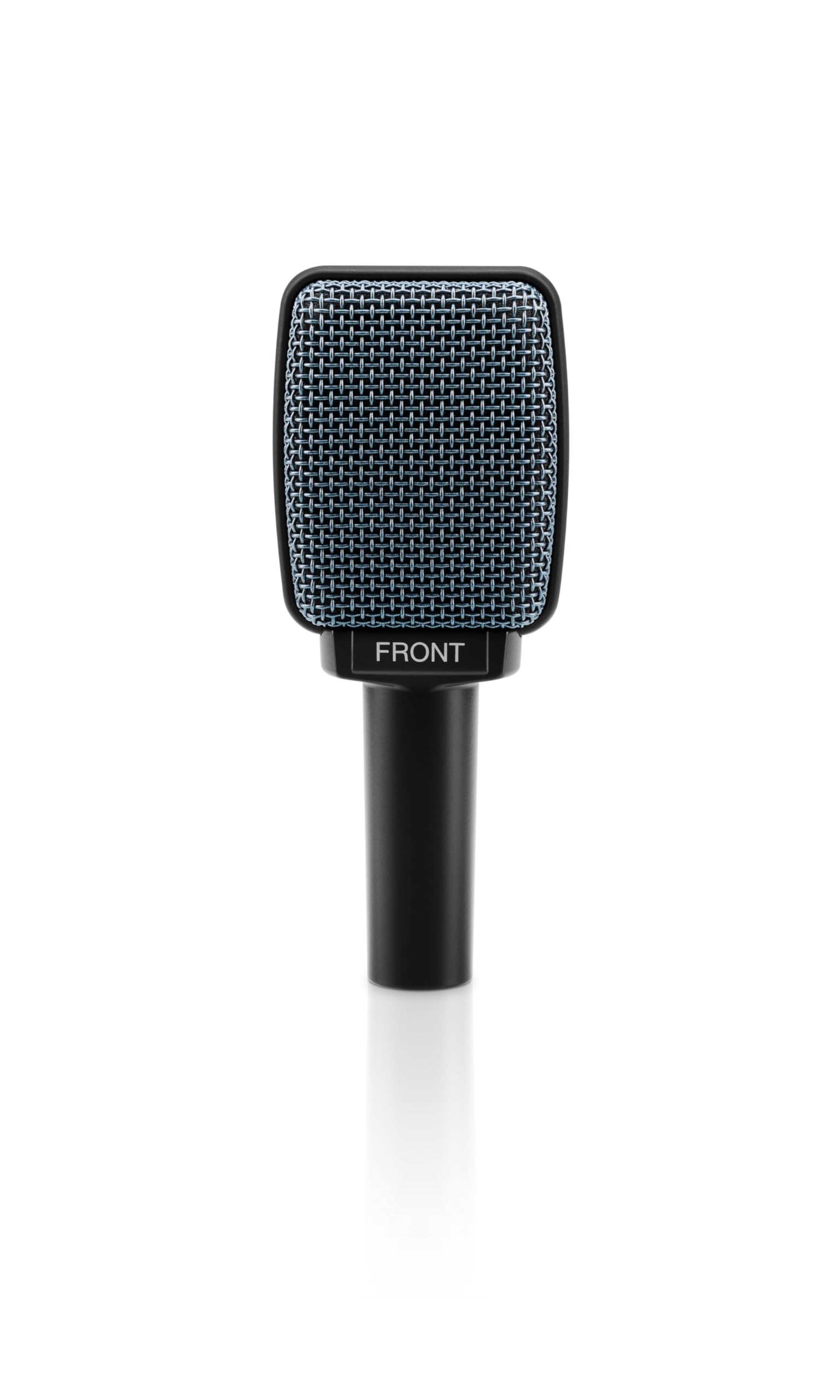
The e609 Silver keeps electric guitar cab miking quick. Its flat body hangs over a 1x12 or 4x12 grille, and the supercardioid capsule rejects enough off-axis sound to keep bleed low on small stages. For players used to a stand-mounted dynamic, this removes setup friction and keeps the capsule position consistent from show to show.

This fits electric guitarists and engineers who want repeatable amp miking without a stand. The flat body is built to hang from an amp rather than lock onto a stand, but it also works on sax, brass, and drums. Skip it if switchable voicing is a priority.

Pros

  • Guitar-cab tone stays clear and low-bleed against a loud stage.
  • Hangs over an amp for repeatable placement without a stand.
  • Strong mid-range value for a purpose-built amp mic.

Cons

  • On a straight stand, the supplied clip may let the mic rotate or slip.
Our verdict

For guitarists tired of wrestling a stand into place, this flat supercardioid is the fast, repeatable amp-cab option.

Check Latest Price
3

Best for Loud Stages & Snare

Shure Beta 57A

94 /100
Sound Score Outstanding

Key details

Capsule
Dynamic
Form Factor
Stand/handheld
Polar Pattern
Supercardioid
Power / Wireless
None required
View on Amazon

The Beta 57A is not the universal workhorse; it is the high-output, close-miking specialist. Its neodymium magnet and supercardioid pattern give instruments more level before feedback, which matters on dense stages and inside a snare rim. Next to the top pick in this set, it pushes source detail forward and keeps nearby bleed further back.

This suits drummers miking snare and toms, horn players needing isolation, and live performers on loud stages. The premium price over the SM57 only pays off when extra output and off-axis control are required; open, all-purpose miking does not need it.

Pros

  • Neodymium output gives clean gain for snare, toms, and loud amps.
  • Supercardioid pattern keeps nearby stage wash out and raises gain-before-feedback.
  • Steel grille and shock mount hold up under touring and close-miking use.

Cons

  • The voicing moves away from the classic SM57 midrange character.
Our verdict

Audition this when the top pick leaves too much stage bleed in a close-mic setup.

Check Latest Price
4

Best Budget Stereo Condenser Pair

Behringer C-2 Pair

92 /100
Sound Score Outstanding

Key details

Capsule
Condenser matched pair
Form Factor
Stand/handheld pencil
Polar Pattern
Cardioid
Power / Wireless
48V phantom
View on Amazon

Small-diaphragm condensers in a matched pair deliver the stereo width that a single dynamic instrument mic cannot give drum overheads, acoustic guitar, and ensembles. The pair ships with a stereo bar and case, so spaced-pair recording starts without extra hardware. The switchable pad and low-frequency roll-off help manage louder percussion and stand rumble.

For budget-conscious instrument recordists, this is a sensible entry into stereo drum overheads, acoustic guitar, and choir or section reinforcement. The pair is happiest on louder acoustic sources and drum cymbals. Buyers who want a dynamic close-mic for very loud guitar amps should look toward the compact amp dynamic in this set instead.

💡 Engage the low-cut and pad when the pair sits close to percussion to keep the stereo image clean.

Pros

  • Complete matched stereo pair with included bar and case at a budget price.
  • Clear, detailed capture on drum overheads and acoustic instruments.
  • Switchable pad and roll-off keep louder percussion manageable.

Cons

  • Self-noise can rise in quiet acoustic passages, making critical quiet work less suitable.
Our verdict

For budget home recordists needing a true matched stereo image on acoustic instruments and drum overheads, this is a practical starter kit.

Check Latest Price
5

Best Clip-On for Horns & Strings

Audio-Technica PRO35

91 /100
Sound Score Outstanding

Key details

Capsule
Condenser clip-on
Form Factor
Clip-on gooseneck
Polar Pattern
Cardioid
Power / Wireless
48V phantom, TA3F/XLR
View on Amazon

The PRO35 places a cardioid condenser capsule directly on sax, trumpet, fiddle, or mandolin through a UniMount clip and attached 6-foot cable. The microphone moves with the instrument, which keeps the stage footprint small and the position stable during live horn and string work.

Players wanting wired phantom-powered hands-free capture get a specialized instrument mic, but this is not the right shape for drummers seeking a stand-mounted dynamic or for players already using a Shure wireless bodypack. The attached cable and gooseneck reward careful handling, so keep transport and cable routing gentle.

💡 Support the attached cable with a loose loop at the instrument and avoid hard bends near the gooseneck.

Pros

  • Clear cardioid capture for horns, fiddle, and mandolin from a low-profile clip-on mount.
  • Hands-free positioning keeps live stage setups compact for sax and trumpet.
  • Strong value for a premium-priced specialized clip-on condenser.

Cons

  • The attached thin cable can become a wear point during hard touring.
  • The gooseneck and clip need careful handling around cases and stands.
Our verdict

A niche instrument-mounted condenser that suits close-miked horn and acoustic string work, with cable and mount care as the main boundary.

Check Latest Price
6

Upgraded Amp & Brass Mic with EQ Switch

Sennheiser e906

94 /100
Sound Score Outstanding

Key details

Capsule
Dynamic
Form Factor
Amp-hanging flat body
Polar Pattern
Supercardioid
Power / Wireless
None required
View on Amazon

The e906 separates itself from entry-level flat amp mics with three switchable presence settings and a 25Hz-18kHz frequency response. Those voicing options cover guitar cabs, snare, and brass without repositioning the mic, while the supercardioid pattern keeps nearby bleed out of the capture.

Players and engineers who shape tone at the source on loud cabs, snare drums, or horn sections will get the most from this design. The slim body hangs over a grille, and the clamp keeps the position stable. The premium price buys that voicing flexibility, but if your mixer or interface already handles the same EQ moves, the extra stage may be unnecessary.

Pros

  • Focused supercardioid capture stays honest on guitar cabs and brass.
  • Three switchable presence settings make it quick to voice amp, snare, or brass without moving the mic.
  • Flat body hangs over a cab and the clamp and pouch keep placement secure.

Cons

  • Players wanting a classic 57-style midrange or a lower-priced entry amp mic may not need this voicing stage.
Our verdict

This is the amp-cab dynamic for players who want presence control at the microphone, not just at the board.

Check Latest Price
7

Best Mono Pencil Condenser

AKG P170

93 /100
Sound Score Outstanding

Key details

Capsule
Condenser small-diaphragm
Form Factor
Stand/handheld pencil
Polar Pattern
Cardioid
Power / Wireless
48V phantom
View on Amazon

The P170 puts a true small-diaphragm condenser response on acoustic guitar, strings, hi-hats, ride cymbals, and drum overheads. Its cardioid capsule captures more top-end air and transient detail than the dynamic workhorse in this set, and the -20 dB pad with 155 dB SPL handling keeps loud percussion usable.

Home studio owners and drummers who want one flexible mono condenser for close or overhead sources get a natural, low-feedback option. Single-mic format means true stereo capture requires buying a second matching unit later; buyers who need a matched pair out of the box should choose a dedicated stereo pair instead. Live vocalists needing a handheld dynamic should look elsewhere.

Pros

  • Natural, detailed sound on acoustic instruments and cymbals.
  • Strong value for a small-diaphragm condenser at a mid-range price.
  • Handles loud sources cleanly with a -20 dB pad and 155 dB SPL rating.

Cons

  • Cardioid-only capsule leaves no omni or figure-8 option for room or mid-side stereo techniques.
Our verdict

Choose it when one detailed small-diaphragm channel covers the session.

Check Latest Price
8

Budget Amp Miking

GLS Audio ES-57

92 /100
Sound Score Outstanding

Key details

Capsule
Dynamic
Form Factor
Stand/handheld
Polar Pattern
Cardioid
Power / Wireless
None required
View on Amazon

The GLS Audio ES-57 delivers clean guitar, bass, and instrument capture in a metal-body cardioid dynamic at a budget-friendly price. It is not an SM57 clone: the voicing and filtering differ, and handling noise can be noticeable when the mic is moved. That keeps the top pick ahead for critical low-movement recording.

Pros

  • Captures guitar and bass cabs with usable tone at a budget-friendly price.
  • Metal body and included clip suit casual gigging and first mic lockers.

Cons

  • Handling noise can be noticeable when the mic is repositioned on a stand.
Our verdict

For beginners building a first instrument mic locker or gigging musicians needing a replaceable amp mic, this is a practical budget option. Buy it for close-miked cabinets where the mic stays put.

Check Latest Price
9

Guitar Amp Cabs

Behringer B 906

92 /100
Sound Score Outstanding

Key details

Capsule
Dynamic
Form Factor
Stand/handheld
Polar Pattern
Supercardioid
Power / Wireless
None required
View on Amazon

The B 906 gives guitarists a compact dynamic with switchable low-cut, flat, and high-boost voicing, plus a hard case. Clarity and high-SPL handling make it a capable amp-cab mic. Handling noise can transmit through the mount when the mic is repositioned, and that tactile compromise keeps it below the e609/E906 tier.

Pros

  • Clear amp tone with high-SPL handling.
  • Compact metal body includes a hard case for travel.

Cons

  • During amp repositioning, handling noise can transmit through the mount.
Our verdict

For live guitar-amp miking where a hard case and switchable EQ curves carry the purchase, this is a cost-effective shortlist option.

Check Latest Price
10

Stereo Acoustic Recording

NEEWER NW-8000 Pair

90 /100
Sound Score Outstanding

Key details

Capsule
Condenser pencil pair
Form Factor
Stand/handheld pencil
Polar Pattern
Cardioid/omni/supercardioid
Power / Wireless
48V phantom
View on Amazon

Pair of pencil condensers with swappable cardioid, omni, and supercardioid capsules covers acoustic ensembles, bluegrass groups, and drum overheads without forcing a single polar pattern. Self-noise or intermittent popping can appear on quieter sources, and consistency is less established than the Behringer C-2 pair when capsule flexibility is not the priority.

Pros

  • Clear stereo image for acoustic groups and drum overheads
  • Swappable capsule patterns cover different instrument placements

Cons

  • Self-noise or intermittent popping can surface during quiet acoustic passages
Our verdict

This pair fits acoustic ensembles and bluegrass groups that need alternate patterns, provided quiet critical recording is not the main task.

Check Latest Price
11

Drum Kit

Pyle PDKM7 7-Piece

89 /100
Sound Score Excellent

Key details

Capsule
Dynamic + condenser kit
Form Factor
Kick, snare, cymbal clips
Polar Pattern
Unidirectional
Power / Wireless
48V phantom for condenser
View on Amazon

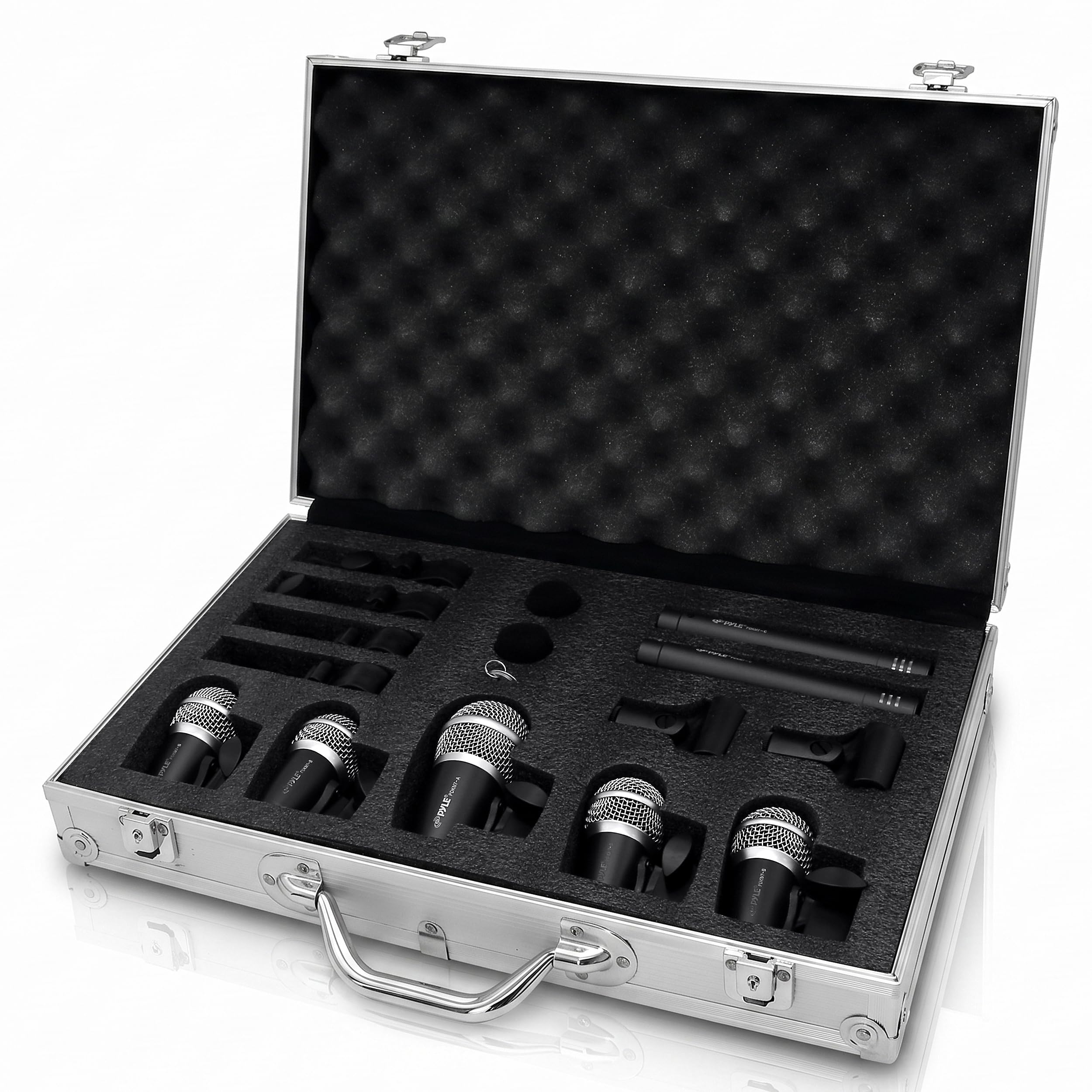
The Pyle PDKM7 condenses a full drum mic locker into one kit with kick, snare/tom, and condenser cymbal mics, clips, and a case. The per-mic acoustic character is not independently characterized for editorial recommendation, so the bundle fits practice spaces and spare-mic duty more than critical drum recording.

Pros

  • Covers kick, snare/tom, and cymbal capture in one purchase.
  • Includes clips and a case for quicker setup and transport.

Cons

  • Cymbal high overtones may need a board EQ lift since the bundled mics top out at 18 kHz.
Our verdict

This set is a practical fit for a practice room or backup drum kit when a full wired setup matters more than a single reference mic.

Check Latest Price
12

Budget Spare

WEYMIC WM57

89 /100
Sound Score Excellent

Key details

Capsule
Dynamic
Form Factor
Stand/handheld
Polar Pattern
Cardioid
Power / Wireless
None required
View on Amazon

The WM57 copies the SM57-style cardioid shape and gives usable close-miked tone for guitar cabs and practice vocals. The metal body feels more solid than the price suggests. Wiring or solder points can be weak, and a unit may arrive non-working or need a quick re-solder. That keeps it a backup, practice, or DIY spare rather than a first-call instrument mic for live work.

Pros

  • Budget-friendly spare that covers amp and practice needs for very little cash.
  • Delivers a usable SM57-style tone for close-miked amps and percussion.

Cons

  • In a critical amp or snare spot, check solder joints first; a unit can arrive non-working.
Our verdict

It fits DIY users who can re-solder and need an extra amp or cab mic for low-stakes practice and backup duty.

Check Latest Price

How to Choose

Polar Pattern and Off-Axis Rejection

Cardioid and supercardioid patterns narrow the pickup area, which reduces stage bleed at the cost of some rear rejection. A supercardioid can help a loud band avoid feedback, but it requires more careful positioning because the off-axis rejection is not even. For a drummer, that means a tighter snare sound; for an acoustic guitarist, a cardioid pencil is usually more forgiving.

Dynamic vs Condenser Capsule

Dynamic capsules tolerate high sound pressure without distorting and do not need phantom power, making them the safer choice for guitar amps, snare, and brass. Small-diaphragm condensers capture cymbal and acoustic string detail, but they also reveal handling noise and self-noise in quiet recordings. The hidden trade-off is noise floor: a budget condenser pair may hiss on fingerpicked passages yet sound open on drum overheads.

Form Factor

A stand-mounted dynamic is the most versatile, but a flat amp-hanging body shortens setup and keeps tone repeatable between gigs. Clip-on mics free horn and string players, but the gooseneck and thin attached cable take more mechanical abuse. Match the mount to the way you perform rather than assuming a clip-on can double as a stand mic.

Maximum SPL and Gain Before Feedback

High SPL handling keeps a close snare or loud cab from turning into a buzzy, compressed mess; gain-before-feedback is what gives a supercardioid its live-stage advantage. If you play at high stage volume, prioritize a dynamic with high output and a tighter pattern over a more sensitive condenser. A microphone that sounds detailed at home can become unusable on a loud stage because extra sensitivity excites the monitors.

Phantom Power and Wireless Compatibility

Condensers need 48V phantom power from an interface or mixer; dynamics do not. Wireless clip-on mics also need the correct bodypack connector, such as TA3F or TA4F mini XLR, not just the same brand. Check power and connector before buying, especially for live or mobile setups.

Frequently Asked Questions