11 Best Condenser Microphone of 2026: Match Your Room and Setup

Find the best condenser microphone for your room and workflow, from USB plug-and-play kits to XLR studio hybrids for streaming and podcasting.

Condenser microphones are sensitive enough to capture every detail in a voice, but that same sensitivity turns an untreated room into audible background noise. Many buyers discover this only after the first recording, when the air conditioner, keyboard, or hallway conversation is suddenly part of the track.

The practical choice comes down to matching the microphone's connectivity and pickup behavior to the room and workflow. A USB condenser keeps setup simple and works well on a treated desk, while an XLR model adds interface cost but provides a more flexible path for later upgrades. From there, the mount, pop filter, and gain control shape the result as much as the capsule itself.

The goal is not the most polar patterns or highest claimed resolution, but a condenser that fits the space you already record in. That keeps you from spending more money on acoustic panels and inline preamps just to correct a mismatch.

About the Sound Score: This comparative score is calculated from a product's published customer rating and review volume. It is not a laboratory measurement or a hands-on test result.

1

Best Overall

Blue Yeti

93 /100
Sound Score Outstanding

Key details

Connectivity
USB
Monitoring And Gain
Headphone jack, no-latency monitoring
Included Mounting Gear
Desktop stand, USB cable
Room Noise Sensitivity
High sensitivity
View on Amazon

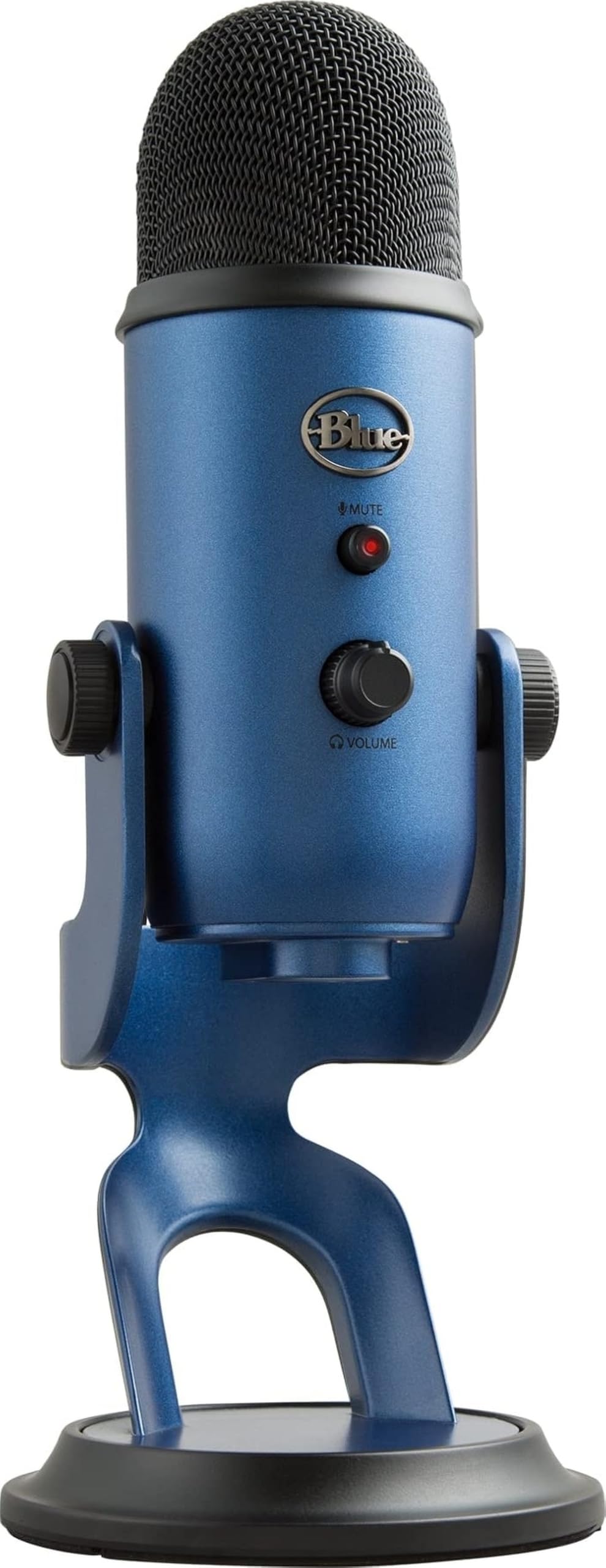
Four polar patterns and no-latency headphone monitoring make this USB condenser a practical desk workhorse for creators who record, stream, and podcast from one position. Cardioid mode delivers clear vocal capture, while stereo and omnidirectional settings cover interviews, acoustic instruments, or a full table. Onboard gain and mute controls pair with a solid metal body for a studio feel without an interface.

The cardioid pattern is the default for solo work because it focuses on the front capsule and keeps a useful amount of off-axis sound out. The headphone jack provides direct monitoring before software processing, so the performer hears the mic, not the computer. Physical controls stay close at hand during takes, which reduces the need to open a driver panel mid-stream.

Podcasters, streamers, and work-from-home users who want better than webcam audio without building an XLR chain will find this fits. The main boundary is noise control: untreated rooms can add reflections and ambience to recordings, and high-gain settings may reveal faint hiss. Close microphone placement and conservative gain help keep the delivered signal clean.

💡 Set gain at about 10 to 12 o'clock and stay within six inches of the capsule for clean takes.

Pros

  • Clear, detailed sound quality for voice and streaming work.
  • Four polar patterns cover solo recording, interviews, and multi-person setups.
  • Solid metal build and plug-and-play setup keep daily desk use simple.

Cons

  • High gain settings can expose audible hiss or static.
  • In untreated spaces, room reflections and ambient noise can enter recordings.
Our verdict

One desk microphone covers solo voice, interviews, and multi-person calls without an interface.

Check Latest Price
2

Best Gaming/Streaming Package

HyperX QuadCast

96 /100
Sound Score Outstanding

Key details

Connectivity
USB
Monitoring And Gain
Gain control, tap-to-mute, headphone jack
Included Mounting Gear
Shock mount, pop filter, stand
Room Noise Sensitivity
High sensitivity
View on Amazon

The QuadCast separates itself with an included shock mount and pop filter, plus a tap-to-mute control that is genuinely useful during live sessions. Four polar patterns cover cardioid voice work, bidirectional interviews, and stereo or omnidirectional room capture. Setup is plug-and-play over USB on PC, PlayStation, and Mac. It keeps the fixed red LED and USB-A connection rather than the RGB and USB-C upgrade path.

This fits streamers and content creators who want a completed desk kit without assembling separate accessories. The condenser favors controlled rooms and careful gain staging; noisy untreated spaces undercut its clarity.

💡 Start with low gain and raise it only after checking for keyboard and room bleed.

Pros

  • All-in-one kit includes shock mount, pop filter, stand, and mic arm adapter for a finished desk setup.
  • Tap-to-mute and gain dial make live voice control simple without opening software.
  • Four polar patterns support solo commentary, interviews, and wider room recording.

Cons

  • No advanced software DSP for auto gain or clip protection; hardware controls are the main adjustment path.
  • Sensitive condenser pickup can capture keyboard and room noise when gain is set too high.
Our verdict

The included shock mount and tap-to-mute remove the usual desk setup friction; a treated room or conservative gain setting keeps the sound clean.

Check Latest Price
3

Best XLR Studio Starter

Audio-Technica AT2020

95 /100
Sound Score Outstanding

Key details

Connectivity
XLR
Monitoring And Gain
—
Included Mounting Gear
Microphone only, no cable
Room Noise Sensitivity
—
View on Amazon

The AT2020 centers on a neutral cardioid XLR capsule in a metal body, keeping the signal path simple for vocals, acoustic instruments, and spoken-word work. Unlike step-up XLR condensers, it leaves out pad and filter switches and puts the cost into the capsule itself, so the sound stays clean without forcing a more expensive upgrade.

This is the right boundary for home studio owners and podcasters who already own an audio interface and can add an XLR cable and stand. It is not for USB plug-and-play buyers or anyone expecting a complete desk kit, because 48V phantom power and separate accessories are required before the first recording.

💡 Match it with a 48V phantom-power interface and a short XLR cable, then set the gain conservatively for a clean take.

Pros

  • Neutral cardioid capture keeps vocals and acoustic instruments clear and natural.
  • Metal body holds up to mic stand repositioning and regular home studio use.
  • Entry-level price keeps a true XLR signal chain accessible for project studios.

Cons

  • An XLR cable and accessories are not included, so the first recording still requires separate purchases.
Our verdict

The AT2020 is the right XLR condenser when the rest of the recording chain already exists. Its value sits in the neutral capsule and metal body, not in accessories or switches.

Check Latest Price
4

Best Software/DSP Control

Elgato Wave:3 MK.2

95 /100
Sound Score Outstanding

Key details

Connectivity
USB-C
Monitoring And Gain
Multifunction dial, tap-to-mute, headphone jack
Included Mounting Gear
Desk stand, adapters, USB-C cable
Room Noise Sensitivity
—
View on Amazon

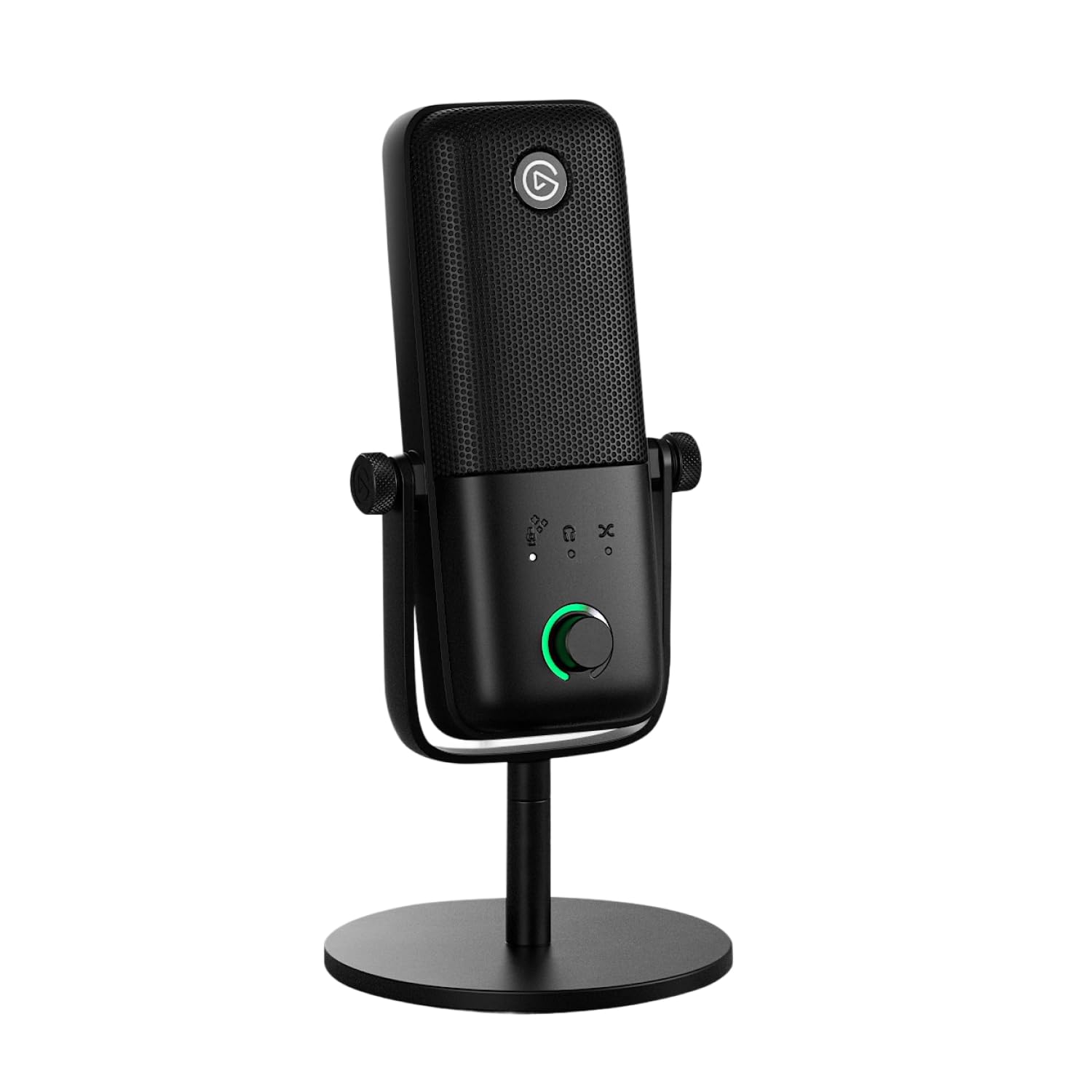
Clipguard 2.0, Auto Gain, and Wave Link routing give this supercardioid USB mic broadcast-style control that the top pick's multipattern flexibility does not provide. The software handles gain management and EQ, so streamers can shape a gated, compressed sound without an XLR chain.

This is for solo streamers and content creators already using or planning an Elgato setup who want software-based audio control. Full value requires Wave Link, and long-term durability can vary by unit. Buyers who prefer physical knobs should stay with the top pick or another hardware-forward option.

Pros

  • Clean voice pickup with enough detail to challenge entry-level XLR options.
  • Wave Link software bundles compression, EQ, routing, and clip protection in one place.
  • Quick setup with a multifunction dial for mute and gain control.

Cons

  • For multi-person recordings, the fixed supercardioid pattern is less flexible than the top pick's multipattern setup.
Our verdict

Software-first solo creators get a focused USB mic with broadcast DSP; other buyers should look toward the top pick.

Check Latest Price
5

Best Premium Hybrid

Rode NT1 5th Gen

93 /100
Sound Score Outstanding

Key details

Connectivity
XLR, USB
Monitoring And Gain
—
Included Mounting Gear
Shock mount, pop filter, cables
Room Noise Sensitivity
High sensitivity
View on Amazon

The NT1 5th Gen is the hybrid workhorse in this set, pairing XLR and USB output with a 4dBA self-noise figure and included shock mount and pop filter. Unlike the compact USB desk mic, it keeps one cardioid capsule available for an interface chain or a direct recording session without changing the core sound.

Serious podcasters, voice-over artists, and project studios with treated rooms or gain discipline get the most from the high sensitivity. The premium price is harder to absorb for casual creators who only need a single USB connection; this is a step up for those who already split time between a DAW and direct USB capture.

💡 Place the mic away from hard surfaces and use the shock mount to keep low-level vibration out of the signal.

Pros

  • Dual XLR and USB outputs let the same capsule feed an interface or a computer.
  • Low self-noise preserves quiet vocal and instrument detail.
  • Included shock mount, pop filter, and cables reduce extra setup purchases.

Cons

  • Premium price may be more than casual USB-only users need.
  • In untreated rooms, high sensitivity can pick up reflections and ambient sound.
Our verdict

This hybrid step up fits creators who already know a condenser rewards a treated room and careful gain, and who split time between XLR and USB workflows.

Check Latest Price
6

Best Budget Full Kit

FIFINE T669 Kit

93 /100
Sound Score Outstanding

Key details

Connectivity
USB
Monitoring And Gain
Gain knob
Included Mounting Gear
Arm, shock mount, pop filter
Room Noise Sensitivity
High sensitivity
View on Amazon

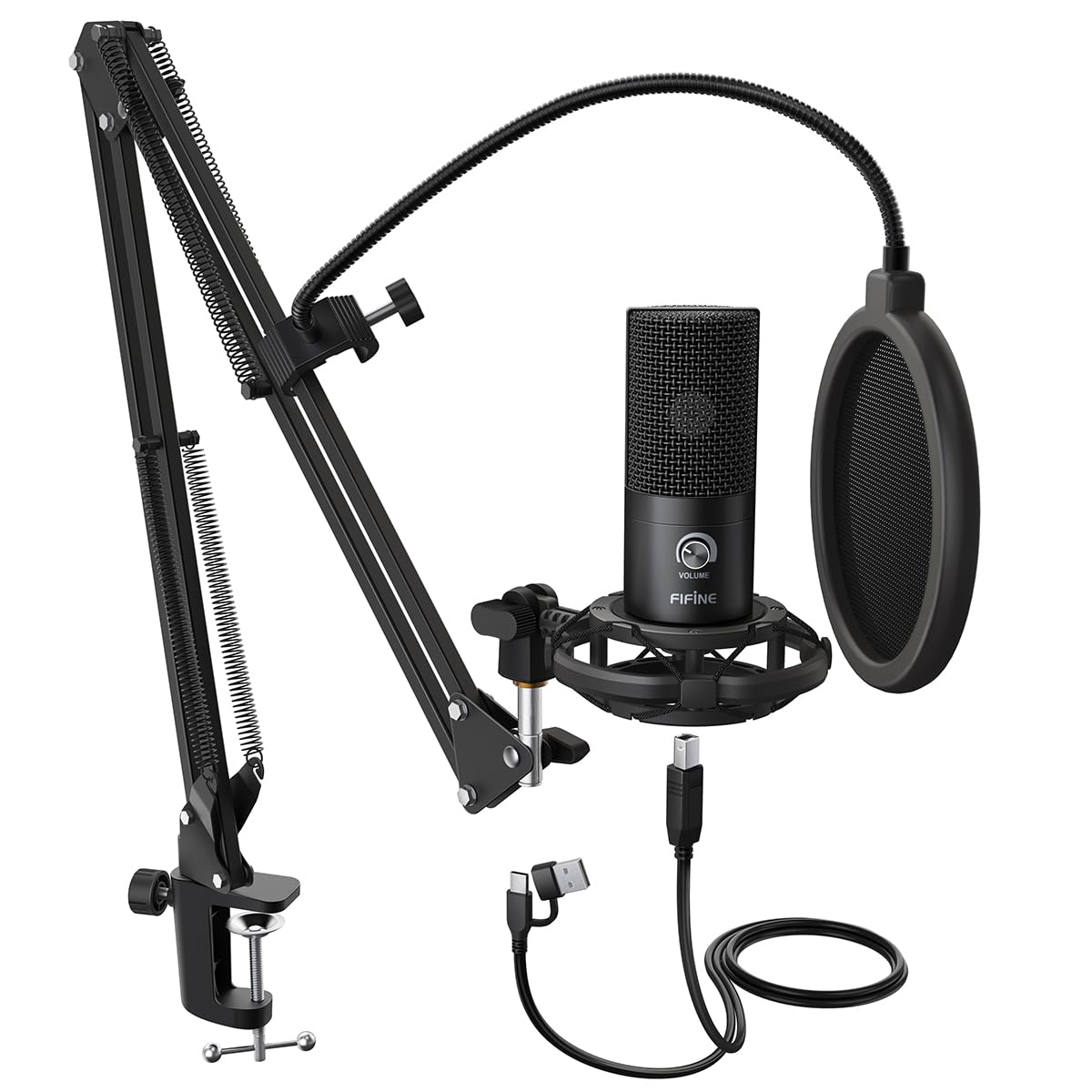
The FIFINE T669 Kit separates itself from a basic tabletop USB microphone by including the boom arm, shock mount, and pop filter in one budget-tier box. A cardioid USB condenser and gain knob cover the core recording path without an interface or extra drivers.

Buyers stepping up from a headset mic or starting a podcast or stream will get the most from the package. The boom arm tension can be inconsistent, and ambient sound pickup can occur in untreated rooms, so this is a starter boundary rather than a premium studio chain.

Pros

  • Boom arm, shock mount, and pop filter are included, reducing setup cost and accessory hunting.
  • Clear cardioid voice capture suits podcast, stream, and game chat speech.
  • USB plug-and-play setup with a gain knob needs no interface or drivers.

Cons

  • The boom arm can lose tension, so mic position may need occasional readjustment.
  • Untreated rooms can add ambient noise and reflections to the cardioid pickup.
Our verdict

The T669 Kit is the budget route to a working podcast or streaming setup when the included boom-arm hardware matters more than acoustic polish.

Check Latest Price
7

XLR Vocalists

Audio-Technica AT2035

96 /100
Sound Score Outstanding

Key details

Connectivity
XLR
Monitoring And Gain
—
Included Mounting Gear
Custom shock mount, pouch
Room Noise Sensitivity
Low self-noise
View on Amazon

Clear, low-noise output suits voice-over, podcasting, and acoustic guitar once an XLR interface and cable are already in place. The pad and filter reduce rumble and hot signals at the source. It costs more than the AT2020 and has no USB output, so it fits a narrower XLR upgrade path rather than a plug-and-play starter.

Pros

  • Natural, clear voice capture with good body for bass-heavy spoken or sung sources.
  • Pro-level voice-over and studio recording quality from a mid-range XLR mic.

Cons

  • No pop filter in the box, so close-miked vocals may need an extra purchase.
Our verdict

This fits an interface-based home recordist or podcaster who wants cleaner voice and acoustic captures with pad and filter control.

Check Latest Price
8

RGB Streamers

HyperX QuadCast S

95 /100
Sound Score Outstanding

Key details

Connectivity
USB-C
Monitoring And Gain
Tap-to-mute, gain knob, headphone jack
Included Mounting Gear
Shock mount, adapter, pop filter
Room Noise Sensitivity
High sensitivity
View on Amazon

The HyperX QuadCast S adds customizable Ngenuity RGB and USB-C to the QuadCast package, keeping four polar patterns, shock mount, and pop filter. Clear voice capture suits streaming and gaming. The tradeoff is a premium price over the original and occasional random disconnects, placing it below the original QuadCast for buyers focused on the core bundle.

Pros

  • Customizable RGB through Ngenuity fits stream setups and HyperX lighting themes.
  • Clear voice capture with four polar patterns covers gaming, calls, and desktop recording.

Cons

  • Noise cancellation is mixed; static or buzzing can appear in some rooms.
Our verdict

It fits visually coordinated streamers who prioritize RGB and USB-C over the original QuadCast's simpler package.

Check Latest Price
9

Remote Workers

Rode NT-USB Mini

91 /100
Sound Score Outstanding

Key details

Connectivity
USB-C
Monitoring And Gain
—
Included Mounting Gear
Magnetic desk stand, pop filter
Room Noise Sensitivity
—
View on Amazon

Cardioid pickup and the built-in pop filter keep spoken clarity high for Zoom calls and light voice-over work. The compact footprint and magnetic stand suit small desks and travel bags. The single polar pattern excludes multi-person or instrument flexibility, and hard falls can compromise the body.

Pros

  • Clear, crisp cardioid capture for calls and voice recordings.
  • Solid build and magnetic stand keep the mic stable during desk use.

Cons

  • Static or background noise can appear in untreated or high-gain rooms.
Our verdict

This fits remote work and travel use where single-person voice capture is the goal and the mic stays protected from hard impacts.

Check Latest Price
10

Ultra-Budget Buyers

FIFINE K669B

91 /100
Sound Score Outstanding

Key details

Connectivity
USB
Monitoring And Gain
Volume knob
Included Mounting Gear
Tripod stand
Room Noise Sensitivity
High sensitivity
View on Amazon

Metal body, tripod stand, and clear voice capture make this an entry-level USB condenser for calls and light recording. No mute button or boom arm keeps the setup simple but limits desk control. Background noise and static can appear in untreated rooms. Budget-conscious remote workers and students needing better than webcam audio get the core benefit.

Pros

  • Clear, loud voice capture upgrades laptop audio for calls and light recording.
  • Metal body and tripod stand provide stable desk placement at a budget price.

Cons

  • For daily desk use, durability can vary over months.
Our verdict

Best for students or remote workers who need a clear tabletop mic for calls and light voice-over work under budget limits.

Check Latest Price
11

Budget Hybrid Buyers

MAONO A04 Gen2

91 /100
Sound Score Outstanding

Key details

Connectivity
XLR, USB
Monitoring And Gain
—
Included Mounting Gear
Arm, shock mount, pop filter
Room Noise Sensitivity
High sensitivity
View on Amazon

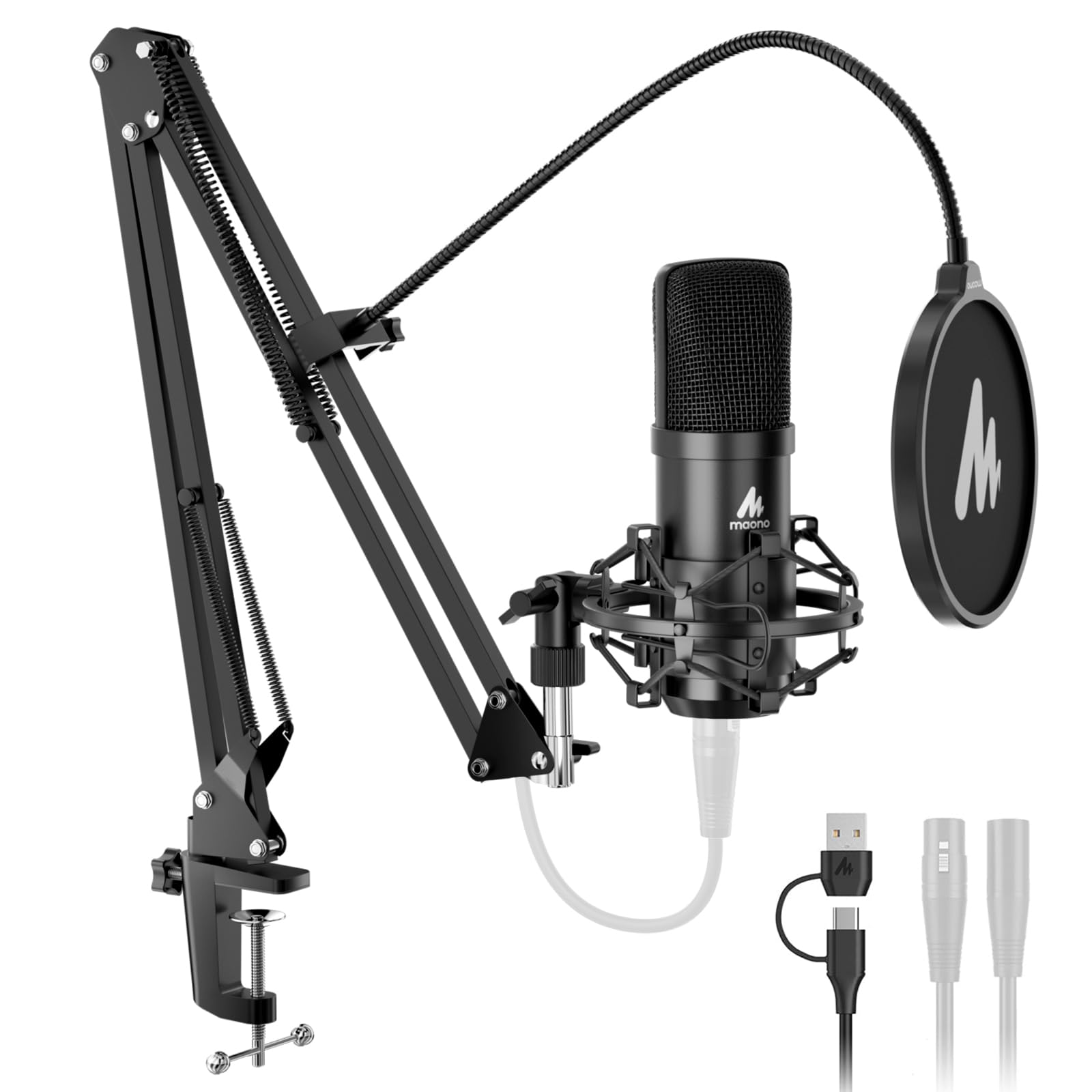
The MAONO A04 Gen2 pairs XLR and USB connectivity with Maono Link software and an included boom arm, shock mount, and pop filter. That makes it a flexible budget hybrid for streaming and podcasting. The XLR cable is not included despite XLR capability, and the listing's review history overlaps with the non-Gen2 A04; arm durability is mixed.

Pros

  • Hybrid XLR/USB output lets creators start on USB and add an interface later.
  • Included boom arm, shock mount, and pop filter keep the initial setup cost low.

Cons

  • Ambient sound pickup can rise in untreated rooms, so gain placement matters.
Our verdict

Pick this for desktop streaming or podcasting where the included software and hybrid output are the main draw, and accept that expansion requires a few extra accessories.

Check Latest Price

How to Choose

USB vs XLR

USB condensers place the converter and preamp inside the mic body, so they connect straight to a computer but lock in gain staging and limit future preamp upgrades. XLR models add an interface and cable, yet separate front-end control makes the chain easier to upgrade piece by piece.

Buy USB when the desk setup is fixed and simple; choose XLR when you may later swap in a better interface or outboard processor.

Polar Pattern Flexibility

Cardioid condenser capsules focus on sound in front of the microphone, which suppresses some rear reflections but does not remove room noise. Multi-pattern USB models add omnidirectional, bidirectional, and stereo modes that pick up more of the room.

Pay for multiple patterns only for interviews, roundtables, or stereo music. A single cardioid condenser is often cleaner for one voice.

Included Mounting Gear

Shock mounts isolate the capsule from desk bumps and keyboard vibrations, while a stable boom arm keeps the mic close without eating desk space. A weak arm lets the mic sag into frame, and a missing pop filter can create low-frequency pops on plosive syllables.

Add the cost of these accessories to the purchase if the kit omits them, because they change the recording more than a small capsule upgrade.

Software / DSP Controls

Software DSP applies gain, EQ, compression, or clip protection before the signal reaches the recording app. That prevents clipped peaks when a sudden loud laugh or plosive hits the capsule.

The dependency on software routing and updates is a real trade-off. Hardware knobs or a later outboard compressor suit buyers who prefer not to manage an app.

Headphone Monitoring and Gain Control

Latency-free headphone monitoring lets you hear the mic before the computer returns the signal, catching plosives, hum, and sibilance immediately. Start with moderate gain and stay close to the mic; maxing gain amplifies room noise along with the voice.

Physical gain control is more useful than a software-only level slider when you need to react quickly during a stream.

Room Noise Sensitivity

Condenser capsules are lighter and more sensitive than dynamic mics, so they capture air conditioning, keyboard noise, and reflective surfaces along with the voice. Carpets, curtains, and a close working distance often reduce the clutter more than switching to another condenser.

An untreated room makes even a premium condenser sound worse than a mid-range dynamic mic in the same space.

Frequently Asked Questions