5 Best KEF Speakers of 2026: Match the Model to Your System

Best KEF speakers matched to your amplifier, room, and listening habits — from budget MAT bookshelves to wireless actives and floorstanders.

KEF's Uni-Q drivers deliver the clarity and imaging the brand is known for — the trick is choosing the version that fits how you actually listen. The lineup spans passive bookshelves, powered wireless systems, and floorstanders, and the right one depends less on price than on whether you already own an amplifier, want streaming built in, or need tower bass.

The most common point of friction in KEF's current range is not sound quality. Wireless models add app setup and firmware updates that can complicate what should be a simple listening session. That doesn't make them bad speakers; it makes them a better fit for some rooms than others.

The practical route is to sort by system architecture first, then by driver quality. Do that, and you'll end up with the KEF that actually matches your amplifier, your room size, and your tolerance for setup.

About the Sound Score: This comparative score is calculated from a product's published customer rating and review volume. It is not a laboratory measurement or a hands-on test result.

1

Best Overall

KEF LS50 Meta

88 /100
Sound Score Excellent

Key details

Format
Bookshelf pair
System Type
Passive bookshelf
Connectivity
None
Driver Technology
5.25-inch Uni-Q MAT
View on Amazon

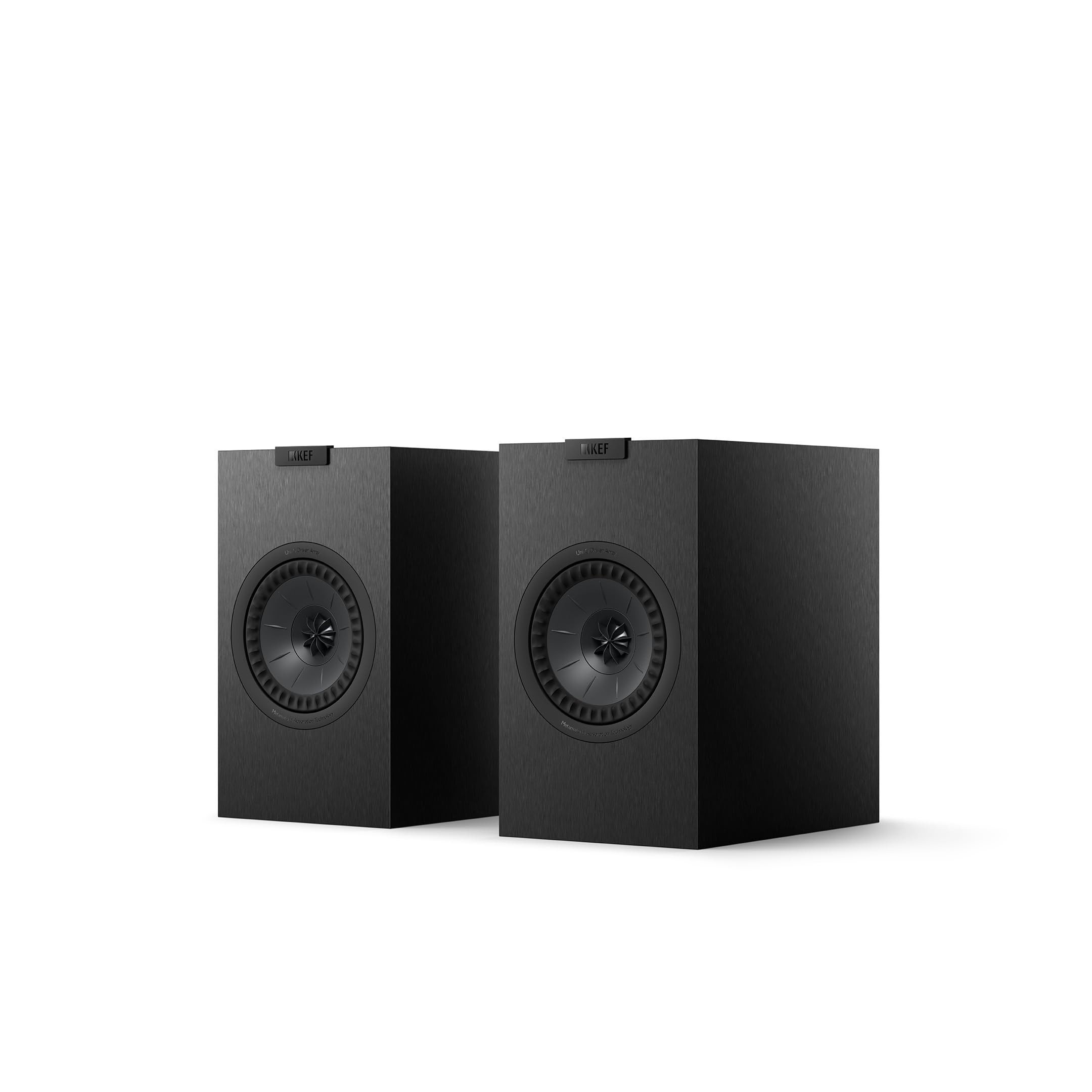
The LS50 Meta's 5.25-inch Uni-Q driver with the 12th-gen MAT absorber creates a 3D soundstage that is the standout trait of this bookshelf. Vocals stay crisp and centered while instruments extend beyond the cabinet boundaries, giving the illusion of a much larger presence. The MAT absorber reduces unwanted rear energy, keeping the midrange-to-tweeter transition seamless and preventing the cabinet from sounding boxy. Guitar and piano lines hold their position in the mix, and ambient cues float around the edges of the room. This is the kind of rendering that makes a simple two-channel pair feel like a complete audio system.

The same clarity holds at modest volumes, which makes near-field listening on a desk or in a small room especially satisfying. The image locks in place with a slight toe-in, and the shelf-friendly cabinet does not need deep room positioning to sound balanced. The Uni-Q waveguide aligns midrange and treble in time, so instruments stay locked in the soundstage even when the level is low. Long listening sessions stay comfortable because the presentation never turns hard or etched.

Placement is forgiving enough for a desktop setup, and the same pair can move to medium-room shelving without losing the focused center image. A small amount of free space around the cabinet lets the soundstage open up, and the speaker remains stable if you shift a little off-axis. Even at close desk distance, the Uni-Q driver keeps the midrange and tweeter as one source. On stands with the tweeter near ear level, the fully 3D presentation comes together quickly. This is a design that rewards modest care with speaker placement but does not demand a dedicated listening room to sound correct.

This is a passive speaker, so the system around it matters as much as the cabinet. The LS50 Meta demands a quality external amplifier; a modest receiver will produce sound but will not reveal the speaker's true performance. The target buyer is someone who already owns a separate amp and wants a bookshelf that rewards that commitment with precise imaging and a natural midrange. It is not the right product for listeners looking for a one-box solution; the powered KEF alternatives handle that duty with their own electronics.

Pros

  • Reference-level clarity and imaging create a 3D soundstage.
  • Vocal reproduction stays crisp and centered on the soundstage.
  • Strong price-to-performance ratio inside the premium bookshelf class.
  • The cabinet suits near-field desks and medium-room shelving without dominating the space.

Cons

  • Accessory feet can be missing from the carton, so check the contents early.
  • Deep-bass extension is limited; adding a subwoofer is the fix for full-range playback.
Our verdict

For critical listening in a small-to-medium room, the LS50 Meta is the KEF bookshelf to build around.
Check Latest Price
2

Best Budget Entry Point

KEF Q1 Meta

83 /100
Sound Score Excellent

Key details

Format
Bookshelf pair
System Type
Passive bookshelf
Connectivity
None
Driver Technology
5.25-inch Uni-Q MAT
View on Amazon

The Q1 Meta is the lowest entry price into KEF's MAT-equipped Uni-Q family, and that driver delivers a wide, anchored soundstage in rooms where larger towers are overkill. The imaging is not as finely etched as the reference mini-monitor in this comparison, but the gap is smaller than the price difference suggests.

The 5.25-inch Uni-Q keeps vocals and dialogue locked to the center, and the pair sounds larger than its cabinet size on a desk or shelf. It holds together at moderate volumes for both music and movie soundtracks, which is what a near-field or surround-channel pair needs.

A modest amplifier is enough for near-field listening, though the 4-ohm load can expose a low-current mini-amp at higher volumes. The pair rewards a clean amplifier without demanding a high-end one, so an AV receiver or decent integrated amp is sufficient.

This pair suits a budget-conscious KEF buyer who wants MAT coherence without the top pick's outlay and is working with a small listening space. At full retail, previous-generation Q-series models can offer stronger value, and bass is limited without a sub; small-room stereo or rear-channel duty is the right fit.

Pros

  • Clear, dynamic soundstage with locked-in vocals for both music and home-theater use.
  • Discounted, it gives budget-conscious buyers a genuine entry into KEF's MAT driver family.
  • Compact cabinet fits near-field desks or rear-channel shelves without dominating the room.
  • Five-year warranty covers the passive pair for long-term ownership.

Cons

  • The 4-ohm load may strain a very small amplifier at louder levels, so amp matching matters.
  • Passive-only with no built-in amplifier or streaming; active-speaker buyers will need external electronics.
Our verdict

For a small-room stereo or rear-channel system, this pair brings KEF's MAT driver into reach without demanding a high-end amplifier.

Check Latest Price
3

Best Compact Wireless

KEF LSX II Wireless

83 /100
Sound Score Excellent

Key details

Format
Compact bookshelf
System Type
Active wireless bookshelf
Connectivity
Wi-Fi, Bluetooth, HDMI ARC
Driver Technology
4.5-inch Uni-Q
View on Amazon

The LSX II's tiny footprint and desktop/TV inputs deliver high-res wireless sound from a single small pair. The 4.5-inch Uni-Q driver produces imaging that sounds larger than the cabinet suggests, and HDMI ARC plus USB-C turn the speakers into a PC monitor or bedroom TV audio hub without a separate amplifier.

At near-field distances, vocals stay locked in the center and instruments keep clear separation, which makes the LSX II comfortable for long listening sessions at a desk. The imaging is convincing enough that the compact cabinet disappears.

This pair is for a desk, bedroom, or small TV setup where space is short and HDMI ARC or USB-C matters more than deep bass. Wi-Fi setup can be frustrating, and the KEF app is part of the day-one process; the supplied cable between speakers helps steady the connection.

Pros

  • Compact two-piece design fits desks and shelves without dominating the room.
  • Crisp imaging and separation for a small cabinet; vocals and instruments stay distinct at close range.
  • HDMI ARC, USB-C, AirPlay 2, and Chromecast cover PC, TV, and phone streaming from one pair.

Cons

  • The KEF app requires an account before streaming, adding a step.
  • For serious bass, the 4.5-inch driver needs a separate subwoofer.
Our verdict

For a desktop or small TV room, this active pair delivers KEF's imaging without needing floor space or a separate amplifier.

Check Latest Price
4

Best Premium Powered Pair

KEF LS50 Wireless II

81 /100
Sound Score Excellent

Key details

Format
Bookshelf pair
System Type
Active wireless bookshelf
Connectivity
Wi-Fi, eARC, TOSLINK
Driver Technology
5.25-inch Uni-Q
View on Amazon

The LS50 Wireless II puts LS50-class imaging into a powered cabinet: each speaker carries its own bi-amplified drive, with AirPlay 2, Chromecast, and an HDMI eARC input for TV audio. That combination replaces a separate amplifier, DAC, and streamer in one tidy pair.

The 760W bi-amplified arrangement gives the Uni-Q driver enough headroom to fill a living room, and imaging stays coherent at moderate volumes. This is a self-contained music and TV hub, not a passive audiophile setup.

Best for a living-room TV/music system with eARC needs, and for buyers who want LS50-grade sound without buying an amplifier. Comfort with the wireless stack is part of the deal; buyers who expect hands-free wireless, or already own a quality amp, should look at the passive LS50 Meta.

💡 Keep the wired speaker link connected and use the optical or coax input as the stable fallback.

Pros

  • Room-filling LS50 sound with a wide soundstage in a single powered pair.
  • No amplifier or separate DAC needed; HDMI eARC and built-in streaming handle common sources.
  • Strong value versus other powered systems at this level.

Cons

  • App controls and the remote can feel unresponsive during a listening session.
  • Streaming can drop in congested Wi-Fi, and a firmware update may alter Spotify behavior until reset.
Our verdict

A self-contained LS50 system for living-room listeners who want KEF's imaging without a separate amplifier.

Check Latest Price
5

Best Floorstanding Option

KEF Q550 Floorstanding

80 /100
Sound Score Excellent

Key details

Format
Floorstanding single
System Type
Passive floorstanding
Connectivity
None
Driver Technology
5.25-inch Uni-Q with bass
View on Amazon

The Q550 is the floorstanding route into KEF's Uni-Q driver family, with a 5.25-inch concentric driver, a matching bass driver, and dual passive radiators in a narrow cabinet. Vocals and instruments stay clear, and channel separation holds up in music and movie playback. That coherence is the same reason the bookshelf reference in this lineup stands out; the Q550 trades that speaker's compact monitor footprint for tower presence and higher output capability.

The narrow cabinet and clean front give it a visually light footprint, which matters in living rooms where floorstanders often dominate the space. Output is sufficient for dialogue and stereo imaging in a mid-size room, and the Uni-Q array keeps the soundfield stable even when listening off-axis. The black finish keeps the visual presence low-key in decor-conscious spaces.

Buyers should know the Q550 is sold individually, so a stereo pair costs twice the displayed price, and bass extension is modest for a tower. It fits best for home theater buyers who need front towers and already plan on a subwoofer, or for two-channel listeners in a medium room who are willing to budget for two speakers and a separate bass solution.

Pros

  • Clear mids and highs with good separation for music and home theater.
  • Slim, modern tower profile fits cleanly into living spaces.
  • Tower presence in a narrow cabinet for mid-size rooms.

Cons

  • Bass extension stops at 58Hz, so deep low end depends on a subwoofer.
  • Sold per speaker, so a stereo pair costs twice the listed price.
Our verdict

The Q550 is the floorstander to choose when the system plan already includes a subwoofer and a second speaker.

Check Latest Price

How to Choose

Driver Technology

KEF's Uni-Q design places the tweeter at the center of the midrange cone, so the sound radiates from one point. That geometry is what creates the focused, three-dimensional image KEF is known for: vocals stay locked in space and instruments don't smear across the room.

The newer MAT variant adds an acoustic absorber behind the tweeter, which reduces high-frequency reflections that can harden the upper treble. It improves clarity on well-recorded material, but it doesn't change the need for proper speaker placement and a supporting amp.

Passive or Powered

Passive KEF models rely on your amplifier or receiver; powered models include amplification and often streaming inside the cabinet. Passive systems have fewer electronics to go wrong and let you upgrade components over time, while powered systems cut hardware clutter and simplify inputs.

The hidden trade-off is on the powered side: wireless setup, app accounts, and firmware updates enter the picture. Buyers who want a single speaker pair with no receiver are the right fit for active models; buyers who already own an amp should stay passive.

Format and Room Fit

Bookshelf speakers need stands or shelves that bring the Uni-Q driver to ear height, with breathing room from the wall behind them. Floorstanders solve the stand problem but occupy floor space and interact with room bass modes differently because of their larger cabinet height.

A compact active pair suits a desk or bedroom; a floorstanding pair suits an open living room where the speakers sit farther from the listening position. Measure the space before choosing.

Bass Expectations

KEF bookshelf speakers reach roughly 47–58 Hz depending on the model, which means you hear the note but not the pressure wave that comes with deep sub-bass. That limit is a physical consequence of driver size and cabinet volume, not a defect.

For acoustic music at moderate levels, a sub is optional. For home theater and bass-heavy genres, plan a subwoofer into the budget from the start.

Connectivity and Streaming

Powered KEF models support Wi-Fi, AirPlay, Chromecast, and HDMI ARC, which works well once the network handshake is stable. The common source of trouble is the wireless link between the speakers and the router; using the supplied cable between speakers and connecting one speaker to Ethernet removes most of it.

If you want zero app dependence, a passive pair with a separate streamer is the lower-maintenance route.

Frequently Asked Questions