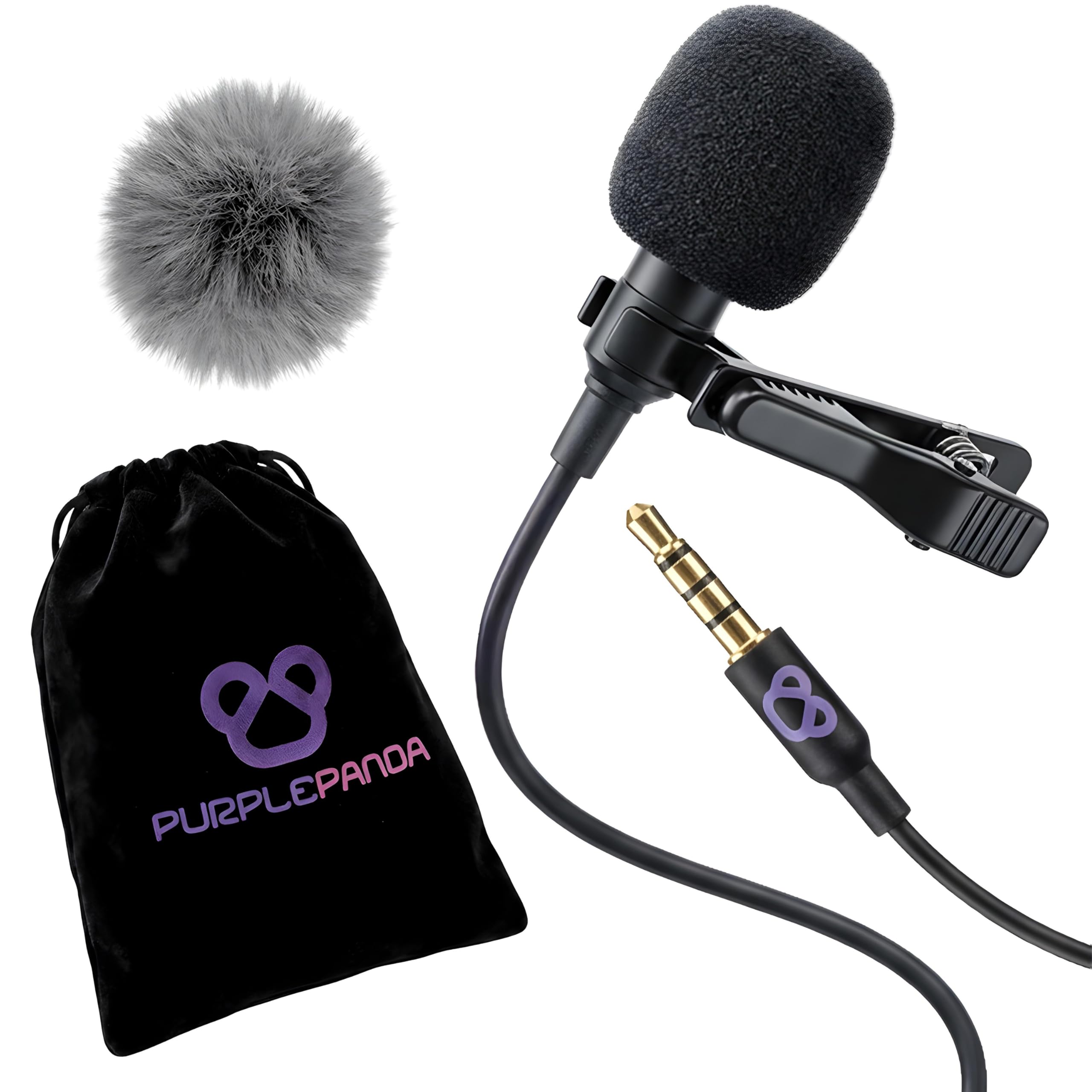
11 Best Lavalier Microphone 2026: Pick the Right Receiver Setup

Find a lavalier microphone that matches your phone, camera, or action-cam setup — with the battery life and backup recording you actually need.

A wireless lavalier can transform spoken audio, but the market is split between simple plug-and-play phone mics and production-style kits with internal recording, timecode, and multi-mic expansion. Many buyers overpay for long range claims they will never use, while ignoring the receiver compatibility that actually determines whether the mic works with their camera or phone.

The practical divide comes down to battery life, receiver outputs, and backup recording. A charging case matters more than a few extra meters of line-of-sight range, and a transmitter with internal recording can save an interview when wireless interference hits. The right kit should disappear into your workflow rather than add setup friction.

This guide focuses on the systems that match the way you actually record: two-transmitter kits for interviews, wired lavs for camera operators, and ultra-light options for native camera ecosystems. Compatibility, real-world battery, and durability shape every pick.

About the Sound Score: This comparative score is calculated from a product's published customer rating and review volume. It is not a laboratory measurement or a hands-on test result.

1

Best Overall

Hollyland Lark M2

95 /100
Sound Score Outstanding

Key details

Battery Life
10h TX / 40h case
Recording Backup
None
Noise Cancellation
Receiver Ecosystem
Camera, USB-C, Lightning
View on Amazon

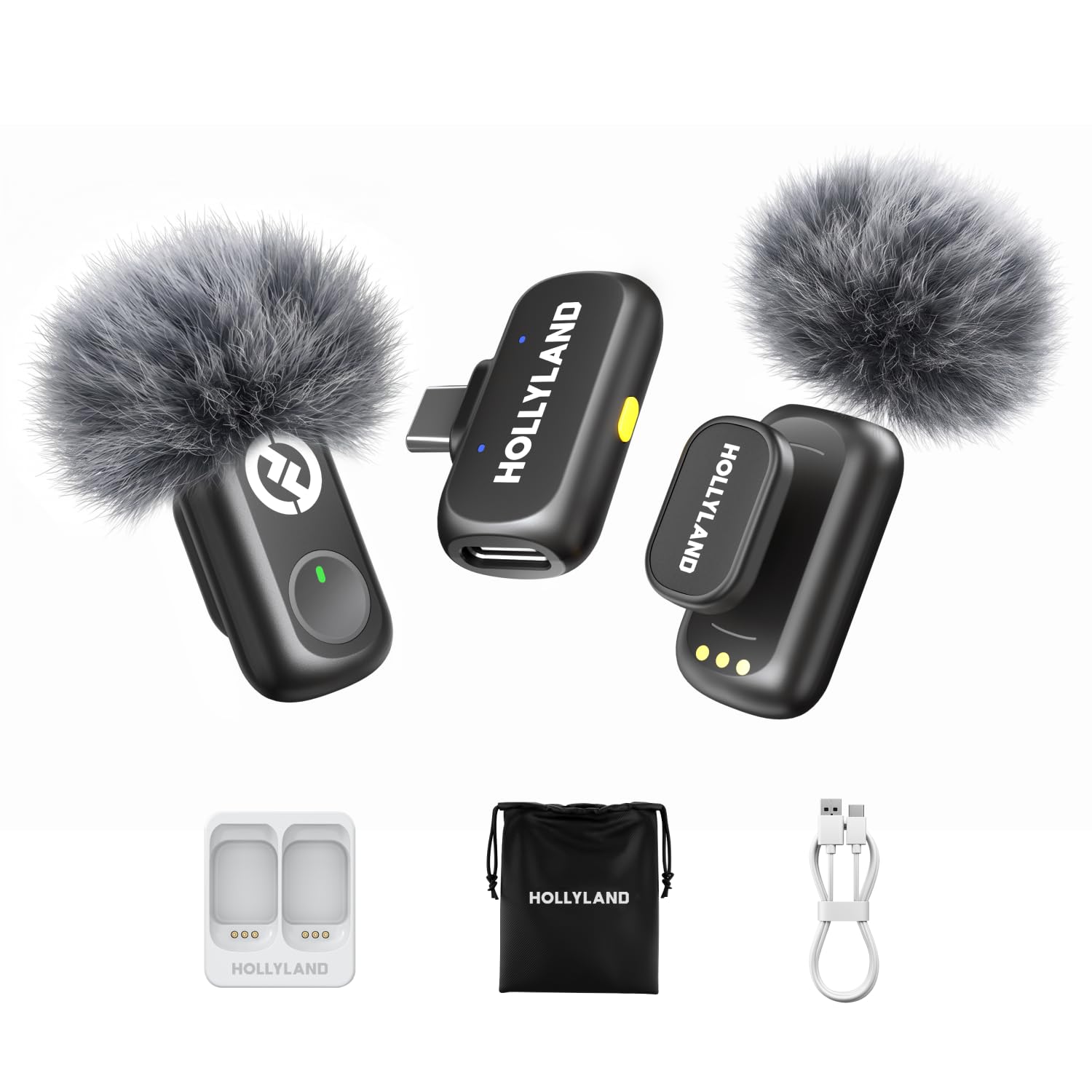
The Lark M2 records speech with clear, natural detail at 48kHz/24-bit, and the kit bundles two transmitters with camera, USB-C, and Lightning receivers. Switching from an iPhone vlog setup to a camera interview is a matter of unplugging one receiver and plugging in another, so there is no need to carry separate kits or a pocket full of adapters. The transmitters are factory-paired, meaning the first recording can start without an app, a pairing menu, or a manual.

Battery life handles a full day of on-and-off use: each transmitter runs about 10 hours, and the charging case adds reserve for repeated short sessions between charges. The 300m range rating assumes clear line of sight; indoors, a transmitter under a collar keeps signal within a room. The 9g transmitter weight avoids tugging on a shirt, and voice remains clean with no hiss in normal indoor settings.

This kit is for interviewers and vloggers who want one system for iPhone, Android, and camera. Two transmitters cover a host and guest without a second purchase, while the three receivers remove adapter hunting from a shoot. Creators who need 32-bit float internal recording or timecode should step up to a production-grade kit, and active shooters should treat the magnetic mount as a quick-release convenience rather than a lock; a backup clip is the right safeguard for movement-heavy filming.

The bundle undercuts the usual cost of buying separate camera and phone receivers, which matters for creators who switch devices week to week. It is not the cheapest wireless lav, but it lands in a sensible mid-range spot for a creator who wants one kit to handle phone and camera work without accumulating extras. The included charging case keeps everything together, so the whole rig travels as one unit.

💡 Run a full discharge-recharge cycle every few months if the case has been the main charger, so the transmitter battery gauge stays honest.

Pros

  • Clear, natural voice capture for spoken-word content without harshness or hiss.
  • Factory pre-pairing makes it usable right out of the box with no app or pairing menu.
  • Two transmitters plus camera, USB-C, and Lightning receivers support phone and camera work from one case.
  • Charging case provides enough power for all-day interview and vlogging sessions.

Cons

  • Charging behavior can vary between individual transmitters after extended use in the case.
  • Magnetic clip can shift or detach during fast movement, so active shooters will want a backup clip.
Our verdict

A single-case wireless kit for creators who record to both phones and cameras: two transmitters, three receivers, and clean voice audio without pairing friction.

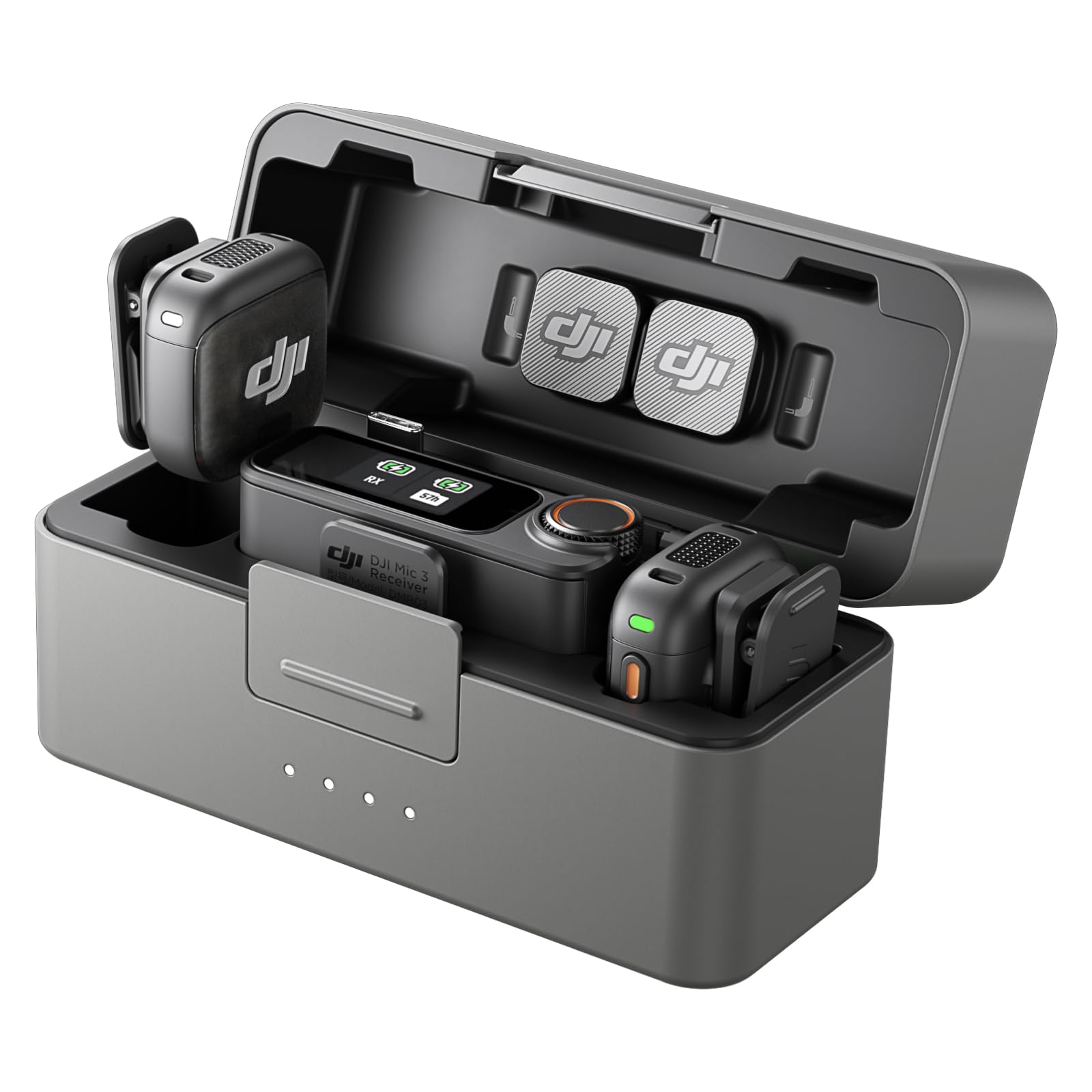
Check Latest Price
2

Best for DJI Creators

DJI Mic Mini

95 /100
Sound Score Outstanding

Key details

Battery Life
48h with case
Recording Backup
None
Noise Cancellation
2 levels
Receiver Ecosystem
OsmoAudio + receiver
View on Amazon

OsmoAudio direct pairing is the differentiator here: compatible DJI cameras connect to the Mic Mini without a receiver, while the 10g transmitters stay light on a collar. The charging case brings total battery to 48 hours, which covers long interview days without hunting for a power outlet. A receiver is still included, so non-Osmo devices can use the mics, but the direct-pairing path is the reason this kit exists.

Target buyers are DJI/Osmo shooters who want a discreet two-mic kit for solo vlogs or two-person interviews. There is no internal recording backup on the transmitter, so shoots that depend on a saved audio file should step up to DJI Mic 2 or Mic 3. For everyone else, the Mic Mini delivers the smallest practical wireless setup in DJI's lineup.

Pros

  • The 10g transmitter is light enough to disappear on a shirt collar while recording.
  • A 48-hour charging case keeps the mics powered across full shoot days.
  • OsmoAudio direct pairing lets compatible DJI cameras skip the receiver entirely.

Cons

  • The single receiver must be swapped between non-DJI devices, so a phone and camera can't stay connected simultaneously.
  • Two-transmitter maximum leaves no channel for a third speaker or backup mic.
Our verdict

The Mic Mini's niche is DJI/Osmo shooting: minimal collar weight, long case battery, and no receiver needed on compatible cameras.

Check Latest Price
3

Best for Multi-Person Creating

DJI Mic 3

92 /100
Sound Score Outstanding

Key details

Battery Life
28h with case
Recording Backup
32-bit float
Noise Cancellation
2 levels
Receiver Ecosystem
4 TX, 7 RX
View on Amazon

The DJI Mic 3 pairs four transmitters, syncs audio to seven additional receivers, and records dual-file 32-bit float backup on every transmitter. The slimmer two-mic option in this lineup handles solo creators; the Mic 3 is the one that scales to a table of guests. Dual-band transmission and two noise-cancelling levels keep voices clear in busy rooms.

The 28-hour charging case makes all-day shoots manageable, and the internal backup runs once the transmitter is armed. Plug in the receiver, confirm levels, and the safety file records silently in the background.

Podcast and group-interview creators who need more than two mics are the core audience, along with DJI Osmo or Action shooters who want direct pairing. Vloggers who want a saved safety copy without timecode also fit. First-time buyers who only need one transmitter should start with a smaller kit, and buyers committed to non-DJI camera ecosystems should verify compatibility before ordering, because third-party pairing is limited.

Pros

  • Feature-rich wireless microphone system that scales to multi-person shoots.
  • Crisp voice capture that stays intelligible in noisy rooms.
  • Small transmitters are easy to hide on camera and travel well in the charging case.

Cons

  • Getting the most from the advanced controls takes a run-through; a tutorial before the first shoot prevents fumbling.
  • Premium price lands above lightweight two-mic kits, so casual buyers may pay for unused channels.
Our verdict

For multi-person podcasts and DJI-native shoots, the Mic 3 delivers four-transmitter coverage and a backup recording path that smaller kits can't match.

Check Latest Price
4

Best for Filmmakers

Rode Wireless PRO

91 /100
Sound Score Outstanding

Key details

Battery Life
Recording Backup
32-bit float
Noise Cancellation
Receiver Ecosystem
View on Amazon

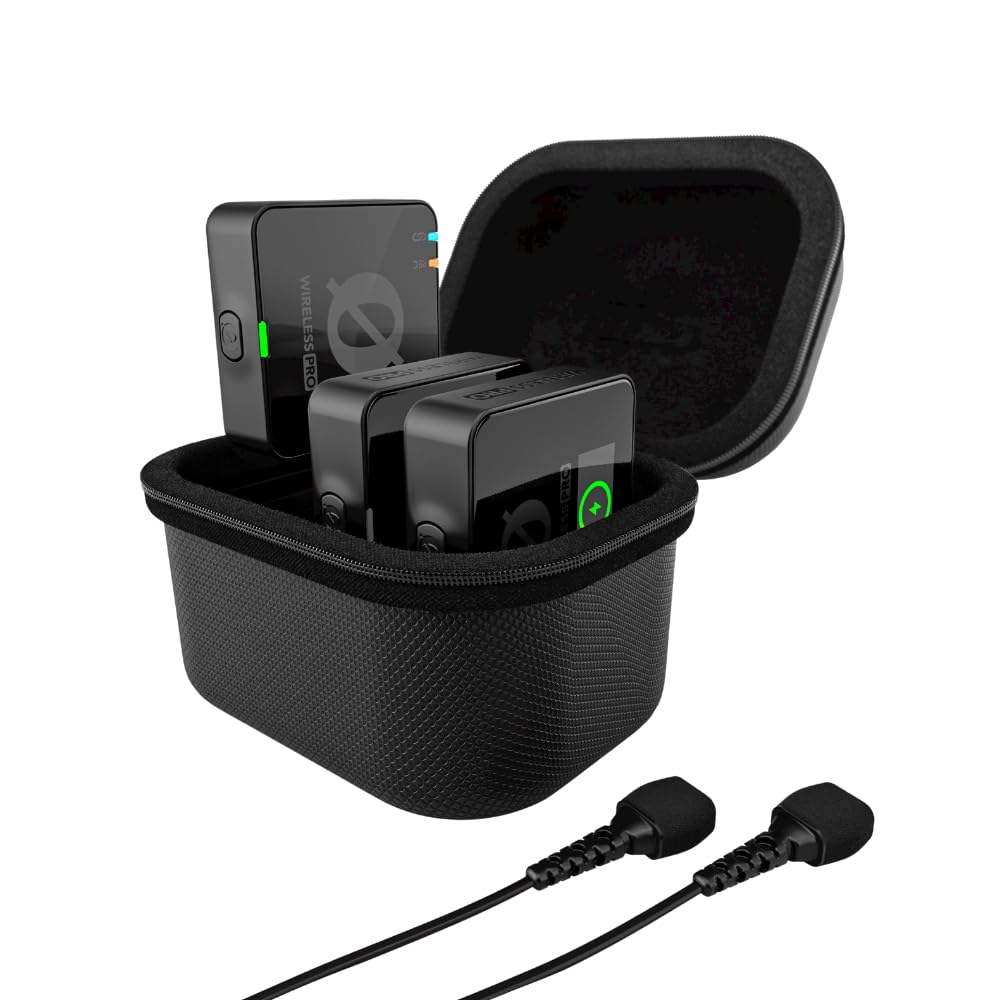
The Rode Wireless PRO is closer to a field recorder than a clip-on mic: each transmitter logs 40-plus hours of 32-bit float audio, timecode locks multi-camera takes together, and 128-bit encrypted transmission protects live dialogue. The box includes two Lavalier II mics, a MagClip GO, cables, and a smart charging case, plus a five-year warranty. That places it above the wired lavs in this roundup, which trade sync and backup recording for cable simplicity.

This is for filmmakers and content teams whose workflow already includes timecode and post-sync; the premium price makes sense when a lost take costs more than the microphone. Occasional pairing glitches can occur, so run a link check before critical shoots. Casual vloggers recording quick phone clips will carry features they won't use. Dual-lav interview sessions are its natural environment.

Pros

  • 32-bit float recording keeps dialogue usable when input levels spike unexpectedly.
  • Build quality feels robust enough for location work.
  • Two Lavalier II mics, MagClip GO, cables, and a smart charging case cover a two-person interview out of the box.

Cons

  • Lav capsules can pull in background noise outdoors, and the included windscreens only reduce it.
  • Latency can be noticeable when monitoring live sound, so confirm the delay before production-critical takes.
Our verdict

For crews that need timecode and recoverable 32-bit float, the Wireless PRO is the complete package. The slimmer option in this set suits creators who don't need on-board backup.

Check Latest Price
5

Best Budget Dual-Channel

NEEWER CM28

91 /100
Sound Score Outstanding

Key details

Battery Life
9h TX / 8h RX
Recording Backup
4GB per TX
Noise Cancellation
One-click
Receiver Ecosystem
USB-C, 3.5mm
View on Amazon

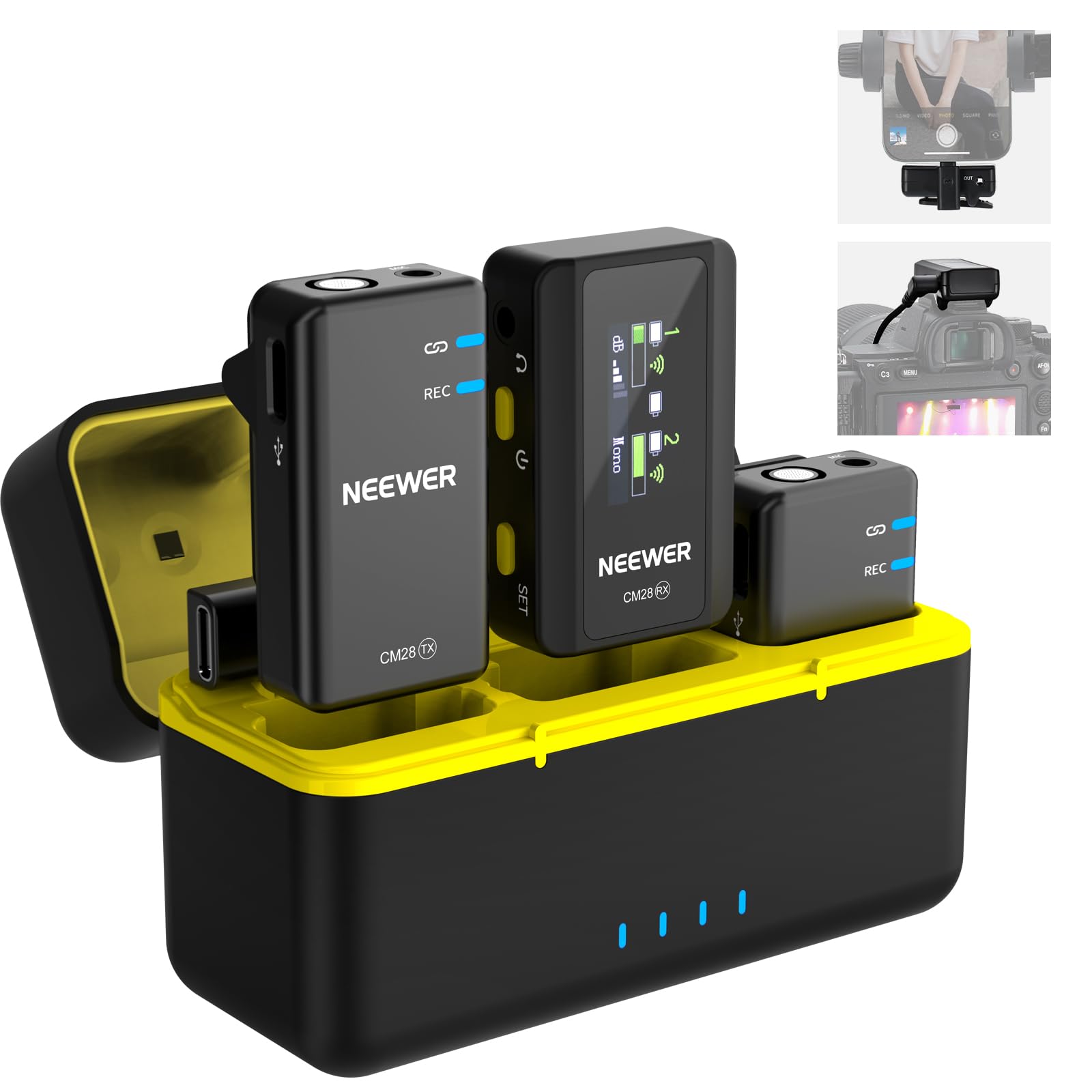
The CM28 pairs two 4GB-recording transmitters with an LCD receiver, a charging case, and 48kHz/16-bit WAV capture on each mic. That is a built-in backup file in a budget dual-channel kit — a safety net usually reserved for pricier sets. The receiver screen also makes battery and signal checks quick between takes.

It fits vloggers, streamers, and sit-down interviewers who want a second copy of the audio without stepping up to 32-bit float or timecode. The 200m range claim assumes open sightlines; indoors, the usable distance is shorter, so keep the receiver near the speakers. Receiver and adapter quality can vary, so a quick unboxing check is worth the time. When those checks pass, the internal recording and LCD deliver real budget value.

Voice clarity is clean for speech, and one-button noise cancellation handles everyday room rumble in a single press. Charging case battery keeps both mics and receiver ready across long recording days. That is the practical part of a two-mic kit.

💡 Keep the receiver and adapters in the charging case when not shooting.

Pros

  • Two transmitters record a backup WAV locally, so a wireless dropout doesn't ruin an interview take.
  • Charging case keeps both mics and receiver ready through long shooting days.
  • One-button noise cancellation trims background hum for cleaner voice indoors.

Cons

  • The detachable adapters can feel fragile after repeated plugging and unplugging.
  • Receiver power or charging issues can show up in some units.
Our verdict

The CM28 gives budget interviewers and vloggers a genuine backup-recording path without the production-grade price tag.

Check Latest Price
6

Best Wired Camera Lav

Rode Lavalier GO

93 /100
Sound Score Outstanding

Key details

Battery Life
No battery needed
Recording Backup
None
Noise Cancellation
Receiver Ecosystem
3.5mm TRS
View on Amazon

The Lavalier GO is a wired lav that treats the cable and capsule as the main event: a 4mm omnidirectional capsule with 67dB SNR and a Kevlar-reinforced 1.2m cable. That combination keeps dialogue crisp in normal interview conditions. It skips receiver pairing and transmitter charging, so it fits fixed-camera interviews and interface-based streams where a bodypack is already part of the chain. The included pop shield and pouch cover the basics without added cost.

This wired lav suits camera and interview recording, streamers with a 3.5mm audio interface, and owners of compatible wireless transmitters who want a higher-quality lav element than the capsule that ships with their kit. The TRS output is not a direct smartphone plug, and some wireless transmitters can add RF interference unless matched carefully. Smartphone-only creators and anyone expecting wireless convenience should look at a different type of kit.

💡 Pinch the spring clip from the sides rather than prying it open from the front to protect the spring wire.

Pros

  • Broadcast-style voice clarity in a small wired lav
  • Kevlar-reinforced cable and solid connector feel dependable for regular location use.
  • Works well with cameras, audio interfaces, and wireless bodypacks like Rode Wireless GO.

Cons

  • Lapel clip spring can pop loose under normal handling; a gentle pinch keeps it in place.
  • The 1.2m cable suits bodypack transmitters but may not reach a tripod camera set across the room.
Our verdict

The Lavalier GO is the wired element to grab when you already own a camera, interface, or transmitter and want broadcast-toned dialogue without rethinking your recording chain.

Check Latest Price
7

USB-C Creators

Hollyland Lark A1

88 /100
Sound Score Excellent

Key details

Battery Life
54h with case
Recording Backup
None
Noise Cancellation
3 levels
Receiver Ecosystem
USB-C only
View on Amazon

The Lark A1 delivers clean 48kHz/24-bit voice at an entry-level price, with a compact build that feels appropriate for the budget wireless tier. The bundle only includes a USB-C receiver, so Lightning iPhone users need an adapter; that keeps it in the USB-C-centric lane rather than the Lark M2. The multi-receiver Lark M2 bundles USB-C, Lightning, and camera outputs in one box, which is the main reason to pay more.

Pros

  • Three-level noise cancellation keeps room and street noise out of the voice track.
  • 8g magnetic transmitters snap on quickly and stay put on collars.

Cons

  • The USB-C receiver may not sync on the first connection with certain phones.
  • Charging-case runtime can fall short of the advertised 54 hours on some units.
Our verdict

For USB-C Android and iPhone 15+ creators on a budget, the Lark A1 is a high-fidelity value pick; anyone who needs one kit across phone and camera should choose the multi-receiver Lark M2 instead.

Check Latest Price
8

iPhone Creators

Mini Mic Pro

88 /100
Sound Score Excellent

Key details

Battery Life
6h per TX
Recording Backup
None
Noise Cancellation
AI-powered
Receiver Ecosystem
USB-C + Lightning
View on Amazon

The Mini Mic Pro is an ultra-budget plug-and-play iPhone lav: no app, no Bluetooth, a tiny receiver, and clean voice for short-form social video. Two transmitters, a Lightning/USB-C receiver, clips, and windscreens are included. Android compatibility is inconsistent, with some phones capturing no audio or dropping the connection. That makes this a starter kit for first-time iPhone creators on a tight budget who record close to the phone and accept the limits of a budget wireless kit.

Pros

  • Clean voice pickup at a budget price, with two transmitters included for alternating interviews.
  • Tiny receiver and clip-on transmitters are easy to hide under clothing and carry in a pocket.

Cons

  • Battery life can vary between units; some transmitters last closer to an hour than the advertised six.
  • Indoor range can drop to under 20 feet in some rooms, well short of the 20m claim.
Our verdict

For iPhone-first creators who stay close to the phone, this budget kit gets you recording immediately; outside that workflow, consider another option.

Check Latest Price
9

Everyday Vloggers

NPTCL Wireless Lav

89 /100
Sound Score Excellent

Key details

Battery Life
24h with case
Recording Backup
None
Noise Cancellation
DSP chip
Receiver Ecosystem
USB-C + Lightning
View on Amazon

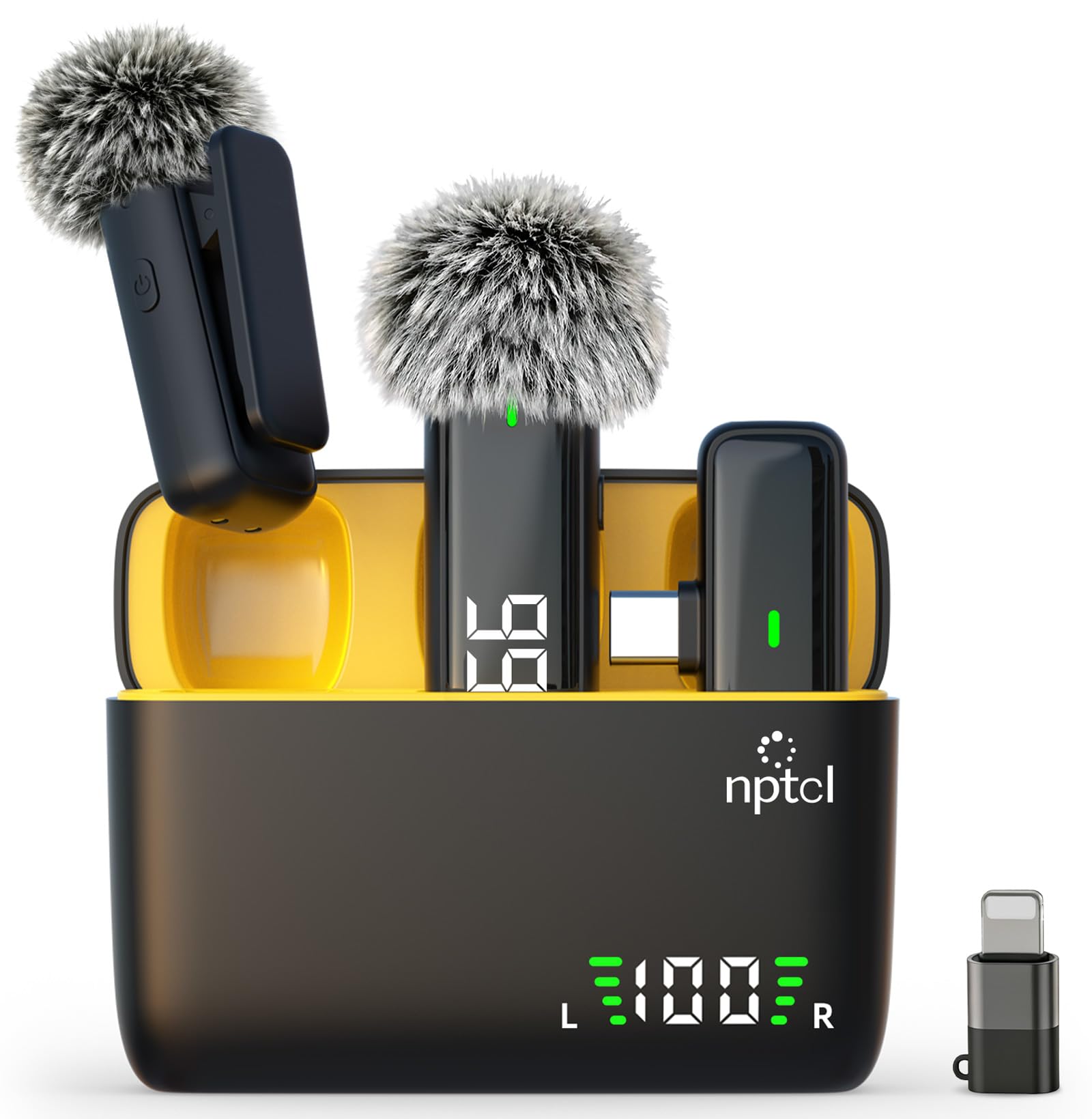
Two transmitters auto-pair with the USB-C receiver, and the charging case tops up both mics between sessions. Voice capture is clean for sit-down interviews, classroom videos, and property walk-throughs, and the Lightning adapter widens the phone compatibility. The noise-reduction circuit is modest in louder rooms, and individual units can show quality-control variance, so a quick unboxing test is worthwhile. It lacks internal recording backup, which leaves filmmakers who want a saved safety file outside the target audience.

Pros

  • Two auto-pairing transmitters with the USB-C receiver get an interview setup going quickly on iPhone 15 and USB-C Android phones.
  • Charging case keeps both mics powered and organized, extending total battery life to around 24 hours.

Cons

  • The USB-C receiver can block the port next to it on a laptop, so side-by-side connections need a little planning.
Our verdict

For phone-first creators who want two wireless mics and a case that keeps them ready, the NPTCL kit covers the essentials without pushing into pro-recorder territory.

Check Latest Price
10

Action-Cam Users

Purple Panda Lav

89 /100
Sound Score Excellent

Key details

Battery Life
No battery needed
Recording Backup
None
Noise Cancellation
Receiver Ecosystem
3.5mm TRS/TRRS
View on Amazon

This wired lav packs a 4.9ft cable, 9.8ft extension, TRS adapter, and windscreens into a budget-friendly kit for action-cam and DSLR recording. Voice pickup is clear for vlogs and interviews, and the accessory bundle makes it easy to move between rigs. As a wired-only design, it cannot replace a wireless clip-on, and action-cam compatibility depends on official GoPro/DJI/Insta360 adapters, so a non-standard dongle may not work. Wind noise can show up above 20 mph on a motorcycle, but casual walking-and-talking vlogs stay clean.

Pros

  • Included accessory kit with multiple adapters and windscreens adds real value for wired recording.
  • Clear voice pickup is well suited for vlogs and interviews when connected correctly.

Cons

  • The non-rotating clip can crack if forced, so positioning depends on the cable angle.
Our verdict

Keep this for desk-shot interviews and low-speed vlogs where a wired connection is not a hindrance.

Check Latest Price
11

Prosumer Creators

DJI Mic 2

93 /100
Sound Score Outstanding

Key details

Battery Life
18h with case
Recording Backup
32-bit float
Noise Cancellation
Receiver Ecosystem
OLED receiver
View on Amazon

A 32-bit float safety recording stored inside each transmitter means a dropped receiver connection won't ruin a take. The OLED receiver adds headphone monitoring, and the compact case charges the system on the go. This is a middle option for solo interviewers and vloggers who want backup audio without a timecode system. Phone connectivity can be inconsistent, so camera or DJI action-cam users get more predictable results. It overlaps with DJI's Mic Mini and Mic 3, limiting its place in a broader ecosystem.

Pros

  • 32-bit float internal backup preserves audio even when the receiver link drops.
  • Crisp, professional-sounding voice capture for interviews and vlogs.

Cons

  • Touch controls can feel finicky for larger fingers during quick gain adjustments.
Our verdict

Camera-first interviewers who want a backup audio file without stepping up to timecode gear are the right audience.

Check Latest Price

How to Choose

Receiver Ecosystem

A wireless lavalier is only as useful as its receiver outputs. A kit with camera 3.5mm, USB-C, and Lightning receivers covers a phone today and a camera tomorrow. A USB-C-only receiver locks you into one connector and forces adapters for older iPhones or cameras.

The reason is signal format: cameras take analog audio from a 3.5mm jack, while phones expect a digital USB or Lightning feed. That is why the receiver ecosystem matters more than the transmitter's range.

Battery Life

Charging cases turn a wireless kit into a daily tool. Transmitters with 10-hour batteries can still die mid-interview if they sit idle, and a case that tops them off between takes is what keeps a shoot moving.

Battery chemistry also matters: lithium cells lose capacity over charge cycles, so older transmitters may not hit their original runtime. Buy for the case's total hours, not the transmitter alone, and expect the number to drop after a year of regular use.

Noise Cancellation

Noise cancellation in a lavalier is a digital filter, not a physical shield. It reduces steady hum from air conditioners or room tones, but wind blasts and hard object clatter still reach the capsule.

The practical test is where you record. An indoor interviewer can rely on a basic filter; a motovlogger needs a windscreen and careful placement because no DSP can remove the sound of wind tearing past a helmet.

Recording Backup

On-board recording stores a second audio file inside each transmitter. If the wireless signal drops, the receiver may cut out for a second, but the transmitter keeps a complete take.

32-bit float backup is the most forgiving option because it captures loud and quiet moments without clipping. A 16-bit WAV backup is still useful for interviews, but it lacks the same headroom. Anyone doing paid work should treat internal recording as insurance.

Transmitter Size and Mounting

A 9-gram transmitter hides under a collar, but its retention system is the weak point. Magnetic clips are fast to attach, yet they shift during active movement; spring clips hold better but can snap when twisted.

Choose mounting based on your movement. A talking-head vlogger can live with magnets, while an action-cam shooter needs a secure clip and a wind muff.

Frequently Asked Questions