7 Best Network Audio Streamer of 2026: Match Protocols to Phone

Find the network audio streamer that matches your phone's streaming protocol, your amp's inputs, and your Wi-Fi — without overpaying for what you do not need.

Network streamers look simple on paper: a box that feeds Wi-Fi music into your stereo. The differences that matter show up in daily use — whether your phone's streaming protocol is supported, whether the app stays connected, and whether the outputs match your amplifier. Price is not a dependable shortcut to a hassle-free experience; some budget streamers deliver calmer software than their premium rivals.

The most consequential trade-off is between a universal streamer that handles both AirPlay 2 and Google Cast and a one-box hub that adds a better DAC, phono input, or room correction. Choose the universal route when your stereo already has a capable DAC and you want maximum phone compatibility. Choose the hub route when you want TV audio, a turntable, and streaming to share one component. Get this choice right and the streamer disappears into your system; get it wrong and you will be juggling apps, adapters, or a second DAC.

About the Sound Score: This comparative score is calculated from a product's published customer rating and review volume. It is not a laboratory measurement or a hands-on test result.

1

Best Overall

WiiM Pro

89 /100
Sound Score Excellent

Key details

Multiroom
WiiM, Google Home, Alexa
Output Types
RCA, optical, coaxial
System Inputs
Network Options
Wi-Fi, Ethernet, Bluetooth
View on Amazon

The WiiM Pro is the rare streamer that speaks AirPlay 2 and Google Cast from the same box, so an iPhone and an Android phone can cast without a platform showdown. RCA, optical, and coaxial outputs carry 24-bit/192 kHz audio to an existing receiver, powered speakers, or a separate DAC, which makes the Pro a transport rather than a whole-system replacement. Digital outs stay bit-perfect for anyone using a separate DAC.

Setup runs through the WiiM Home app, which finds the streamer and puts Spotify, TIDAL, Amazon Music, and Roon in one control surface. Native Spotify/TIDAL Connect and Roon Ready let your usual app keep playing; AirPlay 2 appears from the iOS share sheet; Chromecast extends the same control to any Google Cast app. The app groups source settings and network status, so moving between phone casting and a desktop Roon session does not require re-pairing.

Amazon Music streams natively, which matters for households that buy music inside that ecosystem. Chromecast targets work in parallel, so apps without native Connect integration can still direct audio to the WiiM Pro. The same streamer can sit behind an older amplifier or a set of powered speakers without needing additional boxes.

The value is in the protocol spread: the Pro covers both phone platforms, Roon, and the major Connect services without the price jump that usually comes with a single-ecosystem streamer. That broad coverage is the reason it sits as the default network source in this category.

This is the standalone network source for stereo owners who already have amplification and speakers and want modern streaming in front of it. Mixed-phone households and Roon users on a budget fit here. Wi-Fi stability can vary by environment, so the Ethernet port is the recommended fallback; buyers who can wire the streamer have the clearest path to steady playback.

The Pro does not replace an amplifier; it feeds one. That keeps it useful when the stereo remains the center of the living room and the streamer becomes another network input alongside a CD player or tuner. It is a focused network audio source, not an all-in-one receiver, and that narrow role is what keeps the cost down.

Pros

  • High-res playback stays clean through RCA, optical, or coaxial outputs.
  • Setup is quick via the WiiM Home app, with all major services in one place.
  • AirPlay 2, Google Cast, Spotify/TIDAL Connect, and Roon Ready share one budget-friendly box.
  • Amazon Music, Roon, and Chromecast devices can all address the same streamer.
  • AirPlay 2 gives Apple users a direct target from the iOS share sheet.

Cons

  • No touchscreen or phono input; the all-in-one tier covers those needs.
  • Built-in DAC is solid for the price, not a high-end conversion stage.
Our verdict

The WiiM Pro adds AirPlay 2, Google Cast, Spotify/TIDAL Connect, Roon, and high-res output to an existing stereo without forcing a new amplifier on you.

Check Latest Price
2

Best All-In-One Streamer/Preamp

WiiM Ultra

92 /100
Sound Score Outstanding

Key details

Multiroom
WiiM, Google Cast, Alexa
Output Types
RCA, coax, optical, USB, subwoofer
System Inputs
HDMI ARC, phono, coax, optical, USB
Network Options
Wi-Fi 6, Bluetooth 5.3, Ethernet
View on Amazon

The WiiM Ultra pairs an ESS ES9038Q2M DAC with a touchscreen, phono input, HDMI ARC, subwoofer output, and room correction in one chassis. In a two-channel setup, that combination removes the need for separate DAC, preamp, and phono stage. The HDMI ARC input also lets a television share the same powered speakers or amplifier.

Analog output can drive active speakers or a power amp directly, and the subwoofer output plus room correction tunes a two-channel system without an external processor. Streaming covers Spotify, TIDAL, and Roon over Wi-Fi 6 or Ethernet, while the touchscreen and WiiM Home app handle browsing and playback. The unit can switch between optical, coaxial, RCA, and USB inputs from the same interface.

The all-in-one profile fits vinyl listeners and home theater users who want one shared stereo path. A turntable connects to the phono input, and HDMI ARC brings TV audio into the same speakers. Apple users can cast through the WiiM Home app from supported services; those who depend on system-level AirPlay should choose a different model.

The touchscreen and app split control duties well: on-device controls cover quick changes, while the app manages EQ, room correction, and source configuration. The chassis stays small enough to sit beside an amplifier without dominating the shelf.

Pros

  • Built-in ESS ES9038Q2M DAC and analog outputs feed active speakers or a power amp directly.
  • Touchscreen and the WiiM Home app handle setup, browsing, and playback in one place.
  • Phono input and HDMI ARC allow a turntable and television to share the same streamer.
  • Room correction and subwoofer output tune the low end without adding separate hardware.

Cons

  • Bluetooth/Wi-Fi pairing can be intermittent on a congested network; Ethernet input sidesteps it.
  • No AirPlay support, so iPhone and Mac users cannot send audio from Control Center.
Our verdict

The Ultra is the all-in-one hub for streamer/DAC/preamp buyers who want phono, HDMI ARC, and room correction in one box.

Check Latest Price
3

Best Compact Premium Streamer

Bluesound Node Nano

83 /100
Sound Score Excellent

Key details

Multiroom
BluOS
Output Types
Stereo RCA, optical, coaxial, USB
System Inputs
Network Options
Wi-Fi, Gigabit Ethernet, Bluetooth
View on Amazon

Bluesound Node Nano brings the full BluOS streaming platform to a chassis roughly half the size of the standard Node, with an ESS ES9039Q2M DAC for 24/192 playback, MQA, and AirPlay 2. The analog outputs carry enough detail that an external DAC is optional, while optical, coaxial, and USB outputs remain for those with a separate converter.

After setup, streaming runs at high quality: TIDAL Connect, Spotify Connect, and local library tracks respond quickly through the BluOS app. The small chassis slips beside an integrated amp or powered speakers, and AirPlay 2 lets iPhone users cast directly without opening the app.

This is the right fit for BluOS households that want the ecosystem's multiroom behavior in a smaller, lower-cost package, and for compact stereo owners who value a strong built-in DAC and AirPlay 2. It is not for home theater setups needing HDMI eARC or Dirac Live, nor for buyers chasing the lowest price. Occasional Wi-Fi or software instability can appear in some environments, so wired Ethernet is the safer default for long listening sessions.

💡 Wired Ethernet is the safer network path for long listening sessions.

Pros

  • Built-in ESS ES9039Q2M DAC delivers clean, detailed analog output for a streamer this size.
  • Streaming performance after setup is high-quality, with TIDAL, Spotify, and local files handled smoothly.
  • BluOS brings multiroom and app control at a lower entry cost than the standard Node.
  • AirPlay 2 on board means iPhone users can bypass the app and cast directly.

Cons

  • BluOS app behavior can be inconsistent in some environments, with occasional player disconnects or interface lag.
  • Wi-Fi dropouts can appear in certain network setups, making Ethernet the better path for long sessions.
Our verdict

For compact stereo owners in the BluOS ecosystem, the Node Nano is a small-footprint streamer with a strong DAC and AirPlay 2. Home theater and budget-first buyers will find better matches elsewhere.

Check Latest Price
4

Best for Sonos Households

Sonos Port

83 /100
Sound Score Excellent

Key details

Multiroom
Sonos
Output Types
RCA analog, coaxial digital
System Inputs
RCA line-in, 12V trigger
Network Options
Wi-Fi, Ethernet
View on Amazon

The Port turns a legacy stereo into a Sonos zone without replacing the amplifier. RCA analog and coaxial digital outputs connect to an existing receiver or outboard DAC, while AirPlay 2 brings Apple-device streaming into the same zone. A 12V trigger fires when the zone starts, so connected amplifiers can power up automatically.

Basic RCA setup is quick: connect the Port between amplifier and speakers, then add it as a zone in the Sonos app. Through the coaxial output, Tidal and Amazon HD keep their resolution when a separate DAC does the decoding, making the Port a capable transport for an existing hi-fi chain.

This fits an existing Sonos household that wants one more zone without buying a powered speaker. AirPlay 2 and iOS/iPad direct control cover a large part of daily listening, though setup, grouping, and music-service browsing still run through the Sonos app. There are no HDMI or optical inputs, so this is not a TV ARC bridge or a way to pull television audio into a Sonos group.

Compared with a budget universal streamer, the Port trades protocol breadth for tighter multiroom grouping, and its price reflects Sonos integration more than hardware richness. Buyers outside the Sonos ecosystem can get broader music-service support at a lower cost, while Sonos owners get a purpose-built line-out component.

💡 Use AirPlay 2 from an iPhone or iPad for quick single-track playback; the Sonos app is better suited to full-zone grouping.

Pros

  • Turns a legacy stereo into a Sonos zone without replacing the amplifier.
  • Basic RCA setup connects a stereo to Sonos in a few steps.
  • Tidal and Amazon HD streaming stays clean through the coaxial output.
  • 12V trigger powers connected amplifiers automatically when the zone starts.

Cons

  • The Sonos app handles queue and playlist management, and that part of the experience can feel slower than the hardware itself.
  • In congested Wi-Fi, the Port can drop off the network; Ethernet is the stable fallback.
Our verdict

The Port makes sense for a Sonos household with a legacy stereo and an Apple-heavy device mix, especially when auto-power matters. For buyers outside the Sonos ecosystem, the broader protocol support and lower entry price of a universal streamer is the better fit.

Check Latest Price
5

Best Luxury All-In-One

Eversolo DMP-A8

82 /100
Sound Score Excellent

Key details

Multiroom
Output Types
RCA, XLR, IIS digital
System Inputs
Coax, optical, HDMI ARC, XLR, USB
Network Options
View on Amazon

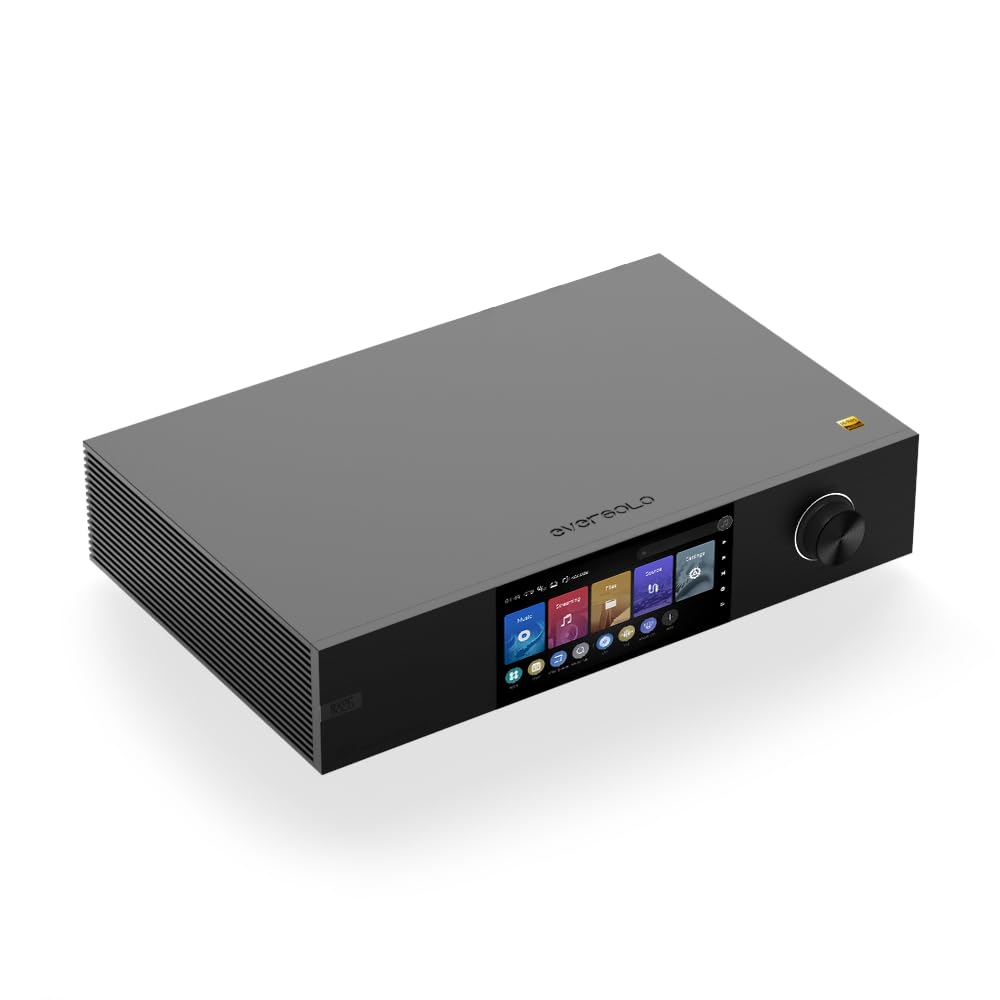
Where the category's budget leader keeps the DAC separate, the DMP-A8 assembles streamer, AKM DAC, and preamp in one high-end chassis. Balanced XLR and RCA preamp outputs connect straight to an amplifier, while the 6-inch touchscreen adds VU meters, spectrum analyzers, and room/EQ controls. This is the one-box answer for a stereo system that does not want a separate preamp.

Input coverage is wide: two coaxial, two optical, HDMI ARC, USB-B, XLR/RCA analog, and Bluetooth. A TV, CD transport, turntable with a phono pre, and streaming services can share the same unit. Sound holds up at this level — tight bass and a spacious stage — and the AKM DAC keeps digital processing flexible without forcing a particular filter on you.

This is the fit for an audiophile who wants one box for everything and runs balanced XLR equipment. It carries a premium price, and occasional firmware/app stability issues are part of that trade. The purist transport in Eversolo's lineup is the better route for owners who already have a separate high-end DAC; anyone rooted in a separate DAC/amp chain should pass.

Pros

  • Balanced XLR and RCA preamp outputs plus a wide digital/analog input set anchor an entire stereo system.
  • AKM DAC delivers tight bass and a spacious stage from streaming sources.
  • Touchscreen with VU meters and spectrum analyzers keeps source switching and monitoring easy.
  • Room/EQ controls and flexible digital processing let one chassis replace separate streamer, DAC, and preamp.

Cons

  • HDMI ARC can be finicky with certain TVs; the optical input is a practical fallback.
  • Buyers who already own a separate DAC will pay for an analog preamp stage they may not use.
Our verdict

For balanced one-box stereo systems, the DMP-A8 replaces streamer, DAC, and preamp duties in a single chassis.

Check Latest Price
6

Home Theater Systems

Bluesound Node (2024)

76 /100
Sound Score Very Good

Key details

Multiroom
BluOS
Output Types
RCA, HDMI, optical/coaxial
System Inputs
HDMI eARC
Network Options
Ethernet, Wi-Fi
View on Amazon

The Bluesound Node (2024) is the rare streamer that combines BluOS multi-room audio with HDMI eARC and Dirac Live, making it a true bridge between a TV-focused home theater and a wired stereo system. Sound quality is even and composed across digital and analog outputs, and Tidal Connect works smoothly once the BluOS app connects. That last part is the catch: connection drops and slow update times can interrupt a listening session in some setups, and the premium price only makes sense when the eARC and Dirac features are actually in use. Buyers who simply want a network streamer for music and don't need TV audio integration will get more for less elsewhere.

Pros

  • HDMI eARC and Dolby Digital decoding bring TV audio into a BluOS multi-room system.
  • Even, composed sound quality across analog and digital outputs suits long listening sessions.
  • Tidal Connect and BluOS integration on Android and Windows covers high-res streaming without third-party workarounds.

Cons

  • Premium pricing only pays off when HDMI eARC and Dirac Live are part of the buyer's system.
  • Connection drops and slow update times can interrupt listening in some home networks.
Our verdict

This is the streamer to pick when a home theater with eARC and Dirac Live is the actual goal; for a music-only streamer, the same money buys a lower-friction option.

Check Latest Price
7

High-End DAC Owners

Eversolo T8

83 /100
Sound Score Excellent

Key details

Multiroom
None
Output Types
IIS, coax, AES/EBU, USB, optical
System Inputs
Network Options
Wi-Fi 6, Gigabit Ethernet, SFP
View on Amazon

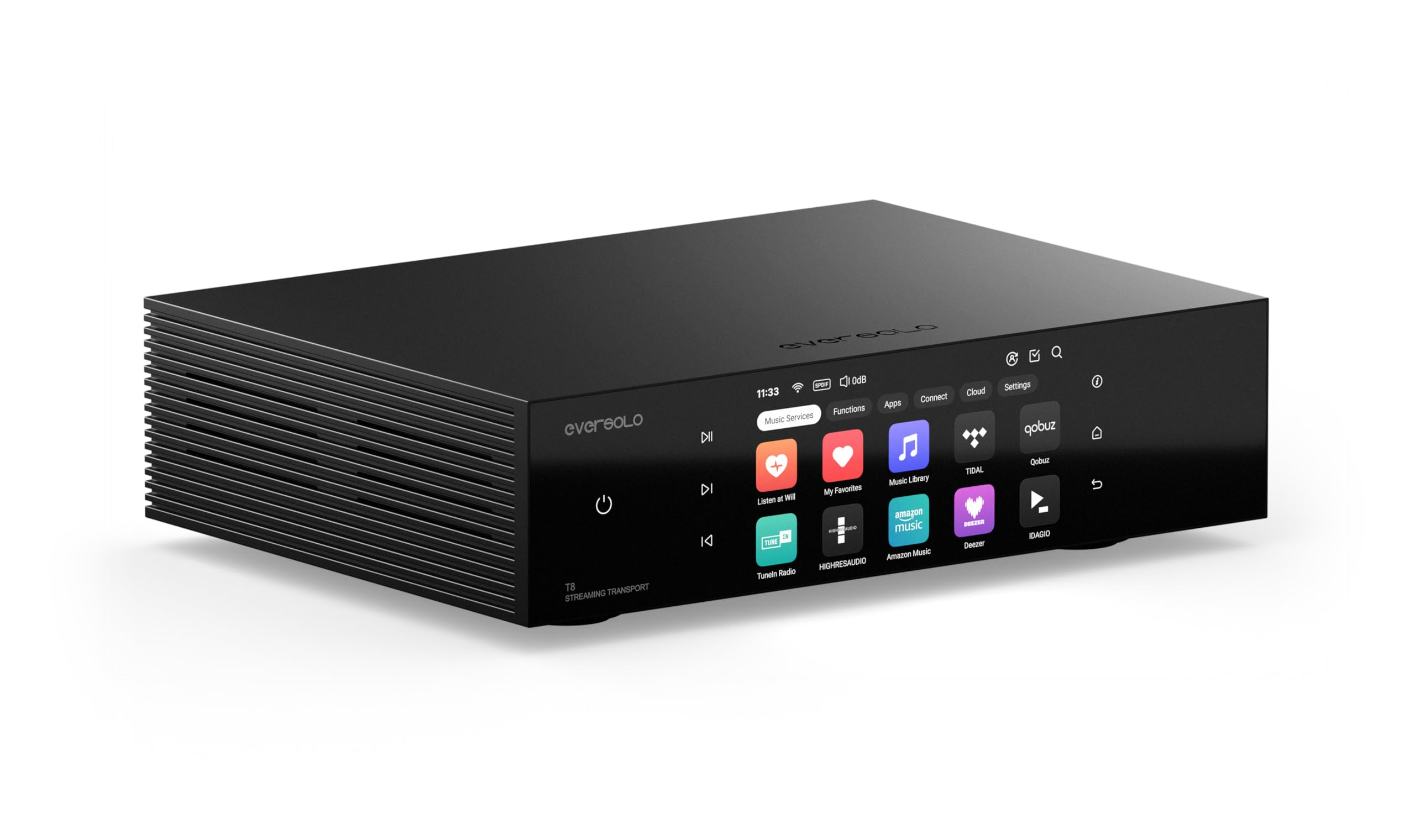
The Eversolo T8 gives a separate high-end DAC a quiet, clean digital source with dual femtosecond clocks and electrical isolation on every digital output. Roon users get solid streaming behavior over Wi-Fi 6, Gigabit Ethernet, or optional SFP fiber, and the chassis and display match the price bracket. The boundary is that there are no analog outputs, so a conventional amplifier requires an external DAC; buyers who want an Eversolo all-in-one should look at the DMP-A8. This focus makes it a specialist tool, but for a high-end DAC owner with a Roon setup, the focus is exactly the appeal.

Pros

  • Cleaner signal path for high-end DACs, with dual femtosecond clocks and electrical isolation on all digital outputs.
  • Roon Ready plus TIDAL, Qobuz, and Spotify Connect over Wi-Fi 6, Ethernet, or SFP fiber.
  • High-grade chassis and a display that fits neatly into a rack.

Cons

  • Qobuz Connect can drop or stutter depending on the network environment.
  • A firmware update may cause temporary freezing that clears with a restart.
Our verdict

This is a focused transport for buyers who value clocking and isolation over all-in-one convenience.

Check Latest Price

How to Choose

Output Types

The first decision is whether the streamer produces analog output or sends digital data to an external DAC. If your amplifier has no digital input, you need analog; a digital-only transport like the Eversolo T8 assumes you already own a DAC.

If you have an external DAC, the streamer's internal DAC becomes irrelevant. If you do not, a known chip like ESS or AKM matters more than a resolution number on the box.

Streaming Protocols

Protocol support decides which phones and apps can cast directly. AirPlay 2 serves iPhones, Google Cast serves Android, and Spotify/TIDAL Connect streams from inside the app.

No streamer supports every protocol: the WiiM Ultra omits AirPlay, while the WiiM Mini omits Google Cast and Ethernet. Match protocols to the phones in your household before comparing resolution.

DAC and Resolution

A better DAC matters only when you use the streamer's analog output. From optical or coaxial into an outboard DAC, the internal DAC is bypassed entirely.

For direct analog connection, an ESS SABRE DAC in the Node Nano or WiiM Ultra is a stronger buy than an unspecified chip in a budget box.

System Inputs

Inputs extend the streamer beyond music. HDMI ARC pulls TV audio, phono connects a turntable, and line-in can digitize another source.

Adding inputs adds cost and chassis space. A compact Node Nano keeps outputs only; the WiiM Ultra or Eversolo DMP-A8 can become the hub for TV, vinyl, and streaming.

Network Connectivity

Ethernet is the most reliable choice because it avoids Wi-Fi congestion and walls. If Ethernet is impossible, dual-band Wi-Fi or Wi-Fi 6 is the next best option.

Budget streamers without Ethernet, like the WiiM Mini, depend entirely on wireless conditions. An entry-level streamer can sound as good as a premium transport; the difference appears in dropouts, not tone.

Multiroom Ecosystem

Multiroom is a loyalty decision. Existing Sonos speakers make the Sonos Port the natural bridge; BluOS owners get the same from a Bluesound Node.

Starting fresh, WiiM's support for Google Cast and AirPlay 2 lets you mix brands without committing to one control app.

Frequently Asked Questions